


About this worksheet
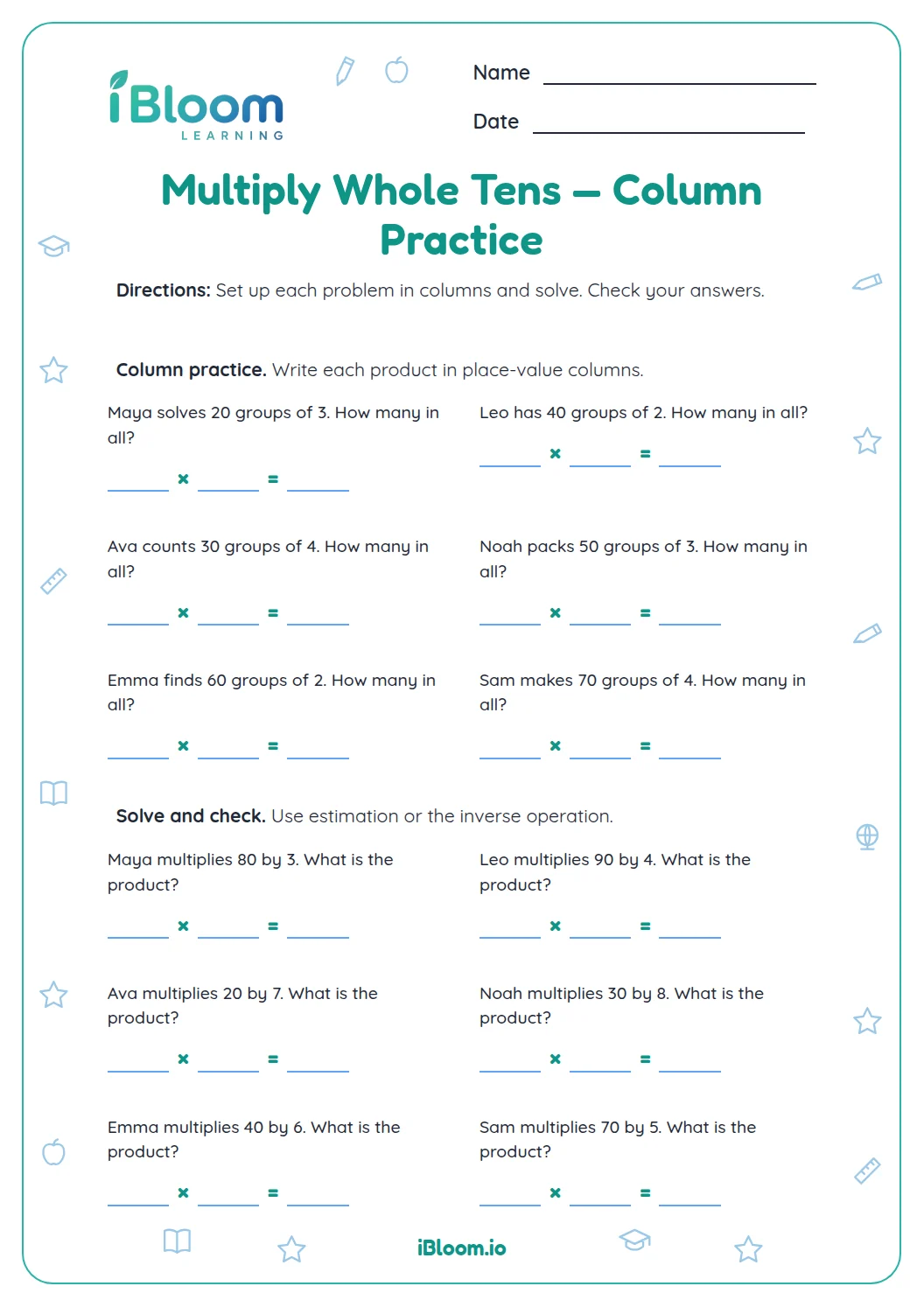
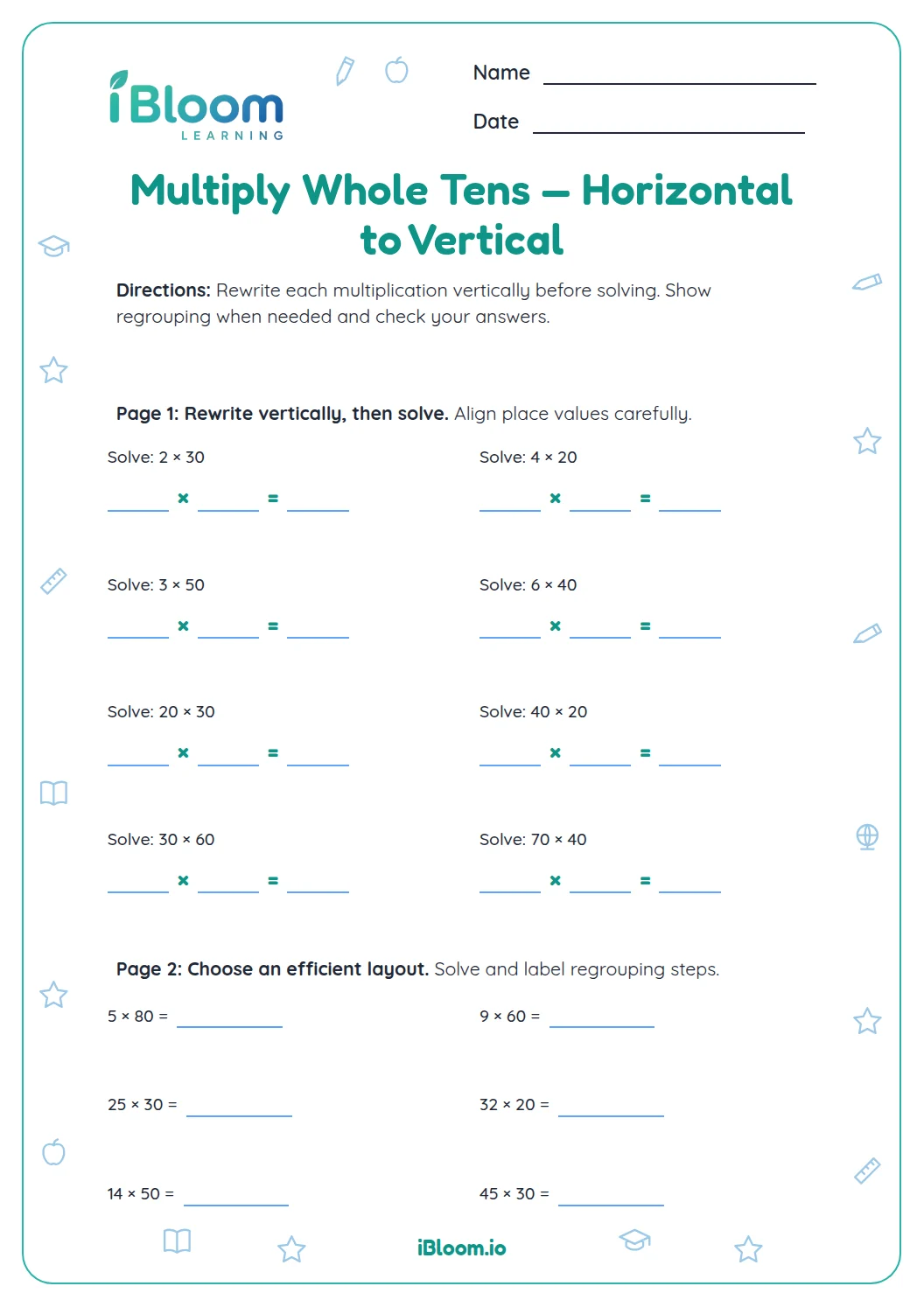
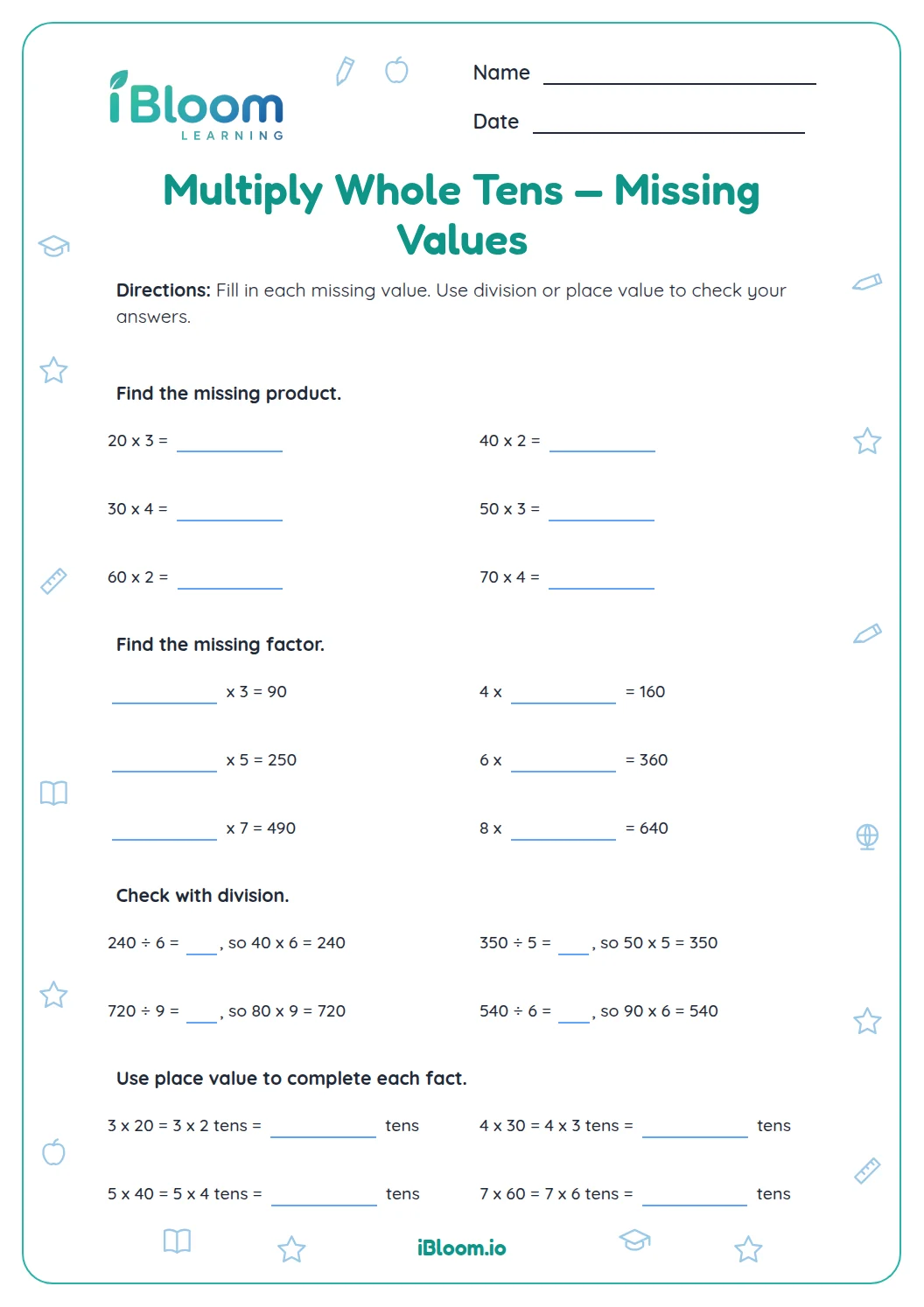
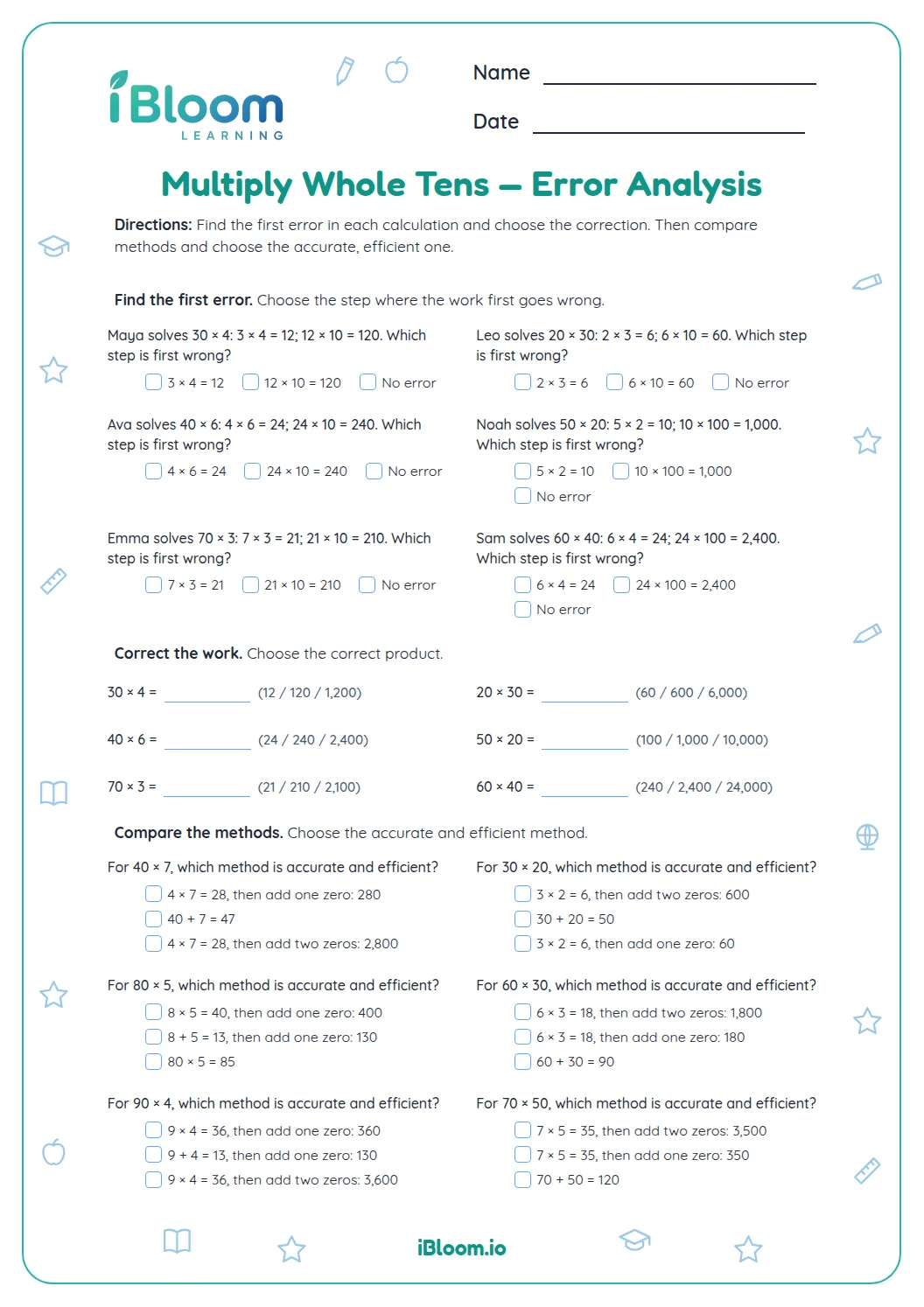
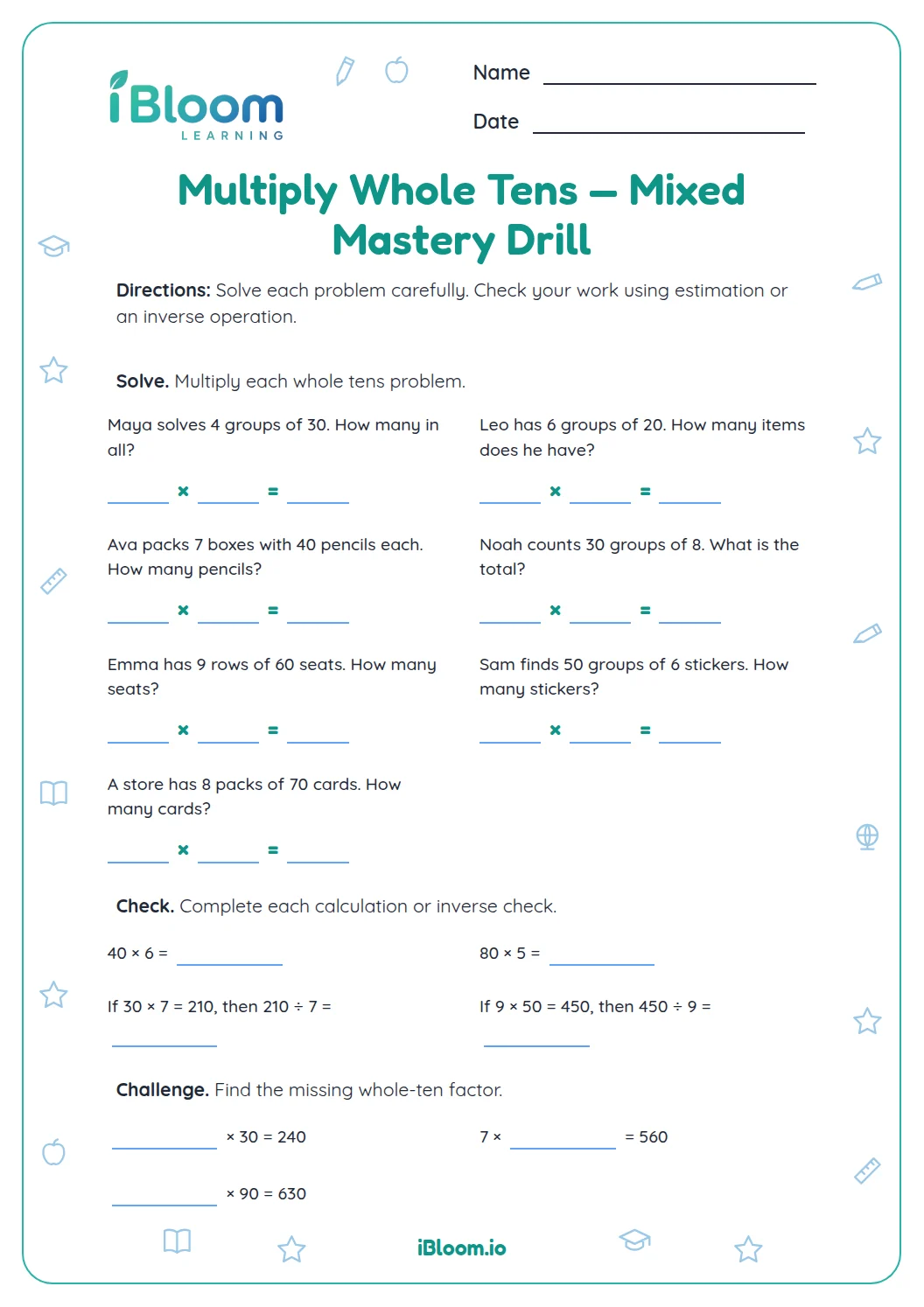
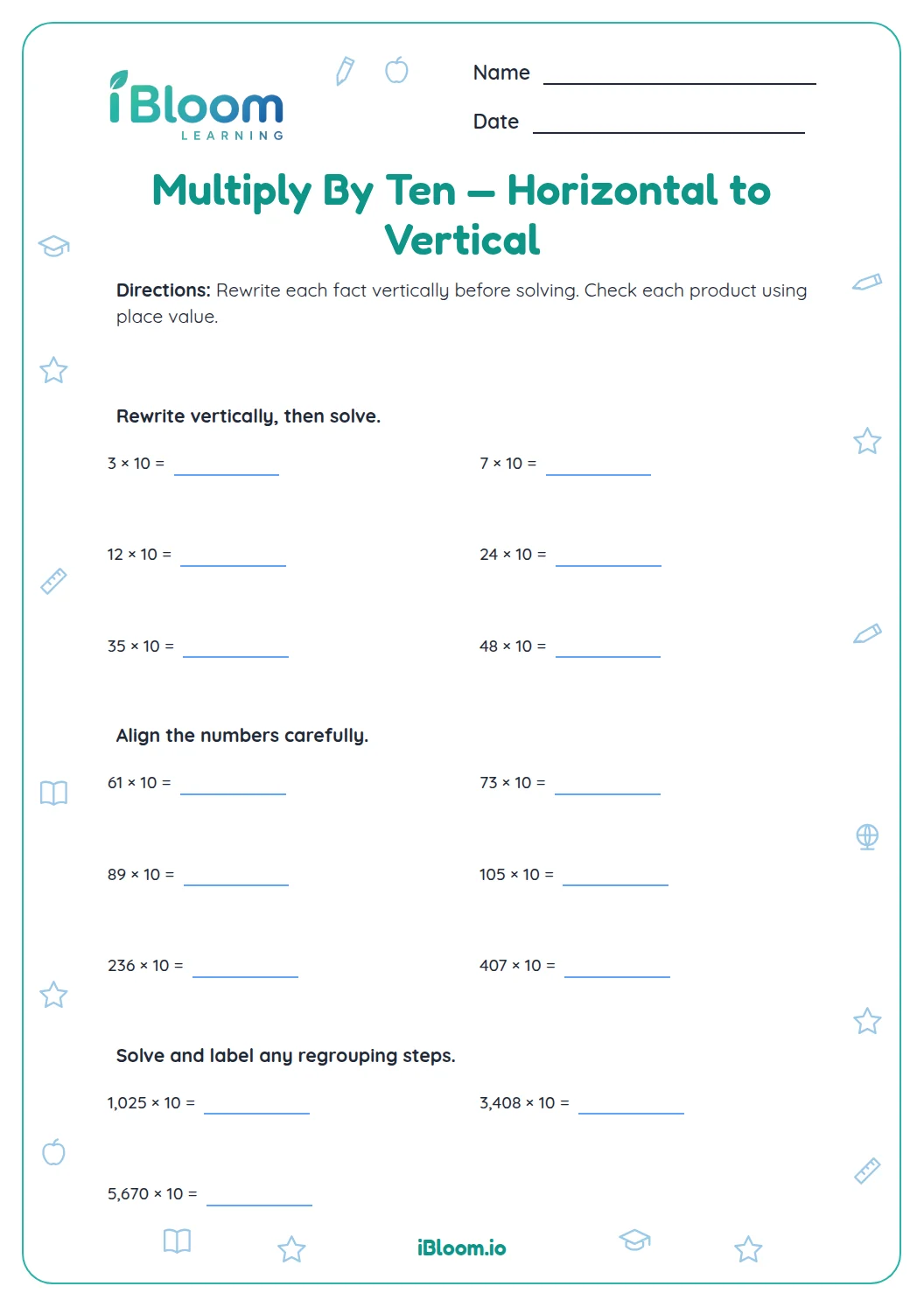
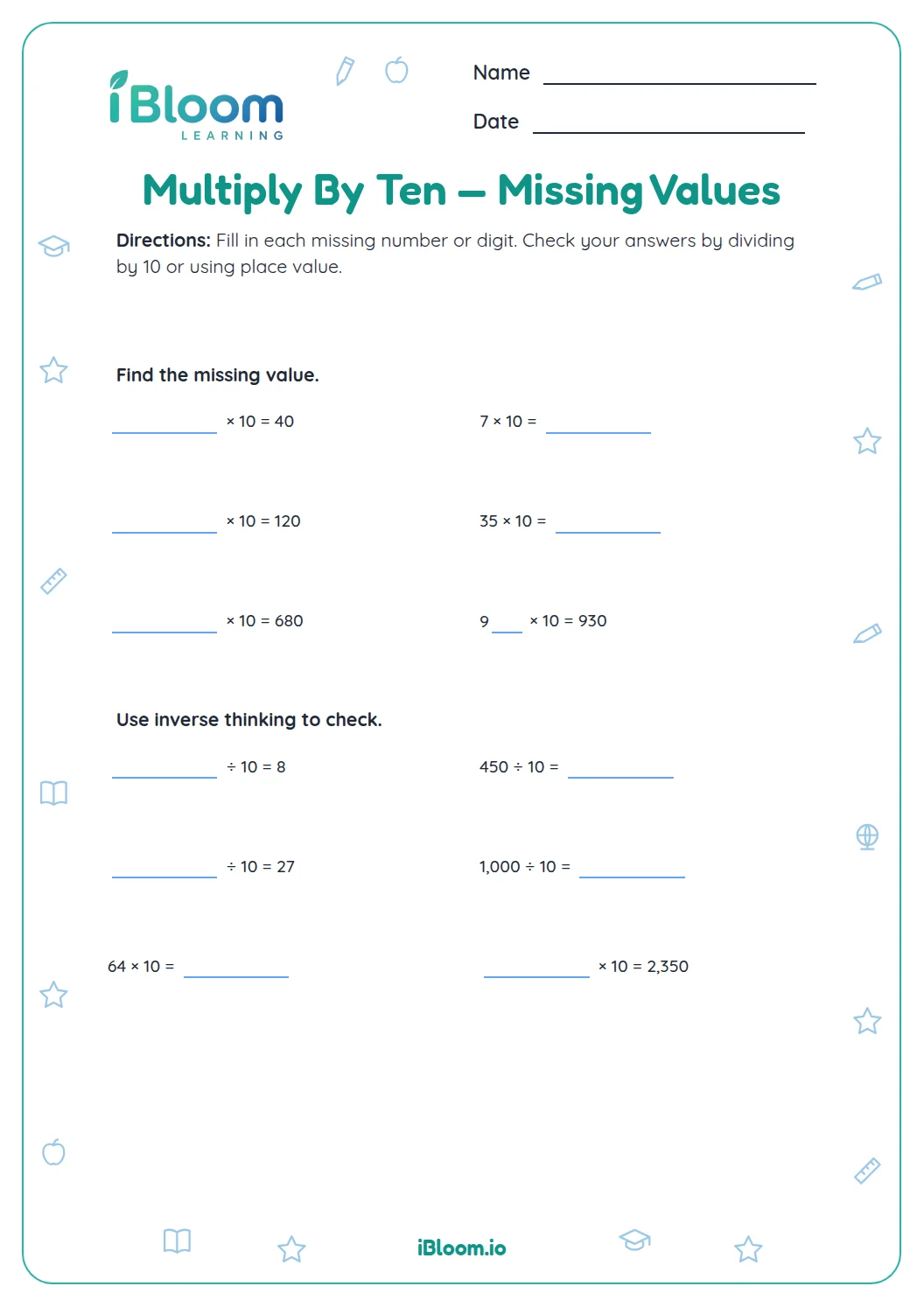
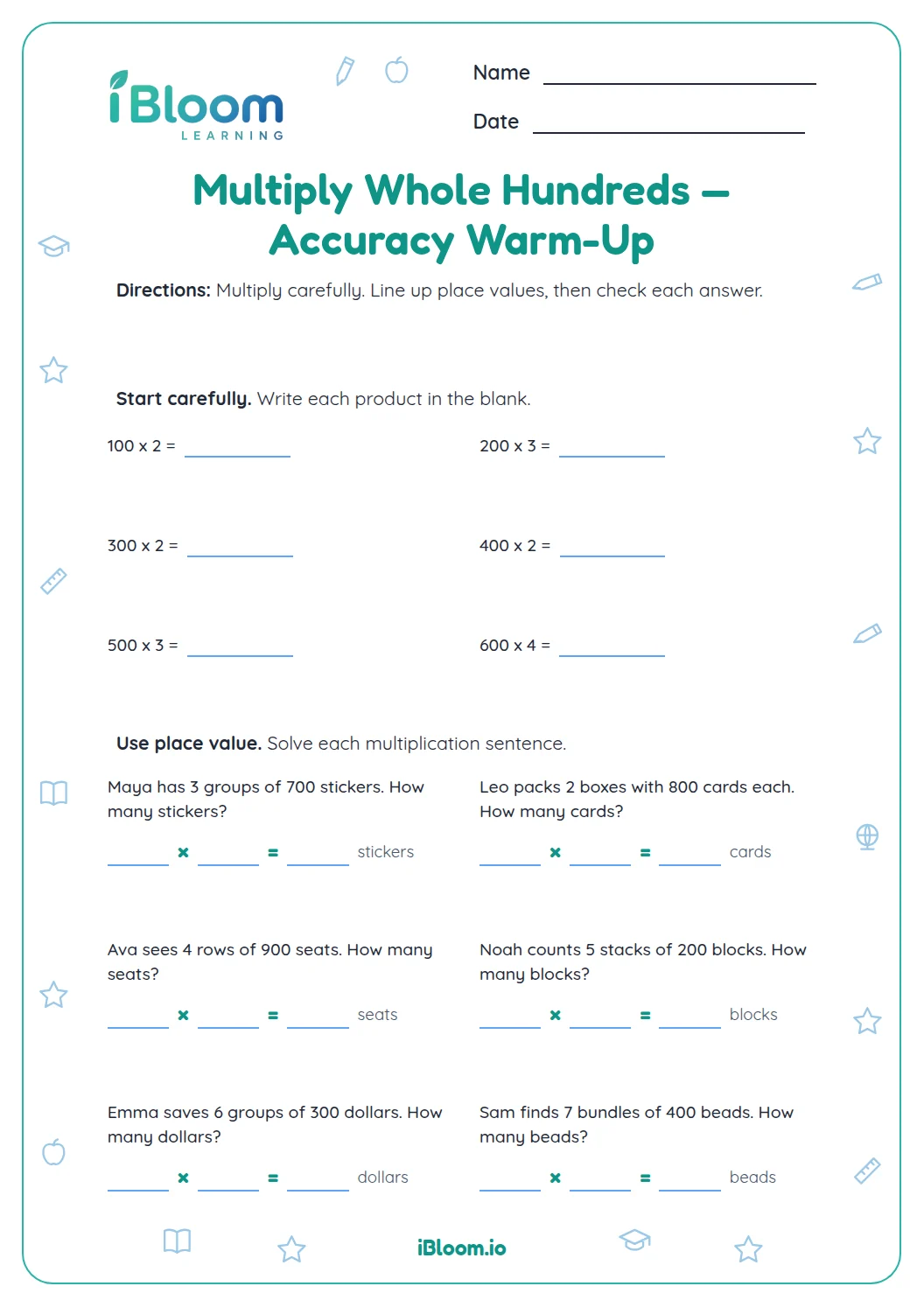
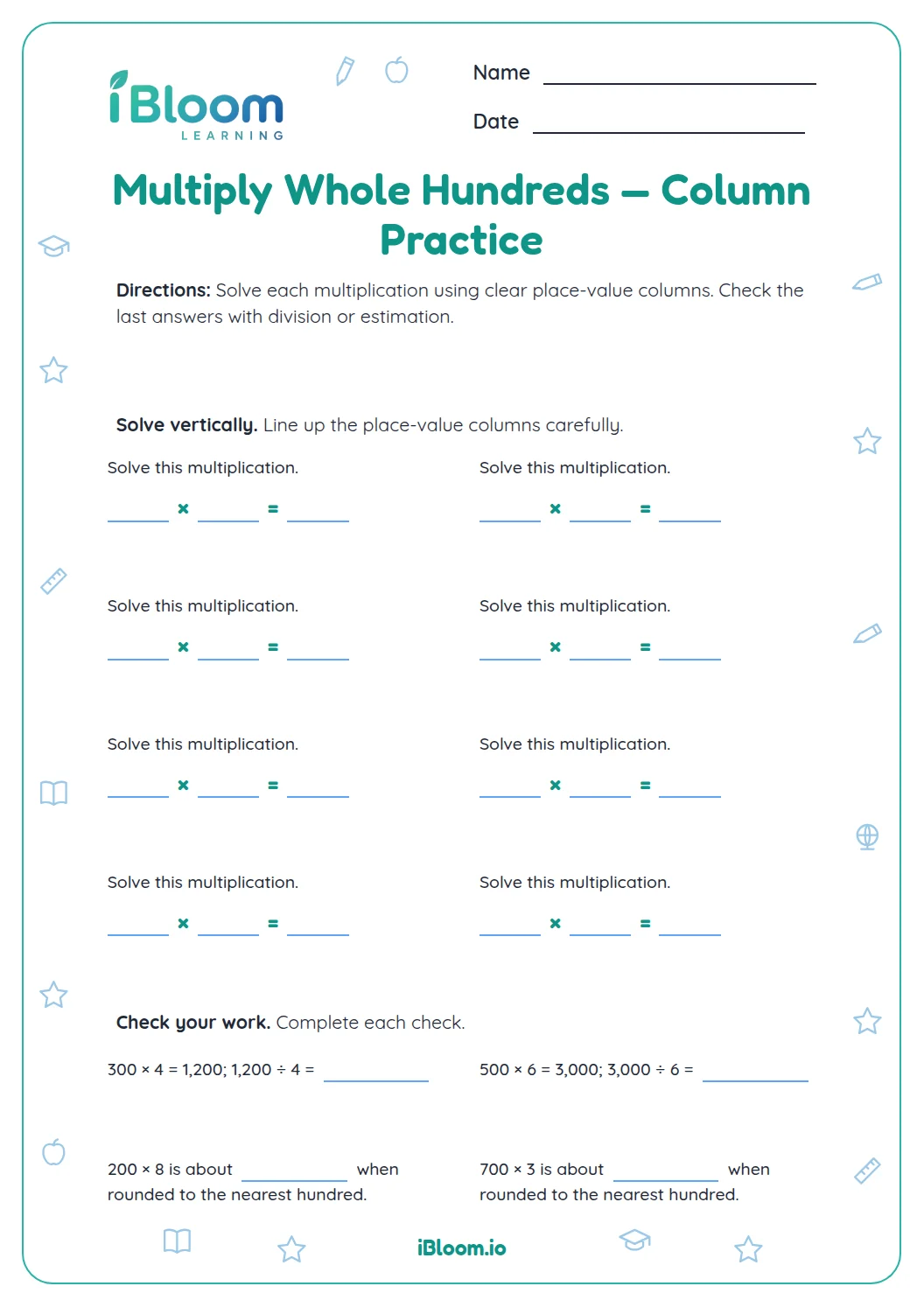
This Grade 4 multiplication worksheet gives students 15 problems with a multiple of ten as one factor. Students begin with tens times tens, then multiply a multiple of ten by a two-digit number and apply the pattern to four short situations. It practices Common Core 4.NBT.B.5, using place-value strategies and properties of operations to multiply whole numbers.
Aligned to 4.NBT.B.5
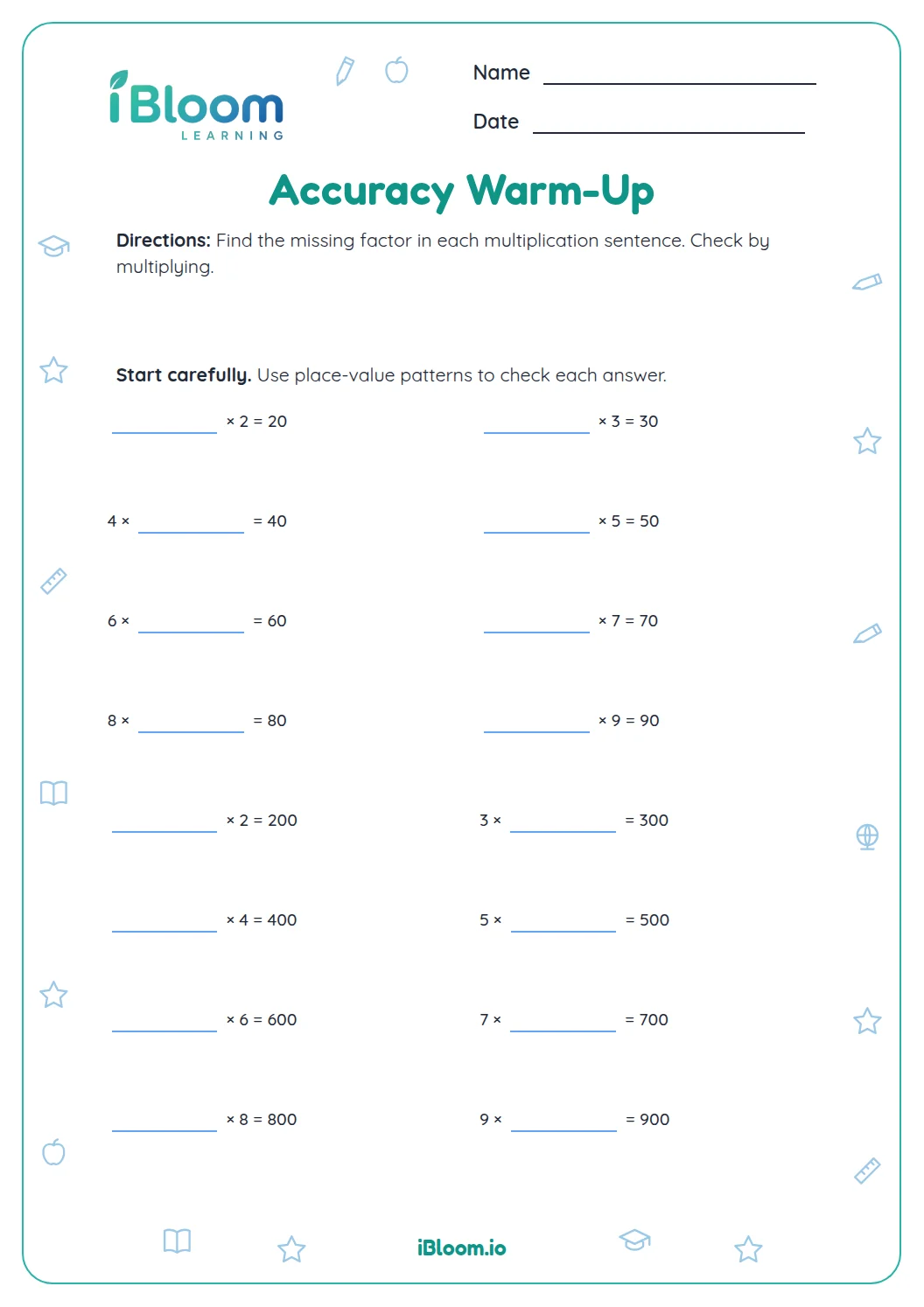
How do you solve accuracy warm-up problems?
Multiply the nonzero digits, then track the place value. With 30 × 40, calculate 3 × 4 = 12 and account for two factors of ten to get 1,200.
- 130 × 40
- 23 × 4 = 12; two tens factors give 1,200
What will students practice on the page?
The 15 questions move from tens times tens to a multiple of ten times a two-digit number, then to four equal-groups situations. All quantities appear on the student page.
How can an adult use the answer key?
Have the student show work for multi-digit problems, then compare both the answer and the method. If an answer differs, check place value and recompute with the inverse operation.
How to use this worksheet
- 1Read the operation and all numbers before calculating.
- 2Write intermediate steps in the open work area.
- 3Keep digits aligned by place value when using a written method.
- 4Estimate first when the problem asks for a reasonable result.
- 5Check division with multiplication or multiplication with a related fact.
- 6Use the answer key after the student has completed the page.
Common mistakes and quick fixes
The mistake
Losing track of a zero or place value.
The fix
Estimate the size first, then check each digit in the written work.
The mistake
Using a different operation from the printed sign or story.
The fix
Circle the operation clue and say the matching number sentence aloud.
The mistake
Stopping without checking a quotient or product.
The fix
Use the inverse operation to see whether the original numbers are recovered.
Common Core alignment
The questions practice use place-value strategies and properties of operations to multiply whole numbers.
Use place-value strategies and properties of operations to multiply whole numbers.
On this sheet: Use place-value strategies and properties of operations to multiply whole numbers.
Show the official wordingHide the official wording
Multiply a whole number of up to four digits by a one-digit whole number, and multiply two two-digit numbers, using strategies based on place value and the properties of operations. Illustrate and explain the calculation by using equations, rectangular arrays, and/or area models.
What to practice next
Make more practice
Further reading
Questions parents and teachers ask
How do you multiply two whole tens?
Multiply the nonzero digits, then count the tens in both factors. For 30 × 40, 3 × 4 = 12 and the two tens factors make 1,200. Estimate first to check that the product is sensible. This also helps students notice whether their answer makes sense in the original problem.
What changes in the second part?
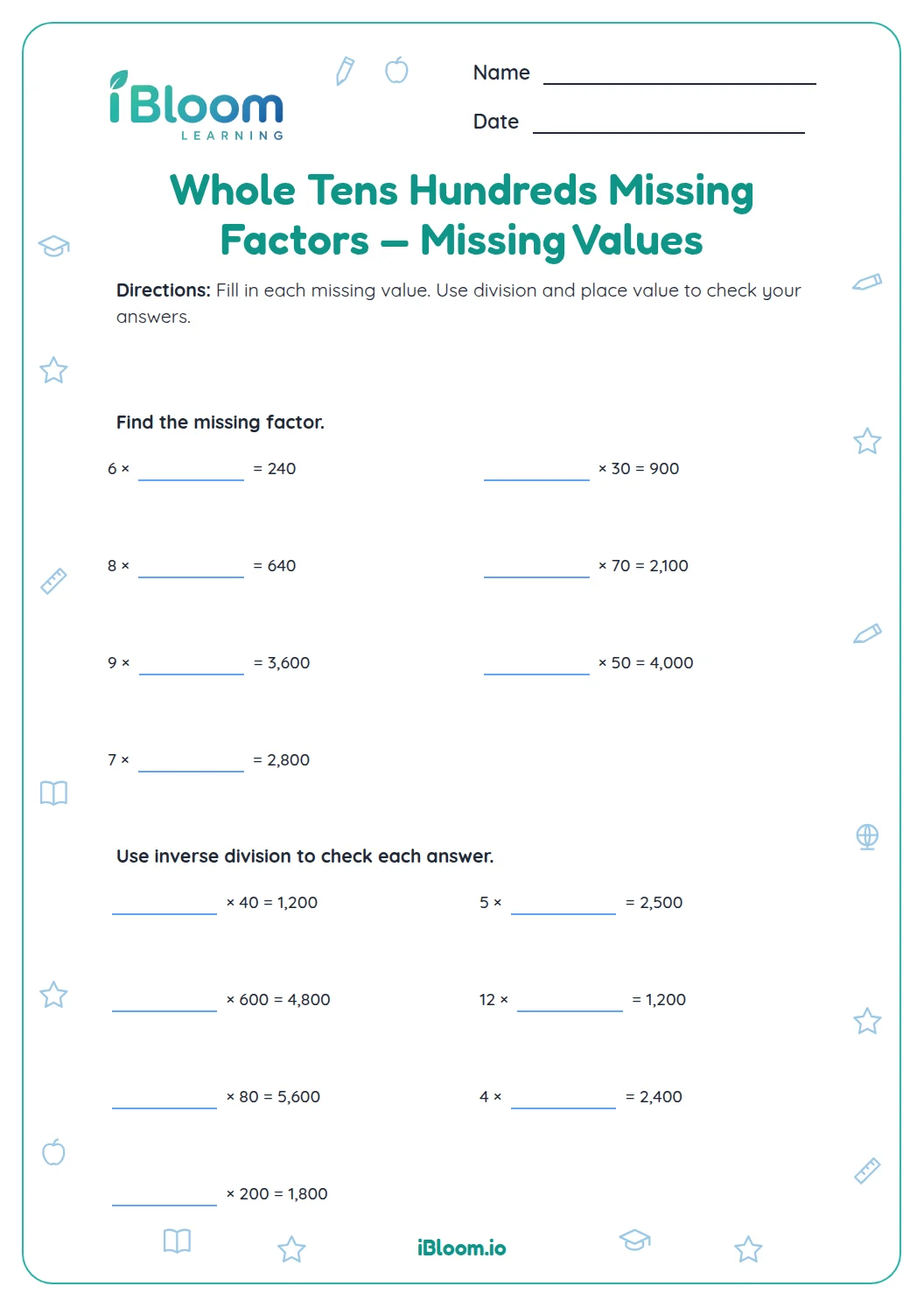
One factor is a multiple of ten and the other is a two-digit number. Multiply the two-digit number by the nonzero digit, then account for the ten. Breaking apart the factor can help keep place value clear. This also helps students notice whether their answer makes sense in the original problem.
How many questions are on this warm-up?
There are 15 questions in three parts: six tens-times-tens products, five larger products, and four equal-groups situations with whole-number answers. The sequence builds from direct calculation to applying the same pattern. This also helps students notice whether their answer makes sense in the original problem.
What does the answer key include?
The separate two-page key gives an answer for each of the 15 questions. For a missed item, check both the basic product and the place value. Rework the calculation before looking at the key to find the slip. This also helps students notice whether their answer makes sense in the original problem.
How can students check a multiplication result?
Estimate first, then use a related fact or split a factor into tens and ones. For example, 30 × 24 equals 3 × 24 tens, or 720. The estimate helps catch a missing zero or other place-value error. This also helps students notice whether their answer makes sense in the original problem.