Free printable practice
Subtraction Facts Practice Activities
Printable subtraction fact drills for practicing facts under 20, zero and one facts, vertical and horizontal formats, missing numbers, tables, and circle drills.
Explore Subtraction Facts
Practice that builds confidence
What students practise
In Math > Math Drills > Subtraction Facts, children build quick, accurate recall of basic subtraction facts. They practise subtracting within 10 and under 20, including zeros and ones, twos and threes, fours and fives, sixes and sevens, and eights and nines.
The printable activities include horizontal and vertical problems, ordered subtraction tables, mixed tables, circle drills, no-regrouping practice, and missing minuend or subtrahend questions. The collection helps children move from careful counting to confident fact fluency.
These subtraction facts worksheets focus on the small facts children use constantly in later math: 9 - 4, 13 - 7, 18 - 9, and similar problems under 20. Early pages isolate helpful patterns such as subtracting 0 and 1, while later pages mix facts so children must choose a strategy rather than rely on order.

Formats that build flexibility
Children see subtraction in several forms: horizontal equations, vertical equations, circle drills, ordered tables, and summary review pages. This matters because a child who knows 12 - 5 in one layout may hesitate when the same fact appears in a table or with a missing number. Missing minuend and subtrahend practice, such as ___ - 4 = 6 or 10 - ___ = 3, strengthens the link between subtraction and the parts of a whole.
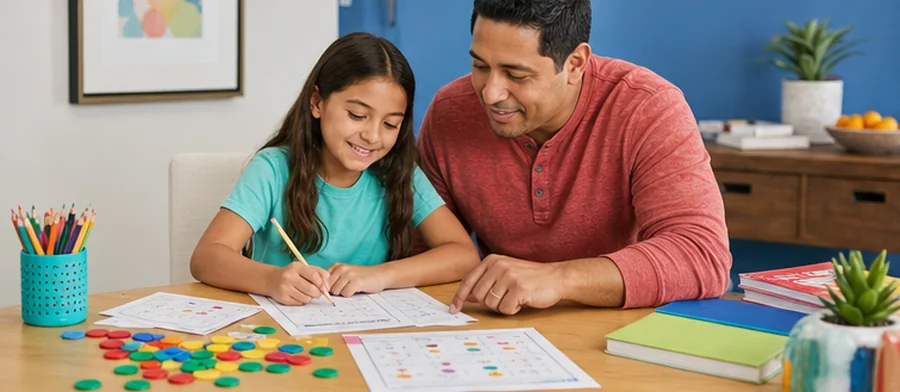
A simple parent routine
At home, choose one focused page first, such as subtract twos and threes or numbers under 10. Ask your child to solve the first few aloud: "Start at 8, take away 3, land on 5." Then let them complete a short section independently. End by checking only the missed facts and writing each as a related addition fact, for example 11 - 6 = 5 and 5 + 6 = 11.
Classroom uses
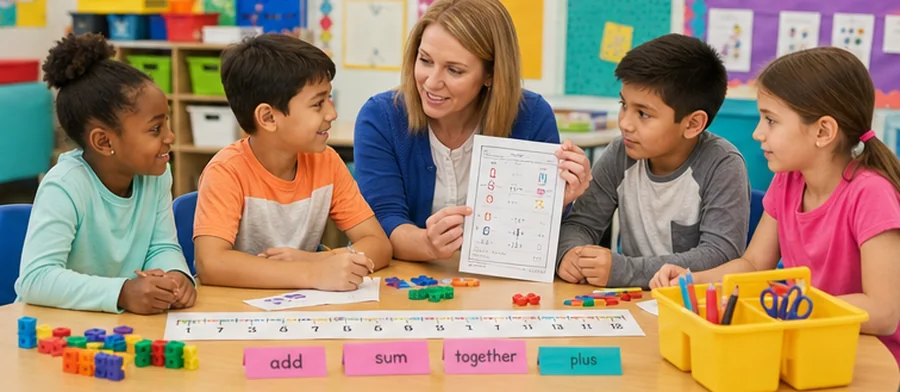
Teachers can use these printables for morning warm-ups, math centers, fluency folders, quick checks, or small-group reteaching. Ordered tables are useful for noticing patterns, while mixed horizontal and vertical pages are better for independent fact recall. Circle drills can add variety without changing the core skill.
Common errors to watch for
Some children reverse the numbers and treat 5 - 9 like 9 - 5. Others count the starting number as the first number taken away, leading to answers that are off by one. Missing-number problems can also cause confusion because the blank is not always the answer. Encourage students to read the whole equation before solving.
Free printable PDF download
Use this subtraction facts worksheet page to preview the activity, print it, or download it as a PDF for quick practice. It works well for homework, homeschool lessons, tutoring, morning work, revision, and classroom centers.
Answers and answer key support
After the child completes the worksheet independently, parents and teachers can use the answer support or answer key information to check the work, review mistakes, and choose the next practice step.
Why iBloom worksheets help
The pages progress from narrow fact families to mixed review, giving children enough repetition without making every sheet feel identical. A child-friendly strategy is: "Think add to subtract." For 14 - 8, ask, "8 plus what makes 14?" This keeps subtraction connected to known addition facts and supports faster recall.
Helpful answers
Frequently asked questions
What subtraction facts are included in this collection?
The worksheets cover basic subtraction facts within 10 and under 20, including subtracting zeros and ones, twos and threes, fours and fives, sixes and sevens, and eights and nines.
Do the worksheets use both horizontal and vertical subtraction?
Yes. Children practise the same facts in horizontal equations, vertical equations, tables, and circle drills so they can recognize subtraction in different layouts.
What are missing minuend and subtrahend problems?
A missing minuend problem has the first number missing, such as ___ - 3 = 6. A missing subtrahend problem has the number being taken away missing, such as 9 - ___ = 4.
Are these subtraction worksheets meant for regrouping practice?
No. This page focuses on subtraction facts and no-regrouping practice, mainly with numbers under 20, so children can strengthen recall before moving into larger subtraction.
How can I help a child who counts every subtraction fact?
Start with one fact group at a time and connect each subtraction fact to addition. For example, for 13 - 7, ask, "7 plus what makes 13?" This helps the child move from counting toward fact recall.
Is this subtraction facts worksheet free?
Yes. You can preview it for free and use the printable worksheet for home or classroom practice.
Can I download this subtraction facts worksheet as a PDF?
Yes. Use the worksheet download option to save a printable PDF, or print the worksheet directly from the page.
Does this subtraction facts worksheet include answers or an answer key?
When the activity has fixed answers, iBloom includes answer support so parents and teachers can check the completed worksheet.