Free printable practice
3 Digit Number From Parts Practice Activities
Class 2 children build 3-digit numbers from hundreds, tens and ones using clear place value practice.
Free printable worksheet PDFs
Preview every available page, then download the free worksheet PDF for home, homeschool, tutoring, or classroom practice.
Preview the exact activity before downloading it.
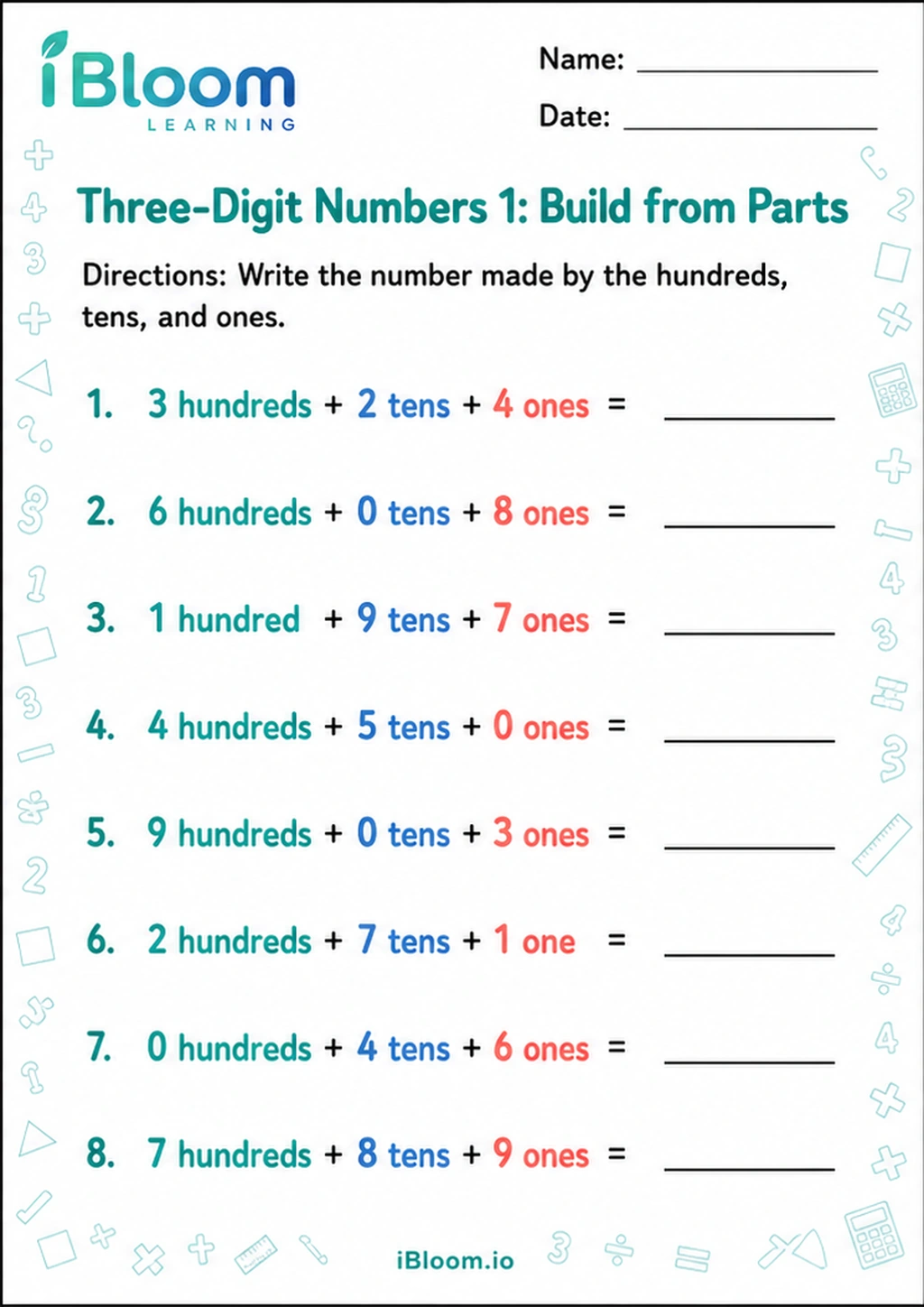 Three-Digit Numbers 1: Build from PartsClass 2 printable practice for Three-Digit Numbers from Parts.Class 2Free PDF preview
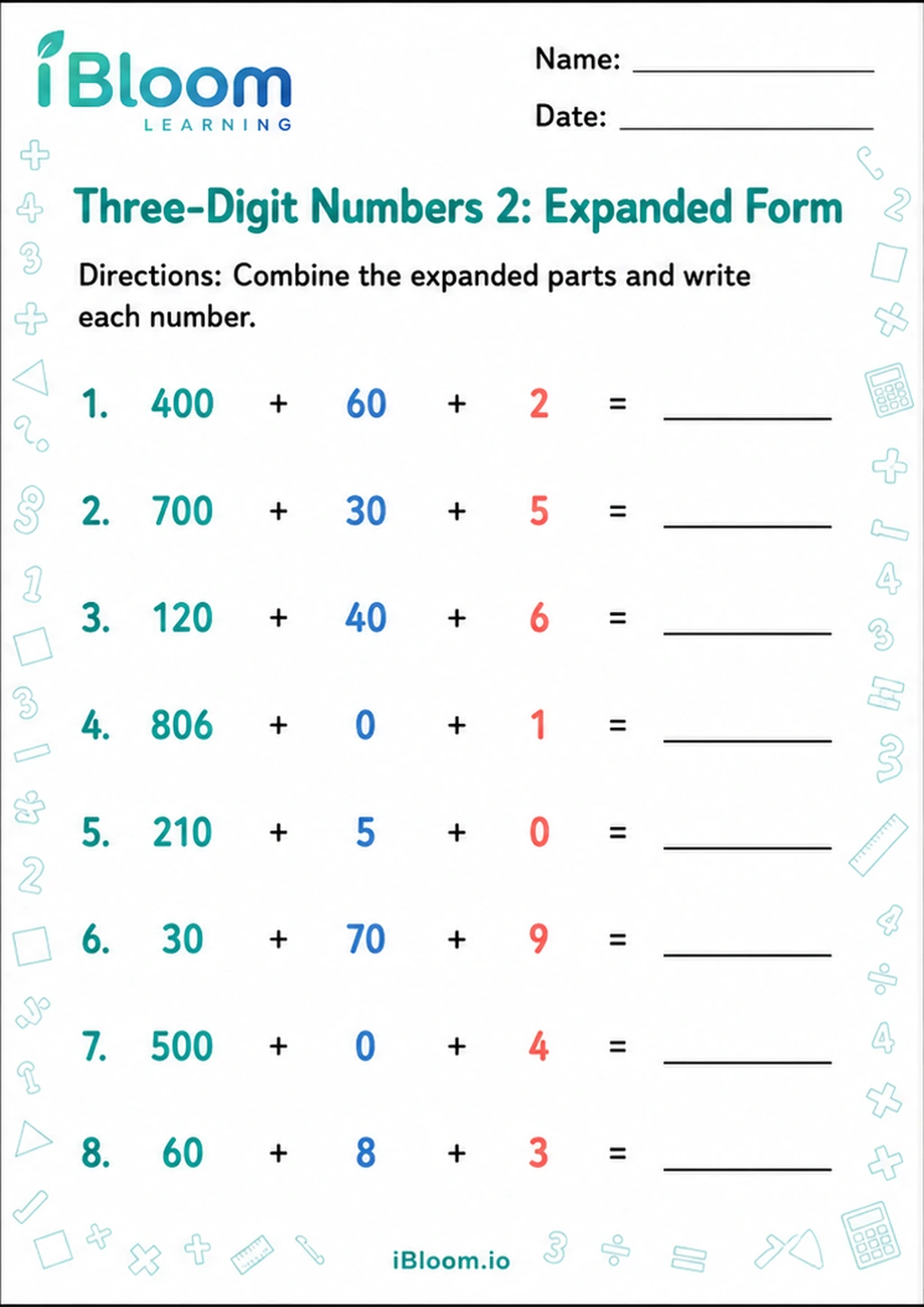 Three-Digit Numbers 2: Expanded FormClass 2 printable practice for Three-Digit Numbers from Parts.Class 2Free PDF preview
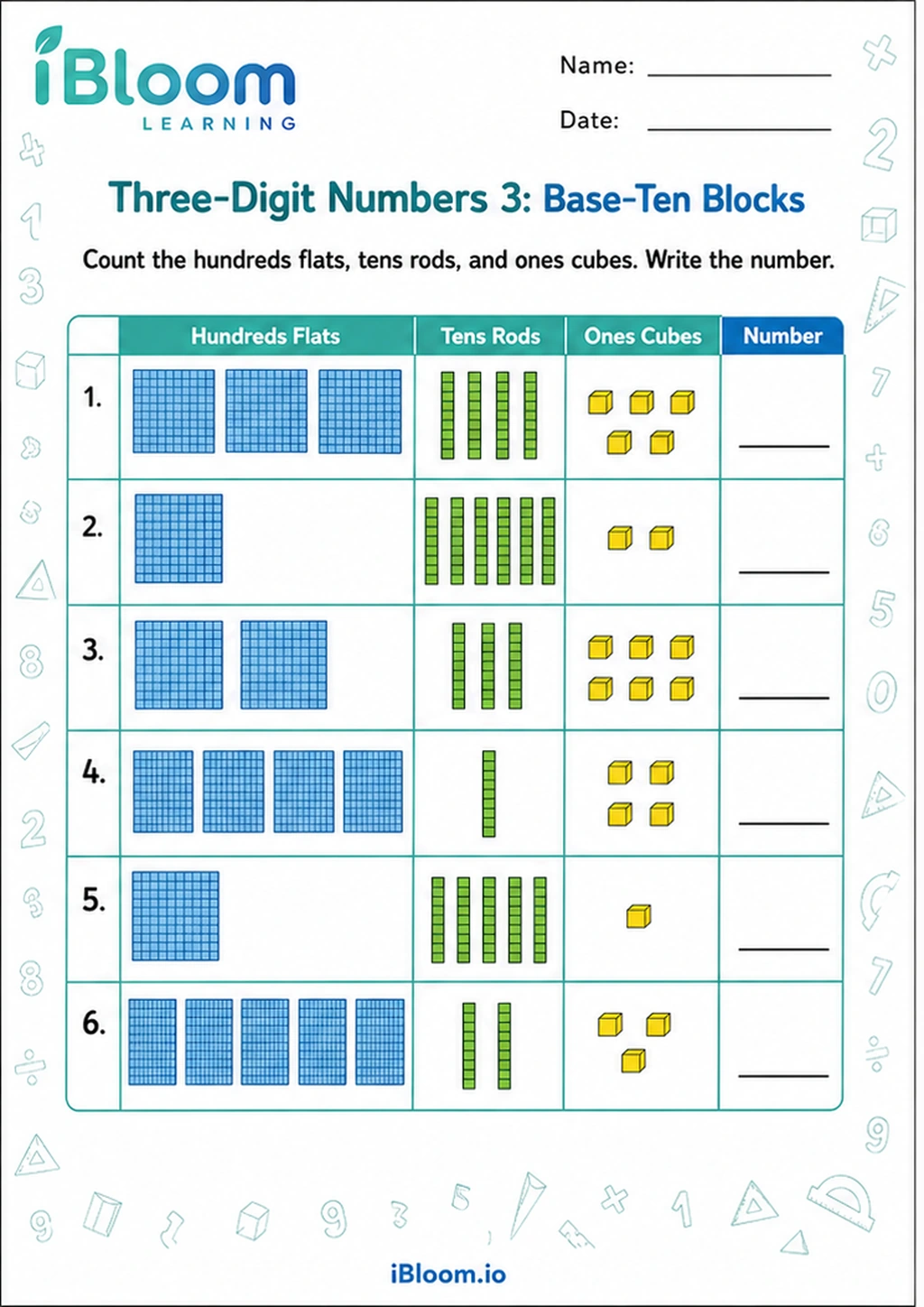 Three-Digit Numbers 3: Base-Ten BlocksClass 2 printable practice for Three-Digit Numbers from Parts.Class 2Free PDF preview
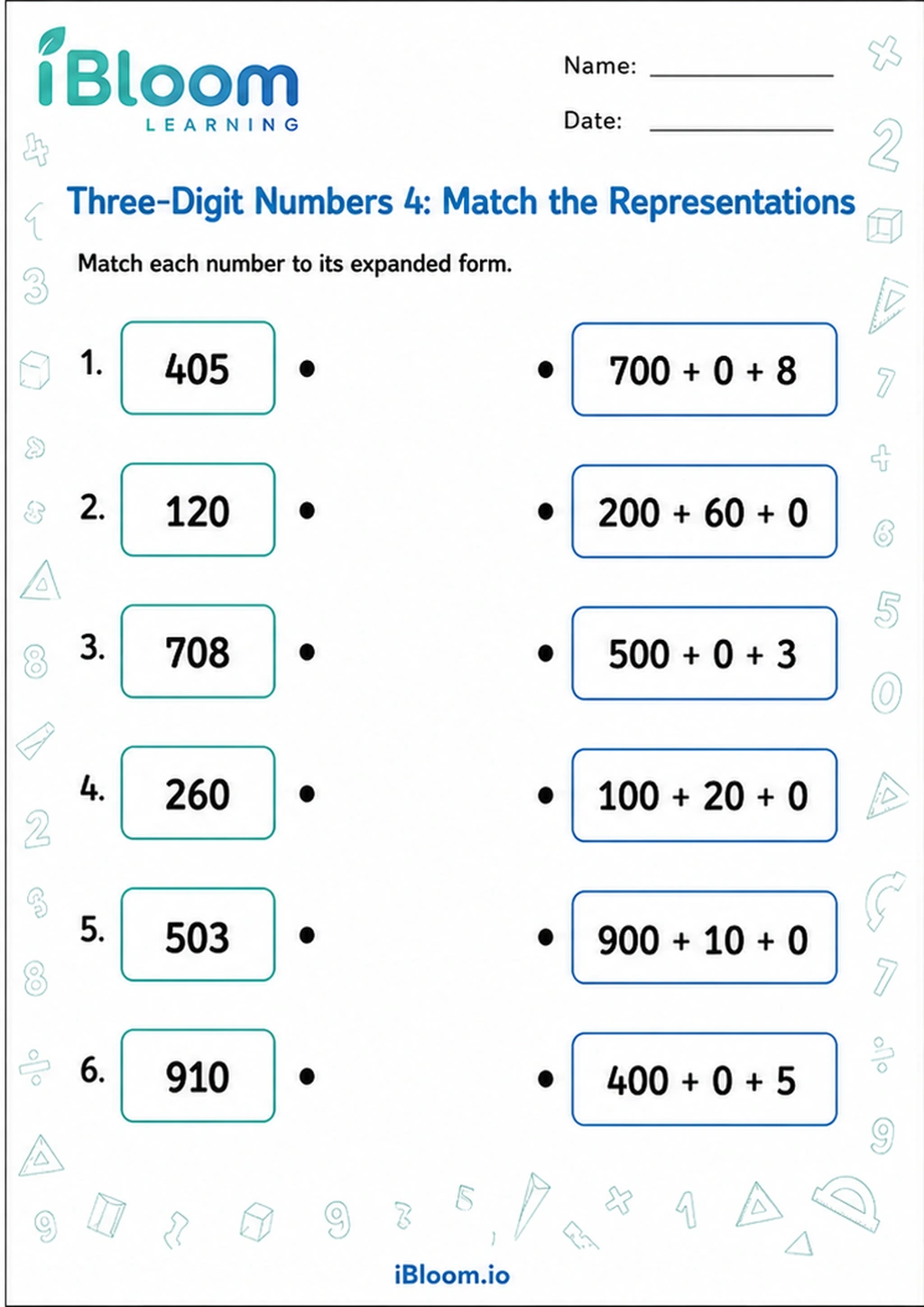 Three-Digit Numbers 4: Match the RepresentationsClass 2 printable practice for Three-Digit Numbers from Parts.Class 2Free PDF preview
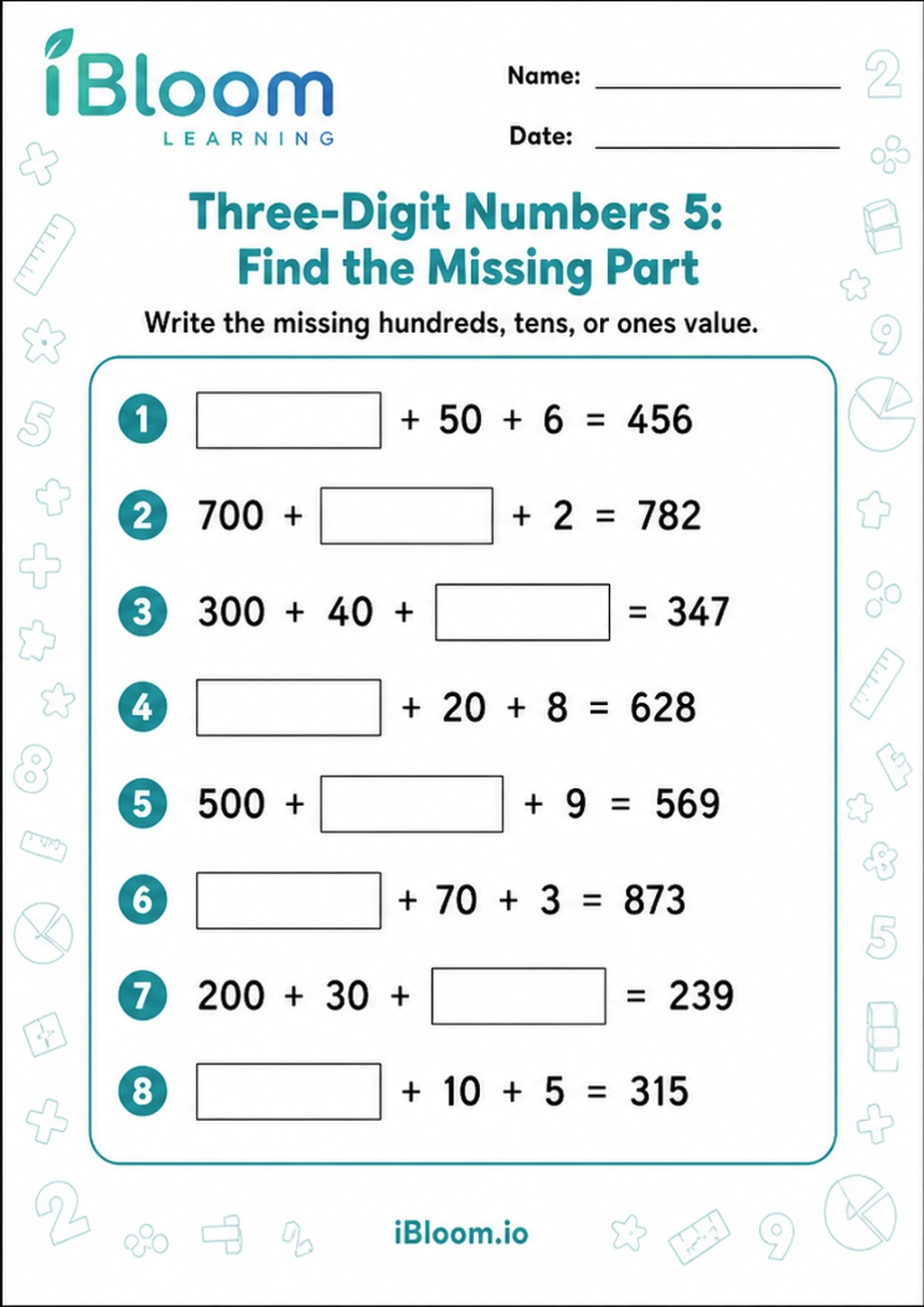 Three-Digit Numbers 5: Find the Missing PartClass 2 printable practice for Three-Digit Numbers from Parts.Class 2Free PDF preview
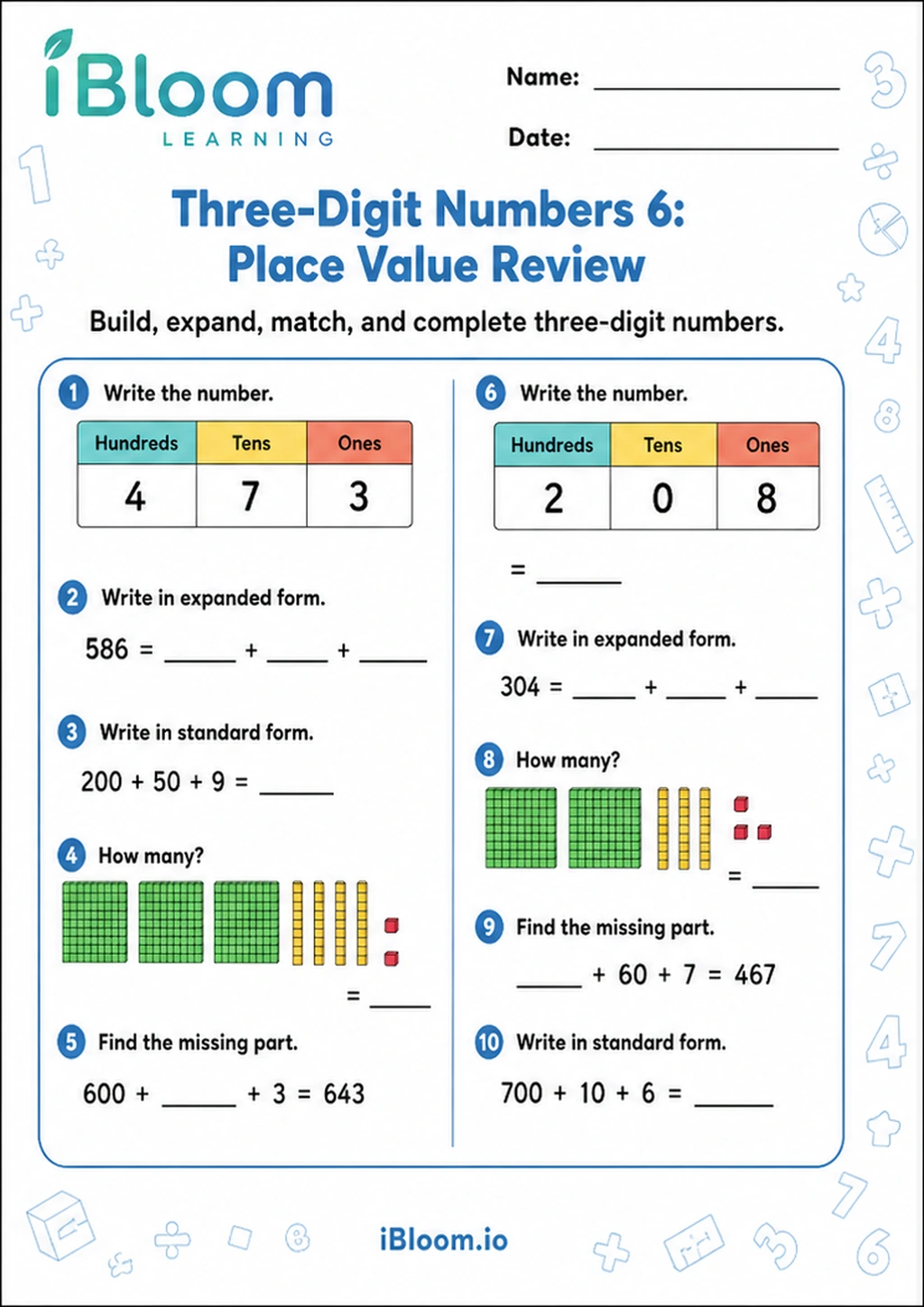 Three-Digit Numbers 6: Place Value ReviewClass 2 printable practice for Three-Digit Numbers from Parts.Class 2Free PDF preview
Practice that builds confidence
Understanding numbers from parts
These Class 2 maths worksheets help children make 3-digit numbers from parts such as hundreds, tens and ones. Children practise reading place value clues, combining parts, and writing the correct number in standard form.
The printable activities include expanded-form style prompts, number-building questions, and place value representations that strengthen understanding before children move on to comparing, ordering and rounding numbers.
A 3-digit number is made from hundreds, tens and ones. In this collection, children learn that 400 + 30 + 6 becomes 436, while 7 hundreds, 0 tens and 5 ones becomes 705. This is an important Class 2 place value skill because children must see both the value of each digit and its position in the number.

How the practice progresses
The worksheets begin with direct combinations of hundreds, tens and ones, then include missing or zero places so children do not simply join every visible digit. For example, 500 + 8 should be written as 508, not 58 or 5008. Questions may use words, numerals, or place value parts, helping children connect vocabulary such as hundreds, tens, ones, digit, value and number.
A simple home routine
Ask your child to say each part aloud before writing the number: “6 hundreds, 2 tens, 9 ones.” Then ask, “Which digit goes in the hundreds place? Which digit goes in the tens place? Which digit goes in the ones place?” For extra practice, use coins, sticks, buttons or drawings as groups of hundreds, tens and ones, and let your child build numbers like 318, 460 and 702.

Classroom uses for teachers
Teachers can use these printables for maths centres, morning practice, small-group reteaching or quick checks after a place value lesson. They also work well with base-ten blocks or place value charts: pupils can build the model first, write the expanded parts, and then record the final 3-digit number. This gives teachers a clear view of who understands the value of each place.

Common errors to watch for
Many children confuse the digit with its value, writing 4 tens as 4 instead of 40. Others omit zero in numbers such as 304 or reverse digits when moving from parts to standard form. Encourage children to line up the hundreds, tens and ones places and to check whether each place has a digit, even when the value is zero.
Free printable PDF download
Use this 3 digit number from parts worksheets class 2 page to preview the activity, print it, or download it as a PDF for quick practice. It works well for homework, homeschool lessons, tutoring, morning work, revision, and classroom centers.
Answers and answer key support
After the child completes the worksheet independently, parents and teachers can use the answer support or answer key information to check the work, review mistakes, and choose the next practice step.
Why iBloom worksheets help
iBloom worksheets focus on one skill at a time, so children can practise without being overloaded. The questions use varied but familiar formats to build confidence and accuracy. A child-friendly strategy is: “Read the parts, place the digits, check the places.” This short routine helps children turn place value parts into correct 3-digit numbers.
Helpful answers
Frequently asked questions
What does “3-digit number from parts” mean?
It means children combine place value parts to make one number. For example, 2 hundreds, 5 tens and 7 ones make 257.
Why is zero important in this skill?
Zero shows that a place has no tens or ones. For example, 6 hundreds and 4 ones must be written as 604, not 64.
Can these worksheets be used before rounding lessons?
Yes. Understanding hundreds, tens and ones helps children later compare numbers and round them more confidently.
How can I help my child if they write 300 + 20 + 5 as 300205?
Use a place value chart with three boxes: hundreds, tens and ones. Ask your child to place only one digit in each box, then read the number as 325.
Are these worksheets suitable for extra maths practice at home?
Yes. They are designed for Class 2 children and give focused practice in forming 3-digit numbers from hundreds, tens and ones.
Is this 3 digit number from parts worksheets class 2 free?
Yes. You can preview it for free and use the printable worksheet for home or classroom practice.
Can I download this 3 digit number from parts worksheets class 2 as a PDF?
Yes. Use the worksheet download option to save a printable PDF, or print the worksheet directly from the page.
Does this 3 digit number from parts worksheets class 2 include answers or an answer key?
When the activity has fixed answers, iBloom includes answer support so parents and teachers can check the completed worksheet.