Free printable practice
Subtracting Decimals Column 0 6 Decimal Digits Practice Activities
Printable Class 6 maths practice for subtracting decimals in columns, including numbers with 0 to 6 decimal places and careful regrouping.
Free printable worksheet PDFs
Preview every available page, then download the free worksheet PDF for home, homeschool, tutoring, or classroom practice.
Preview the exact activity before downloading it.
 Subtracting Decimals Column 0 6 Decimal Digits — Concept FoundationsConcept Foundations for subtracting decimals column 0 6 decimal digits in Class 6. Identify decimal places, align decimal points, and solve subtraction sentences from tenths through millionths with regrouping.Class 6Free PDF preview
 Subtracting Decimals Column 0 6 Decimal Digits — Visual ModelsVisual Models for subtracting decimals column 0 6 decimal digits in Class 6. Use place-value grids and decimal subtraction sentences to model, regroup, and solve decimal differences from 0 to 6 decimal places.Class 6Free PDF preview
 Subtracting Decimals Column 0 6 Decimal Digits — Guided PracticeGuided Practice for subtracting decimals column 0 6 decimal digits in Class 6. Subtract each decimal in aligned columns, starting with simple examples and progressing to six decimal places with regrouping.Class 6Free PDF preview
 Subtracting Decimals Column 0 6 Decimal Digits — Independent PracticeIndependent Practice for subtracting decimals column 0 6 decimal digits in Class 6. Solve 12 decimal subtraction problems by aligning decimal points, adding zeros when needed, and regrouping carefully.Class 6Free PDF preview
 Subtracting Decimals Column 0 6 Decimal Digits — Real-World ProblemsReal-World Problems for subtracting decimals column 0 6 decimal digits in Class 6. Solve 12 real-world decimal subtraction problems, lining up decimal points and regrouping carefully.Class 6Free PDF preview
 Subtracting Decimals Column 0 6 Decimal Digits — Reasoning ChallengeReasoning Challenge for subtracting decimals column 0 6 decimal digits in Class 6. Solve decimal subtraction problems, find missing digits, and check which column answers are correct.Class 6Free PDF preview
Practice that builds confidence
What this skill builds
These Class 6 maths worksheets help children practise subtracting decimals written in vertical columns, with numbers that may have 0, 1, 2, 3, 4, 5, or 6 digits after the decimal point. The focus is on lining up decimal points, using placeholder zeroes, and regrouping accurately.
The printable activities include column subtraction problems with mixed decimal lengths, so learners must think about place value before subtracting. They are useful for revision in the Decimals Addition Subtraction chapter, homework practice, or extra support after classroom teaching.
Subtracting decimals in columns strengthens place value understanding beyond whole numbers. Children learn that tenths, hundredths, thousandths, and smaller decimal places must be matched correctly before subtracting. A problem such as 8.4 − 2.375 is not solved by matching the last digits; it needs 8.400 − 2.375, with each place value in its own column.

Progression in the worksheets
The practice moves through decimals of different lengths, from numbers with no decimal digits to numbers with up to 6 decimal digits. This variety matters because Class 6 learners often handle 5.68 − 2.13 confidently, but hesitate when the numbers look uneven, such as 12 − 3.4567 or 9.030005 − 4.12. The activities encourage pupils to rewrite, align, subtract, and check reasonableness.
Parent routine at home
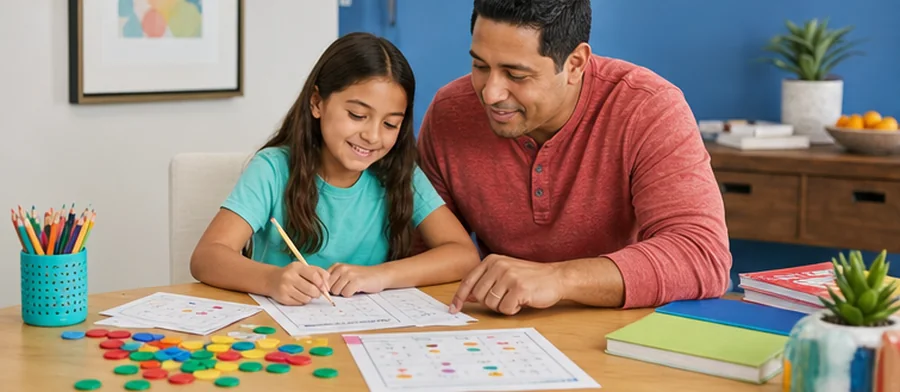
Ask your child to read each number aloud by place value, then draw a vertical line through the decimal points before subtracting. Encourage them to add zeroes only after the last decimal digit, not inside the number. After every few sums, ask, “Should the answer be close to the larger number, or much smaller?” This quick estimate helps catch misplaced decimals.
Classroom use for teachers
Teachers can use these printables for independent practice, maths centres, quick revision after teaching decimal subtraction, or remedial groups. One useful activity is to have pupils solve the same question twice: first in the column format and then by explaining the regrouping in words. This reveals whether they understand the process or are only following steps.

Common errors to watch for
The most common mistakes are not aligning decimal points, borrowing across zeroes incorrectly, dropping placeholder zeroes too early, and placing the decimal point in the answer by counting digits instead of copying the aligned column. Some children also subtract the smaller digit from the larger digit in each column, which hides regrouping errors.
Free printable PDF download
Use this Class 6 subtracting decimals in columns worksheet page to preview the activity, print it, or download it as a PDF for quick practice. It works well for homework, homeschool lessons, tutoring, morning work, revision, and classroom centers.
Answers and answer key support
After the child completes the worksheet independently, parents and teachers can use the answer support or answer key information to check the work, review mistakes, and choose the next practice step.
Why iBloom worksheets help
The questions are focused on one exact skill: decimal subtraction in columns with 0 to 6 decimal digits. The mixed decimal lengths make pupils practise the real decision-making needed in Class 6 maths. A child-friendly strategy is: line up the dots, fill the blanks with zeroes, subtract from right to left, and bring the decimal point straight down.
Helpful answers
Frequently asked questions
What does 0 to 6 decimal digits mean in these worksheets?
It means the questions may include whole numbers as well as decimals with up to six digits after the decimal point, such as 7, 4.8, 12.345, or 9.000126.
Should children add zeroes before subtracting decimals?
Yes, when the decimal lengths are different, children can add placeholder zeroes at the end of the decimal part. For example, 6.2 can be written as 6.200 before subtracting 1.375.
Why is decimal point alignment important in column subtraction?
Aligning decimal points keeps the same place values in the same column. Without alignment, tenths may be subtracted from hundredths or thousandths, leading to an incorrect answer.
Do these worksheets include regrouping across zeroes?
Yes, the mixed decimal subtraction practice can include regrouping, including cases where children need to borrow across one or more zeroes.
How can I help my child check a decimal subtraction answer?
Ask them to estimate first and then add the answer back to the smaller number. If the sum returns to the starting number, the subtraction is likely correct.
Is this Class 6 subtracting decimals in columns worksheet free?
Yes. You can preview it for free and use the printable worksheet for home or classroom practice.
Can I download this Class 6 subtracting decimals in columns worksheet as a PDF?
Yes. Use the worksheet download option to save a printable PDF, or print the worksheet directly from the page.
Does this Class 6 subtracting decimals in columns worksheet include answers or an answer key?
When the activity has fixed answers, iBloom includes answer support so parents and teachers can check the completed worksheet.