Free printable practice
Multiplication Facts Practice Activities
Printable maths drills for practising multiplication facts, times tables, missing factors, horizontal facts, and circle drills from 0 to 12.
Explore Multiplication Facts
Free printable worksheet PDFs
Preview every available page, then download the free worksheet PDF for home, homeschool, tutoring, or classroom practice.
Preview the exact activity before downloading it.
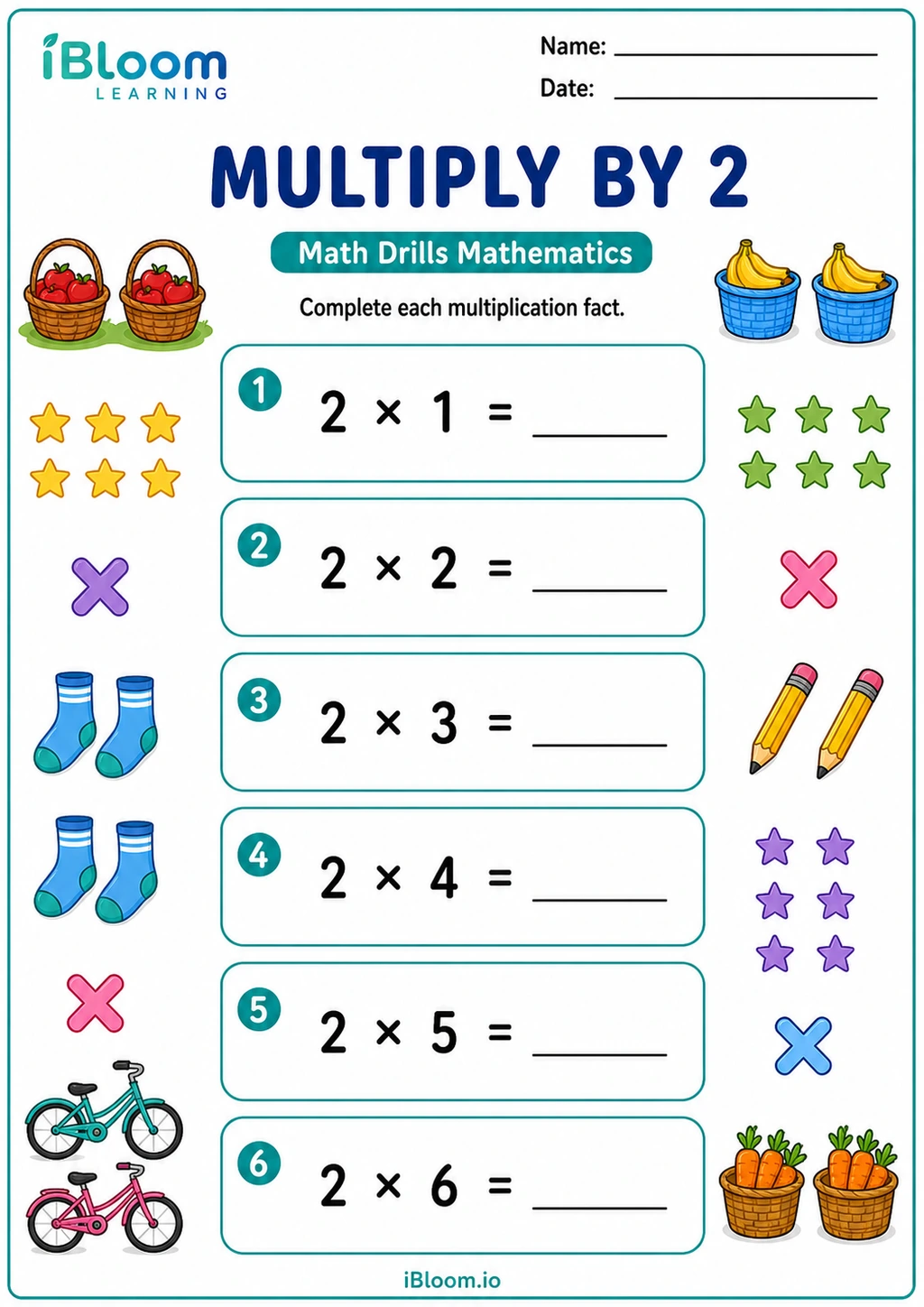 Multiply by 2Focused multiply by 2, 3, and 4 practice for Math Drills learners.Math DrillsFree PDF preview
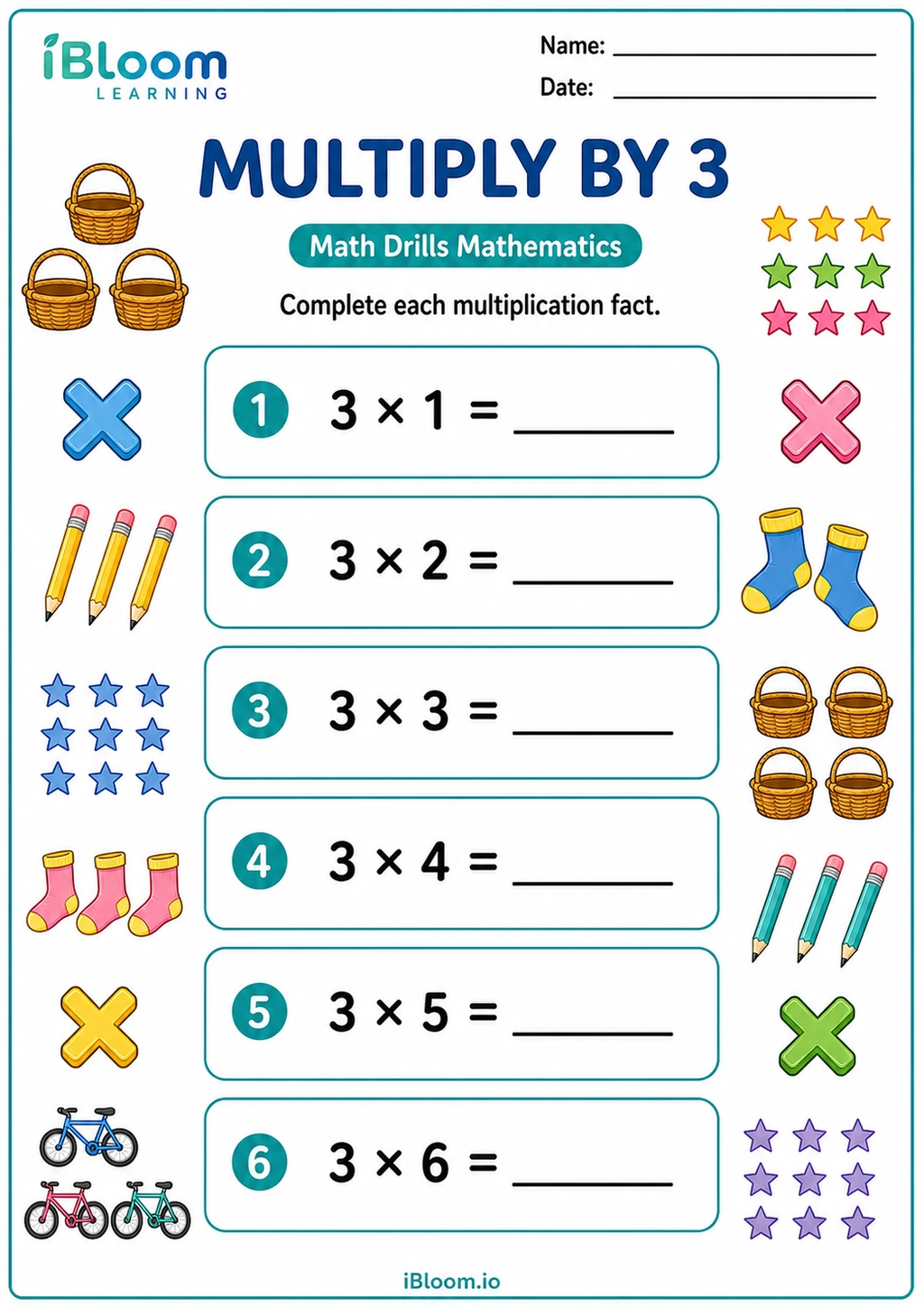 Multiply by 3Focused multiply by 2, 3, and 4 practice for Math Drills learners.Math DrillsFree PDF preview
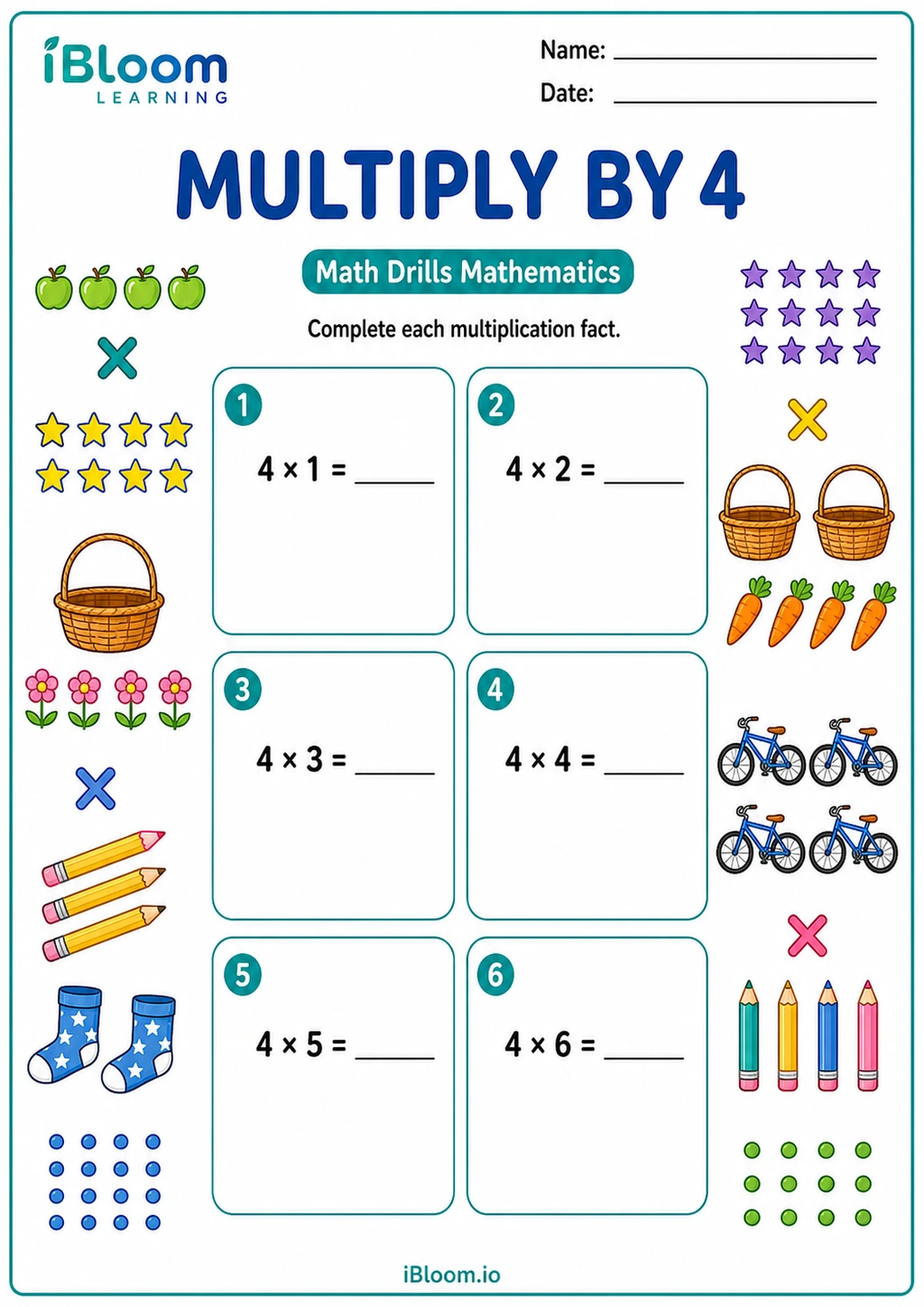 Multiply by 4Focused multiply by 2, 3, and 4 practice for Math Drills learners.Math DrillsFree PDF preview
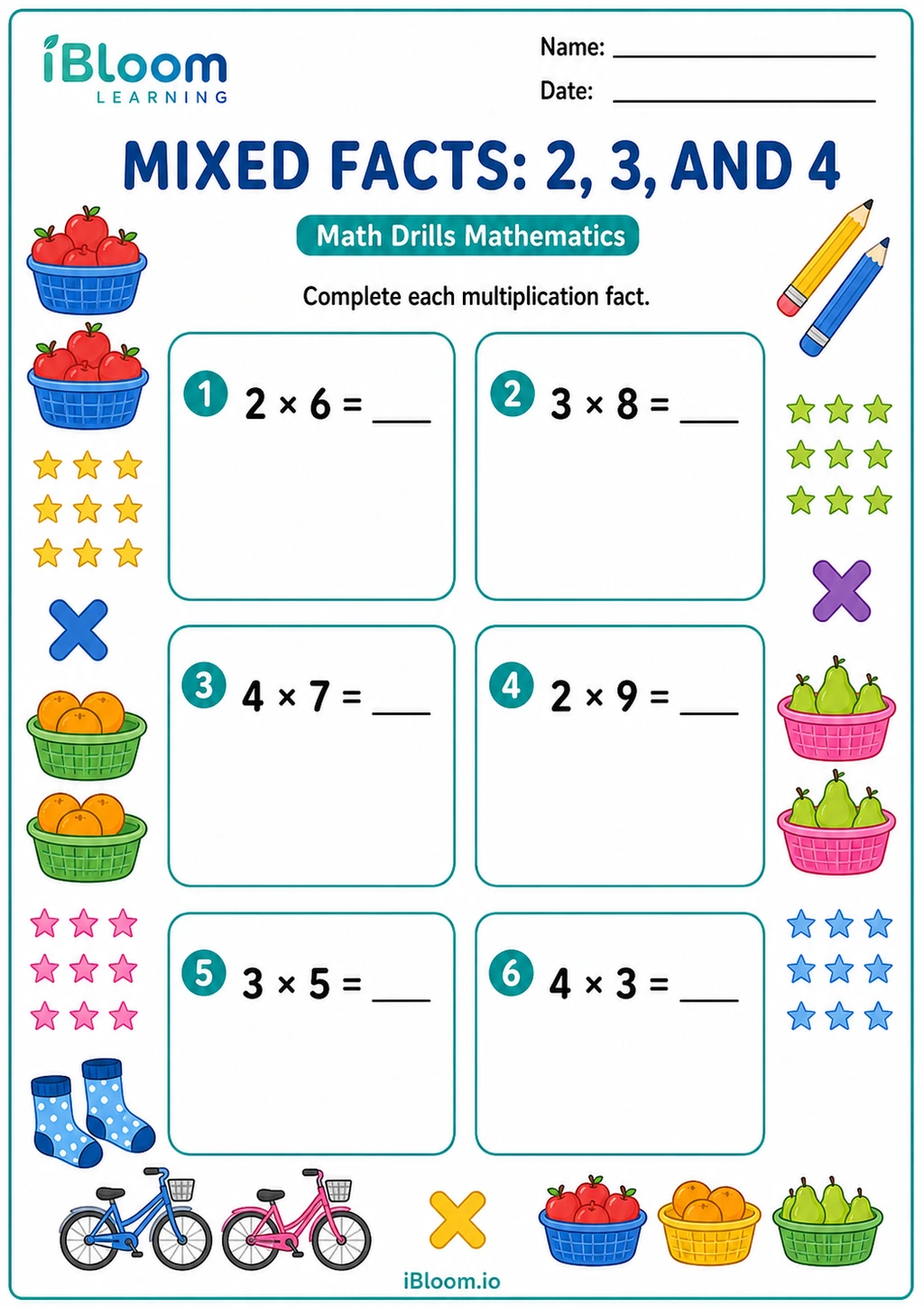 Mixed Facts: 2, 3, and 4Focused multiply by 2, 3, and 4 practice for Math Drills learners.Math DrillsFree PDF preview
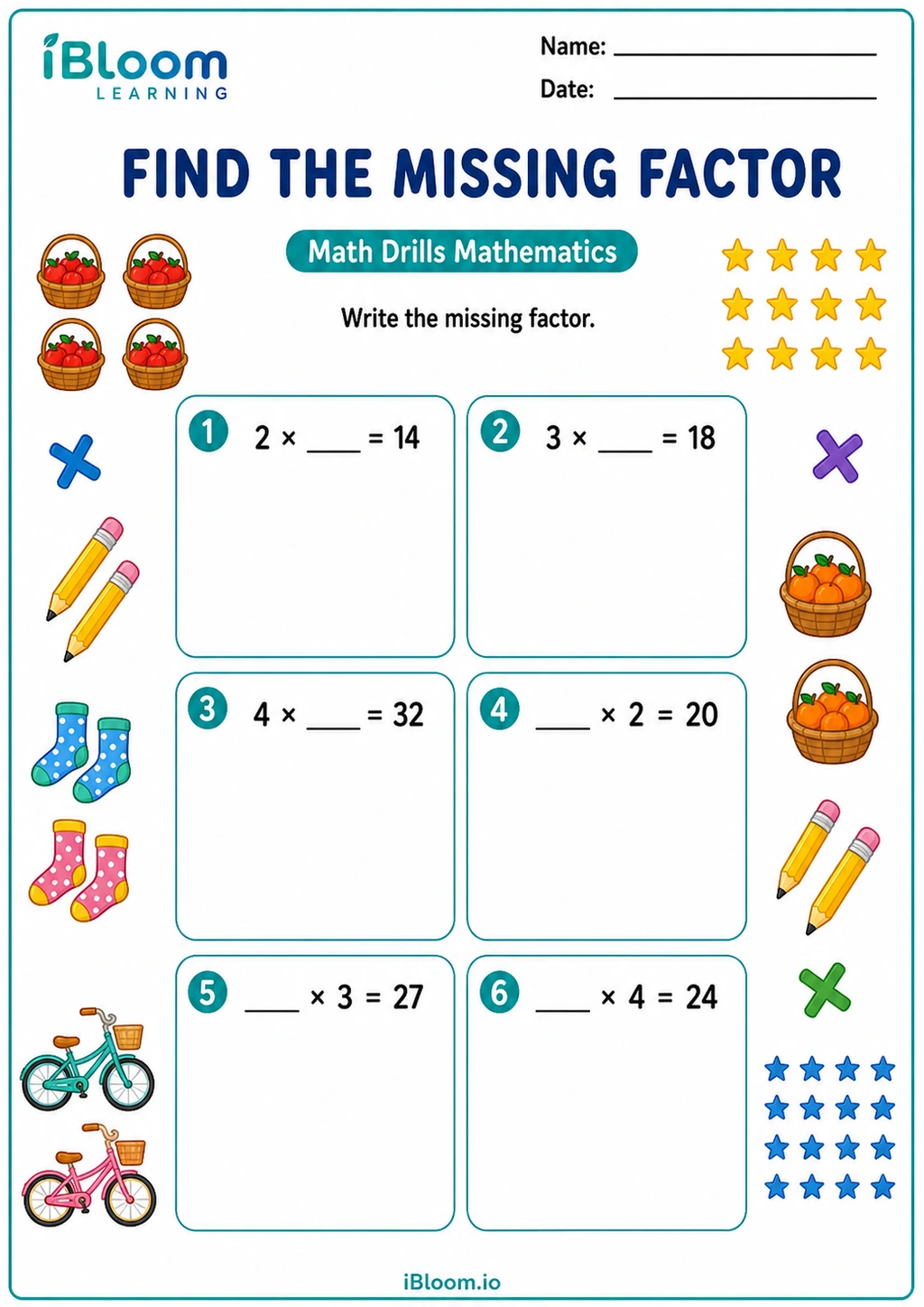 Find the Missing FactorFocused multiply by 2, 3, and 4 practice for Math Drills learners.Math DrillsFree PDF preview
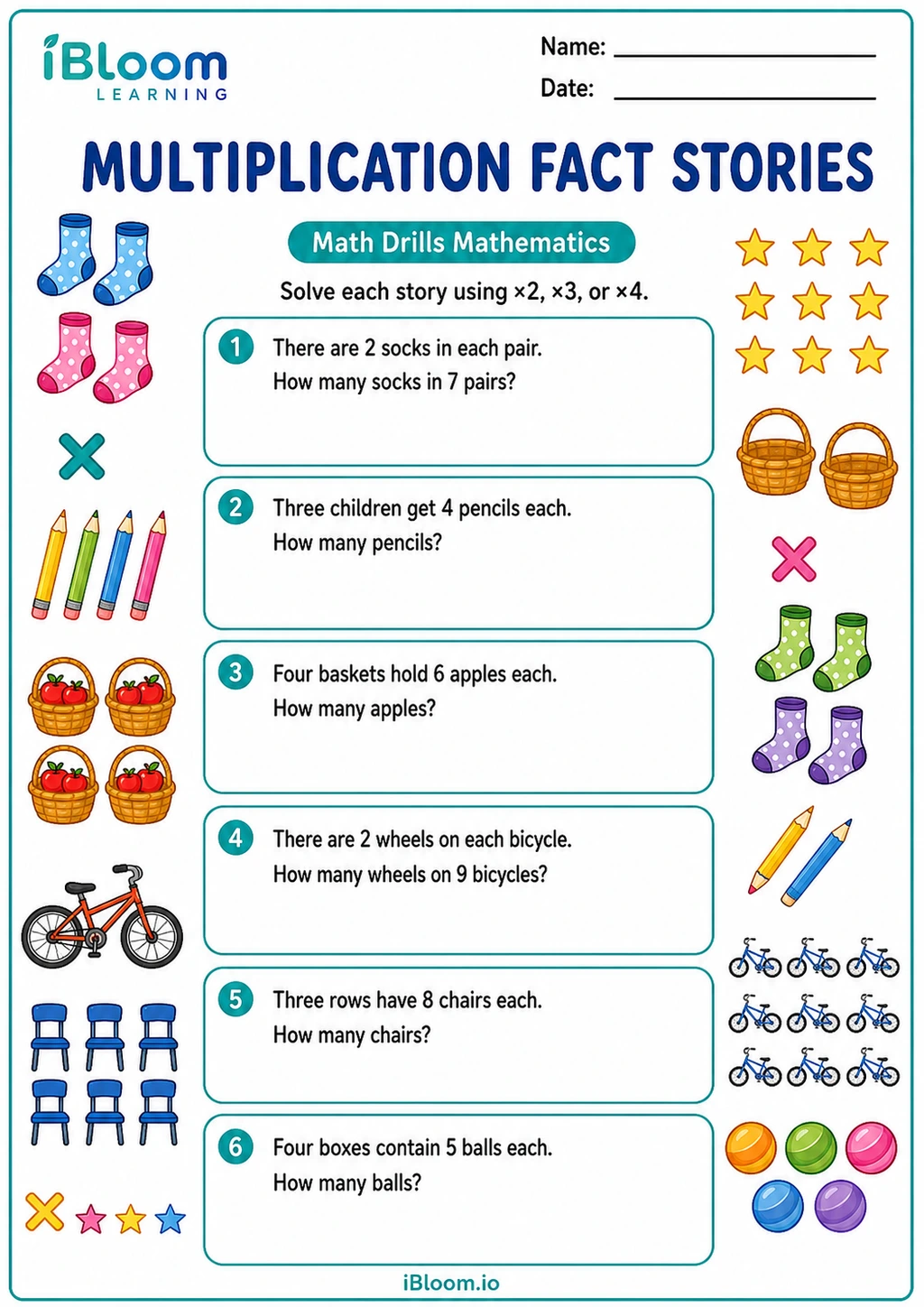 Multiplication Fact StoriesFocused multiply by 2, 3, and 4 practice for Math Drills learners.Math DrillsFree PDF preview
Practice that builds confidence
Build recall one table at a time
These Multiplication Facts worksheets help children build quick, accurate recall of times tables and related multiplication facts. The practice sits under Mathematics > Math Drills > Multiplication Facts and supports class-level fluency with tables from 0 to 12.
The printable activities include focused sheets for the 2, 3, 4, 5, 6, 7, 8, 9, 10, 11 and 12 times tables, mixed tables ordered 1-10 and 1-12, horizontal facts, missing factors, and multiplication circle drills to 10.
Children begin by strengthening familiar patterns such as multiply by 2, 5 and 10, then move into 3, 4 and 6, and later the trickier 7, 8, 9, 11 and 12 times tables. Single-table pages, such as the six times table or nine times table, let children notice patterns before they meet mixed facts.

Move from ordered to mixed practice
Ordered tables from 1-10 or 1-12 support confidence because the sequence is predictable. Mixed pages, such as times tables 2-12, seven eight times tables, and multiply by 10 11 12, ask children to retrieve facts without relying only on counting in order. This is where true fluency develops.
Understand the fact family idea
Missing factor worksheets connect multiplication with division thinking. For example, in 7 x __ = 56, children use the known fact 7 x 8 = 56. Horizontal facts to 10 and facts 0 to 5 help them read multiplication in different layouts instead of expecting every sum to appear in a table grid.
A simple home routine
Choose one target group for the week, such as four times table or eight times table. First, read the facts aloud together. Next, complete a short worksheet. Finally, ask your child to explain three answers using skip counting, equal groups, or a known nearby fact such as 6 x 8 helping with 7 x 8.

Classroom practice ideas
Teachers can use these printables for warm-ups, maths centres, revision folders, quick checks, or differentiated table practice. Circle drills to 10 work well for speed and attention, while missing factors help identify whether a child knows the relationship between multiplier, factor and product.

Free printable PDF download
Use this multiplication facts worksheet page to preview the activity, print it, or download it as a PDF for quick practice. It works well for homework, homeschool lessons, tutoring, morning work, revision, and classroom centers.
Answers and answer key support
After the child completes the worksheet independently, parents and teachers can use the answer support or answer key information to check the work, review mistakes, and choose the next practice step.
Why iBloom worksheets help
The collection progresses from narrow practice to mixed recall, so children are not rushed into all facts at once. Clear formats reduce confusion, repeated fact exposure builds memory, and varied representations help children transfer learning across tables, horizontal equations and missing-factor questions. Watch for common errors such as reversing digits in 6 x 7 and 7 x 6, skipping zero facts, treating 11 and 12 as guesses, or adding instead of multiplying. A child-friendly strategy is: “Find a fact I know, then build from it.” For example, use 5 x 8 = 40 to reason that 6 x 8 = 48.
Helpful answers
Frequently asked questions
Which times tables are covered in this collection?
The worksheets cover facts from 0 to 12, including focused practice for the 2, 3, 4, 5, 6, 7, 8, 9, 10, 11 and 12 times tables, plus mixed tables from 1-10 and 1-12.
How should my child practise if they do not know all tables yet?
Start with a small set such as 2, 5 and 10, then add one new table at a time. Use ordered practice first, followed by mixed facts only after your child can answer most facts confidently.
What are missing factor worksheets useful for?
Missing factor questions help children see the relationship between factors and products. They also prepare children for division because they ask, for example, what number makes 6 x __ = 42.
Are horizontal multiplication facts different from table practice?
Yes. Table practice often shows facts in a sequence, while horizontal facts appear as equations such as 8 x 7 = __. This helps children recognise multiplication facts in the format they often see in classwork and tests.
How can teachers use the circle drills?
Circle drills are useful for quick recall practice, warm-ups, small-group maths centres, or checking whether students can multiply by a target number without relying on a full table chart.
Is this multiplication facts worksheet free?
Yes. You can preview it for free and use the printable worksheet for home or classroom practice.
Can I download this multiplication facts worksheet as a PDF?
Yes. Use the worksheet download option to save a printable PDF, or print the worksheet directly from the page.
Does this multiplication facts worksheet include answers or an answer key?
When the activity has fixed answers, iBloom includes answer support so parents and teachers can check the completed worksheet.