Free printable practice
Letter Sounds Practice Activities
Printable Nursery, LKG and UKG worksheets that help children hear, match and practise common letter sounds in beginning-sound activities.
Free printable worksheet PDFs
Preview every available page, then download the free worksheet PDF for home, homeschool, tutoring, or classroom practice.
Preview the exact activity before downloading it.
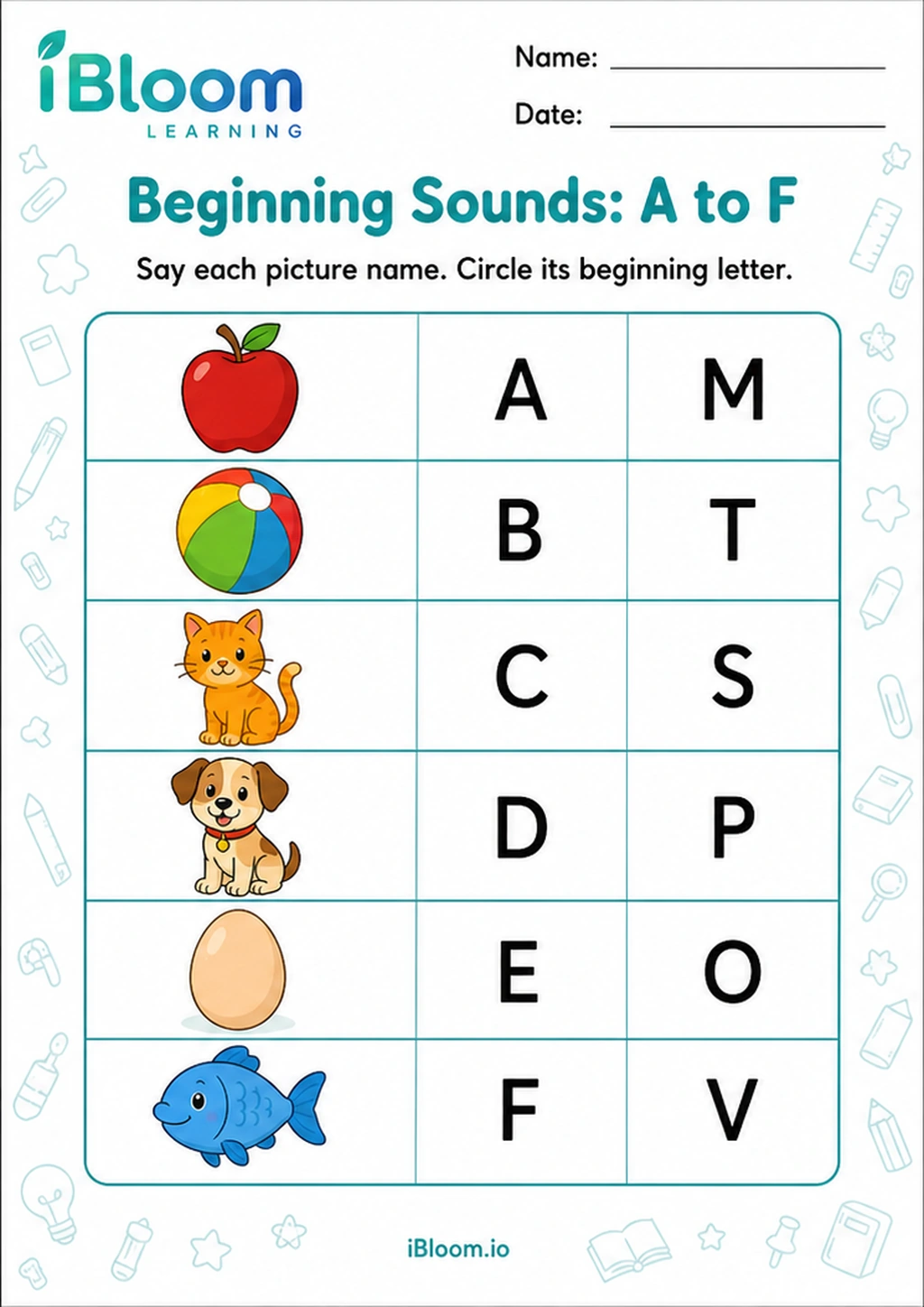 Beginning Sounds: A to FLKG printable practice for Beginning Letter Sounds.LKGFree PDF preview
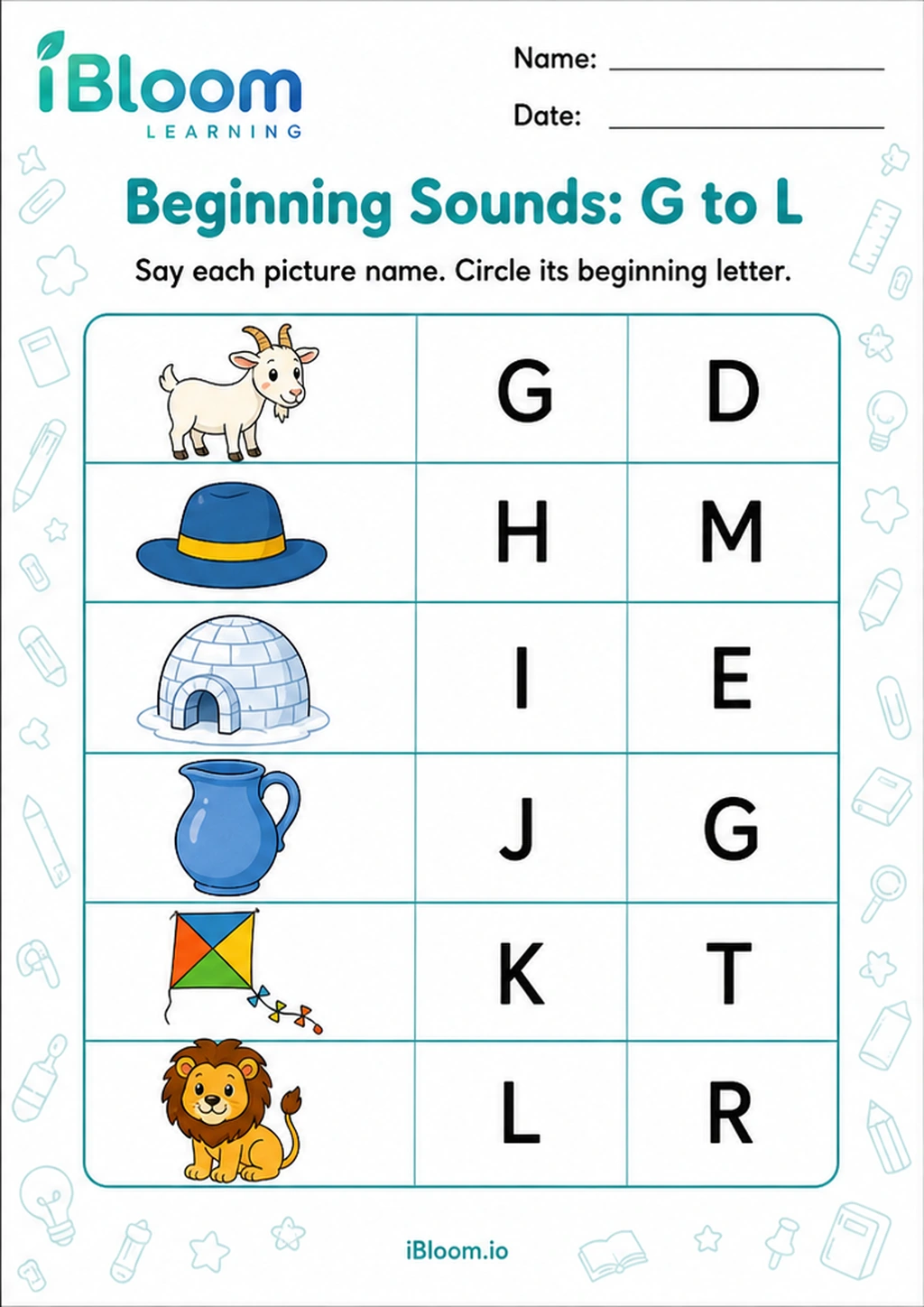 Beginning Sounds: G to LLKG printable practice for Beginning Letter Sounds.LKGFree PDF preview
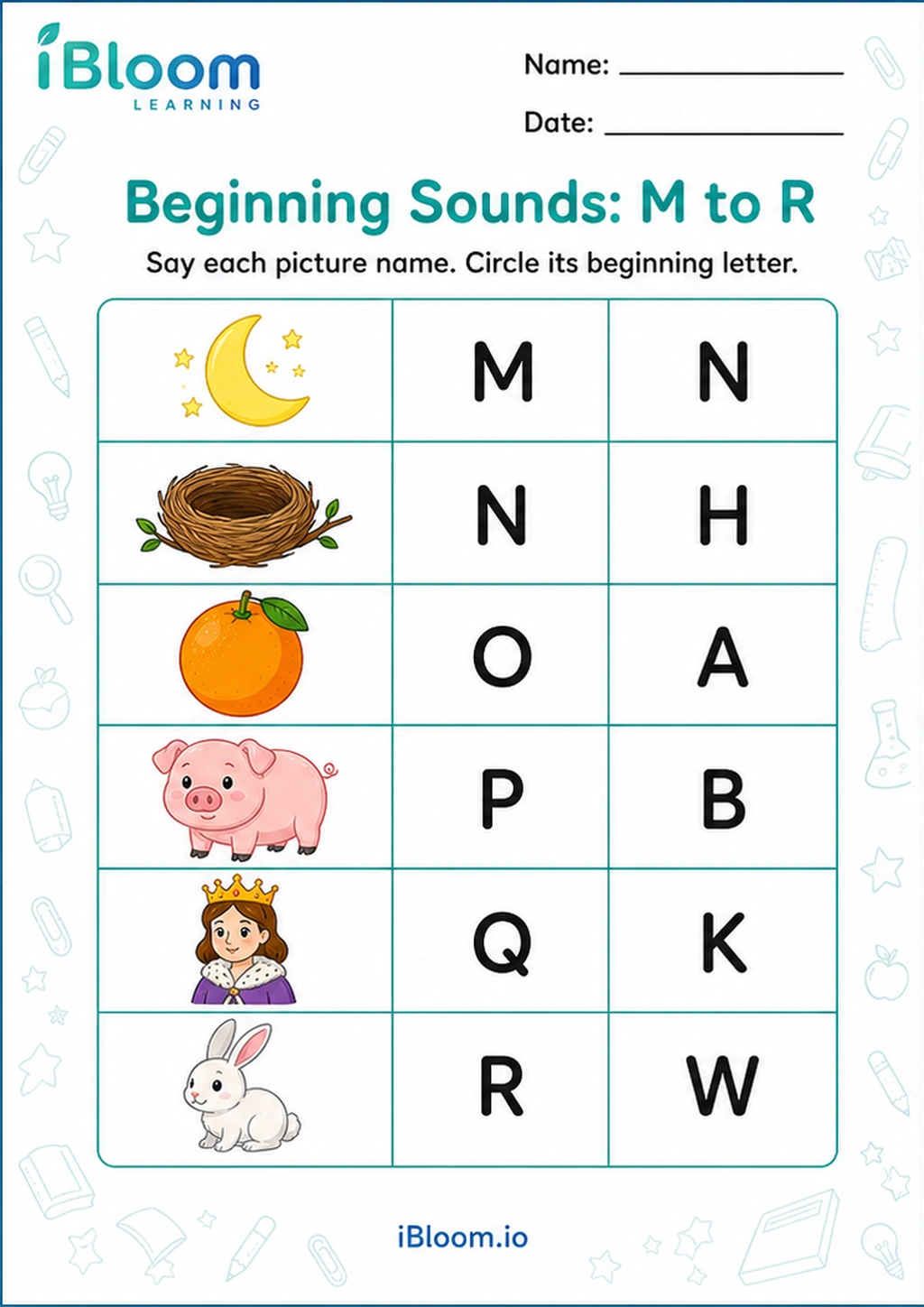 Beginning Sounds: M to RLKG printable practice for Beginning Letter Sounds.LKGFree PDF preview
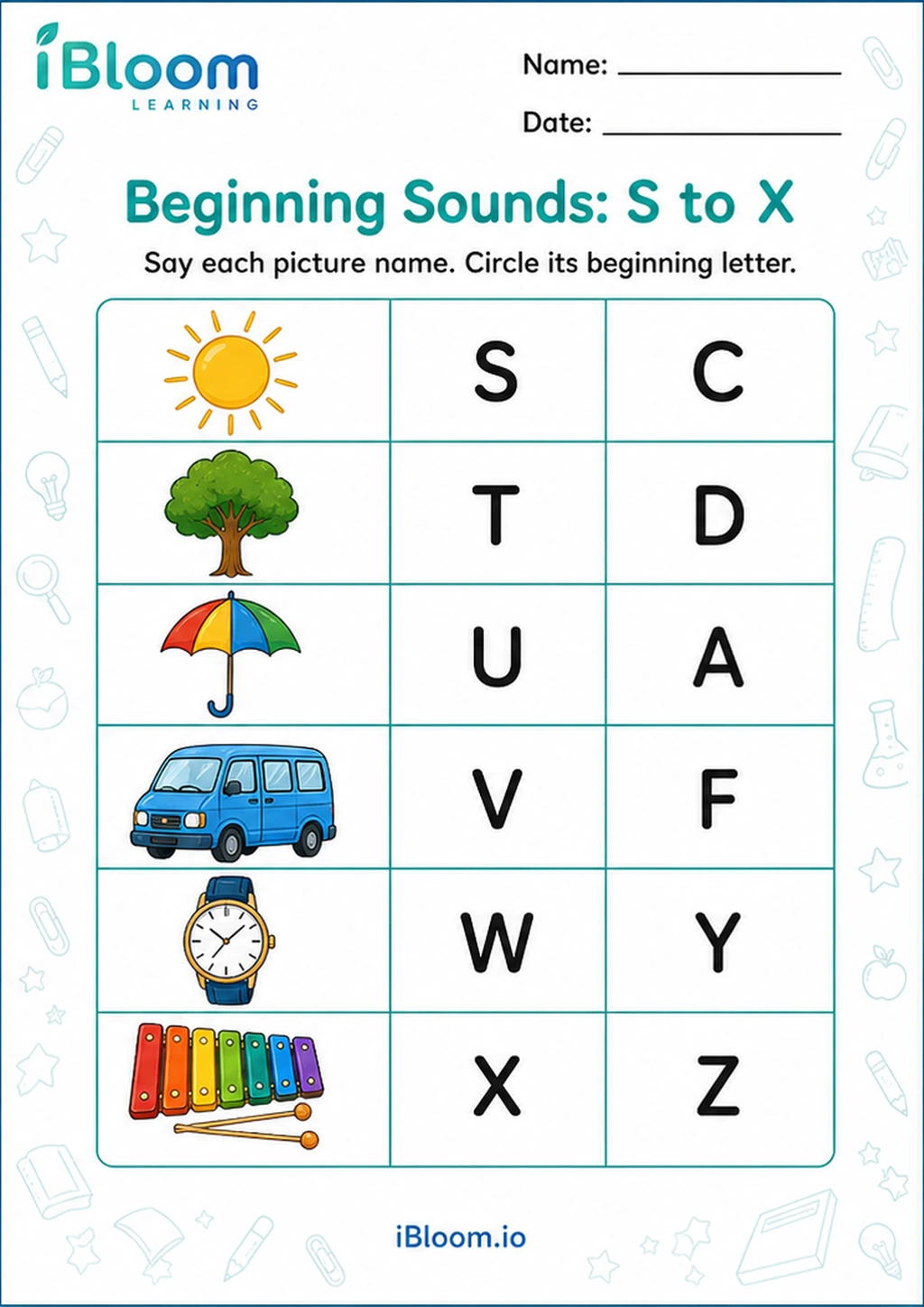 Beginning Sounds: S to XLKG printable practice for Beginning Letter Sounds.LKGFree PDF preview
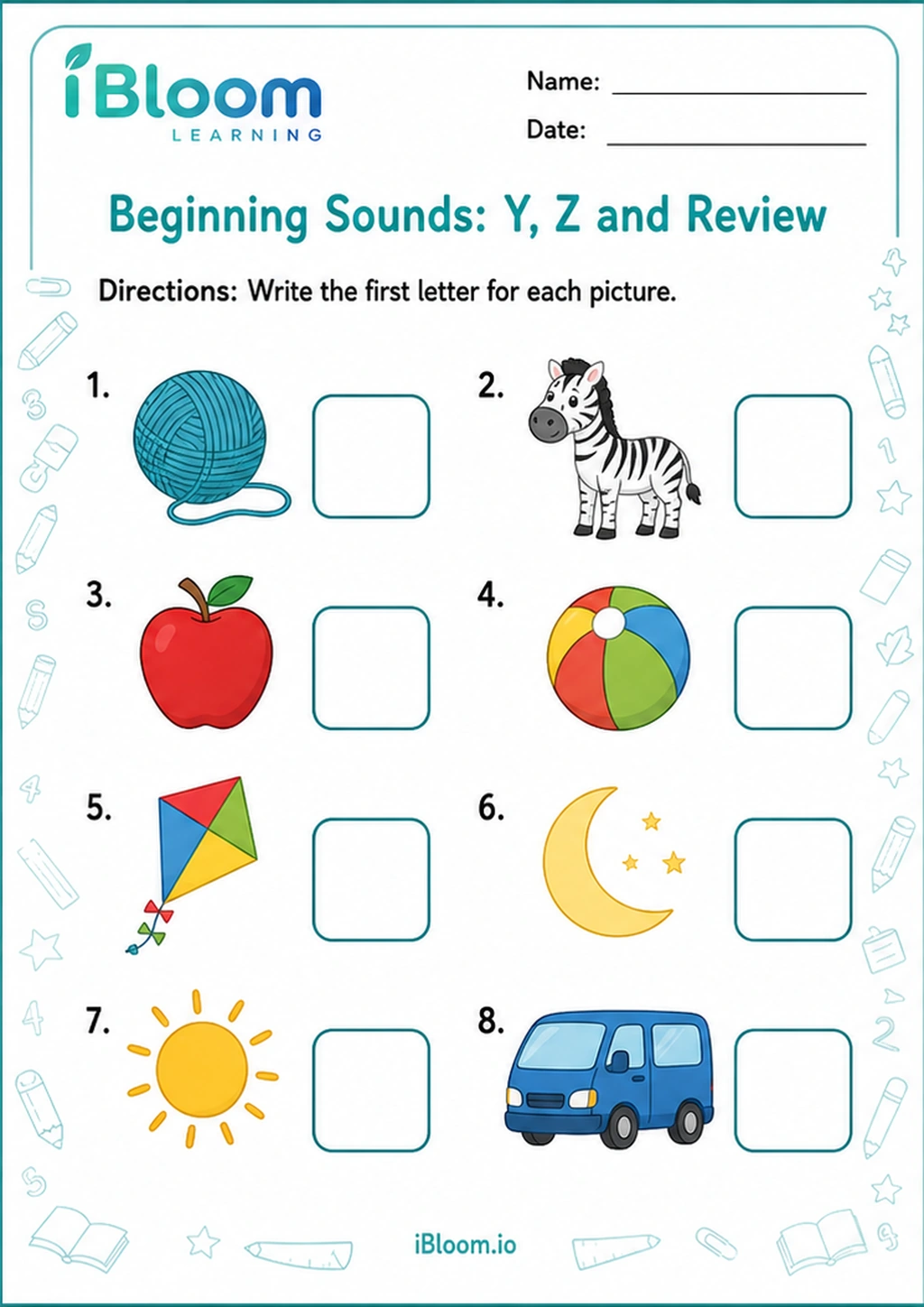 Beginning Sounds: Y, Z and ReviewLKG printable practice for Beginning Letter Sounds.LKGFree PDF preview
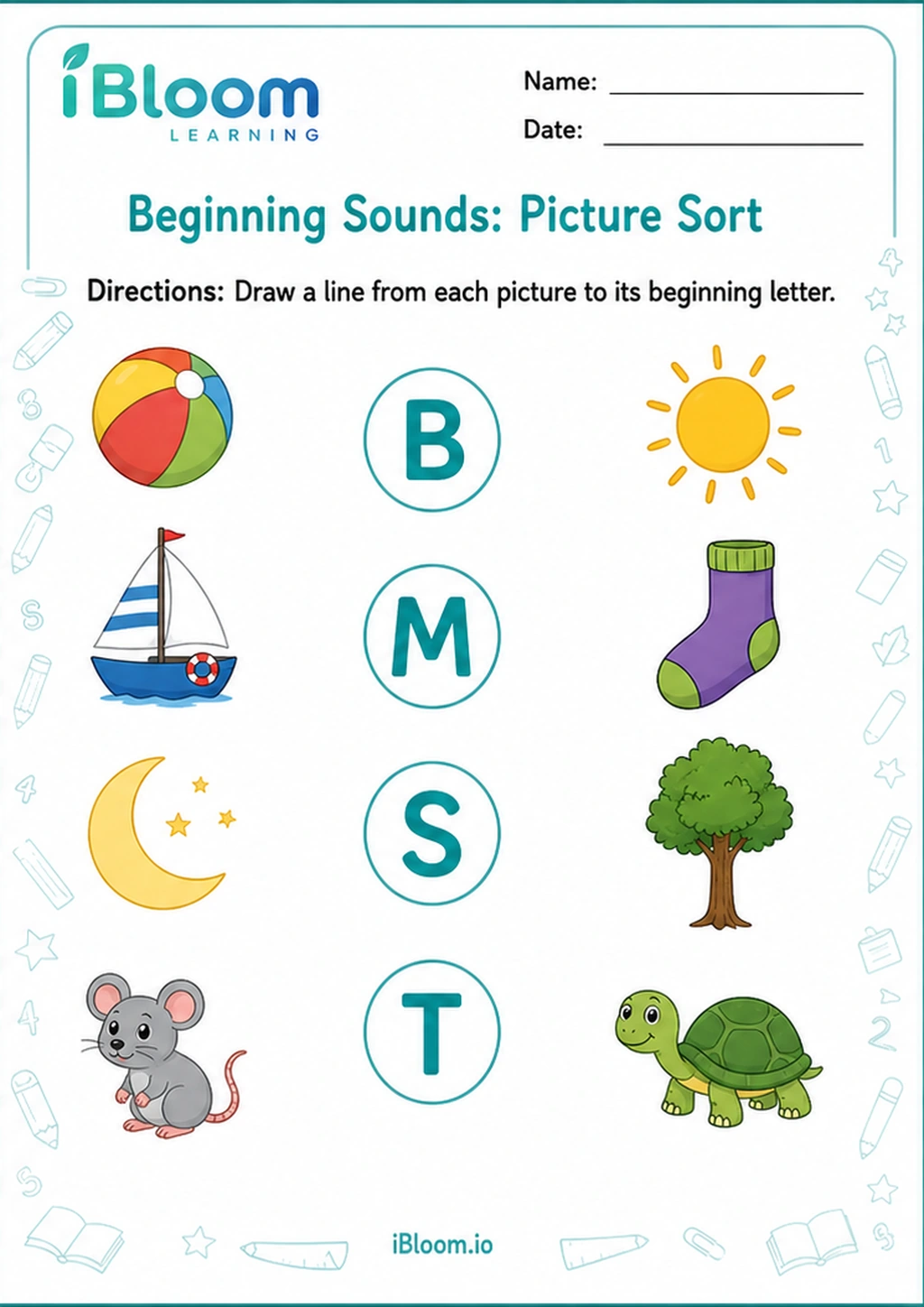 Beginning Sounds: Picture SortLKG printable practice for Beginning Letter Sounds.LKGFree PDF preview
Practice that builds confidence
What children learn
These Letter Sounds worksheets help Nursery, LKG and UKG children connect letters with the sounds they make. Children practise listening for a sound, saying it clearly, and matching it to familiar pictures or printed letters.
The printable activities include simple beginning-sound tasks such as identifying the first sound in a word, choosing the correct letter, tracing letters, and sorting pictures by sound. They are designed for early phonics practice at home or in class.
Letter-sound practice builds the bridge between spoken words and printed letters. In these Beginning Sounds worksheets, children work with common sound-letter links such as /m/ for mango, /s/ for sun, or /b/ for ball. The focus is on hearing the sound at the start of a word, not simply memorising letter names.

How the activities progress
Children may begin by looking at a picture and saying the word aloud. They then listen for the first sound, match it to a letter, colour or circle the correct option, and gradually trace or write the matching letter. This progression keeps the task concrete: picture, sound, letter, then written response. For Nursery children, oral naming and pointing may be enough; LKG and UKG children can try more independent matching and writing.
A simple parent routine
Choose one worksheet and say each picture name slowly with your child. Ask, “What sound do you hear first?” Stretch only the first sound, such as “mmmm-mango,” without adding extra vowel sounds. Let your child point to the letter, then trace it with a finger before using a pencil. End by finding two real objects at home that start with the same sound, such as mug and mat.

Classroom uses
Teachers can use these printables during phonics practice, small-group work, literacy centers, or revision after introducing a new letter sound. A worksheet can also become an oral activity: children say the picture word, clap once for the beginning sound, and then mark the matching letter. Pair work is useful when one child names the picture and the other checks the sound.

Common errors to watch for
Many young learners confuse letter names with letter sounds, so a child may say “bee” instead of /b/. Some also add an extra sound, saying “buh” too strongly. Others choose a letter because it looks familiar rather than because it matches the sound. If this happens, return to clear oral practice and use familiar words before asking for written answers.
Free printable PDF download
Use this letter sounds worksheets for nursery lkg ukg page to preview the activity, print it, or download it as a PDF for quick practice. It works well for homework, homeschool lessons, tutoring, morning work, revision, and classroom centers.
Answers and answer key support
After the child completes the worksheet independently, parents and teachers can use the answer support or answer key information to check the work, review mistakes, and choose the next practice step.
Why iBloom worksheets help
iBloom worksheets keep the page clean, the pictures child-friendly, and the response choices manageable for early learners. The activities give repeated practice without overloading children. A helpful child strategy is: “Say the picture, listen to the first sound, find the letter, then check again.” This small routine supports confidence as children move towards reading simple words.
Helpful answers
Frequently asked questions
What is the difference between letter names and letter sounds?
A letter name is what we call the letter, such as “bee” for B. A letter sound is the sound it usually makes in a word, such as /b/ in ball. These worksheets focus on hearing and matching the sound.
Are these worksheets suitable for Nursery children?
Yes. Nursery children can use the sheets orally with an adult by naming pictures, pointing to letters, and tracing with a finger. Pencil writing can be added later when they are ready.
Should my child learn sounds in alphabetical order?
Not always. Alphabetical order is useful for reciting letters, but sound practice can also be grouped by easy-to-hear sounds and familiar words. The aim is for children to connect a spoken sound with its letter.
How can I help if my child guesses the answer from the picture?
Ask your child to say the picture word slowly and repeat only the first sound. Then compare it with the letter choices. This shifts attention from the picture alone to the sound at the start of the word.
Can these letter sound worksheets be used in class?
Yes. Teachers can use them for phonics revision, small groups, literacy centers, or quick assessment of which beginning sounds children can hear and match independently.
Is this letter sounds worksheets for nursery lkg ukg free?
Yes. You can preview it for free and use the printable worksheet for home or classroom practice.
Can I download this letter sounds worksheets for nursery lkg ukg as a PDF?
Yes. Use the worksheet download option to save a printable PDF, or print the worksheet directly from the page.
Does this letter sounds worksheets for nursery lkg ukg include answers or an answer key?
When the activity has fixed answers, iBloom includes answer support so parents and teachers can check the completed worksheet.