Free printable practice
Capital Letters Practice Activities
Nursery, LKG and UKG capital letters worksheets build recognition, tracing and writing confidence for uppercase English alphabets.
Free printable worksheet PDFs
Preview every available page, then download the free worksheet PDF for home, homeschool, tutoring, or classroom practice.
Preview the exact activity before downloading it.
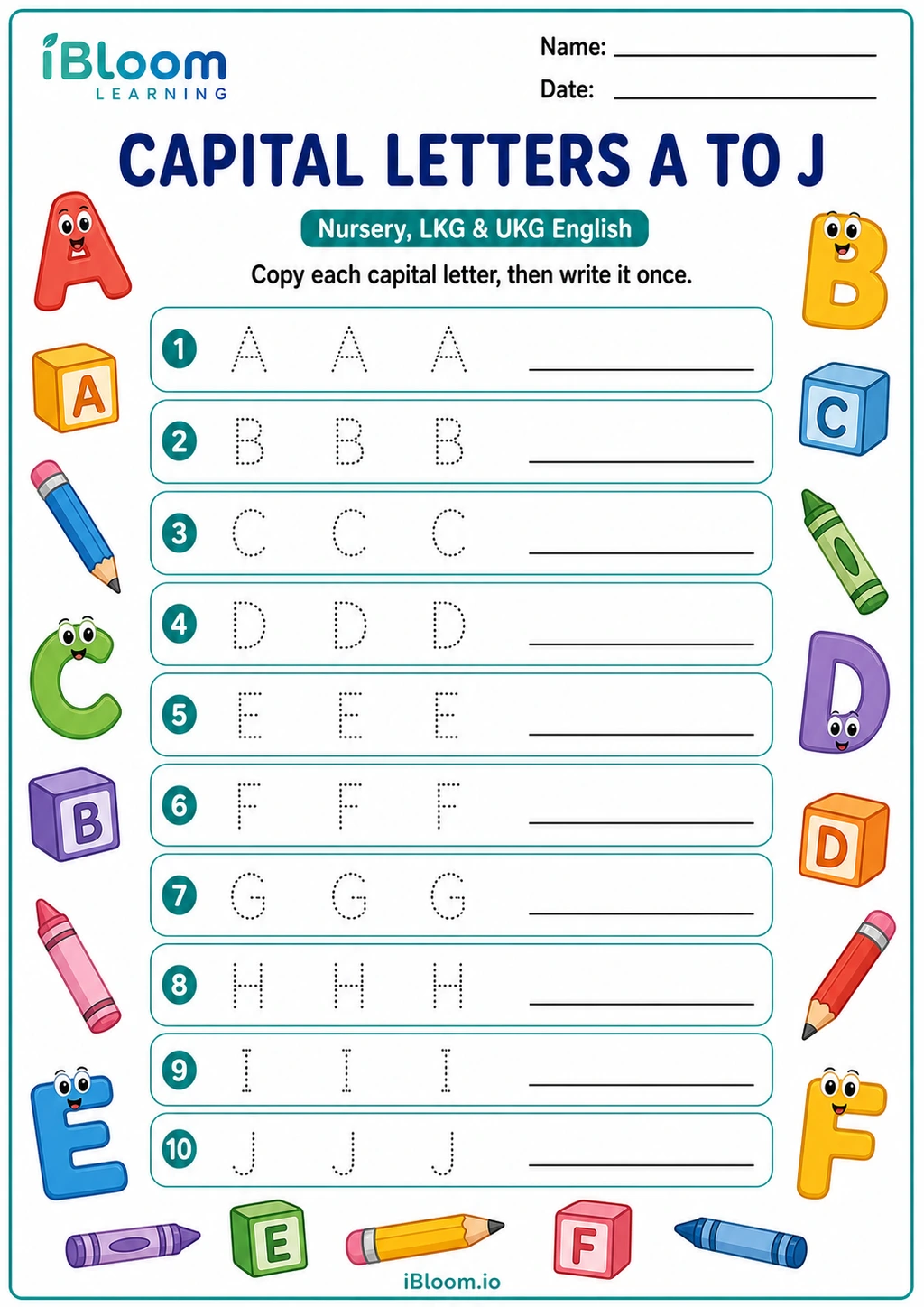 Capital Letters A to JFocused capital letters practice for Nursery, LKG & UKG learners.Nursery, LKG & UKGFree PDF preview
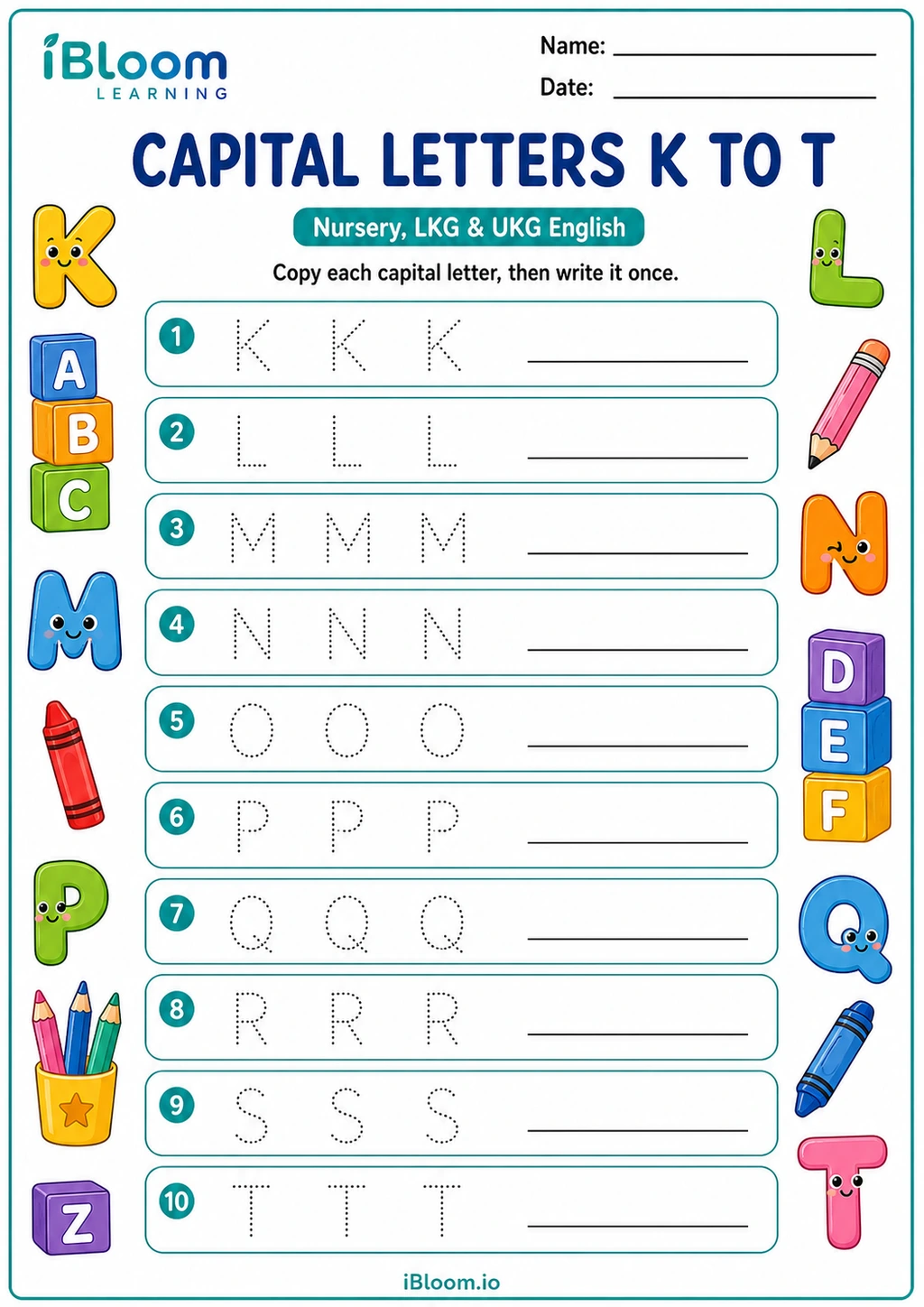 Capital Letters K to TFocused capital letters practice for Nursery, LKG & UKG learners.Nursery, LKG & UKGFree PDF preview
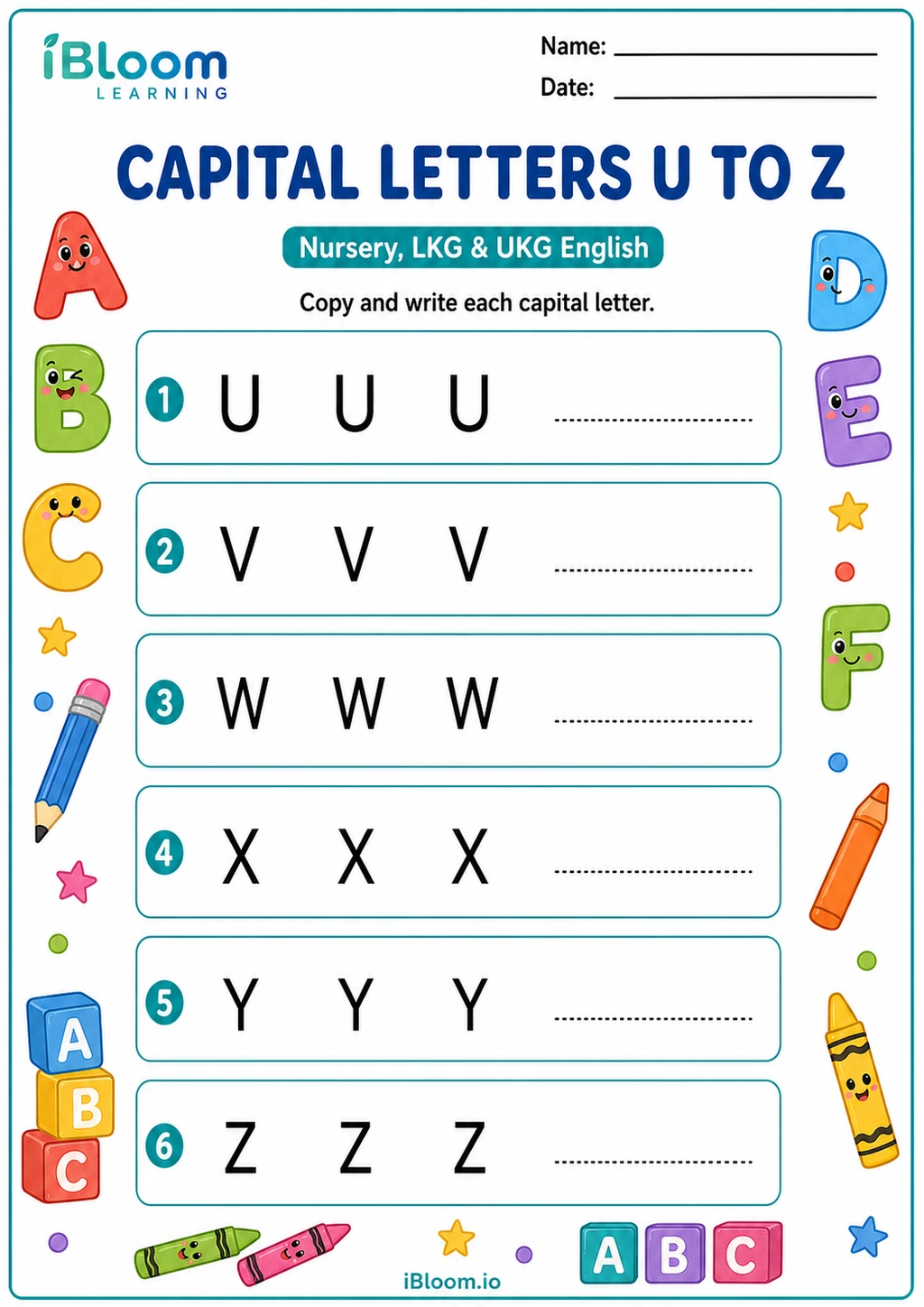 Capital Letters U to ZFocused capital letters practice for Nursery, LKG & UKG learners.Nursery, LKG & UKGFree PDF preview
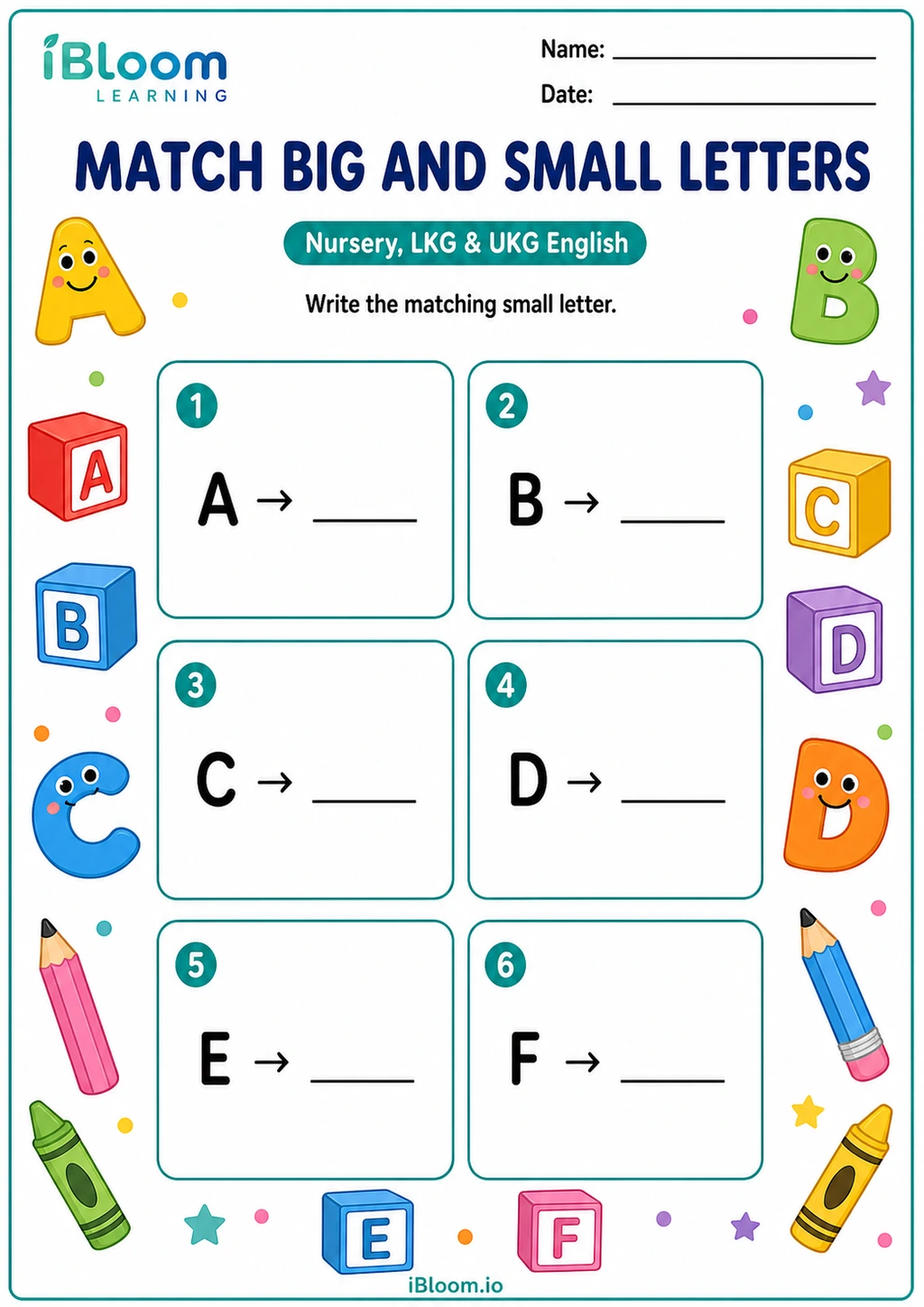 Match Big and Small LettersFocused capital letters practice for Nursery, LKG & UKG learners.Nursery, LKG & UKGFree PDF preview
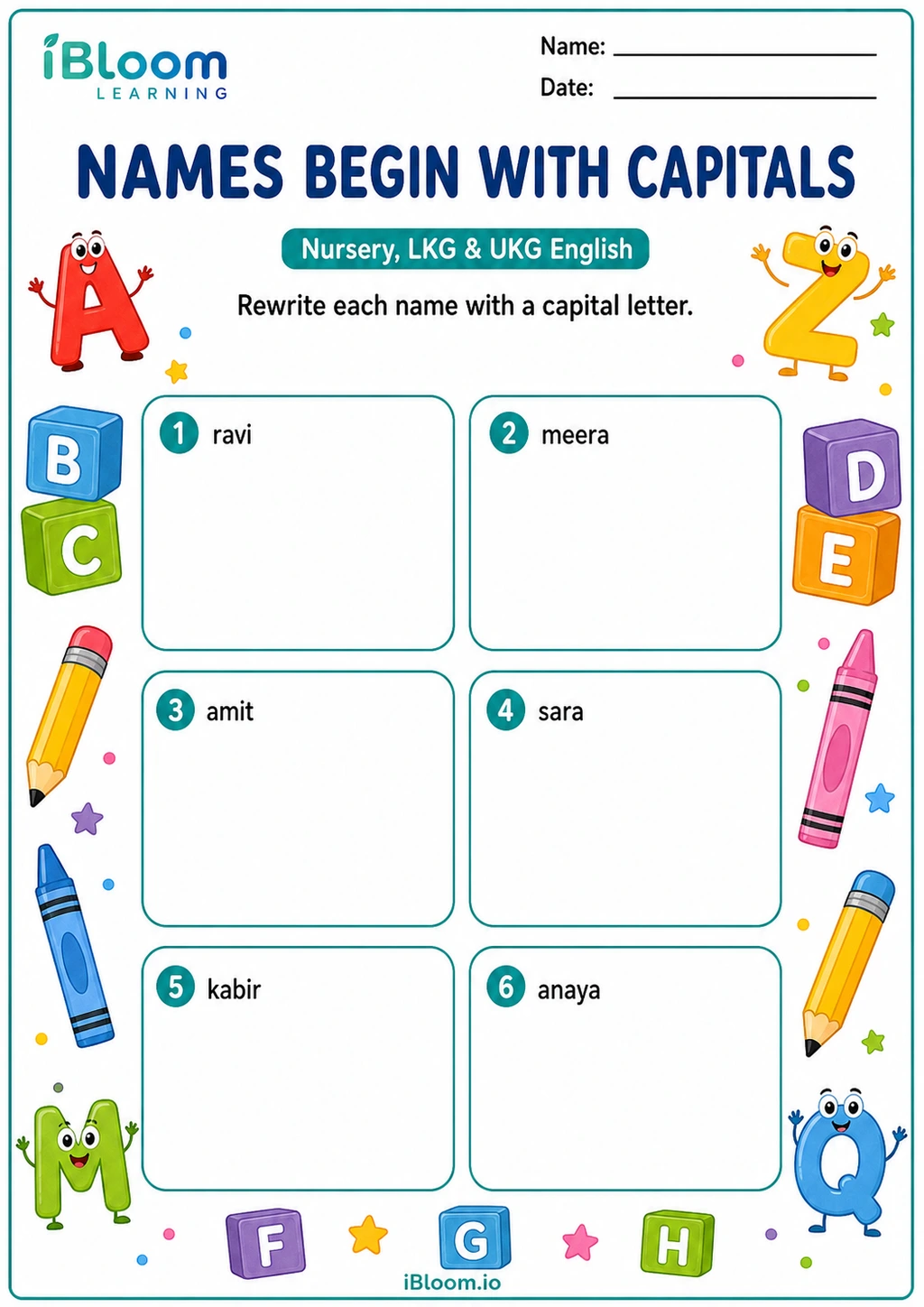 Names Begin with CapitalsFocused capital letters practice for Nursery, LKG & UKG learners.Nursery, LKG & UKGFree PDF preview
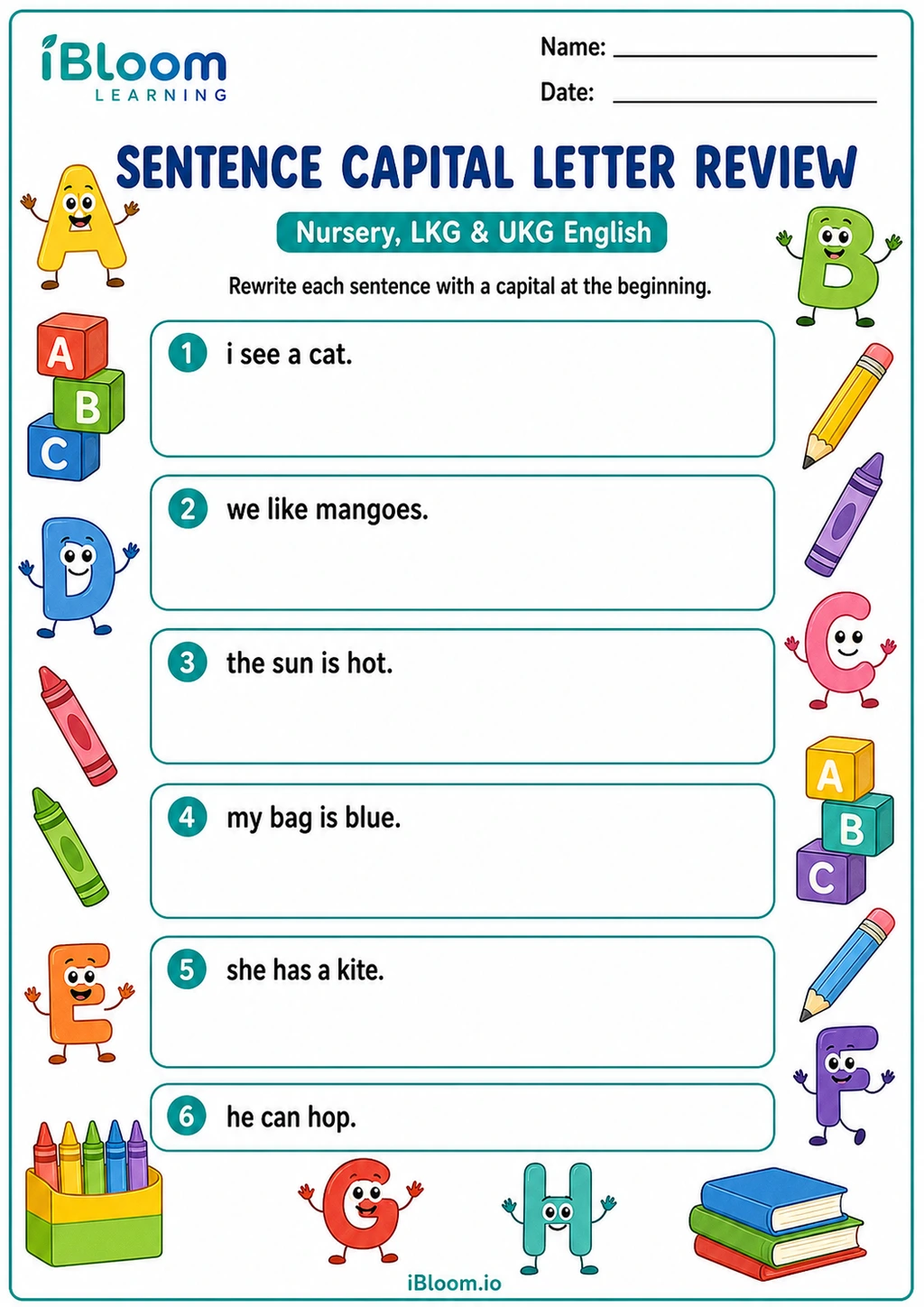 Sentence Capital Letter ReviewFocused capital letters practice for Nursery, LKG & UKG learners.Nursery, LKG & UKGFree PDF preview
Practice that builds confidence
What capital letters mean here
These Nursery, LKG and UKG capitalization worksheets help young children recognise and write capital letters from A to Z with clear, age-appropriate practice.
The printable activities include letter identification, tracing, matching and simple writing tasks so children strengthen pencil control while learning the shape and name of each uppercase letter.
For early learners, capital letters are the uppercase forms of the English alphabet: A, B, C and so on. Children first learn to recognise the letter shape, then connect it with the letter name and sound. This page focuses on the capital form itself, before children are expected to use capitals in sentences.

Skill progression for Nursery, LKG and UKG
Nursery children may begin by pointing to a named letter, colouring it, or matching the same capital letter. LKG children can trace straight and curved strokes with guidance. UKG children can copy letters more independently and begin noticing where capitals appear, such as in names or at the start of a line. The worksheets move from recognition to controlled formation.
Building correct letter formation
Capital letters have different stroke patterns. Some use straight lines, such as A, E, F, H and T. Others use curves, such as C, O, Q and S. Children benefit from saying the movement aloud: “down, across, across” or “round and close.” Large tracing paths, start dots and plenty of white space help them practise without feeling crowded.
Parent routine at home
Pick three to five letters at a time rather than rushing through the full alphabet. Ask your child to find the letter on the page, trace it with a finger, then trace with a crayon or pencil. Finally, look for the same capital on a book cover, food packet or name card. Use colour and praise neat effort, not just perfect writing.

Classroom uses and errors to watch
Teachers can use these worksheets for alphabet corners, morning work, fine-motor practice and small-group handwriting support. Watch for reversed letters, starting from the bottom when the letter should begin at the top, or confusing similar shapes such as M and W, P and R, or O and Q. Gentle modelling works better than repeated rubbing and rewriting.

Free printable PDF download
Use this capital letters worksheets for Nursery LKG UKG page to preview the activity, print it, or download it as a PDF for quick practice. It works well for homework, homeschool lessons, tutoring, morning work, revision, and classroom centers.
Answers and answer key support
After the child completes the worksheet independently, parents and teachers can use the answer support or answer key information to check the work, review mistakes, and choose the next practice step.
Why iBloom worksheets help
The activities keep the focus on one clear early literacy goal: recognising and forming capital letters. A child-friendly strategy is: look at the letter, say its name, trace with your finger, then write it slowly from the starting point.
Helpful answers
Frequently asked questions
What is the difference between capital letters and small letters?
Capital letters are uppercase forms such as A, B and C. Small letters are lowercase forms such as a, b and c. This page focuses on uppercase letters.
Which class should start capital letter tracing?
Many children begin simple capital letter recognition in Nursery and tracing in LKG, with more independent writing practice in UKG.
How many letters should my child practise in one sitting?
For young children, three to five letters is usually enough. Short, careful practice is better than rushing through all 26 letters.
What should I do if my child reverses letters?
Show the correct letter, trace it together from the starting point, and compare it with a familiar word or name. Reversals are common in early writing.
Do these worksheets teach sentence capitalization?
No. These activities focus mainly on recognising, tracing and writing capital alphabet letters. Using capitals in sentences is a later step.
Is this capital letters worksheets for Nursery LKG UKG free?
Yes. You can preview it for free and use the printable worksheet for home or classroom practice.
Can I download this capital letters worksheets for Nursery LKG UKG as a PDF?
Yes. Use the worksheet download option to save a printable PDF, or print the worksheet directly from the page.
Does this capital letters worksheets for Nursery LKG UKG include answers or an answer key?
When the activity has fixed answers, iBloom includes answer support so parents and teachers can check the completed worksheet.