Free printable practice
Colors Practice Activities
Printable colour worksheets for Nursery, LKG and UKG children to recognise, name, match, sort, colour, read and begin writing colour words.
Explore Colors
Free printable worksheet PDFs
Preview every available page, then download the free worksheet PDF for home, homeschool, tutoring, or classroom practice.
Preview the exact activity before downloading it.
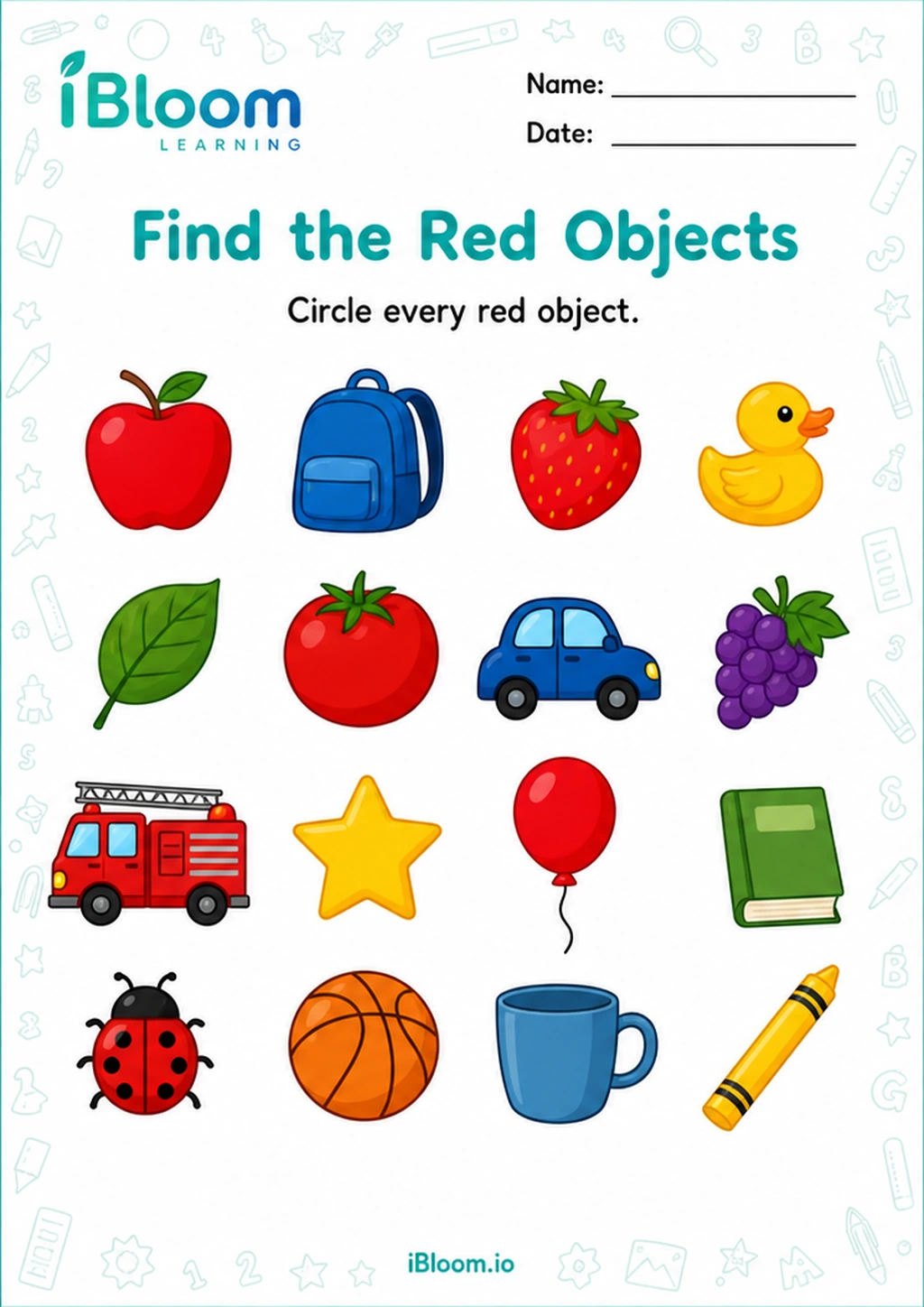 Find the Red ObjectsNursery printable practice for The Colour Red.NurseryFree PDF preview
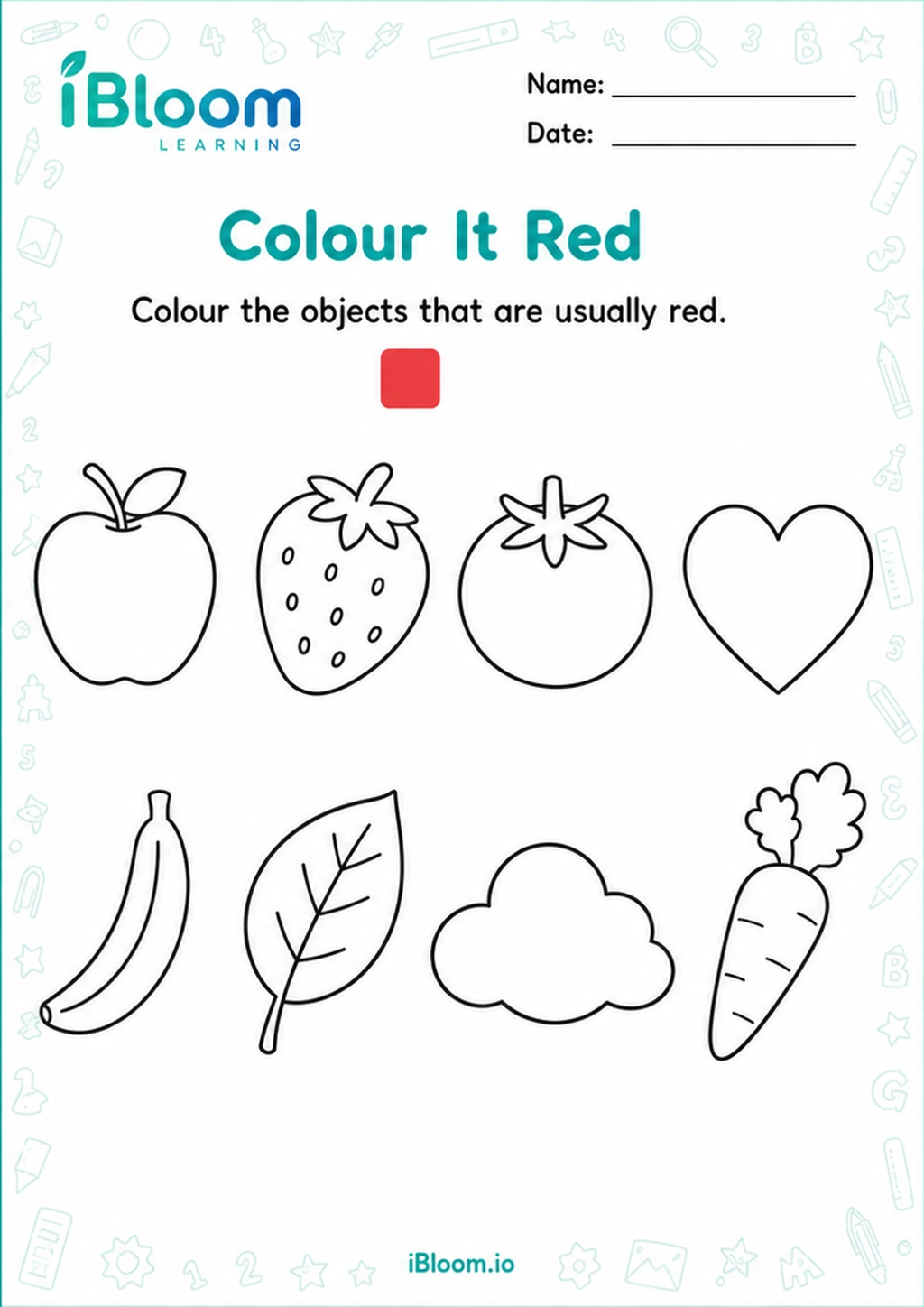 Colour It RedNursery printable practice for The Colour Red.NurseryFree PDF preview
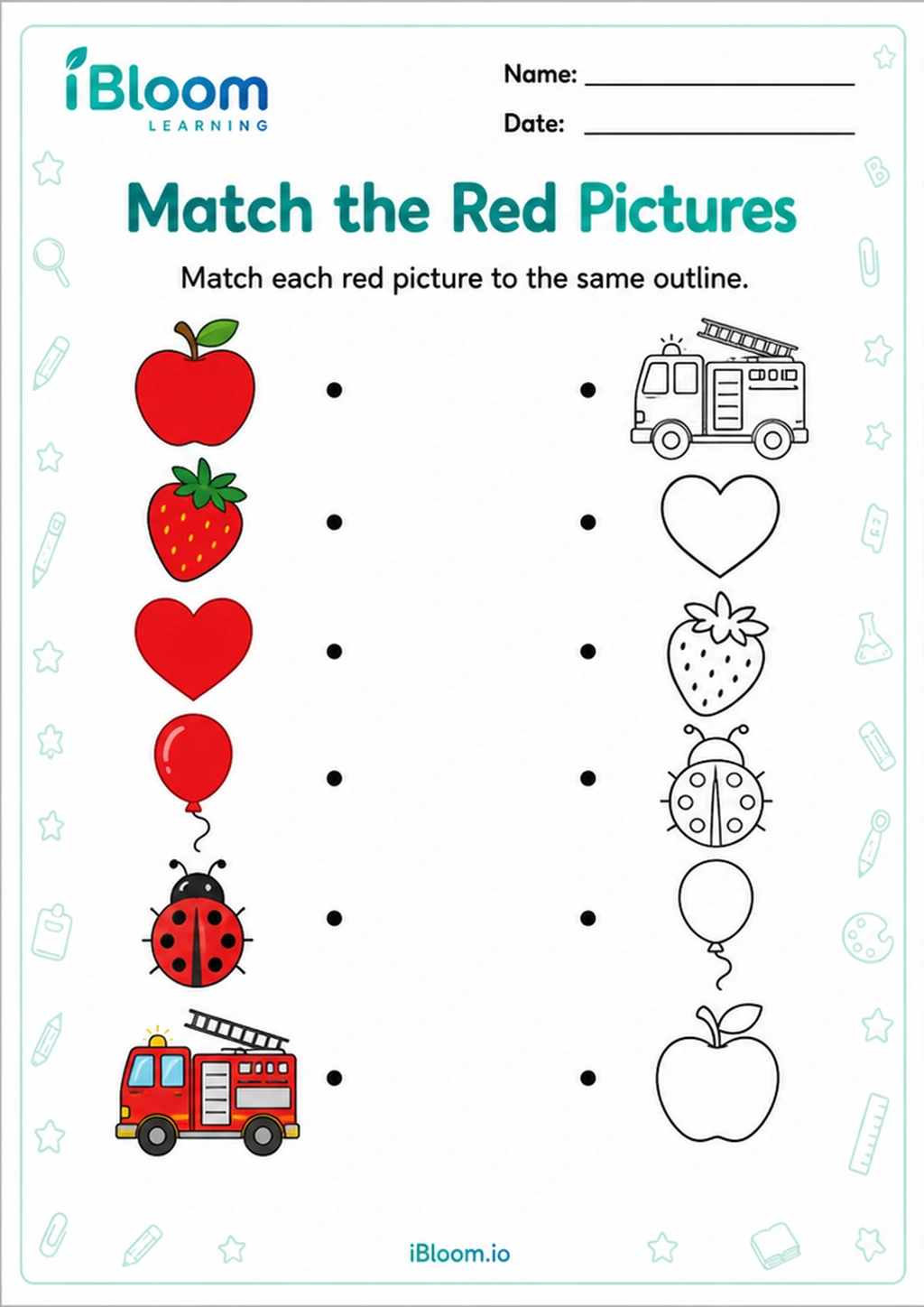 Match the Red PicturesNursery printable practice for The Colour Red.NurseryFree PDF preview
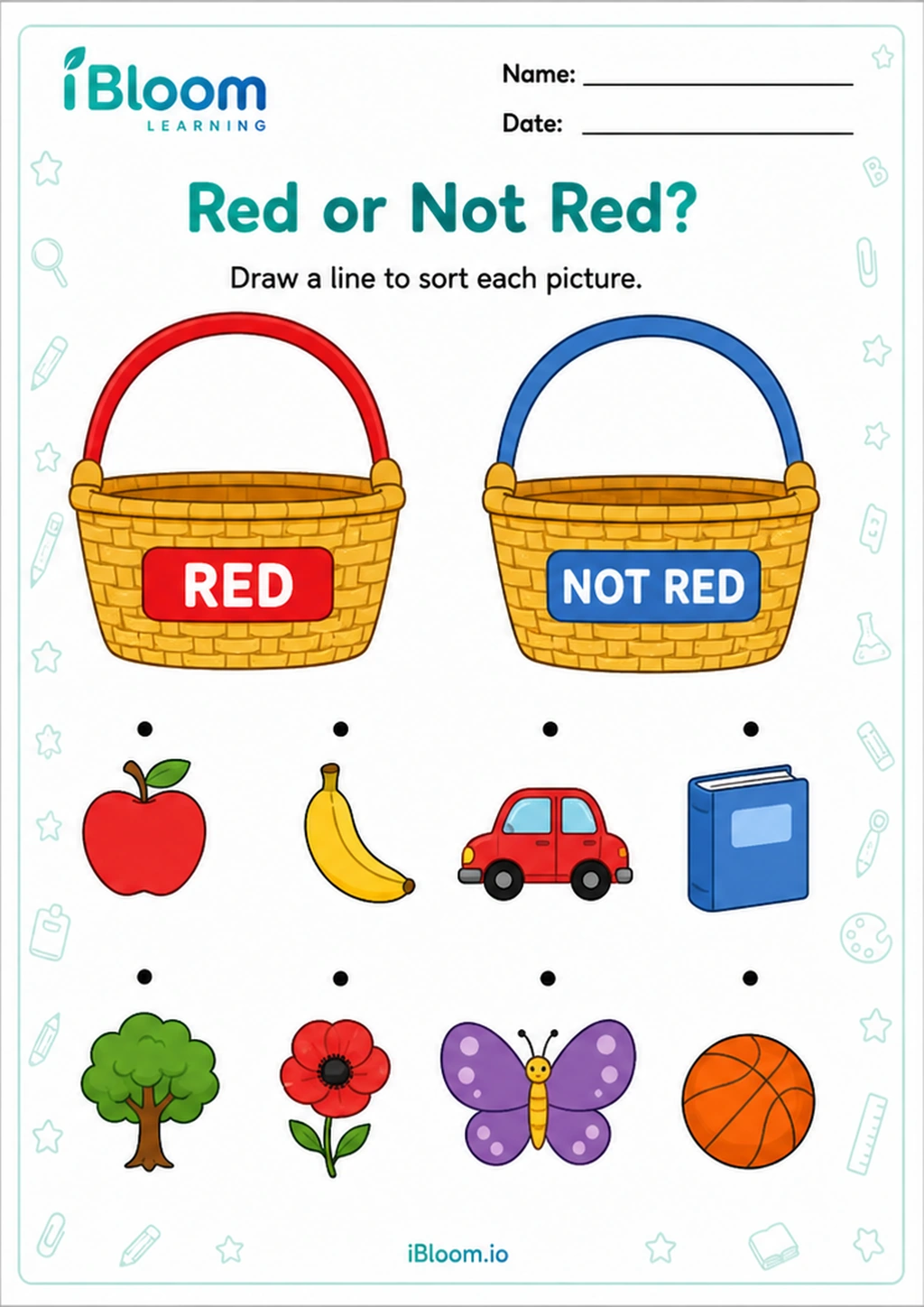 Red or Not Red?Nursery printable practice for The Colour Red.NurseryFree PDF preview
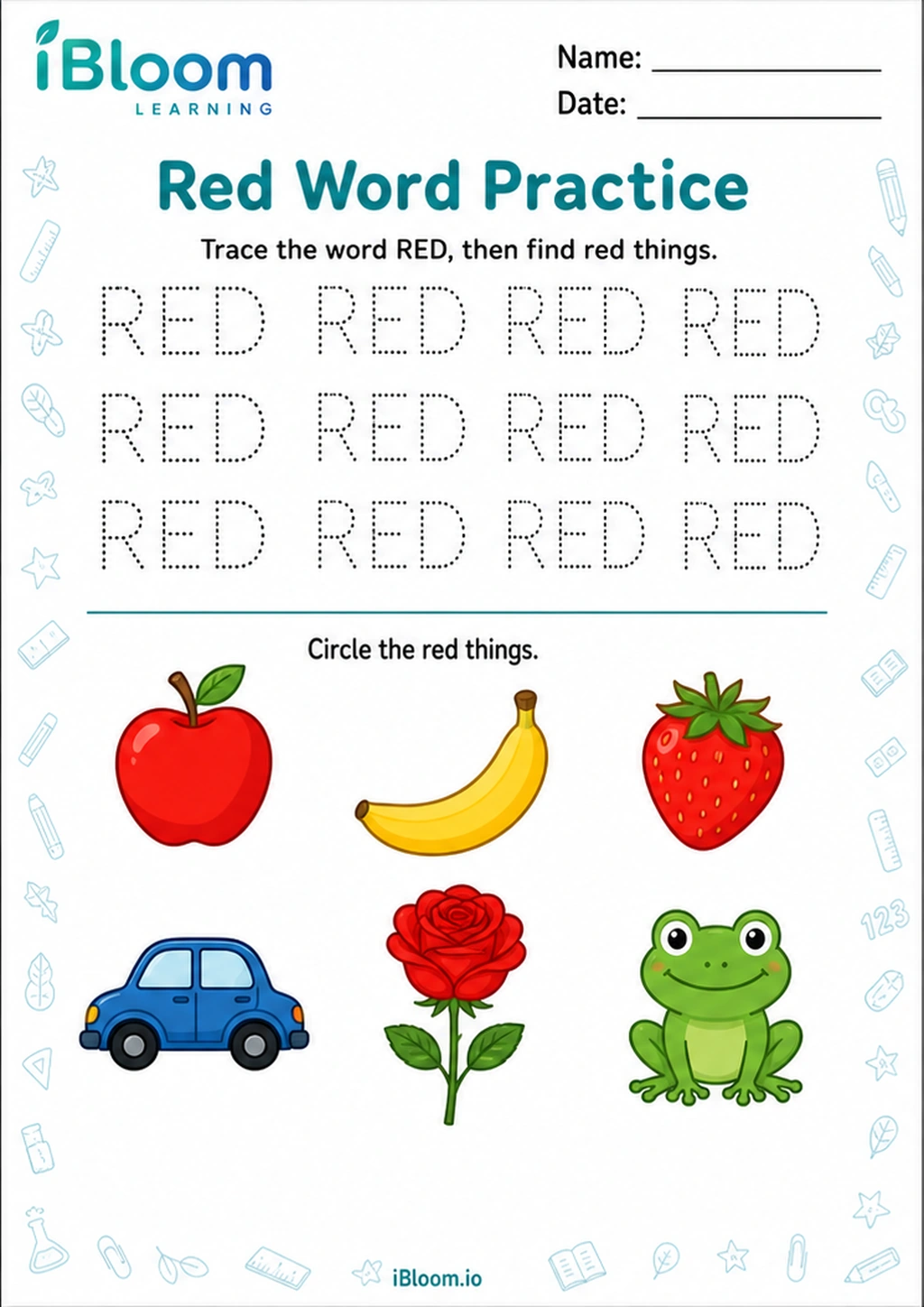 Red Word PracticeNursery printable practice for The Colour Red.NurseryFree PDF preview
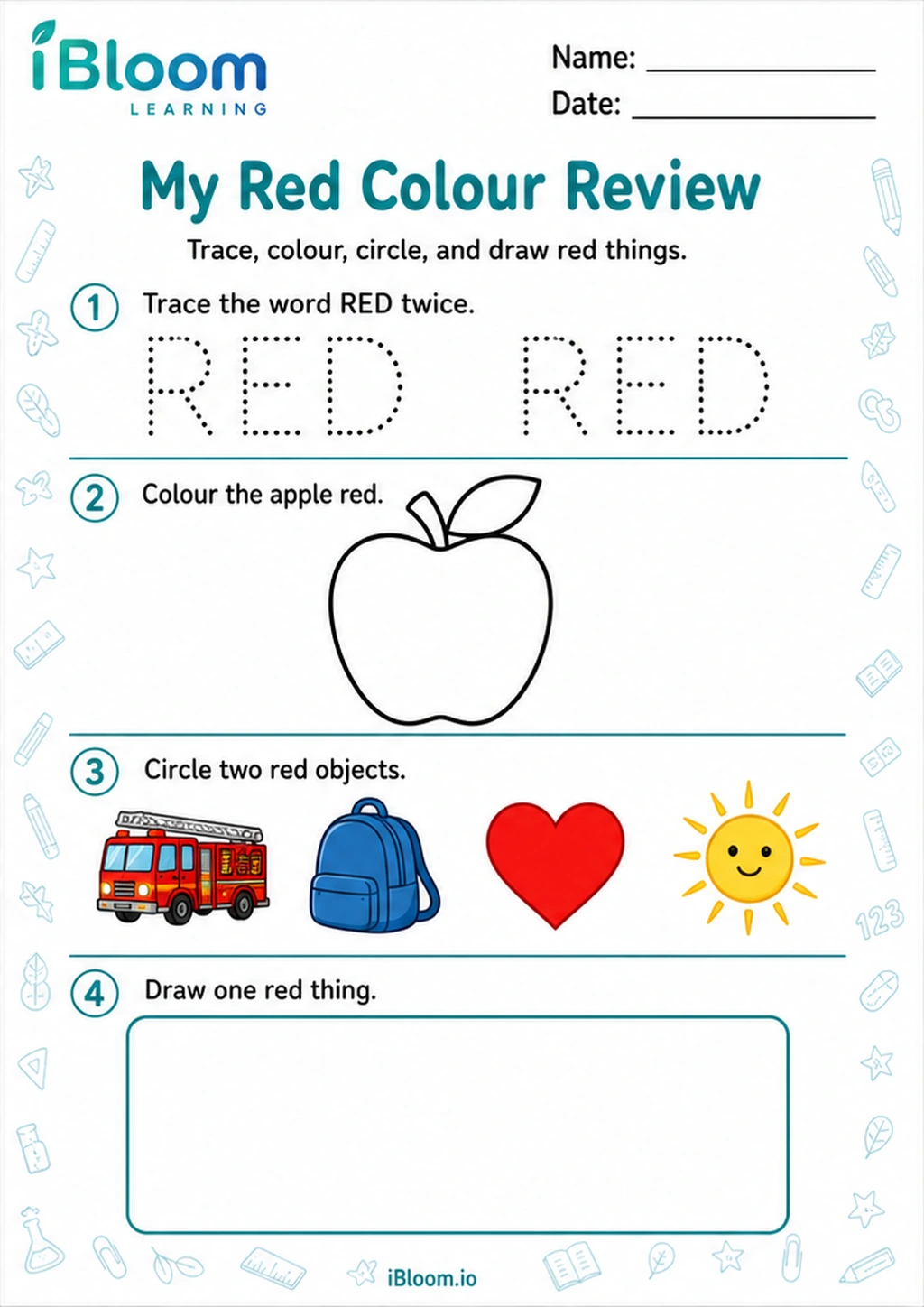 My Red Colour ReviewNursery printable practice for The Colour Red.NurseryFree PDF preview
Practice that builds confidence
Building colour recognition
These Nursery, LKG and UKG colour practice activities help children recognise common colours, connect colour names with objects, and use colour words in simple reading and early writing tasks.
The printable sheets include reading and colouring, matching objects, sorting by colour, match-and-write tasks, colour by letter, printing and colouring practice, colour-name learning, and naming activities.
Young learners first need many chances to notice, name and compare colours in familiar things: a red apple, a blue bag, a green leaf or a yellow sun. These worksheets move from simple identification to choosing the correct colour, so children do not only repeat a word but connect it with what they see.

Matching, sorting and naming
Matching objects by colour strengthens visual discrimination. Sorting by colour asks children to group items and explain why they belong together. Colour-name pages support vocabulary such as red, blue, green, yellow, orange, pink, black, white, brown and purple when these appear in the activity. Match-write tasks add early literacy by linking the spoken colour name to its printed word.
Reading, colouring and letter clues
Reading-colouring pages invite children to look at a colour word or prompt and colour the picture correctly. Colour by letter activities add a playful challenge: children follow a letter key and colour parts of a picture. Printing-colouring sheets give fine-motor practice as children trace, print or copy simple colour words before colouring.
A simple home routine
Choose one worksheet and keep real objects nearby, such as crayons, buttons, toys or fruit. Ask, “Show me something blue,” then “Can you colour the ball blue?” After the page, let the child find two objects of the same colour at home. This short routine joins worksheet practice with real-life colour learning.

Classroom uses for teachers
Teachers can use these pages for morning work, colour theme days, small-group reinforcement, or activity centres. Sorting sheets work well with discussion: “What is the same?” and “Which one is different?” Match-write and colour-name pages are useful after oral colour games because children are ready to connect speech, print and action.

Free printable PDF download
Use this colors practice activities for nursery lkg ukg worksheet page to preview the activity, print it, or download it as a PDF for quick practice. It works well for homework, homeschool lessons, tutoring, morning work, revision, and classroom centers.
Answers and answer key support
After the child completes the worksheet independently, parents and teachers can use the answer support or answer key information to check the work, review mistakes, and choose the next practice step.
Why iBloom worksheets help
The collection gives a gradual path: recognise, match, sort, read, colour, trace and write. Children practise with pictures, printed colour names, letters and colouring tools, which supports visual memory, vocabulary, hand control and listening to instructions. Watch for common errors such as confusing similar shades, colouring before reading the instruction, or guessing from the picture alone. A child-friendly strategy is: look at the word or key, say the colour aloud, point to the correct crayon, then colour carefully.
Helpful answers
Frequently asked questions
What colour skills do these Nursery, LKG and UKG worksheets practise?
They practise recognising colours, naming colours, matching objects, sorting by colour, reading colour words, following colour-by-letter keys, and beginning to write or print simple colour names.
Are these worksheets suitable before a child can read full words?
Yes. Many pages use pictures, matching, sorting and colouring prompts. For colour-word pages, an adult or teacher can read the word aloud while the child points to the correct crayon and colours the picture.
How can I use the match-and-write colour pages at home?
First ask the child to say the colour aloud, then match it to the correct object or colour word. After that, let the child trace, copy or attempt the word, depending on their writing readiness.
What should I do if my child mixes up colour names?
Use real objects and keep choices limited at first, such as only red and blue. Ask the child to sort objects, say the colour aloud, and then complete a simple worksheet using the same two colours.
Can teachers use these pages for colour theme activities?
Yes. Teachers can pair the worksheets with colour days, crayon sorting, object hunts, art corners, small-group vocabulary practice, or centre activities focused on matching and sorting.
Is this colors practice activities for nursery lkg ukg worksheet free?
Yes. You can preview it for free and use the printable worksheet for home or classroom practice.
Can I download this colors practice activities for nursery lkg ukg worksheet as a PDF?
Yes. Use the worksheet download option to save a printable PDF, or print the worksheet directly from the page.
Does this colors practice activities for nursery lkg ukg worksheet include answers or an answer key?
When the activity has fixed answers, iBloom includes answer support so parents and teachers can check the completed worksheet.