Free printable practice
Comparison Practice Activities
Printable comparison activities for Nursery, LKG and UKG children to practise big/small, tall/short, long/short, heavy/light and same/different size.
Explore Comparison
Free printable worksheet PDFs
Preview every available page, then download the free worksheet PDF for home, homeschool, tutoring, or classroom practice.
Preview the exact activity before downloading it.
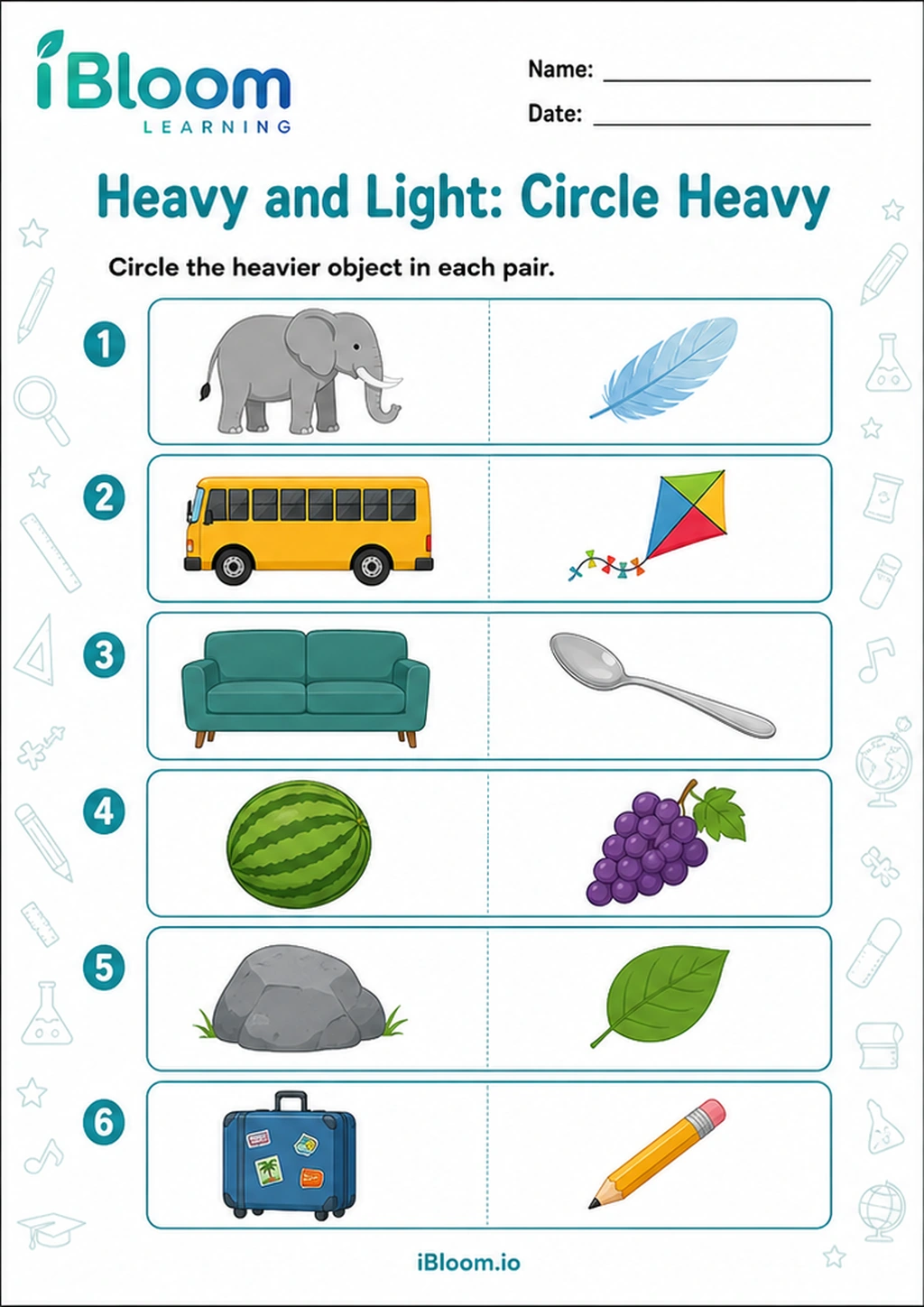 Heavy and Light: Circle HeavyLKG printable practice for Heavy and Light.LKGFree PDF preview
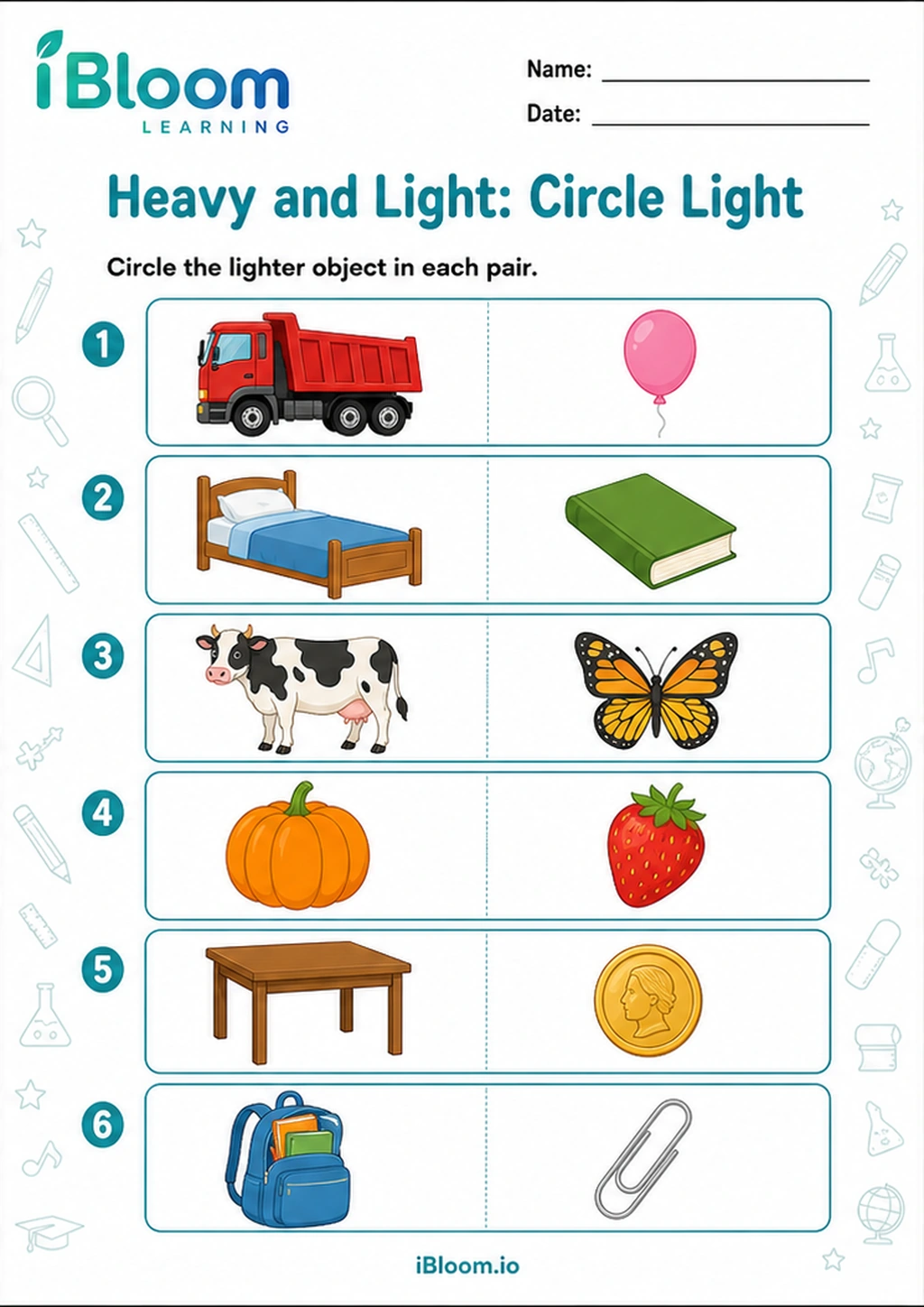 Heavy and Light: Circle LightLKG printable practice for Heavy and Light.LKGFree PDF preview
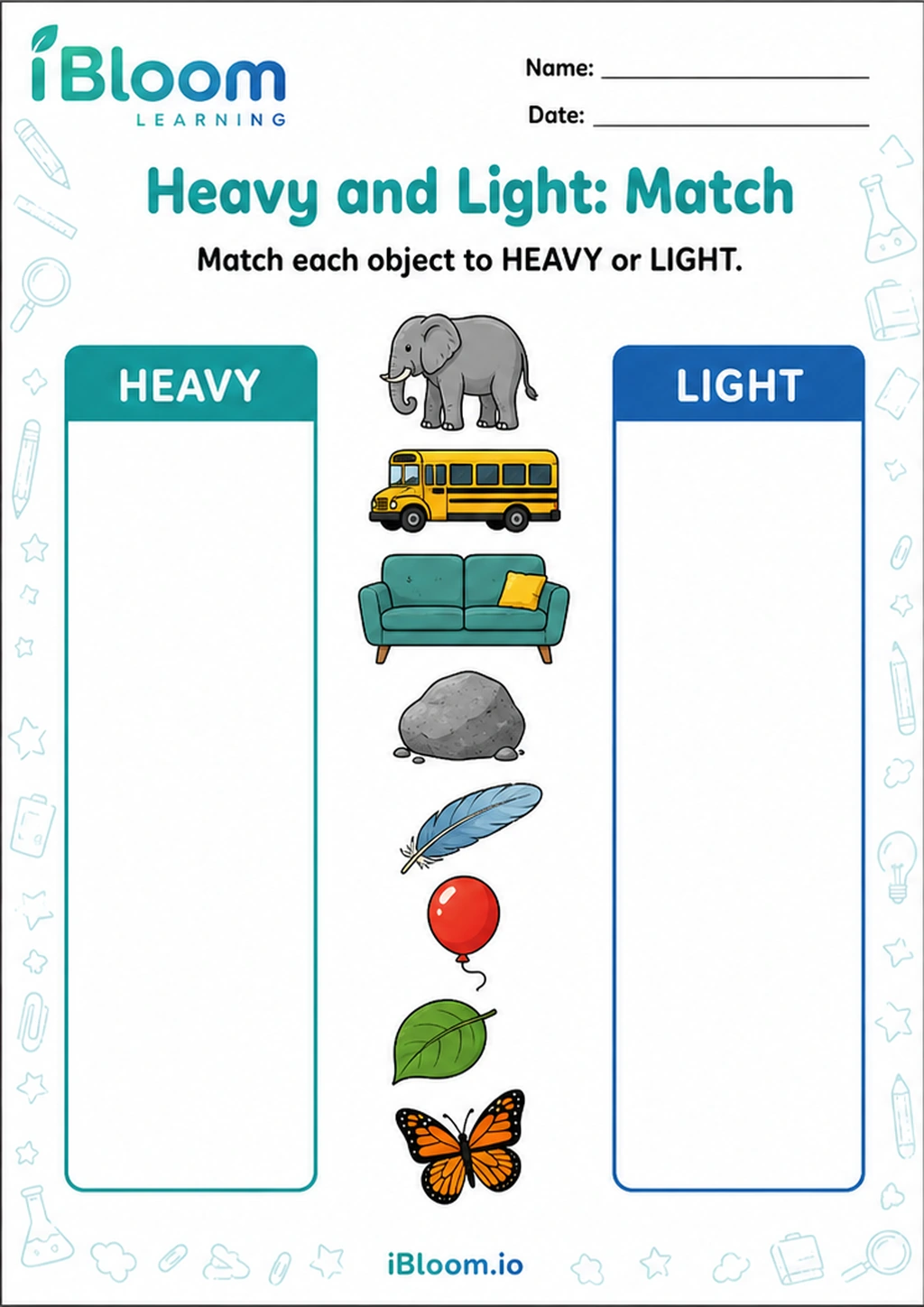 Heavy and Light: MatchLKG printable practice for Heavy and Light.LKGFree PDF preview
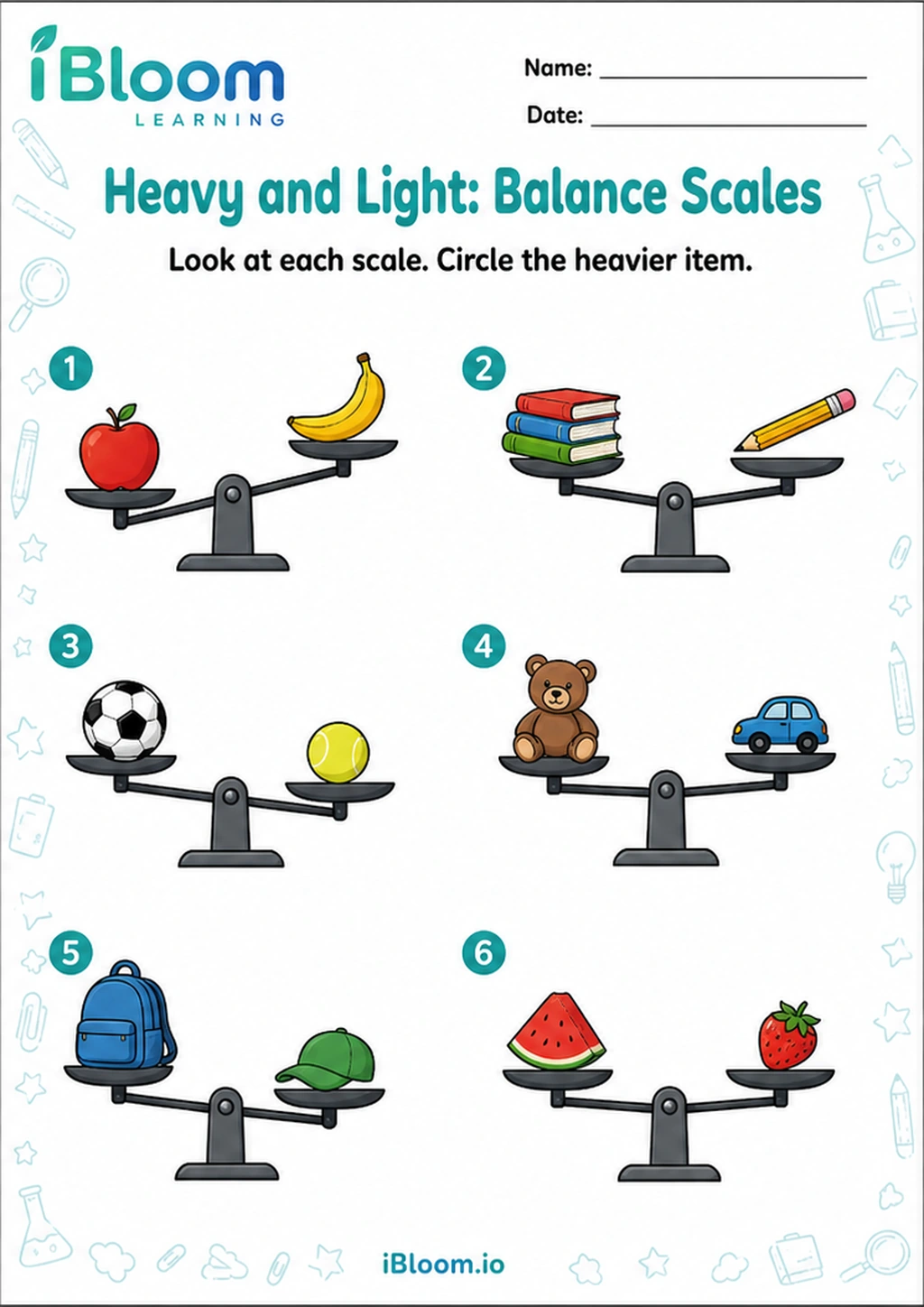 Heavy and Light: Balance ScalesLKG printable practice for Heavy and Light.LKGFree PDF preview
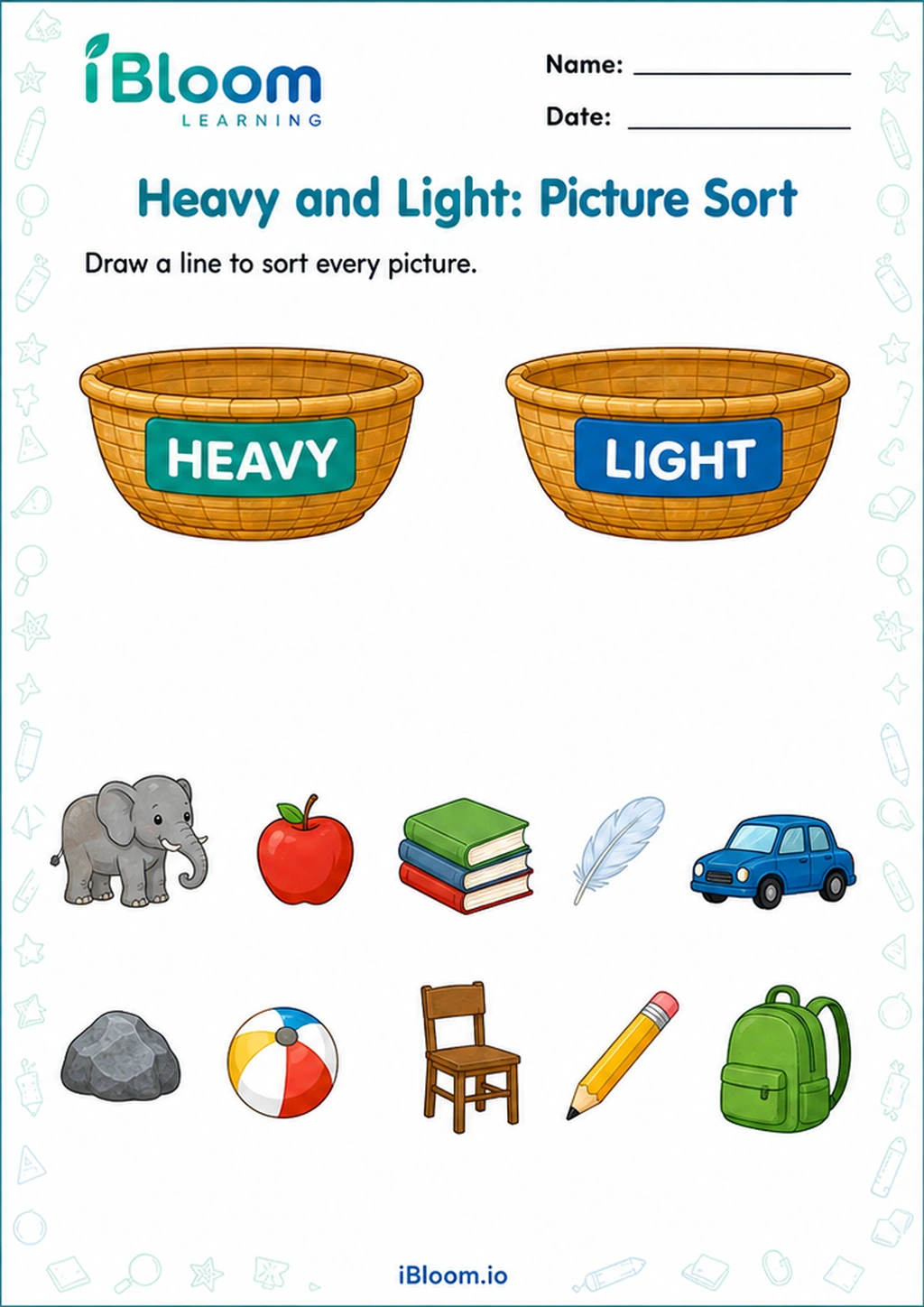 Heavy and Light: Picture SortLKG printable practice for Heavy and Light.LKGFree PDF preview
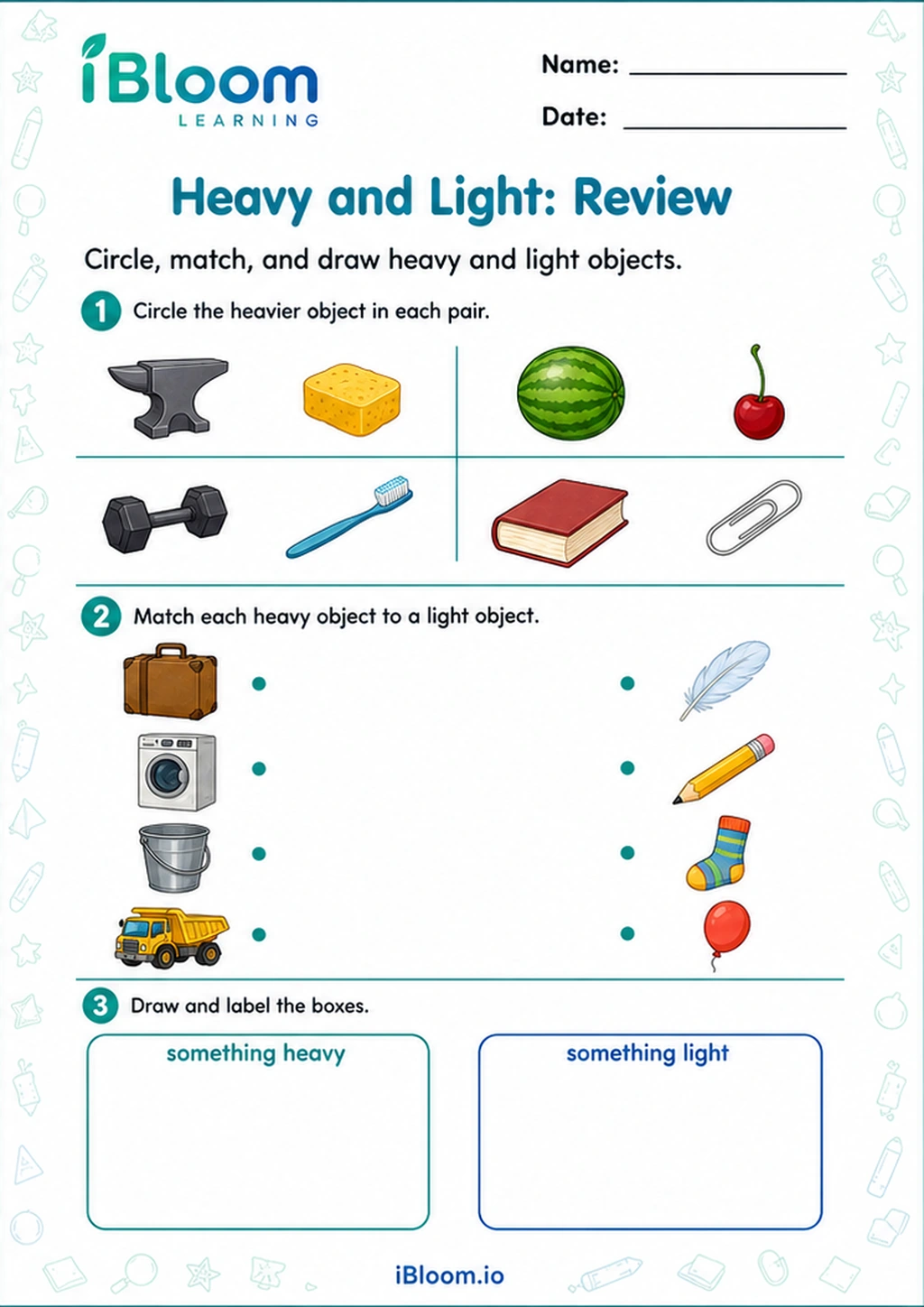 Heavy and Light: ReviewLKG printable practice for Heavy and Light.LKGFree PDF preview
Practice that builds confidence
What children learn
These comparison worksheets help Nursery, LKG and UKG children notice how objects are alike or different in size, height, length and weight. Children practise words such as big, small, tall, short, long, heavy, light, biggest and shortest.
The printable activities include matching, circling, sorting, colouring and choosing the correct object. Each page uses simple pictures so young learners can compare visually before they are expected to explain their thinking.
Comparison is an early maths skill that builds observation, vocabulary and reasoning. In these worksheets, children compare two or more objects by size, height, length and weight. They meet pairs such as big/small, tall/short, long/short and heavy/light, then move to groups where they identify the biggest, smallest, tallest, shortest, longest or shortest object.

Progression across the activities
The practice begins with clear two-object choices, such as marking the big ball or the small box. It then includes same and different size tasks, where children must look more carefully instead of choosing only the most obvious picture. Later pages ask children to compare three objects, for example finding the tallest tree or the shortest pencil. This gentle progression suits Nursery, LKG and UKG learners who are still building attention and language.
Parent routine at home
Choose one worksheet and first talk about real objects nearby: a big plate and small spoon, a tall bottle and short cup, a long ribbon and short crayon. Ask your child to say the comparison word aloud before marking the answer. After the worksheet, invite them to find one more example in the room. This links the printable task with daily life and helps the words become meaningful.

Classroom uses for teachers
Teachers can use these pages for maths readiness, oral language practice, morning work or small-group centres. A comparison worksheet can follow a hands-on sorting activity with blocks, pencils, leaves or classroom objects. Children may also colour the correct answer, circle it, or explain it to a partner using a full phrase such as “This bag is heavier.”

Common errors to watch for
Some children confuse tall and long because both can look “big”. Use tall for height from bottom to top, and long for length from end to end. Heavy and big are also not always the same; a small stone may be heavier than a big feather. For biggest and smallest, remind children to look at all the pictures before choosing.
Free printable PDF download
Use this comparison worksheets for nursery lkg ukg page to preview the activity, print it, or download it as a PDF for quick practice. It works well for homework, homeschool lessons, tutoring, morning work, revision, and classroom centers.
Answers and answer key support
After the child completes the worksheet independently, parents and teachers can use the answer support or answer key information to check the work, review mistakes, and choose the next practice step.
Why iBloom worksheets help
iBloom comparison worksheets use familiar pictures, uncluttered layouts and repeated vocabulary so children can focus on the concept, not complicated instructions. A child-friendly strategy is: look at both objects, say the comparison word, point to your choice, then mark it. This simple routine builds confidence and careful observation.
Helpful answers
Frequently asked questions
Which children are these comparison worksheets for?
They are designed for Nursery, LKG and UKG children who are learning early maths vocabulary and simple visual comparison skills.
What comparison words are covered?
The worksheets cover big and small, tall and short, longest and shortest, heavy and light, same and different size, biggest and smallest, and tallest and shortest.
How can I teach heavy and light if the worksheet has only pictures?
Before using the page, let your child hold real objects such as a book, spoon, toy or cotton ball. Then connect the hands-on feeling of weight to the worksheet pictures.
Why does my child mix up tall and long?
This is common. Explain that tall means height going up and down, like a tree, while long means distance from one end to another, like a rope or pencil.
Can these worksheets be used in a classroom activity?
Yes. Teachers can use them after object sorting, during maths centres, for oral vocabulary practice or as quick independent work for pre-primary learners.
Is this comparison worksheets for nursery lkg ukg free?
Yes. You can preview it for free and use the printable worksheet for home or classroom practice.
Can I download this comparison worksheets for nursery lkg ukg as a PDF?
Yes. Use the worksheet download option to save a printable PDF, or print the worksheet directly from the page.
Does this comparison worksheets for nursery lkg ukg include answers or an answer key?
When the activity has fixed answers, iBloom includes answer support so parents and teachers can check the completed worksheet.