Free printable practice
Consonants Practice Activities
Printable Nursery, LKG and UKG consonant worksheets for identifying beginning and ending consonant sounds, blends, digraphs and simple word patterns.
Explore Consonants
Free printable worksheet PDFs
Preview every available page, then download the free worksheet PDF for home, homeschool, tutoring, or classroom practice.
Preview the exact activity before downloading it.
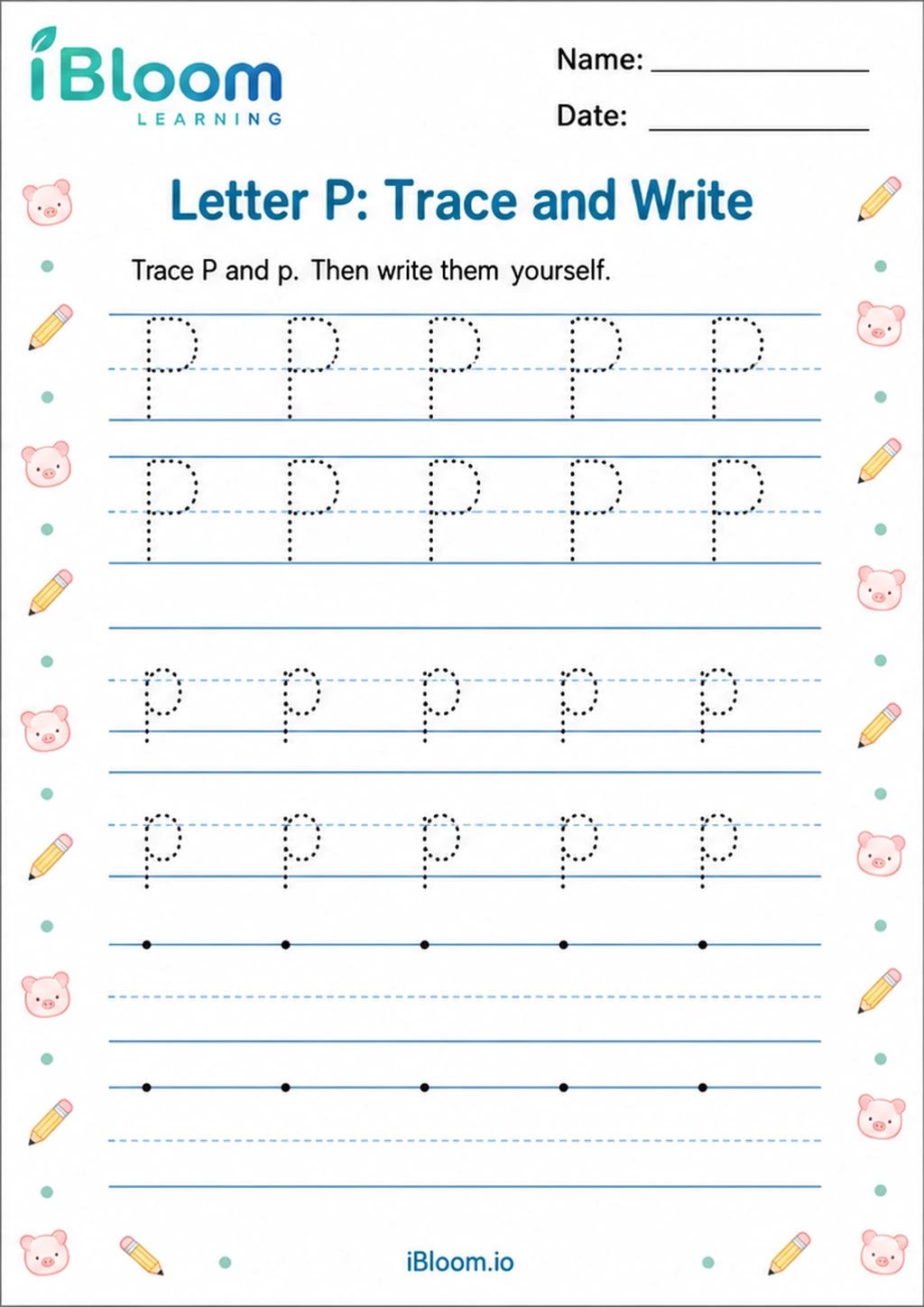 Letter P: Trace and WriteLKG printable practice for Letter P.LKGFree PDF preview
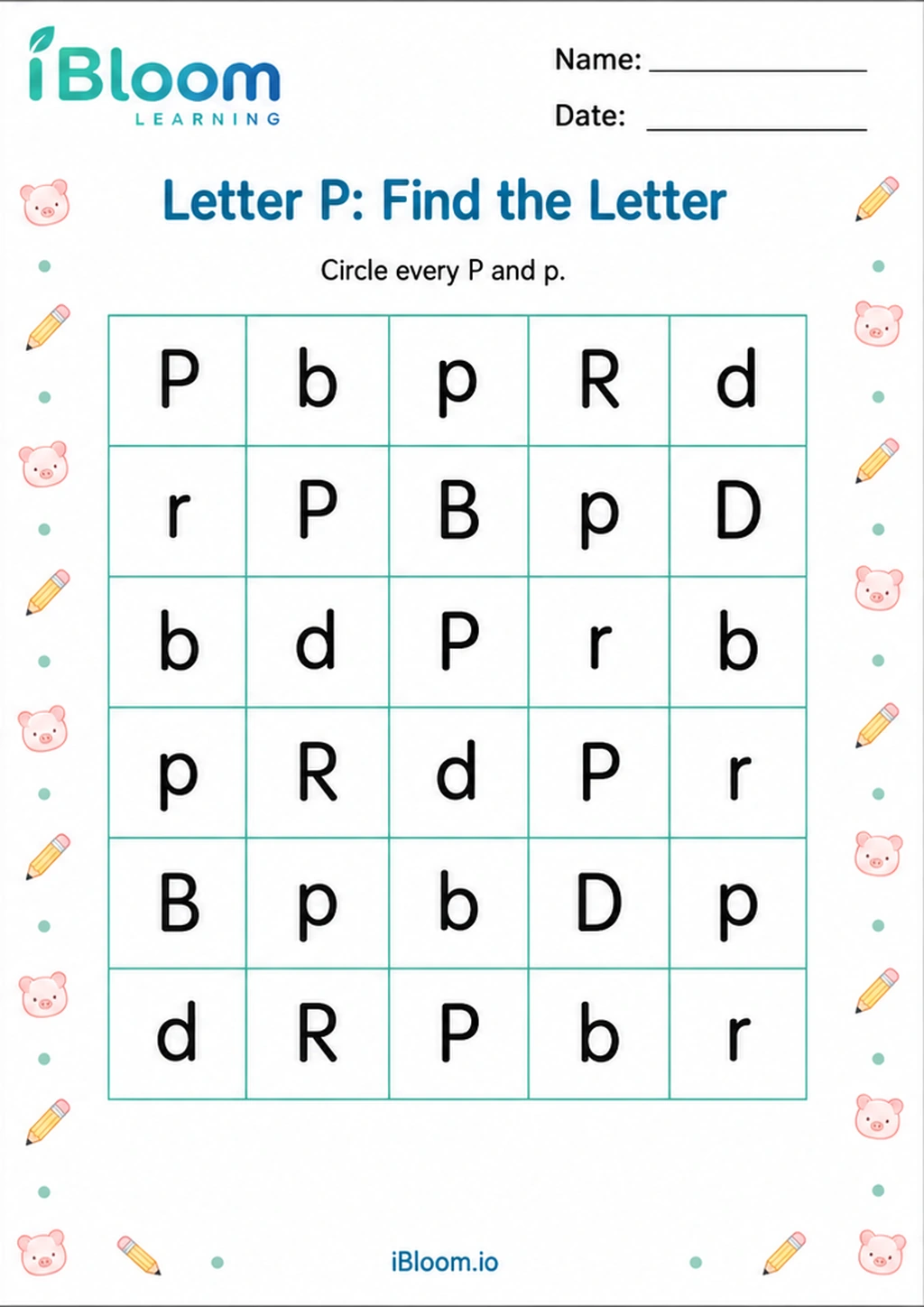 Letter P: Find the LetterLKG printable practice for Letter P.LKGFree PDF preview
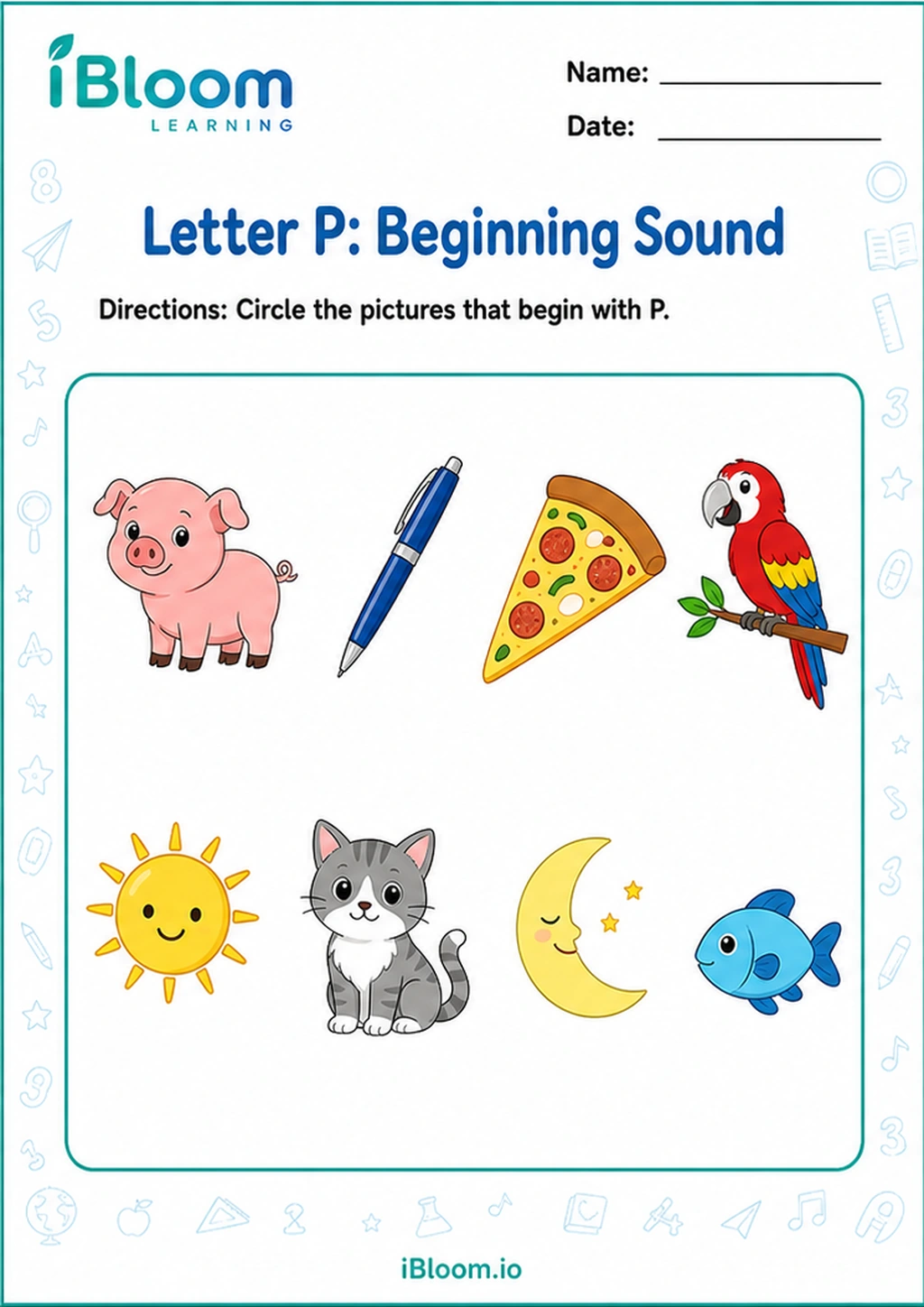 Letter P: Beginning SoundLKG printable practice for Letter P.LKGFree PDF preview
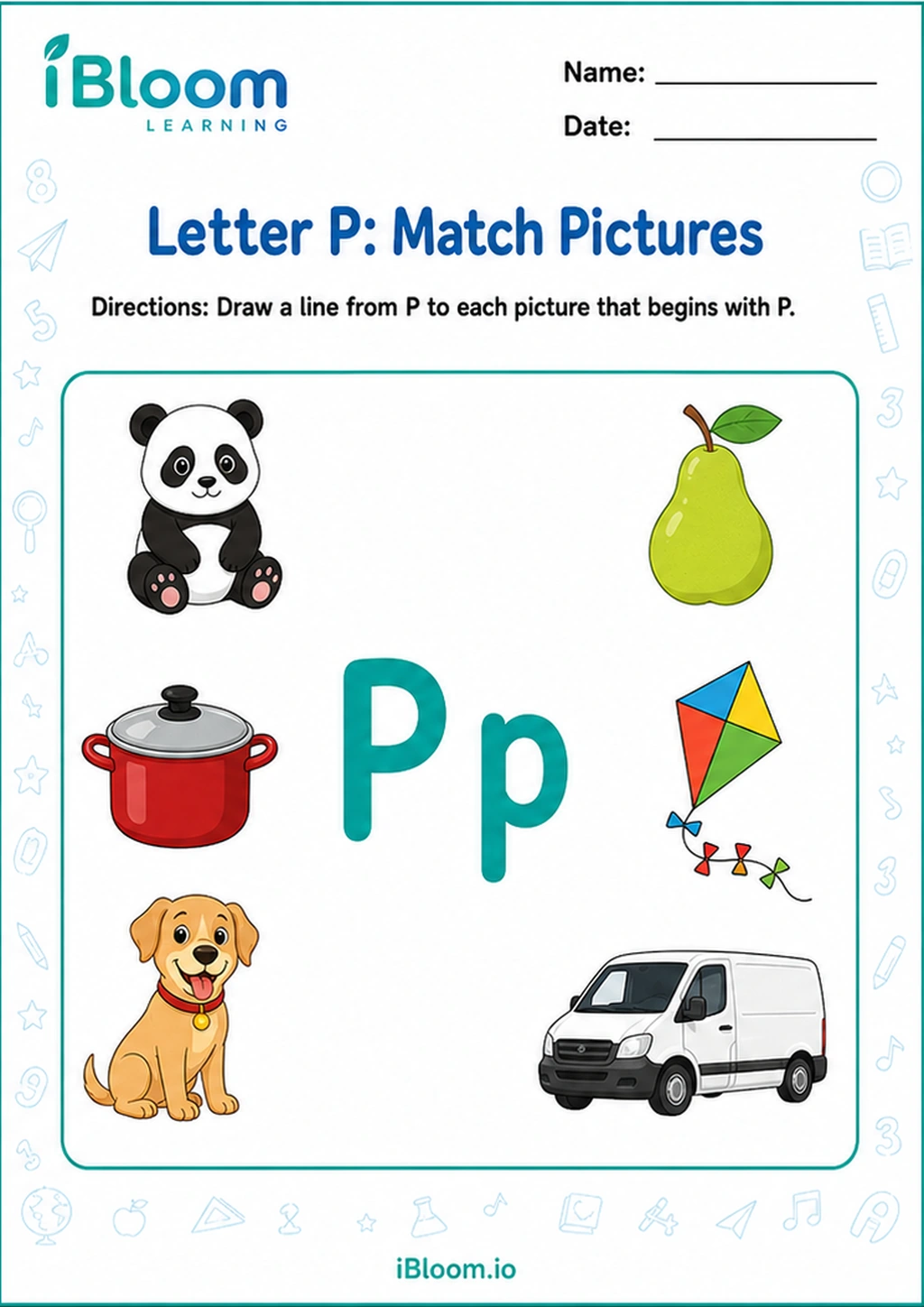 Letter P: Match PicturesLKG printable practice for Letter P.LKGFree PDF preview
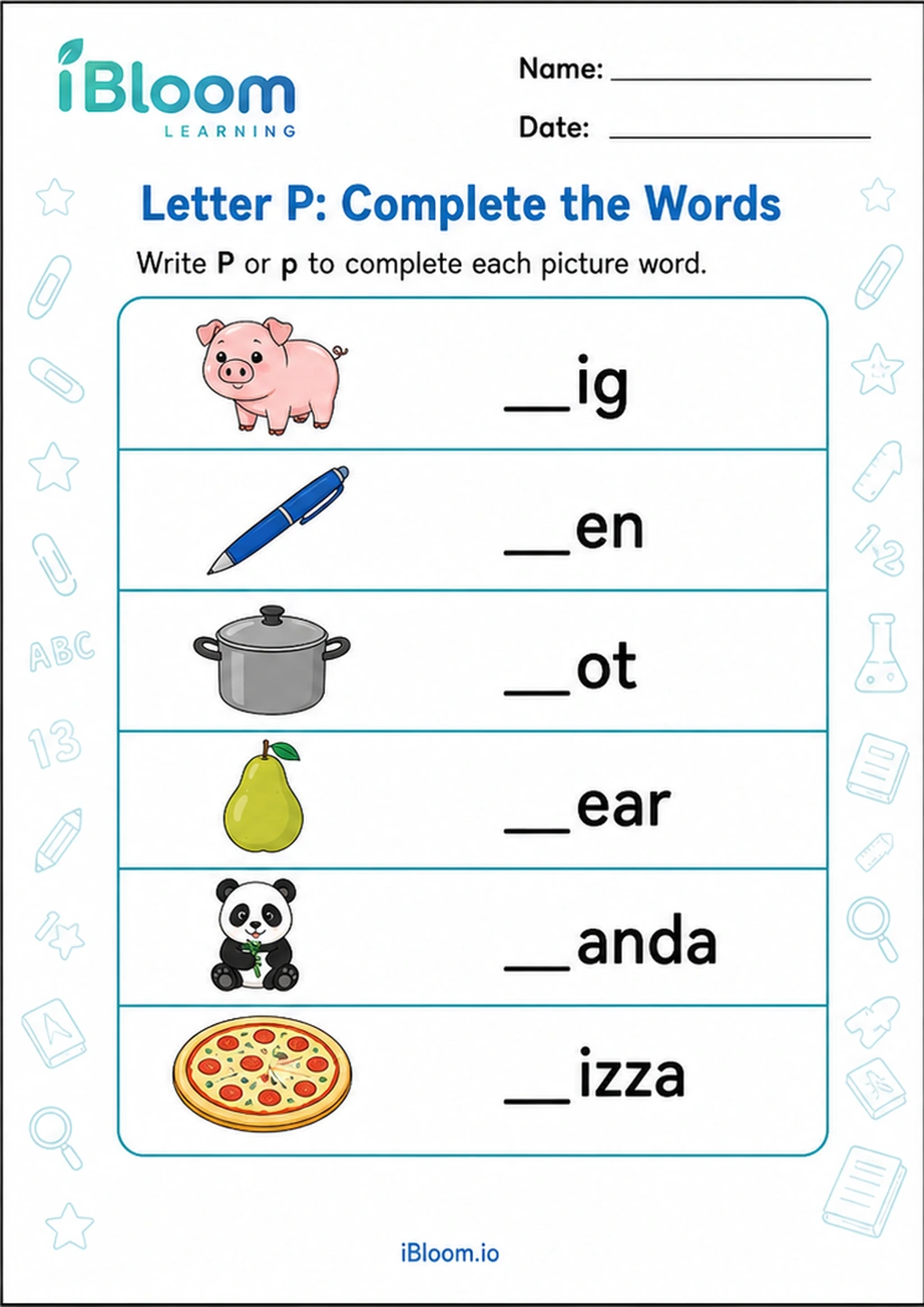 Letter P: Complete the WordsLKG printable practice for Letter P.LKGFree PDF preview
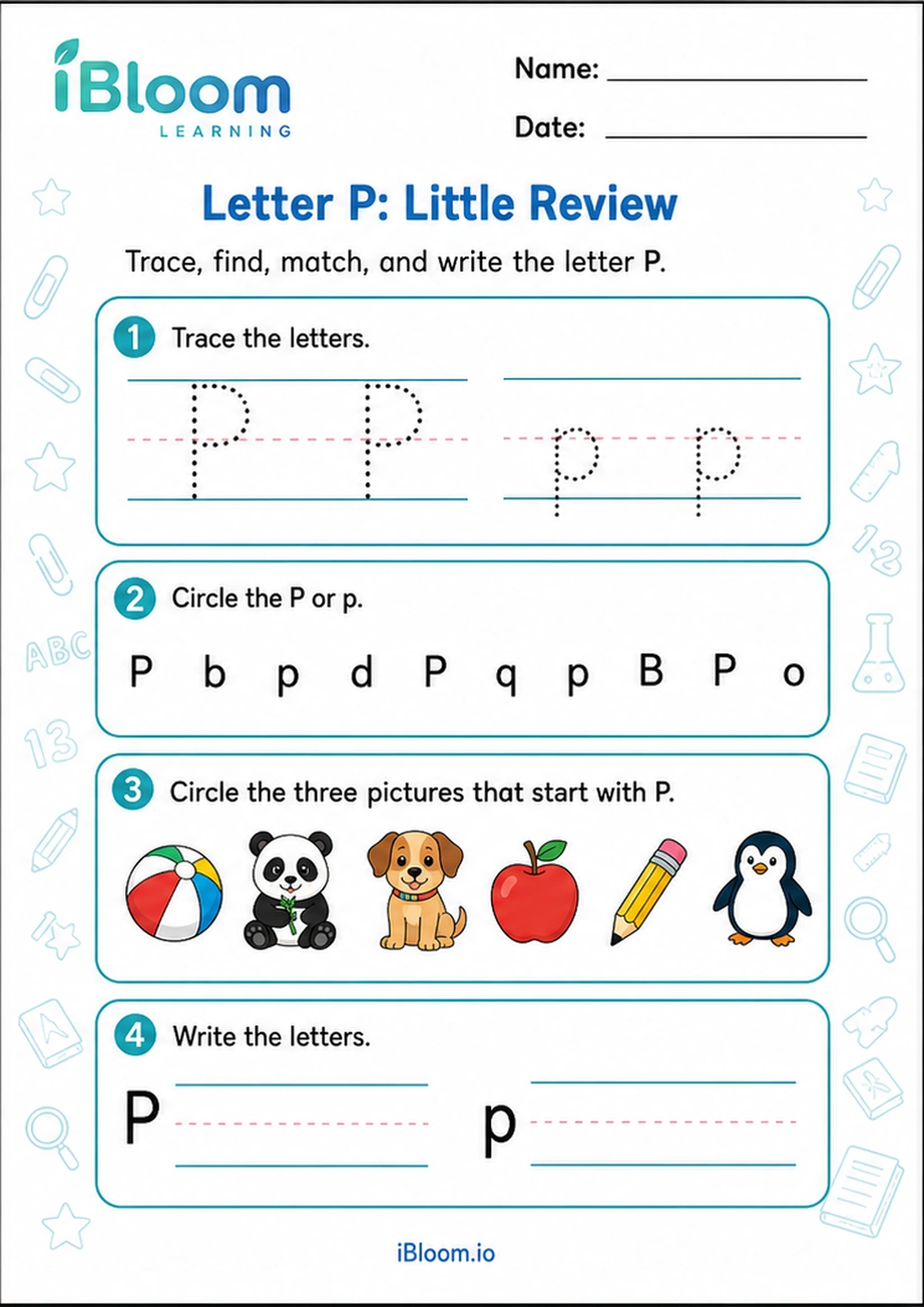 Letter P: Little ReviewLKG printable practice for Letter P.LKGFree PDF preview
Practice that builds confidence
Building consonant awareness
These consonants practice activities help Nursery, LKG and UKG children listen for, recognise and use consonant sounds in simple words. Children practise beginning consonants, ending consonants, ending letters, consonant blends and early phonics digraphs through clear picture-based tasks.
The printable worksheets include activities to identify sounds, match letters to pictures, complete missing consonants and notice how sounds appear at the start and end of words. They support early reading, spelling readiness and confident sound-letter connection.
Consonants are the letter sounds that help children hear the shape of a word, such as the /b/ in bat or the /t/ at the end of cat. At Nursery, LKG and UKG level, the aim is not memorising long rules, but developing careful listening. These worksheets move from identifying a single consonant sound to using that sound in a simple printed word.

From beginning sounds to ending sounds
Children first work with beginning consonants because the first sound is often easiest to hear. They may circle the picture that begins with m, match sun to s, or choose the missing first letter in a word. The practice then extends to ending consonants and ending letters, where children listen for the final sound in words like dog, cup or fan. This builds attention to the whole word, not only the first letter.
Blends and digraphs in simple words
As children grow more confident, they meet phonics consonant blends such as bl, cl, st or tr, where two consonants keep their own sounds. They also begin noticing phonics digraphs such as sh or ch, where two letters work together to make one sound. The activities use short, familiar words and picture support so children can connect what they see, say and hear.
A simple parent routine
At home, choose one worksheet and read the pictures aloud together. Ask, “What sound do you hear first?” or “What sound comes at the end?” Let the child say the word slowly, tap the sounds on fingers, then write or colour the matching letter. Keep the focus on listening and trying, rather than rushing to finish the page.

Classroom uses for teachers
Teachers can use these printables for phonics groups, revision sheets, morning work or literacy centres. One group may sort pictures by beginning consonant, while another completes missing ending consonants. Blends and digraph pages are useful for children who are ready to move beyond single-letter sound practice.

Free printable PDF download
Use this consonants worksheets for nursery lkg ukg page to preview the activity, print it, or download it as a PDF for quick practice. It works well for homework, homeschool lessons, tutoring, morning work, revision, and classroom centers.
Answers and answer key support
After the child completes the worksheet independently, parents and teachers can use the answer support or answer key information to check the work, review mistakes, and choose the next practice step.
Why iBloom worksheets help
The pages progress from identify tasks to beginning consonants, ending consonants, blends and digraphs, giving children repeated practice without feeling repetitive. Watch for common errors such as confusing letter names with sounds, hearing the vowel instead of the final consonant, or treating a blend as one sound. A child-friendly strategy is: say the word, stretch it slowly, listen for the target sound, then choose the letter or letters.
Helpful answers
Frequently asked questions
What consonant skills do these worksheets cover?
They cover identifying consonant sounds, beginning consonants, ending letters, ending consonants, phonics consonant blends and simple phonics digraphs.
Are these worksheets suitable for Nursery children?
Yes. Nursery children can start with picture-based identifying and beginning consonant pages, while LKG and UKG children can practise ending sounds, blends and digraphs.
How can I help my child hear an ending consonant?
Say the word slowly and slightly stretch the final sound, such as ca-t or cu-p. Ask the child to repeat the word and listen for the last sound before choosing the letter.
What is the difference between a blend and a digraph?
In a blend, both consonant sounds can still be heard, as in bl or st. In a digraph, two letters make one new sound, such as sh or ch.
Can teachers use these pages in phonics groups?
Yes. The worksheets work well for small-group phonics, literacy centres, revision, sound sorting and extra practice for children who need more support with consonant sounds.
Is this consonants worksheets for nursery lkg ukg free?
Yes. You can preview it for free and use the printable worksheet for home or classroom practice.
Can I download this consonants worksheets for nursery lkg ukg as a PDF?
Yes. Use the worksheet download option to save a printable PDF, or print the worksheet directly from the page.
Does this consonants worksheets for nursery lkg ukg include answers or an answer key?
When the activity has fixed answers, iBloom includes answer support so parents and teachers can check the completed worksheet.