Free printable practice
Letters Alphabet Practice Activities
Printable Nursery, LKG and UKG alphabet activities for tracing, printing, letter recognition, upper-lower case matching, word search and alphabetical order.
Explore Letters Alphabet




Free printable worksheet PDFs
Preview every available page, then download the free worksheet PDF for home, homeschool, tutoring, or classroom practice.
Preview the exact activity before downloading it.
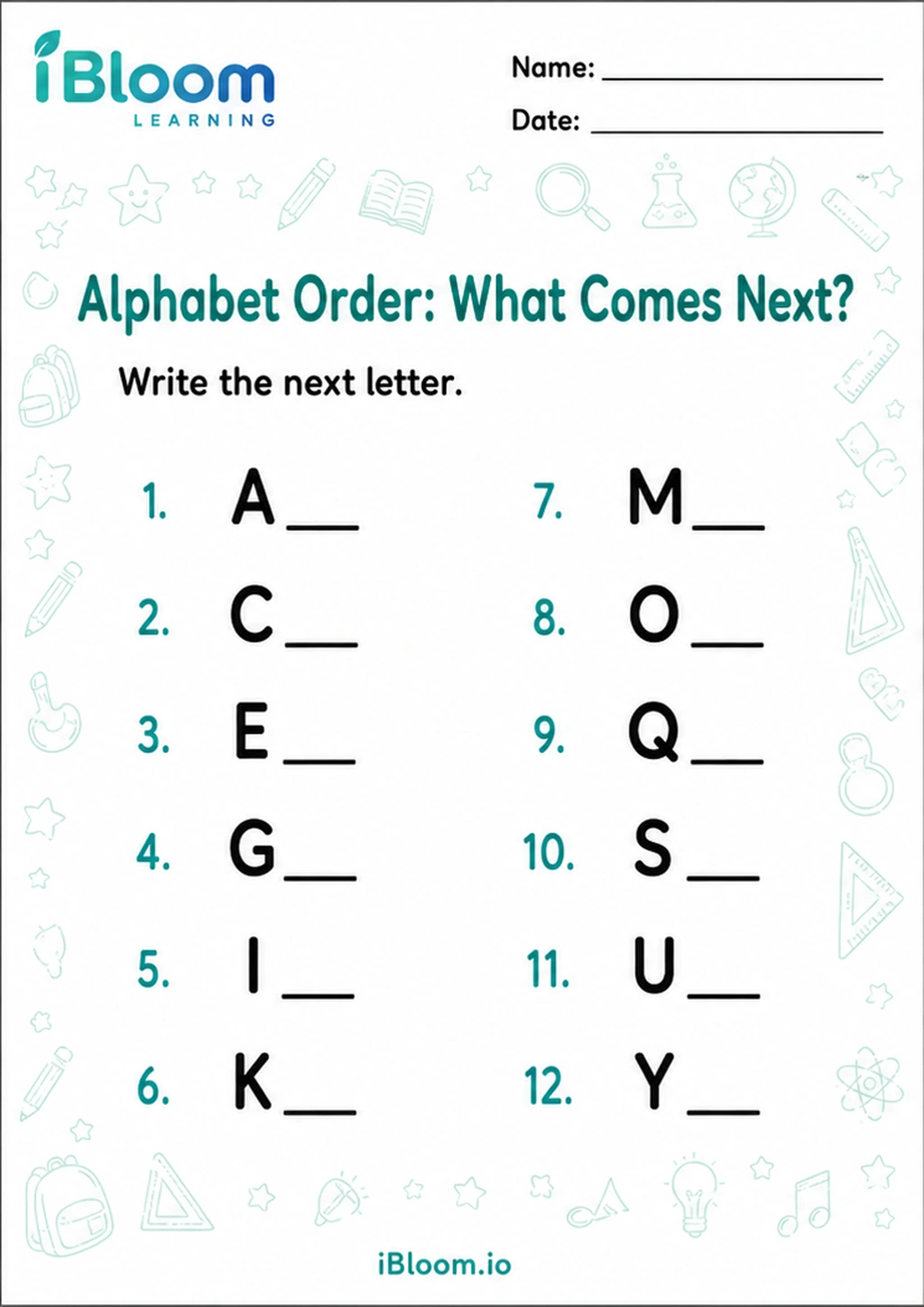 Alphabet Order: What Comes Next?UKG printable practice for Alphabetical Order.UKGFree PDF preview
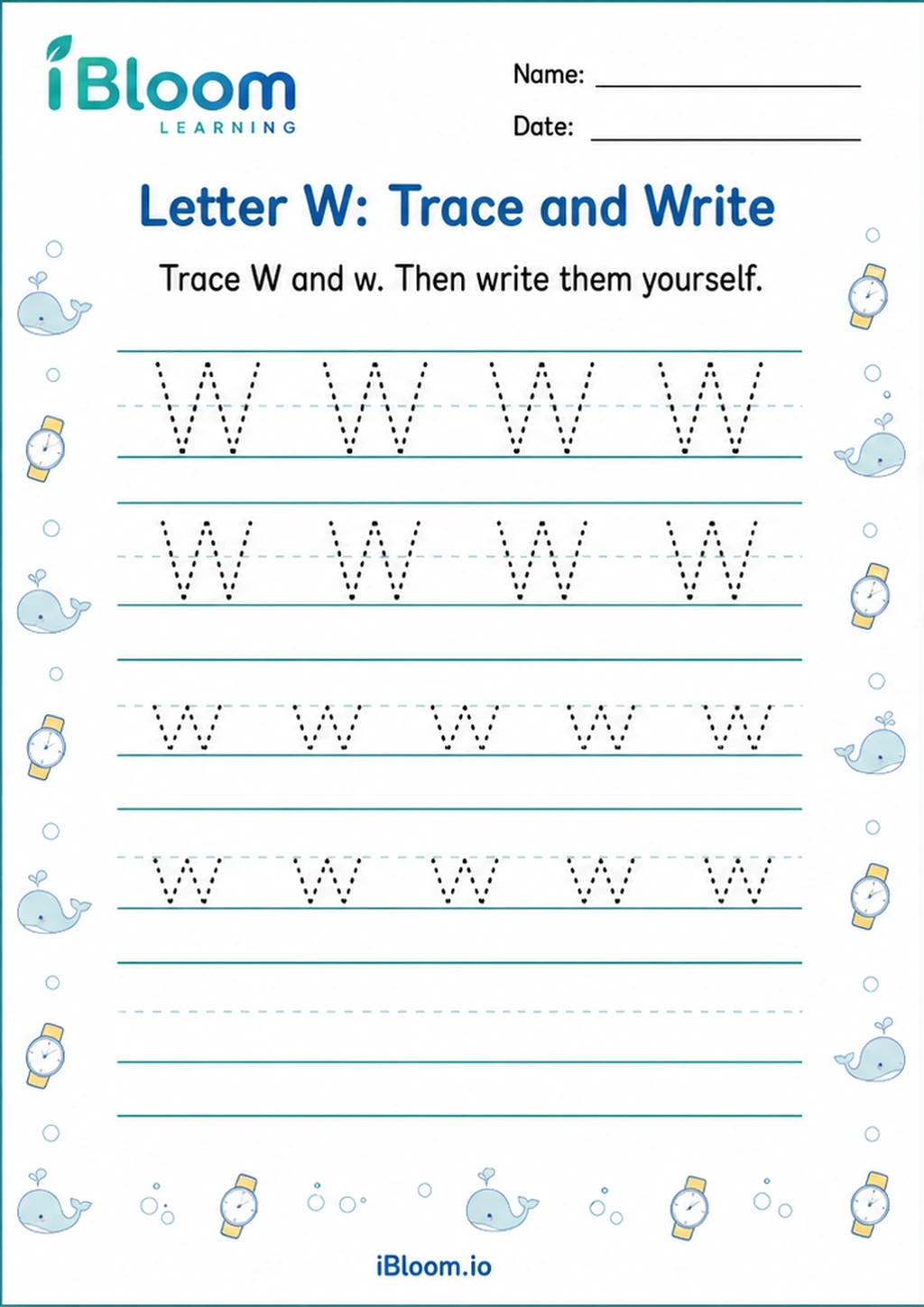 Letter W: Trace and WriteLKG printable practice for Letter W.LKGFree PDF preview
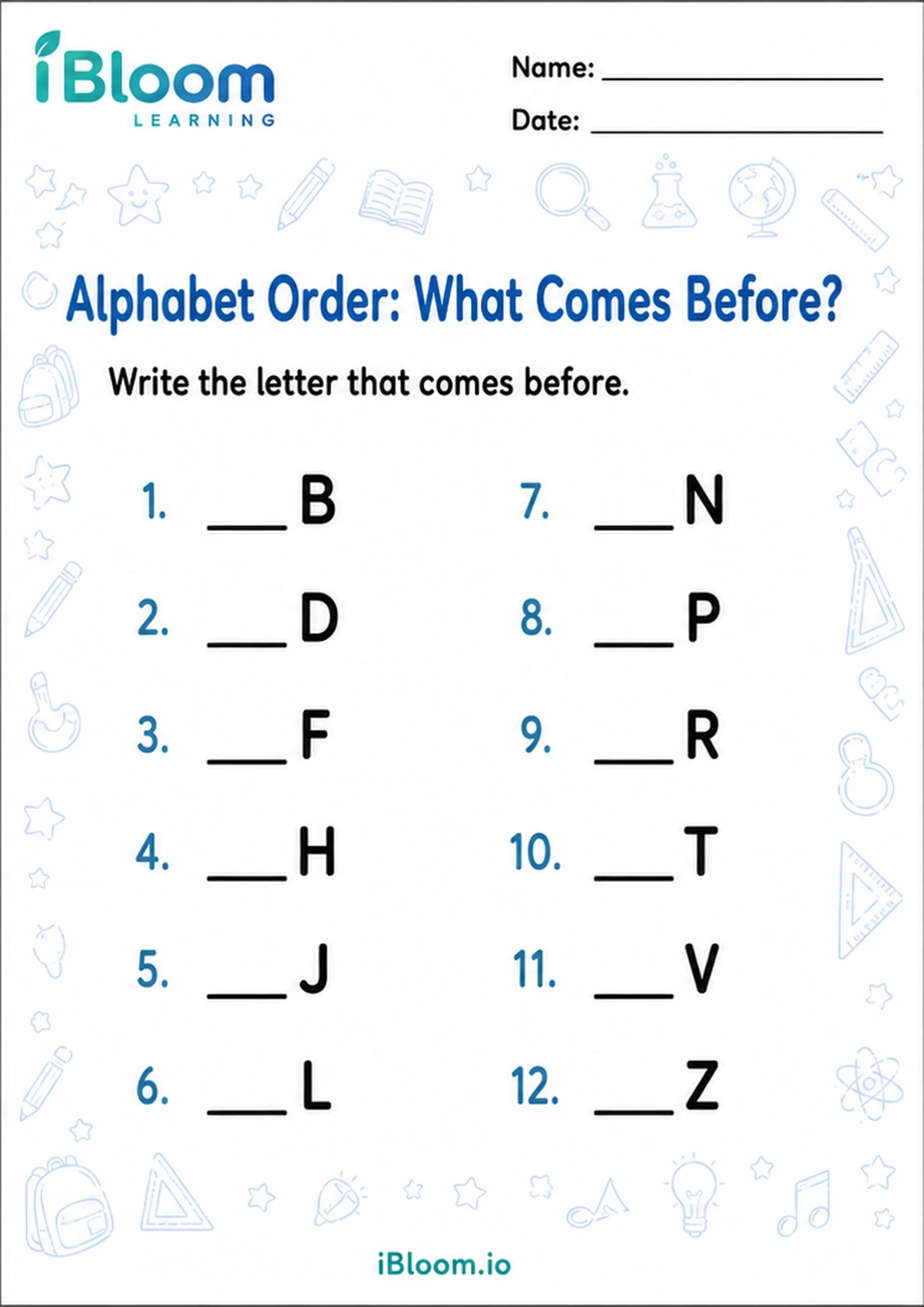 Alphabet Order: What Comes Before?UKG printable practice for Alphabetical Order.UKGFree PDF preview
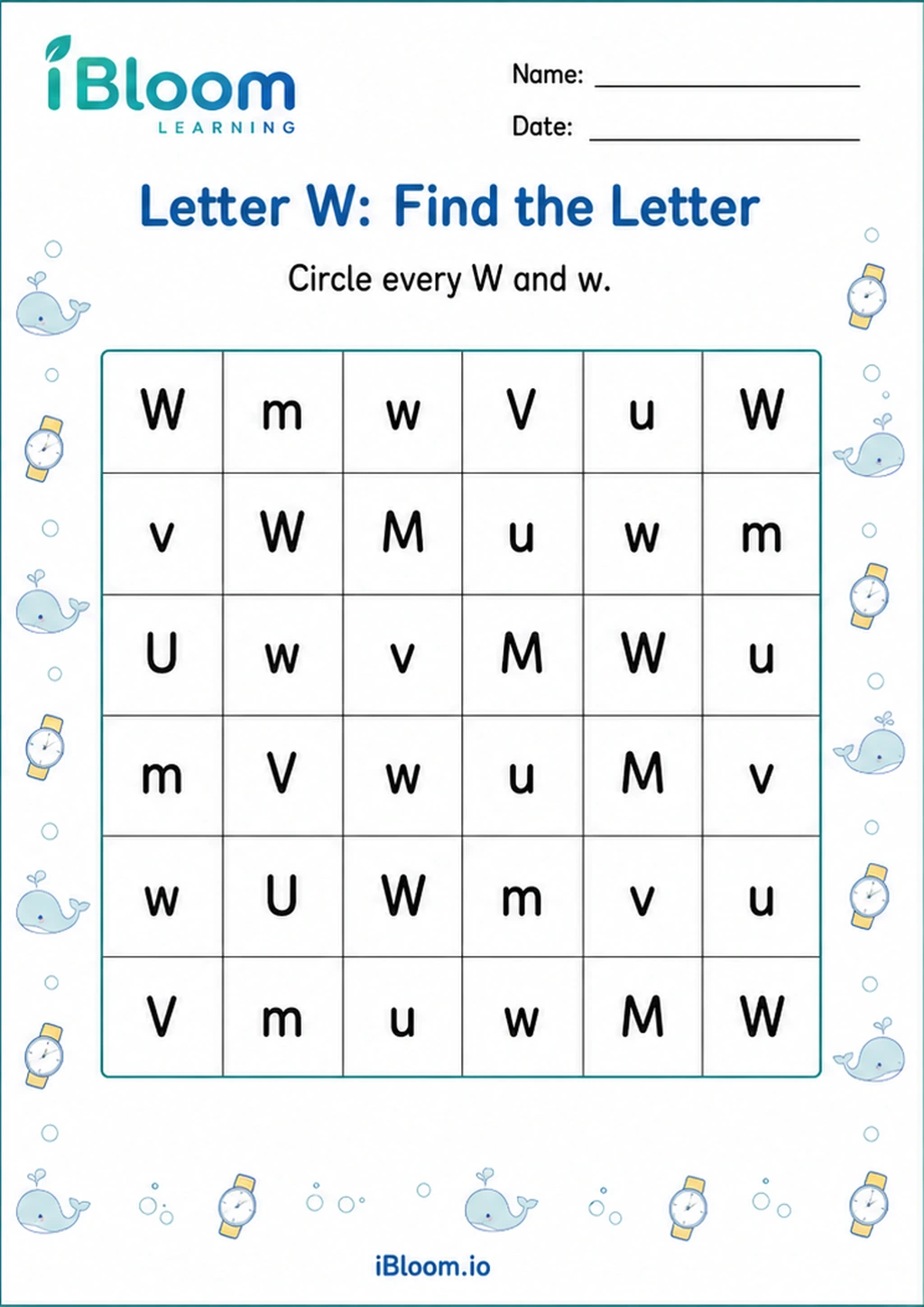 Letter W: Find the LetterLKG printable practice for Letter W.LKGFree PDF preview
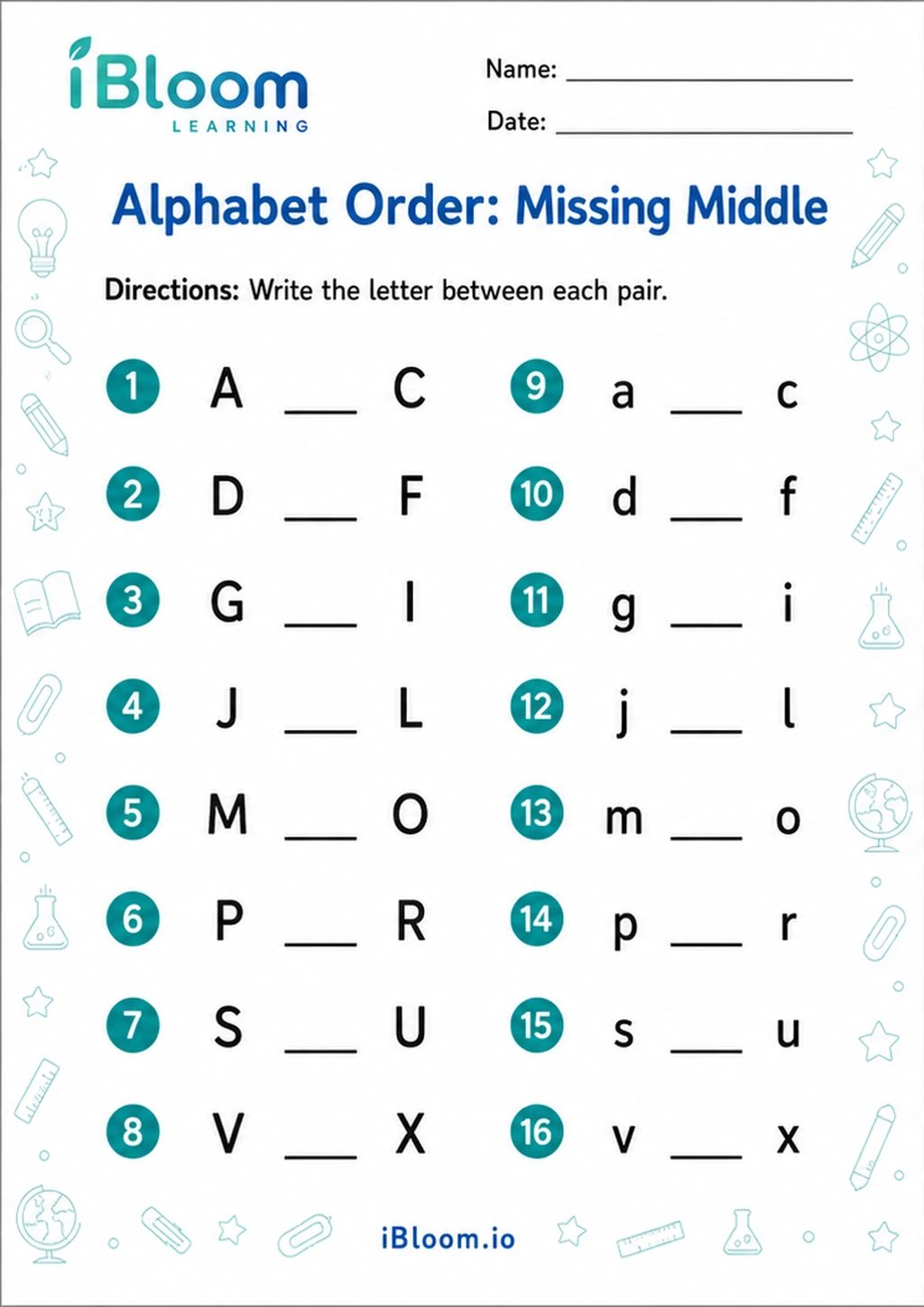 Alphabet Order: Missing MiddleUKG printable practice for Alphabetical Order.UKGFree PDF preview
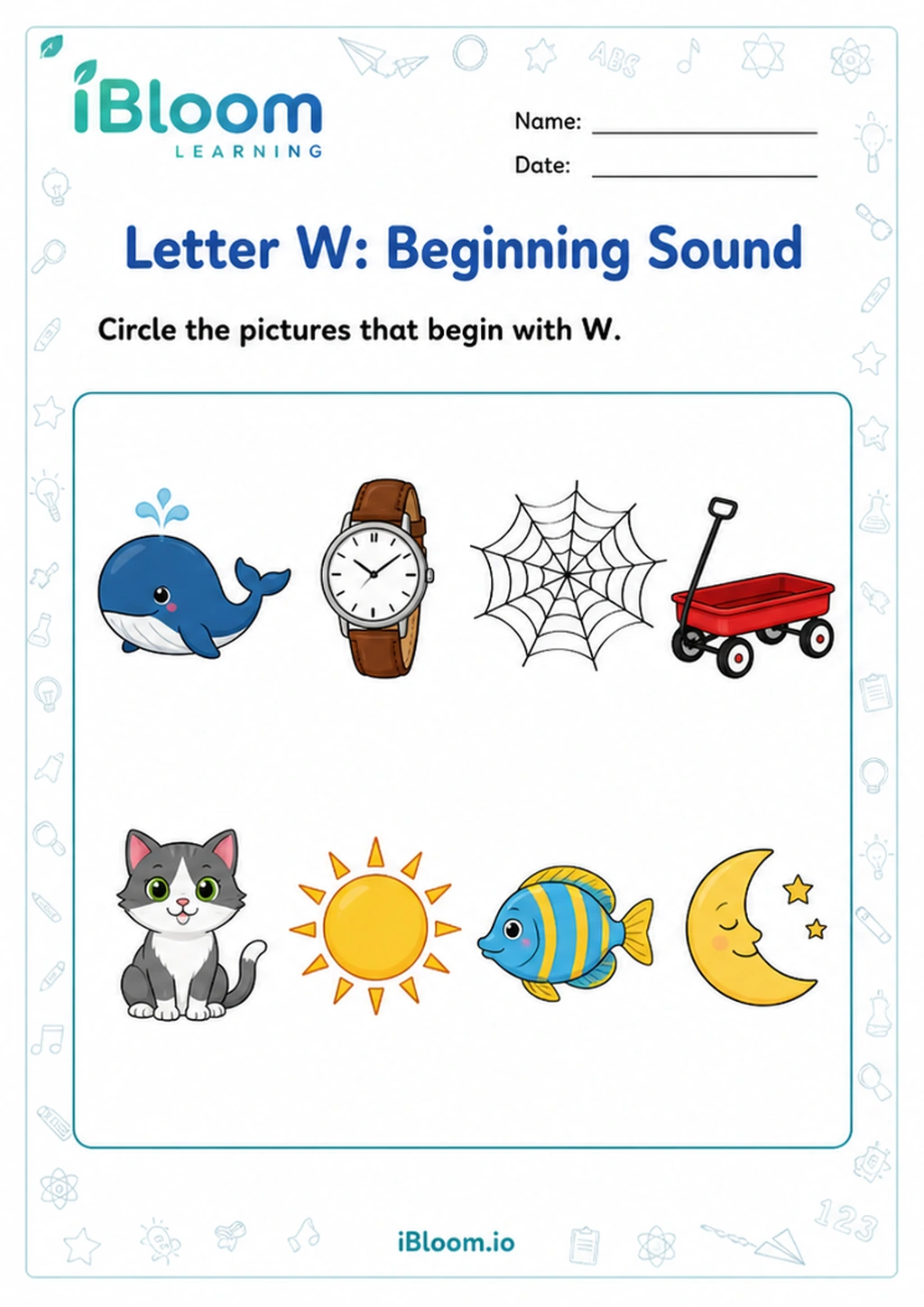 Letter W: Beginning SoundLKG printable practice for Letter W.LKGFree PDF preview
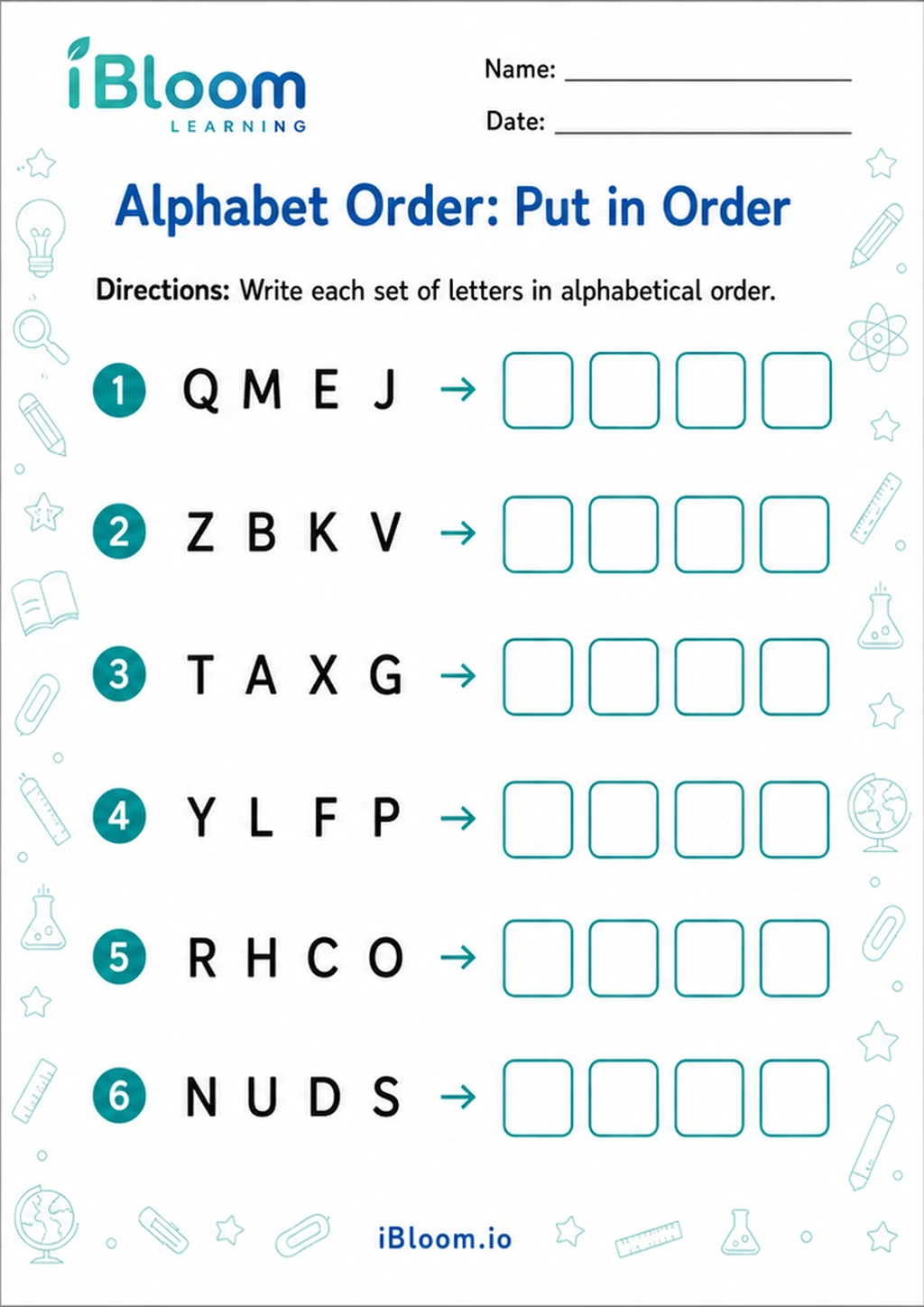 Alphabet Order: Put in OrderUKG printable practice for Alphabetical Order.UKGFree PDF preview
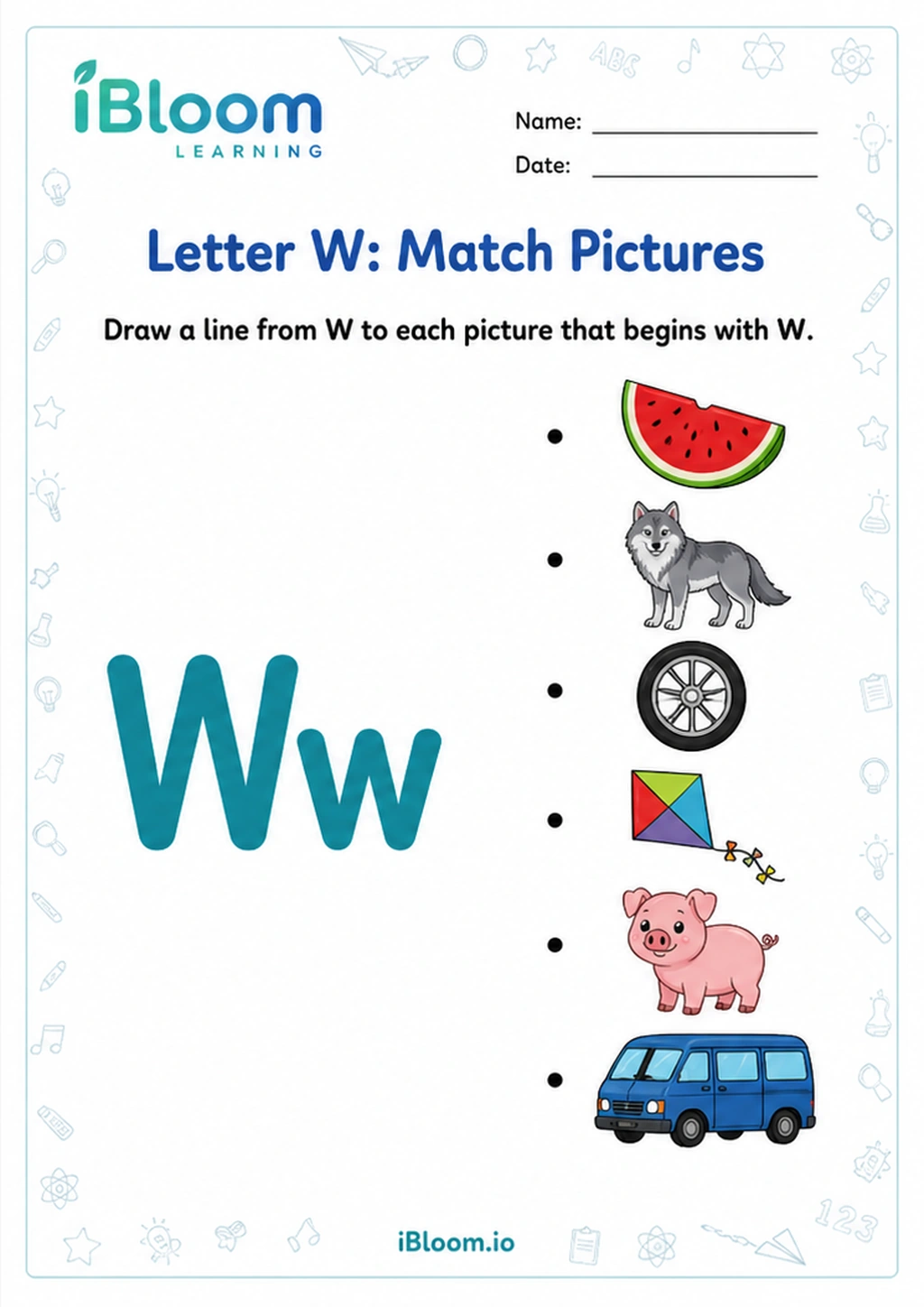 Letter W: Match PicturesLKG printable practice for Letter W.LKGFree PDF preview
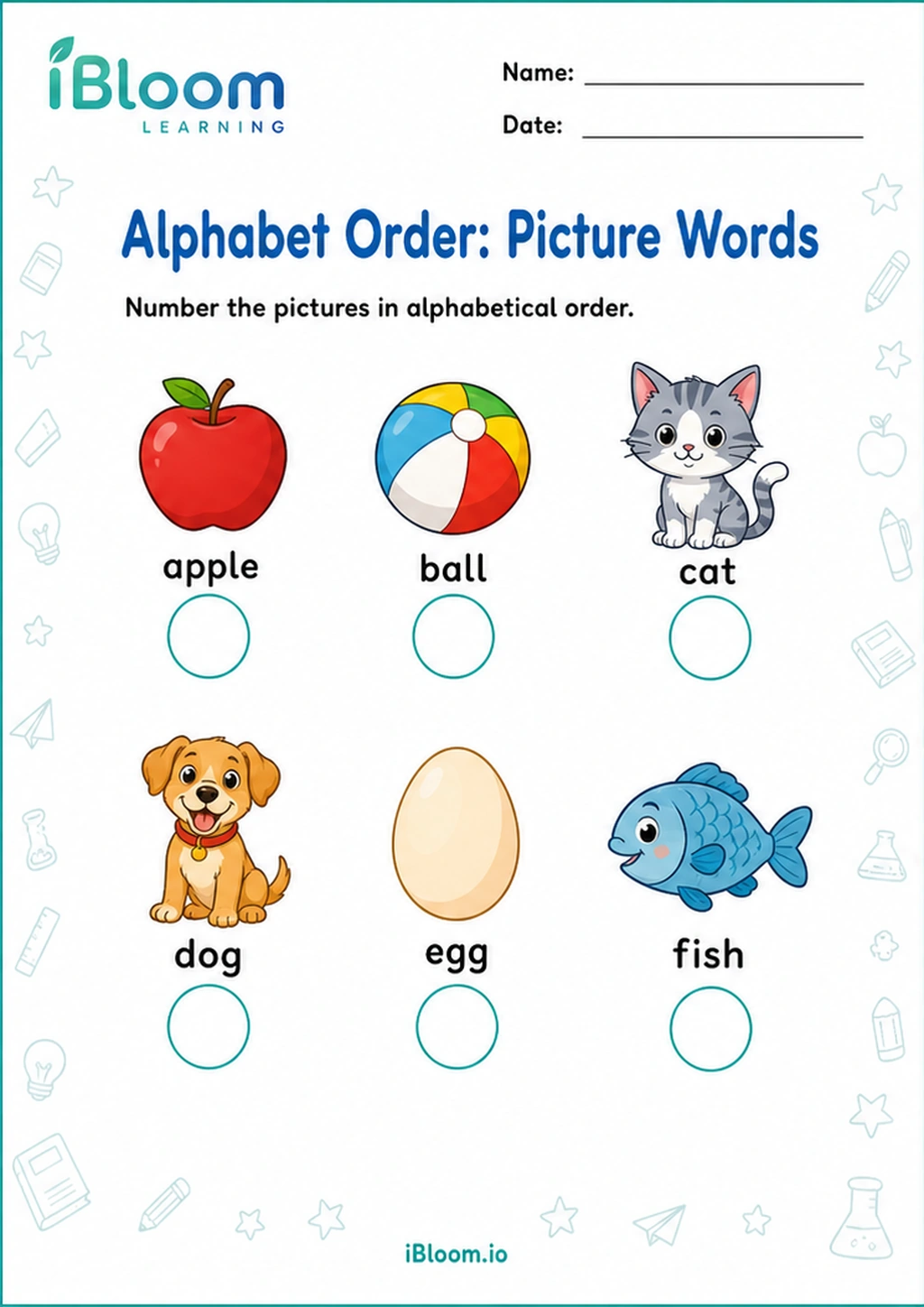 Alphabet Order: Picture WordsUKG printable practice for Alphabetical Order.UKGFree PDF preview
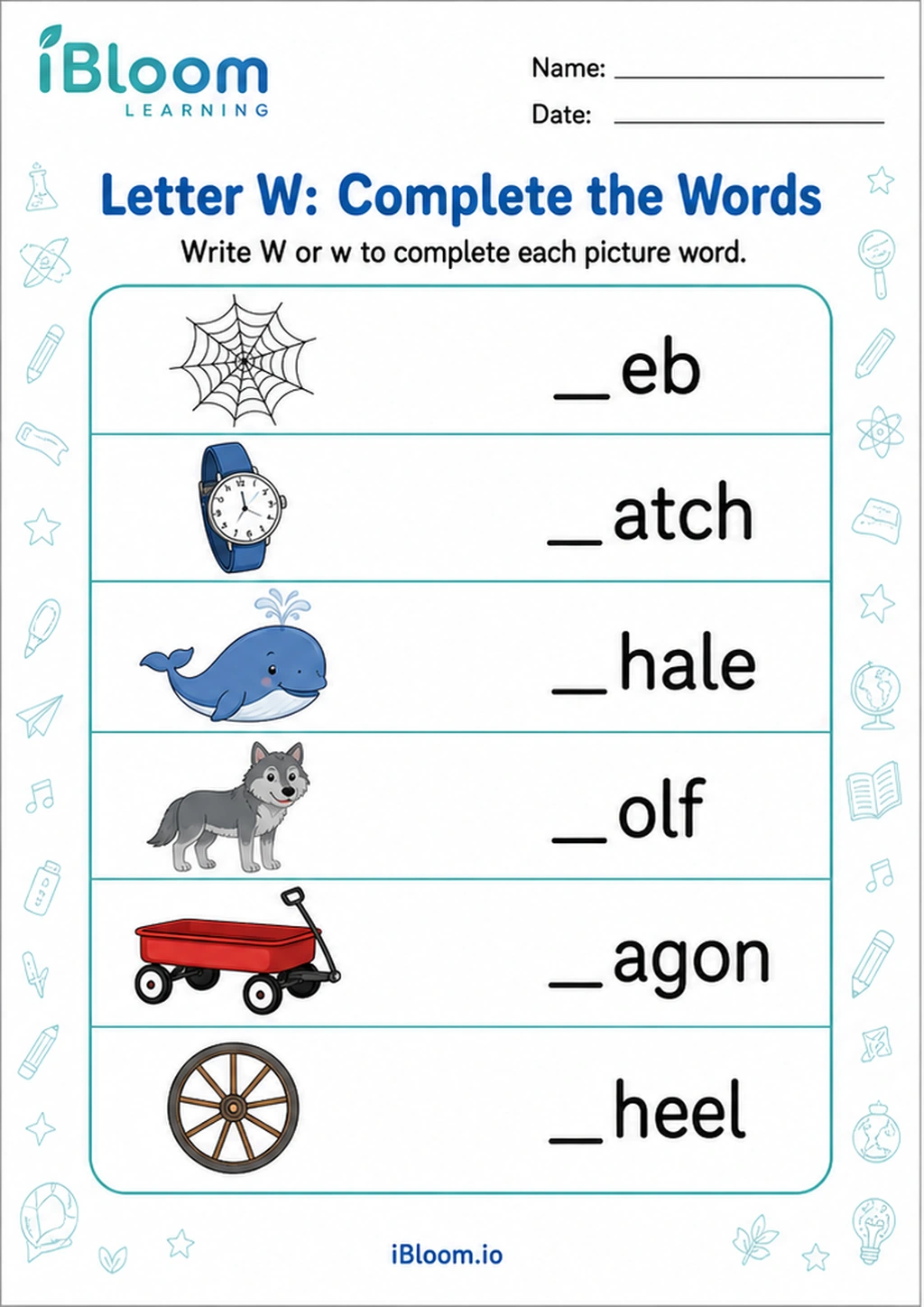 Letter W: Complete the WordsLKG printable practice for Letter W.LKGFree PDF preview
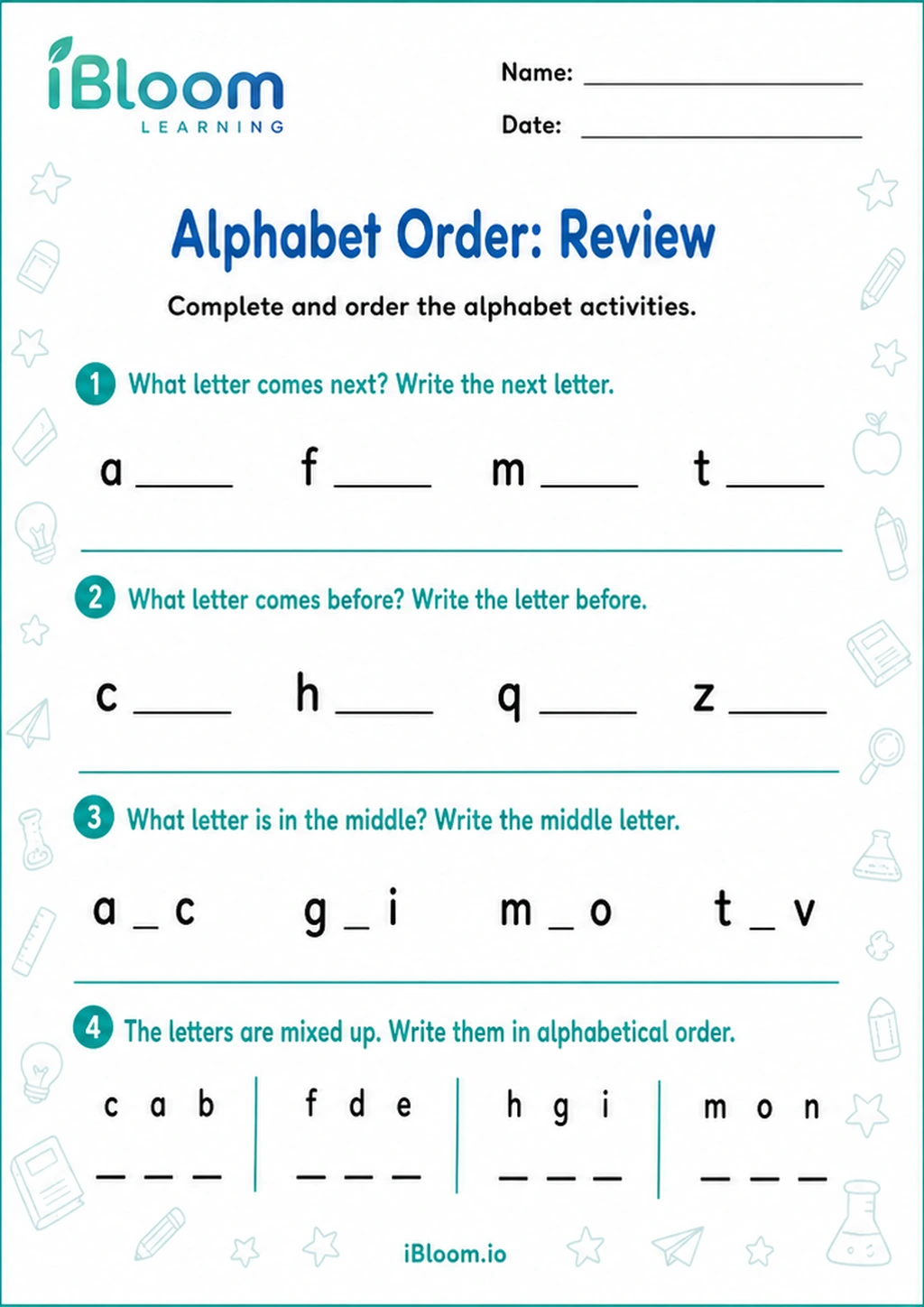 Alphabet Order: ReviewUKG printable practice for Alphabetical Order.UKGFree PDF preview
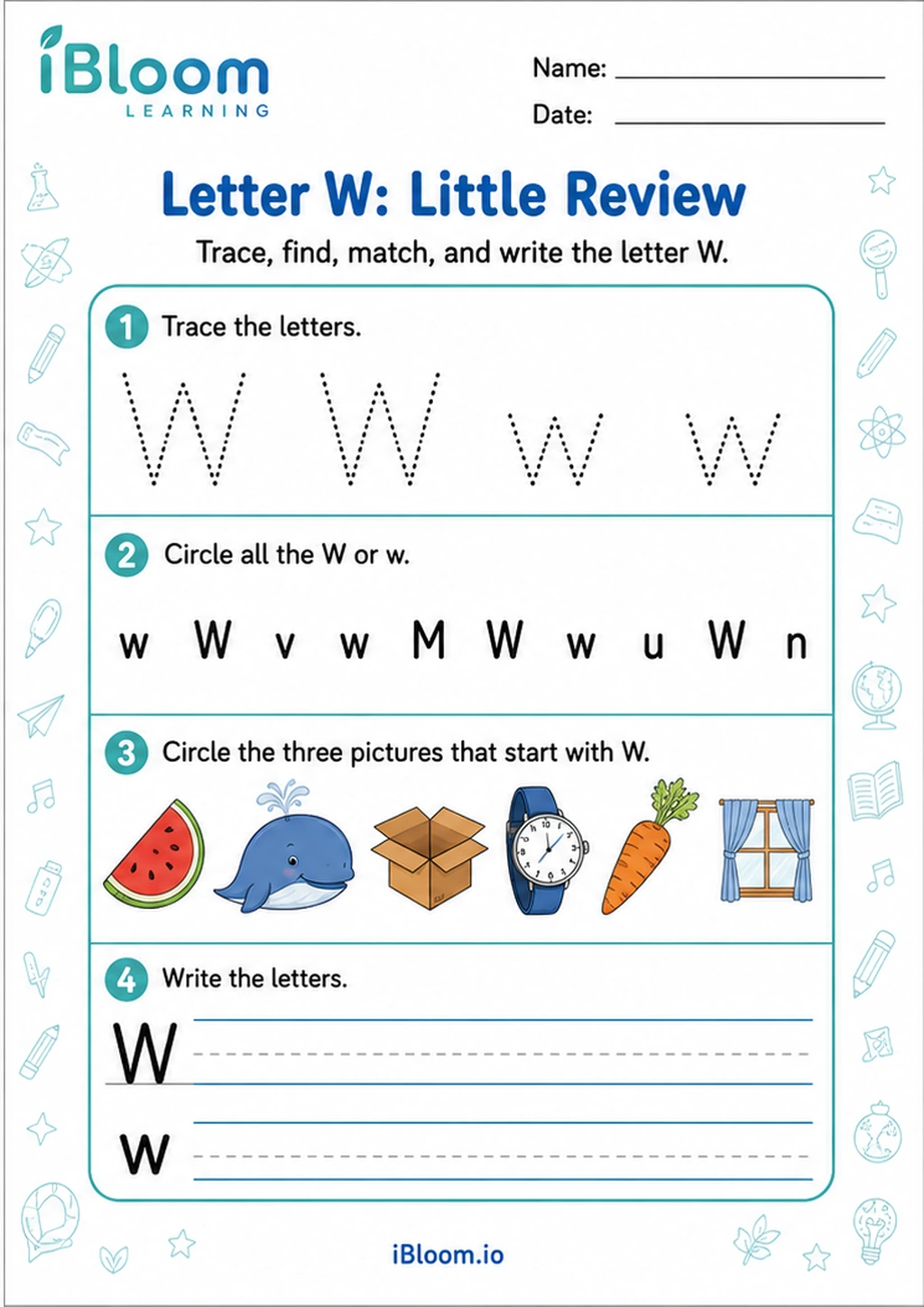 Letter W: Little ReviewLKG printable practice for Letter W.LKGFree PDF preview
Practice that builds confidence
From recognising to using letters
These Letters Alphabet worksheets help Nursery, LKG and UKG children build early English literacy through clear practice with letter names, letter shapes and simple letter-word connections. Children practise recognising uppercase and lowercase letters, tracing strokes, printing letters and spotting letters in words.
The printable activities include upper-lower case matching, learning letters pages, tracing letters, printing letters, letters and words practice, simple word searches and alphabetical order tasks. They are designed for short, focused practice at home or in class.
Alphabet learning begins with noticing the shape and name of each letter, then linking it to a sound and a familiar word such as A for apple or B for ball. These worksheets move from learning letters to using them in small tasks: matching uppercase and lowercase forms, finding letters inside words and arranging letters in alphabetical order.

Tracing, printing and letter formation
Tracing letters gives young children a guided path for pencil movement. Printing letters asks them to remember the shape and form it independently. Encourage correct starting points, left-to-right movement where needed and steady spacing. Common errors include reversing b and d, mixing p and q, writing uppercase letters in the middle of lowercase words, or stopping before a curved letter is complete.
Word search, letters and words
Word search activities strengthen visual scanning and careful attention. Letters and words pages help children see that letters are not isolated marks; they build meaningful words. Children may circle a target letter, identify the first letter of a picture word or match a letter to a simple word. Use letter names along with sounds so children hear and see the connection.
A simple home routine
Choose one or two letters for the day. Say the letter name, trace it in the air, trace it on the worksheet and then print it once or twice without help. Ask your child to find the same letter on a food packet, book cover or name label. End by saying a word that begins with the letter. Keep corrections gentle: show the starting point again instead of asking for many repeated copies.

Classroom practice and centres
Teachers can use these printables for morning work, literacy centres, small-group reinforcement or early finisher folders. Upper-lower case sheets work well after a letter introduction, tracing pages support fine-motor practice, and alphabetical order tasks suit children who already recognise several letters. Word search sheets can be used to build attention and confidence before reading longer words.

Free printable PDF download
Use this letters alphabet worksheets for nursery lkg ukg page to preview the activity, print it, or download it as a PDF for quick practice. It works well for homework, homeschool lessons, tutoring, morning work, revision, and classroom centers.
Answers and answer key support
After the child completes the worksheet independently, parents and teachers can use the answer support or answer key information to check the work, review mistakes, and choose the next practice step.
Why iBloom worksheets help
The collection is organised around the exact skills young learners need: learning letters, tracing, printing, upper-lower case, letters in words, word search and alphabetical order. A child-friendly strategy is Look, say, trace, write, find: look at the letter, say its name, trace it, write it and find it in a word or around the room.
Helpful answers
Frequently asked questions
Which children are these Letters Alphabet worksheets for?
They are suitable for Nursery, LKG and UKG children who are learning to recognise, trace, print and use English alphabet letters.
Should my child learn uppercase or lowercase letters first?
Many children notice uppercase letters first because the shapes are simpler, but they also need lowercase practice because most words in books use lowercase letters. These worksheets include both.
How do tracing letters and printing letters differ?
Tracing gives dotted or guided support for forming the letter. Printing asks the child to write the letter more independently, helping build memory of the shape and stroke pattern.
What should I do if my child reverses letters like b and d?
Show the starting point and direction slowly, compare only the two confusing letters, and give short practice. Reversals are common in early writing and usually improve with steady exposure.
How can alphabetical order worksheets help young learners?
They help children understand that letters follow a fixed sequence. This supports dictionary skills later and strengthens memory of the alphabet beyond singing the alphabet song.
Can these worksheets be used in a classroom?
Yes. Teachers can use them for literacy centres, small-group practice, revision after introducing a letter, early finisher work or take-home reinforcement.
Is this letters alphabet worksheets for nursery lkg ukg free?
Yes. You can preview it for free and use the printable worksheet for home or classroom practice.
Can I download this letters alphabet worksheets for nursery lkg ukg as a PDF?
Yes. Use the worksheet download option to save a printable PDF, or print the worksheet directly from the page.