Free printable practice
Ascending Descending Order Practice Activities
Printable Nursery, LKG and UKG maths activities for arranging objects and numbers from smallest to biggest and biggest to smallest.
Free printable worksheet PDFs
Preview every available page, then download the free worksheet PDF for home, homeschool, tutoring, or classroom practice.
Preview the exact activity before downloading it.
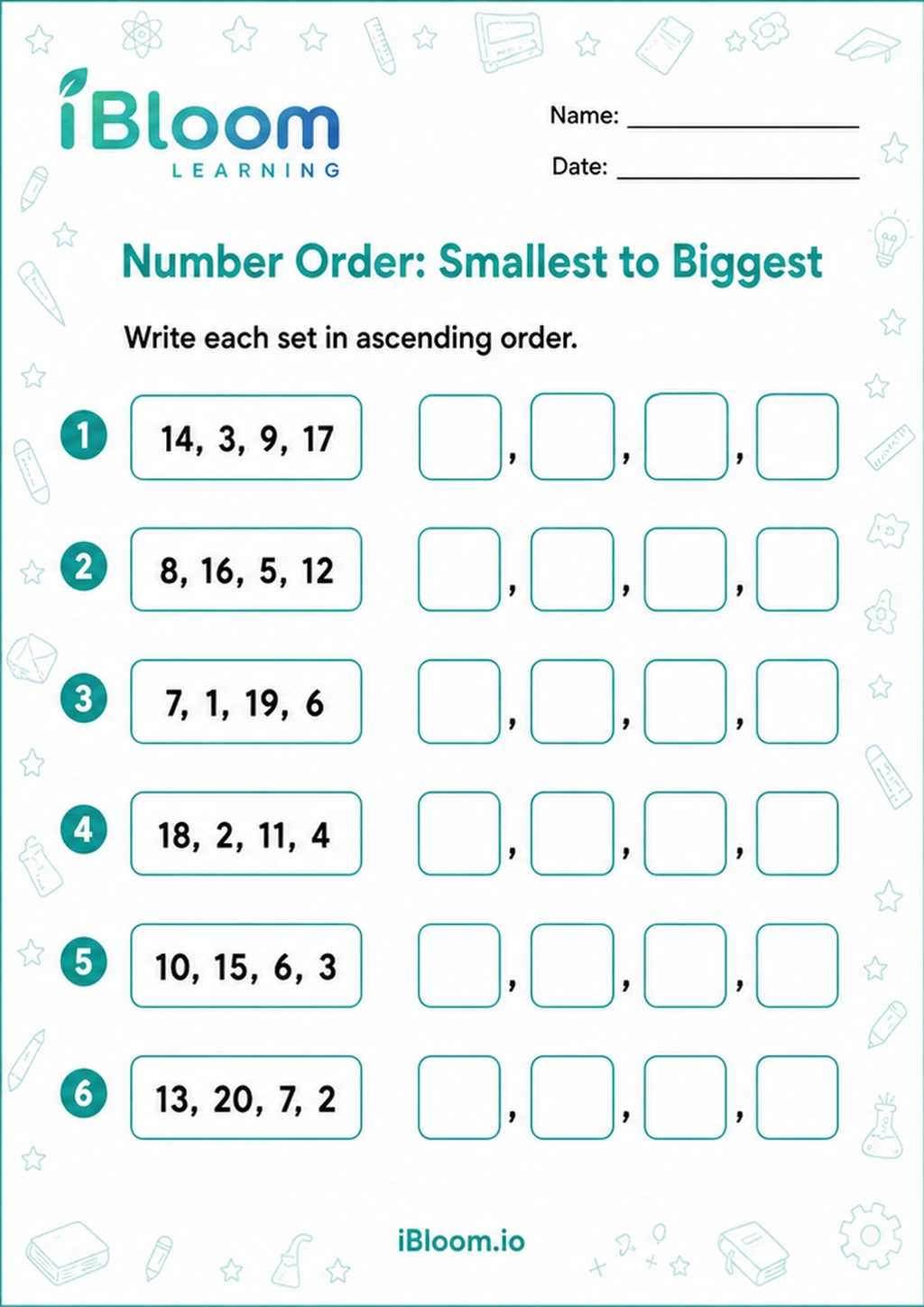 Number Order: Smallest to BiggestUKG printable practice for Ascending and Descending Order.UKGFree PDF preview
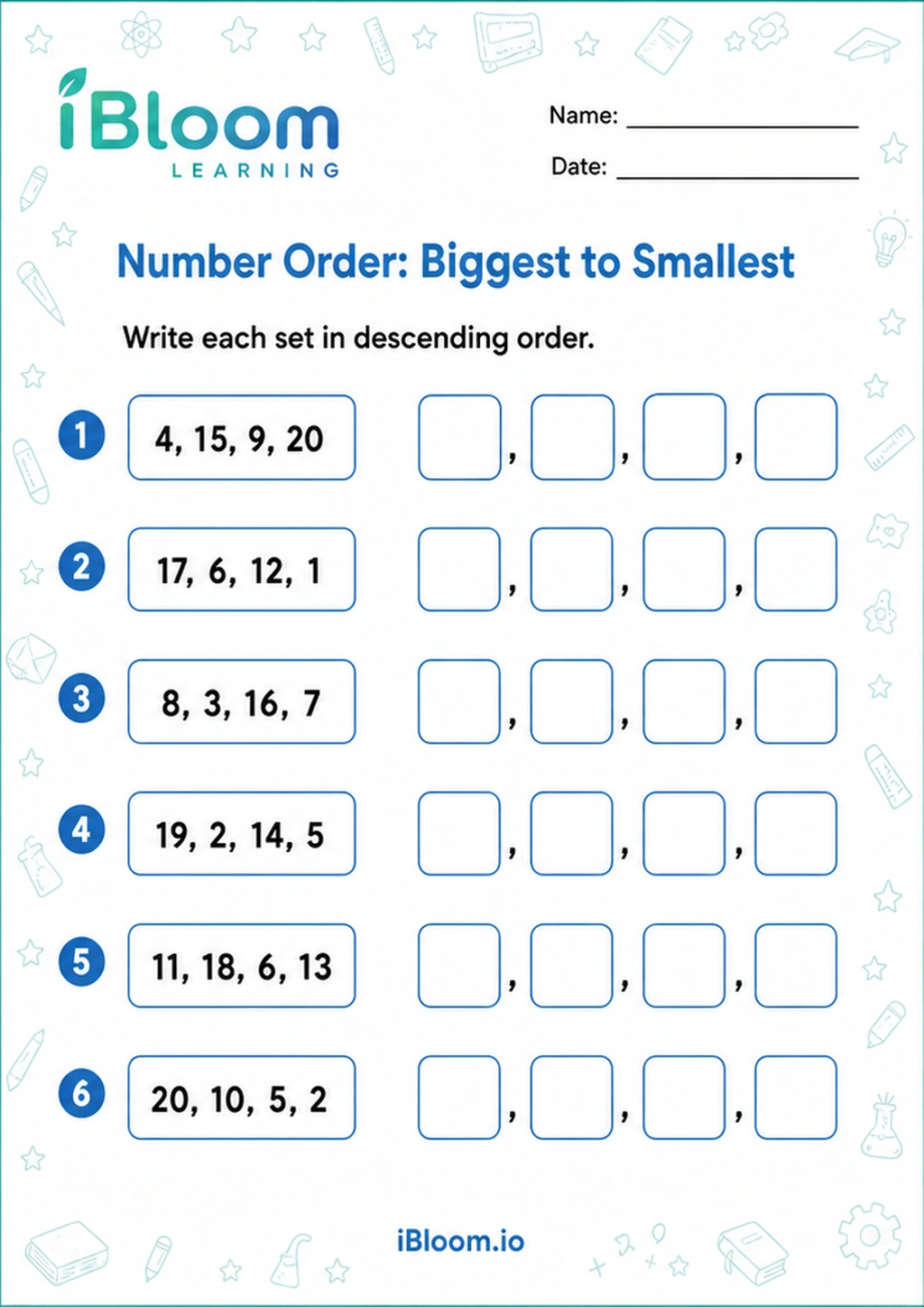 Number Order: Biggest to SmallestUKG printable practice for Ascending and Descending Order.UKGFree PDF preview
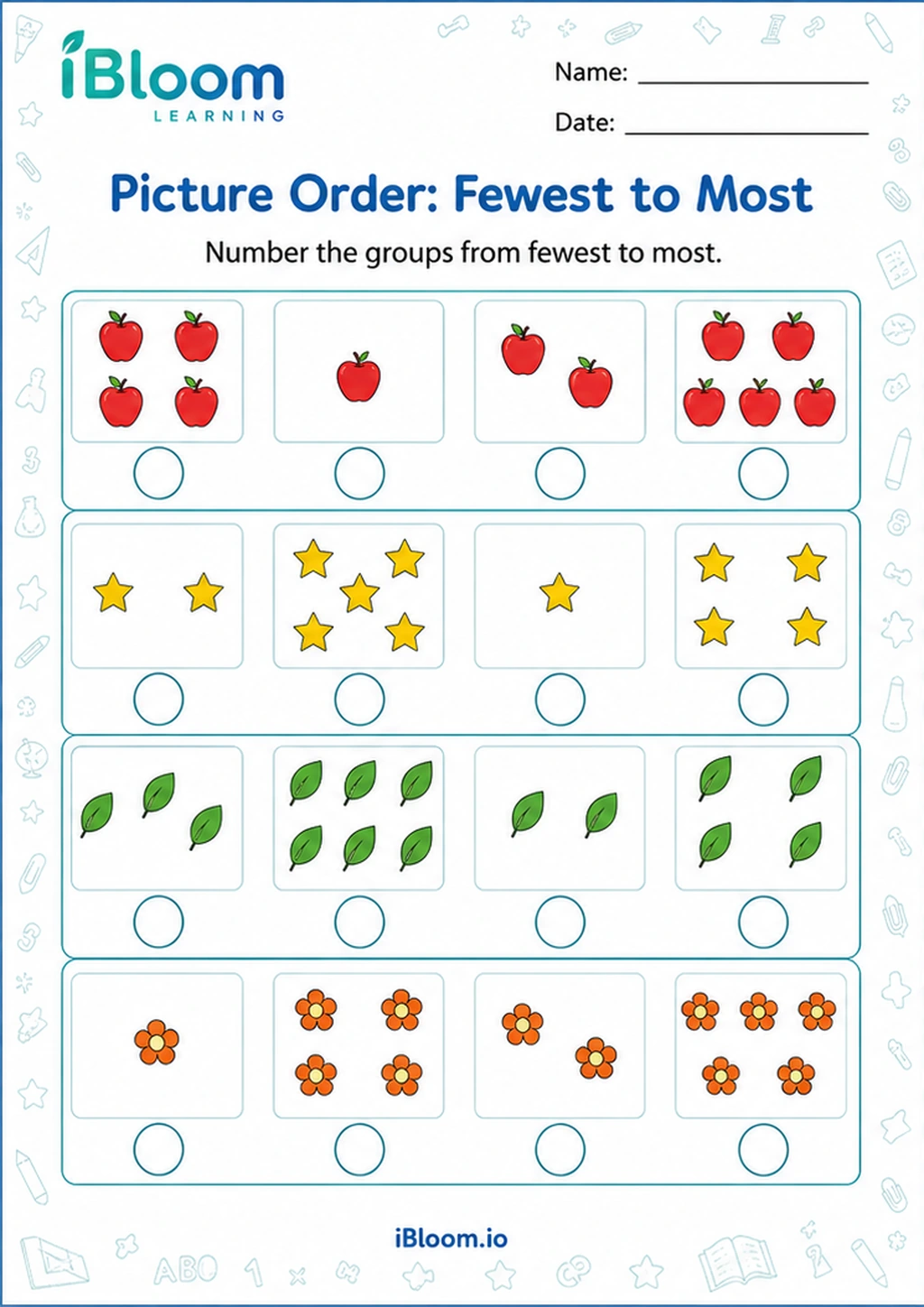 Picture Order: Fewest to MostUKG printable practice for Ascending and Descending Order.UKGFree PDF preview
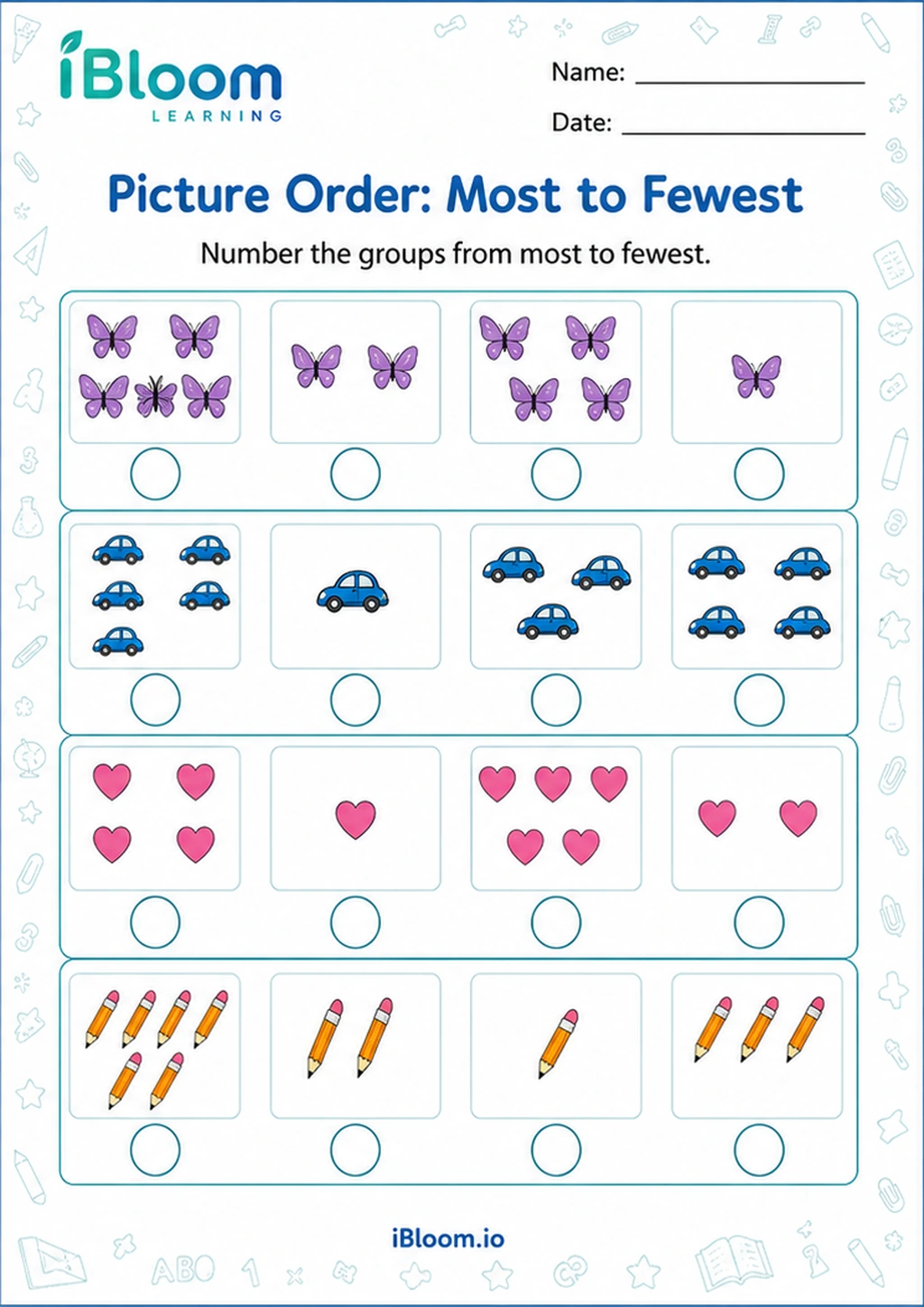 Picture Order: Most to FewestUKG printable practice for Ascending and Descending Order.UKGFree PDF preview
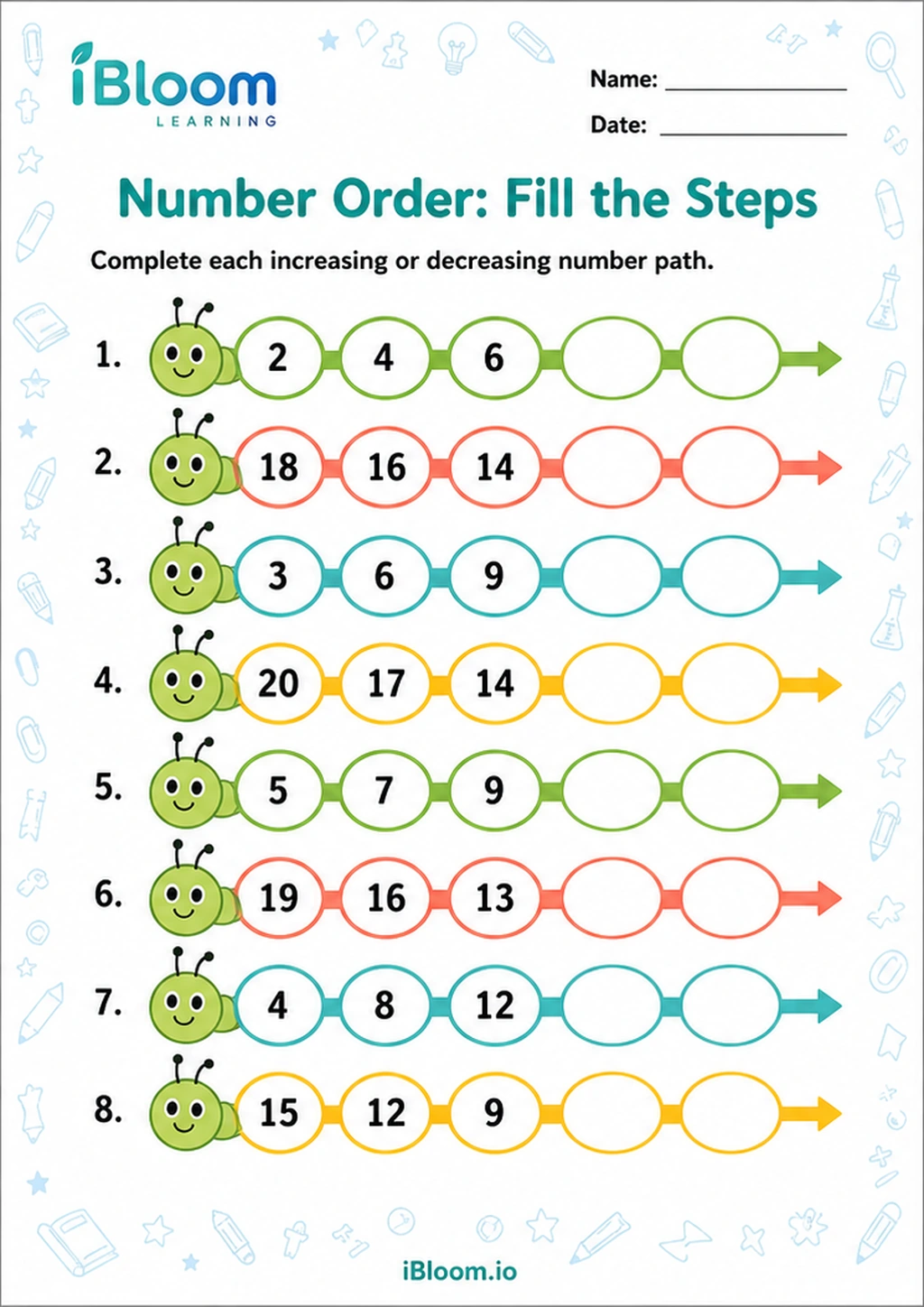 Number Order: Fill the StepsUKG printable practice for Ascending and Descending Order.UKGFree PDF preview
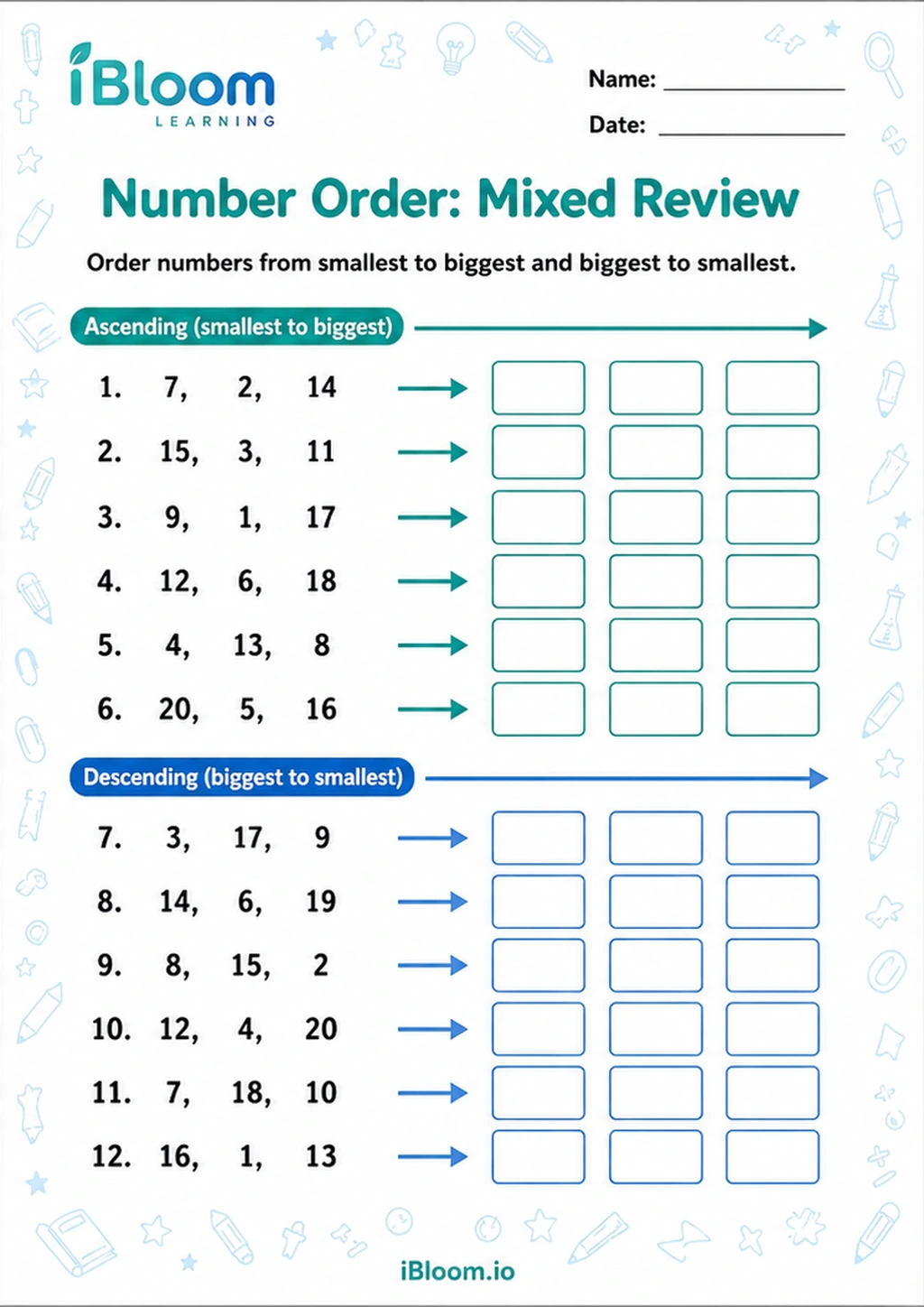 Number Order: Mixed ReviewUKG printable practice for Ascending and Descending Order.UKGFree PDF preview
Practice that builds confidence
What children are learning
These ascending and descending order worksheets help Nursery, LKG and UKG children arrange objects, pictures and simple numbers by size or value. The activities connect directly with the More Than Less Than skill, so children see which item or number comes before another.
The printables include clear ordering tasks, cut-and-paste style practice, picture-based comparisons and number sequences suited to early maths learners. Children practise saying “smallest to biggest” and “biggest to smallest” while building confidence with order words.
Ascending order means arranging from least to greatest, such as small to big or lower number to higher number. Descending order is the reverse: greatest to least, big to small or higher number to lower number. In the Nursery, LKG and UKG More Than Less Than pathway, this skill helps children move from simple comparison to organising a whole set.

How the practice progresses
The activities begin with visual ordering: short to tall, few to many, small to large, or light to heavy when the picture makes the idea clear. Children then apply the same thinking to numbers, using counting and comparison words such as more, less, bigger, smaller, first, next and last. This progression keeps the concept concrete before asking children to handle number order independently.
A simple parent routine
At home, place three spoons, crayons or toys in different sizes and ask, “Which is smallest? What comes next?” Let the child arrange them in ascending order, then reverse the set for descending order. After the hands-on sorting, complete one worksheet row together. Encourage the child to say the full sentence: “I put them from biggest to smallest.”

Classroom use
Teachers can use these printables after a comparison lesson, in maths centres, for small-group support or as quick follow-up practice. For group work, give children picture cards first, then the worksheet. Ask them to explain their order to a partner using more than, less than, before and after.

Errors to watch for and a strategy
Common mistakes include starting at the wrong end, ordering only the first two items, or confusing size order with number value. A child-friendly strategy is “look, point, say, place”: look at all items, point to the smallest or biggest, say the order word, then place or write it. This slows the task down and builds a reliable habit.
Free printable PDF download
Use this ascending descending order worksheets for nursery lkg ukg page to preview the activity, print it, or download it as a PDF for quick practice. It works well for homework, homeschool lessons, tutoring, morning work, revision, and classroom centers.
Answers and answer key support
After the child completes the worksheet independently, parents and teachers can use the answer support or answer key information to check the work, review mistakes, and choose the next practice step.
Why iBloom worksheets help
The worksheets use uncluttered layouts, familiar objects and repeated directions so young learners can focus on the maths idea rather than decoding a complex page. Some tasks ask children to circle, match or draw lines, while others encourage writing numbers in order. This variety supports fine motor practice and helps teachers or parents notice whether a child understands the order or is only copying a pattern.
Helpful answers
Frequently asked questions
What does ascending order mean for Nursery, LKG and UKG children?
At this level, ascending order means arranging objects or numbers from smallest to biggest, shortest to tallest, or least to greatest using simple visual and counting clues.
How is descending order different from ascending order?
Descending order goes the opposite way. Children arrange from biggest to smallest, tallest to shortest, or greatest to least instead of starting with the smallest item.
Should my child practise with objects before using the worksheet?
Yes. Sorting real objects such as crayons, spoons, blocks or toys helps children see the order physically before they complete picture or number tasks on paper.
Why does my child arrange the first two items correctly but miss the rest?
Young children often compare only two items at a time. Ask them to look at the whole group first, choose the smallest or biggest, and then find what comes next.
Are these worksheets only for number ordering?
No. They also support picture and object ordering, which is important for early learners who are still connecting size, quantity and number value.
Is this ascending descending order worksheets for nursery lkg ukg free?
Yes. You can preview it for free and use the printable worksheet for home or classroom practice.
Can I download this ascending descending order worksheets for nursery lkg ukg as a PDF?
Yes. Use the worksheet download option to save a printable PDF, or print the worksheet directly from the page.
Does this ascending descending order worksheets for nursery lkg ukg include answers or an answer key?
When the activity has fixed answers, iBloom includes answer support so parents and teachers can check the completed worksheet.