Free printable practice
Number Of Objects Odd Or Even Practice Activities
Printable Nursery, LKG and UKG activities that help children decide whether a group of objects is odd or even by counting and making pairs.
Free printable worksheet PDFs
Preview every available page, then download the free worksheet PDF for home, homeschool, tutoring, or classroom practice.
Preview the exact activity before downloading it.
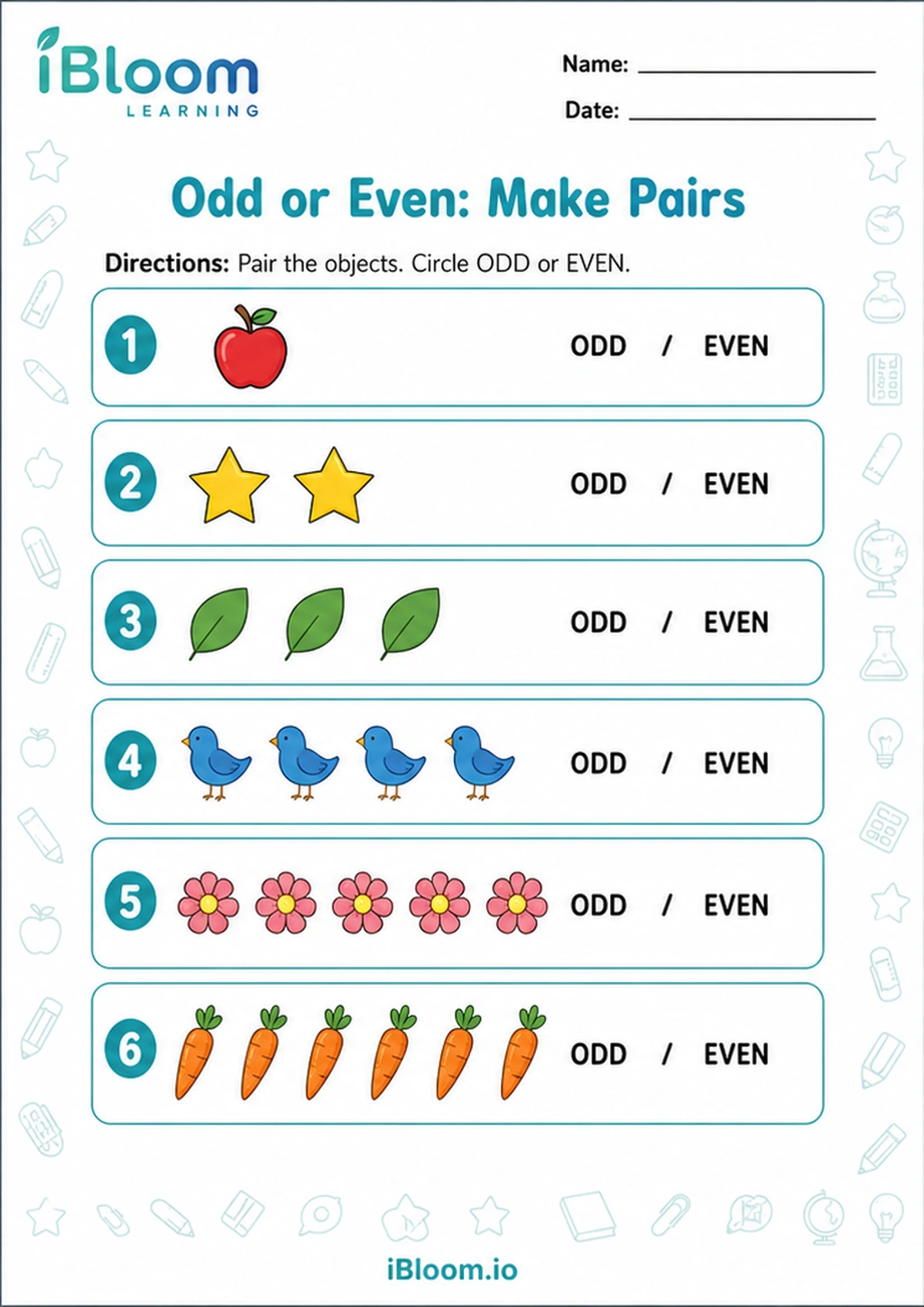 Odd or Even: Make PairsUKG printable practice for Odd and Even Object Groups.UKGFree PDF preview
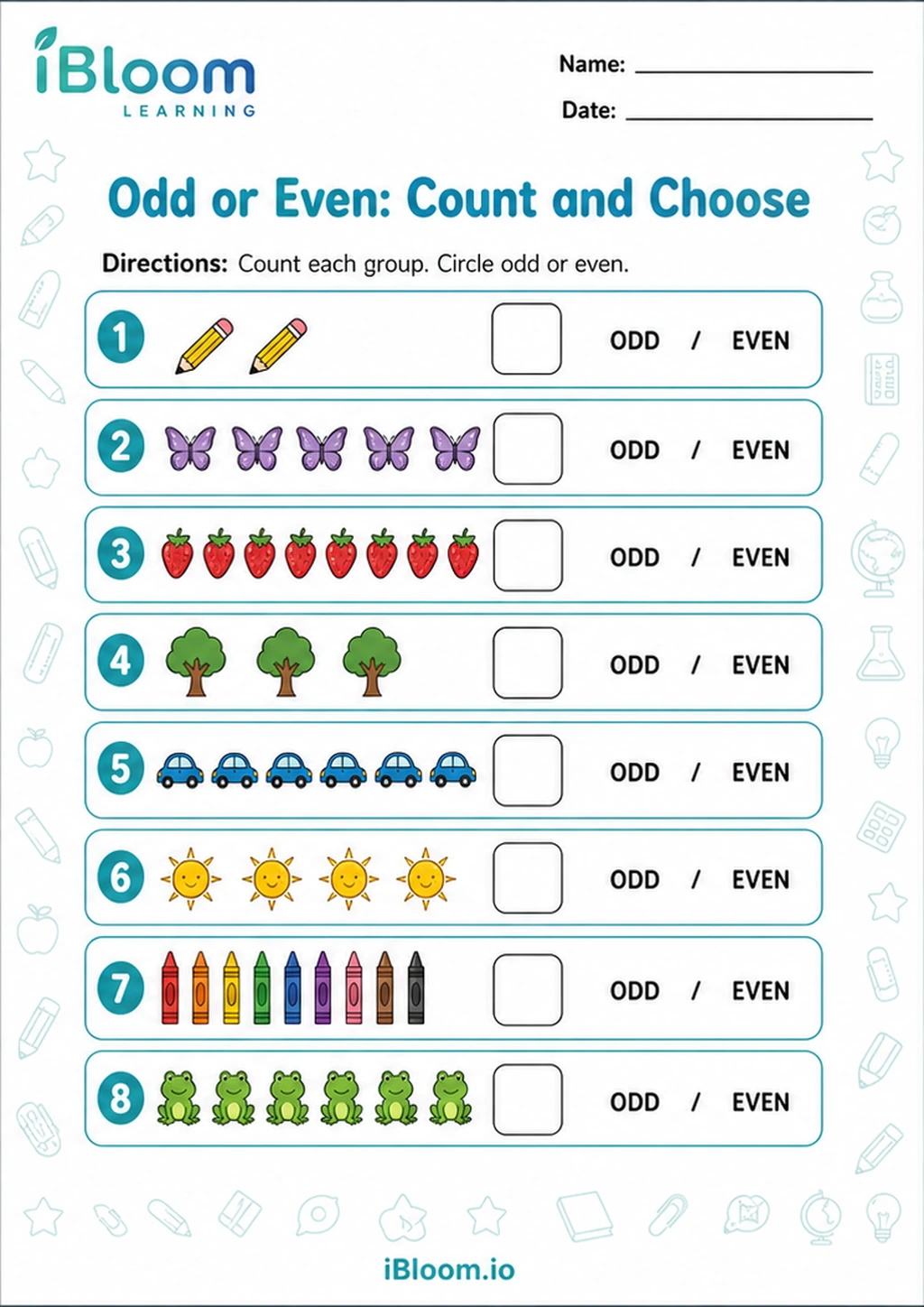 Odd or Even: Count and ChooseUKG printable practice for Odd and Even Object Groups.UKGFree PDF preview
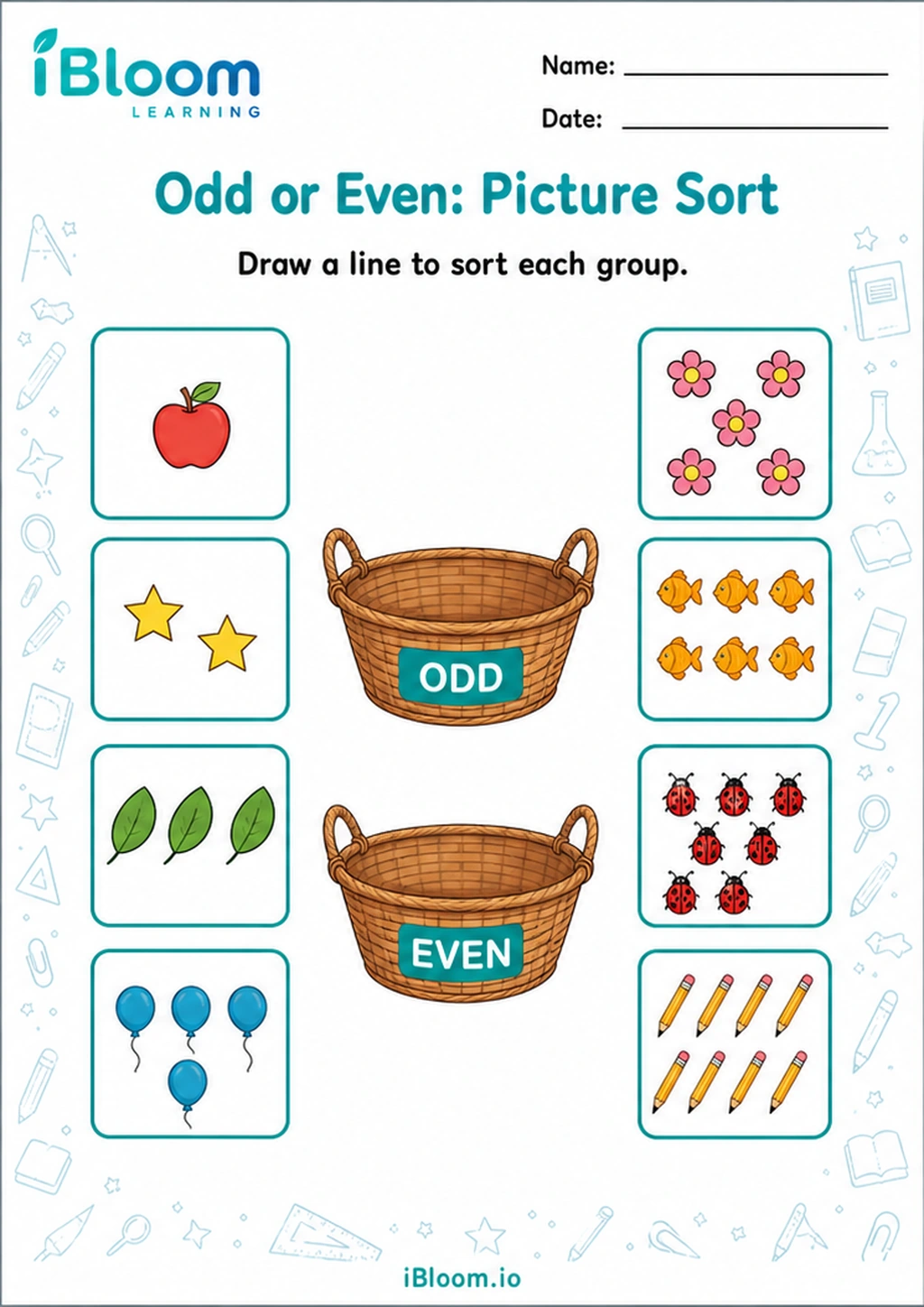 Odd or Even: Picture SortUKG printable practice for Odd and Even Object Groups.UKGFree PDF preview
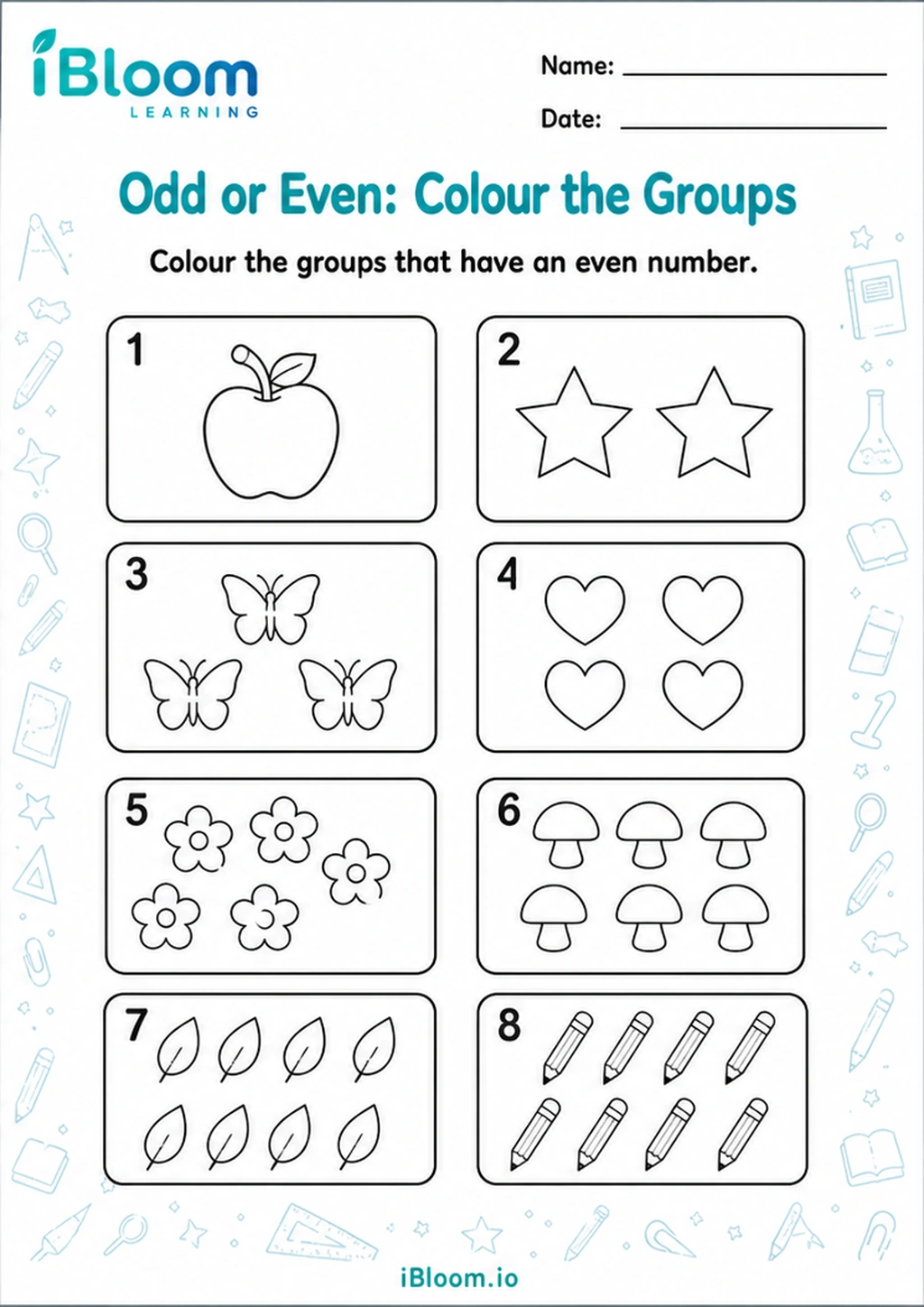 Odd or Even: Colour the GroupsUKG printable practice for Odd and Even Object Groups.UKGFree PDF preview
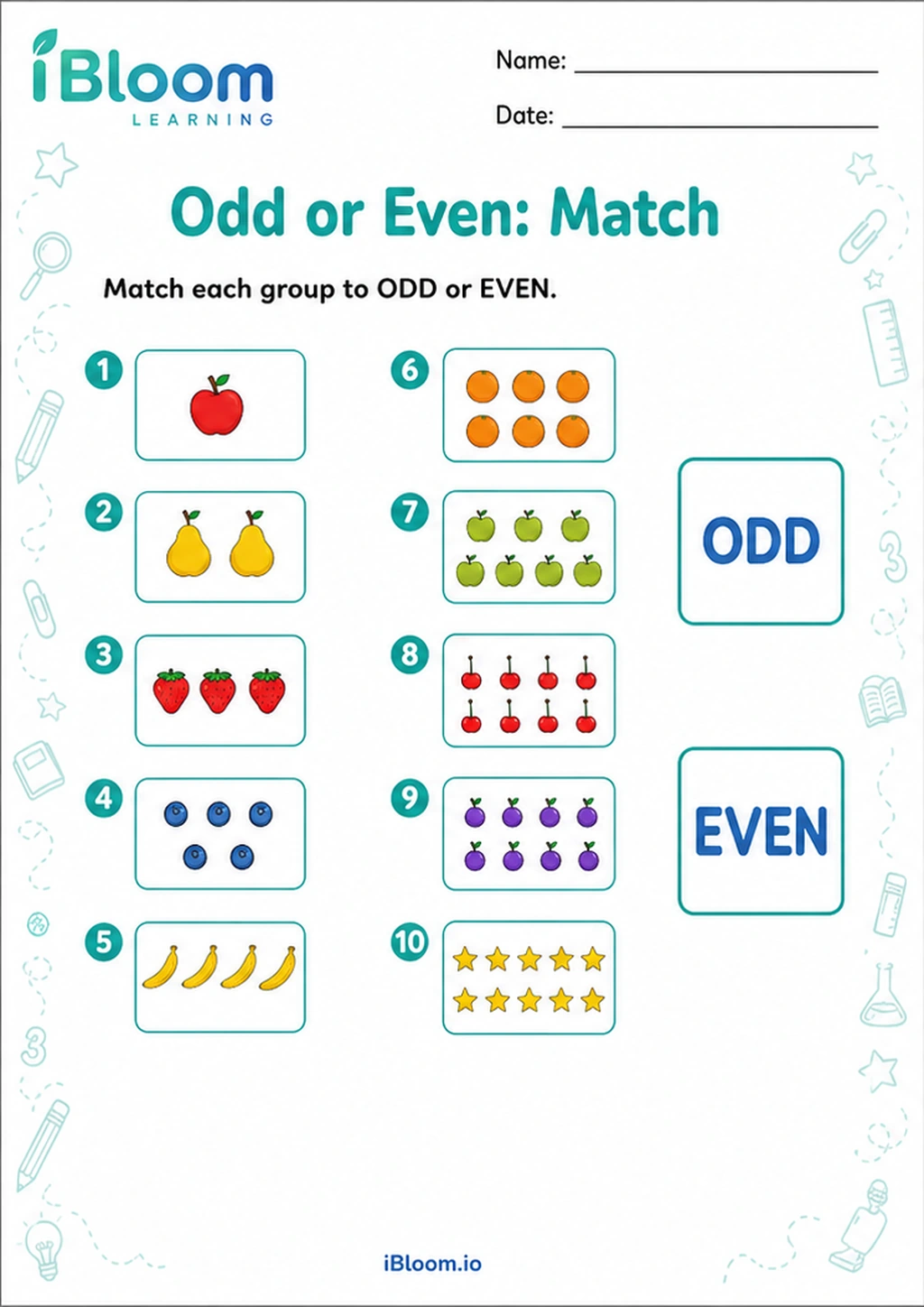 Odd or Even: MatchUKG printable practice for Odd and Even Object Groups.UKGFree PDF preview
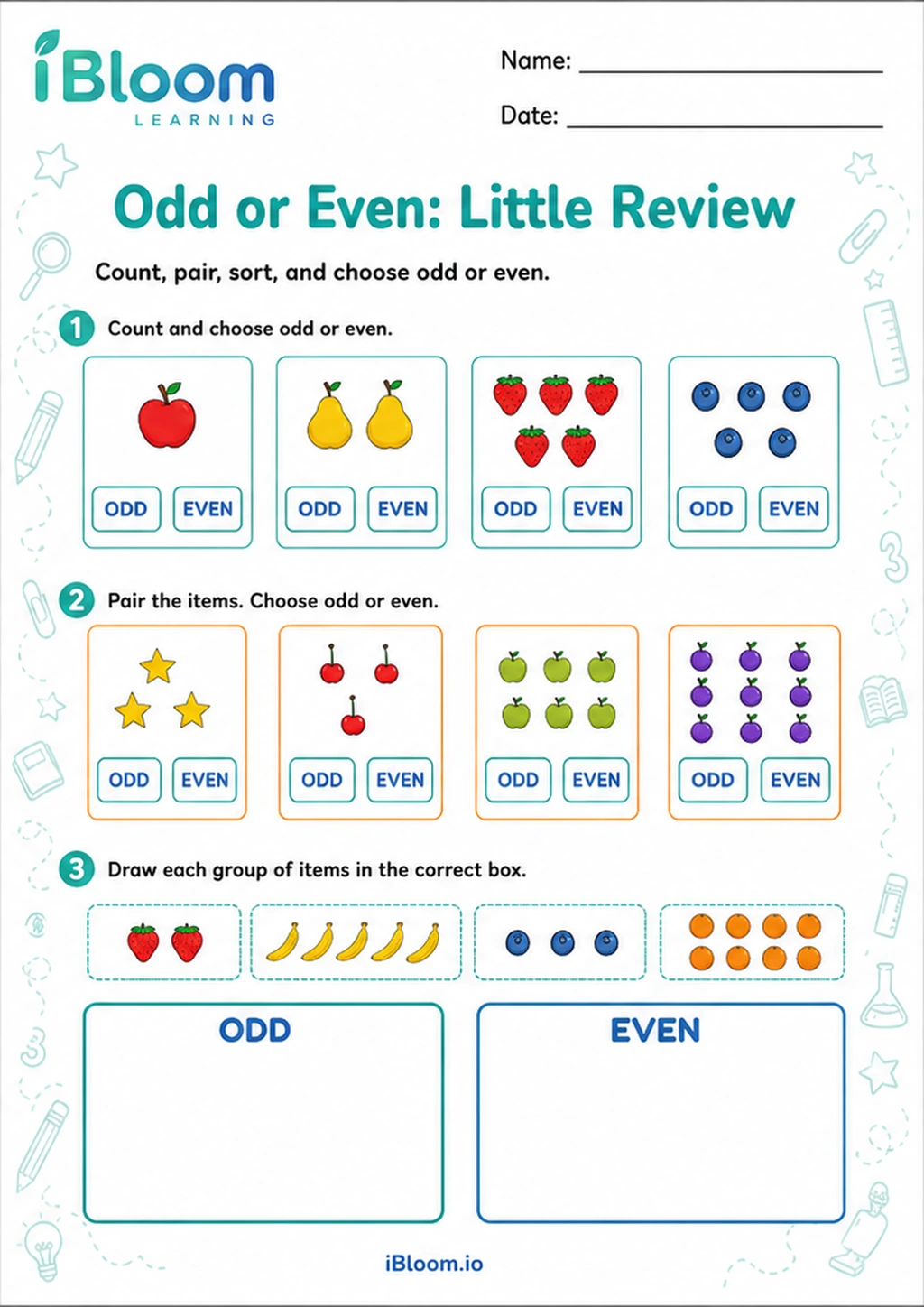 Odd or Even: Little ReviewUKG printable practice for Odd and Even Object Groups.UKGFree PDF preview
Practice that builds confidence
Building the idea with objects
These Nursery, LKG and UKG worksheets help children understand odd and even numbers through groups of objects. Instead of memorising rules, children look at pictures, count each group, and notice whether every object can be matched with a partner.
The printable activities include object sets such as dots, toys, fruits, and classroom items. Children practise circling, colouring, matching, and marking groups as odd or even using the simple idea of pairs and leftovers.
At this early stage, odd and even should feel visible. A child sees a group, counts the objects, and tries to make pairs. If all objects have a partner, the group is even. If one object is left alone, the group is odd. This page focuses on that concrete understanding before children move to number-only odd and even practice.

How the practice progresses
The worksheets begin with clear picture groups so children can count slowly and touch or point to each object. Activities may ask them to tick the even group, colour the odd group, draw lines to make pairs, or write O and E with support. This mix helps children connect three ideas: counting carefully, pairing objects, and using the words odd and even correctly.
Parent routine at home
Use real objects before or after the worksheet. Place buttons, spoons, crayons, or blocks on the table. Ask your child to make pairs by moving two objects together. Then ask, “Is anyone left without a partner?” Say the full sentence together: “No one is left, so it is even,” or “One is left, so it is odd.” Keep the language the same each time so the concept becomes familiar.

Classroom use for teachers
Teachers can use these printables after a mat activity with counters or beads. They work well for maths corners, small-group revision, or quick observation during Nursery, LKG and UKG number lessons. Children who finish early can explain one answer to a partner by pointing to the pairs, which builds maths talk along with number sense.

Common errors to watch for
Some children call a group odd or even by guessing from its size, not by pairing. Others count the same object twice or skip an object in a busy picture. Encourage left-to-right pointing, crossing out each counted object, or drawing pair lines. If a child says only the number name, gently bring the focus back to the objects: “Can we make pairs?”
Free printable PDF download
Use this number of objects odd or even worksheet page to preview the activity, print it, or download it as a PDF for quick practice. It works well for homework, homeschool lessons, tutoring, morning work, revision, and classroom centers.
Answers and answer key support
After the child completes the worksheet independently, parents and teachers can use the answer support or answer key information to check the work, review mistakes, and choose the next practice step.
Why iBloom worksheets help
The activities are designed for young learners who need pictures, repetition, and simple instructions. A useful child-friendly strategy is: “Count, pair, check leftover.” Children can whisper it while working. This keeps odd and even practice playful, visual, and age-appropriate for the Nursery, LKG and UKG stage.
Helpful answers
Frequently asked questions
How do these worksheets teach odd and even using objects?
Children count a group of pictures and try to make pairs. If every object has a partner, the group is even. If one object is left over, the group is odd.
Are these worksheets suitable for Nursery children?
Yes, with adult support. Nursery children can begin by counting small picture groups, drawing simple pair lines, and saying whether one object is left alone.
What should my child know before starting this activity?
Your child should be able to count objects with some accuracy and understand simple matching. The odd and even idea is introduced through pairing, not memorisation.
How can I explain odd and even at home?
Use real items like crayons or spoons. Ask your child to put them in pairs. Say, “All have partners, so it is even,” or “One is left, so it is odd.”
What if my child keeps guessing odd or even?
Ask your child to show the pairs before giving the answer. Pointing, crossing out counted objects, or drawing pair lines can reduce guessing.
Is this number of objects odd or even worksheet free?
Yes. You can preview it for free and use the printable worksheet for home or classroom practice.
Can I download this number of objects odd or even worksheet as a PDF?
Yes. Use the worksheet download option to save a printable PDF, or print the worksheet directly from the page.
Does this number of objects odd or even worksheet include answers or an answer key?
When the activity has fixed answers, iBloom includes answer support so parents and teachers can check the completed worksheet.