Free printable practice
Cut Paste Practice Activities
Printable cut and paste pattern worksheets for Nursery, LKG and UKG children to practise matching, sequencing and completing simple visual patterns.
Free printable worksheet PDFs
Preview every available page, then download the free worksheet PDF for home, homeschool, tutoring, or classroom practice.
Preview the exact activity before downloading it.
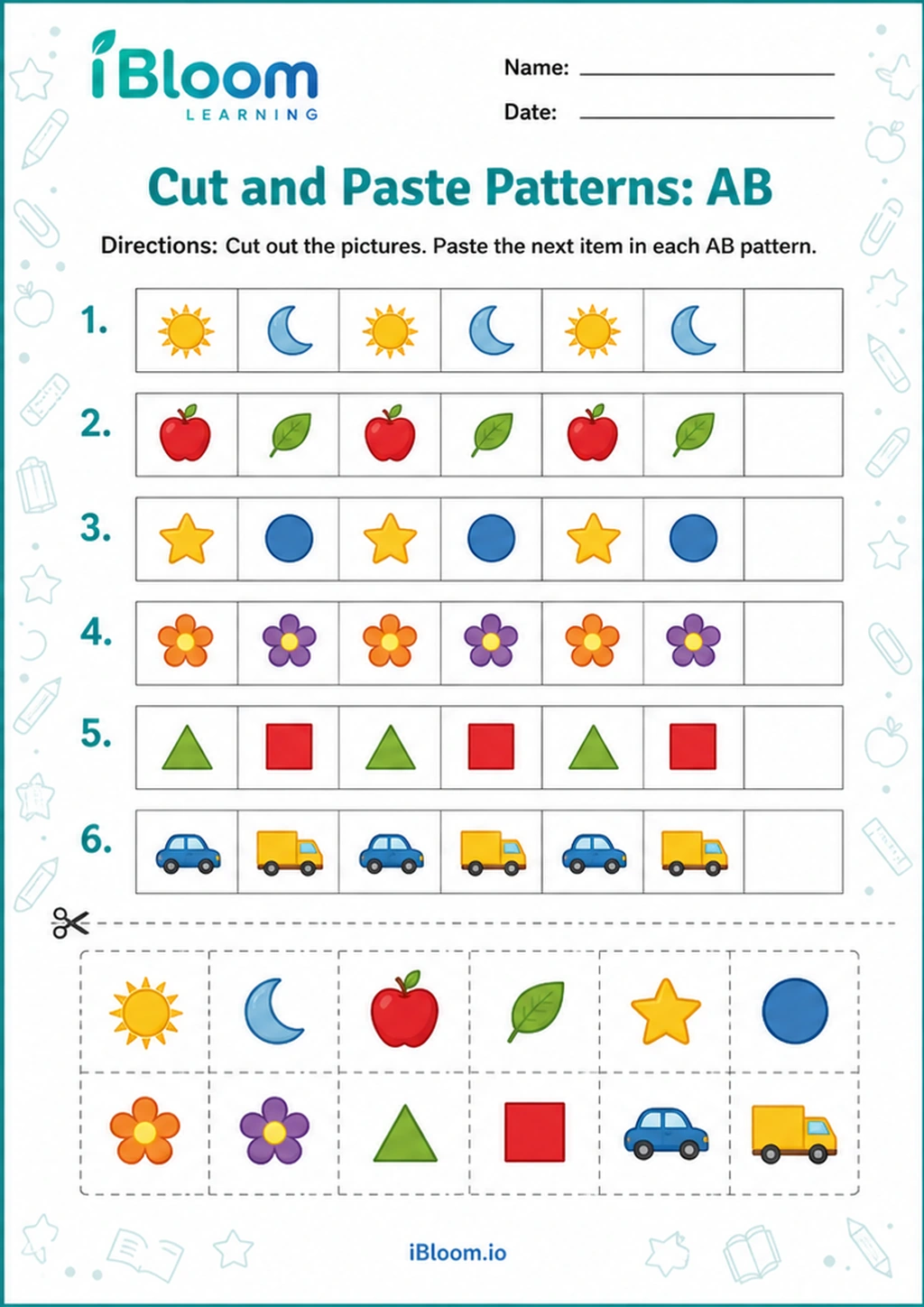 Cut and Paste Patterns: ABUKG printable practice for Cut-and-Paste Patterns.UKGFree PDF preview
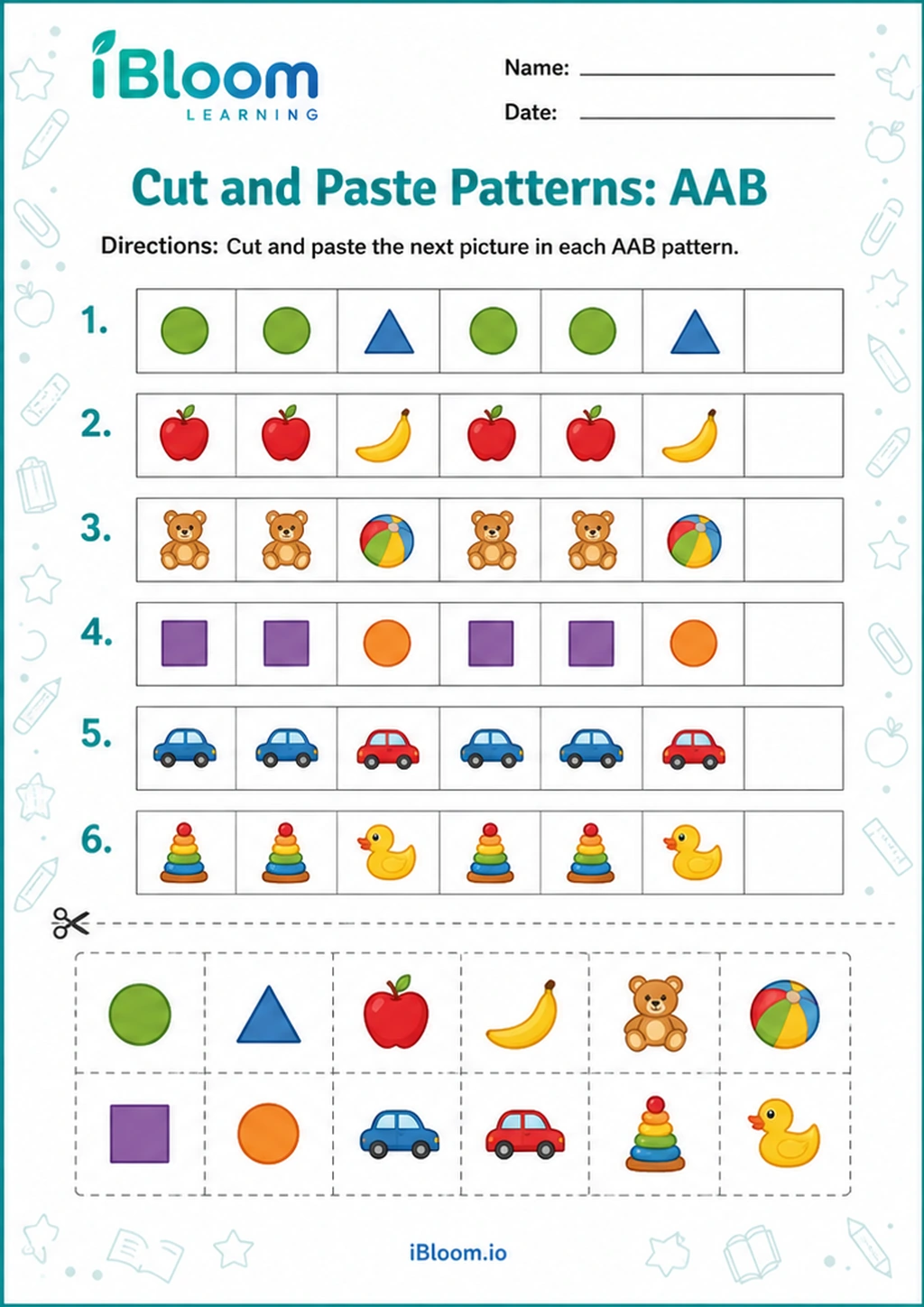 Cut and Paste Patterns: AABUKG printable practice for Cut-and-Paste Patterns.UKGFree PDF preview
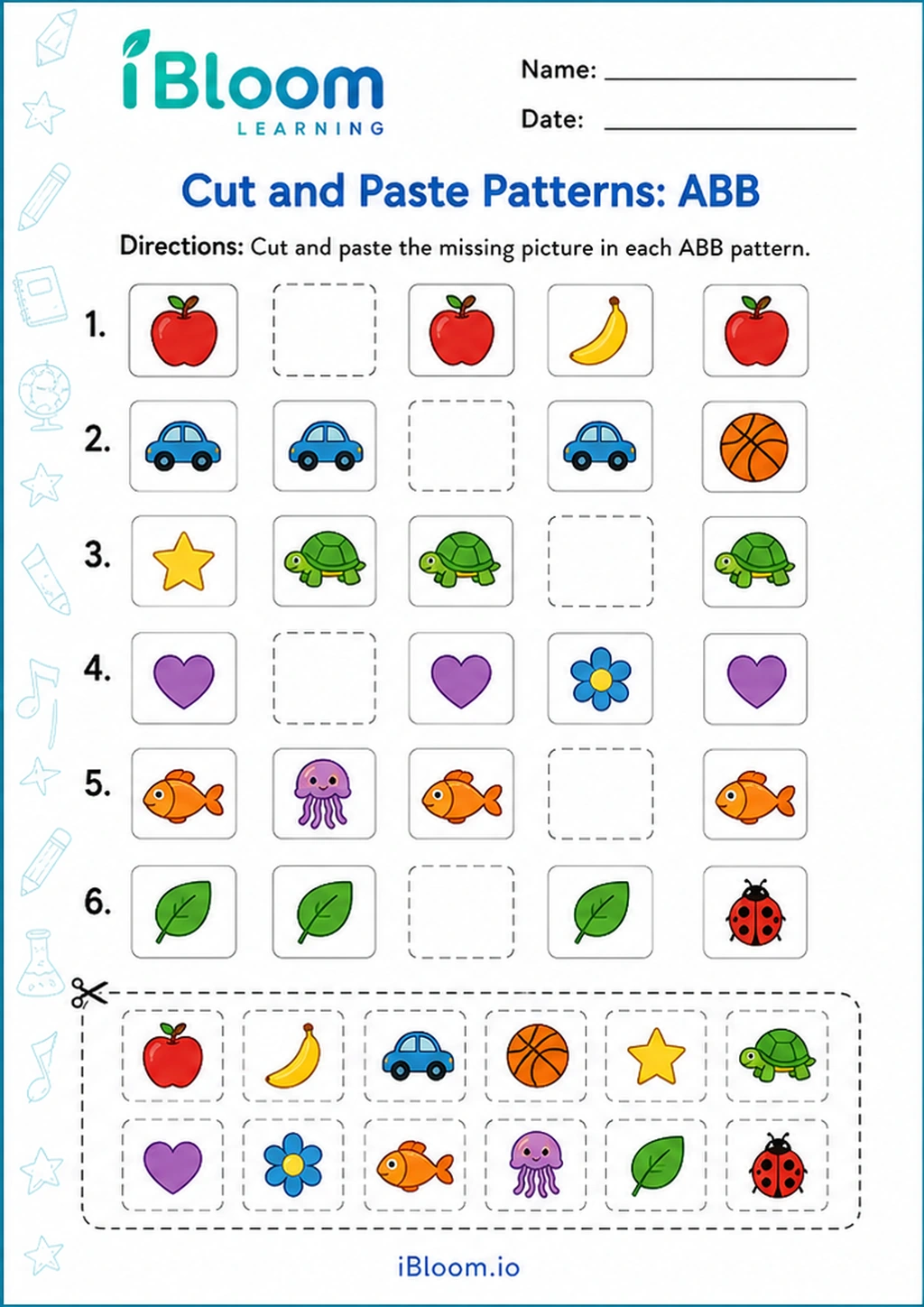 Cut and Paste Patterns: ABBUKG printable practice for Cut-and-Paste Patterns.UKGFree PDF preview
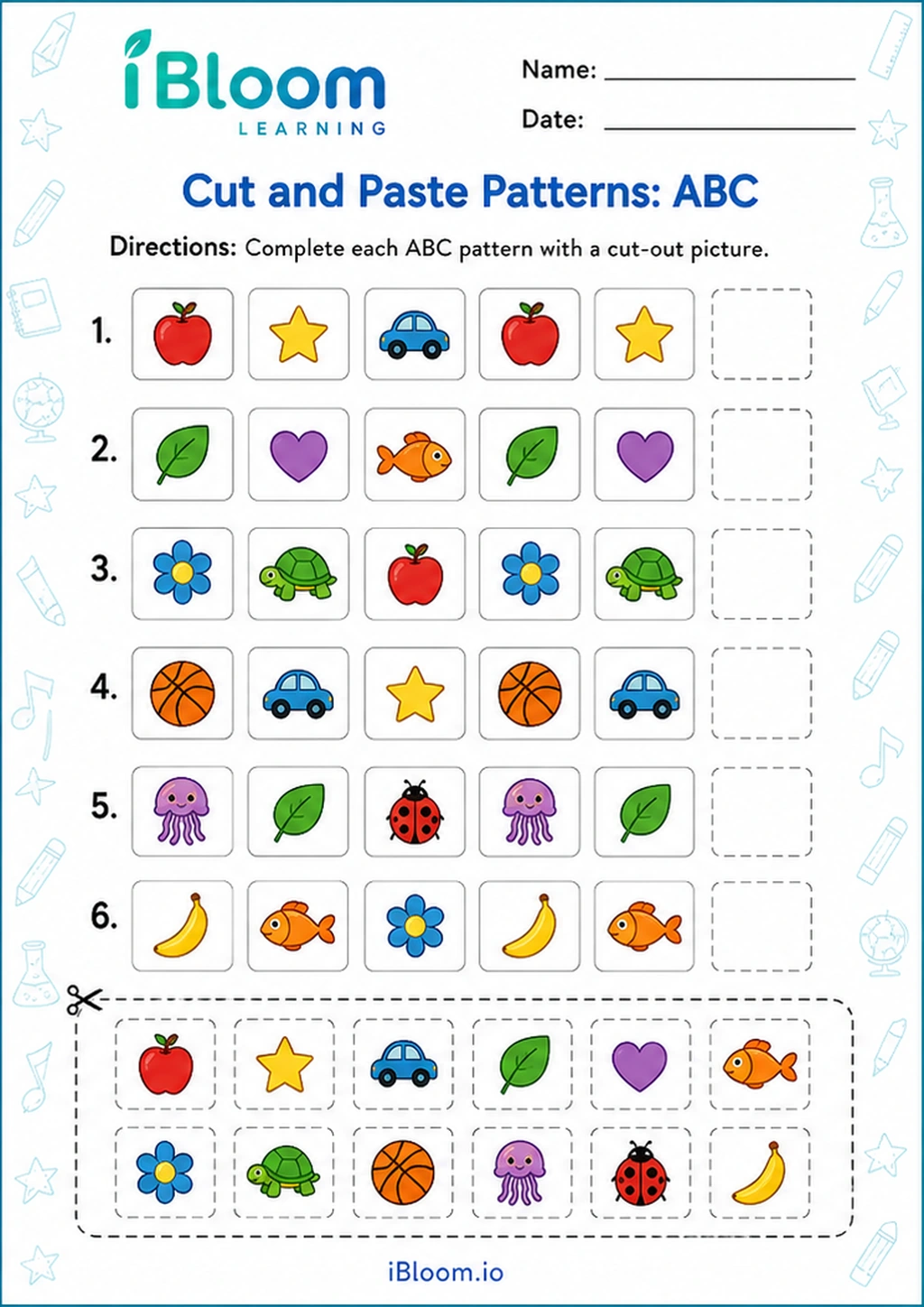 Cut and Paste Patterns: ABCUKG printable practice for Cut-and-Paste Patterns.UKGFree PDF preview
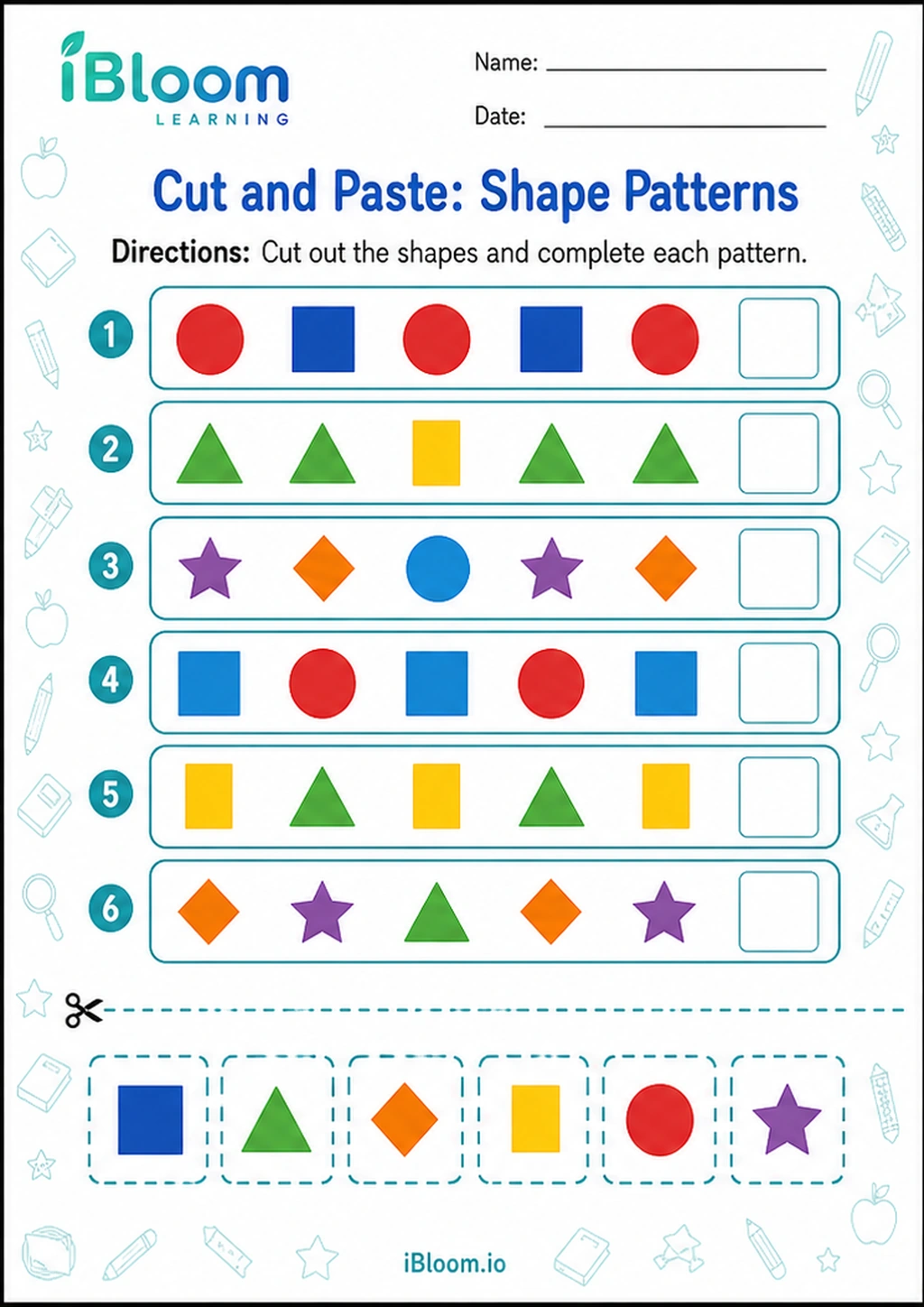 Cut and Paste: Shape PatternsUKG printable practice for Cut-and-Paste Patterns.UKGFree PDF preview
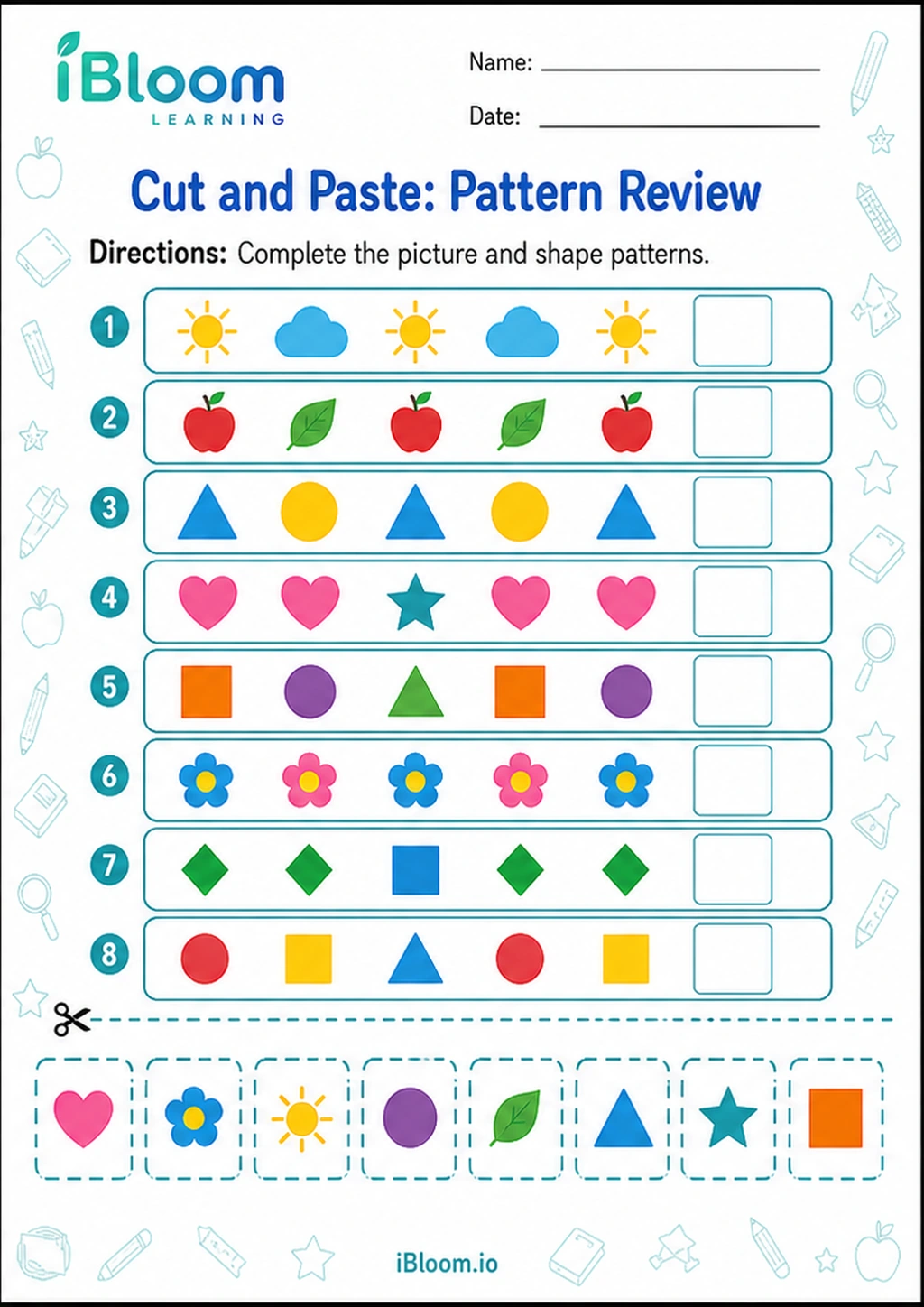 Cut and Paste: Pattern ReviewUKG printable practice for Cut-and-Paste Patterns.UKGFree PDF preview
Practice that builds confidence
What children practise
These Cut Paste Practice Activities help Nursery, LKG and UKG children build early pattern sense through hands-on sorting, matching and arranging. Children look closely at colours, shapes, pictures and repeated sequences before choosing the piece that fits.
The printable activities include child-friendly cut-outs, spaces for pasting and simple pattern tasks that support fine motor control as well as maths readiness. Each worksheet encourages children to observe, compare, continue and complete patterns in an engaging way.
In the Nursery, LKG and UKG pattern strand, cut and paste work turns abstract sequencing into something children can touch. A child may complete a row such as red-blue-red-blue, match the missing picture in a repeated set, or place similar objects together. These tasks strengthen visual discrimination, order, directionality and the habit of checking what comes next.

How the skill progresses
Children usually begin by matching identical pictures and sorting by one feature such as colour or shape. They then move to simple repeating patterns, missing-piece patterns and mixed picture sequences. Cutting the answer choices adds another layer: the child must select, position and paste the correct piece, not just point to it.
Parent routine at home
Sit beside your child with child-safe scissors, glue and crayons. First, read the row from left to right together: “star, circle, star, circle...” Ask, “What should come next?” Let the child cut only the needed pieces first if a full sheet feels busy. After pasting, invite them to say the completed pattern aloud. You can repeat the idea with beads, bottle caps, bangles or blocks.

Classroom uses for teachers
Teachers can use these printables in maths corners, fine motor centres, small-group pattern practice or after a floor activity with real objects. They are also useful for observing whether a child recognises the repeating unit, follows left-to-right order and handles glue and scissors with control.

Common errors to watch for
Some children choose a picture they like instead of the picture that continues the pattern. Others rotate pieces, skip spaces or focus only on colour while ignoring shape. Gently cover part of the row and ask the child to name the repeating unit before pasting.
Free printable PDF download
Use this cut paste pattern worksheets for nursery lkg ukg page to preview the activity, print it, or download it as a PDF for quick practice. It works well for homework, homeschool lessons, tutoring, morning work, revision, and classroom centers.
Answers and answer key support
After the child completes the worksheet independently, parents and teachers can use the answer support or answer key information to check the work, review mistakes, and choose the next practice step.
Why iBloom worksheets help
iBloom cut paste worksheets combine pattern thinking with purposeful hand movement. Clear layouts, simple answer pieces and familiar visual themes help young learners stay focused while practising the vocabulary of same, different, next, before, after and repeat. A child-friendly strategy is: “Say the pattern, find the next, then paste.”
Helpful answers
Frequently asked questions
What skills do cut and paste pattern worksheets build?
They build pattern recognition, visual matching, sequencing, hand-eye coordination and fine motor control through cutting, positioning and pasting the correct pieces.
Are these activities suitable for Nursery children?
Yes, Nursery children can start with simple matching and two-part patterns, with adult support for cutting and gluing as needed.
How can I help my child who pastes random pieces?
Ask your child to say the pattern aloud first, such as “flower, leaf, flower, leaf.” Then point to the empty space and ask what comes next before using glue.
Should children cut all the pieces before solving?
For beginners, it is better to cut only the answer choices needed for one row at a time. This reduces confusion and helps the child focus on the pattern.
Can these worksheets be used without scissors?
Yes. An adult can pre-cut the pieces, or the child can point to the correct answer first and paste the prepared piece independently.
Is this cut paste pattern worksheets for nursery lkg ukg free?
Yes. You can preview it for free and use the printable worksheet for home or classroom practice.
Can I download this cut paste pattern worksheets for nursery lkg ukg as a PDF?
Yes. Use the worksheet download option to save a printable PDF, or print the worksheet directly from the page.
Does this cut paste pattern worksheets for nursery lkg ukg include answers or an answer key?
When the activity has fixed answers, iBloom includes answer support so parents and teachers can check the completed worksheet.