Free printable practice
In Front Behind Practice Activities
Printable Nursery, LKG and UKG activities for recognising, saying, and marking objects that are in front of or behind another object.
Free printable worksheet PDFs
Preview every available page, then download the free worksheet PDF for home, homeschool, tutoring, or classroom practice.
Preview the exact activity before downloading it.
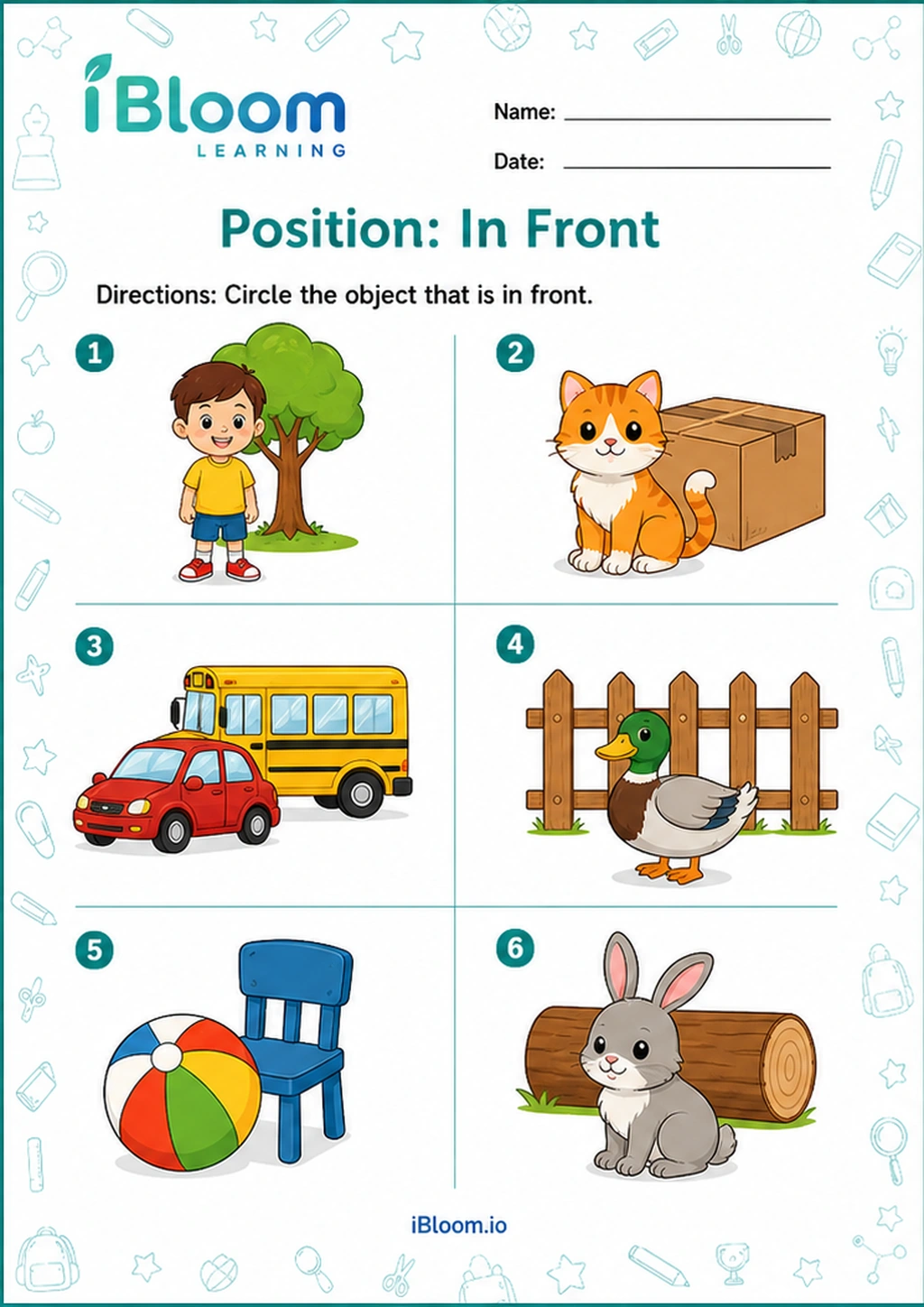 Position: In FrontLKG printable practice for In Front and Behind.LKGFree PDF preview
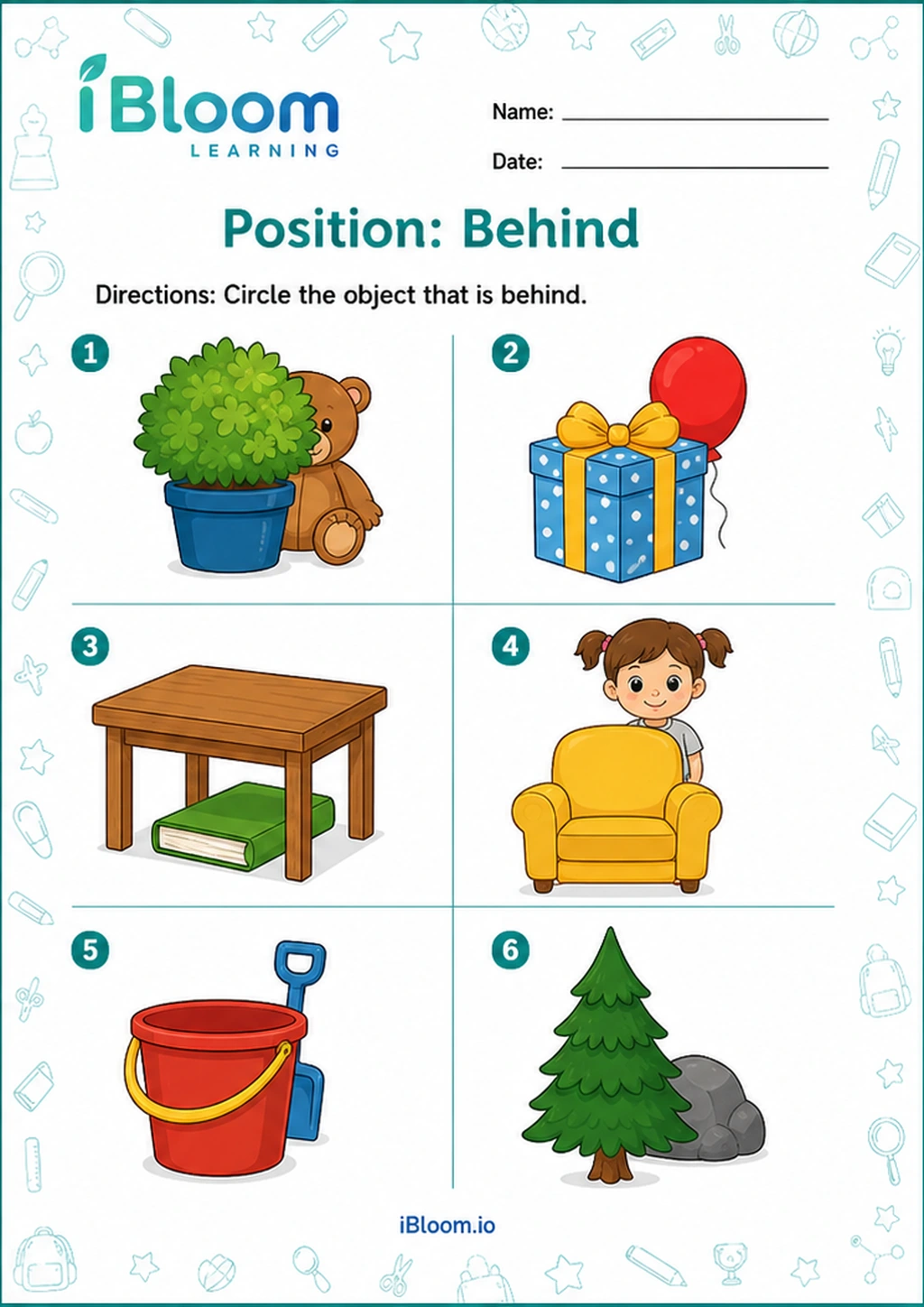 Position: BehindLKG printable practice for In Front and Behind.LKGFree PDF preview
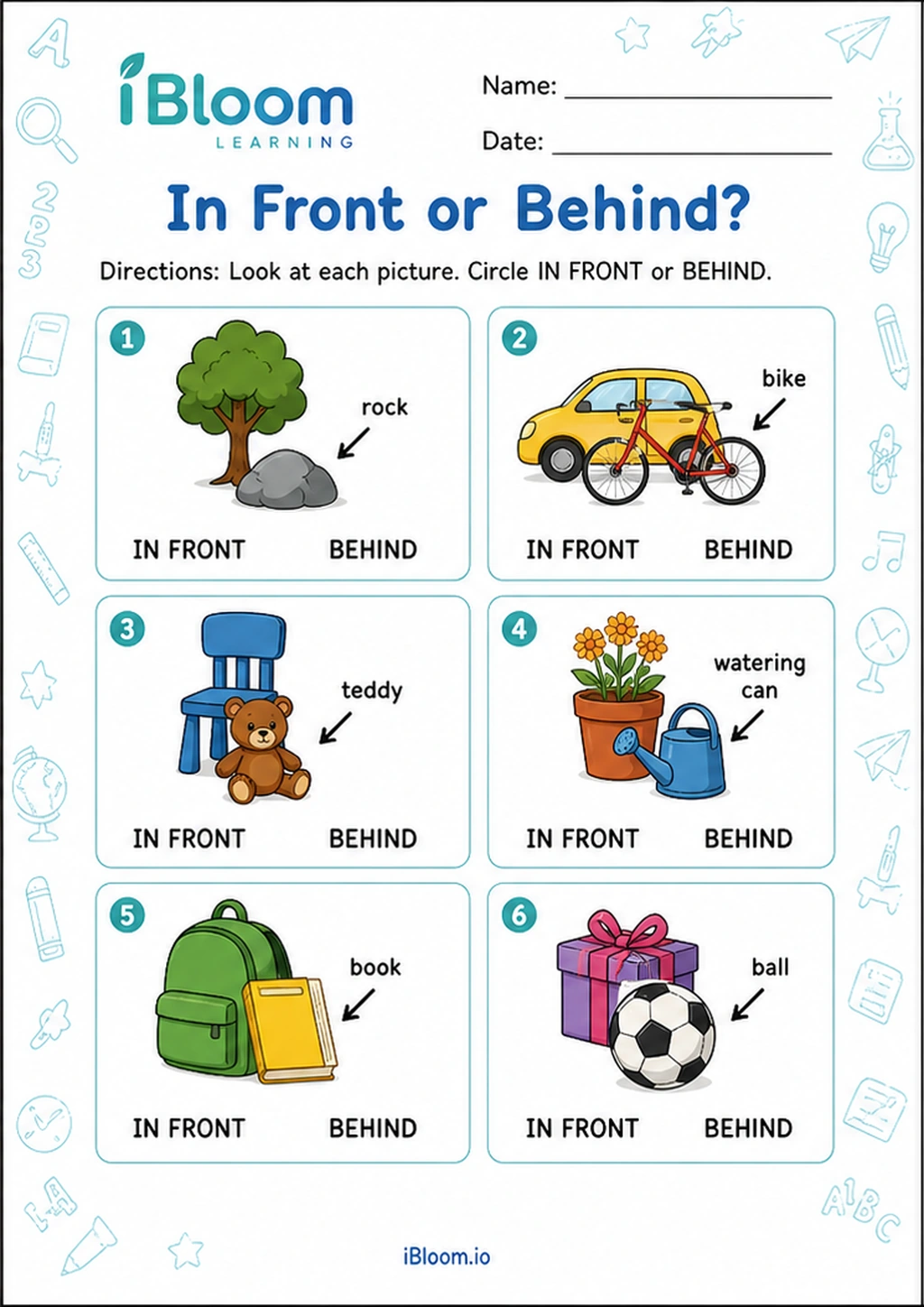 In Front or Behind?LKG printable practice for In Front and Behind.LKGFree PDF preview
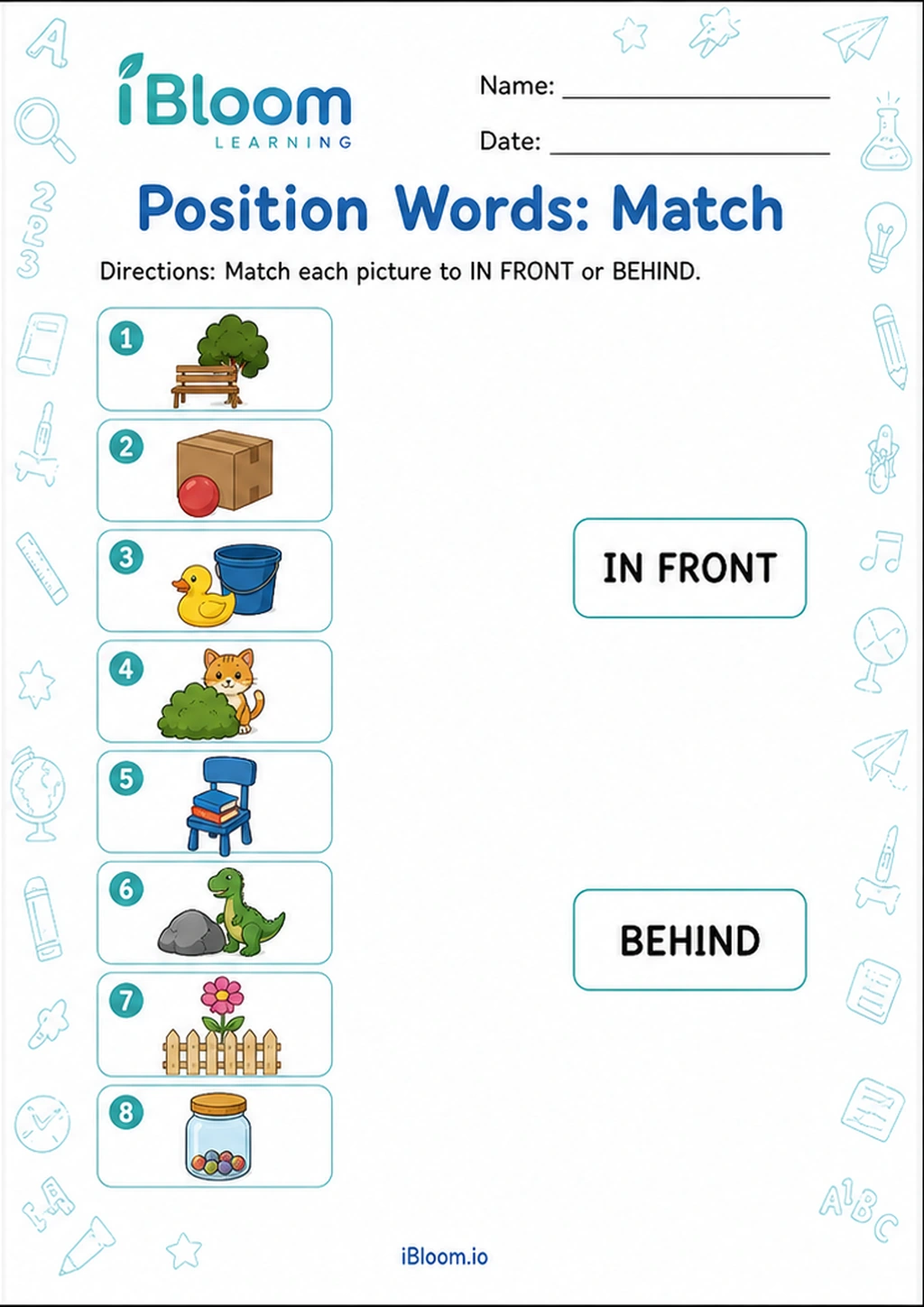 Position Words: MatchLKG printable practice for In Front and Behind.LKGFree PDF preview
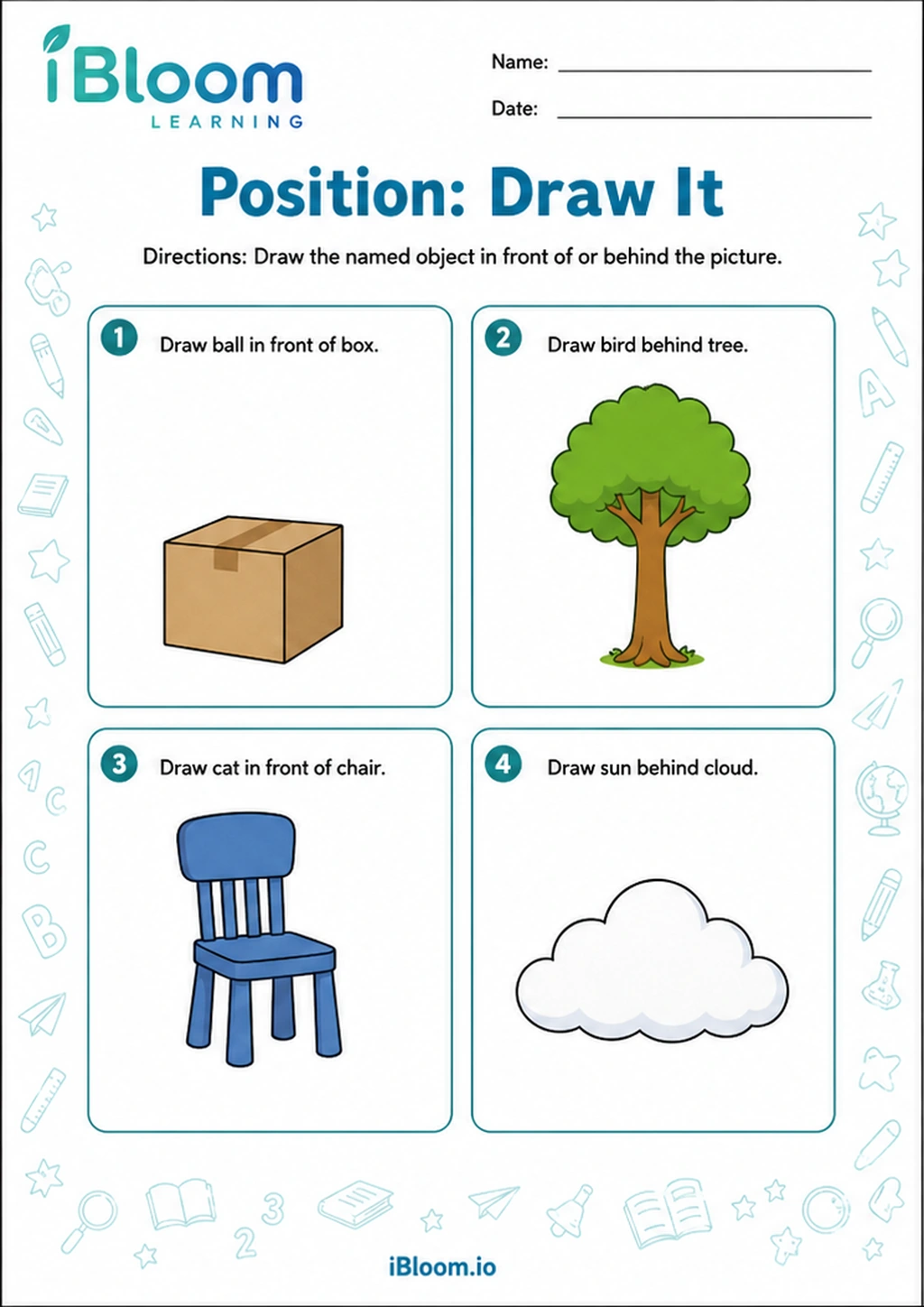 Position: Draw ItLKG printable practice for In Front and Behind.LKGFree PDF preview
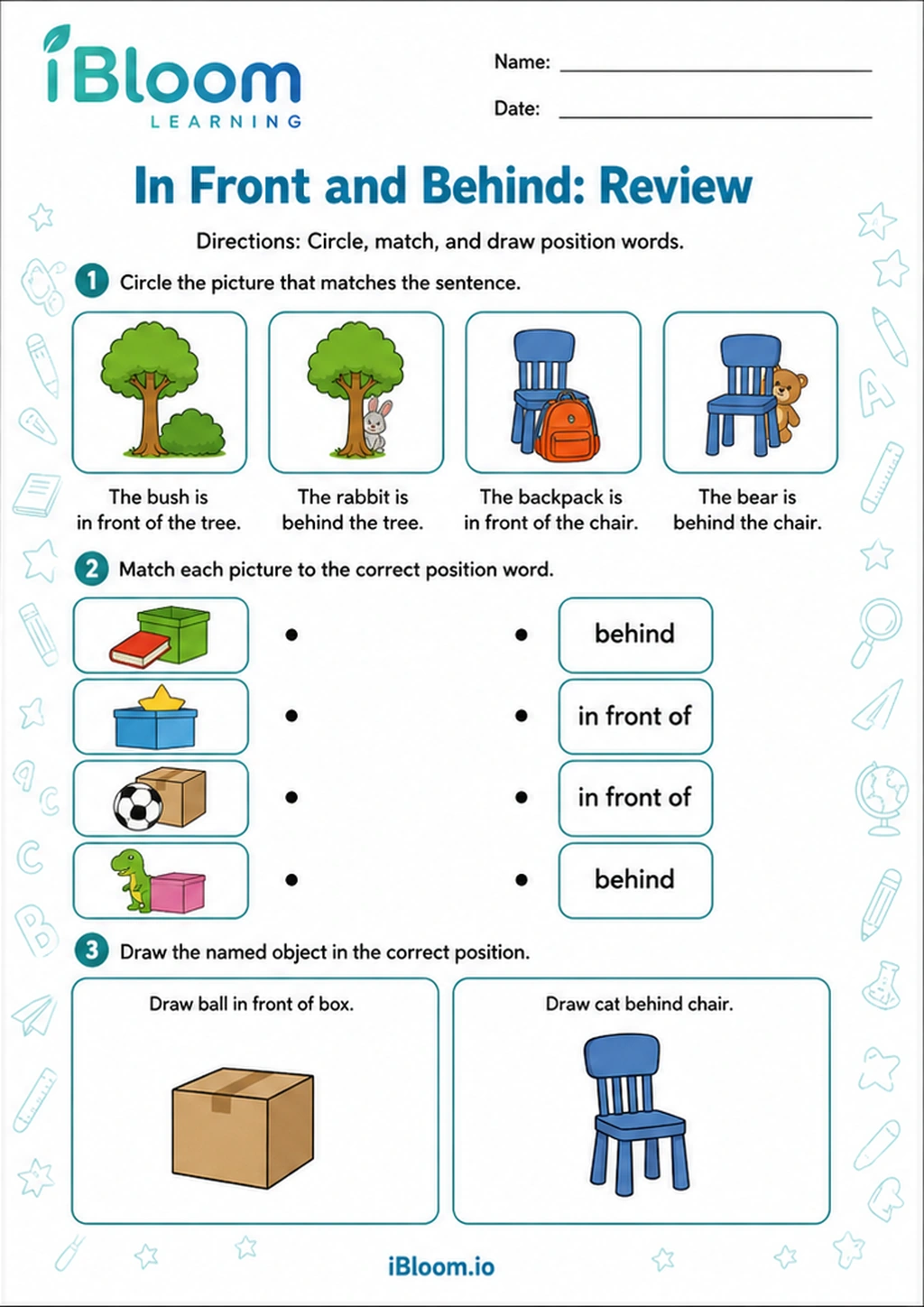 In Front and Behind: ReviewLKG printable practice for In Front and Behind.LKGFree PDF preview
Practice that builds confidence
Understanding the Position Words
These In Front Behind practice activities help Nursery, LKG and UKG children build early position vocabulary through clear, visual tasks. Children learn to notice where one object is placed in relation to another and use the words “in front of” and “behind” correctly.
The printable worksheets include child-friendly pictures, simple instructions, and practice such as circling, colouring, matching, and identifying objects. They are useful for early maths readiness, oral language development, and everyday spatial awareness.
“In front of” means something is nearer to the viewer or placed before another object. “Behind” means something is at the back or hidden partly or fully by another object. Young children often understand these ideas first through real objects, such as a toy car in front of a box or a ball behind a chair, before moving to pictures on paper.

Worksheet Progression
These worksheets move from simple picture recognition to more careful comparison. A child may first point to the animal in front, then colour the object behind, and later choose between two similar scenes. This gradual practice helps children connect the spoken word, the visual position, and the action they must take on the page.
Parent Practice Routine
At home, begin with two familiar objects. Place a cup in front of a book and ask, “What is in front?” Then move the cup behind the book and ask again. After this quick hands-on activity, give one worksheet page and read each instruction aloud. Encourage your child to answer in a full phrase, such as “The cat is behind the tree,” instead of only pointing.

Classroom Uses for Teachers
Teachers can use these printables after a movement activity, rhyme, or story that includes position words. They work well for small-group practice, maths corners, oral language work, or quick observation during class. Children can also explain their answers to a partner, which strengthens listening and speaking along with position understanding.

Common Errors to Watch For
Some children mix up left-right ideas with front-behind ideas, especially in pictures. Others answer based on what they like in the picture rather than the position asked. If a child is unsure, cover part of the picture with your hand or use real classroom objects to show which item is at the back and which is before it.
Free printable PDF download
Use this in front behind worksheets for ukg page to preview the activity, print it, or download it as a PDF for quick practice. It works well for homework, homeschool lessons, tutoring, morning work, revision, and classroom centers.
Answers and answer key support
After the child completes the worksheet independently, parents and teachers can use the answer support or answer key information to check the work, review mistakes, and choose the next practice step.
Why iBloom Worksheets Help
iBloom worksheets keep the scenes uncluttered and the task clear, so young learners focus on the target concept. The repeated use of everyday objects and simple actions gives children many chances to hear, see, and use the same vocabulary. A helpful child-friendly strategy is: “Look at the main object, then ask—what is before it, and what is at the back?”
Helpful answers
Frequently asked questions
What do children practise in these In Front Behind worksheets?
Children practise identifying which object is in front of another object and which object is behind it. They respond by circling, colouring, matching, or pointing to the correct picture.
Are these worksheets suitable for Nursery children?
Yes. Nursery children can use the simpler pages with adult support, especially after practising with real objects such as toys, cups, books, chairs, or blocks.
How can I explain “behind” to a young child?
Place one object at the back of another and say, “The teddy is behind the box.” Then change the position and ask the child to describe it. Real-object practice makes the worksheet pictures easier to understand.
Why does my child confuse in front and behind in pictures?
Young children may focus on the bigger or favourite object instead of the position. Ask them to first find the main object, then look carefully for what is before it and what is at the back.
Can teachers use these pages for group activities?
Yes. Teachers can use them after a demonstration with classroom objects, in small groups, at maths centers, or as a follow-up to movement games using position words.
Is this in front behind worksheets for ukg free?
Yes. You can preview it for free and use the printable worksheet for home or classroom practice.
Can I download this in front behind worksheets for ukg as a PDF?
Yes. Use the worksheet download option to save a printable PDF, or print the worksheet directly from the page.
Does this in front behind worksheets for ukg include answers or an answer key?
When the activity has fixed answers, iBloom includes answer support so parents and teachers can check the completed worksheet.