Free printable practice
Classify By Property Practice Activities
Printable Nursery, LKG and UKG sorting activities that help children classify objects by colour, shape, size, type, use, and other simple properties.
Free printable worksheet PDFs
Preview every available page, then download the free worksheet PDF for home, homeschool, tutoring, or classroom practice.
Preview the exact activity before downloading it.
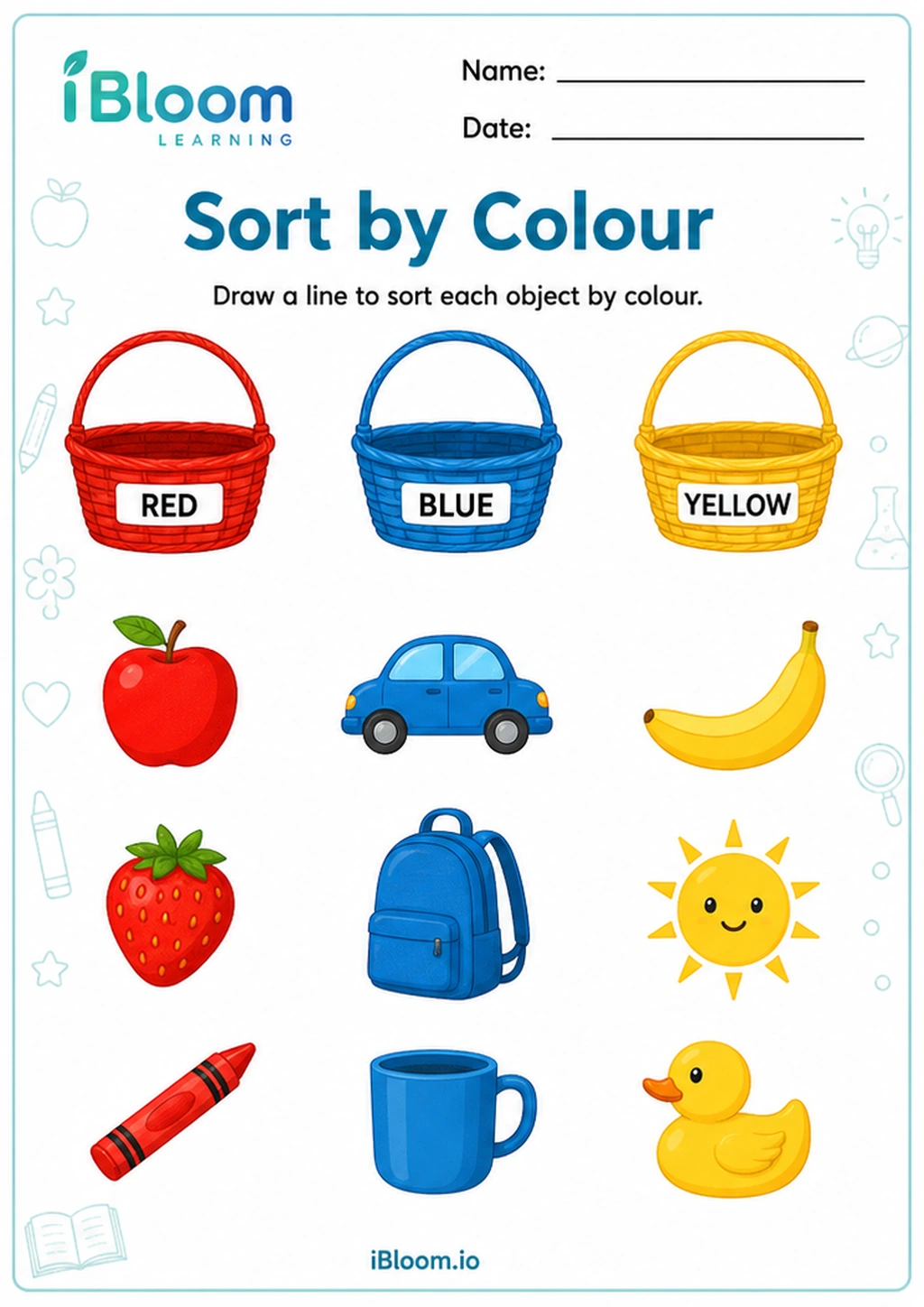 Sort by ColourUKG printable practice for Classifying by Property.UKGFree PDF preview
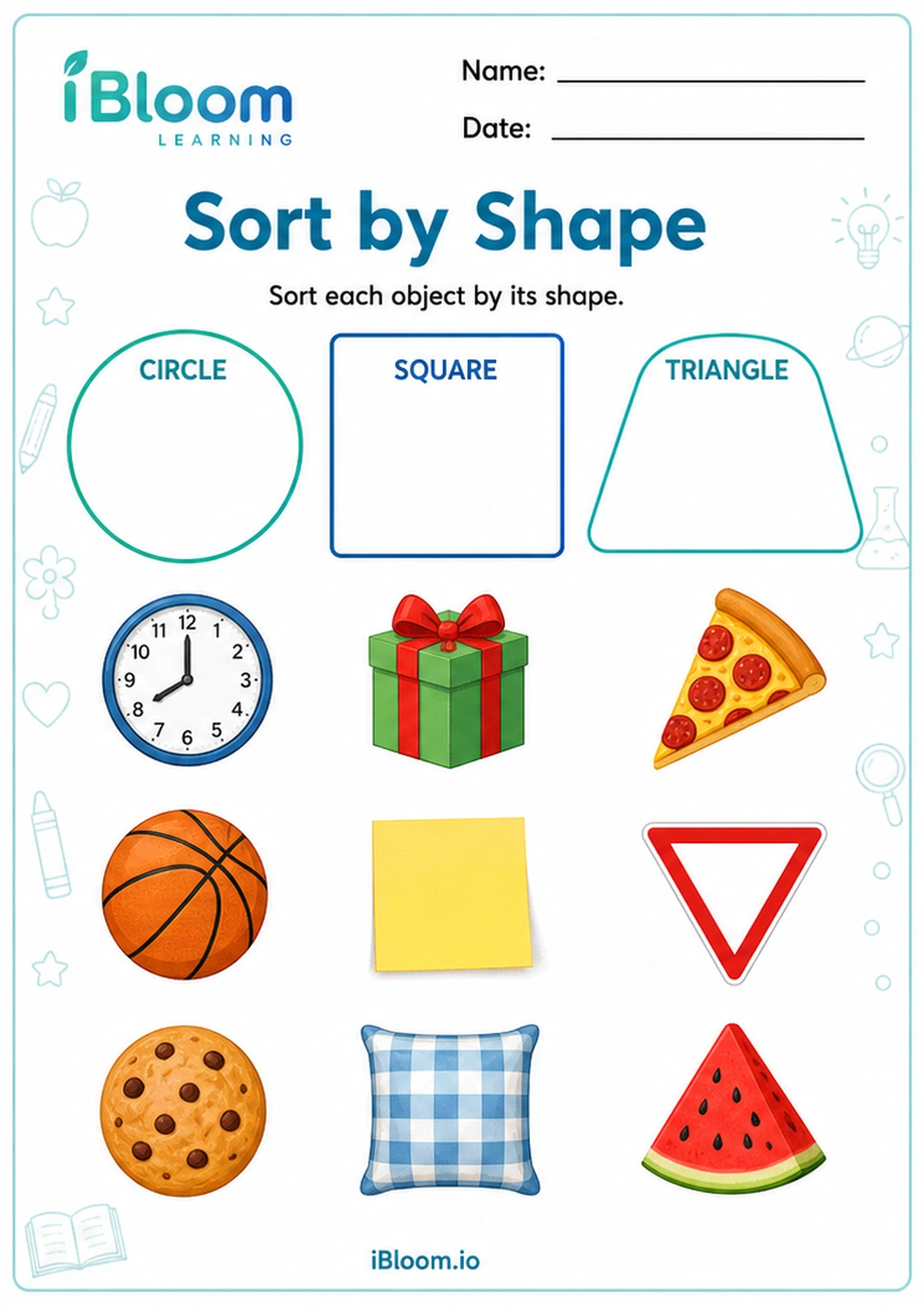 Sort by ShapeUKG printable practice for Classifying by Property.UKGFree PDF preview
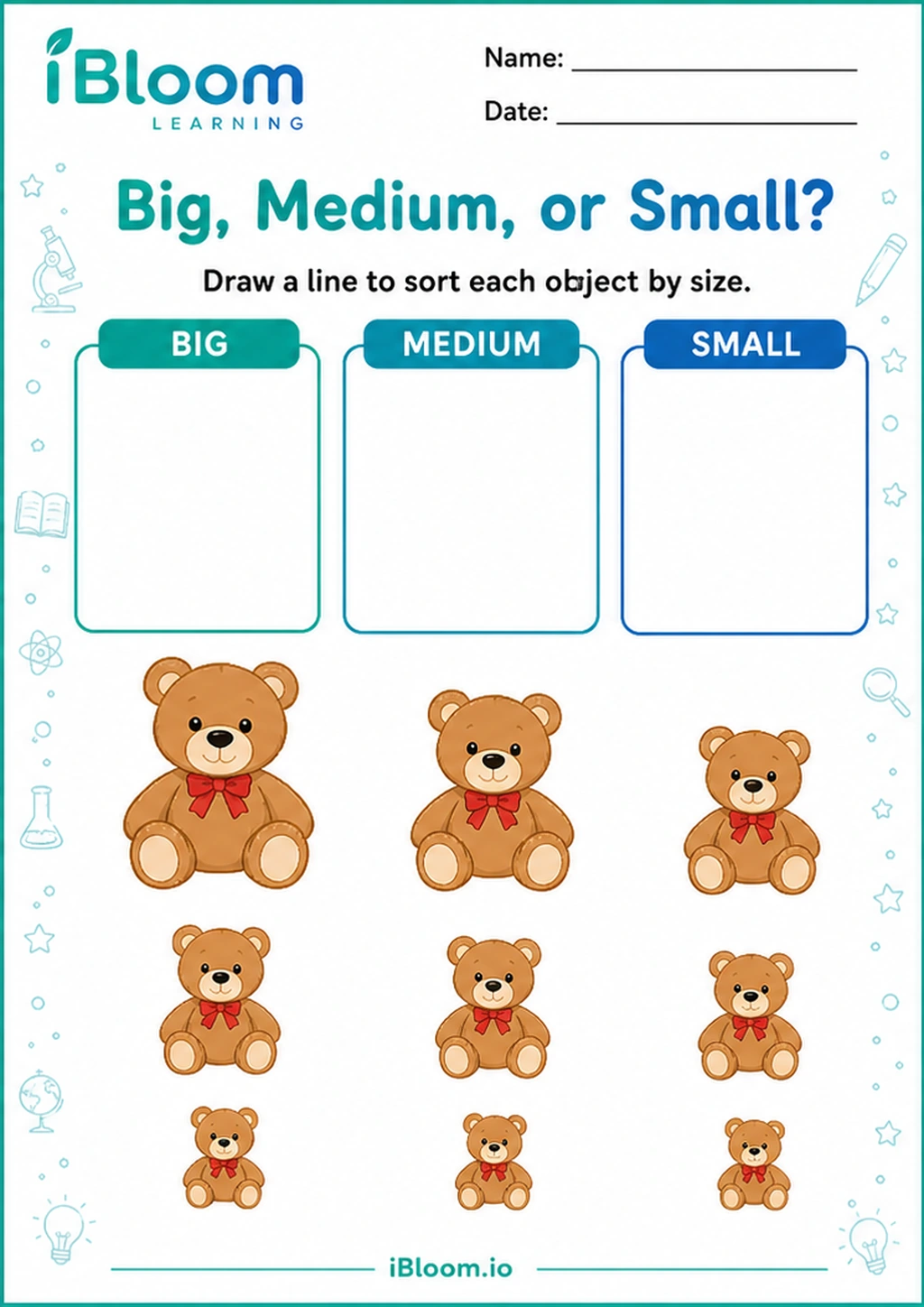 Big, Medium, or Small?UKG printable practice for Classifying by Property.UKGFree PDF preview
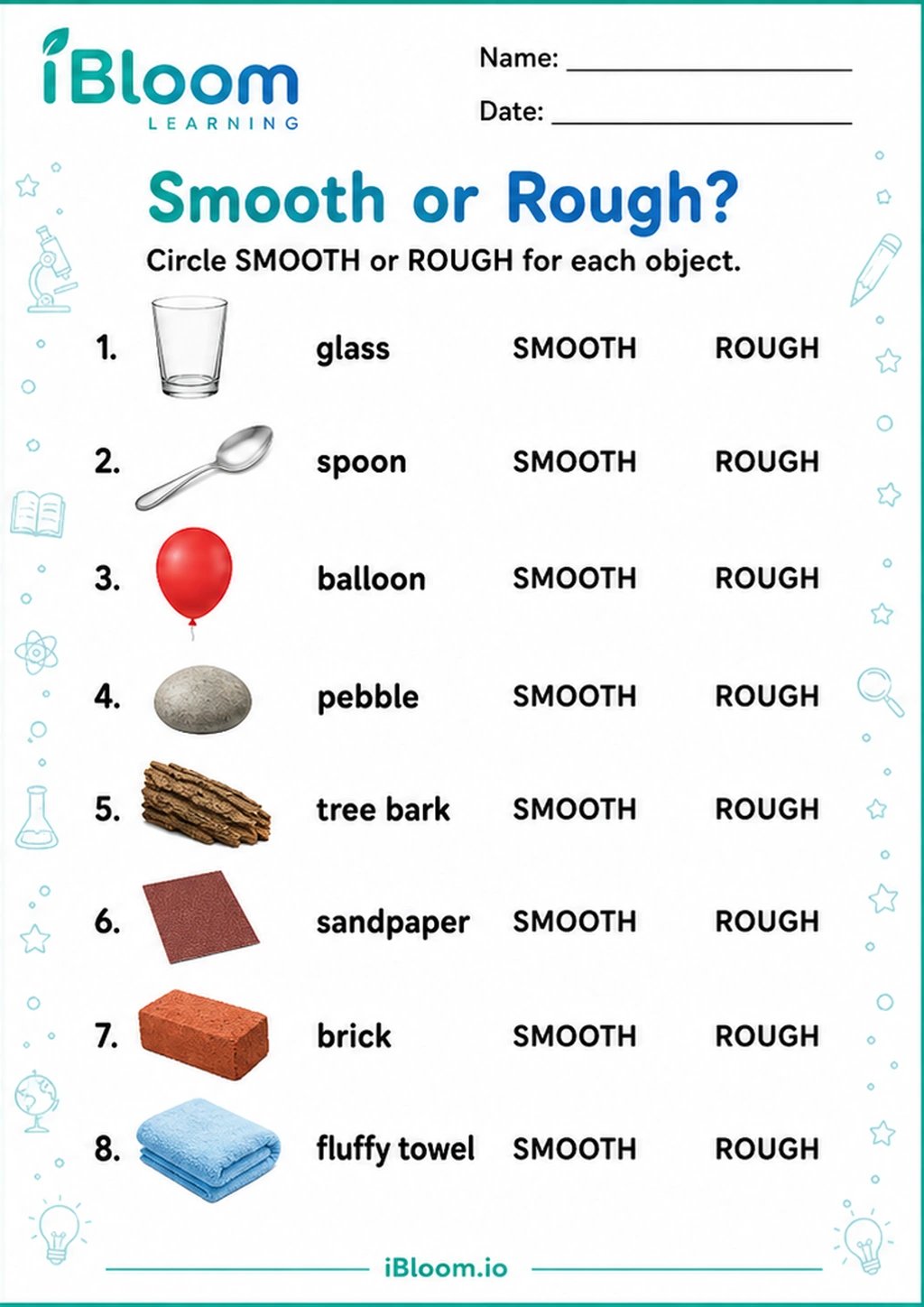 Smooth or Rough?UKG printable practice for Classifying by Property.UKGFree PDF preview
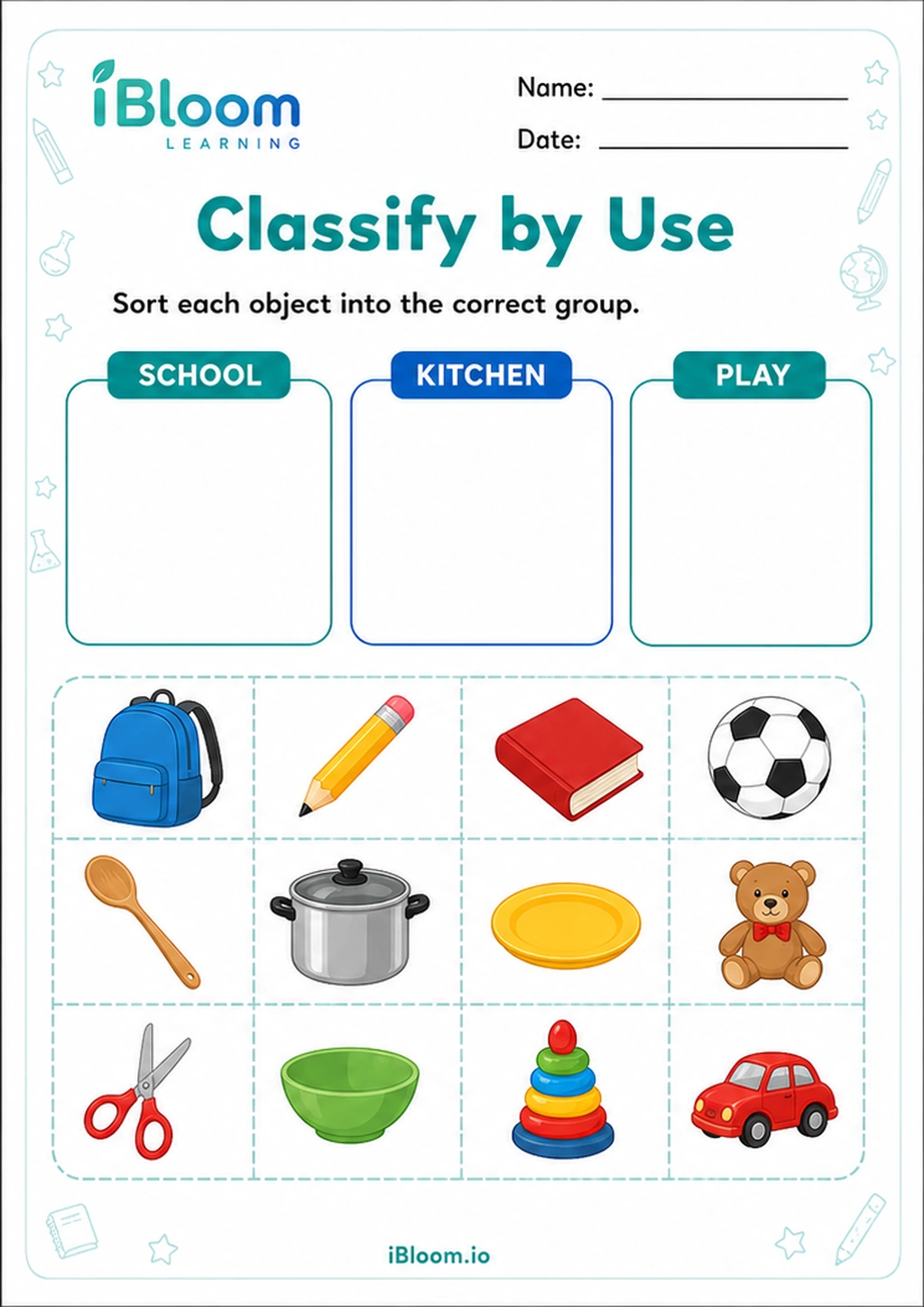 Classify by UseUKG printable practice for Classifying by Property.UKGFree PDF preview
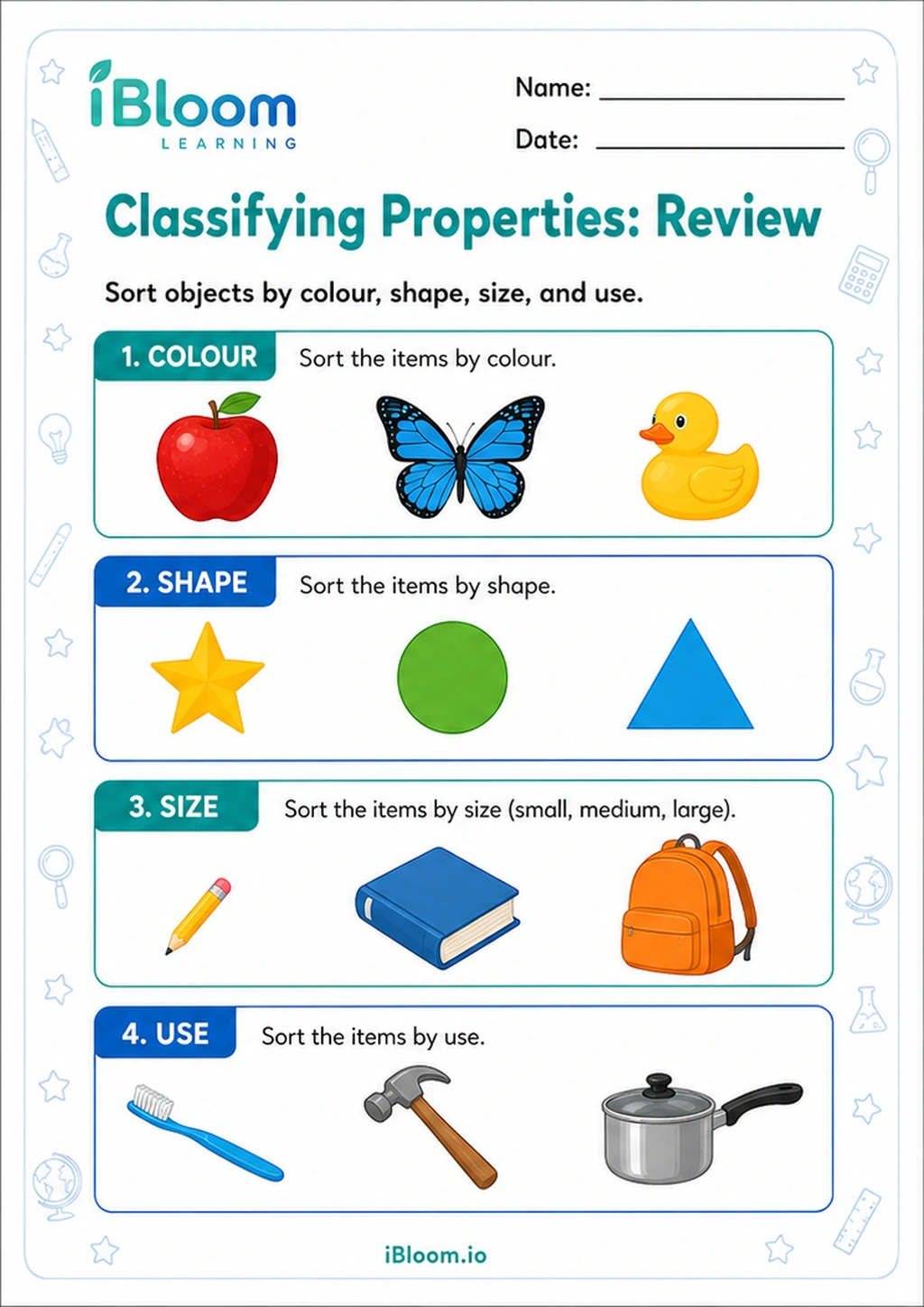 Classifying Properties: ReviewUKG printable practice for Classifying by Property.UKGFree PDF preview
Practice that builds confidence
What children learn
These Classify By Property practice activities help Nursery, LKG and UKG children look carefully at objects and decide how they are alike or different. Children practise sorting by clear properties such as colour, shape, size, kind, pattern, and everyday use.
The printable worksheets include child-friendly pictures, matching and grouping tasks, odd-one-out style thinking, and simple category choices. Each activity builds observation, vocabulary, and early maths reasoning within the Sorting topic.
Classifying by property is an early sorting skill where children group objects because they share one feature. A child may place all red items together, circle the big animals, match round objects, or choose things used for eating. In Nursery, LKG and UKG, this skill supports maths language, visual discrimination, and the habit of explaining, “These go together because…”

From noticing to sorting
The progression usually begins with obvious properties such as colour and size. Children then move towards shape, pattern, object type, material, or use. The worksheets give practice in looking at one property at a time before comparing two groups. Some tasks ask children to identify a matching property, while others ask them to find the item that does not belong.
A simple parent routine
At home, use real objects before or after the worksheet. Put out spoons, crayons, buttons, toy animals, leaves, or blocks. Ask your child to make one group, then ask, “What is the same?” If the child says “these ones,” gently model the property word: “Yes, these are all blue,” or “These are all small.” Then let the child draw, colour, or tick the matching pictures on the printable page.

Classroom uses for teachers
Teachers can use these sheets after hands-on sorting trays, as table work, or in maths centres. They also work well for small-group language practice because children can describe their choices aloud. For mixed readiness levels, let younger children sort by one visible feature, while older UKG children explain the rule or create a second possible group.

Common errors to watch for
Some children sort by personal preference instead of a property, such as “I like these.” Others change the rule midway, first choosing red items and then adding a big item because it stands out. Watch for confusion between colour and shape words, or between size words like big, small, tall, and short. Encourage children to point to the feature and say the rule before marking an answer.
Free printable PDF download
Use this classify by property worksheet page to preview the activity, print it, or download it as a PDF for quick practice. It works well for homework, homeschool lessons, tutoring, morning work, revision, and classroom centers.
Answers and answer key support
After the child completes the worksheet independently, parents and teachers can use the answer support or answer key information to check the work, review mistakes, and choose the next practice step.
Why iBloom worksheets help
The activities are designed for early years learners with clear pictures, limited visual clutter, and gradual thinking demands. A helpful child-friendly strategy is: look, name, compare, group. First look at every picture, name the property, compare it with the others, and then make the group. This keeps sorting thoughtful instead of guess-based.
Helpful answers
Frequently asked questions
What does classify by property mean for Nursery, LKG and UKG children?
It means grouping objects because they share a clear feature, such as the same colour, shape, size, type, pattern, or use. For example, a child may group all round objects or all things used for eating.
Should children sort real objects before using these worksheets?
Yes, hands-on sorting with blocks, crayons, spoons, toys, or leaves is very helpful. Once children have physically made groups, the worksheet activities become easier to understand.
Which property should I start with first?
Start with highly visible properties such as colour or size. After the child is confident, move to shape, pattern, object type, or use, such as things we wear or things we eat.
How can I help if my child keeps changing the sorting rule?
Ask the child to say the rule before sorting, such as “I am finding all the red things.” If the rule changes, pause and ask, “Does this one match our rule?” This builds careful classification.
Are these worksheets useful for maths or language development?
They support both. Children practise early maths thinking through sorting and grouping, while also learning vocabulary such as same, different, big, small, round, red, animal, fruit, and object names.
Is this classify by property worksheet free?
Yes. You can preview it for free and use the printable worksheet for home or classroom practice.
Can I download this classify by property worksheet as a PDF?
Yes. Use the worksheet download option to save a printable PDF, or print the worksheet directly from the page.
Does this classify by property worksheet include answers or an answer key?
When the activity has fixed answers, iBloom includes answer support so parents and teachers can check the completed worksheet.