Free printable practice
Comparison Practice Activities
Printable preschool and kindergarten comparison worksheets for comparing size, length, height, weight, and sameness using clear picture-based tasks.
Explore Comparison
Free printable worksheet PDFs
Preview every available page, then download the free worksheet PDF for home, homeschool, tutoring, or classroom practice.
Preview the exact activity before downloading it.
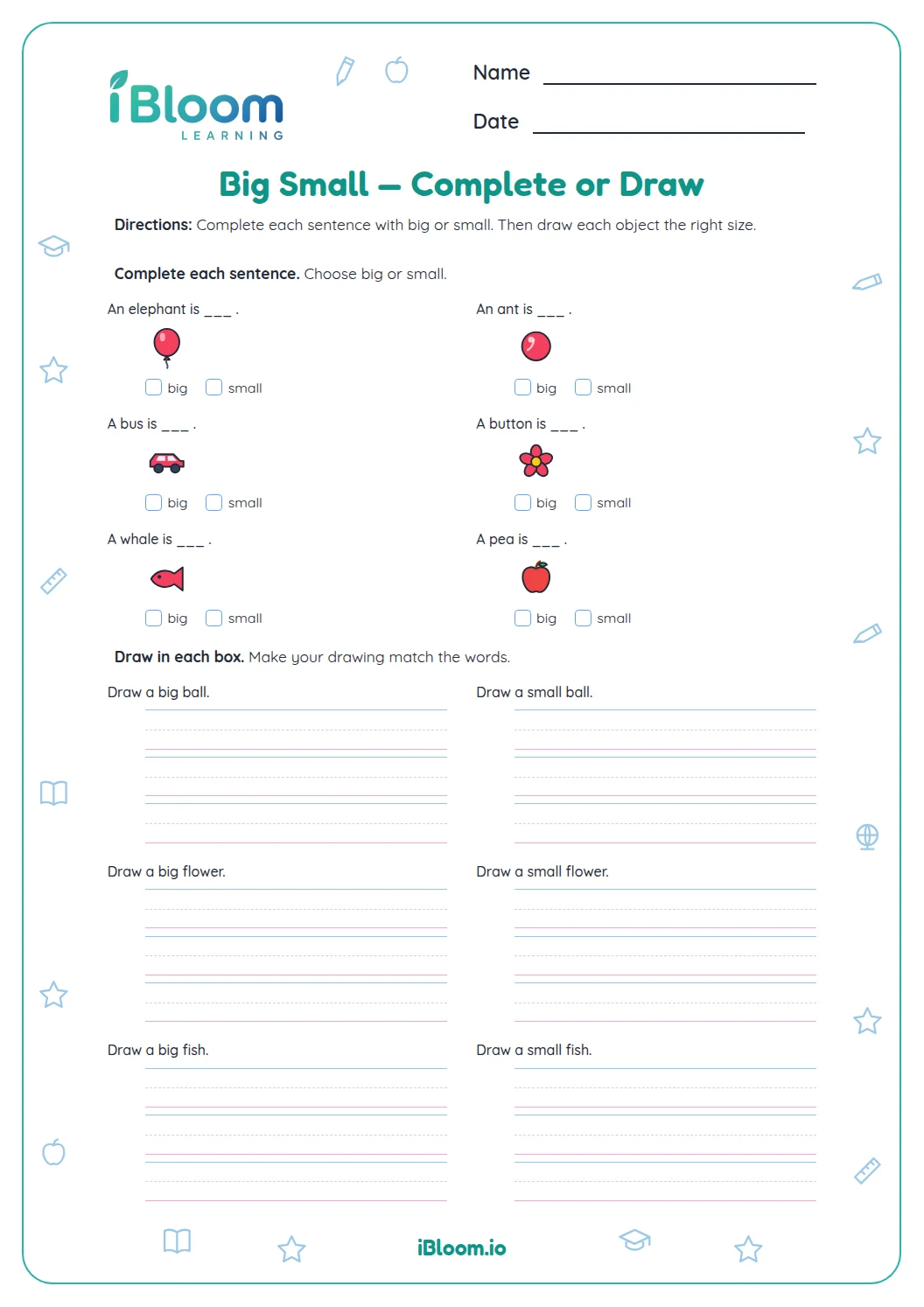 Big Small — Complete or DrawPrintable preschool and kindergarten activities that help children compare objects and identify which one is big or small. This complete or draw worksheet provides a distinct, age-appropriate way to practise the same lesson.Preschool, KindergartenFree PDF preview
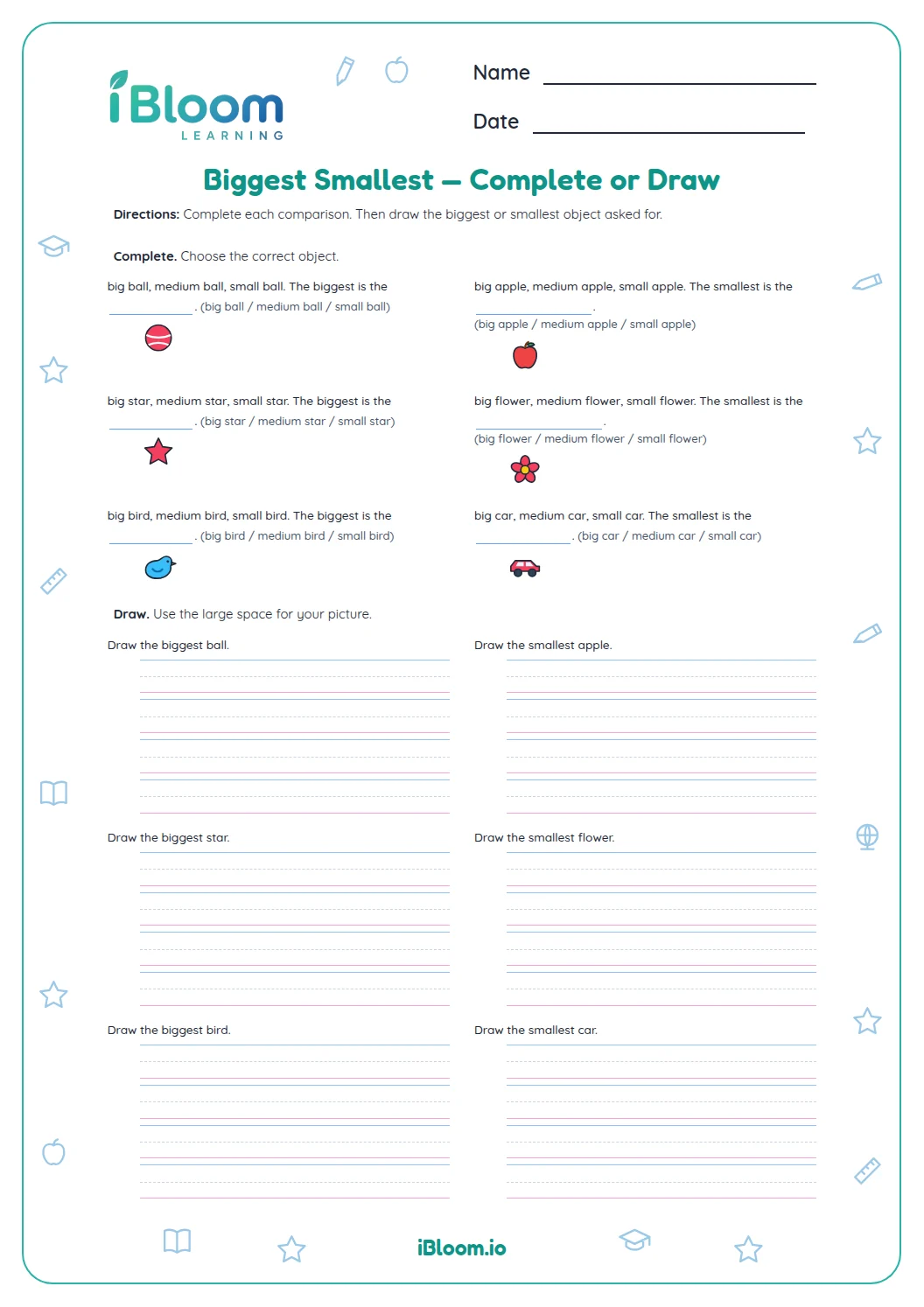 Biggest Smallest — Complete or DrawPreschool and kindergarten children practice identifying the biggest and smallest objects through colorful printable comparison activities. This complete or draw worksheet provides a distinct, age-appropriate way to practise the same lesson.Preschool, KindergartenFree PDF preview
 Heavy Light — Complete or DrawPrintable preschool and kindergarten activities that help children compare objects as heavy or light using pictures, sorting, and everyday reasoning. This complete or draw worksheet provides a distinct, age-appropriate way to practise the same lesson.Preschool, KindergartenFree PDF preview4 pages
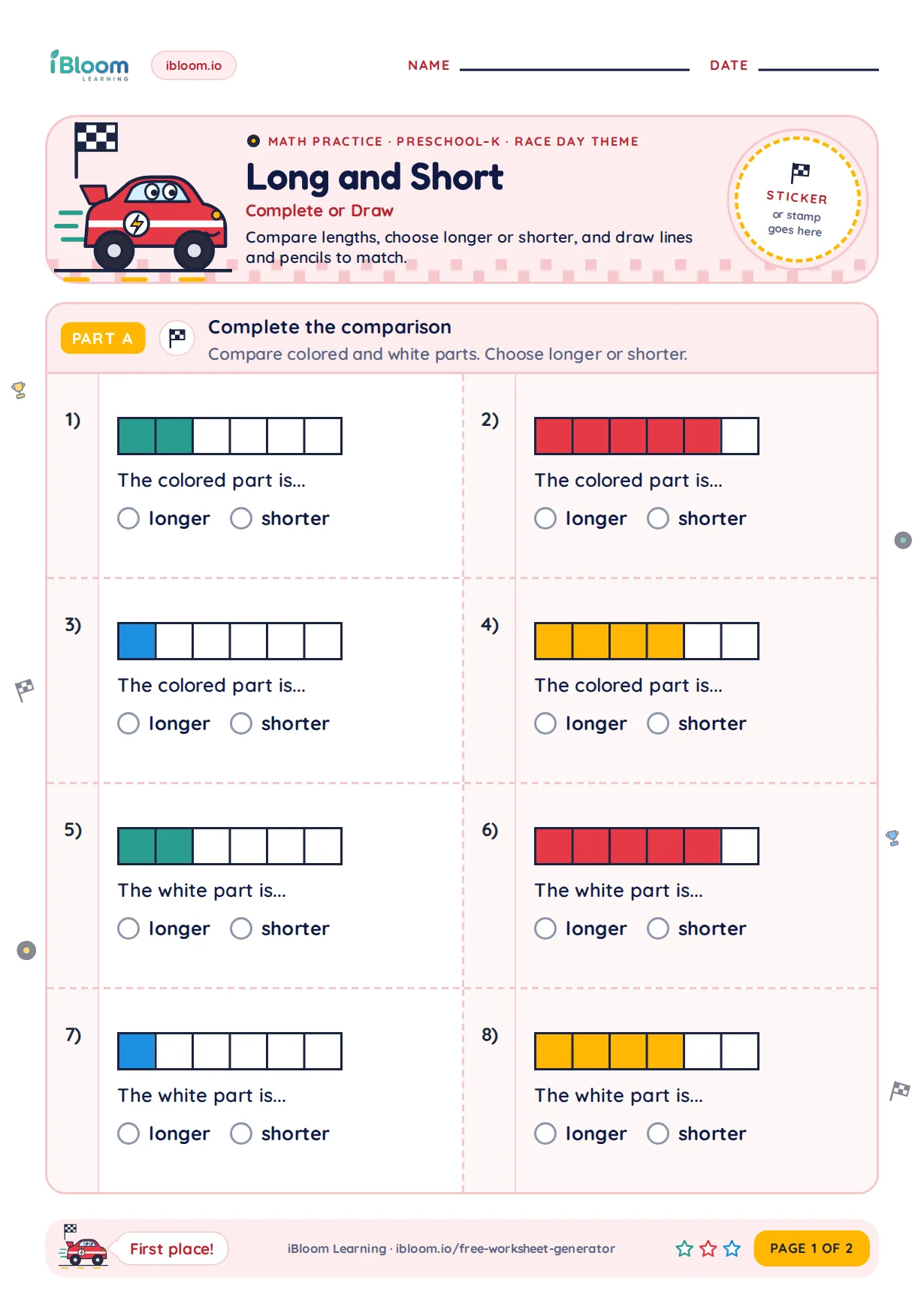 Long Short — Complete or DrawPrintable preschool and kindergarten activities for comparing long and short objects through pictures, coloring, matching, and simple sorting. This complete or draw worksheet provides a distinct, age-appropriate way to practise the same lesson.Preschool, KindergartenFree PDF preview
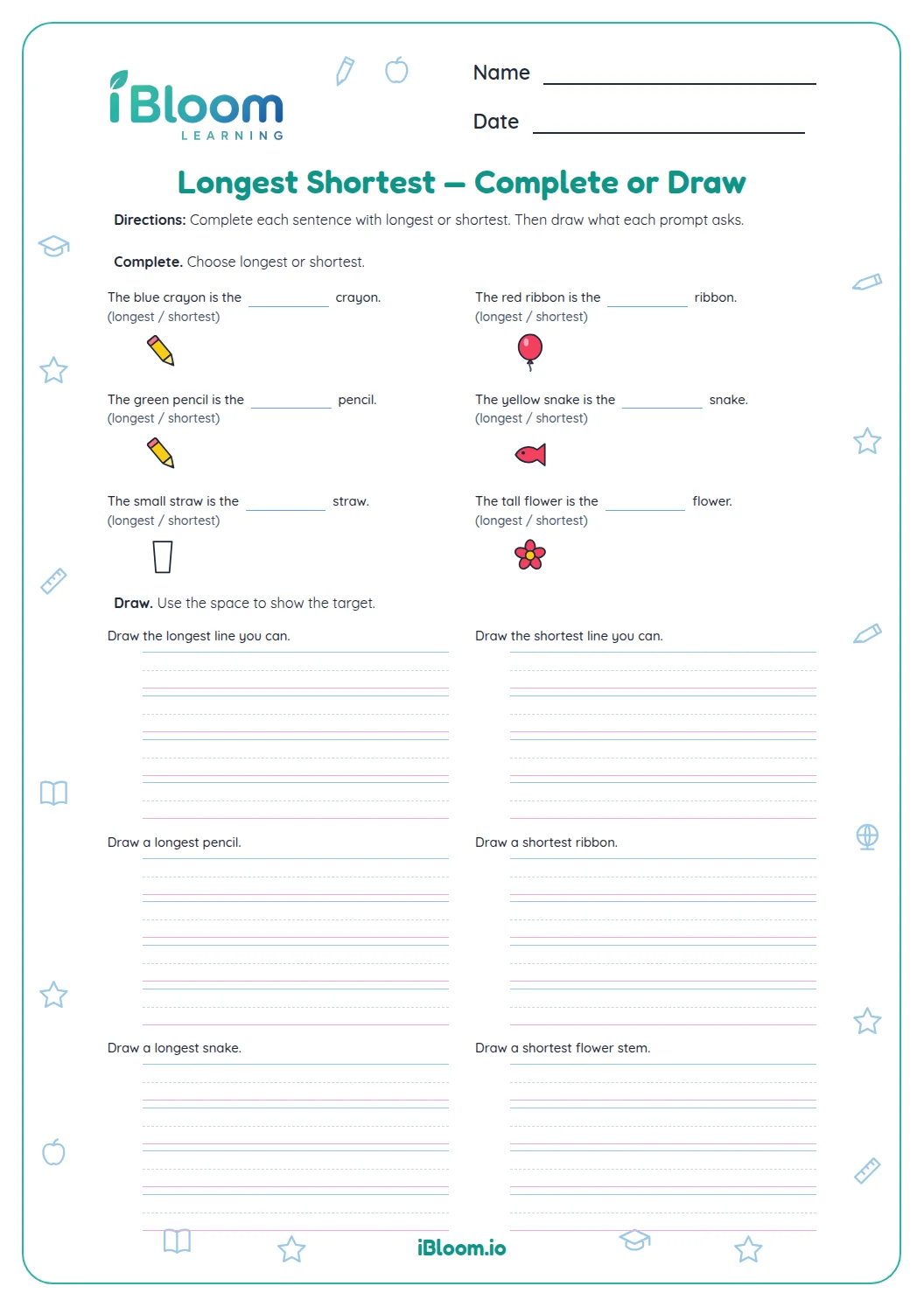 Longest Shortest — Complete or DrawPrintable preschool and kindergarten comparison worksheets for identifying, ordering, and describing the longest and shortest objects. This complete or draw worksheet provides a distinct, age-appropriate way to practise the same lesson.Preschool, KindergartenFree PDF preview4 pages
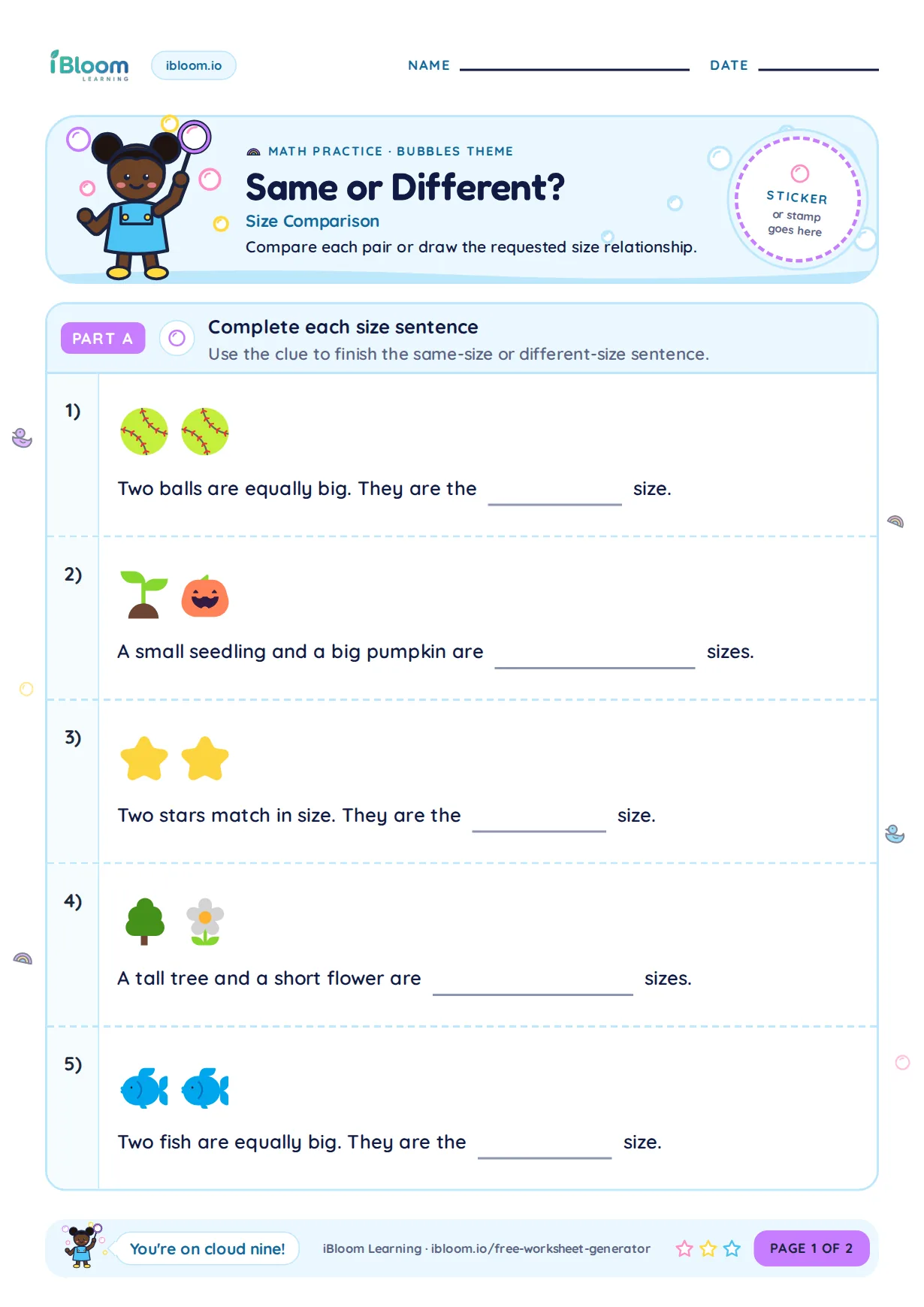 Same Different Size — Complete or DrawPrintable preschool and kindergarten comparison worksheets for identifying objects that are the same size or different sizes. This complete or draw worksheet provides a distinct, age-appropriate way to practise the same lesson.Preschool, KindergartenFree PDF preview6 pages
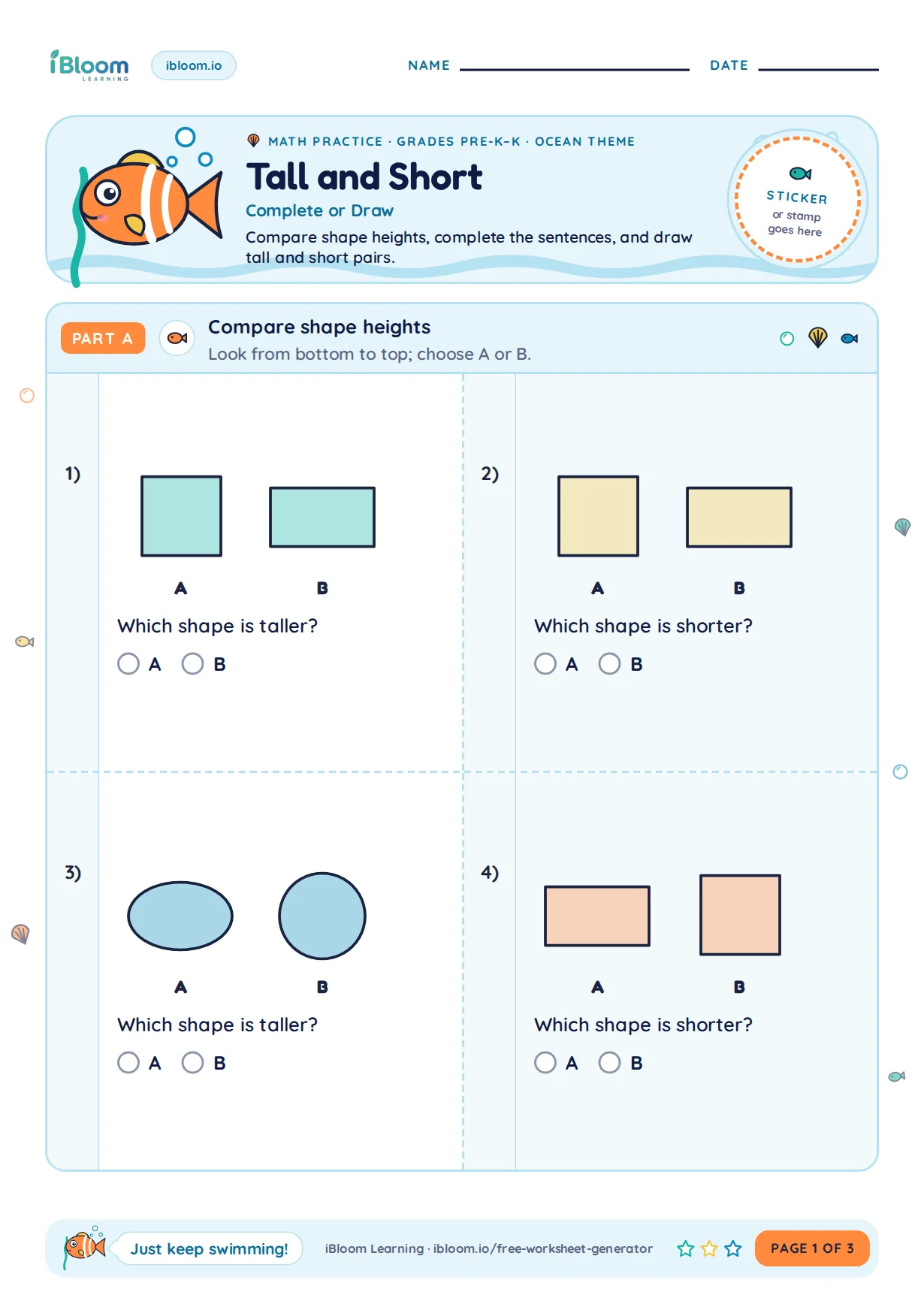 Tall Short — Complete or DrawPrintable preschool and kindergarten activities for comparing height using tall, short, taller, shorter, tallest, and shortest. This complete or draw worksheet provides a distinct, age-appropriate way to practise the same lesson.Preschool, KindergartenFree PDF preview
 Tallest Shortest — Complete or DrawPrintable preschool and kindergarten activities for comparing objects by height and identifying the tallest and shortest items. This complete or draw worksheet provides a distinct, age-appropriate way to practise the same lesson.Preschool, KindergartenFree PDF preview4 pages
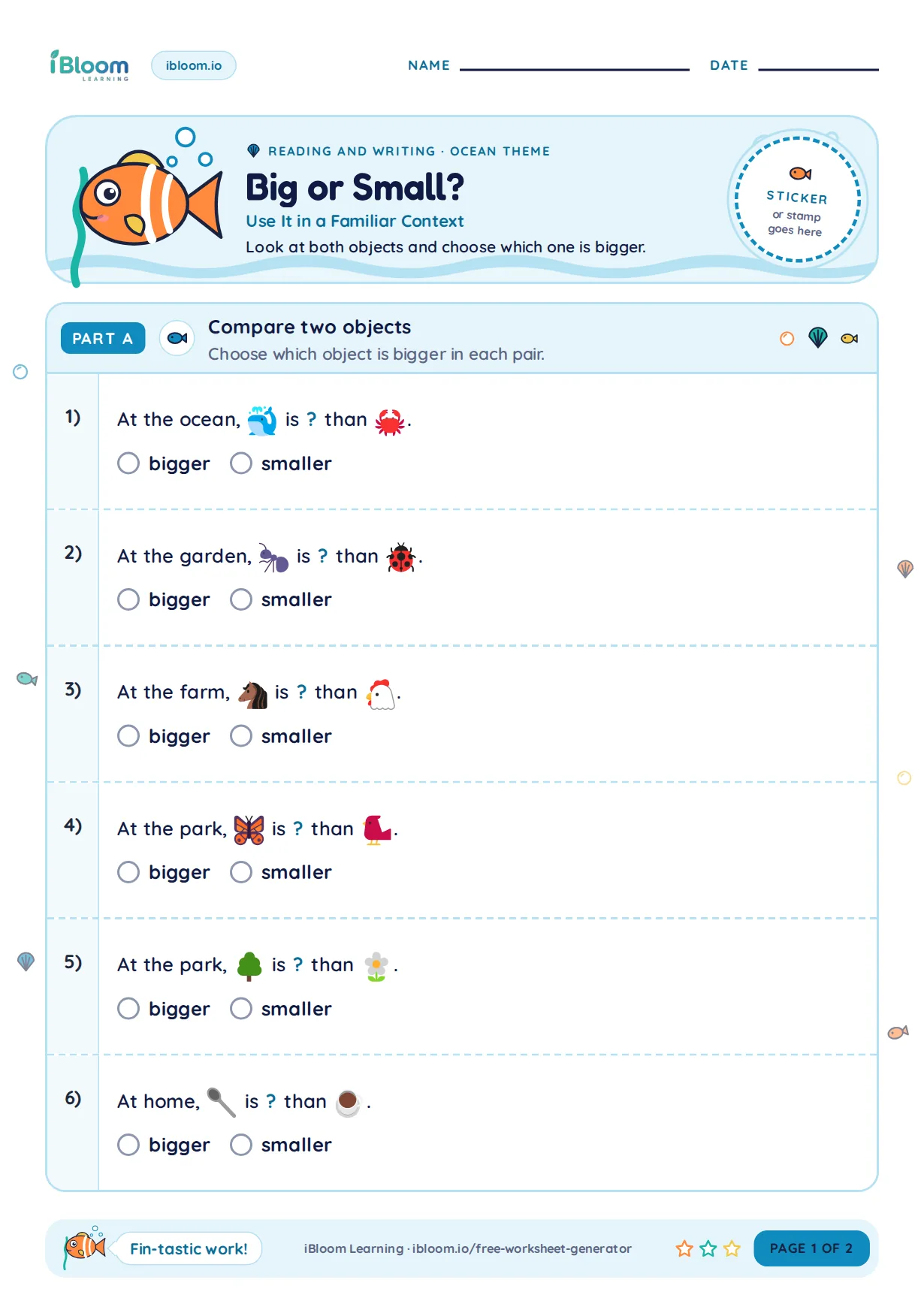 Big Small — Use It in a Familiar ContextPrintable preschool and kindergarten activities that help children compare objects and identify which one is big or small. This use it in a familiar context worksheet provides a distinct, age-appropriate way to practise the same lesson.Preschool, KindergartenFree PDF preview4 pages
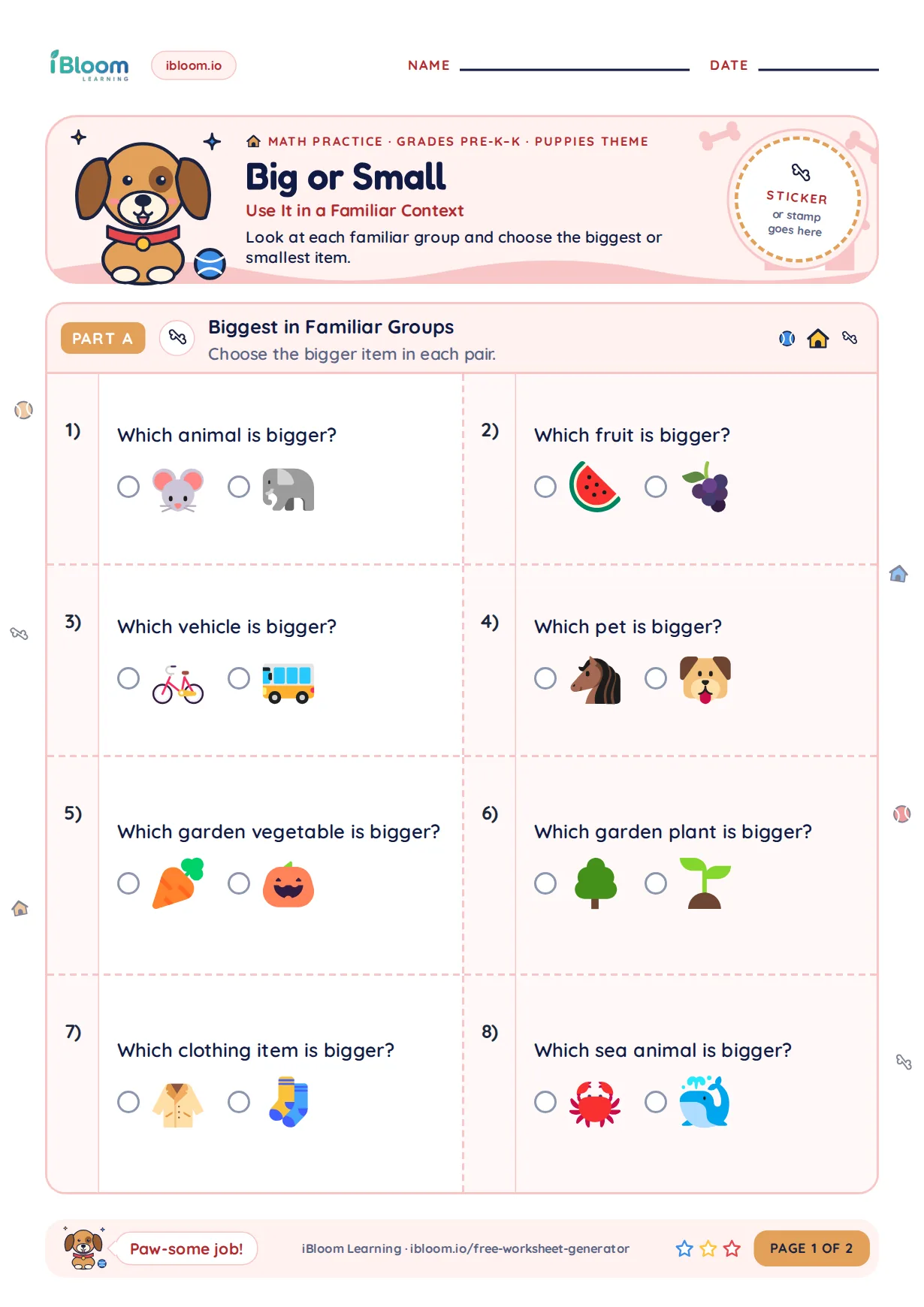 Biggest Smallest — Use It in a Familiar ContextPreschool and kindergarten children practice identifying the biggest and smallest objects through colorful printable comparison activities. This use it in a familiar context worksheet provides a distinct, age-appropriate way to practise the same lesson.Preschool, KindergartenFree PDF preview
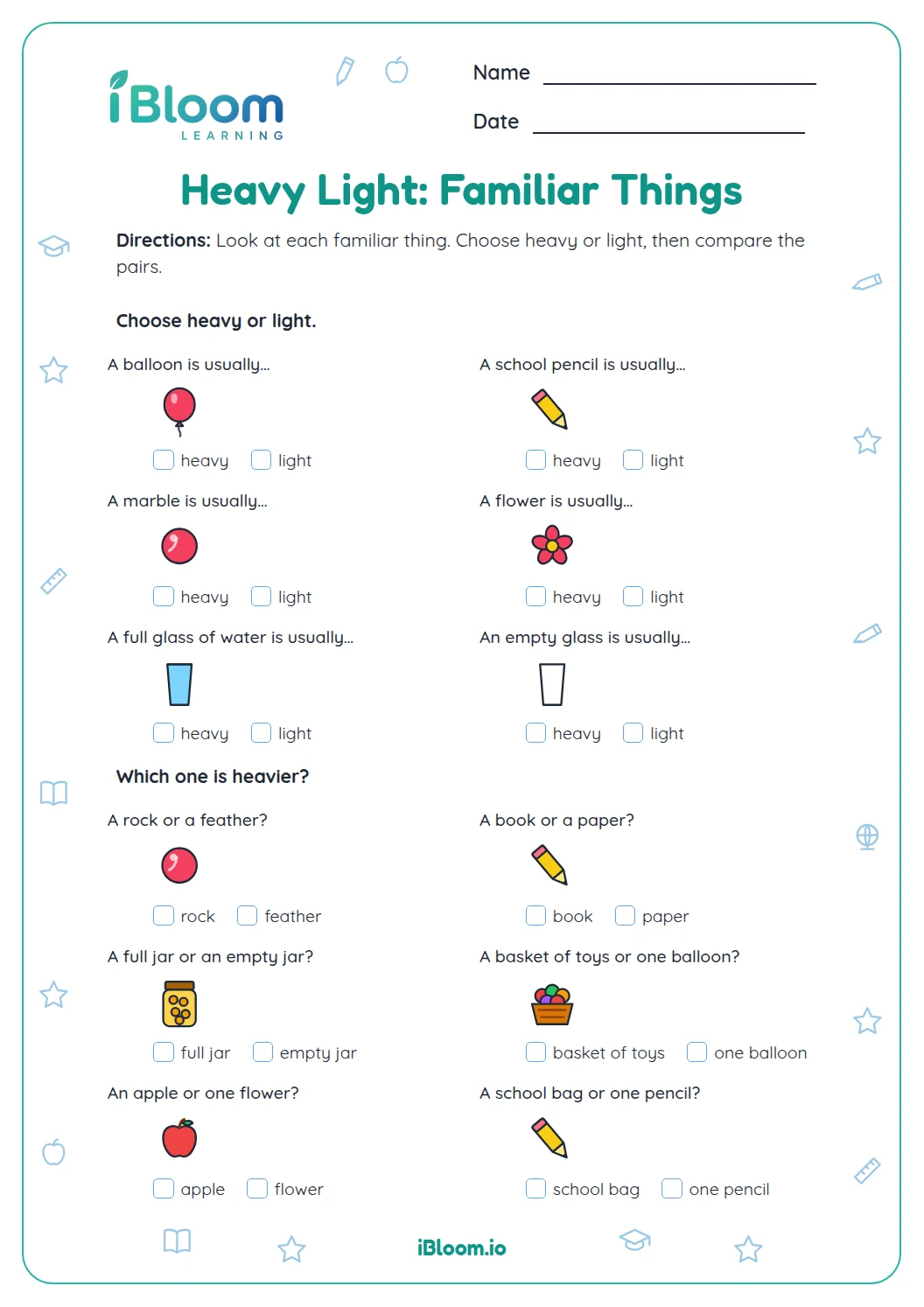 Heavy Light — Use It in a Familiar ContextPrintable preschool and kindergarten activities that help children compare objects as heavy or light using pictures, sorting, and everyday reasoning. This use it in a familiar context worksheet provides a distinct, age-appropriate way to practise the same lesson.Preschool, KindergartenFree PDF preview
 Long Short — Use It in a Familiar ContextPrintable preschool and kindergarten activities for comparing long and short objects through pictures, coloring, matching, and simple sorting. This use it in a familiar context worksheet provides a distinct, age-appropriate way to practise the same lesson.Preschool, KindergartenFree PDF preview
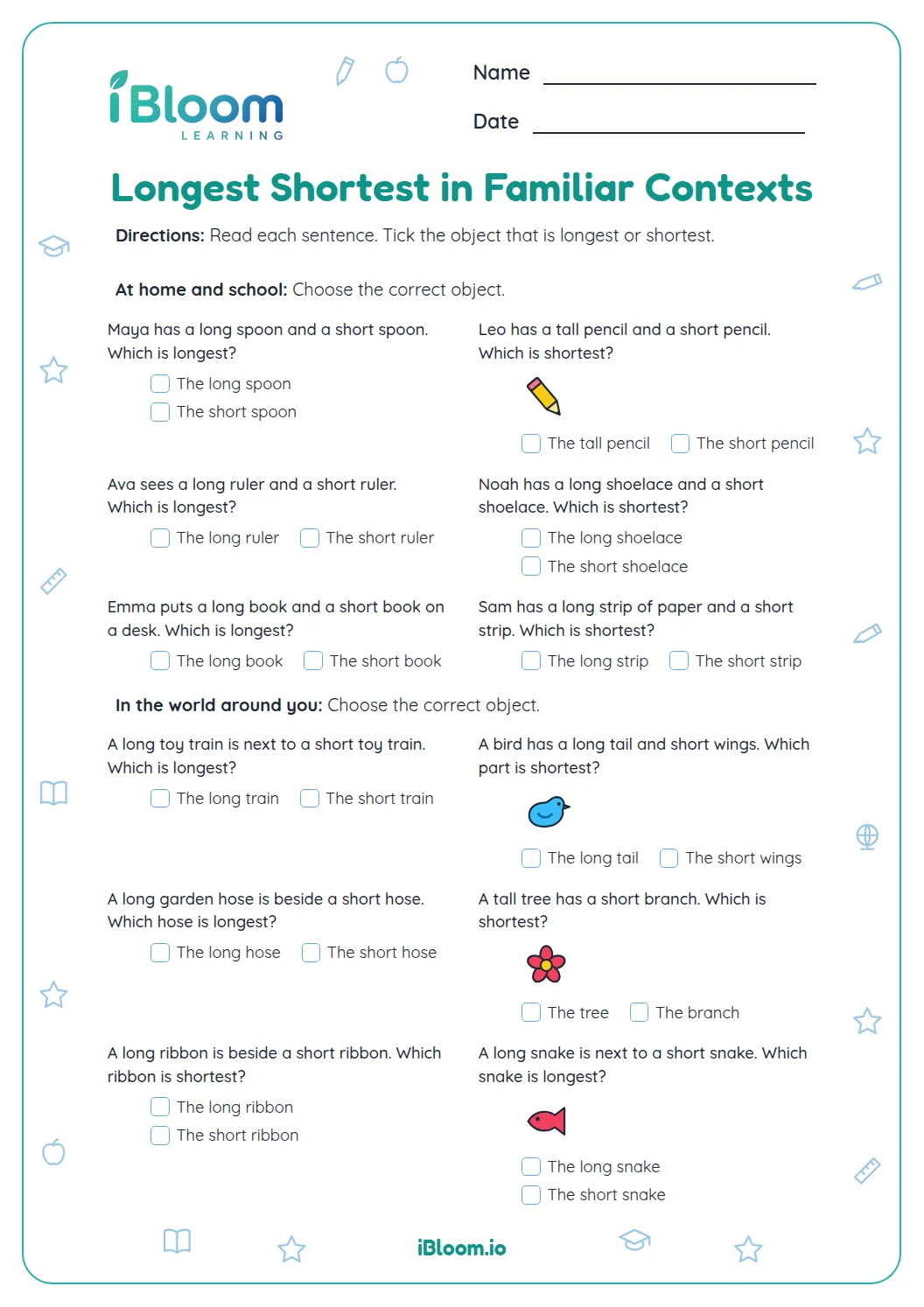 Longest Shortest — Use It in a Familiar ContextPrintable preschool and kindergarten comparison worksheets for identifying, ordering, and describing the longest and shortest objects. This use it in a familiar context worksheet provides a distinct, age-appropriate way to practise the same lesson.Preschool, KindergartenFree PDF preview6 pages
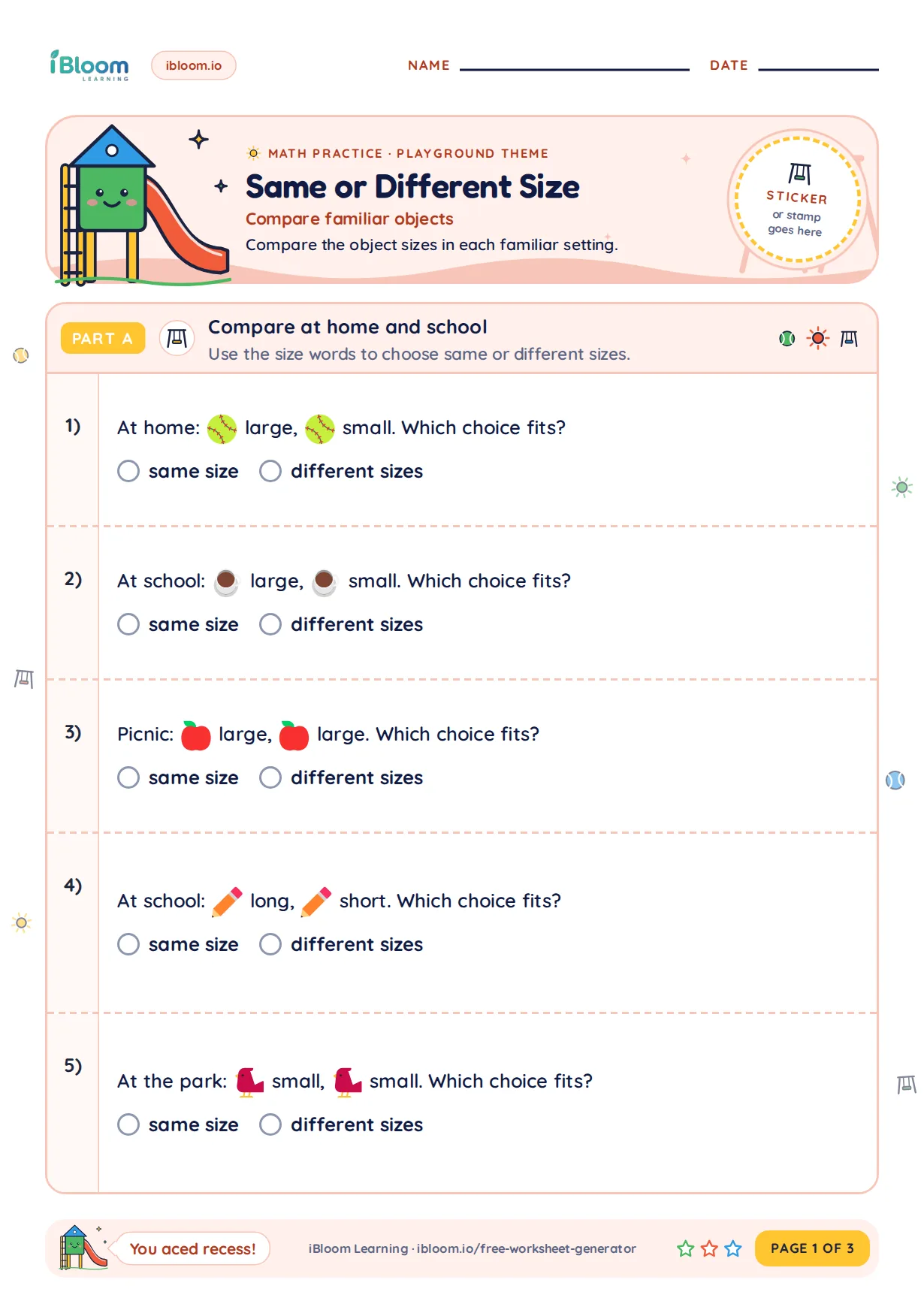 Same Different Size — Use It in a Familiar ContextPrintable preschool and kindergarten comparison worksheets for identifying objects that are the same size or different sizes. This use it in a familiar context worksheet provides a distinct, age-appropriate way to practise the same lesson.Preschool, KindergartenFree PDF preview
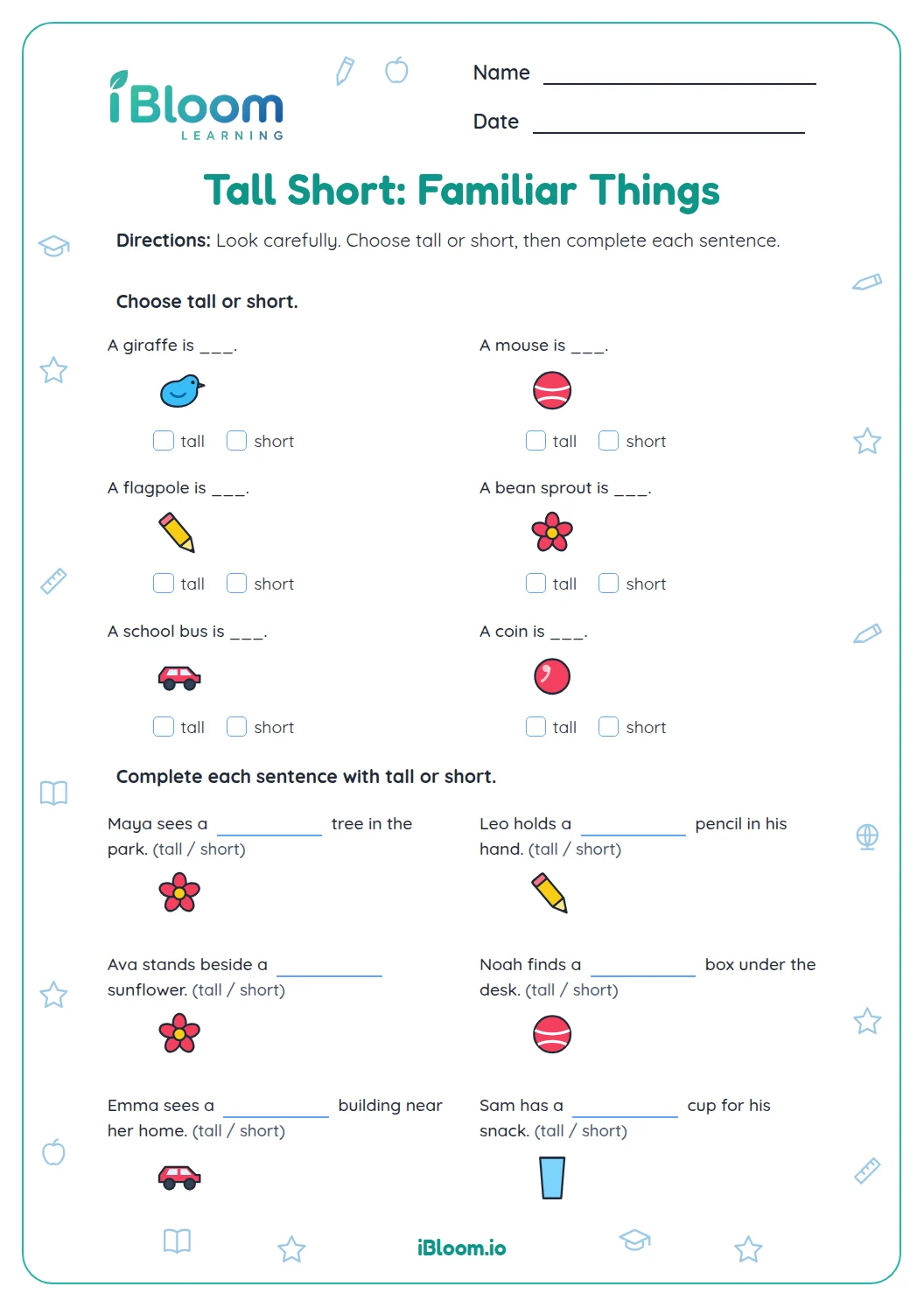 Tall Short — Use It in a Familiar ContextPrintable preschool and kindergarten activities for comparing height using tall, short, taller, shorter, tallest, and shortest. This use it in a familiar context worksheet provides a distinct, age-appropriate way to practise the same lesson.Preschool, KindergartenFree PDF preview
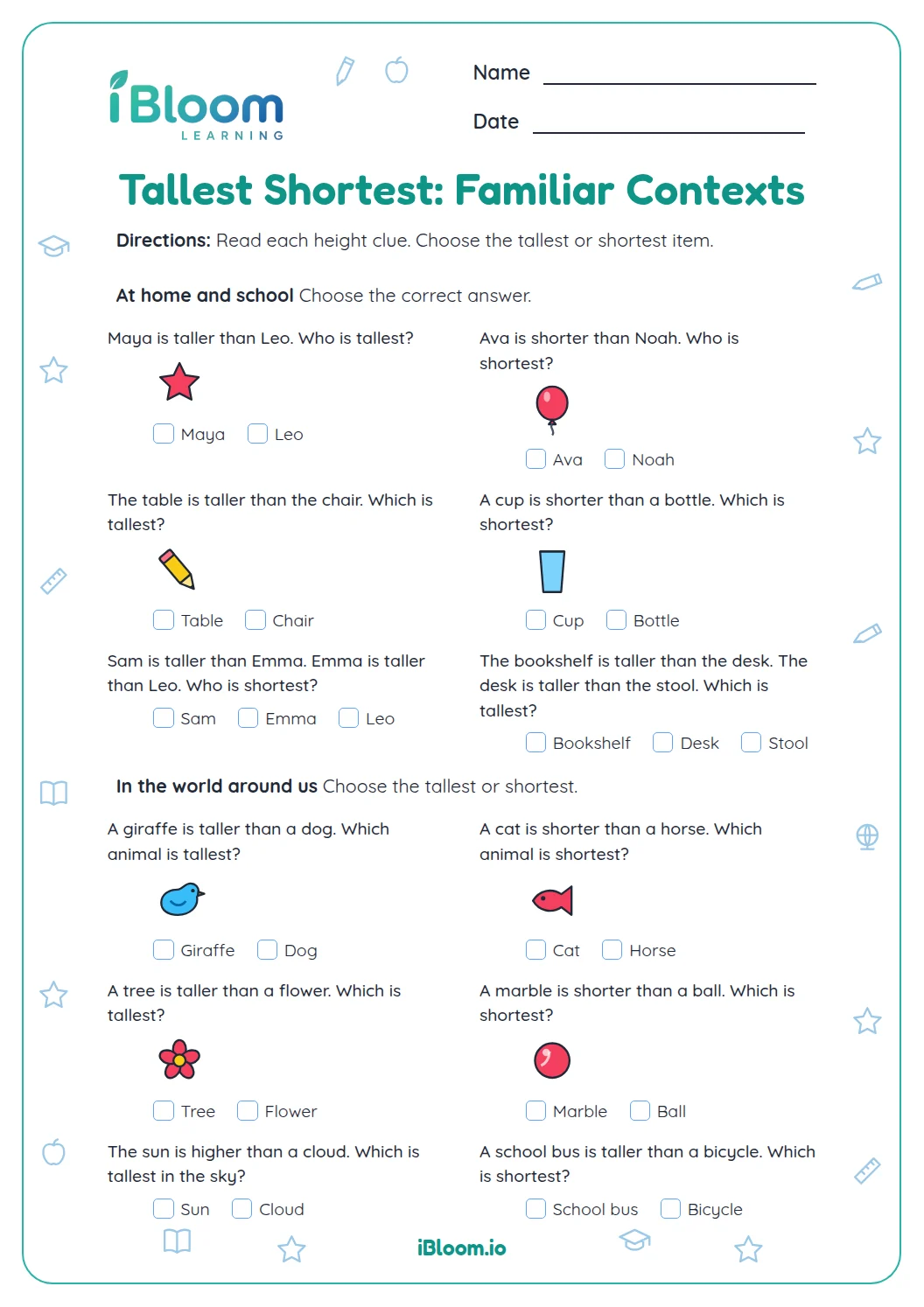 Tallest Shortest — Use It in a Familiar ContextPrintable preschool and kindergarten activities for comparing objects by height and identifying the tallest and shortest items. This use it in a familiar context worksheet provides a distinct, age-appropriate way to practise the same lesson.Preschool, KindergartenFree PDF preview4 pages
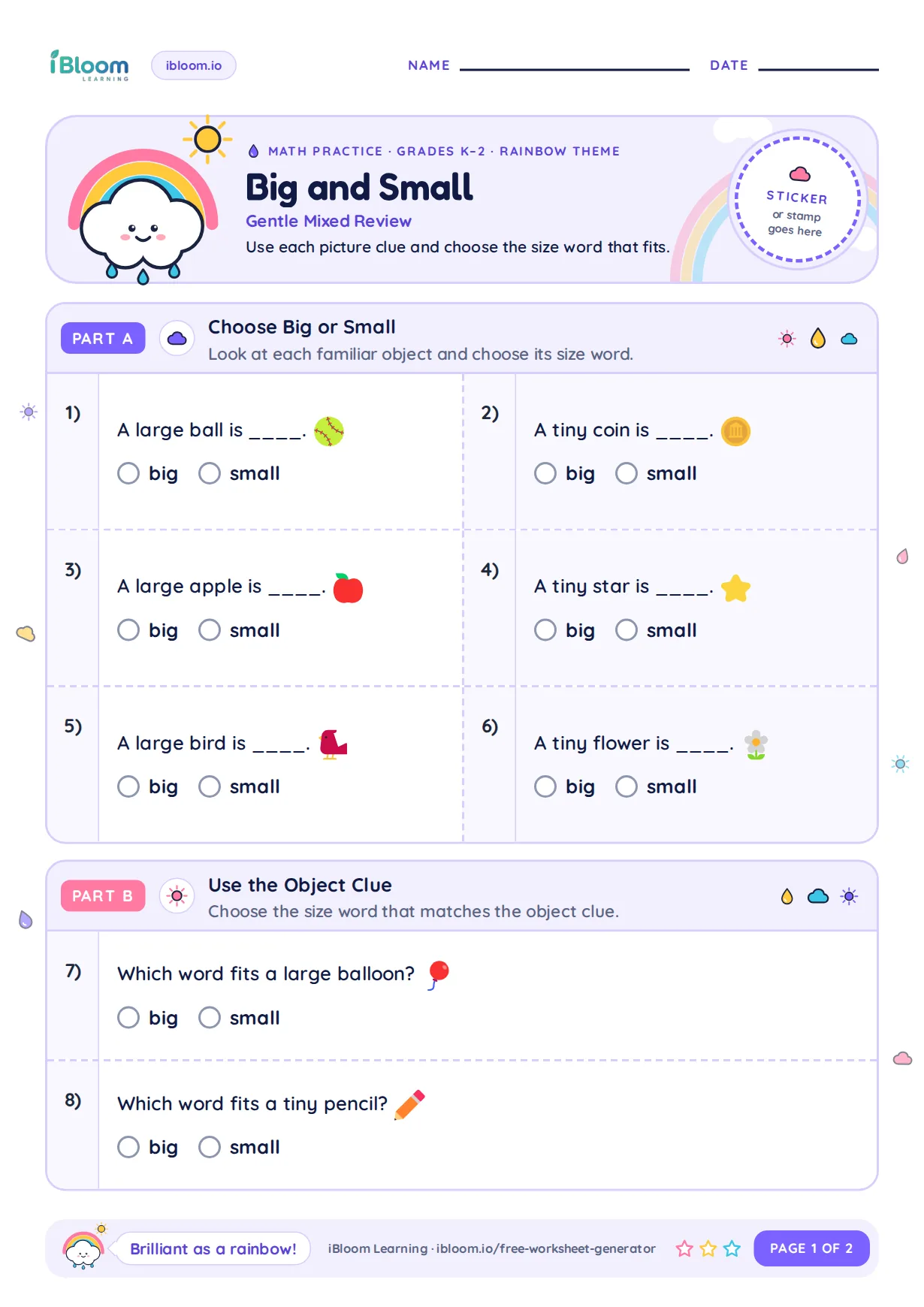 Big Small — Gentle Mixed ReviewPrintable preschool and kindergarten activities that help children compare objects and identify which one is big or small. This gentle mixed review worksheet provides a distinct, age-appropriate way to practise the same lesson.Preschool, KindergartenFree PDF preview
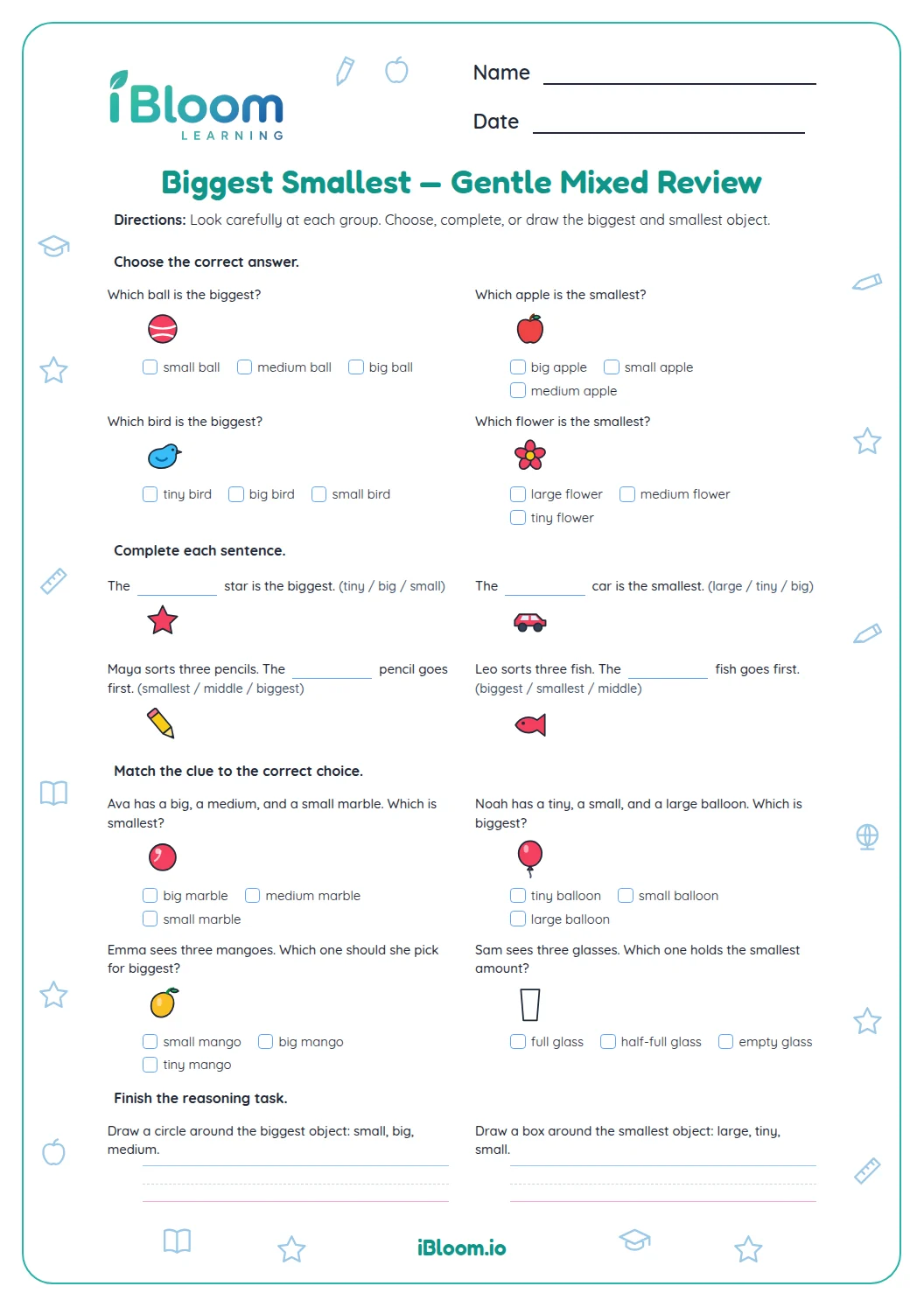 Biggest Smallest — Gentle Mixed ReviewPreschool and kindergarten children practice identifying the biggest and smallest objects through colorful printable comparison activities. This gentle mixed review worksheet provides a distinct, age-appropriate way to practise the same lesson.Preschool, KindergartenFree PDF preview
 Heavy Light — Gentle Mixed ReviewPrintable preschool and kindergarten activities that help children compare objects as heavy or light using pictures, sorting, and everyday reasoning. This gentle mixed review worksheet provides a distinct, age-appropriate way to practise the same lesson.Preschool, KindergartenFree PDF preview
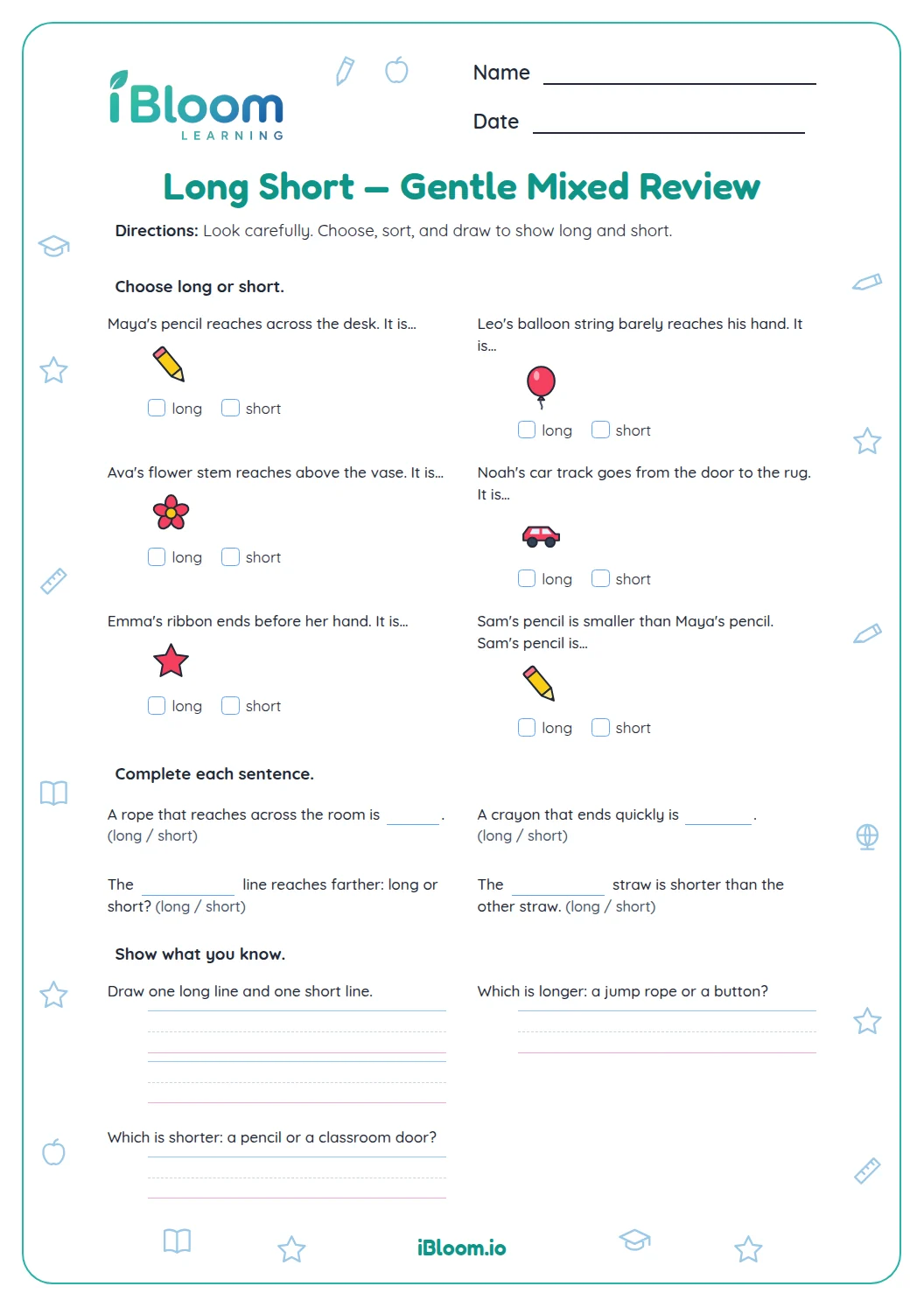 Long Short — Gentle Mixed ReviewPrintable preschool and kindergarten activities for comparing long and short objects through pictures, coloring, matching, and simple sorting. This gentle mixed review worksheet provides a distinct, age-appropriate way to practise the same lesson.Preschool, KindergartenFree PDF preview
Practice that builds confidence
What children compare
These preschool and kindergarten comparison worksheets help children notice and describe how objects are alike and different. Children practise words such as big, small, tall, short, long, heavy, light, same, different, biggest, smallest, longest, shortest, tallest, and shortest.
The printable activities use simple pictures, matching tasks, circling, coloring, and sorting-style questions. They are designed to build visual discrimination, measurement language, and early reasoning before children begin formal measuring with tools.
Children work with everyday attributes: size, length, height, and weight. A worksheet might ask them to circle the biggest animal, color the shortest pencil, match objects that are the same size, or choose which object looks heavy or light. These tasks connect directly to the child topics in this collection: Longest Shortest, Heavy Light, Big Small, Same Different Size, Long Short, Tallest Shortest, Tall Short, and Biggest Smallest.
How the skill progresses
Most children begin with two-object comparisons such as big/small, tall/short, or long/short. Then they move to sets of three or more, where they identify the biggest, smallest, tallest, shortest, longest, or shortest item. Same and different size activities add an important reasoning step because children must compare carefully instead of choosing the object that stands out first.
A simple parent routine
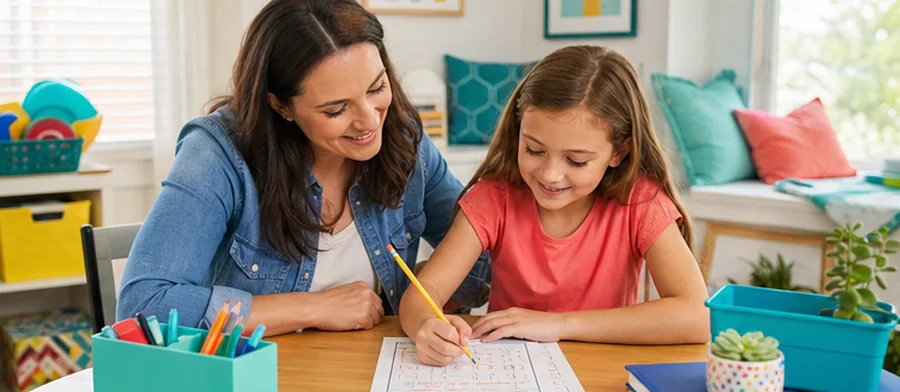
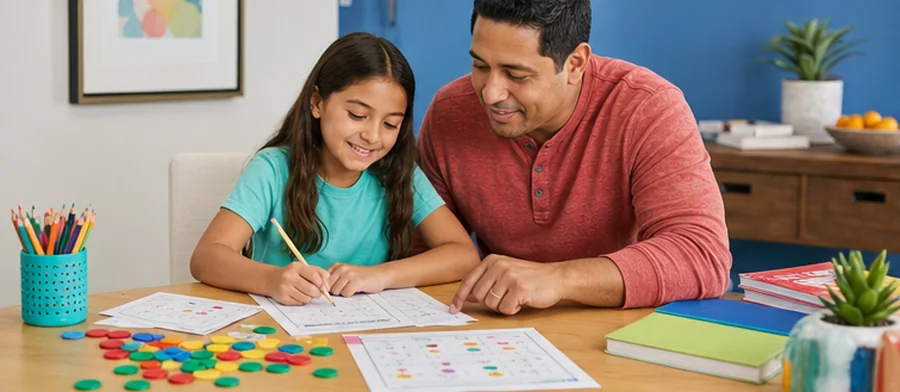
At home, introduce one comparison word at a time using real objects. Put two spoons on the table and ask, “Which is longer?” Hold two stuffed toys and ask, “Which is bigger?” Then complete one printable page together, asking your child to explain the choice: “How do you know this one is the tallest?” End by finding one more example around the room, such as a heavy book and a light paper.
Classroom uses
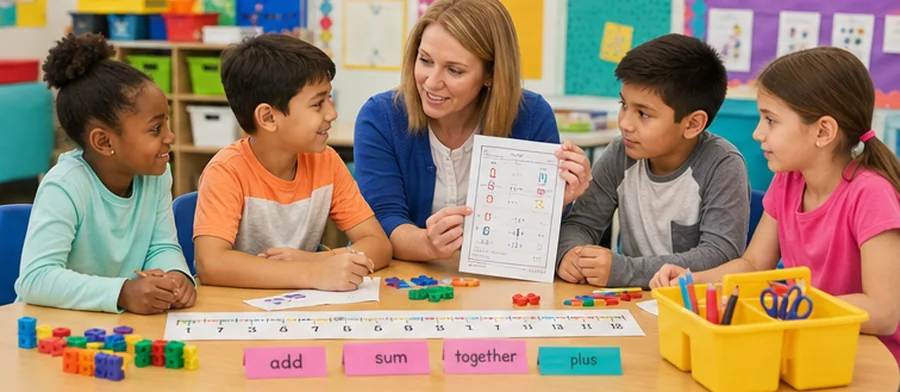
Teachers can use these worksheets for morning work, math centers, small-group vocabulary practice, or quick observation of early measurement language. The pages also pair well with hands-on sorting trays, building blocks, classroom objects, and picture cards. For English learners, the clear visuals support oral practice with comparison sentences: “The tree is tall,” “The snake is long,” or “These two boxes are the same size.”
Common errors to watch for
Some children confuse tall and long, especially when an object is turned sideways. Others choose the largest-looking picture even when the question asks for shortest or lightest. Encourage children to look at the attribute named in the direction, not just the most noticeable object. For heavy and light, remind them that size can give a clue in pictures, but in real life weight is something we feel.
Free printable PDF download
Use this comparison worksheets preschool kindergarten page to preview the activity, print it, or download it as a PDF for quick practice. It works well for homework, homeschool lessons, tutoring, morning work, revision, and classroom centers.
Answers and answer key support
After the child completes the worksheet independently, parents and teachers can use the answer support or answer key information to check the work, review mistakes, and choose the next practice step.
Why iBloom worksheets help
The activities use uncluttered images and repeated comparison language so children can focus on the concept. A helpful child-friendly strategy is: “Listen for the comparing word, look at each picture, then point and tell why.” This builds confidence, vocabulary, and careful observation.
Helpful answers
Frequently asked questions
What comparison words do these worksheets practise?
They practise big, small, biggest, smallest, tall, short, tallest, shortest, long, longest, heavy, light, same size, and different size.
Are these worksheets suitable for both preschool and kindergarten?
Yes. Preschool children can begin with simple two-object comparisons, while kindergarten children can work on comparing groups and using words such as biggest, smallest, longest, and tallest.
How can I help my child if they mix up tall and long?
Use real objects and position them clearly. Explain that tall usually goes up and down, like a tree, while long usually stretches across, like a rope or pencil.
Do children need to measure with a ruler or scale?
No. These worksheets focus on early comparison by looking, reasoning, and using correct vocabulary before formal measuring tools are introduced.
How should teachers use these pages in class?
They work well for math centers, small-group vocabulary practice, morning tasks, or follow-up after hands-on comparing with blocks, classroom objects, and picture cards.
Is this comparison worksheets preschool kindergarten free?
Yes. You can preview it for free and use the printable worksheet for home or classroom practice.
Can I download this comparison worksheets preschool kindergarten as a PDF?
Yes. Use the worksheet download option to save a printable PDF, or print the worksheet directly from the page.
Does this comparison worksheets preschool kindergarten include answers or an answer key?
When the activity has fixed answers, iBloom includes answer support so parents and teachers can check the completed worksheet.