Free printable practice
Making Cookies Practice Activities
Class 1 reading worksheets for the story Making Cookies, with simple comprehension, sequencing, vocabulary, and sentence-based response practice.
Free printable worksheet PDFs
Preview every available page, then download the free worksheet PDF for home, homeschool, tutoring, or classroom practice.
Preview the exact activity before downloading it.
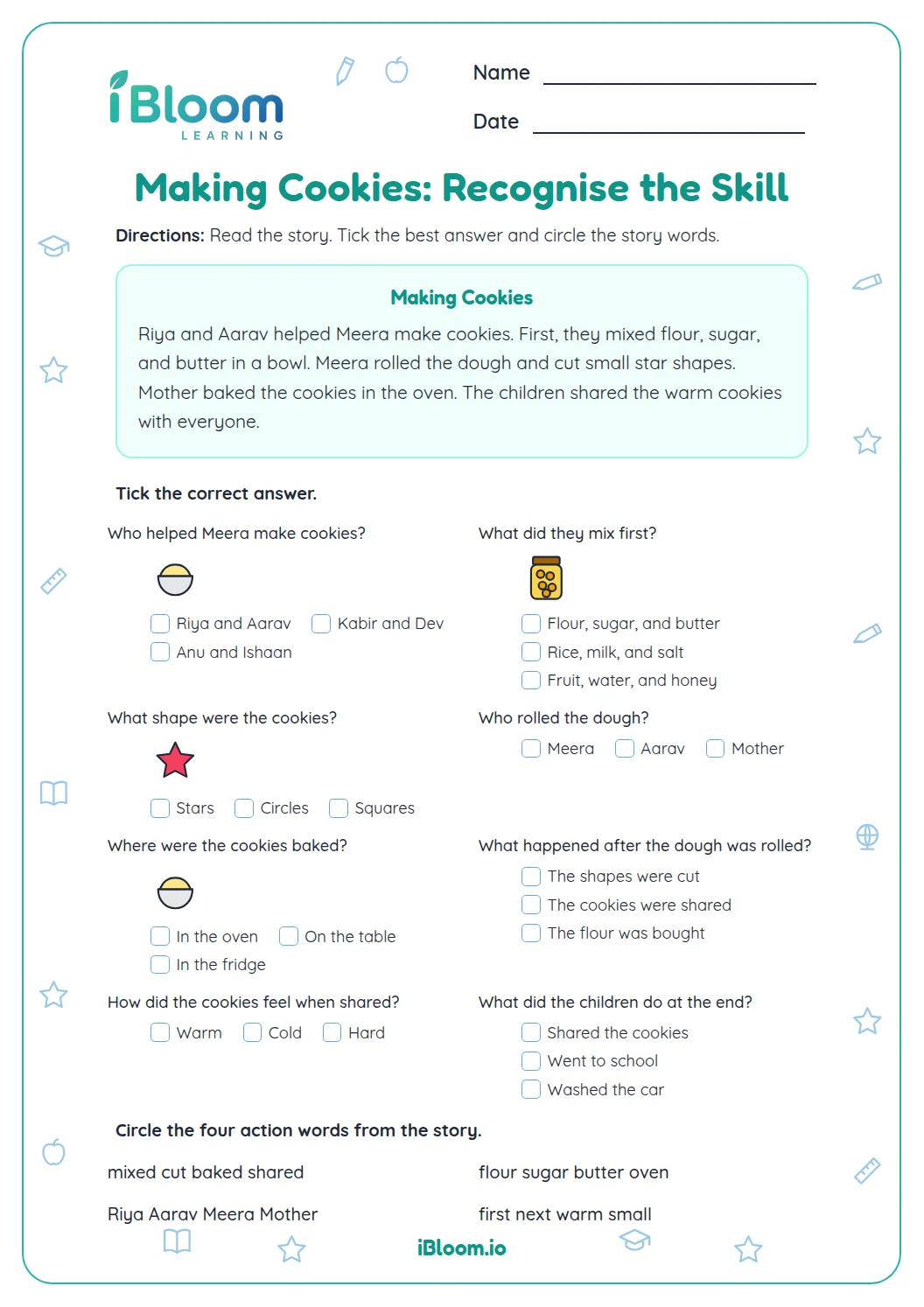 Childrens Stories: Making Cookies — Recognise the SkillRecognise the Skill for childrens stories: making cookies in Class 1. Read a short cookie-making story, then recognise its characters, actions, order, and details.Class 1Free PDF preview
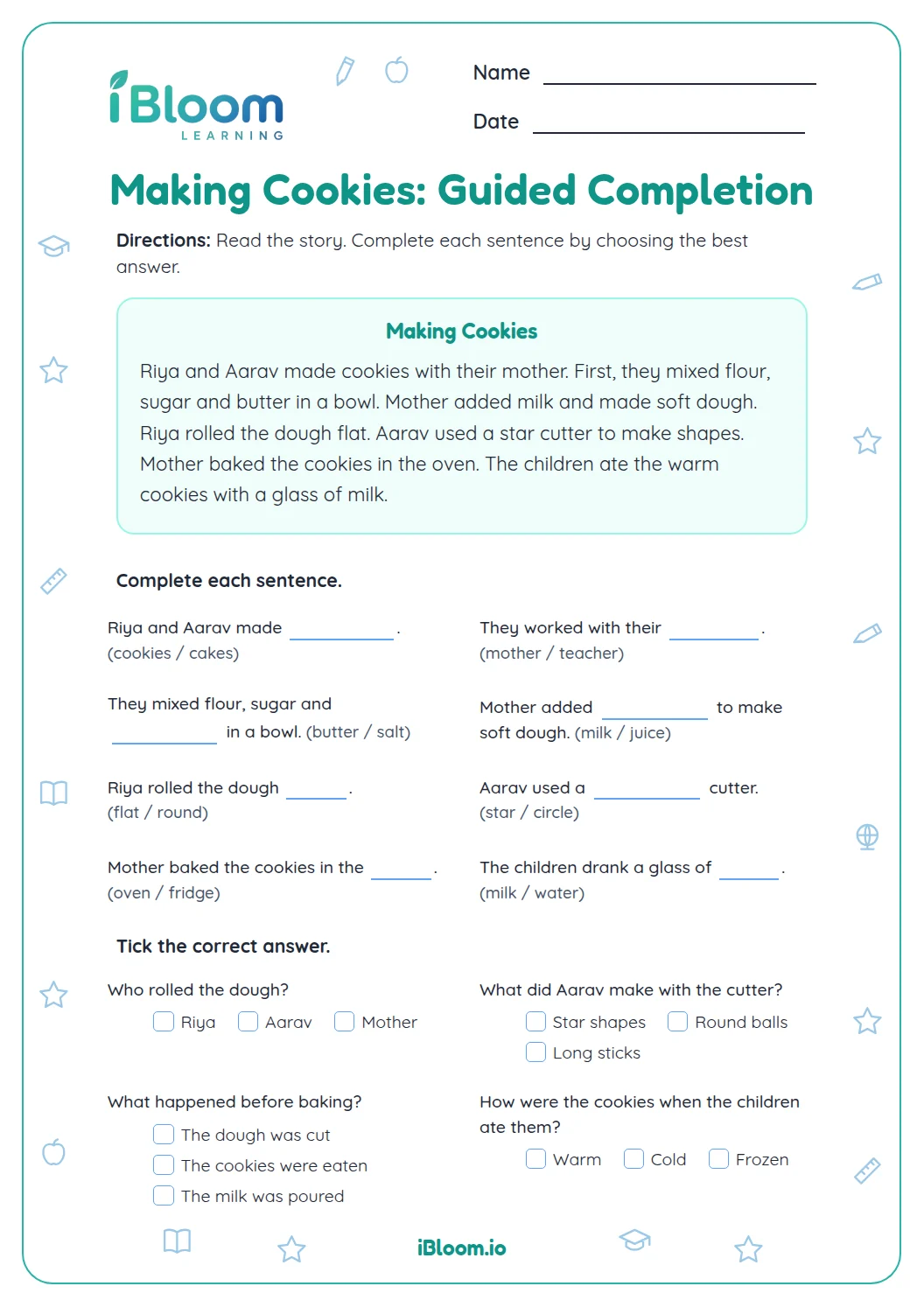 Childrens Stories: Making Cookies — Guided CompletionGuided Completion for childrens stories: making cookies in Class 1. Read the short story, choose words to complete sentences, and answer simple questions about making cookies.Class 1Free PDF preview
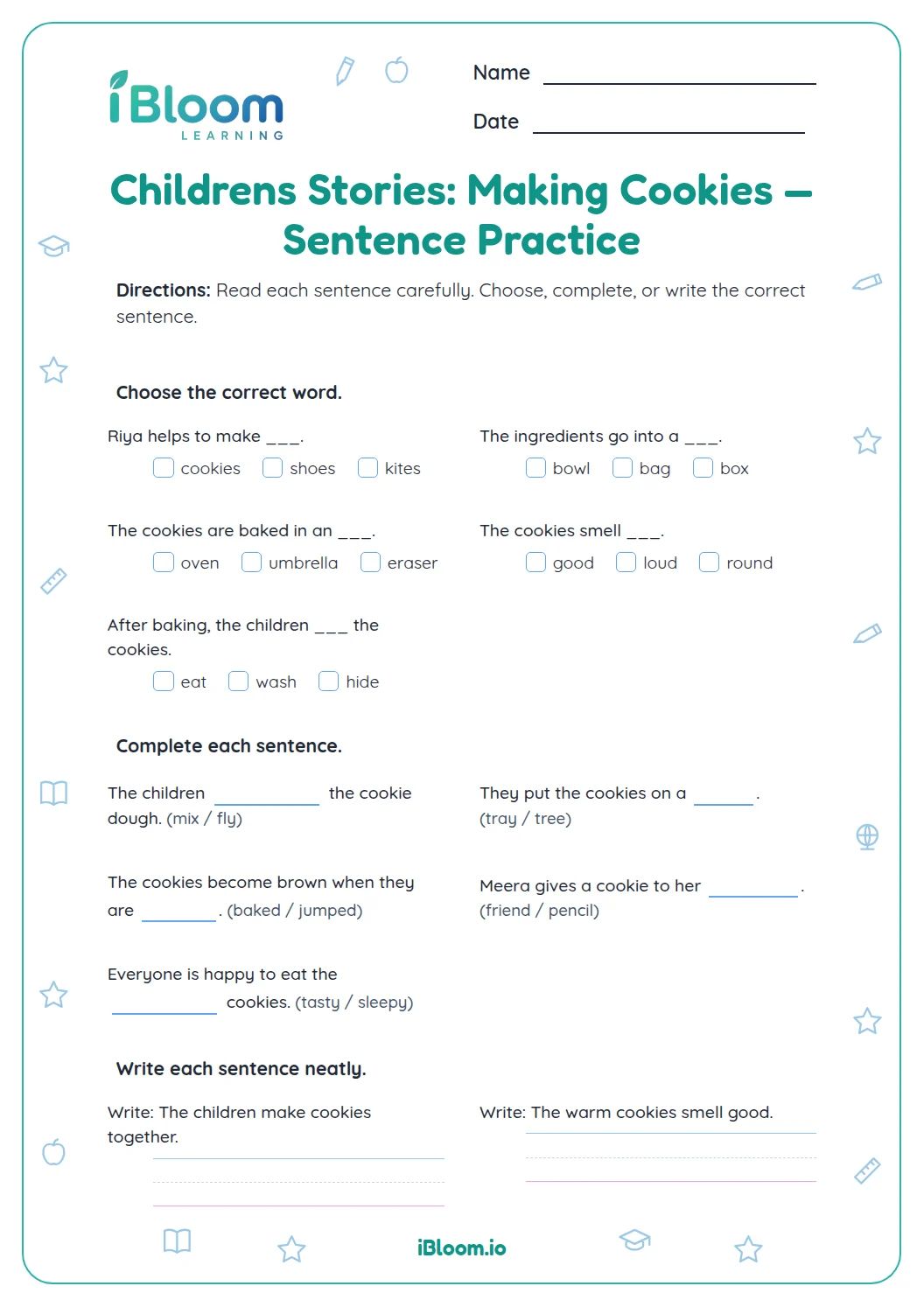 Childrens Stories: Making Cookies — Sentence PracticeSentence Practice for childrens stories: making cookies in Class 1. Read short sentences about making cookies, choose or complete the correct words, and write two accurate sentences.Class 1Free PDF preview
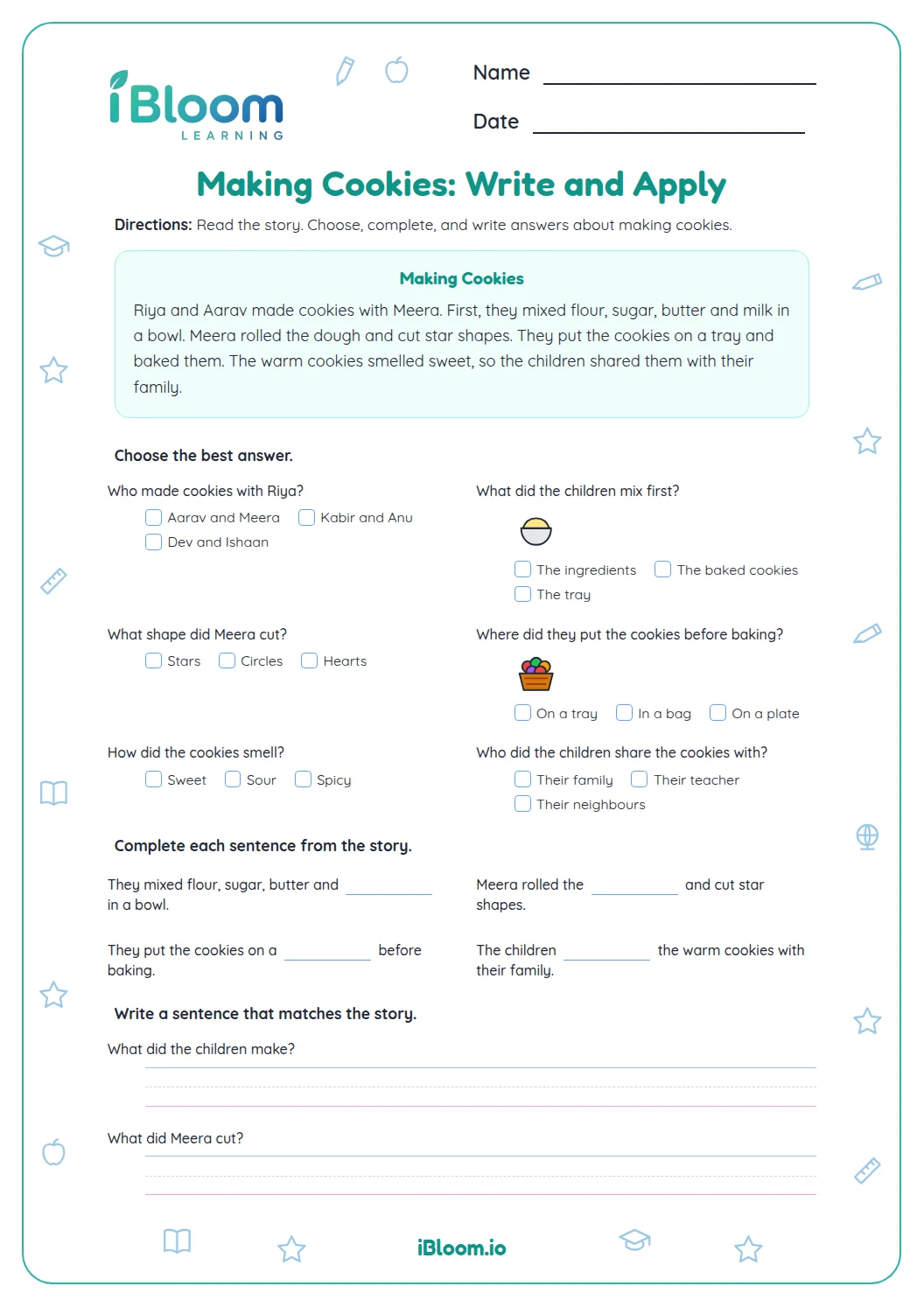 Childrens Stories: Making Cookies — Write and ApplyWrite and Apply for childrens stories: making cookies in Class 1. Read a short cookie-making story, choose answers, complete story sentences, and write two matching sentences.Class 1Free PDF preview
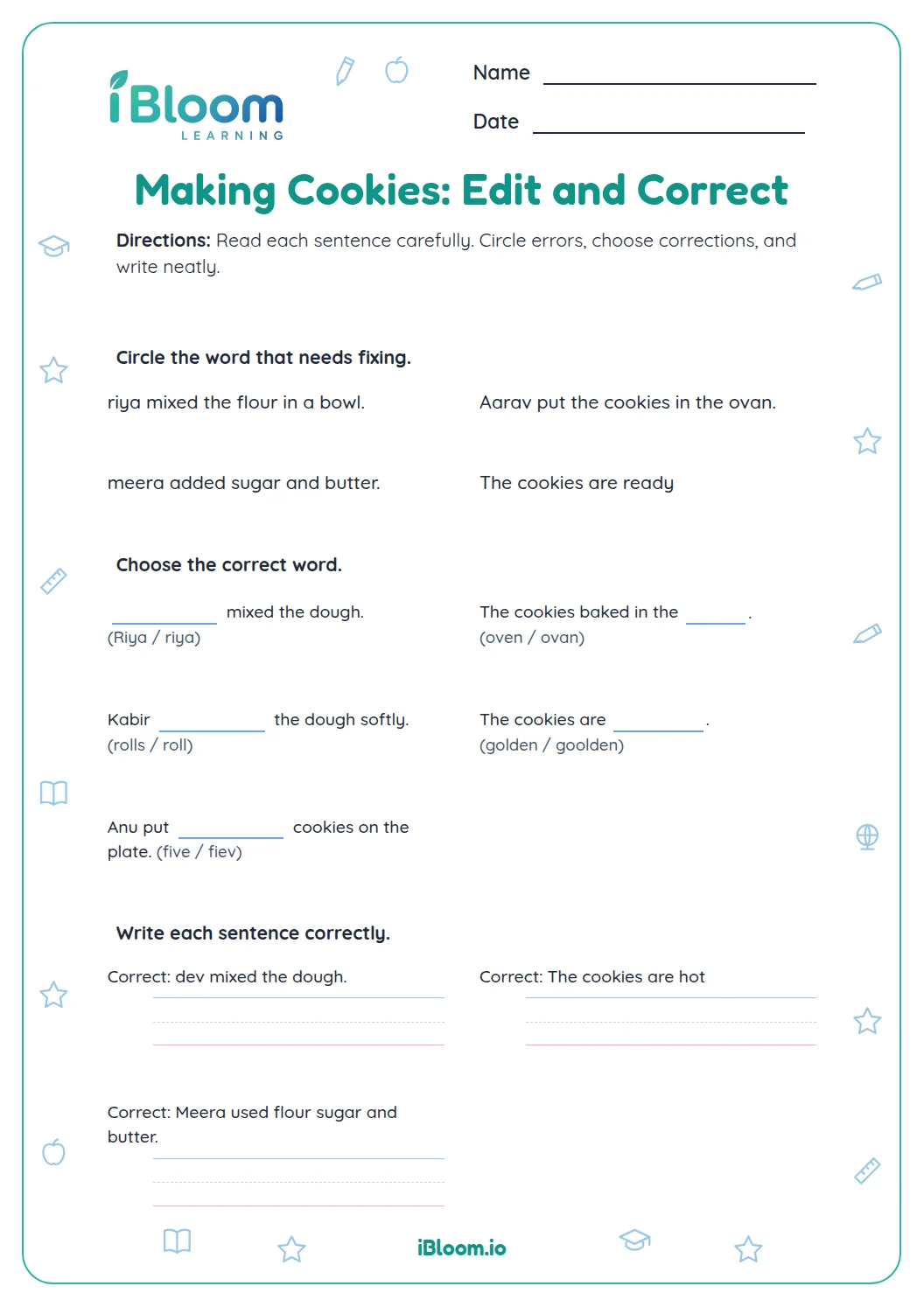 Childrens Stories: Making Cookies — Edit and CorrectEdit and Correct for childrens stories: making cookies in Class 1. Find errors in cookie-making sentences, choose the correct words, and write corrected sentences.Class 1Free PDF preview
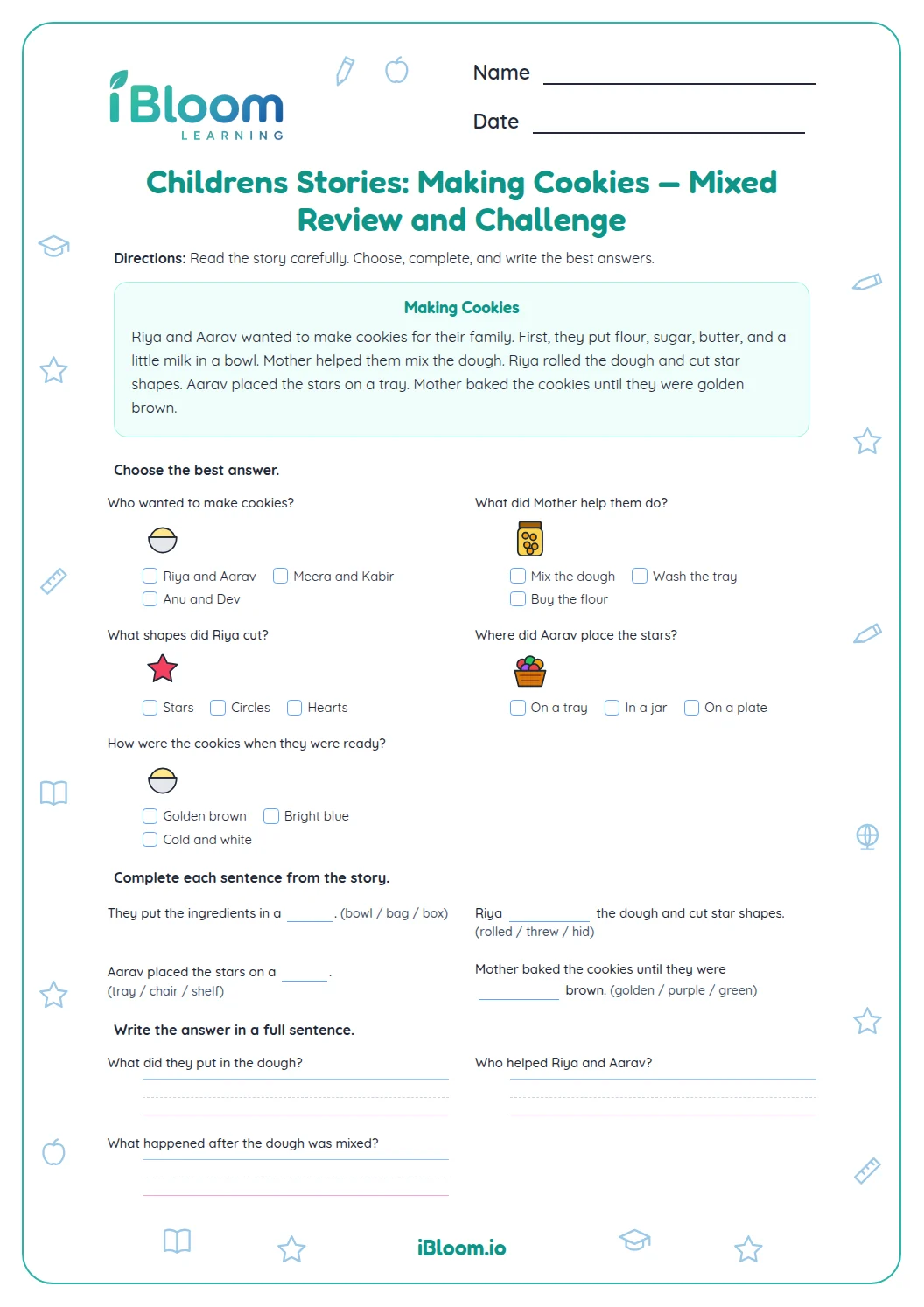 Childrens Stories: Making Cookies — Mixed Review and ChallengeMixed Review and Challenge for childrens stories: making cookies in Class 1. Read a short cookie-making story, then answer comprehension, sequencing, vocabulary, and sentence questions.Class 1Free PDF preview
Practice that builds confidence
Reading the story with purpose
These Class 1 reading comprehension worksheets help children understand the short children’s story Making Cookies. Learners practise noticing who is in the story, what happens first, next, and last, and how small details help them answer questions correctly.
The printable activities include simple story-based questions, sequencing tasks, picture or word clues, vocabulary from the baking theme, and short answer practice. They are designed for early readers who are building confidence with complete sentences and careful rereading.
In the Making Cookies worksheet set, children move beyond simply reading the words. They learn to look for story clues: the people involved, the actions they do, the things used for making cookies, and the order in which events happen. This supports the Class 1 reading habit of going back to the passage before answering.

Skills children practise
The activities focus on literal comprehension, simple inference, sequencing, and vocabulary. A child may be asked to identify an ingredient, choose what happened after mixing, match a word to a picture, or write a short answer such as who helped or what was made. The story context gives useful everyday words like mix, bake, cookie, dough, tray, and share, depending on the passage used on the worksheet.
A simple routine for parents
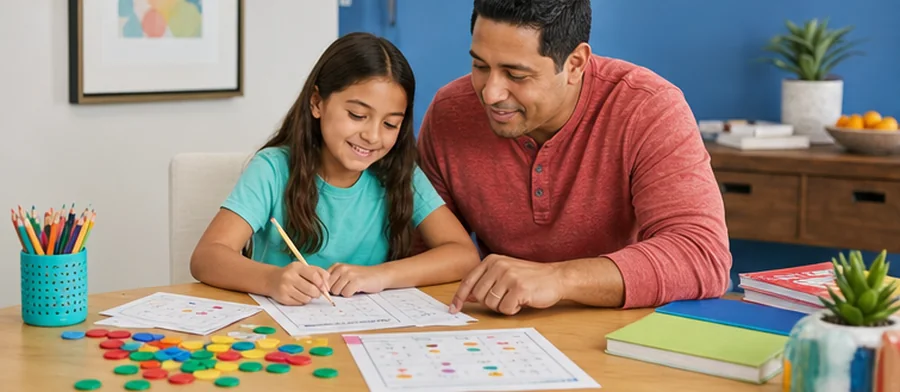
Read the story aloud once, then ask your child to read it again with a finger under each line. Before starting the questions, talk about three things: who was there, what they were making, and what happened at the end. For sequencing questions, let your child say the steps aloud first: “First…, then…, finally…”. If an answer is wrong, guide them to find the sentence in the story rather than giving the answer immediately.
Classroom uses for teachers
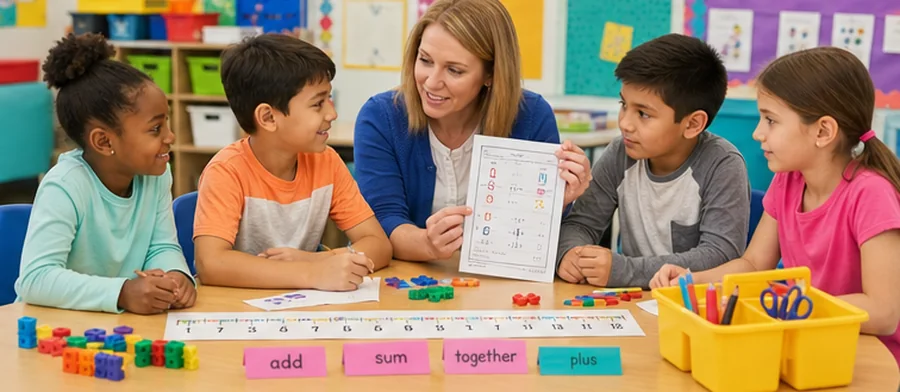
Teachers can use these printables during reading comprehension practice, small-group reading, or literacy centres. One group can read and underline clues, another can complete sequencing, and a third can discuss vocabulary from the story. The worksheets also work well after a read-aloud, especially when children are learning to answer in words from the text.
Common errors to watch for
Young readers may answer from memory instead of checking the story, confuse the order of baking steps, or copy a word without understanding the question. Some children also write one-word answers when the question needs a sentence. Encourage them to circle key question words such as who, what, where, and when.
Free printable PDF download
Use this Making Cookies Class 1 reading comprehension worksheet page to preview the activity, print it, or download it as a PDF for quick practice. It works well for homework, homeschool lessons, tutoring, morning work, revision, and classroom centers.
Answers and answer key support
After the child completes the worksheet independently, parents and teachers can use the answer support or answer key information to check the work, review mistakes, and choose the next practice step.
Why iBloom worksheets help
The iBloom activities keep the story setting familiar and concrete, so children can focus on meaning. Questions progress from direct recall to order and simple reasoning. A child-friendly strategy is: read, point to the clue, say the answer, then write it neatly.
Helpful answers
Frequently asked questions
What does my child practise in the Making Cookies worksheets?
Your child practises understanding a short story, answering direct questions, putting events in order, using baking-related vocabulary, and writing simple responses based on the passage.
Are these worksheets suitable for Class 1 independent reading?
Yes, many Class 1 children can try them independently after reading the story. Children who are still developing fluency may benefit from an adult reading the passage aloud first.
How can I help if my child forgets the order of events?
Ask your child to reread the story and mark the action words. Then have them say the steps aloud using “first”, “then”, and “finally” before writing the answers.
Do the worksheets include vocabulary practice?
Yes. The activities use words connected with the story setting, such as making, mixing, baking, cookies, and sharing, so children connect word meaning with the passage.
Can teachers use these worksheets in reading groups?
Yes. Teachers can use them for guided reading, literacy centres, quick comprehension checks, or follow-up work after reading the children’s story together.
Is this Making Cookies Class 1 reading comprehension worksheet free?
Yes. You can preview it for free and use the printable worksheet for home or classroom practice.
Can I download this Making Cookies Class 1 reading comprehension worksheet as a PDF?
Yes. Use the worksheet download option to save a printable PDF, or print the worksheet directly from the page.
Does this Making Cookies Class 1 reading comprehension worksheet include answers or an answer key?
When the activity has fixed answers, iBloom includes answer support so parents and teachers can check the completed worksheet.