Free printable practice
Reading Sentences Practice Activities
Class 1 children practise reading, arranging, tracing, matching, and understanding simple sentences with picture-supported activities.
Explore Reading Sentences
Free printable worksheet PDFs
Preview every available page, then download the free worksheet PDF for home, homeschool, tutoring, or classroom practice.
Preview the exact activity before downloading it.
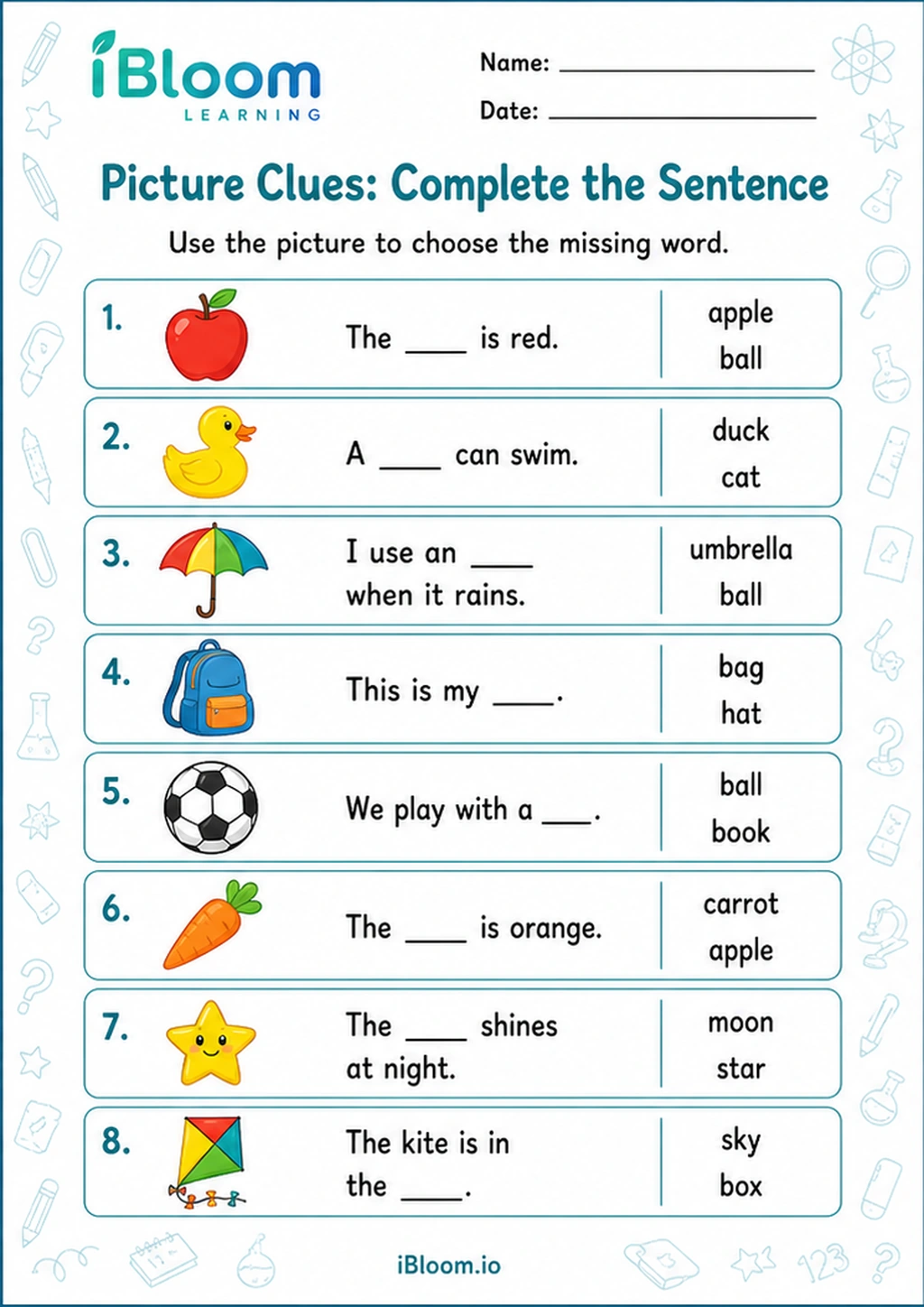 Picture Clues: Complete the SentenceClass 1 printable practice for Picture Clues.Class 1Free PDF preview
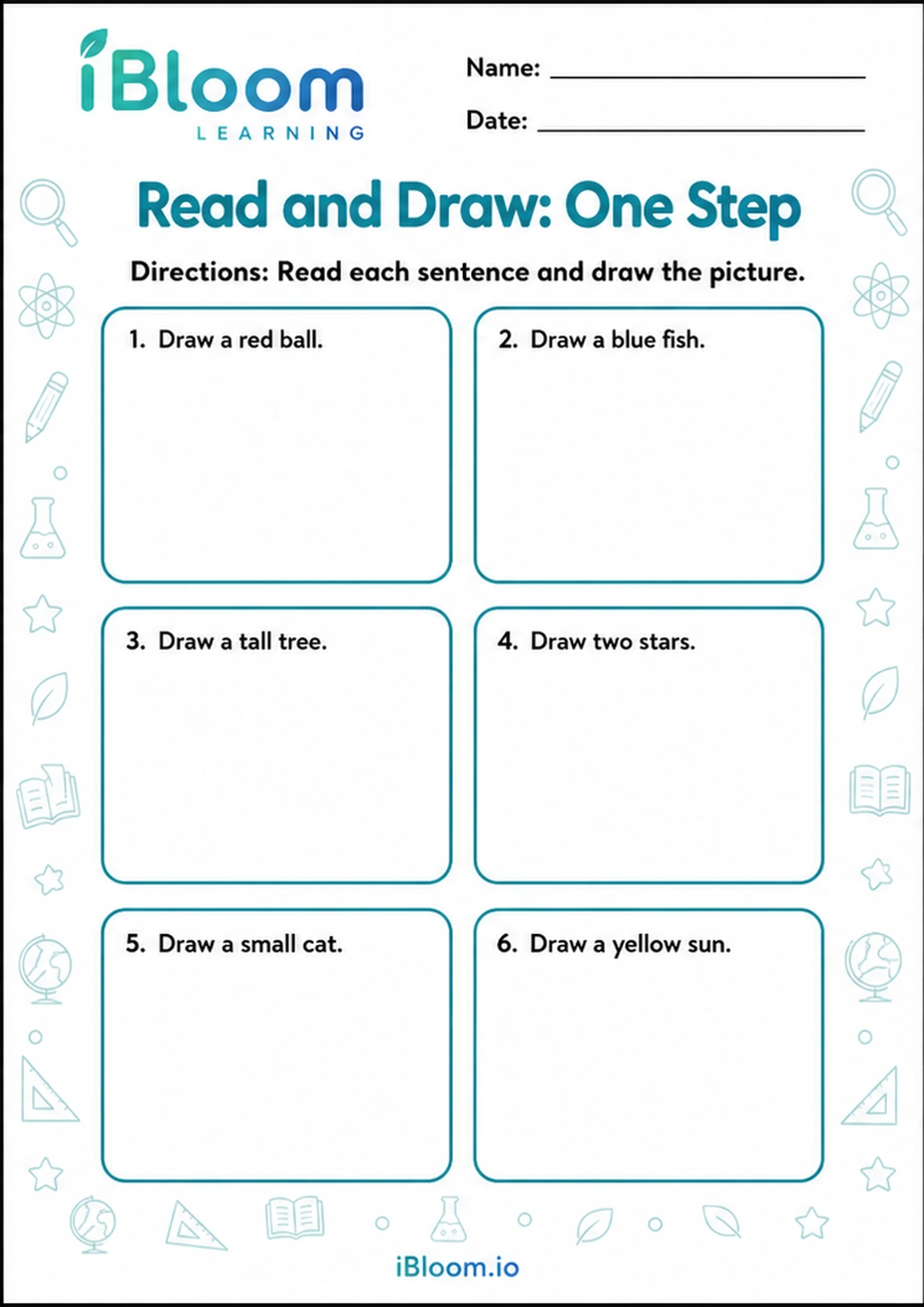 Read and Draw: One StepClass 1 printable practice for Read and Draw.Class 1Free PDF preview
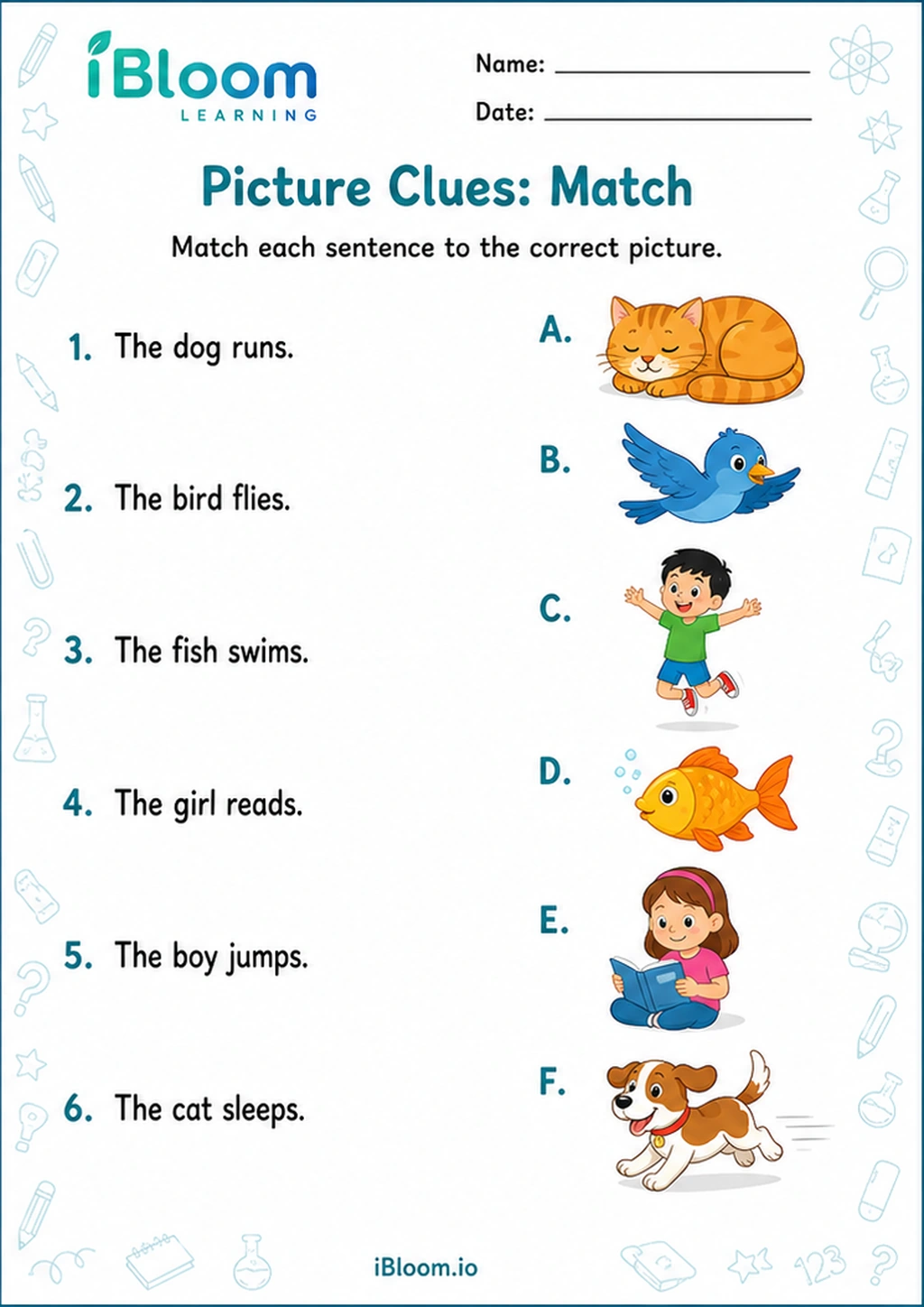 Picture Clues: MatchClass 1 printable practice for Picture Clues.Class 1Free PDF preview
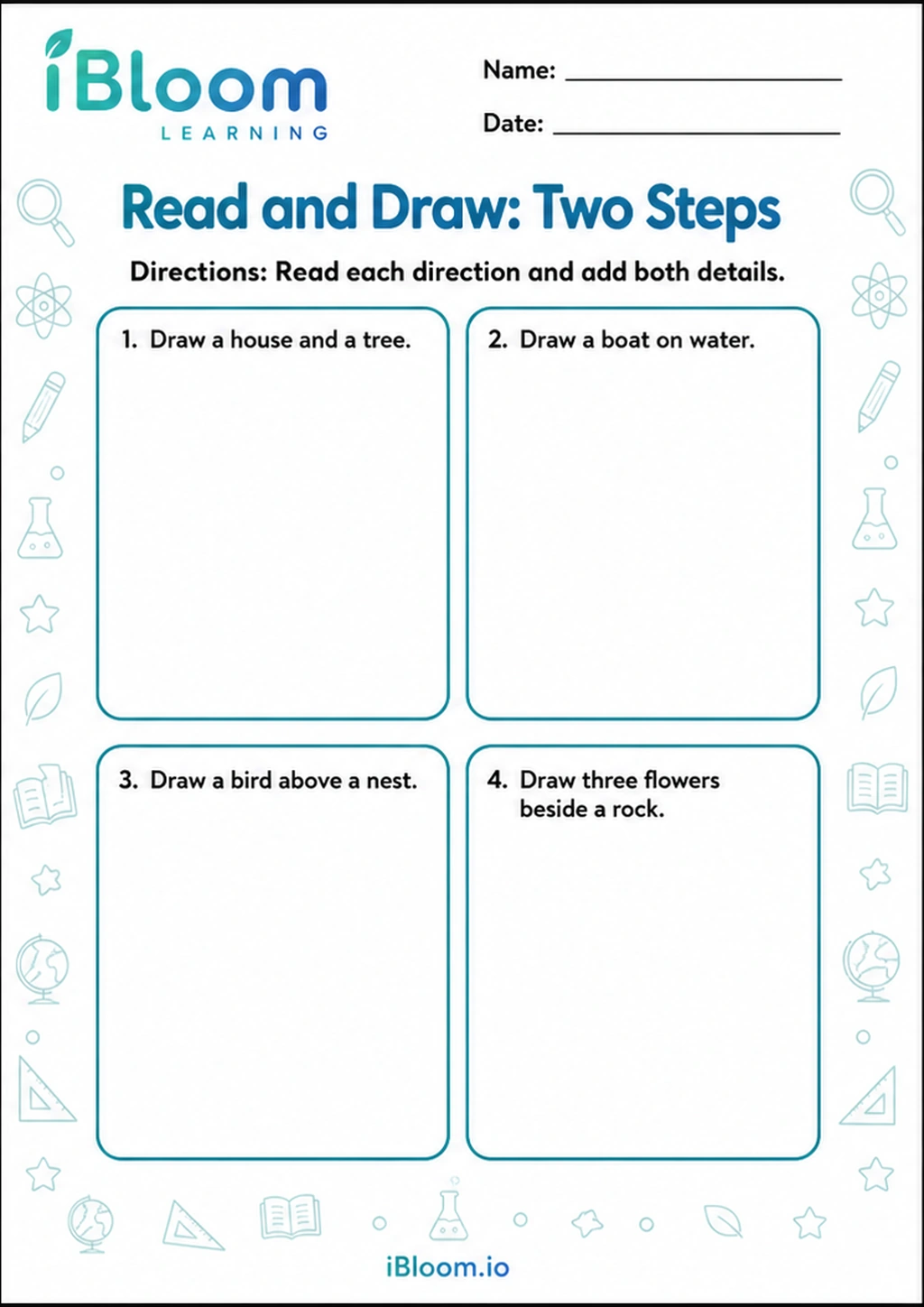 Read and Draw: Two StepsClass 1 printable practice for Read and Draw.Class 1Free PDF preview
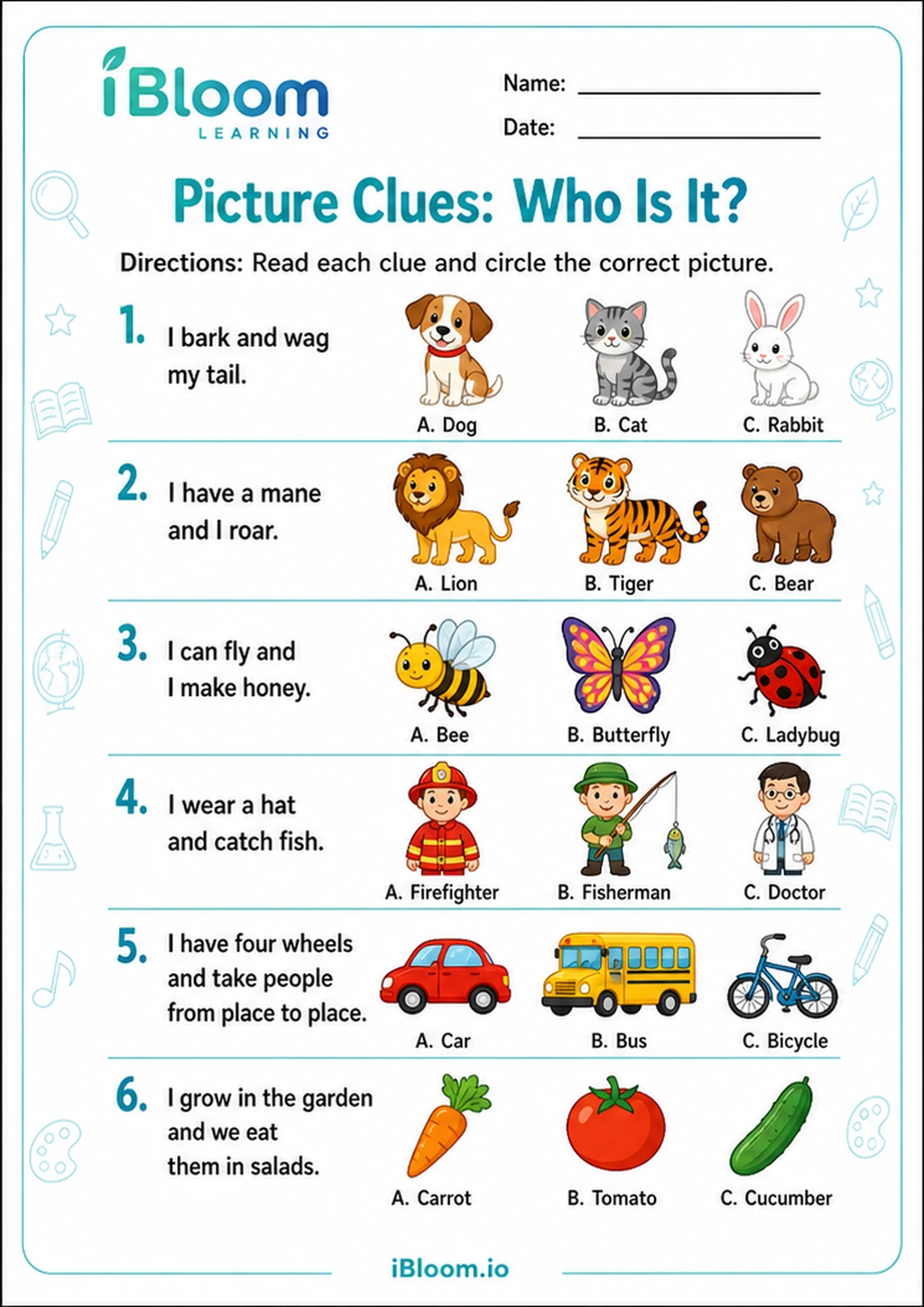 Picture Clues: Who Is It?Class 1 printable practice for Picture Clues.Class 1Free PDF preview
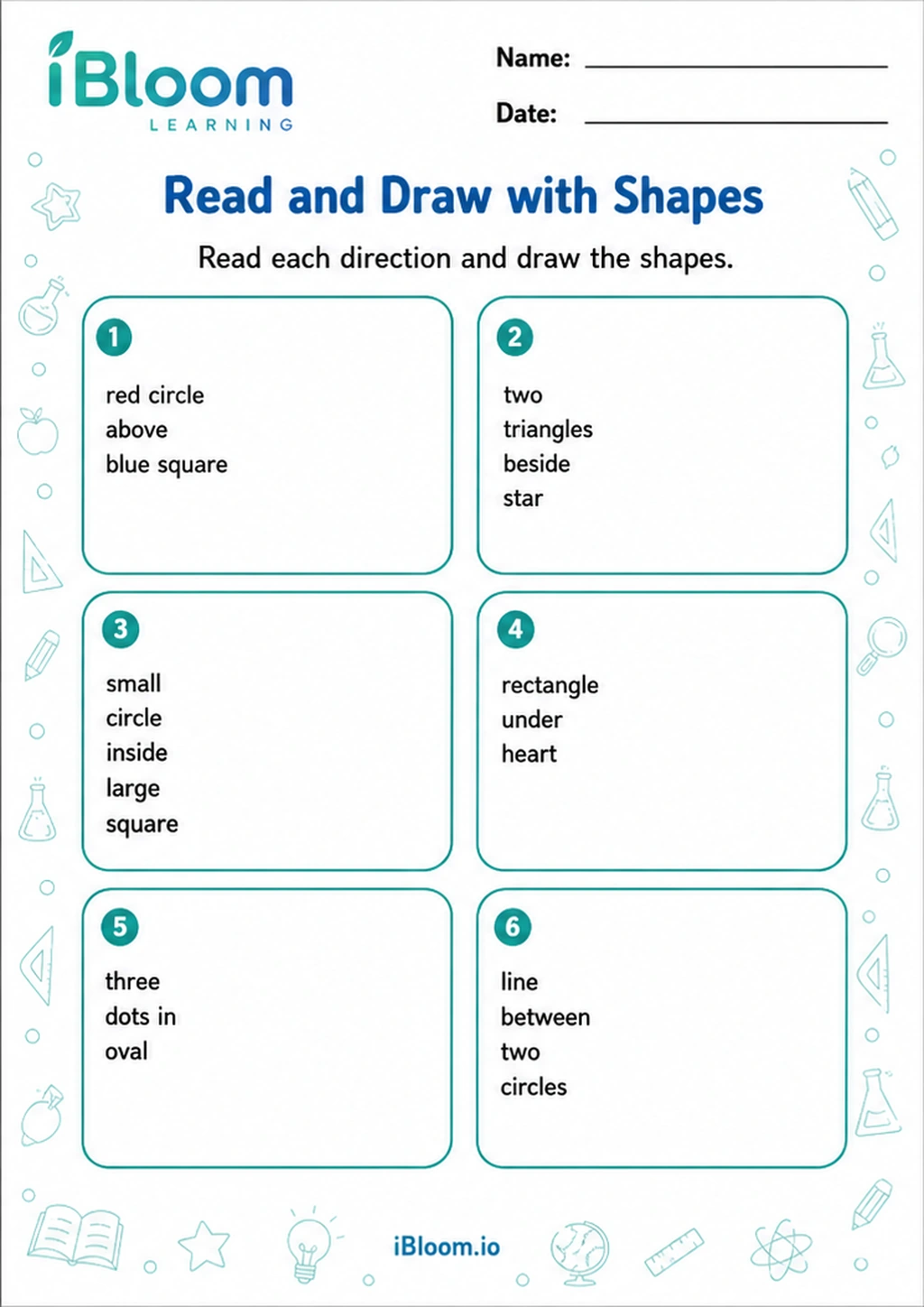 Read and Draw with ShapesClass 1 printable practice for Read and Draw.Class 1Free PDF preview
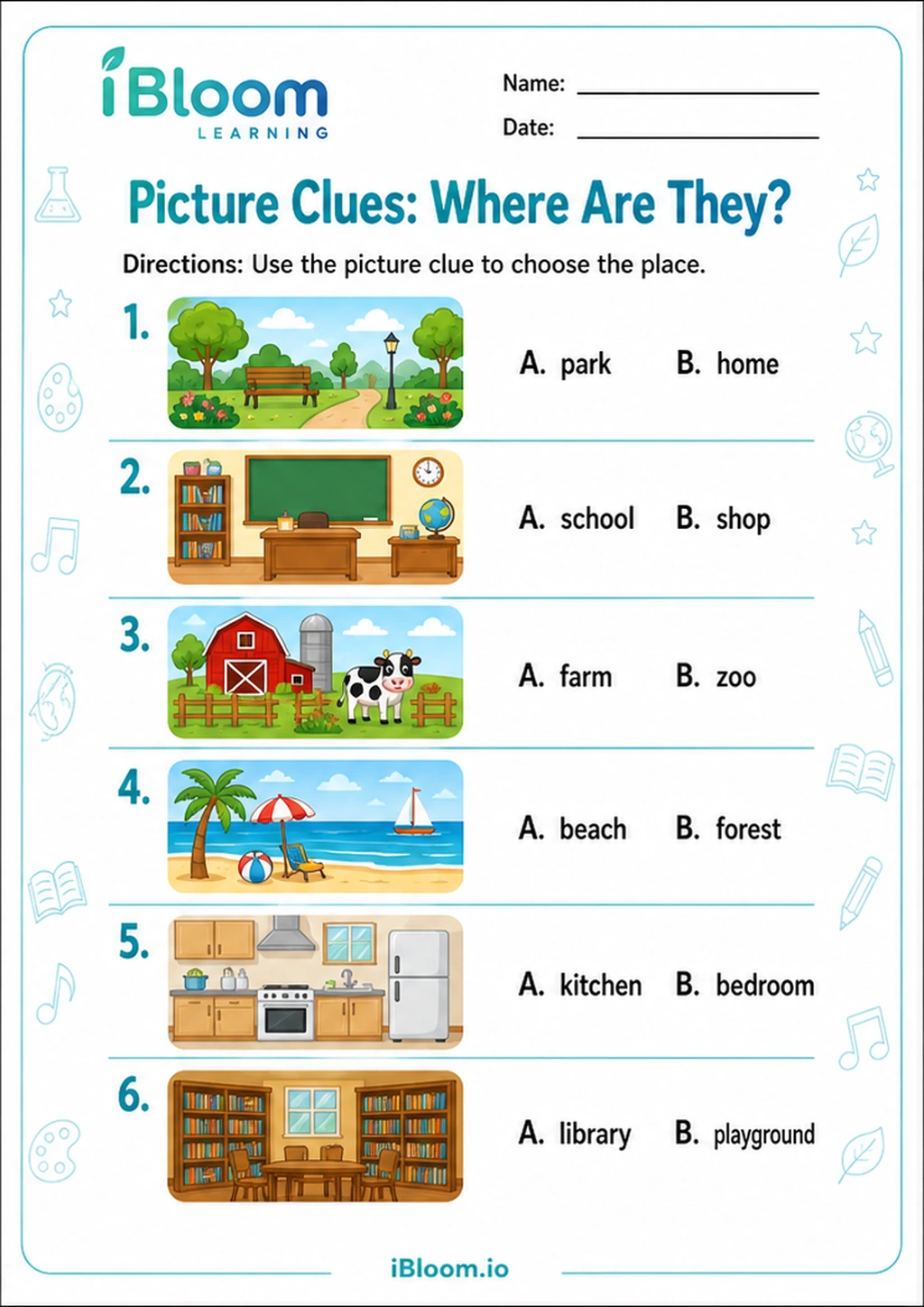 Picture Clues: Where Are They?Class 1 printable practice for Picture Clues.Class 1Free PDF preview
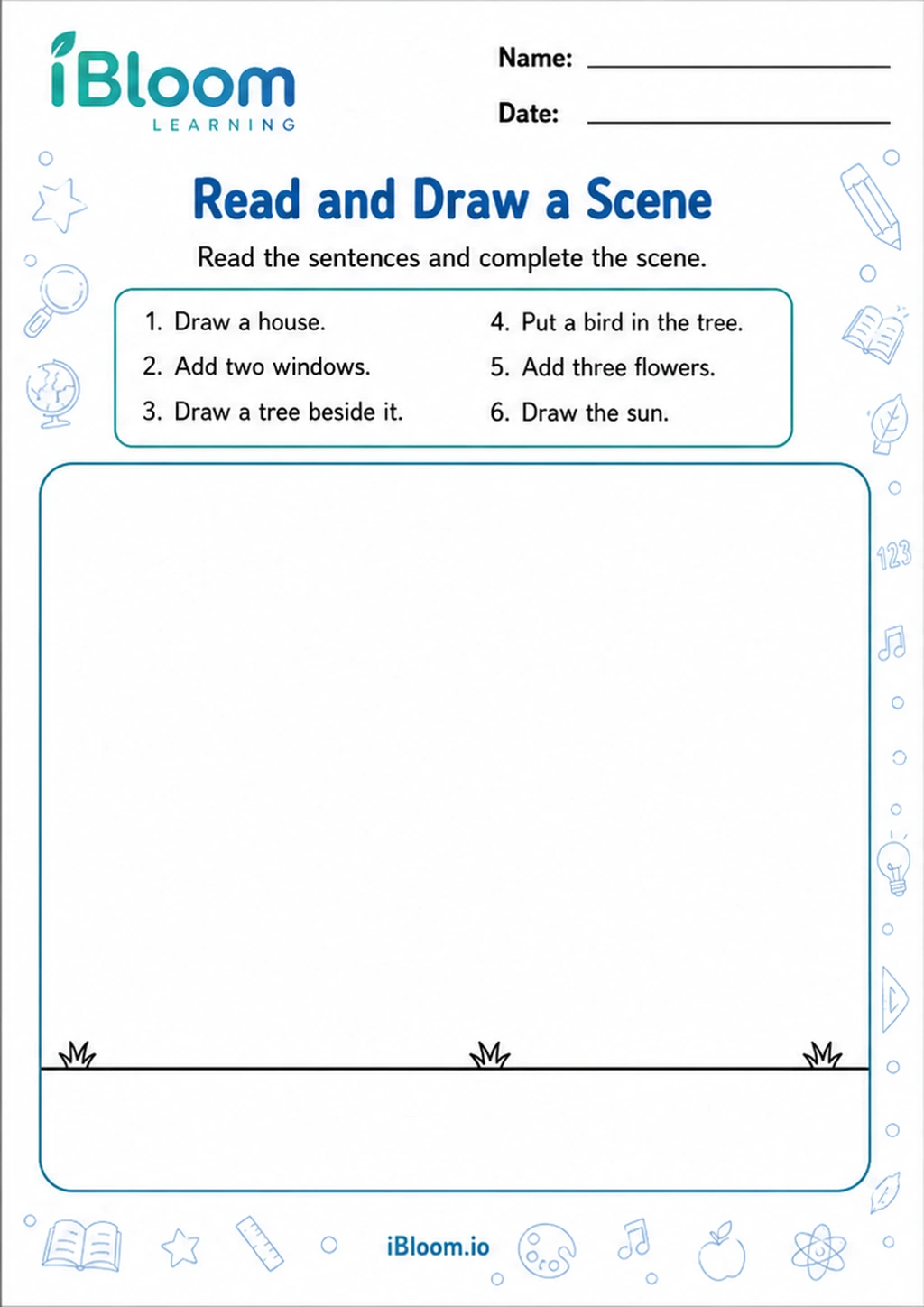 Read and Draw a SceneClass 1 printable practice for Read and Draw.Class 1Free PDF preview
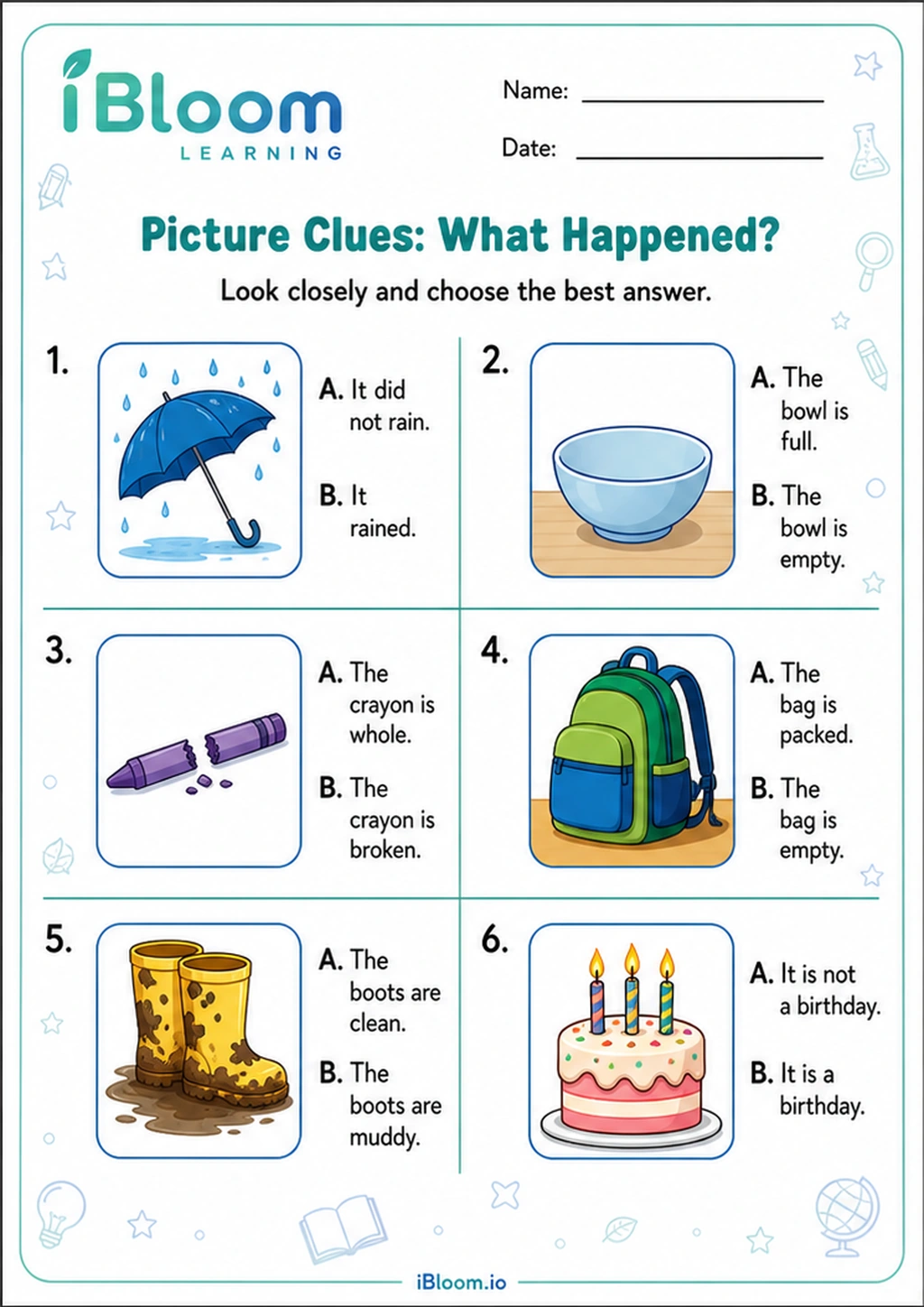 Picture Clues: What Happened?Class 1 printable practice for Picture Clues.Class 1Free PDF preview
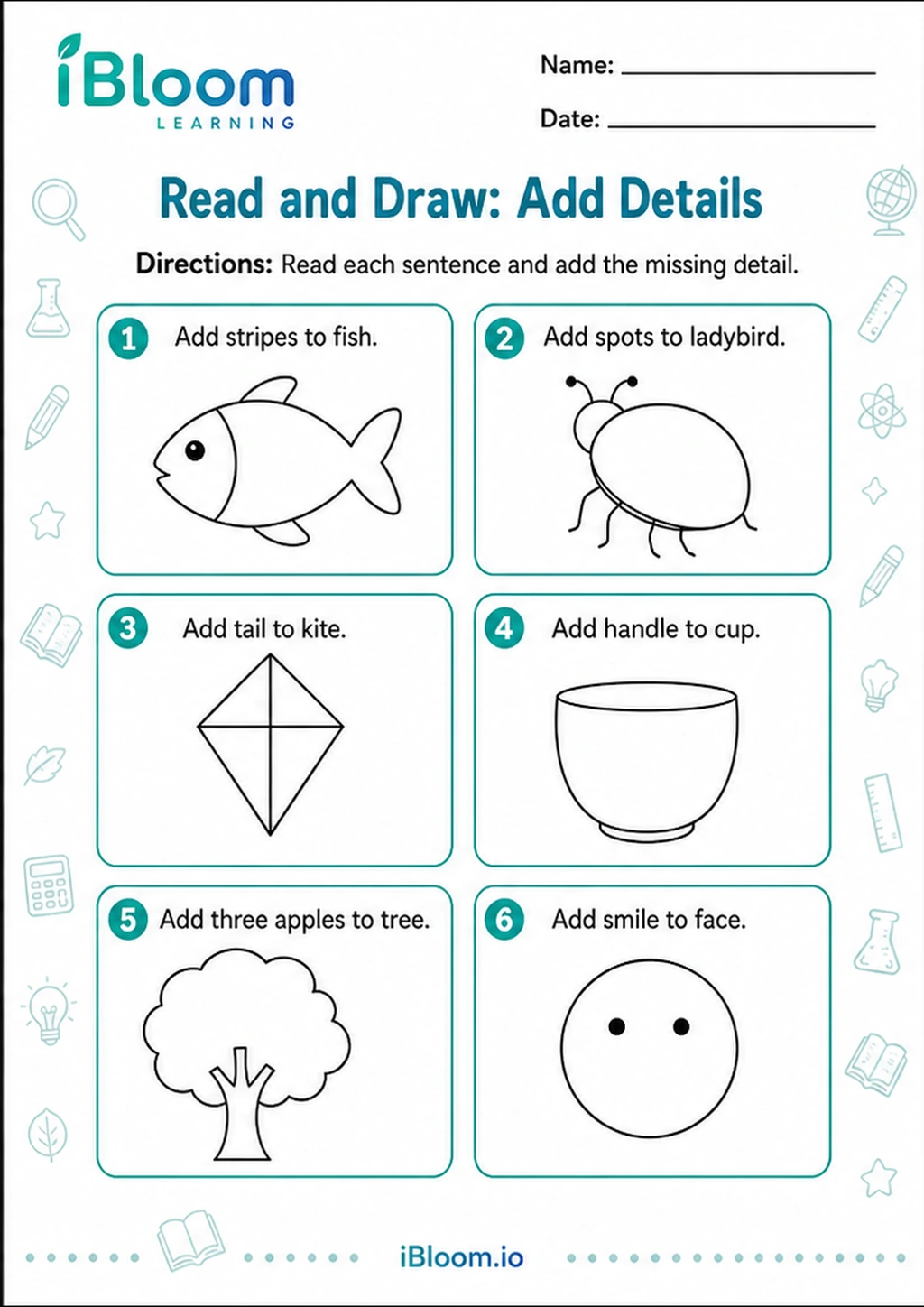 Read and Draw: Add DetailsClass 1 printable practice for Read and Draw.Class 1Free PDF preview
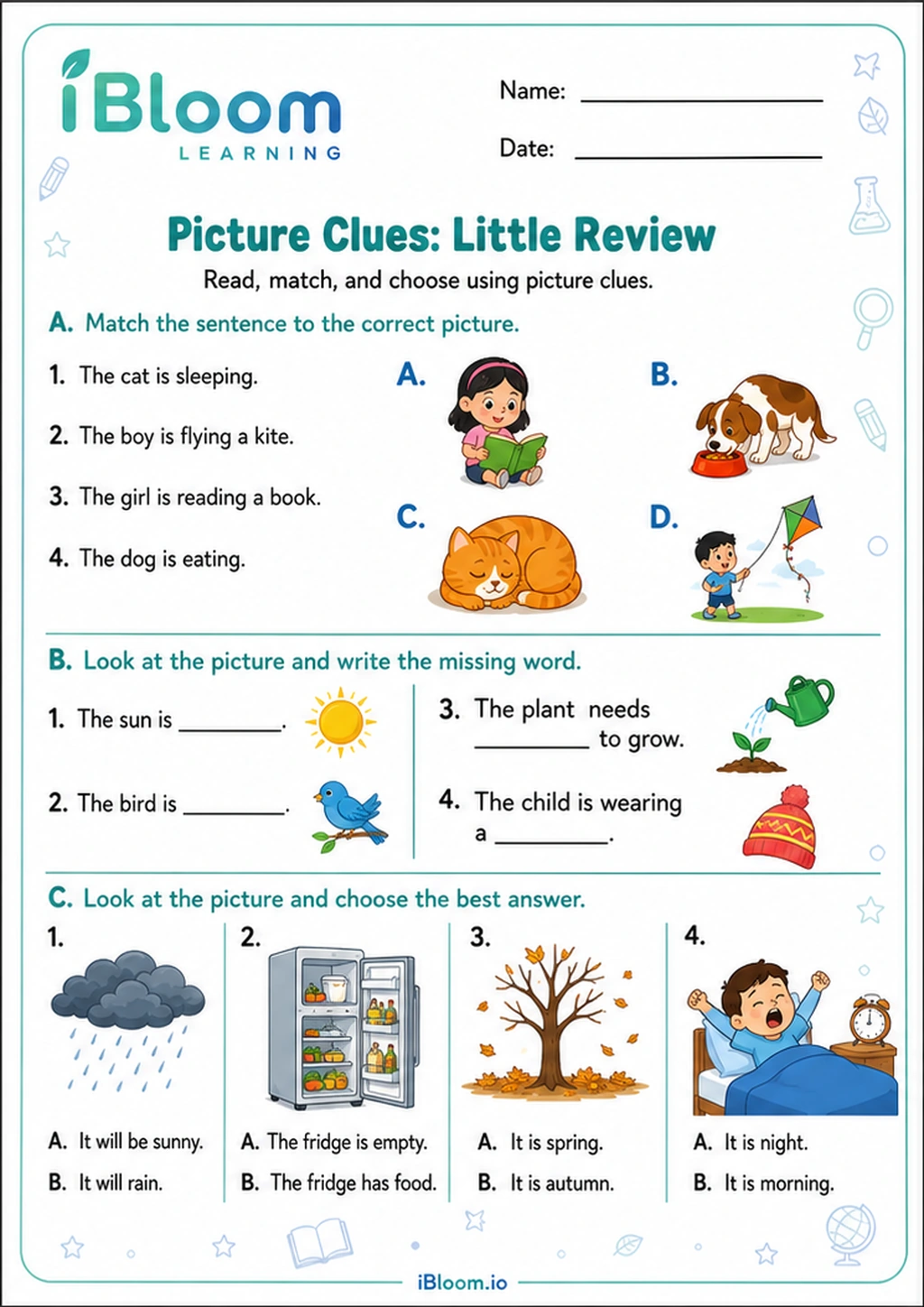 Picture Clues: Little ReviewClass 1 printable practice for Picture Clues.Class 1Free PDF preview
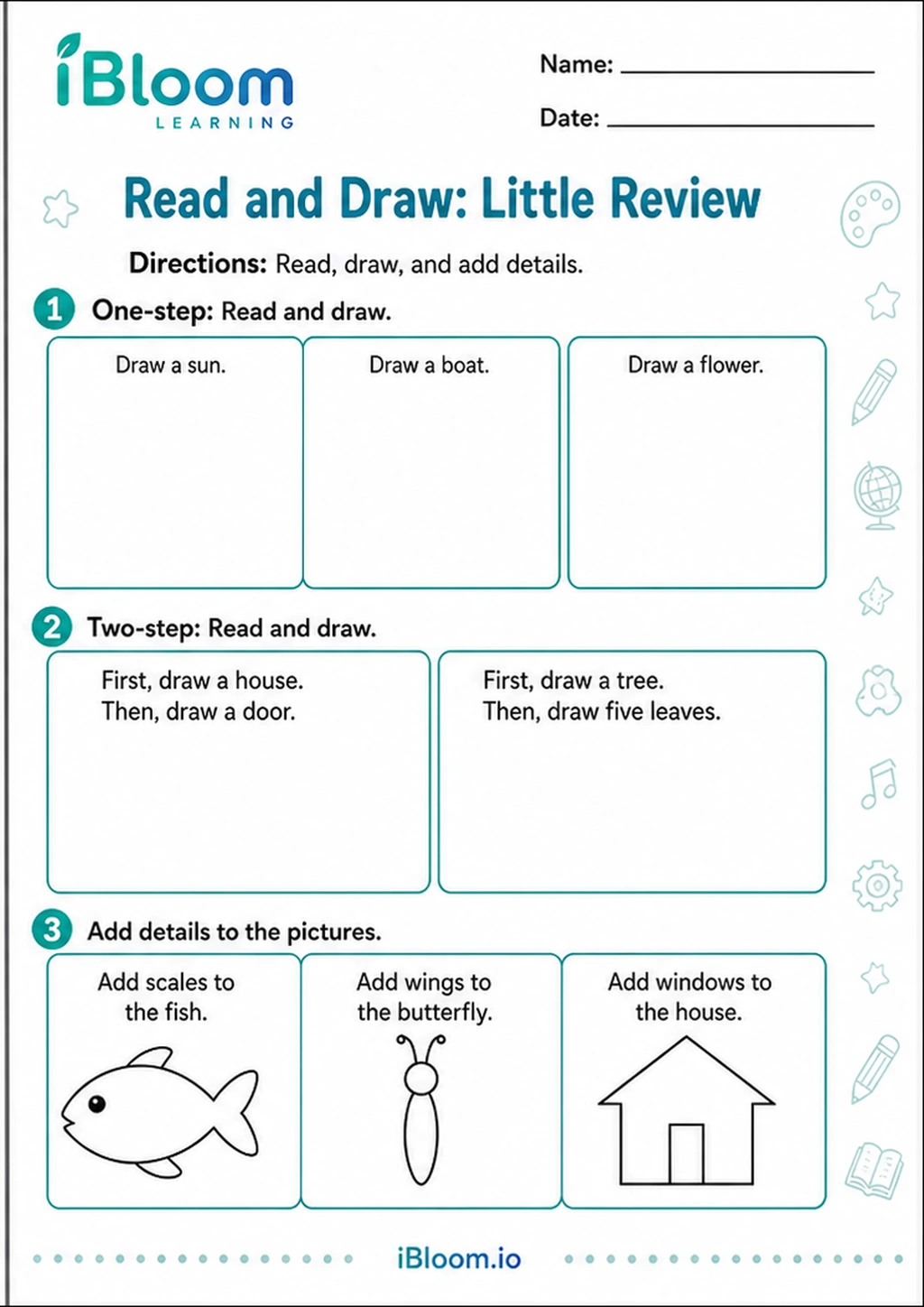 Read and Draw: Little ReviewClass 1 printable practice for Read and Draw.Class 1Free PDF preview
Practice that builds confidence
From words to meaningful sentences
These Class 1 Reading Sentences worksheets help children move from reading single words to understanding complete, meaningful sentences. Learners practise reading with picture clues, fluency phrases, riddles, matching tasks, cloze reading, and simple sentence comprehension.
The printable activities include read-and-draw prompts, sentence unscramble and scramble exercises, read-trace practice, riddles with picture clues, and short fluency work. Each sheet supports careful reading, word order, meaning, and confidence with everyday sentence patterns.
At this stage, children are learning that a sentence is not just a line of words; it carries a complete idea. The worksheets build this understanding through familiar sentence types such as naming, action, and describing sentences. Picture clues help children connect print with meaning, while matching and understanding tasks ask them to choose the sentence that fits what they see or read.

Practice progression across activities
The collection moves from supported reading to more independent sentence work. In read-trace sheets, children see the sentence, trace it, and read it aloud. Fluency phrases and sentences reading fluency pages encourage smooth reading without guessing. Cloze reading asks children to supply a missing word that makes sense. Sentence unscramble and sentence scramble tasks focus on correct word order, capital letters, and full stops.
A simple parent routine
At home, begin with one worksheet and ask your child to look at the picture first. Say, “What do you notice?” Then have the child read the sentence slowly, pointing to each word. For a riddle, ask them to underline clues before answering. For read-and-draw, let them read twice before drawing so the picture shows the exact meaning of the sentence.

Classroom uses for teachers
Teachers can use these printables for reading centres, morning work, partner reading, or quick comprehension checks. Matching pages work well for small groups because children can explain why a sentence belongs with a picture. Sentence unscramble tasks are useful after phonics or vocabulary lessons, as they show whether children can use known words in a meaningful order.

Common errors to watch for
Some children read only the first word and guess the rest from the picture. Others skip small words such as is, am, the, and a, which changes the meaning. In scramble activities, children may place action words too early or forget that a sentence begins with a capital letter and ends with a full stop. Encourage rereading after every answer.
Child-friendly strategy: read, think, check
Teach children to use three steps: read the whole sentence, think about what it means, and check it against the picture or answer choices. This works especially well for riddles, picture clues, cloze reading, and matching. Why iBloom worksheets help: the pages mix drawing, tracing, arranging, and reading aloud, so children practise sentence meaning in more than one way instead of simply copying words.
Free printable PDF download
Use this reading sentences worksheets for class 1 page to preview the activity, print it, or download it as a PDF for quick practice. It works well for homework, homeschool lessons, tutoring, morning work, revision, and classroom centers.
Answers and answer key support
After the child completes the worksheet independently, parents and teachers can use the answer support or answer key information to check the work, review mistakes, and choose the next practice step.
Helpful answers
Frequently asked questions
What sentence skills do these Class 1 worksheets practise?
They practise reading simple sentences, using picture clues, completing cloze sentences, matching sentences to pictures, solving riddles, tracing sentences, and arranging words in the correct order.
How do sentence unscramble pages help young readers?
Sentence unscramble pages teach children that words must appear in a logical order to make meaning. They also reinforce capital letters, spacing, and full stops in a hands-on way.
Are picture clues useful, or do they make reading too easy?
Picture clues are useful when used carefully. They help Class 1 children confirm meaning, but children should still point to and read every word instead of guessing from the picture alone.
How can I use the read-and-draw worksheets at home?
Ask your child to read the sentence twice, talk about the important words, and then draw only what the sentence says. This checks whether the child has understood the whole sentence.
What should I do if my child reads very slowly?
Use the fluency phrases and short sentences for repeated reading. Let your child read once for accuracy, again for smoother reading, and a final time while paying attention to meaning.
Is this reading sentences worksheets for class 1 free?
Yes. You can preview it for free and use the printable worksheet for home or classroom practice.
Can I download this reading sentences worksheets for class 1 as a PDF?
Yes. Use the worksheet download option to save a printable PDF, or print the worksheet directly from the page.
Does this reading sentences worksheets for class 1 include answers or an answer key?
When the activity has fixed answers, iBloom includes answer support so parents and teachers can check the completed worksheet.