Free printable practice
After The Flood Practice Activities
Printable Class 5 reading comprehension activities for the children’s story “After The Flood”, focused on evidence, inference, vocabulary, and story sequence.
Free printable worksheet PDFs
Preview every available page, then download the free worksheet PDF for home, homeschool, tutoring, or classroom practice.
Preview the exact activity before downloading it.
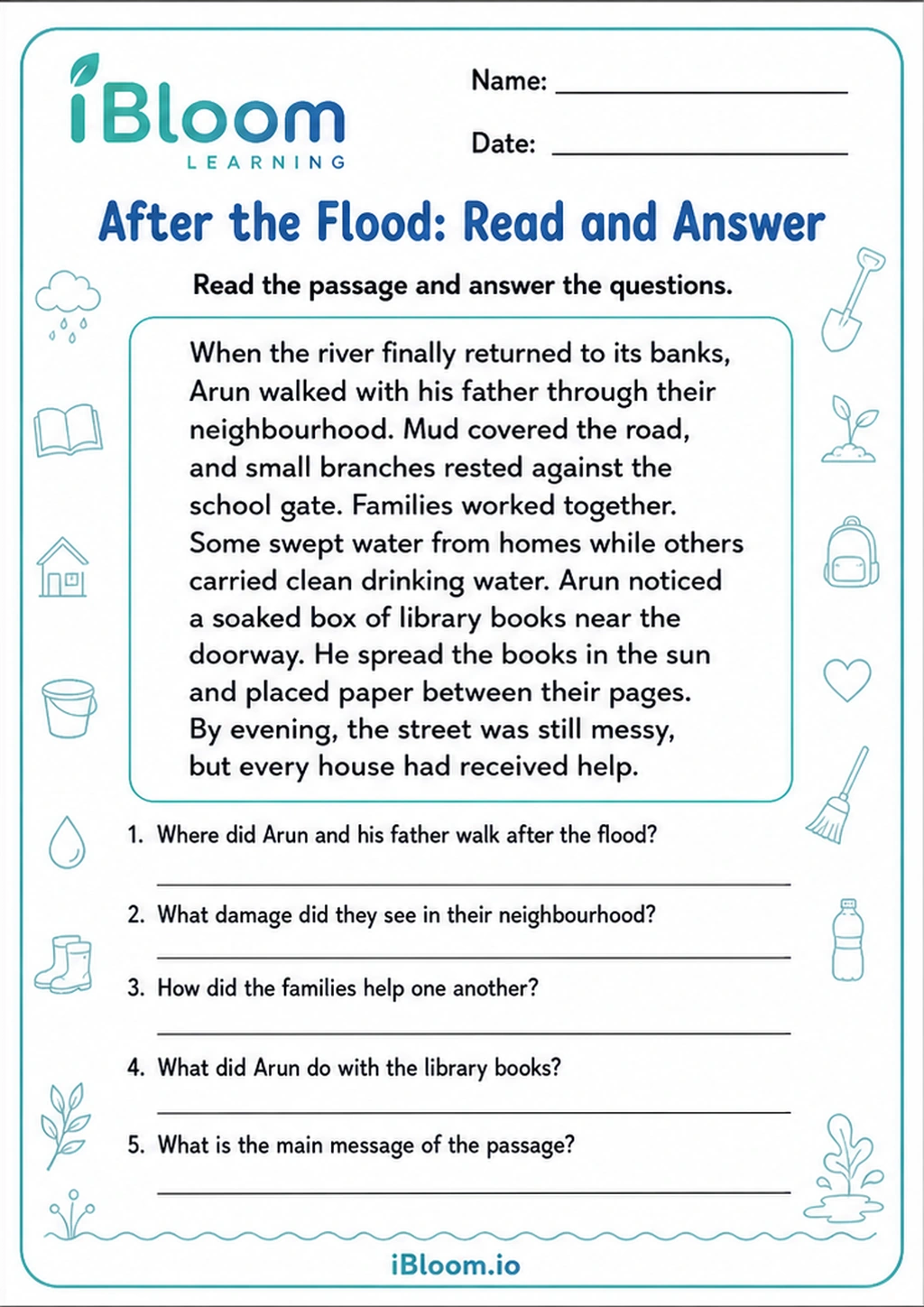 After the Flood: Read and AnswerClass 5 printable practice for After the Flood Reading.Class 5Free PDF preview
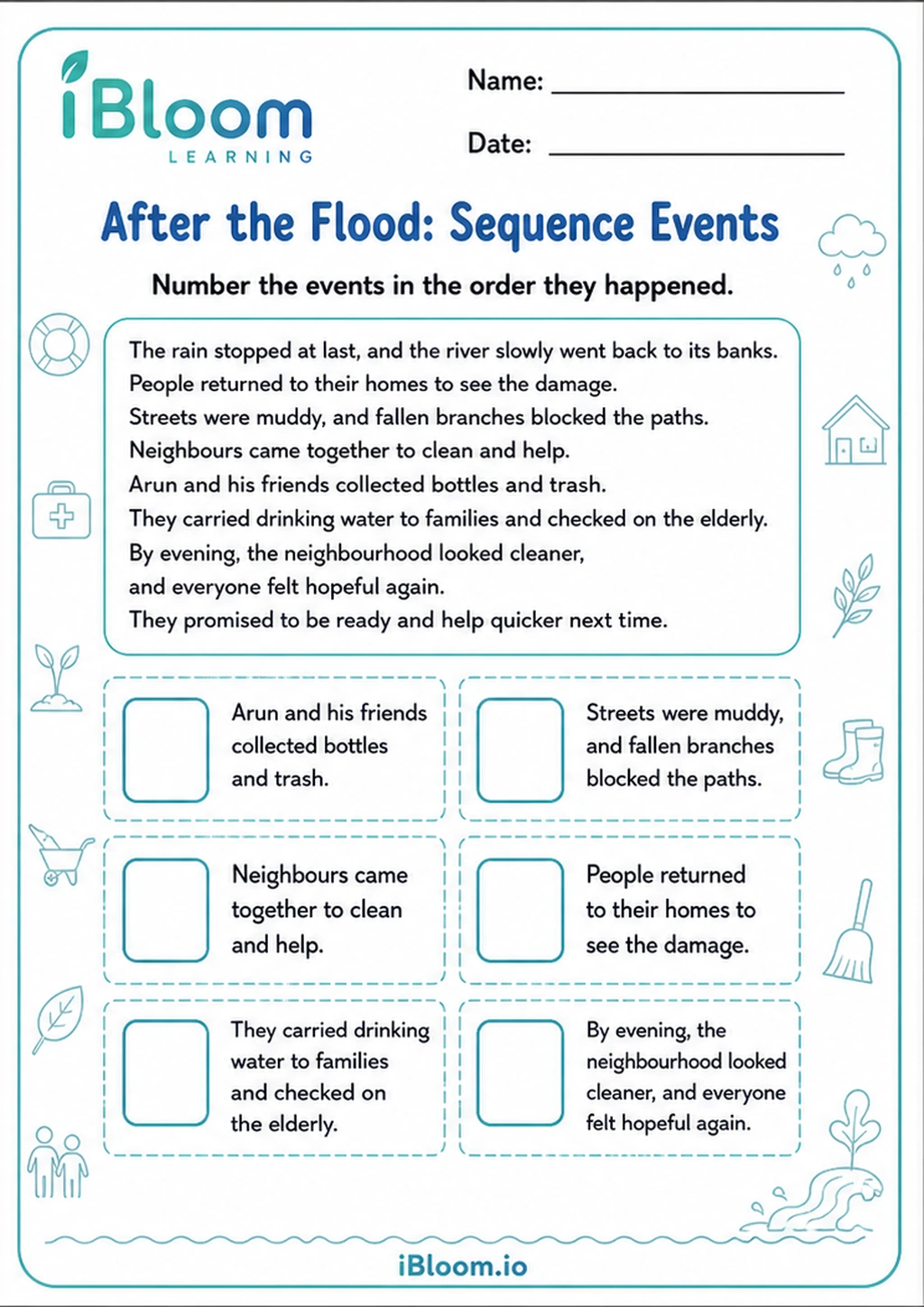 After the Flood: Sequence EventsClass 5 printable practice for After the Flood Reading.Class 5Free PDF preview
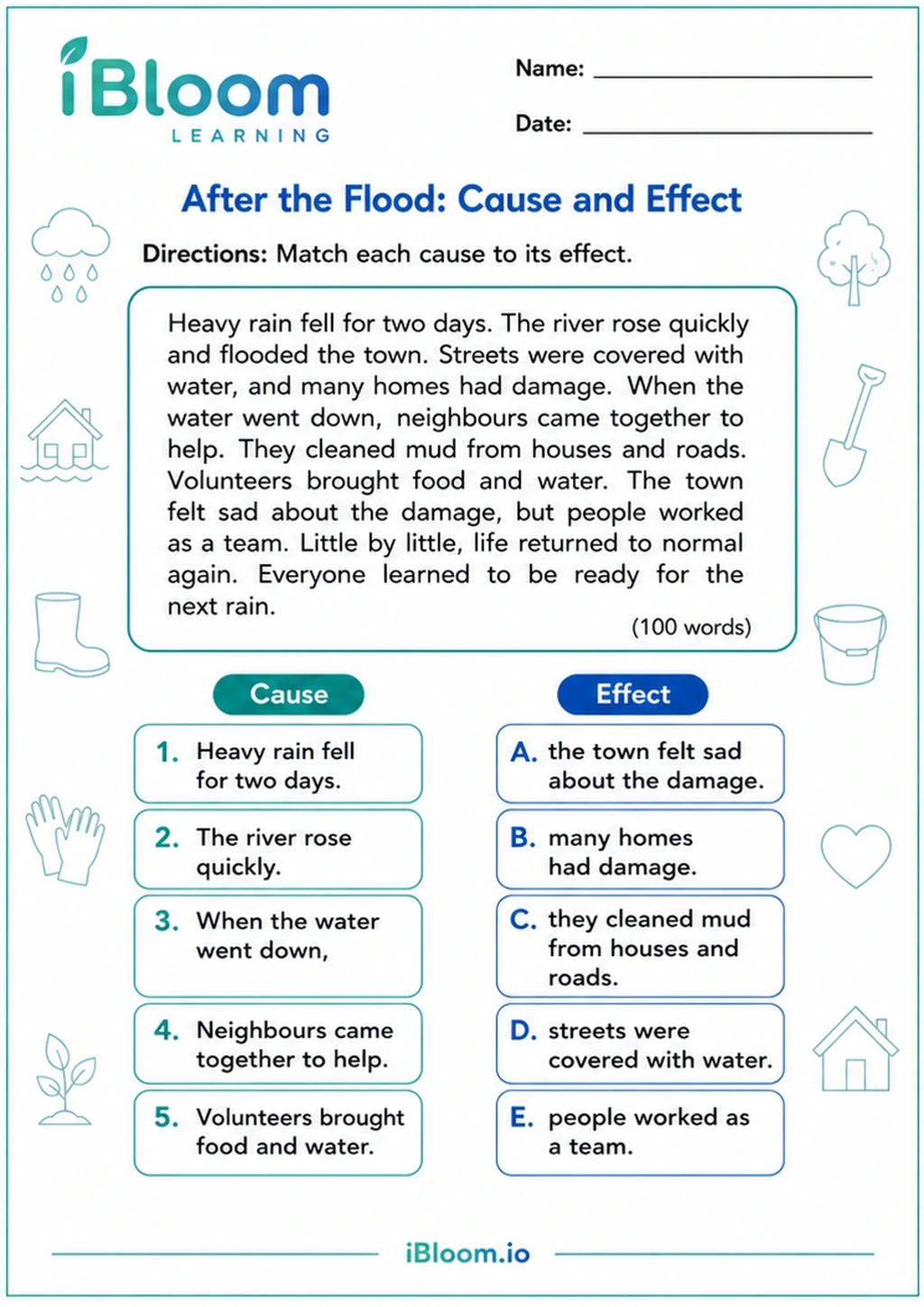 After the Flood: Cause and EffectClass 5 printable practice for After the Flood Reading.Class 5Free PDF preview
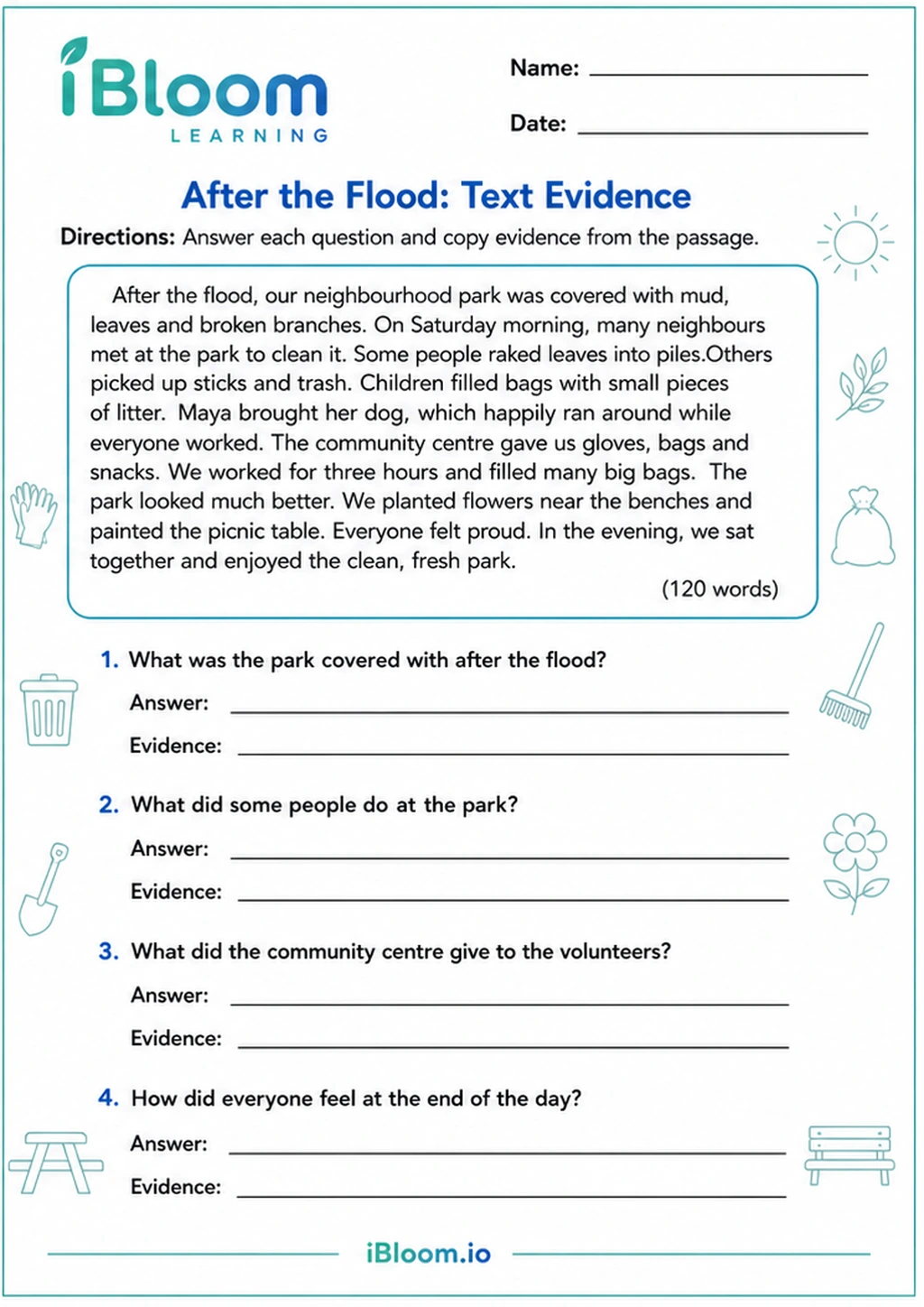 After the Flood: Text EvidenceClass 5 printable practice for After the Flood Reading.Class 5Free PDF preview
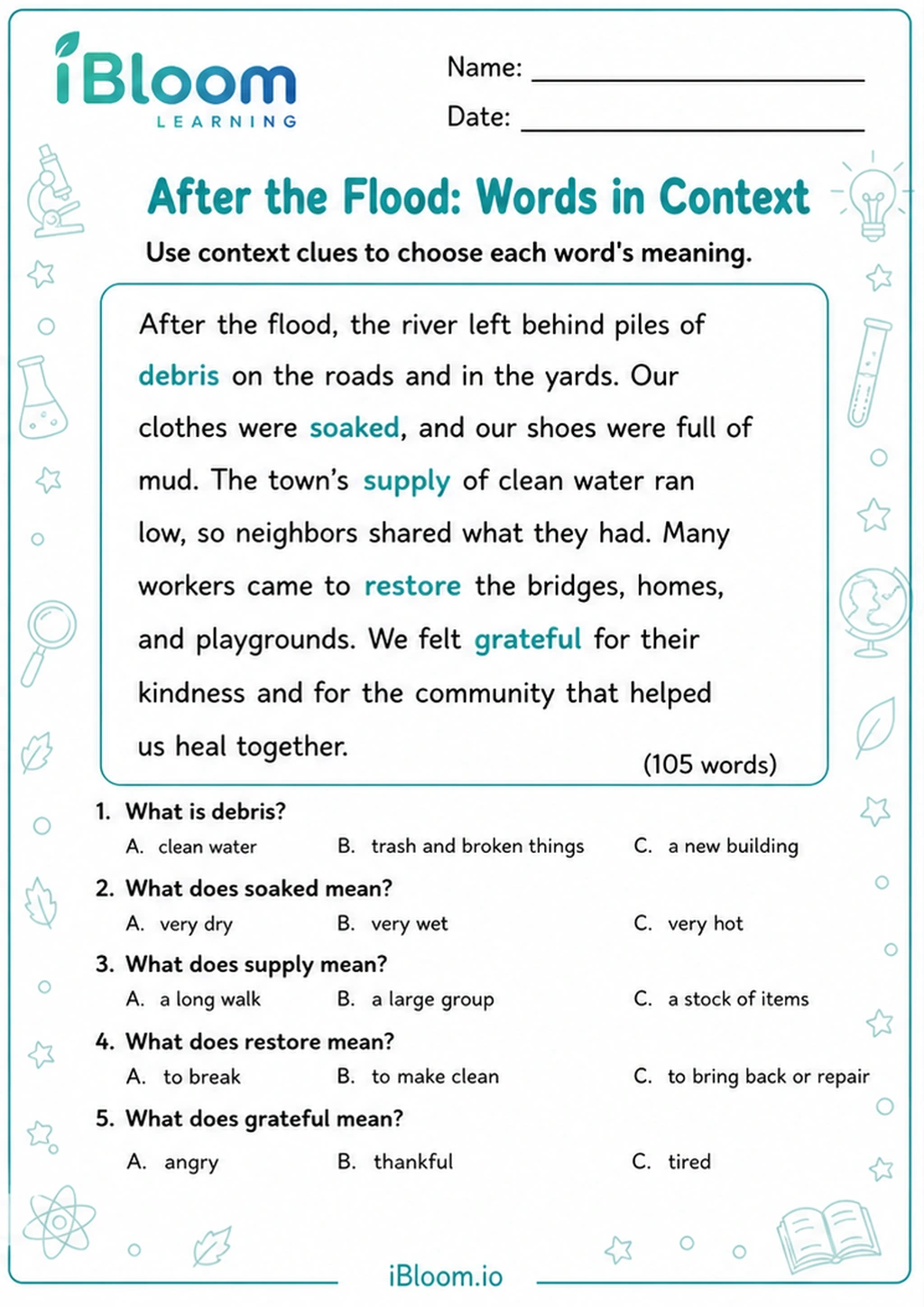 After the Flood: Words in ContextClass 5 printable practice for After the Flood Reading.Class 5Free PDF preview
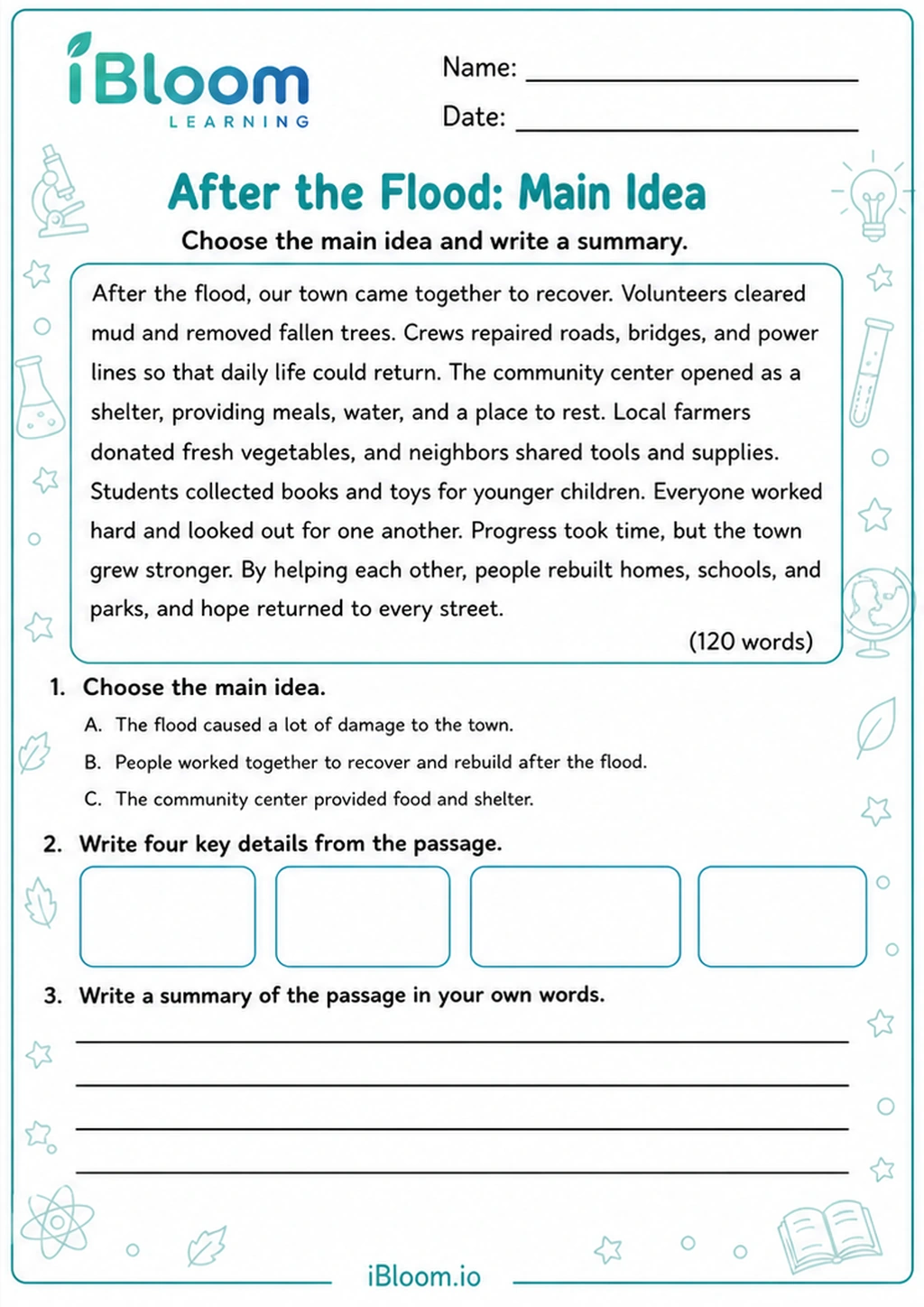 After the Flood: Main IdeaClass 5 printable practice for After the Flood Reading.Class 5Free PDF preview
Practice that builds confidence
Reading the story with purpose
These Class 5 reading comprehension worksheets help children read “After The Flood” carefully and respond with clear, text-based answers. Learners practise identifying key events, understanding characters’ actions, noticing cause and effect, and explaining ideas in their own words.
The printable activities include a mix of direct questions, inference prompts, vocabulary work, sequencing, and short written responses. They are designed for independent practice, guided reading, homework, or revision within the Children’s Stories section.
“After The Flood” gives Class 5 learners a chance to move beyond simple recall and think about how a story develops after a difficult event. The worksheets encourage children to track what happens, who is affected, what changes, and how the title connects to the events in the passage. Questions guide them to return to the text rather than depend on memory alone.

Skills practised step by step
Children begin with literal comprehension, such as finding details and identifying the order of events. They then move towards cause-and-effect thinking: what happened because of the flood, how people responded, and why certain actions mattered. Vocabulary tasks may ask learners to use context clues, explain phrases, or choose words that fit the meaning of the passage.
Parent routine for home practice
At home, ask your child to read the story once for understanding and a second time with a pencil in hand. Let them underline names, places, problem words, and lines that show feelings or actions. Before writing answers, ask: “Which sentence helped you decide that?” This simple routine builds the habit of giving evidence, not just opinions.

Classroom use for teachers
Teachers can use these printables during guided reading, comprehension centres, or as a follow-up after a class read-aloud. One group can work on sequencing, another on vocabulary, and another on inference. The written response questions are useful for checking whether pupils can form complete answers with relevant details from the story.

Common errors to watch for
Some children may retell the whole story instead of answering the exact question. Others may write very short answers without proof from the passage. Watch for confusion between a character’s action and a character’s feeling, or between the cause of an event and its result. Encourage pupils to use words like because, after, therefore, and as a result.
Free printable PDF download
Use this After The Flood Class 5 reading comprehension worksheet page to preview the activity, print it, or download it as a PDF for quick practice. It works well for homework, homeschool lessons, tutoring, morning work, revision, and classroom centers.
Answers and answer key support
After the child completes the worksheet independently, parents and teachers can use the answer support or answer key information to check the work, review mistakes, and choose the next practice step.
Why iBloom worksheets help
The iBloom activities are focused on the exact story, so children practise comprehension in context rather than through isolated drills. A child-friendly strategy is: read, find, think, answer. Read the question, find the matching part of the story, think about what it means, and then answer in a full sentence.
Helpful answers
Frequently asked questions
What skills do these “After The Flood” worksheets practise?
They practise literal comprehension, sequencing, inference, vocabulary in context, cause and effect, and writing answers supported by details from the story.
Are these worksheets suitable for Class 5 independent work?
Yes. Most Class 5 learners can attempt them independently after reading the story, though weaker readers may benefit from a guided first reading.
How can I help my child answer inference questions from the story?
Ask your child to point to the sentence or detail that gave them the clue. Then help them connect that clue to their answer using words such as because or this shows.
Can teachers use this page for group reading lessons?
Yes. The activities work well after a shared reading of “After The Flood”, with pupils answering different question types in pairs, groups, or comprehension centres.
What should children do if they do not understand a word in the passage?
They should reread the sentence, look at the words around it, and think about what meaning would fit the situation in the story before checking with an adult or dictionary.
Is this After The Flood Class 5 reading comprehension worksheet free?
Yes. You can preview it for free and use the printable worksheet for home or classroom practice.
Can I download this After The Flood Class 5 reading comprehension worksheet as a PDF?
Yes. Use the worksheet download option to save a printable PDF, or print the worksheet directly from the page.
Does this After The Flood Class 5 reading comprehension worksheet include answers or an answer key?
When the activity has fixed answers, iBloom includes answer support so parents and teachers can check the completed worksheet.