Free printable practice
Descriptive Text Structure Practice Activities
Printable Class 5 reading worksheets that help children identify descriptive text structure, key details, signal words, and organised descriptions.
Free printable worksheet PDFs
Preview every available page, then download the free worksheet PDF for home, homeschool, tutoring, or classroom practice.
Preview the exact activity before downloading it.
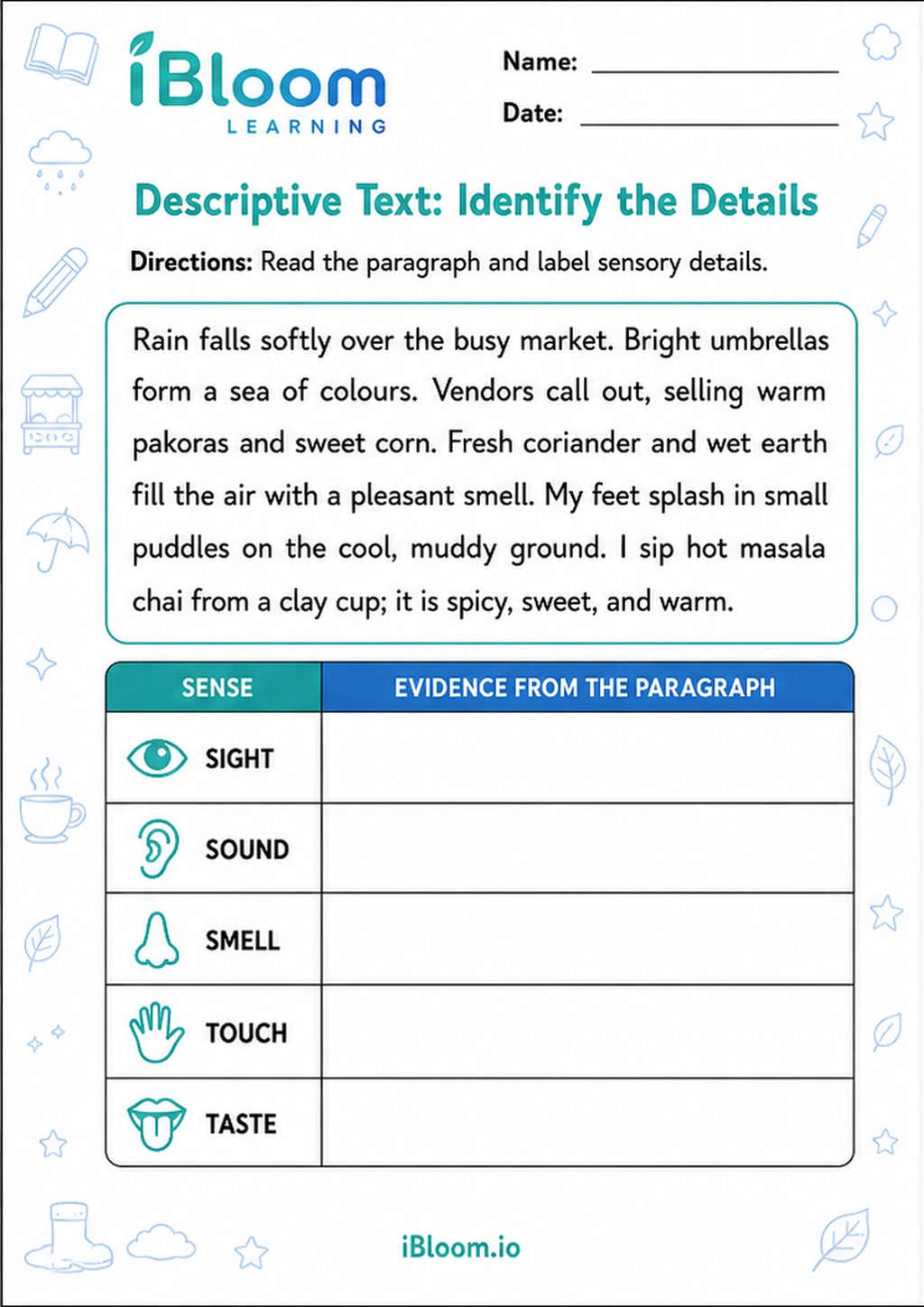 Descriptive Text: Identify the DetailsClass 5 printable practice for Descriptive Text Structure.Class 5Free PDF preview
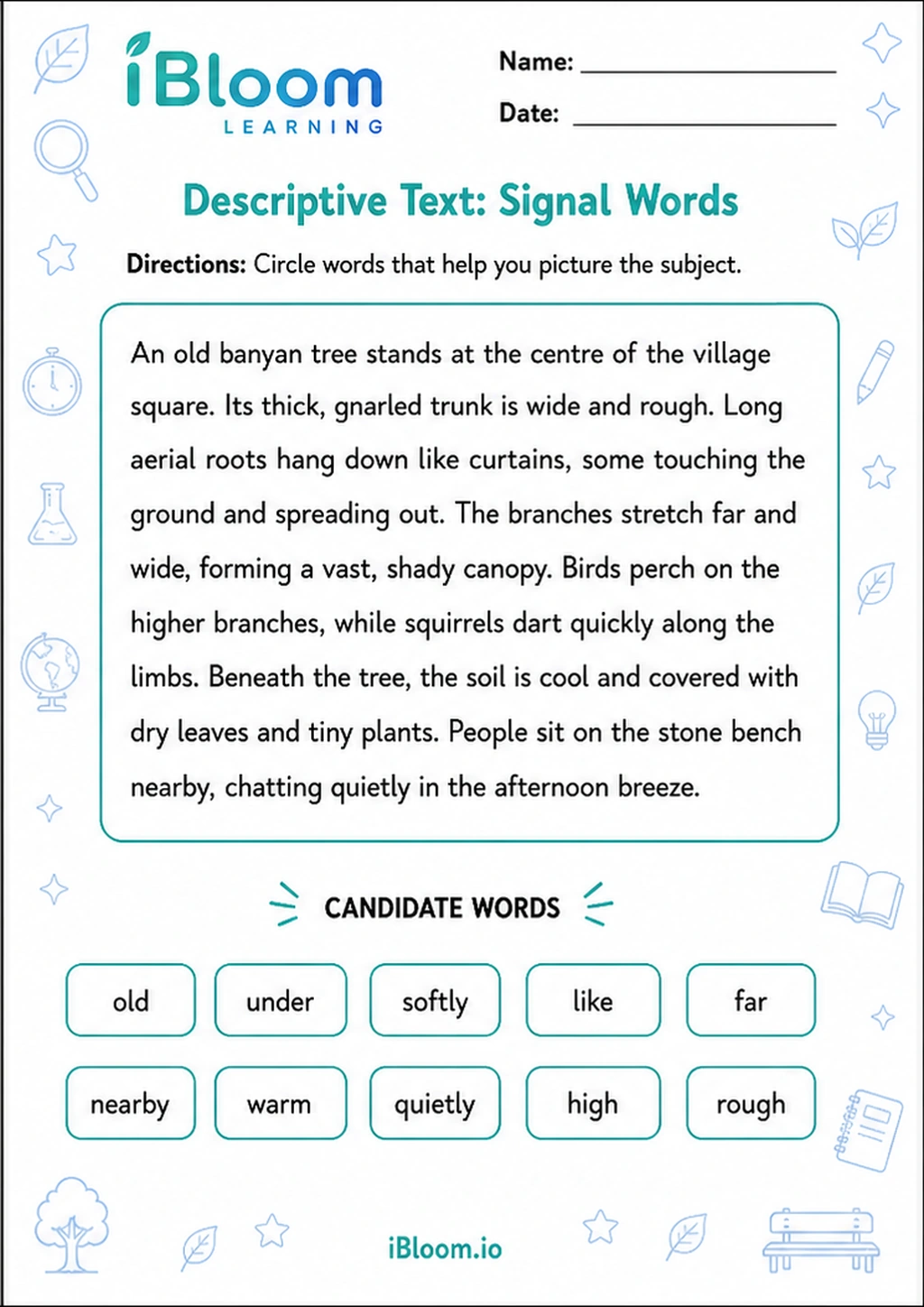 Descriptive Text: Signal WordsClass 5 printable practice for Descriptive Text Structure.Class 5Free PDF preview
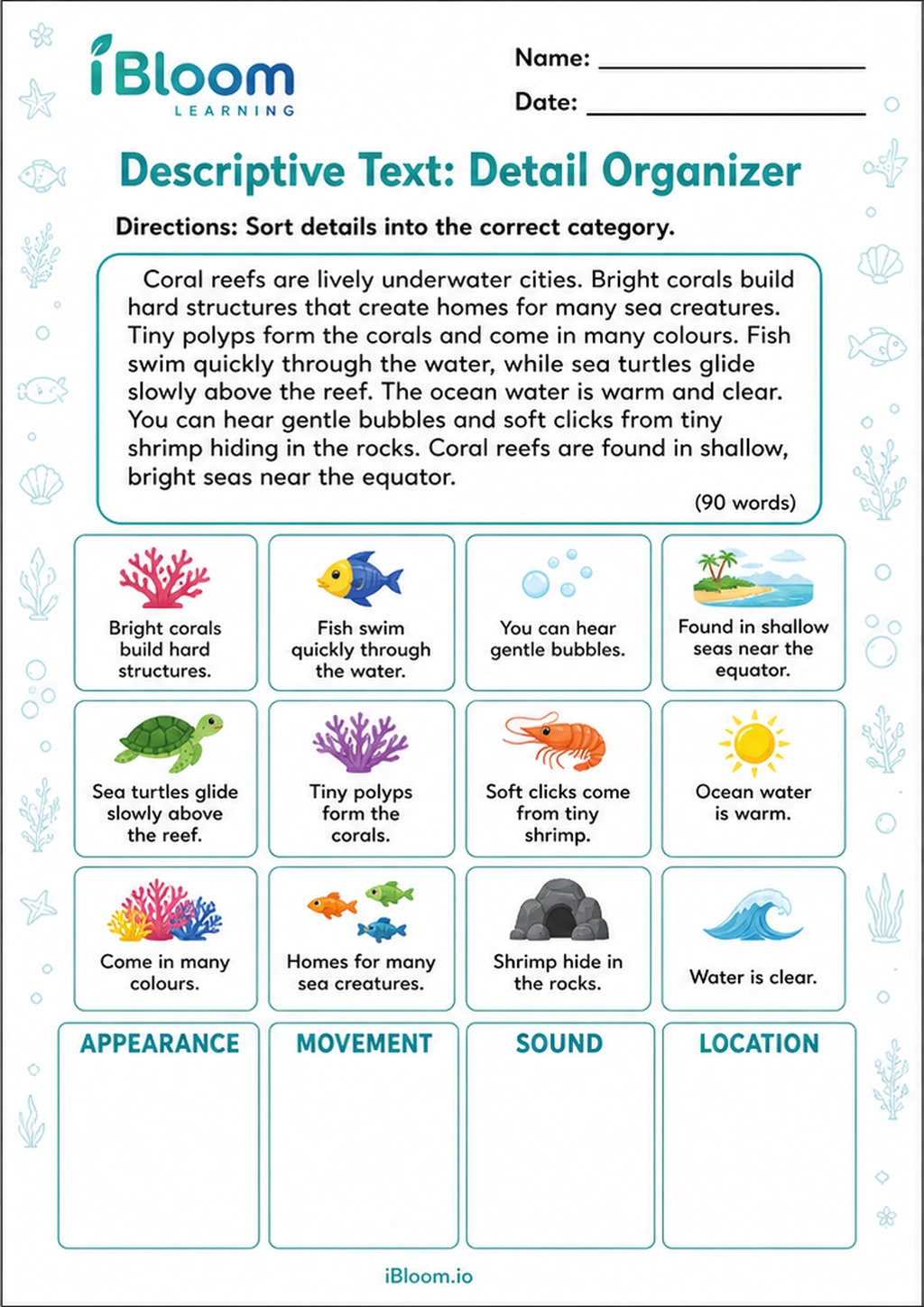 Descriptive Text: Detail OrganizerClass 5 printable practice for Descriptive Text Structure.Class 5Free PDF preview
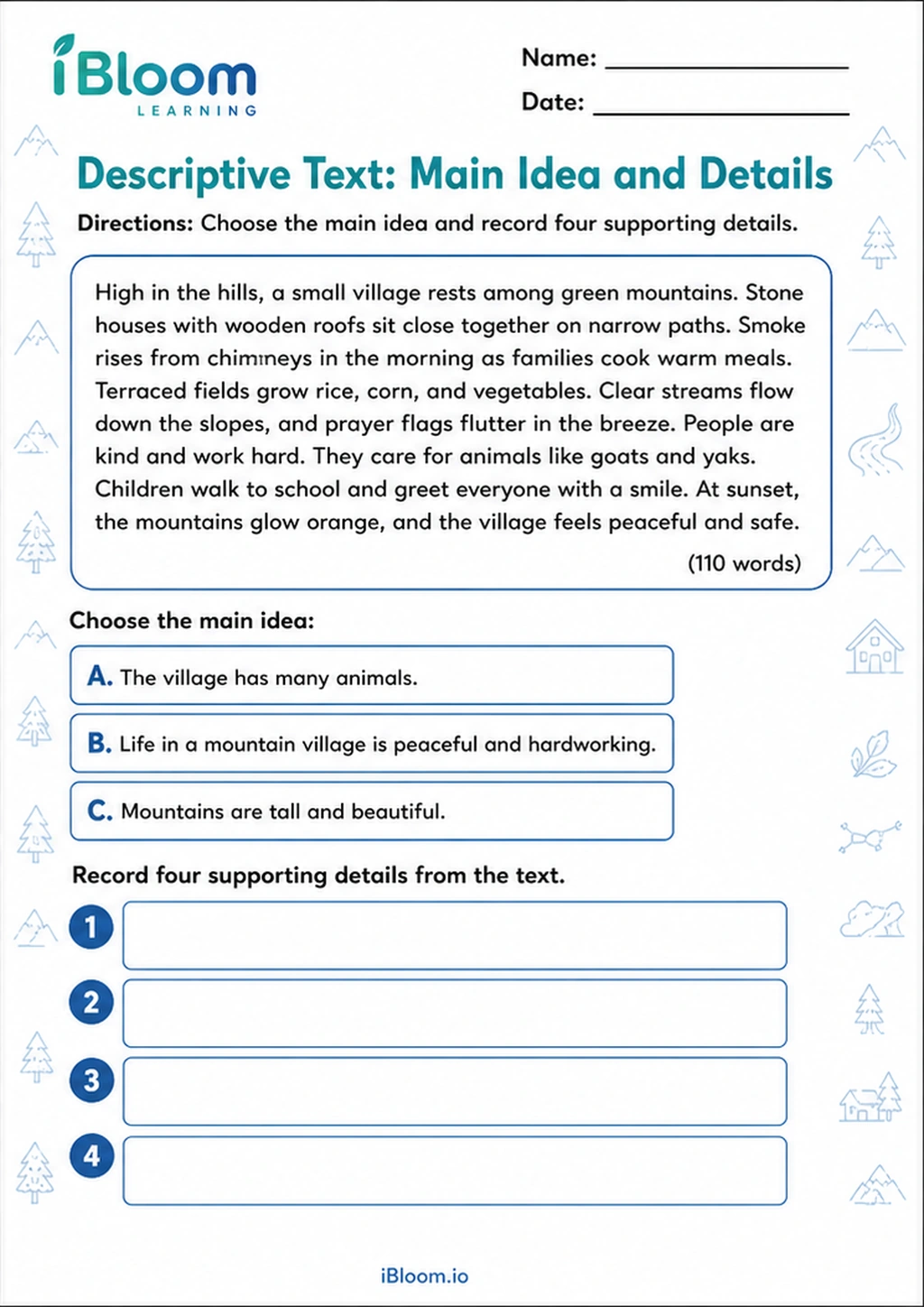 Descriptive Text: Main Idea and DetailsClass 5 printable practice for Descriptive Text Structure.Class 5Free PDF preview
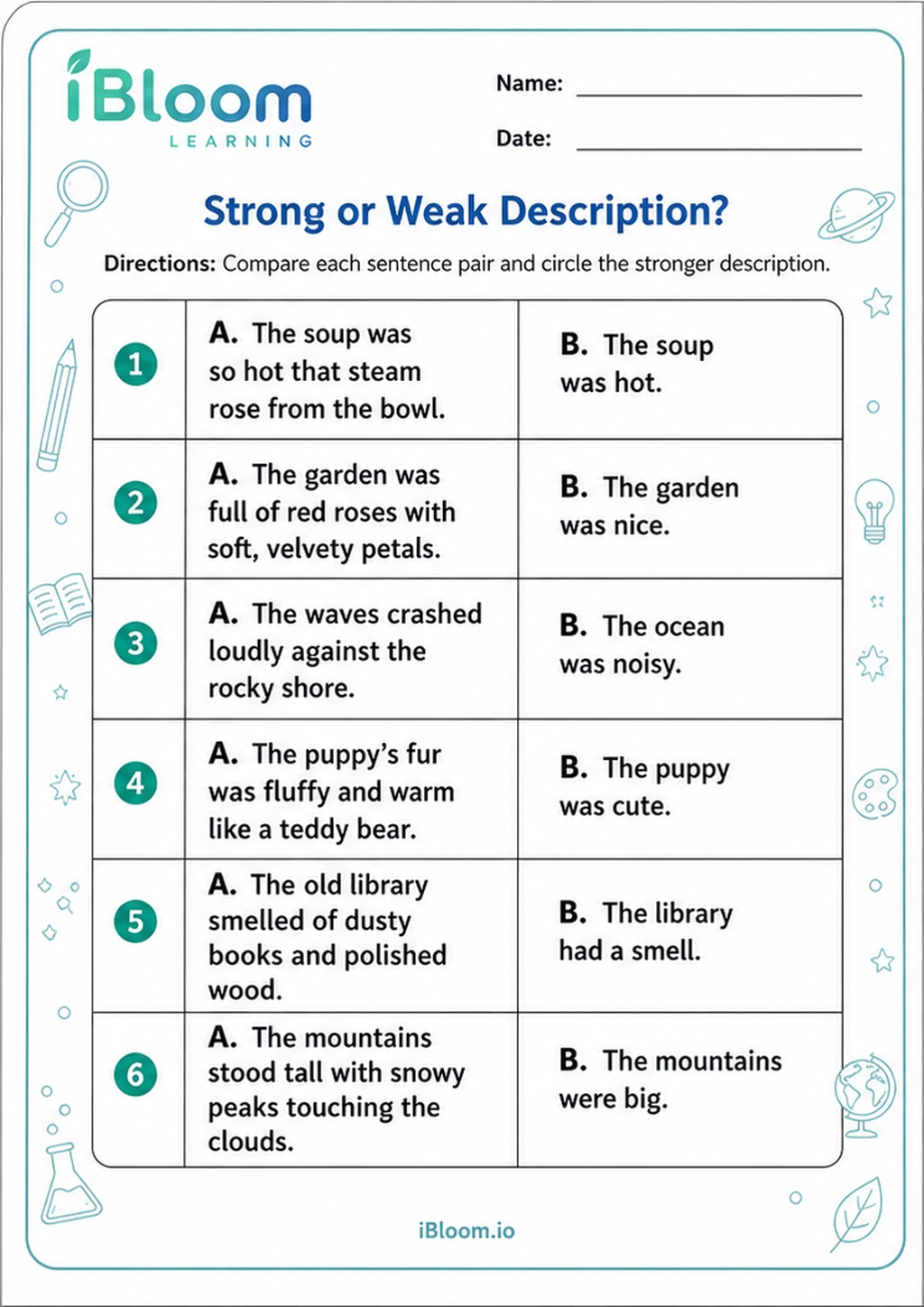 Strong or Weak Description?Class 5 printable practice for Descriptive Text Structure.Class 5Free PDF preview
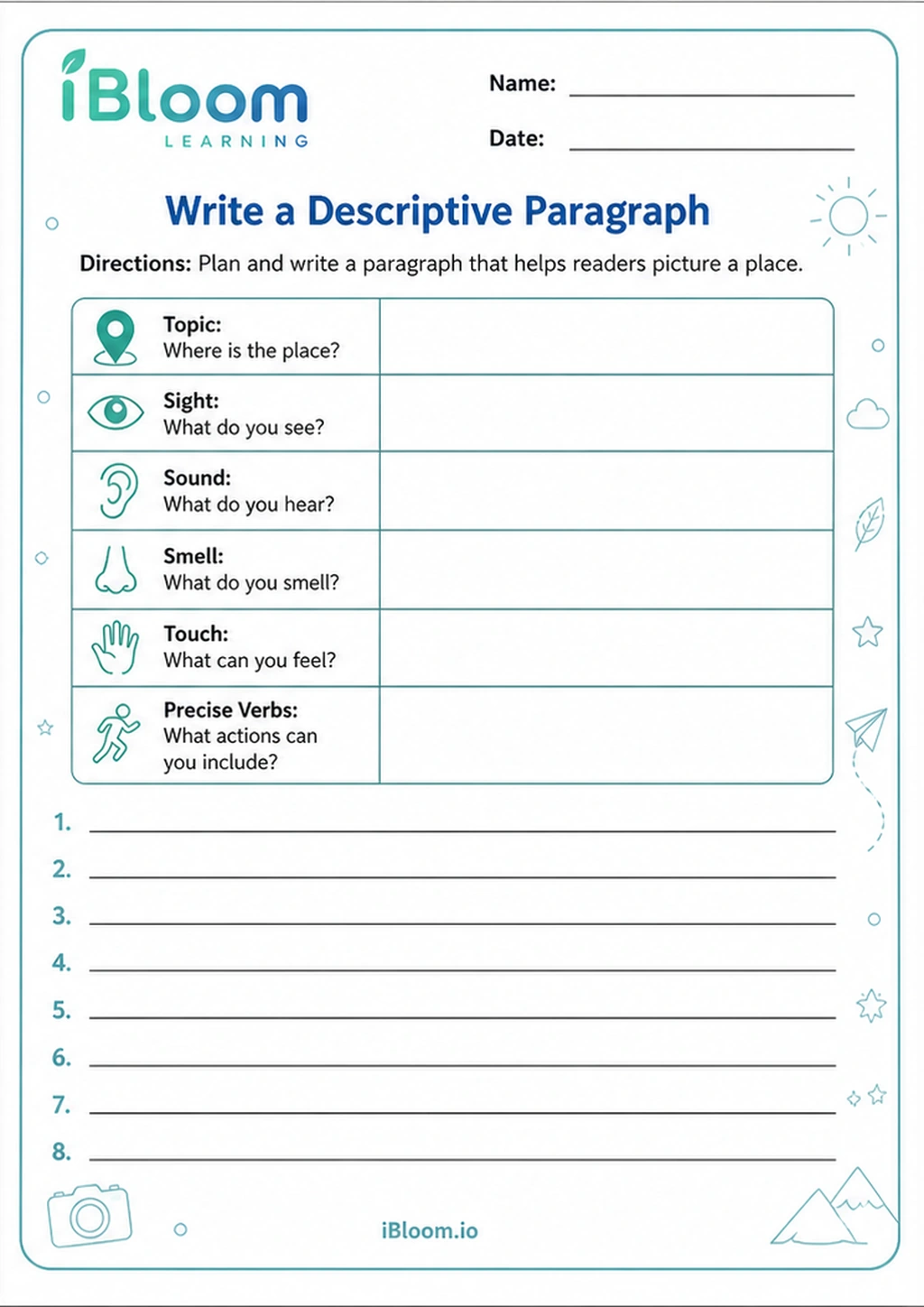 Write a Descriptive ParagraphClass 5 printable practice for Descriptive Text Structure.Class 5Free PDF preview
Practice that builds confidence
What descriptive structure shows
These Class 5 reading comprehension worksheets help children understand how descriptive texts are organised. Learners practise spotting the main topic, identifying important features, noticing descriptive language, and separating key details from extra information.
The printable activities include short passages, detail-sorting tasks, graphic organisers, and questions that guide children to see how a writer builds a clear picture of a person, place, object, event, or idea.
Descriptive text structure explains what something is like. In Class 5, children move beyond simply finding adjectives; they learn to see how facts, features, examples, and sensory details work together around one topic. A passage may describe a rainforest, a festival, a historical monument, an animal, or a scientific object by giving its parts, qualities, uses, appearance, or special features.

How the skill progresses
The worksheets begin with recognising the topic and underlining details that describe it. Children then group details under headings such as appearance, location, function, behaviour, or importance. Later tasks ask them to complete graphic organisers, choose the best summary, and explain why a detail belongs in a description. Useful signal words may include for example, such as, looks like, is made of, has, includes, and another feature.
A simple parent routine
At home, ask your child to read one passage aloud once for meaning and once with a pencil. Have them circle the topic, underline three important descriptive details, and say, “This detail helps me picture or understand…” Then ask them to retell the description in four sentences without copying the passage. This builds comprehension as well as independent expression.

Classroom uses for teachers
Teachers can use these printables during reading groups, comprehension practice, homework, or revision before longer writing tasks. They also work well as pair activities: one child finds the topic, the other finds supporting details, and both agree on how the text is organised. The same worksheet can lead into descriptive paragraph writing.

Common errors and a child-friendly strategy
Children often mistake every interesting sentence for an important detail, or they focus only on adjectives while missing facts and examples. Some may summarise by listing random points. Teach the strategy: “Name it, frame it, prove it.” Name the topic, frame the categories of details, and prove each category with one line from the text.
Free printable PDF download
Use this Class 5 descriptive text structure worksheet page to preview the activity, print it, or download it as a PDF for quick practice. It works well for homework, homeschool lessons, tutoring, morning work, revision, and classroom centers.
Answers and answer key support
After the child completes the worksheet independently, parents and teachers can use the answer support or answer key information to check the work, review mistakes, and choose the next practice step.
Why iBloom worksheets help
iBloom worksheets give repeated, focused practice with short, manageable texts and clear question types. The activities encourage children to read actively, organise information visually, and explain their thinking, so descriptive structure becomes a useful reading tool rather than a memorised label.
Helpful answers
Frequently asked questions
What is descriptive text structure in Class 5 reading?
Descriptive text structure is a way of organising information to show what a person, place, object, event, or idea is like. Children learn to identify the topic and the details that describe its features, parts, qualities, or importance.
How are these worksheets different from general adjective practice?
These worksheets do not focus only on adjectives. They help children understand how a whole passage is organised, including facts, examples, categories, sensory details, and supporting information.
What should my child look for in a descriptive passage?
Your child should first find the main topic. Then they should look for details that explain appearance, location, parts, uses, behaviour, qualities, or examples, along with signal words such as such as, includes, has, and for example.
Can these worksheets help with writing descriptive paragraphs?
Yes. When children see how good descriptions are organised in reading passages, they can use the same pattern in writing: choose a topic, group details, add clear examples, and keep every sentence connected to the main idea.
What is a common mistake in descriptive text structure questions?
A common mistake is listing random interesting details instead of choosing details that clearly describe the main topic. Children should ask whether each detail helps the reader picture or understand the topic better.
Is this Class 5 descriptive text structure worksheet free?
Yes. You can preview it for free and use the printable worksheet for home or classroom practice.
Can I download this Class 5 descriptive text structure worksheet as a PDF?
Yes. Use the worksheet download option to save a printable PDF, or print the worksheet directly from the page.
Does this Class 5 descriptive text structure worksheet include answers or an answer key?
When the activity has fixed answers, iBloom includes answer support so parents and teachers can check the completed worksheet.