Free printable practice
Stories Kids Fables Practice Activities
Class 5 printable reading worksheets for stories and fables, with questions on plot, character, inference, vocabulary and moral lessons.
Explore Stories Kids Fables
Free printable worksheet PDFs
Preview every available page, then download the free worksheet PDF for home, homeschool, tutoring, or classroom practice.
Preview the exact activity before downloading it.
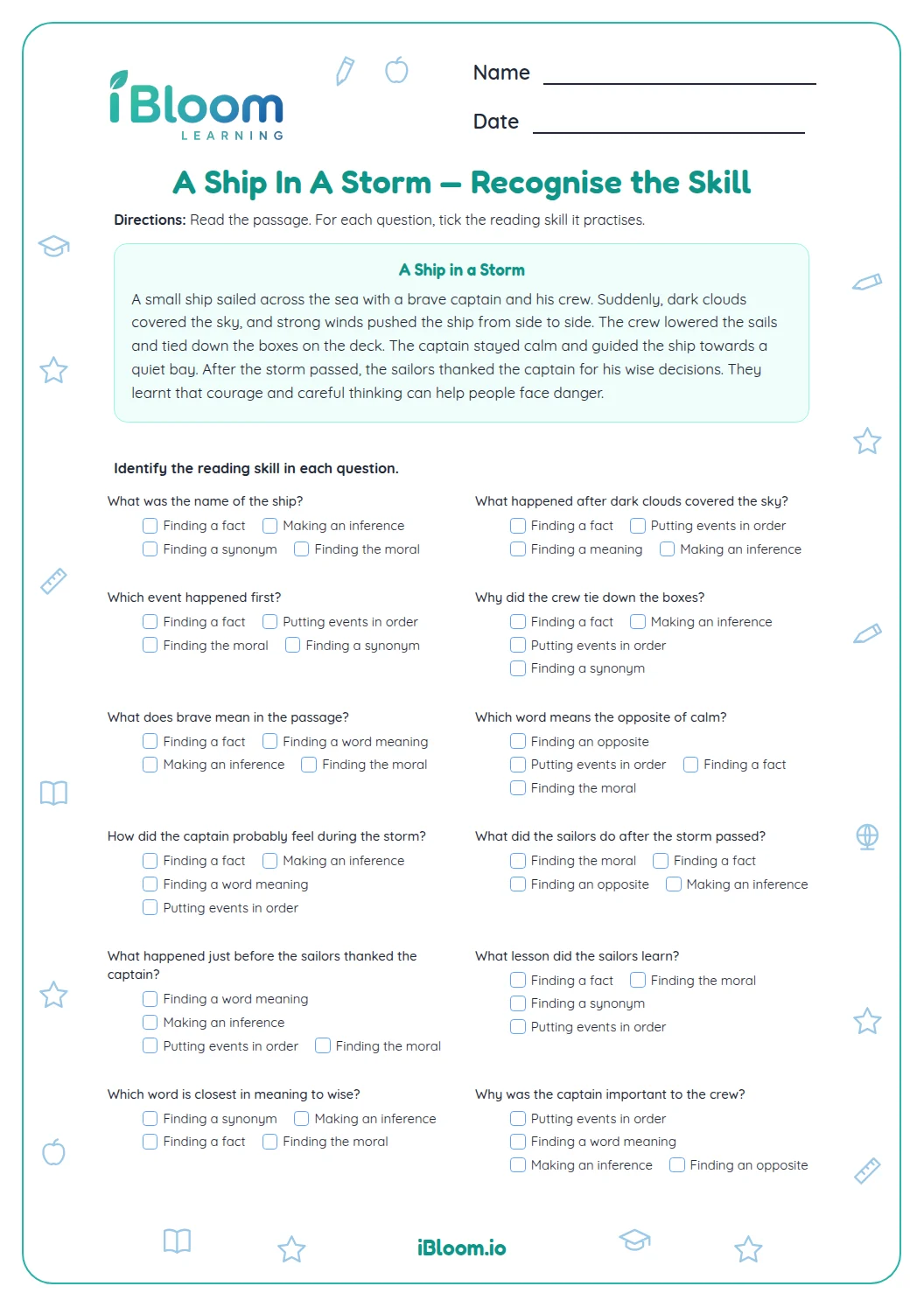 Stories Kids Fables: A Ship In A Storm — Recognise the SkillRecognise the Skill for stories kids fables: a ship in a storm in Class 5. Read the fable passage, then identify the reading skill each question practises.Class 5Free PDF preview
 Stories Kids Fables: Bruce And The Spider — Recognise the SkillRecognise the Skill for stories kids fables: bruce and the spider in Class 5. Read a short fable, then recognise its sequence, details, vocabulary, inference, and moral.Class 5Free PDF preview
 Stories Kids Fables: Harry And Annie — Recognise the SkillRecognise the Skill for stories kids fables: harry and annie in Class 5. Read the Harry and Annie passage, then identify the reading skill each question practises.Class 5Free PDF preview
 Stories Kids Fables: Horatius At The Bridge — Recognise the SkillRecognise the Skill for stories kids fables: horatius at the bridge in Class 5. Read a short Horatius passage and recognise whether each question practises fact, sequence, vocabulary, inference, main idea, or evidence.Class 5Free PDF preview
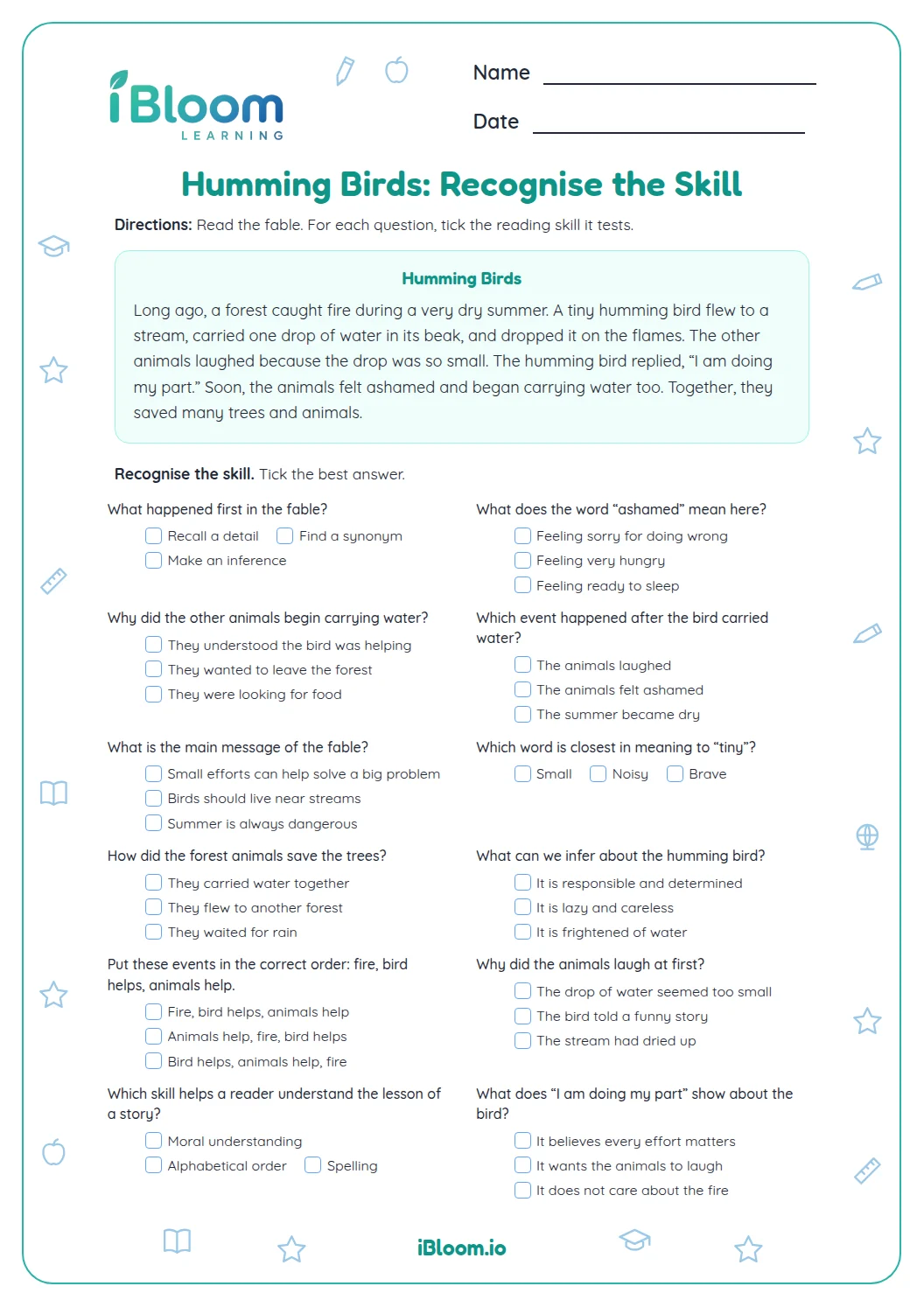 Stories Kids Fables: Humming Birds — Recognise the SkillRecognise the Skill for stories kids fables: humming birds in Class 5. Read the fable, then identify whether each question tests recall, vocabulary, sequence, inference, or moral understanding.Class 5Free PDF preview
 Stories Kids Fables: I Will Think Of It — Recognise the SkillRecognise the Skill for stories kids fables: i will think of it in Class 5. Read the fable, then recognise its main idea, clues, vocabulary, character traits, and lesson.Class 5Free PDF preview
 Stories Kids Fables: Jaden And The Magic Ring — Recognise the SkillRecognise the Skill for stories kids fables: jaden and the magic ring in Class 5. Read a short fable, then identify whether each question practises vocabulary, sequencing, inference, character analysis, or moral understanding.Class 5Free PDF preview
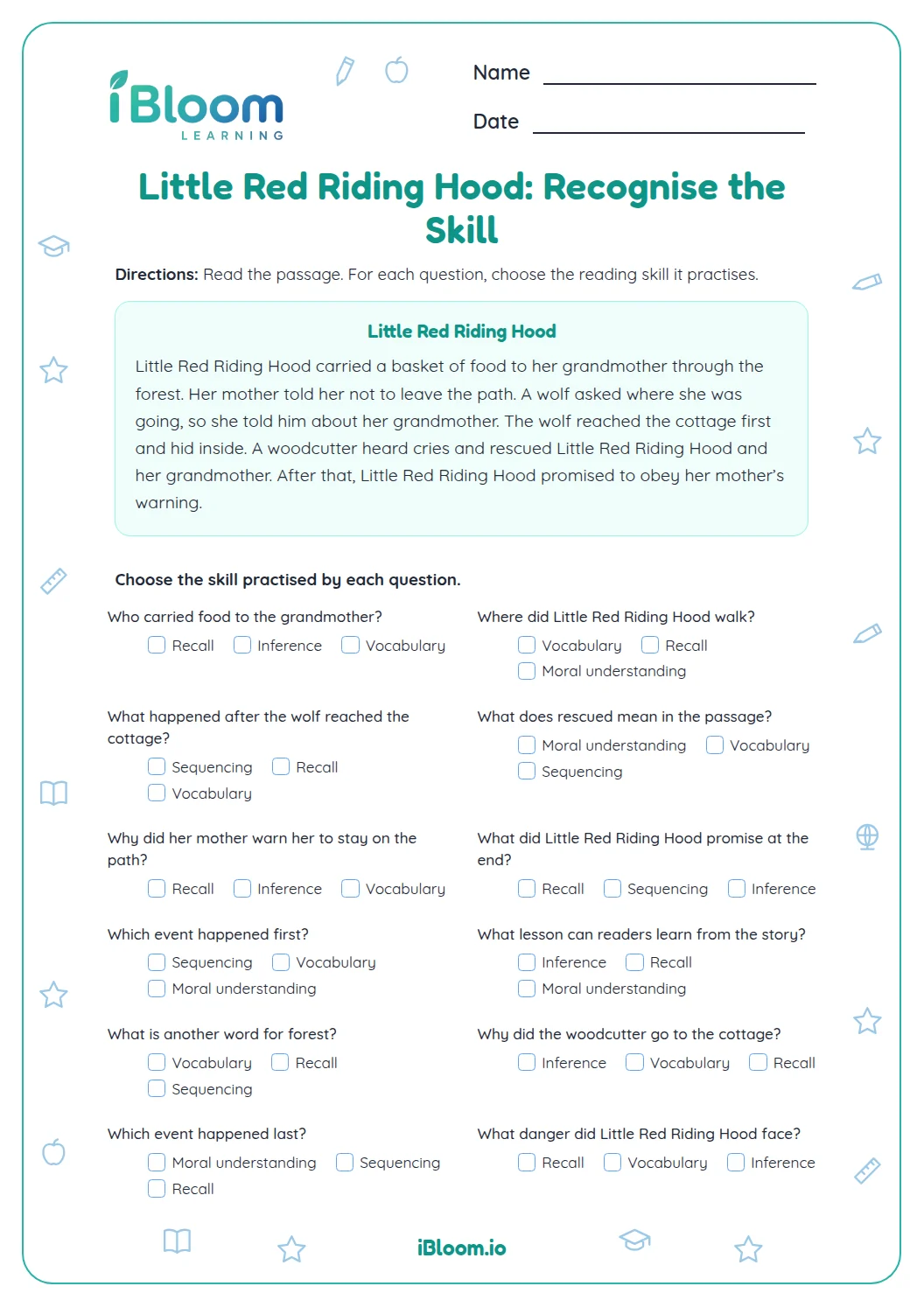 Stories Kids Fables: Little Red Riding Hood — Recognise the SkillRecognise the Skill for stories kids fables: little red riding hood in Class 5. Read a short fable and identify whether each question practises recall, sequencing, vocabulary, inference, or moral understanding.Class 5Free PDF preview
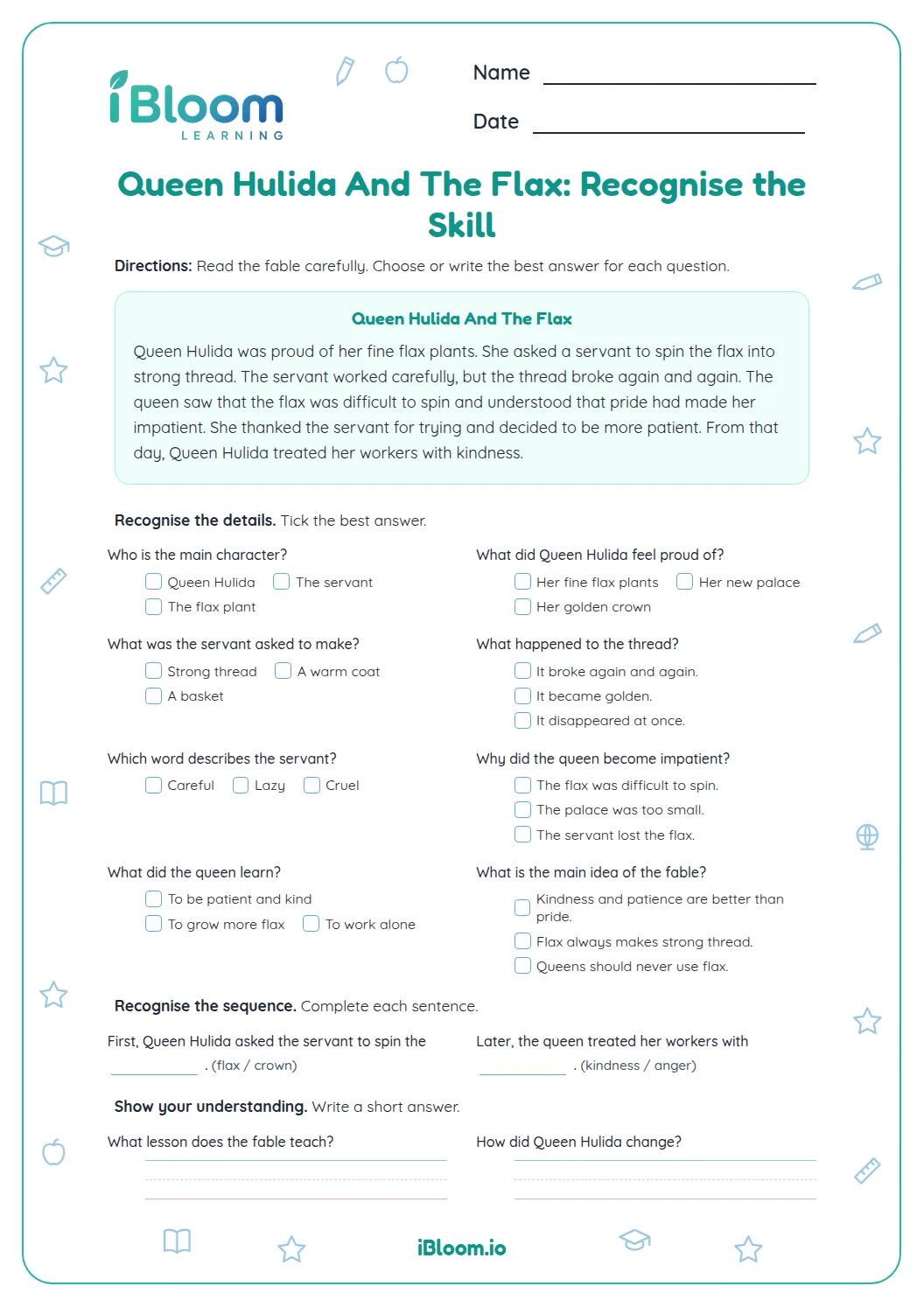 Stories Kids Fables: Queen Hulida And The Flax — Recognise the SkillRecognise the Skill for stories kids fables: queen hulida and the flax in Class 5. Read a short fable, then recognise its characters, setting, sequence, vocabulary, main idea and lesson.Class 5Free PDF preview
 Stories Kids Fables: Sennin The Hermit — Recognise the SkillRecognise the Skill for stories kids fables: sennin the hermit in Class 5. Read a short fable, then identify whether each question tests detail, vocabulary, sequence, inference, character, or theme.Class 5Free PDF preview
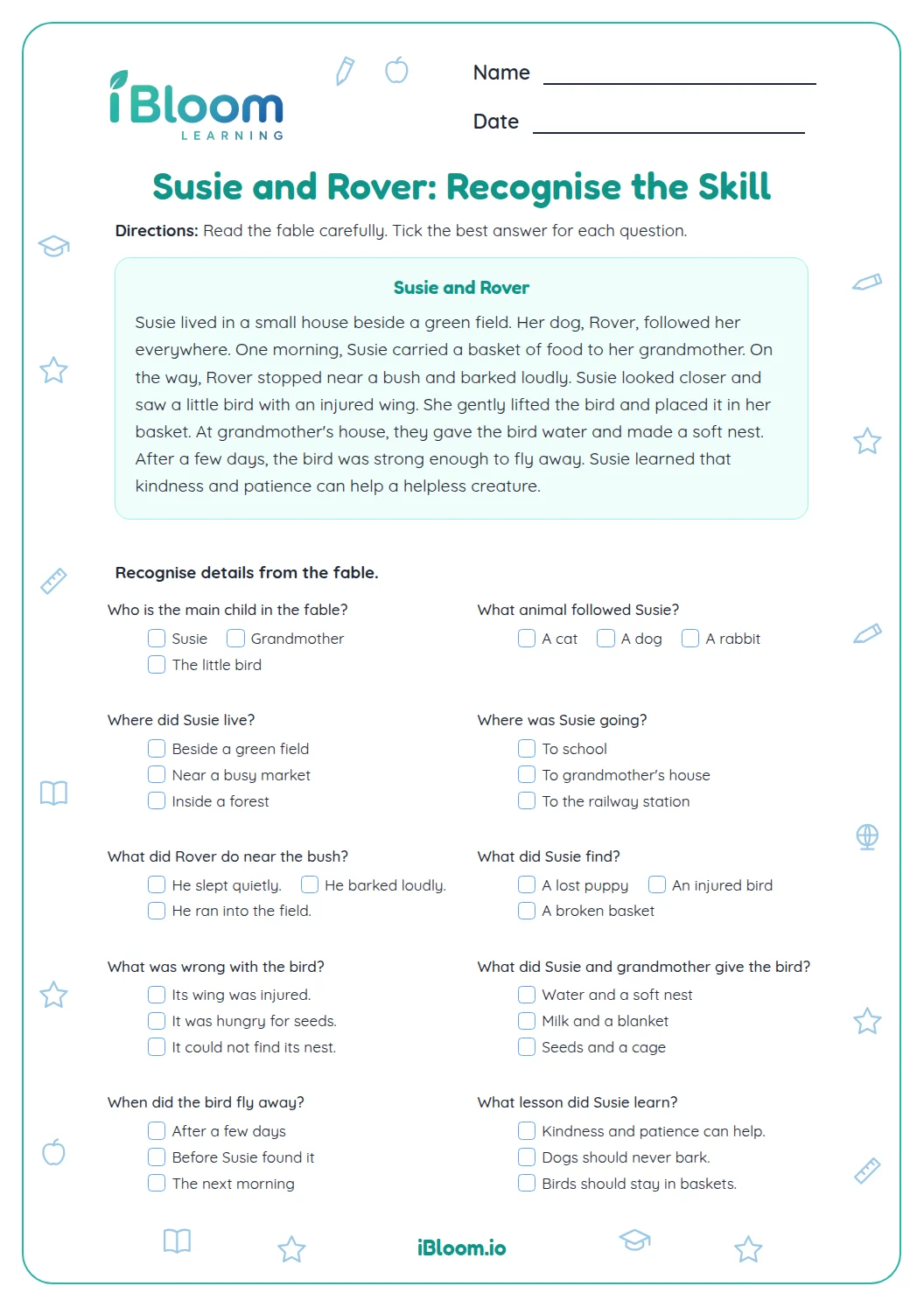 Stories Kids Fables: Susie And Rover — Recognise the SkillRecognise the Skill for stories kids fables: susie and rover in Class 5. Read a short fable about Susie and Rover, then recognise its characters, setting, events, feelings, and lesson.Class 5Free PDF preview
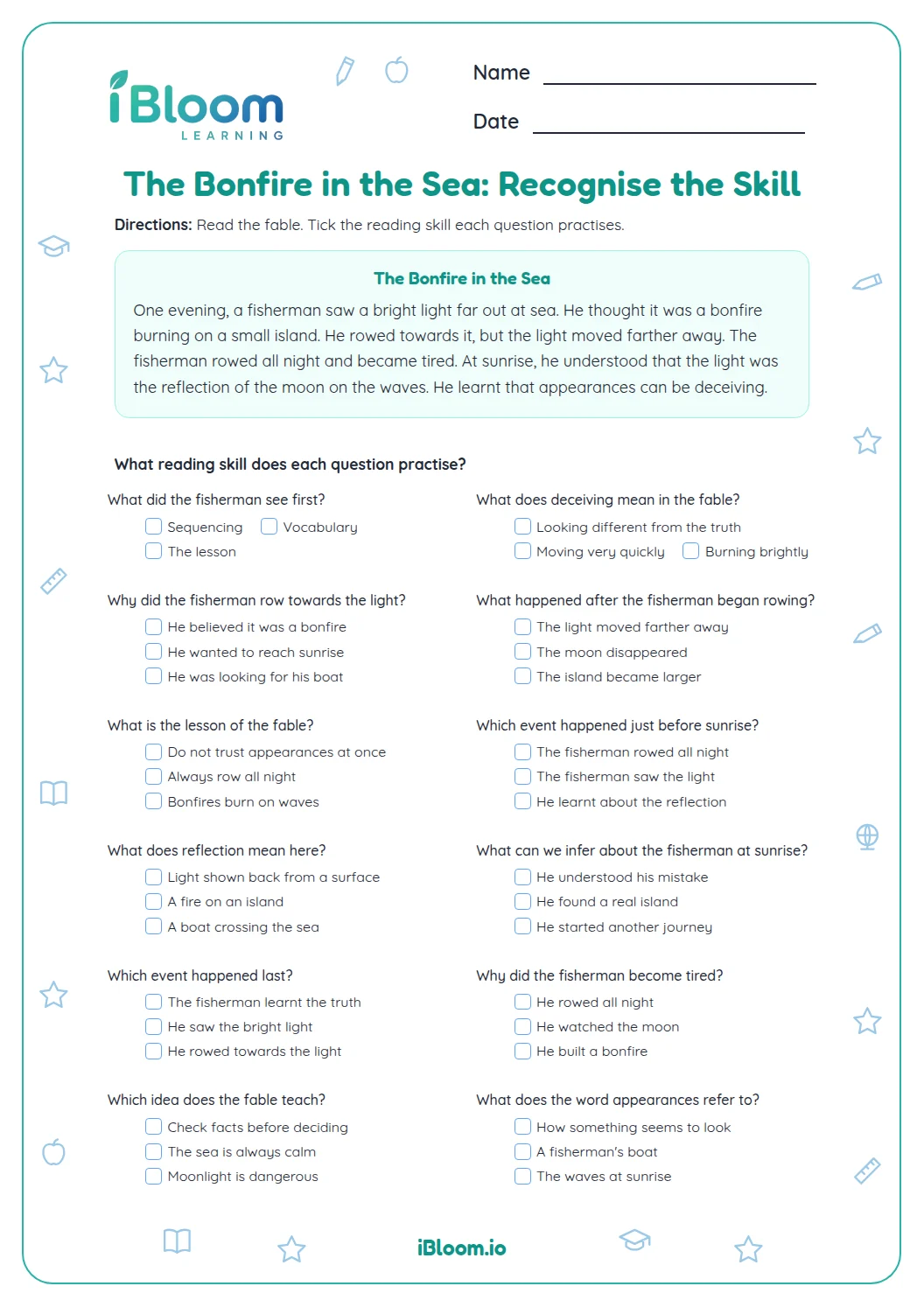 Stories Kids Fables: The Bonfire In The Sea — Recognise the SkillRecognise the Skill for stories kids fables: the bonfire in the sea in Class 5. Read the fable and identify whether each question practises sequencing, inference, vocabulary, or the lesson.Class 5Free PDF preview
 Stories Kids Fables: The Fairy Tree — Recognise the SkillRecognise the Skill for stories kids fables: the fairy tree in Class 5. Read a short fable, then choose answers about its plot, characters, vocabulary, evidence, and message.Class 5Free PDF preview
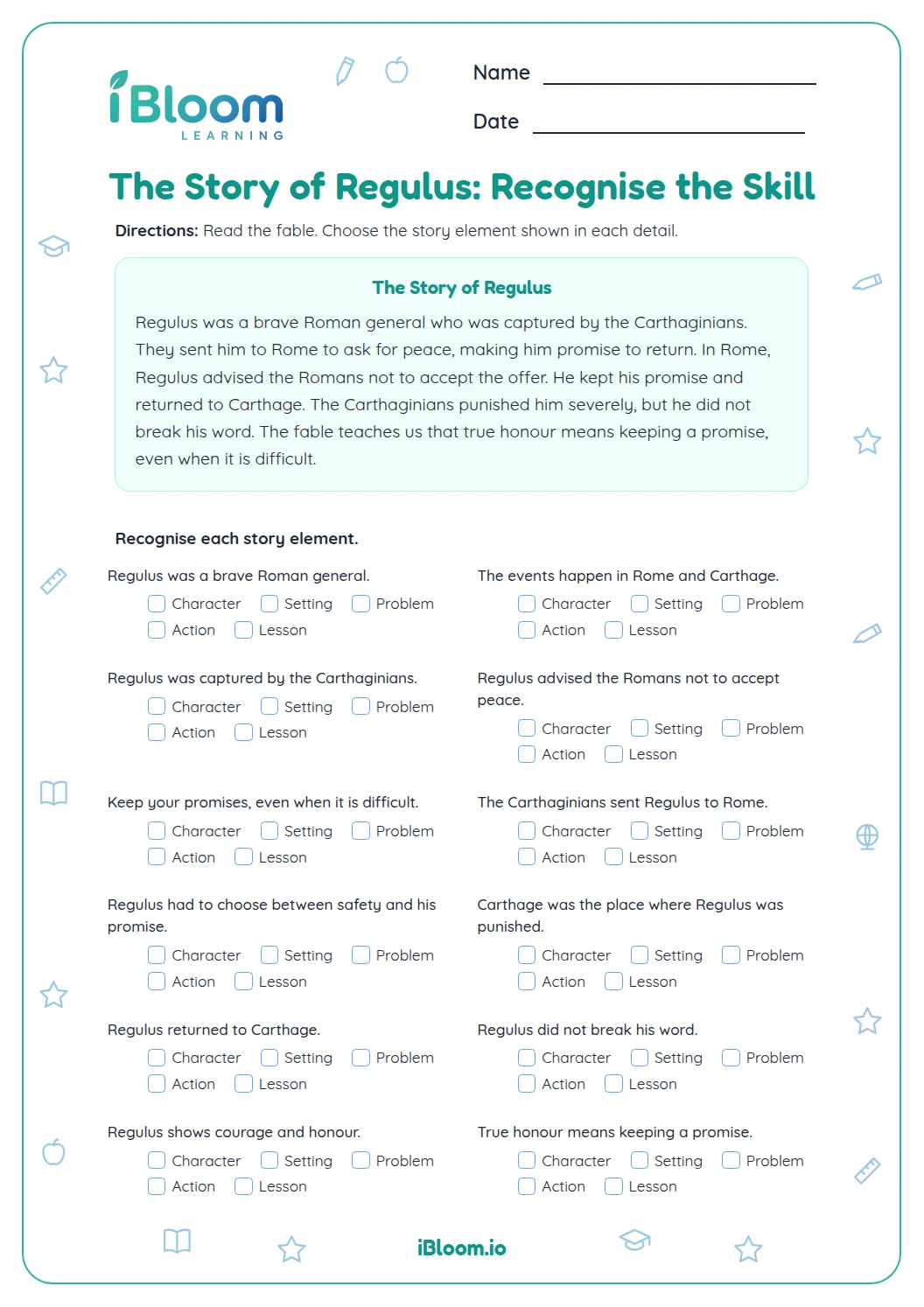 Stories Kids Fables: The Story Of Regulus — Recognise the SkillRecognise the Skill for stories kids fables: the story of regulus in Class 5. Read the short fable and recognise whether each detail shows a character, setting, problem, action, or lesson.Class 5Free PDF preview
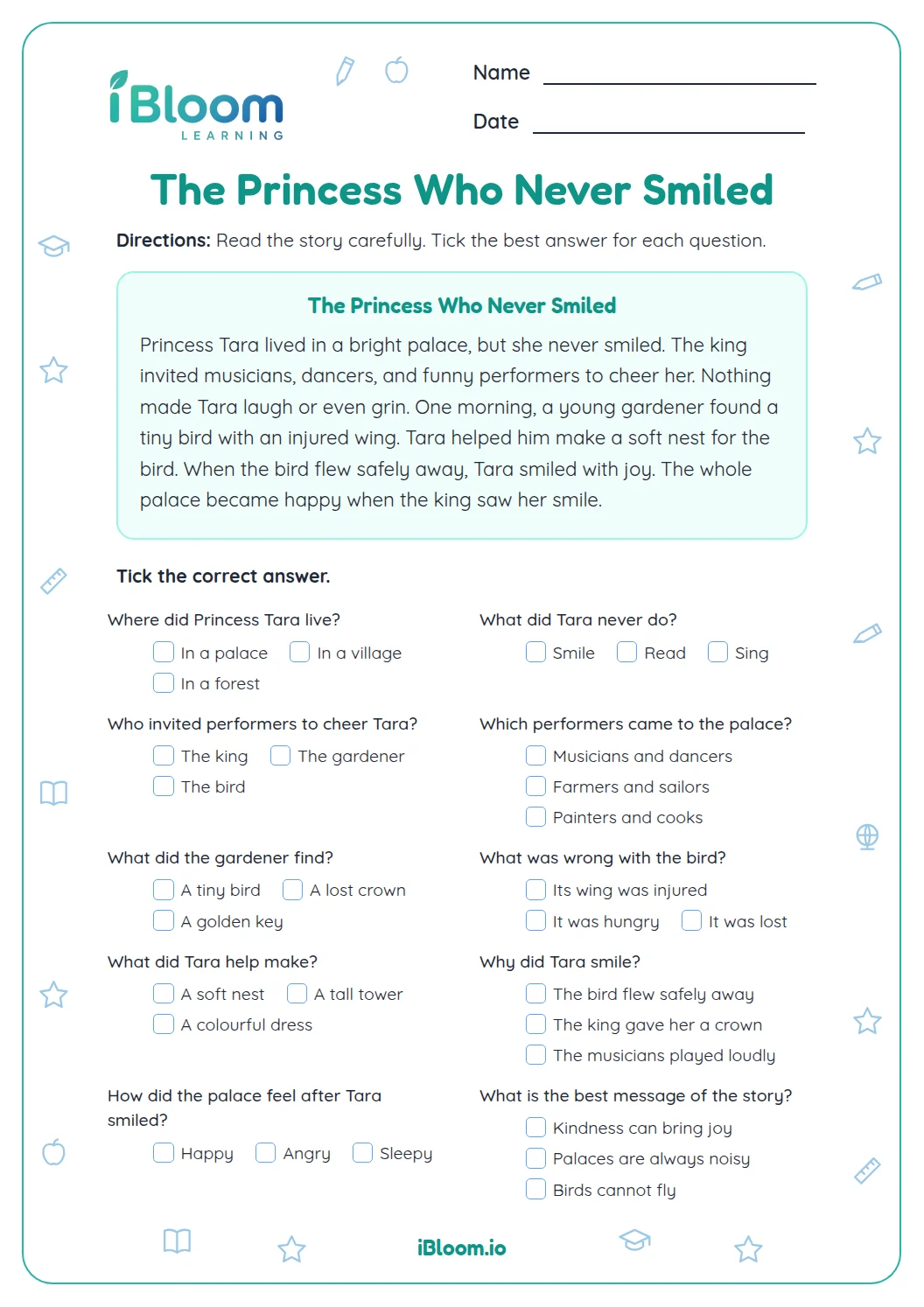 The Princess Who Never Smiled — Recognise the SkillRecognise the Skill for the princess who never smiled in Class 5. Read the short story, then recognise and choose the correct details, characters, actions, and message.Class 5Free PDF preview
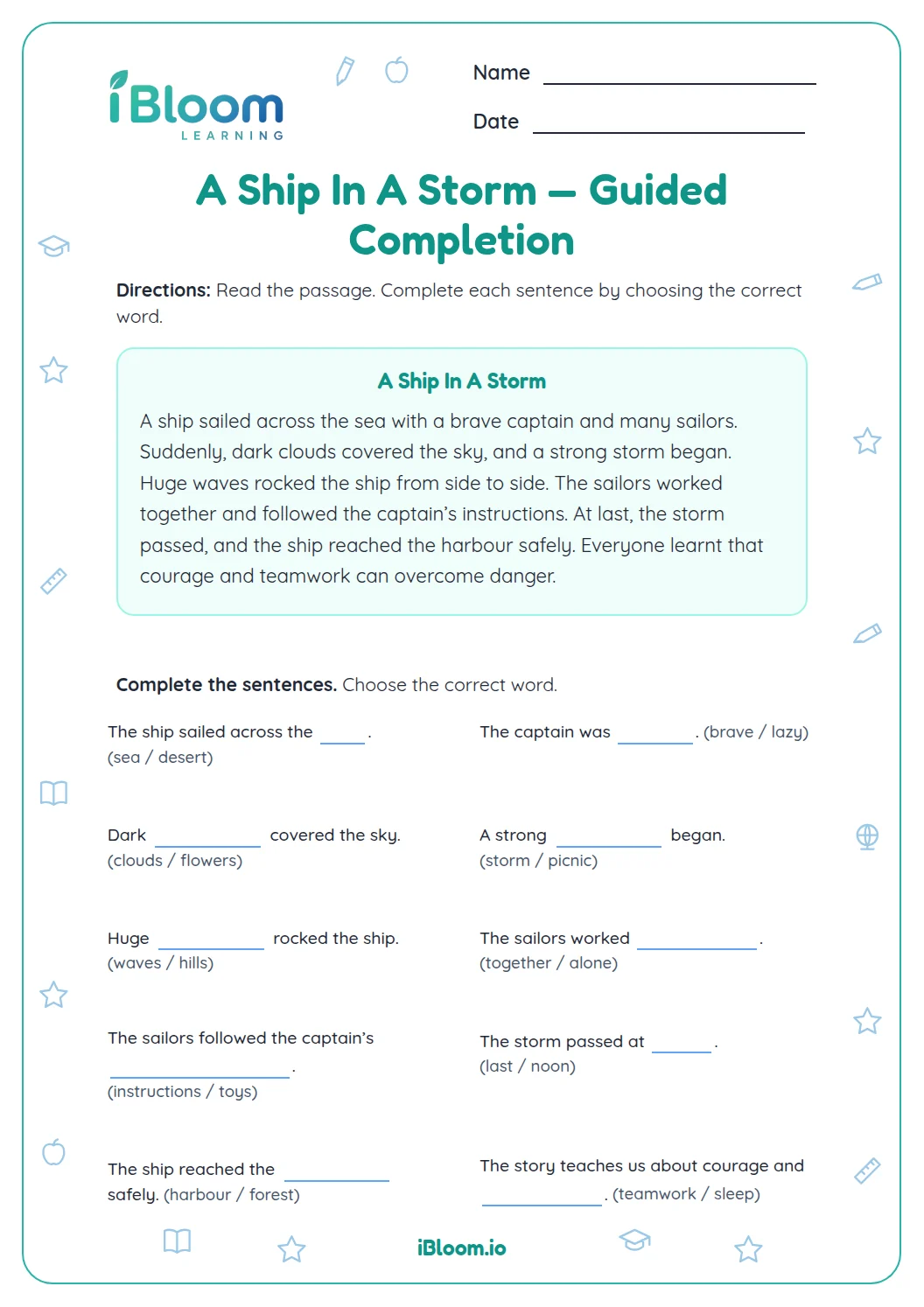 Stories Kids Fables: A Ship In A Storm — Guided CompletionGuided Completion for stories kids fables: a ship in a storm in Class 5. Read the short fable, then complete each sentence with the correct word from the choices.Class 5Free PDF preview
 Stories Kids Fables: Bruce And The Spider — Guided CompletionGuided Completion for stories kids fables: bruce and the spider in Class 5. Read a short retelling, then complete guided sentences about Bruce, the spider, the cave, and the moral.Class 5Free PDF preview
 Stories Kids Fables: Harry And Annie — Guided CompletionGuided Completion for stories kids fables: harry and annie in Class 5. Read a short fable about Harry and Annie, then use the word choices and clues to complete its key ideas.Class 5Free PDF preview
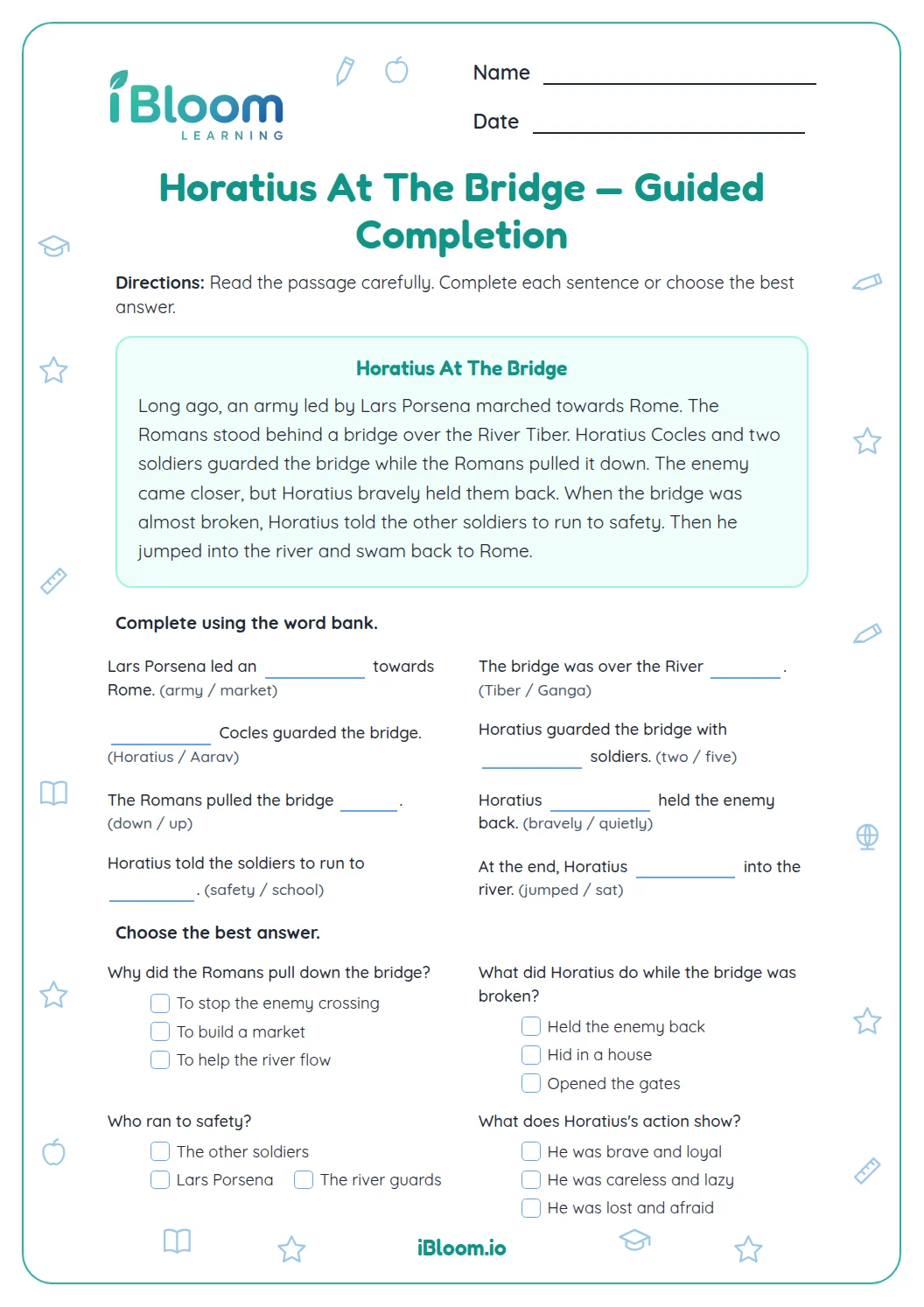 Stories Kids Fables: Horatius At The Bridge — Guided CompletionGuided Completion for stories kids fables: horatius at the bridge in Class 5. Read a short retelling, then complete key details and check understanding of Horatius At The Bridge.Class 5Free PDF preview
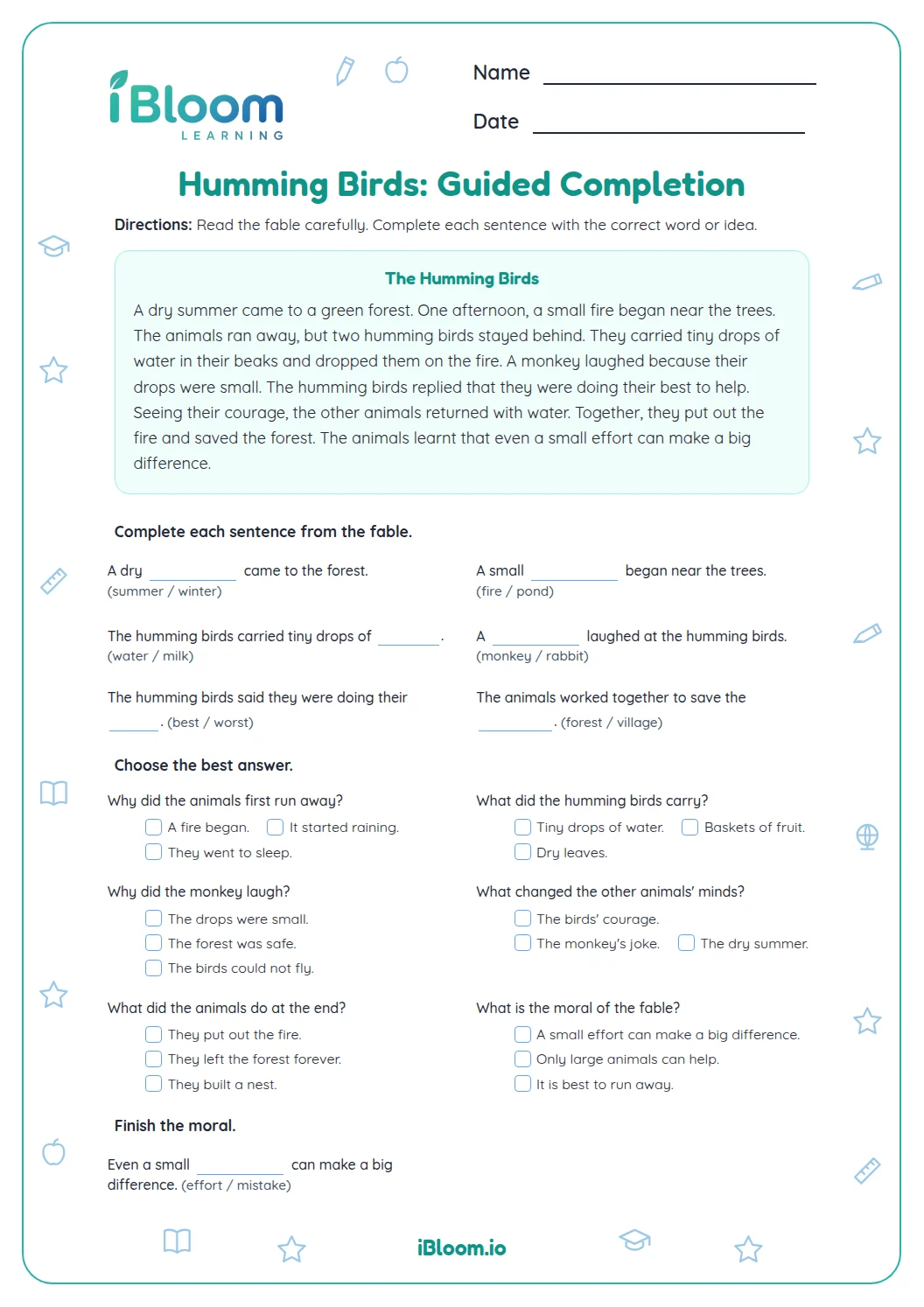 Stories Kids Fables: Humming Birds — Guided CompletionGuided Completion for stories kids fables: humming birds in Class 5. Read the short fable, then complete guided blanks and choose answers using details from the text.Class 5Free PDF preview
Practice that builds confidence
Reading skills in these fables
These Class 5 reading comprehension worksheets help children read longer stories, fables, folk tales and moral narratives with attention to plot, setting, character choices and the lesson behind the text. Children practise finding evidence, explaining motives, sequencing events and answering in complete sentences.
The printable activities include passages such as Sennin The Hermit, The Bonfire In The Sea, Bruce And The Spider, A Ship In A Storm, Little Red Riding Hood, Horatius At The Bridge and The Story Of Regulus, along with varied questions that build careful reading rather than quick guessing.
Children move beyond recalling “what happened” to explaining why it happened. In stories like I Will Think Of It, The Princess Who Never Smiled and Susie And Rover, they look at choices, feelings and consequences. In adventure or courage-based passages such as A Ship In A Storm, Horatius At The Bridge and The Story Of Regulus, they practise identifying conflict, turning points and resolution.

How the collection progresses
The worksheets mix familiar tales, moral stories and imaginative pieces: Jaden And The Magic Ring, Queen Hulida And The Flax, The Fairy Tree, Humming Birds, Harry And Annie and Little Red Riding Hood. Questions may ask children to sequence events, match meanings, infer a character trait, explain a phrase from the passage, or write a short answer using evidence from the text.
A simple parent routine
Ask your child to read the passage once for enjoyment and a second time with a pencil. After reading, have them underline one sentence that shows the main problem and circle words that reveal mood, such as fear, pride, kindness or surprise. Before writing answers, let them say the answer aloud with “I know this because…” to encourage evidence-based thinking.

Classroom use for teachers
Teachers can use these printables for guided reading, independent comprehension practice, literature circles or homework. One group can discuss the moral of Bruce And The Spider while another tracks the problem and solution in The Bonfire In The Sea. The passages also work well for oral reading, vocabulary notebooks and short written responses.
Common mistakes to watch for
Some Class 5 learners retell the whole story instead of answering the exact question. Others write a moral that sounds nice but is not supported by the passage. Watch for vague answers like “he was good” without proof, missed sequence words, and confusion between the narrator’s words and a character’s speech.
Free printable PDF download
Use this Class 5 stories and fables worksheet page to preview the activity, print it, or download it as a PDF for quick practice. It works well for homework, homeschool lessons, tutoring, morning work, revision, and classroom centers.
Answers and answer key support
After the child completes the worksheet independently, parents and teachers can use the answer support or answer key information to check the work, review mistakes, and choose the next practice step.
Why iBloom worksheets help
Each worksheet encourages close reading through a clear passage and focused questions. Children meet varied story types, from heroic and historical tales to animal and fairy-tale style narratives, so they learn to adjust their thinking. A helpful strategy is: read, notice the problem, track the character’s choice, find proof, then write the answer in your own words.
Helpful answers
Frequently asked questions
What kinds of stories are included in this Class 5 collection?
The collection includes fables, folk-style tales, adventure stories, moral narratives and classic story passages such as Bruce And The Spider, Little Red Riding Hood, Horatius At The Bridge and The Story Of Regulus.
What comprehension skills do children practise with these worksheets?
Children practise identifying plot events, describing characters, sequencing, making inferences, using text evidence, understanding vocabulary in context and explaining the lesson or moral of a story.
Are these worksheets suitable for independent reading practice?
Yes. Many Class 5 children can attempt them independently, but a short discussion before and after reading helps improve deeper answers, especially for inference and moral-based questions.
How can I help my child write better answers for fable questions?
Ask your child to begin with a direct answer, then add proof from the passage. A useful sentence frame is: “I think this because the story says…” This reduces guessing and builds evidence-based writing.
Can teachers use these passages for group reading activities?
Yes. Teachers can assign different stories to groups, ask each group to identify the problem, key character choice and lesson, and then compare how different stories teach values such as courage, patience or kindness.
Is this Class 5 stories and fables worksheet free?
Yes. You can preview it for free and use the printable worksheet for home or classroom practice.
Can I download this Class 5 stories and fables worksheet as a PDF?
Yes. Use the worksheet download option to save a printable PDF, or print the worksheet directly from the page.
Does this Class 5 stories and fables worksheet include answers or an answer key?
When the activity has fixed answers, iBloom includes answer support so parents and teachers can check the completed worksheet.