Finding Answers In Stories worksheet for Class 1

Lesson-Wise Builder
A premium AI tool that creates syllabus-aligned questions and worksheets for any lesson in seconds.
A finding answers in stories worksheet asks a Class 1 reader to read a very short story, decide which question can be answered by the words on the page, and point to the detail that proves the choice. The goal is careful reading, not guessing from a picture or choosing the most familiar-looking option.
What this Class 1 activity asks
Each item presents a few simple sentences and two possible questions. The child does not need to answer every question that could be asked about the topic. Instead, the child chooses the question for which the story supplies enough information. This distinction builds literal comprehension: finding information that is stated directly.
The pictures can support meaning, but the written sentences remain the evidence. A useful response sounds like, “I chose the who question because the story names Sara,” or, “I chose the what question because the story says Tina drew a tree.”
Worked examples from the activity
The lost puppy
The visible passage says that Sara found a lost puppy and gave it water. The question asking who helped the puppy can be answered because Sara is named. A question about the puppy’s breed cannot be answered from those sentences. The picture may suggest what the puppy looks like, but it does not establish a breed.
The tree drawing
Another passage says that Tina drew a picture of a tree and used green paint. “What did Tina draw?” matches an exact detail: a tree. “How many strokes did she paint?” does not match because the number of brush strokes is never given. This example shows why a plausible question is not always an answerable question.
The loud noise item
The supplied image begins a third passage called “Loud Noise” and shows the sentence “Emily heard a loud noise.” The rest of that item is outside the captured image, so adults should use the choices visible on the live activity rather than inventing a missing question or answer.
A reliable five-step routine
- Read both sentences. If needed, an adult can read them aloud once while the child follows each word.
- Name the question word. Who asks for a person, what asks for a thing or action, where asks for a place, and when asks for a time.
- Hunt for the matching detail. The child should touch, underline, or repeat the exact words that would answer the question.
- Test both choices. Ask, “Can the story answer this one?” A choice should be rejected when the needed information is absent.
- Explain the decision. One short sentence is enough: “The story says ___, so this question fits.”
Let the question word guide the search
Who questions
A who question needs a person or named character. Names such as Sara, Tina, or Emily are strong clues. Pronouns such as she or he should be connected to the character already named.
What questions
A what question may ask for an object, action, or event. In the tree passage, “a picture of a tree” answers what Tina drew. Children should read the complete phrase rather than stopping at the first noun.
Where and when questions
A where question needs a place, and a when question needs a time. If a passage gives neither, those questions are not answerable even if the child can imagine a likely place or time.
Why and how questions
Why and how often require a reason or a process. Class 1 readers can learn to say, “The story does not tell us why,” when no reason is stated. Recognising missing information is a genuine comprehension skill.
Evidence is different from a guess
Pictures and background knowledge help a child understand a scene, but an answer should be checked against the words. A child may know that puppies have breeds, painters use many brush strokes, or loud noises can come from televisions. None of those ideas becomes a story detail unless the passage states it.
Teach the child to separate three possibilities: the text says it, the picture suggests it, or I already know it. For this activity, the strongest choice is the one supported by the text. This habit prepares the learner for later work with key details, inference, and text evidence.
Parent guidance: prompt without taking over
Keep home practice brief. Read one item together, then let the child try the next item independently. If the child guesses, avoid saying the correct choice immediately. Ask, “Which words would answer that question?” or “Does the story tell us that?” These prompts return attention to the passage.
- Let a multilingual child explain the evidence in the strongest language first, then repeat the key English sentence.
- Praise the act of pointing to evidence, even when the first choice is wrong.
- Correct one thinking step at a time: question word, rereading, or checking the detail.
- Stop after a few accurate explanations rather than extending practice until attention fades.
Teacher and tutor use
This activity can serve as a guided-reading warm-up, a small-group check, or a short intervention task. Model one example as a think-aloud: identify the question word, find the relevant sentence, and reject the option for which information is missing. Then listen to how learners explain their own choices.
A correct click alone does not show which strategy the child used. Ask the learner to point to the proof. If reading the words is difficult but oral comprehension is sound, support decoding separately. If the child reads accurately but repeatedly chooses unsupported questions, reteach answerability and question words.
Common mistakes and precise fixes
- Choosing from the picture alone: cover the picture briefly and reread the sentences.
- Ignoring who or what: circle the question word before looking at the choices.
- Using outside knowledge: ask whether the detail is stated, suggested, or simply known already.
- Remembering only the last sentence: reread both sentences and retell them in order.
- Picking the longer choice: test each choice against a specific phrase instead of its length.
- Giving an answer without a reason: use the frame “I know because the story says ___.”
Extra practice that stays close to the skill
- Write two sentences about a pet, then make one answerable question and one question the sentences cannot answer.
- Tell a two-sentence story aloud and ask the child to choose whether who or what would be the more useful question word.
- Sort question cards into “the story tells us” and “the story does not tell us.”
- Ask the child to draw one story detail, then explain whether the proof came from the picture, the words, or both.
- After success with two choices, invite the child to create a third unrelated question and explain why it does not fit.
Related concepts
Finding direct answers connects with identifying characters, actions, objects, settings, and important story details. It also supports asking questions about a story, retelling events, and finding proof in the text. Inference should come later: first make sure the child can retrieve a detail that is stated plainly and can distinguish that detail from a guess.
Frequently asked questions
Should a Class 1 child read the passage alone?
Independent reading is useful when the text is accessible, but an adult may read the sentences aloud if decoding hides the comprehension skill. The child should still choose the question and show the evidence.
Can the picture be used?
Yes, as support for understanding. The final choice should still be verified with the words in the story.
What if both questions sound possible?
Test what information each question requires. Choose the one for which the passage supplies an exact person, object, action, place, time, reason, or process.
What should happen after the child chooses?
Ask for one evidence sentence. A short explanation reveals more about comprehension than completing many items silently.
More practice for this grade
More English Language Arts worksheets
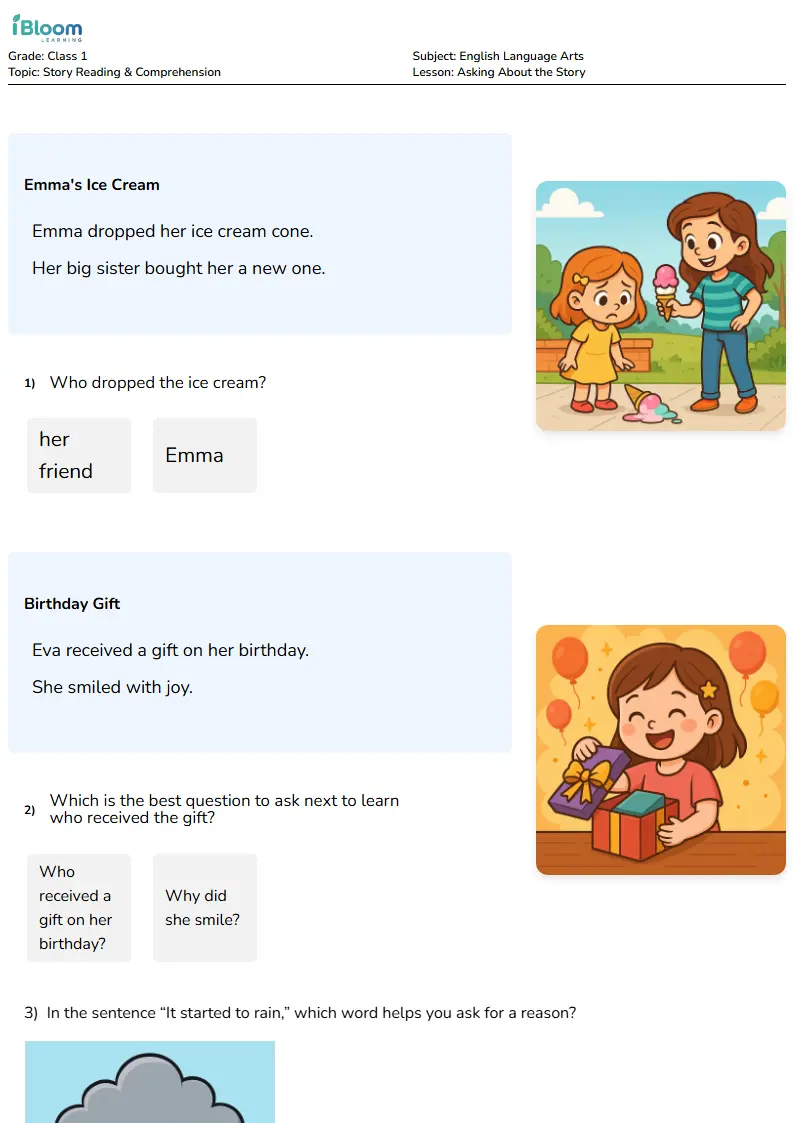
Free Asking About the Story Worksheets for Class 1
Looking for class 1 english language arts help? Download free, interactive asking about the story worksheets. AI-personalized and Common Core-aligned. Practice early literacy with iBloom.
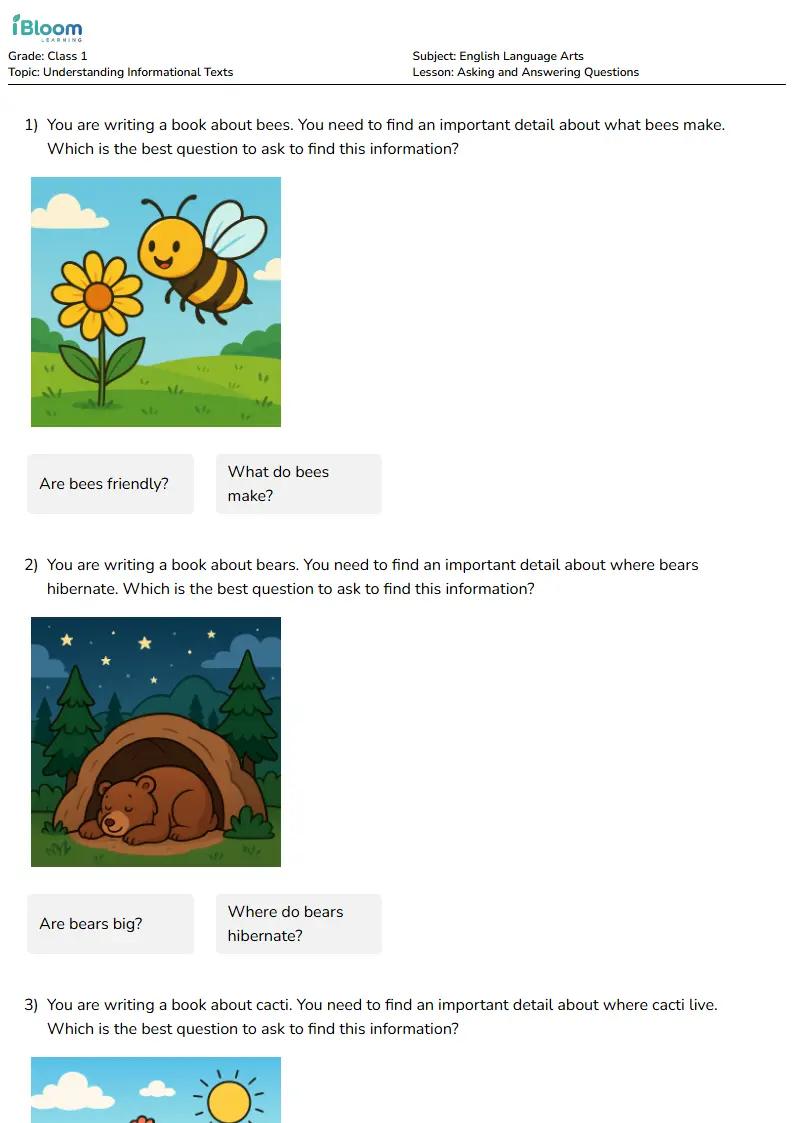
Free Asking and Answering Questions Worksheets for Class 1
Looking for class 1 english language arts help? Download free, interactive asking and answering questions worksheets. AI-personalized and Common Core-aligned. Practice early literacy with iBloom.
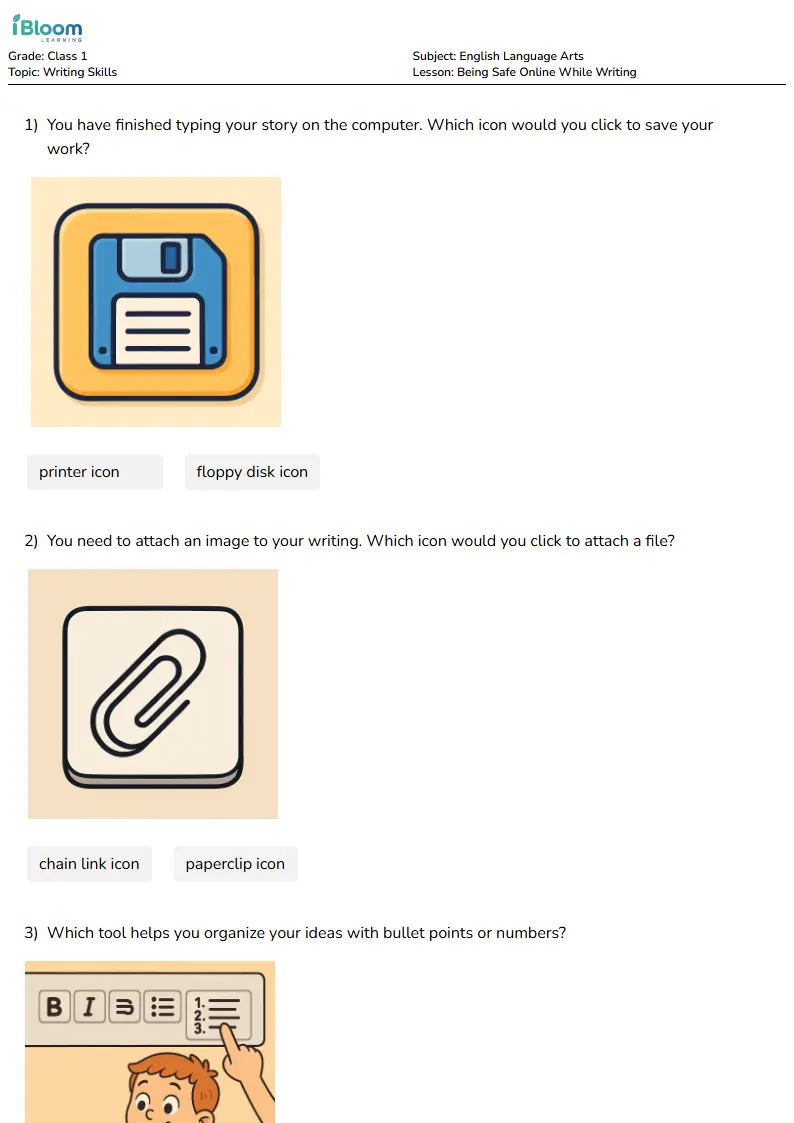
Free Being Safe Online While Writing Worksheets for Class 1
Looking for class 1 english language arts help? Download free, interactive being safe online while writing worksheets. AI-personalized and Common Core-aligned. Practice early literacy with iBloom.
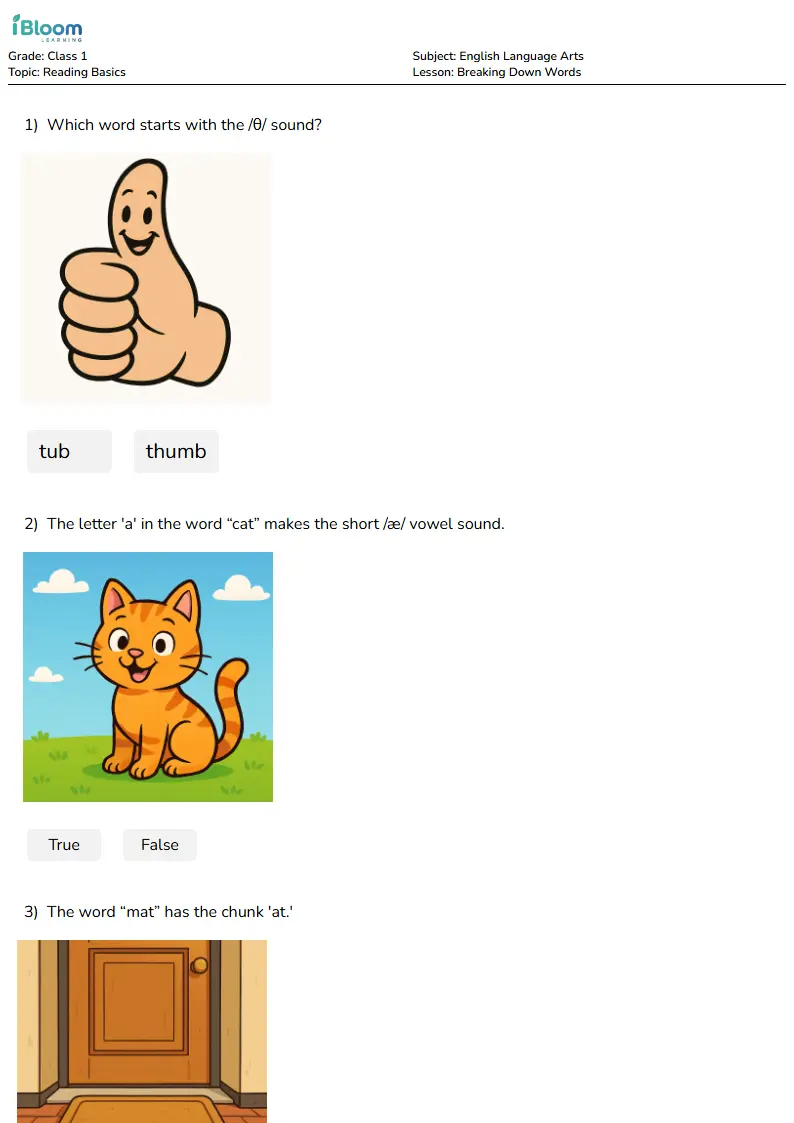
Free Breaking Down Words Worksheets for Class 1
Looking for class 1 english language arts help? Download free, interactive breaking down words worksheets. AI-personalized and Common Core-aligned. Practice early literacy with iBloom.
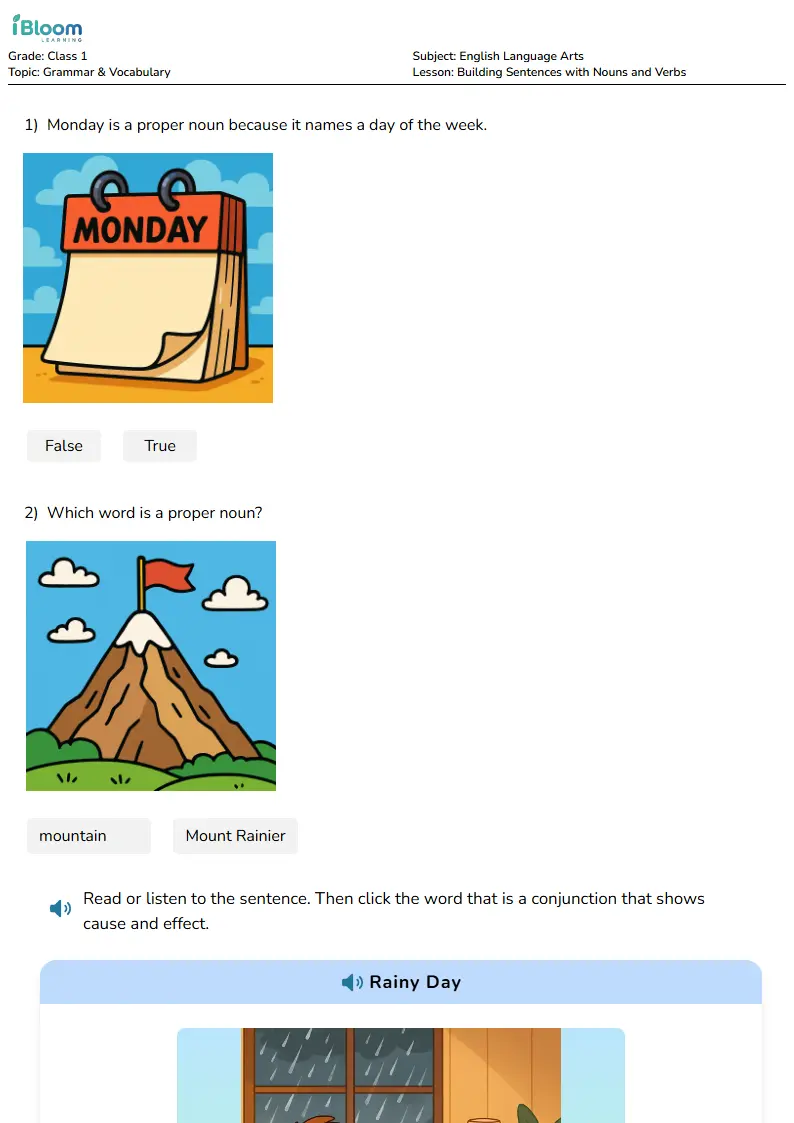
Free Building Sentences with Nouns and Verbs Worksheets for Class 1
Looking for class 1 english language arts help? Download free, interactive building sentences with nouns and verbs worksheets. AI-personalized and Common Core-aligned. Practice early literacy with iBloom.
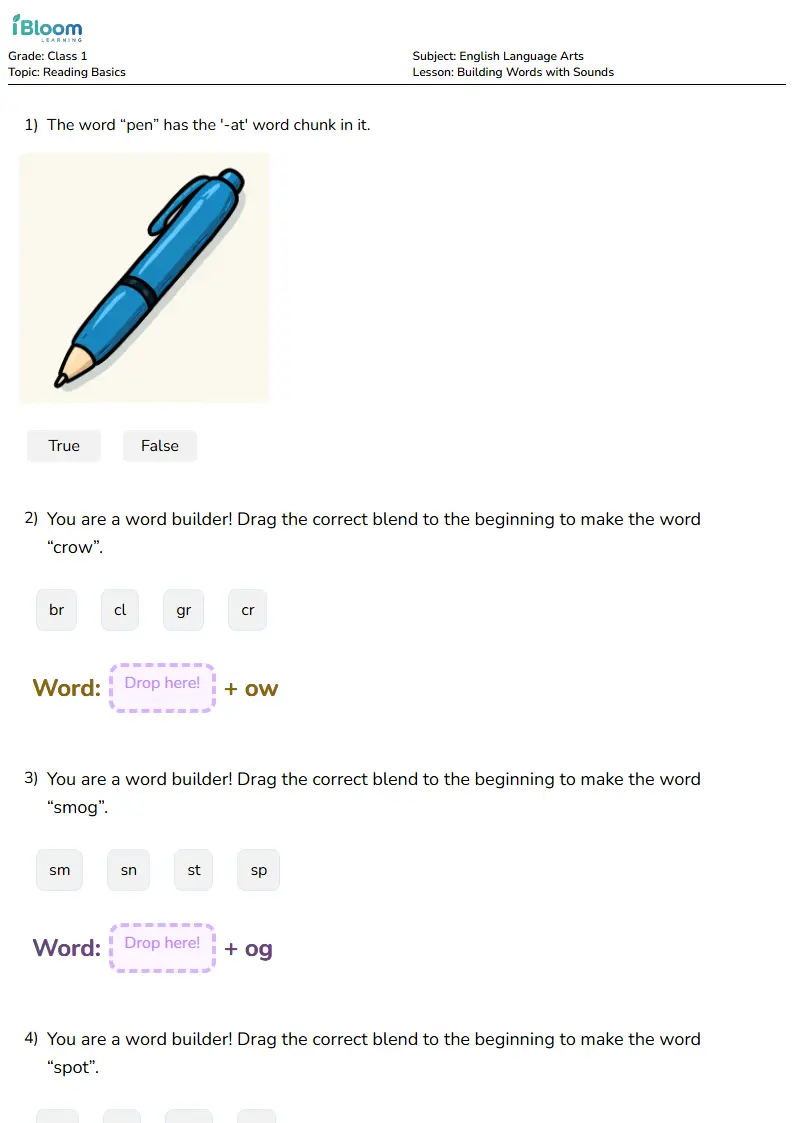
Free Building Words with Sounds Worksheets for Class 1
Looking for class 1 english language arts help? Download free, interactive building words with sounds worksheets. AI-personalized and Common Core-aligned. Practice early literacy with iBloom.
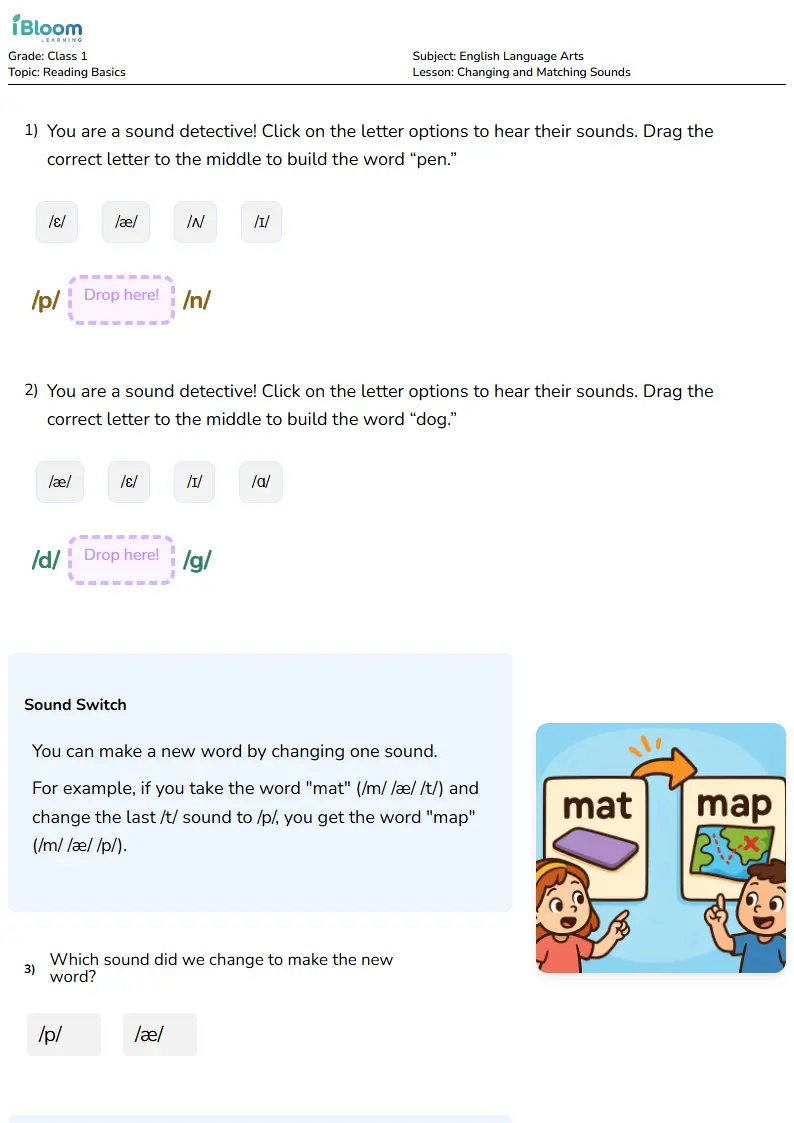
Free Changing and Matching Sounds Worksheets for Class 1
Looking for class 1 english language arts help? Download free, interactive changing and matching sounds worksheets. AI-personalized and Common Core-aligned. Practice early literacy with iBloom.
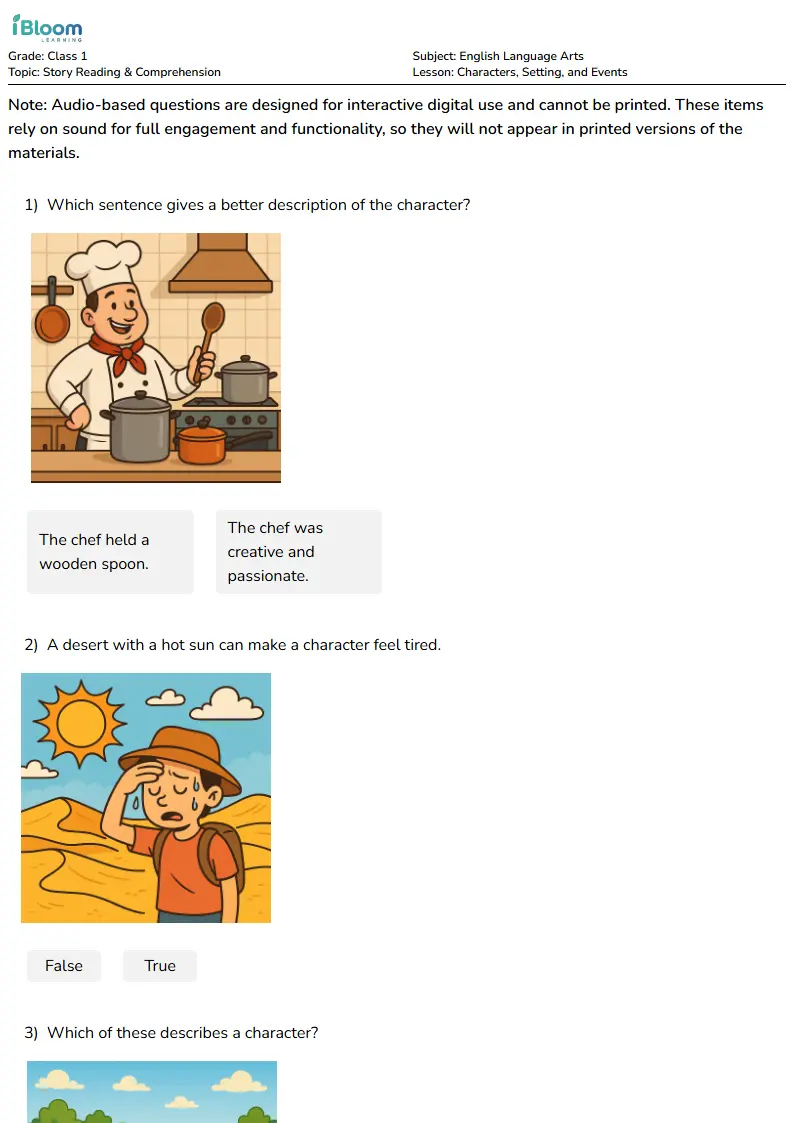
Free Characters, Setting, and Events Worksheets for Class 1
Looking for class 1 english language arts help? Download free, interactive characters, setting, and events worksheets. AI-personalized and Common Core-aligned. Practice early literacy with iBloom.
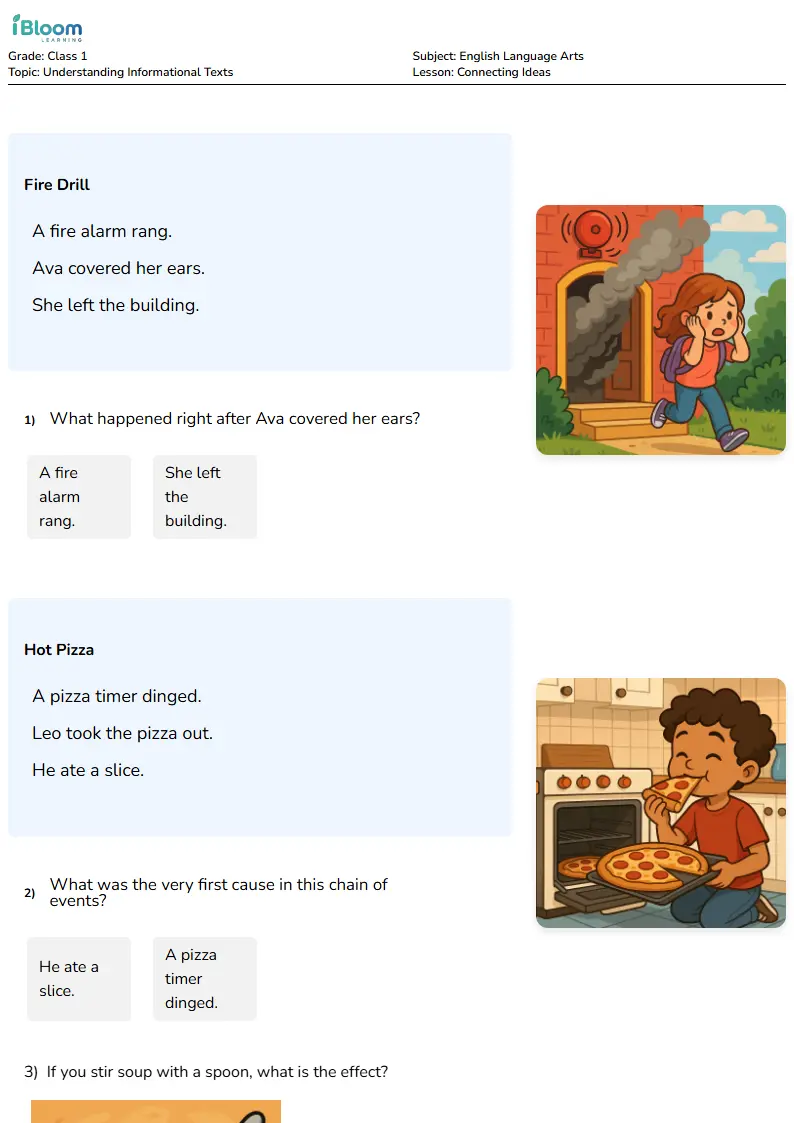
Free Connecting Ideas Worksheets for Class 1
Looking for class 1 english language arts help? Download free, interactive connecting ideas worksheets. AI-personalized and Common Core-aligned. Practice early literacy with iBloom.
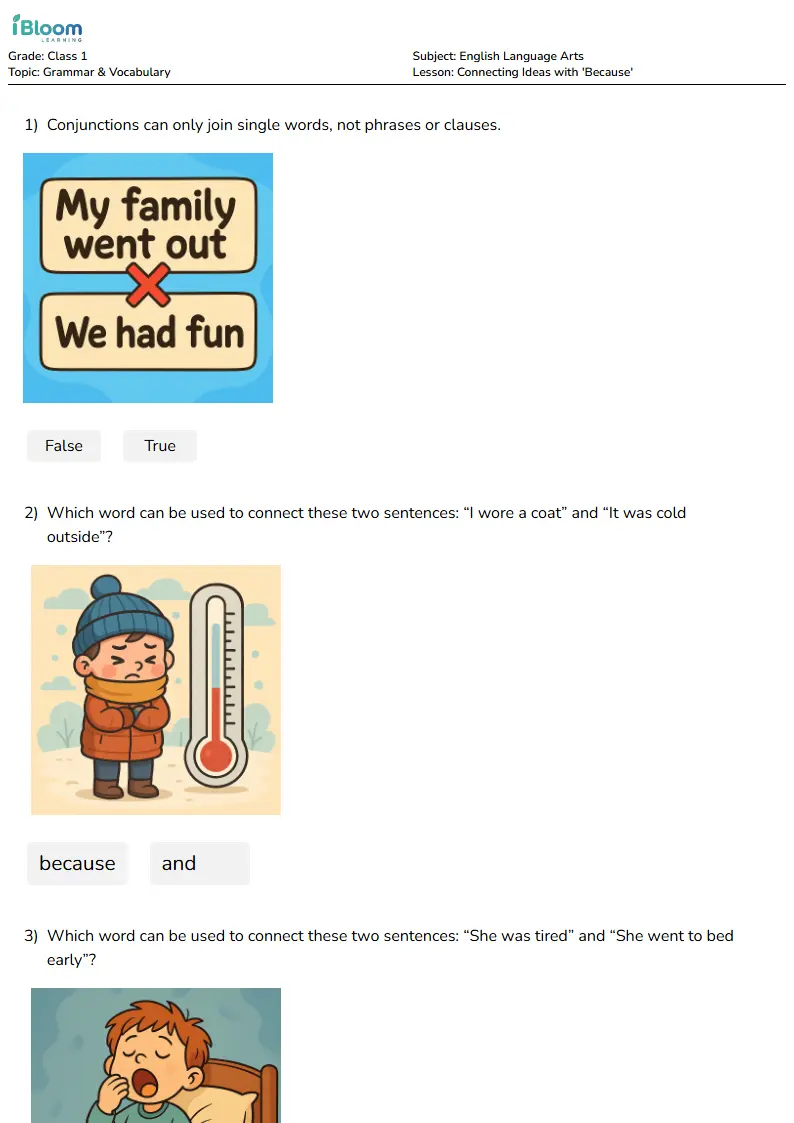
Free Connecting Ideas with 'Because' Worksheets for Class 1
Looking for class 1 english language arts help? Download free, interactive connecting ideas with 'because' worksheets. AI-personalized and Common Core-aligned. Practice early literacy with iBloom.
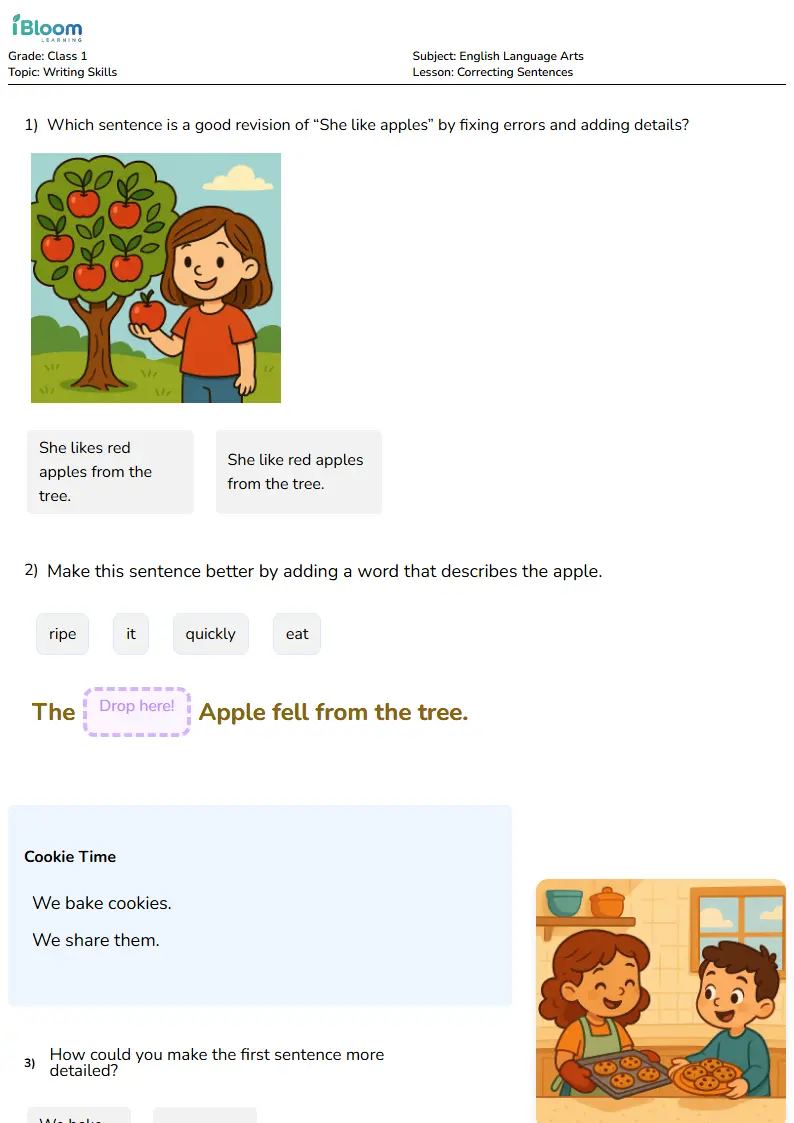
Free Correcting Sentences Worksheets for Class 1
Looking for class 1 english language arts help? Download free, interactive correcting sentences worksheets. AI-personalized and Common Core-aligned. Practice early literacy with iBloom.
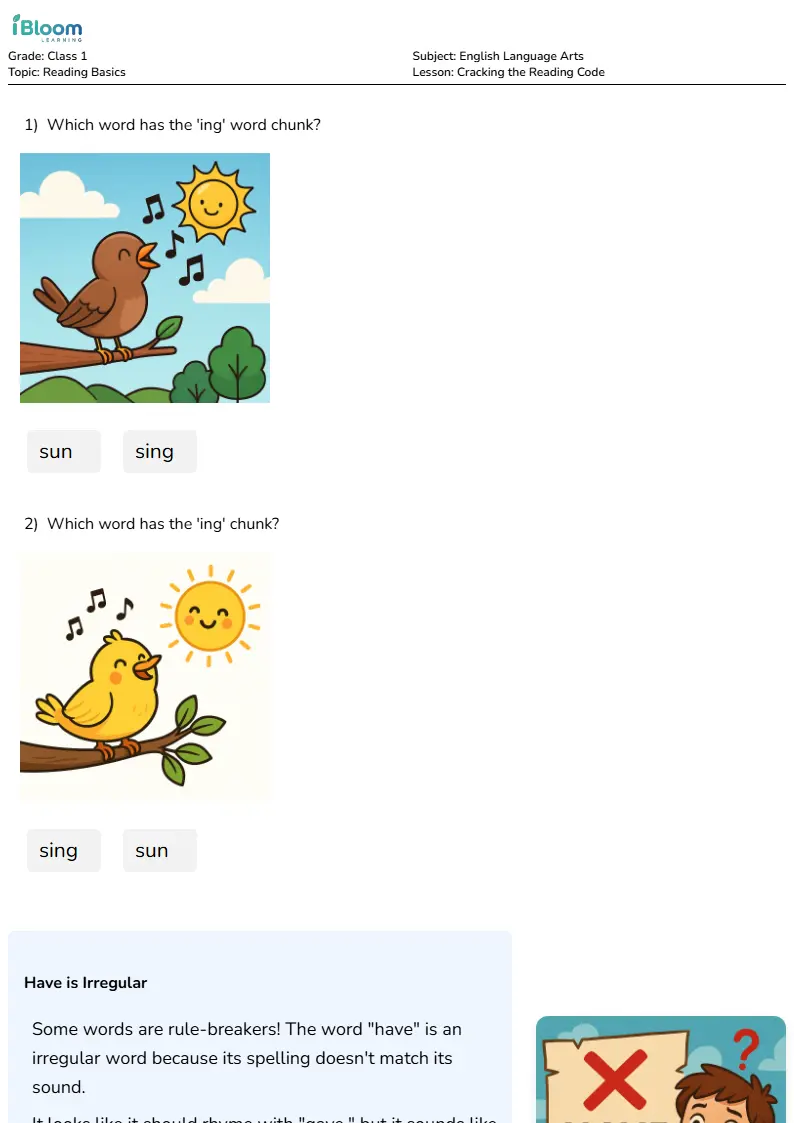
Free Cracking the Reading Code Worksheets for Class 1
Looking for class 1 english language arts help? Download free, interactive cracking the reading code worksheets. AI-personalized and Common Core-aligned. Practice early literacy with iBloom.
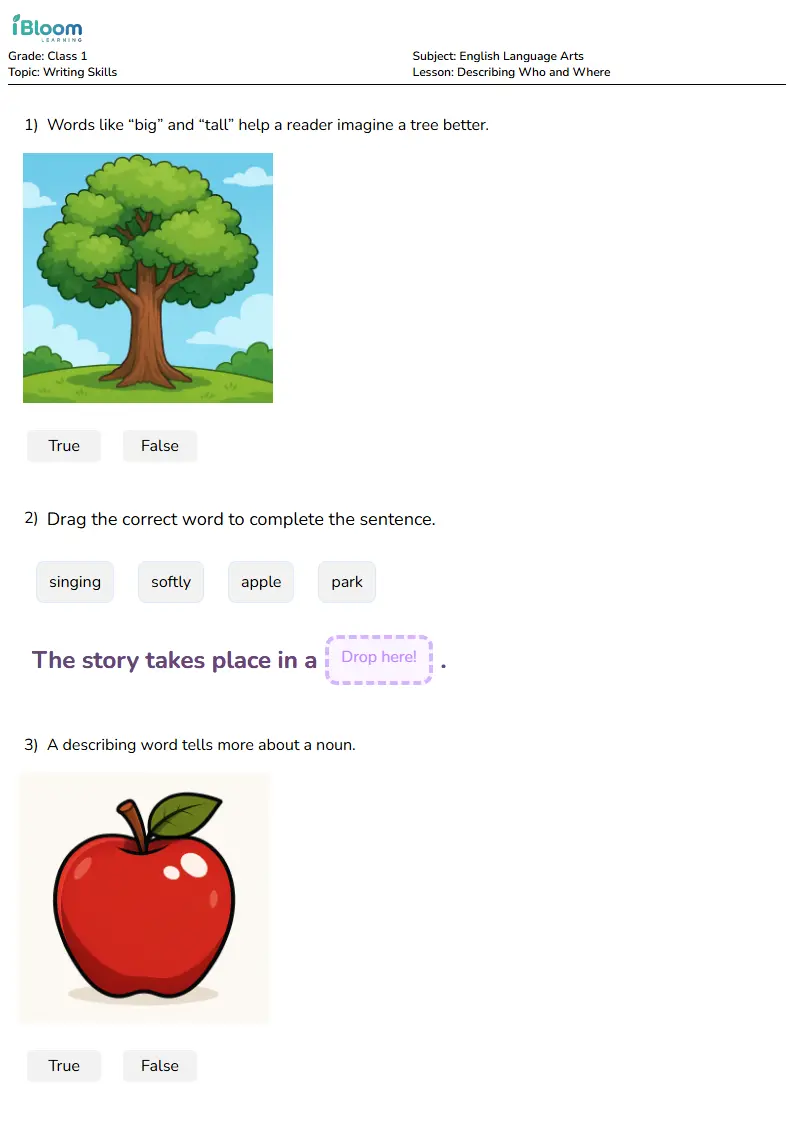
Free Describing Who and Where Worksheets for Class 1
Looking for class 1 english language arts help? Download free, interactive describing who and where worksheets. AI-personalized and Common Core-aligned. Practice early literacy with iBloom.
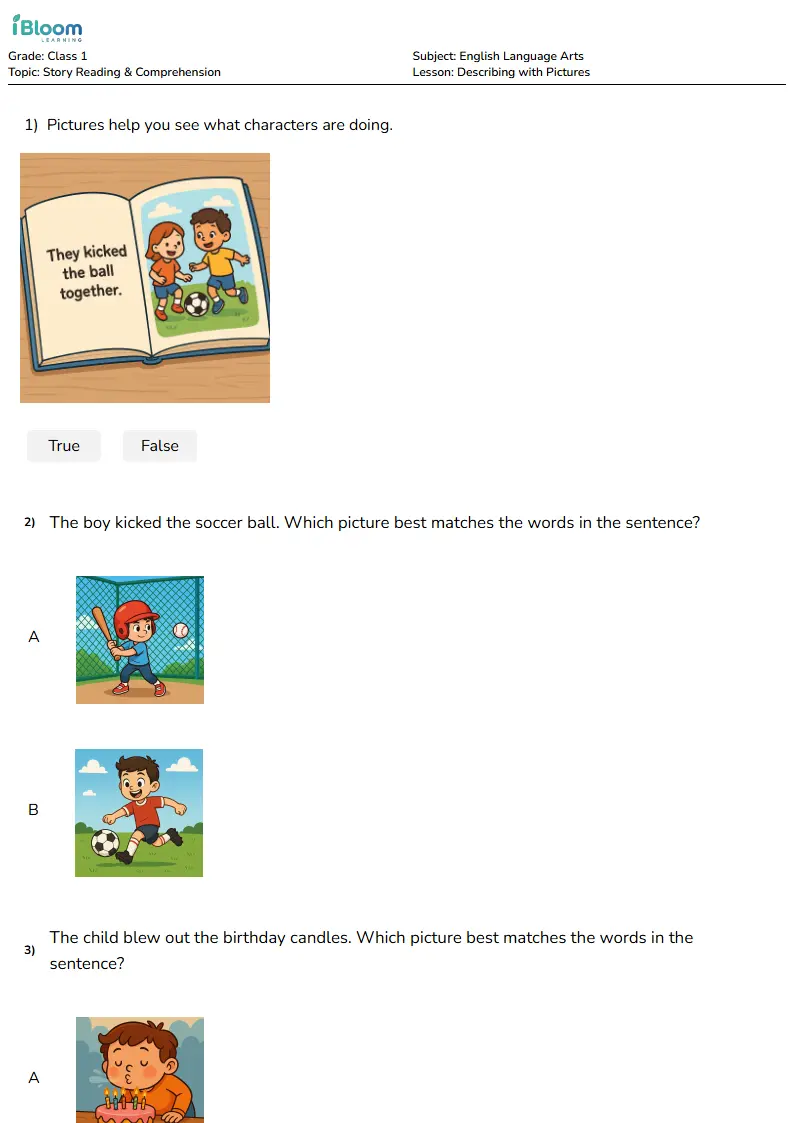
Free Describing with Pictures Worksheets for Class 1
Looking for class 1 english language arts help? Download free, interactive describing with pictures worksheets. AI-personalized and Common Core-aligned. Practice early literacy with iBloom.
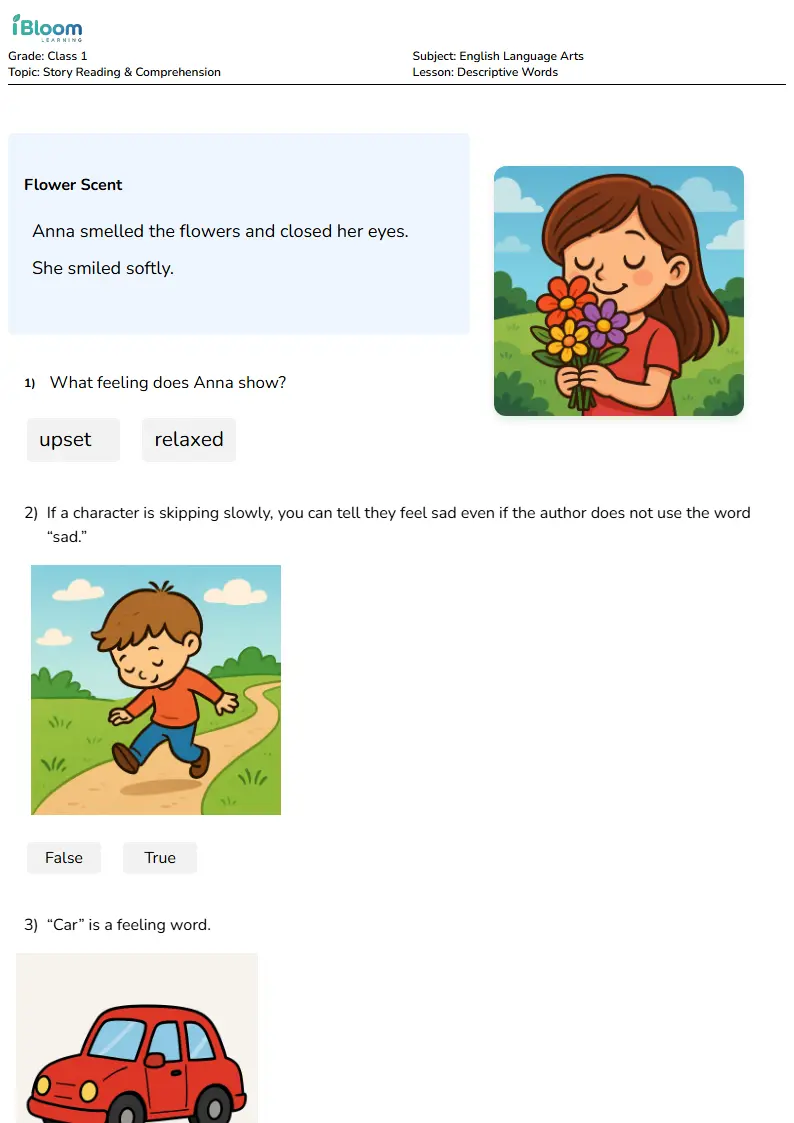
Free Descriptive Words Worksheets for Class 1
Looking for class 1 english language arts help? Download free, interactive descriptive words worksheets. AI-personalized and Common Core-aligned. Practice early literacy with iBloom.
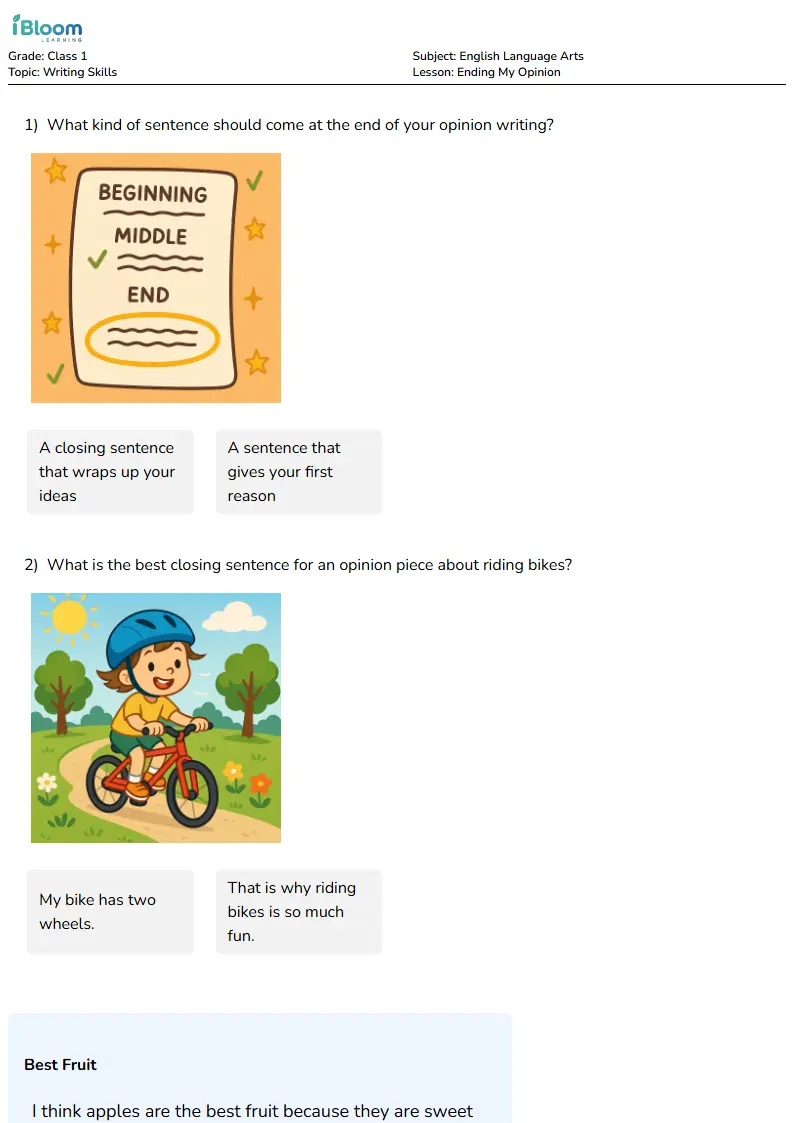
Free Ending My Opinion Worksheets for Class 1
Looking for class 1 english language arts help? Download free, interactive ending my opinion worksheets. AI-personalized and Common Core-aligned. Practice early literacy with iBloom.
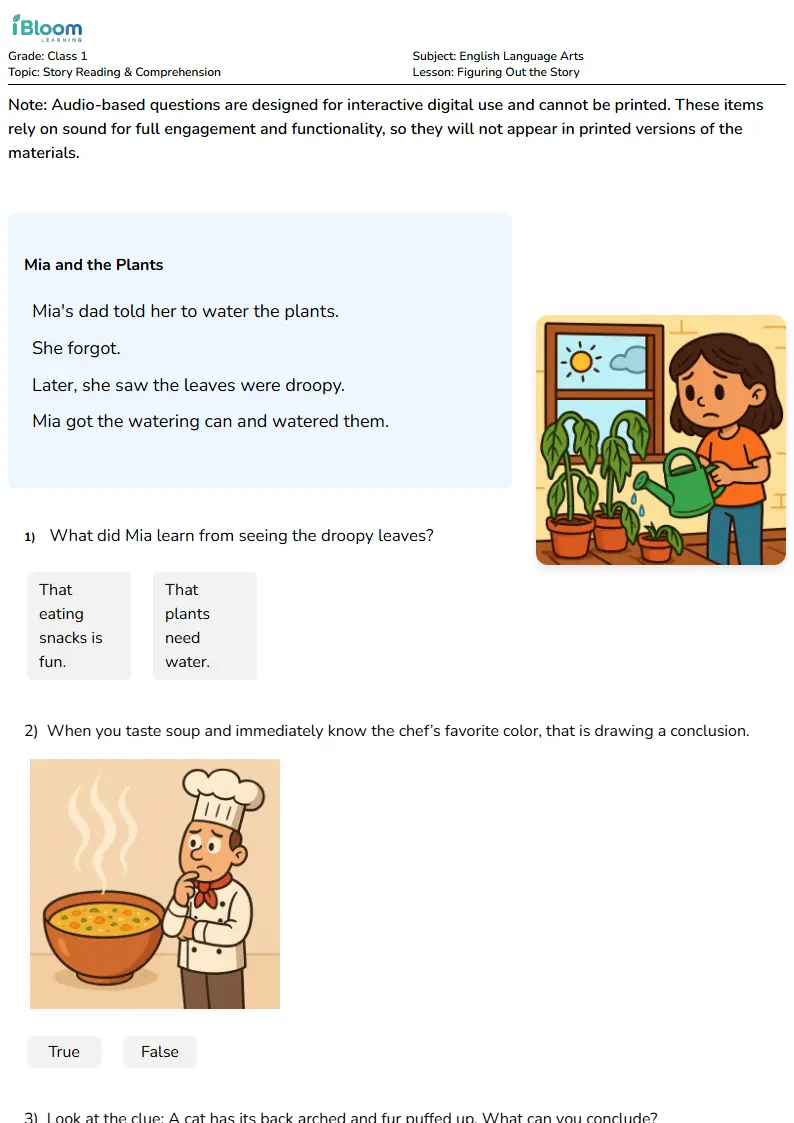
Free Figuring Out the Story Worksheets for Class 1
Looking for class 1 english language arts help? Download free, interactive figuring out the story worksheets. AI-personalized and Common Core-aligned. Practice early literacy with iBloom.
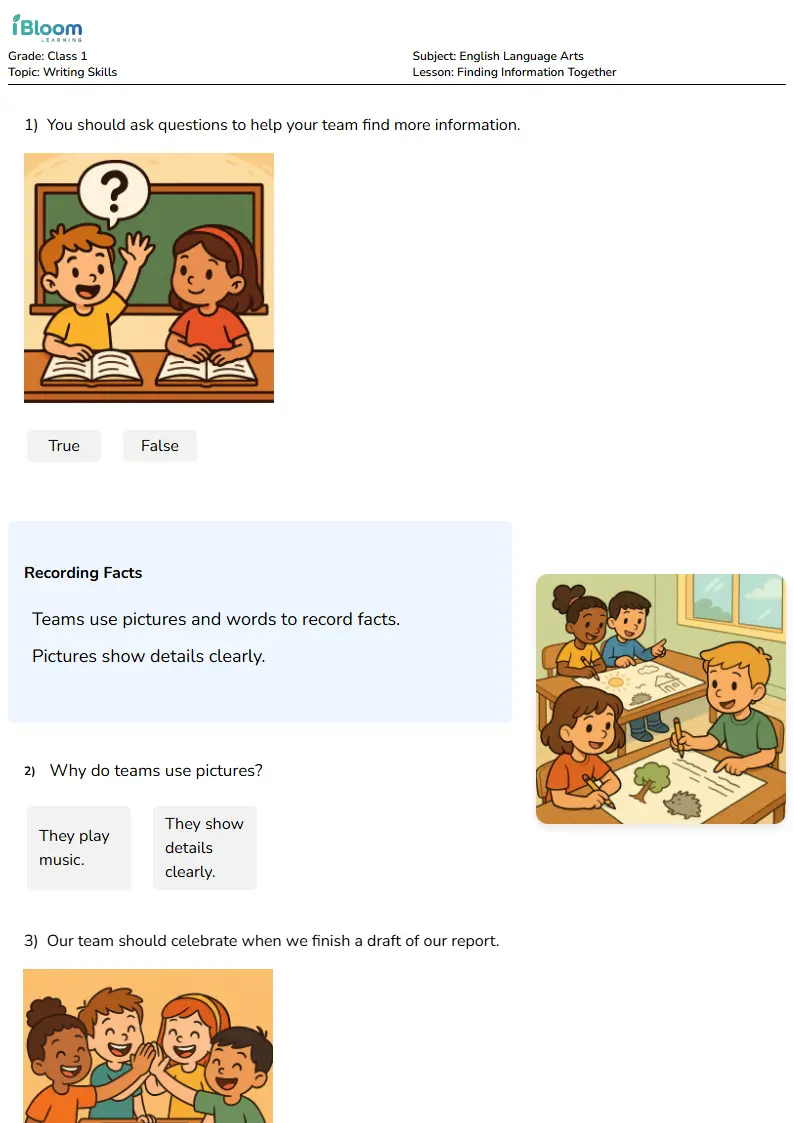
Free Finding Information Together Worksheets for Class 1
Looking for class 1 english language arts help? Download free, interactive finding information together worksheets. AI-personalized and Common Core-aligned. Practice early literacy with iBloom.
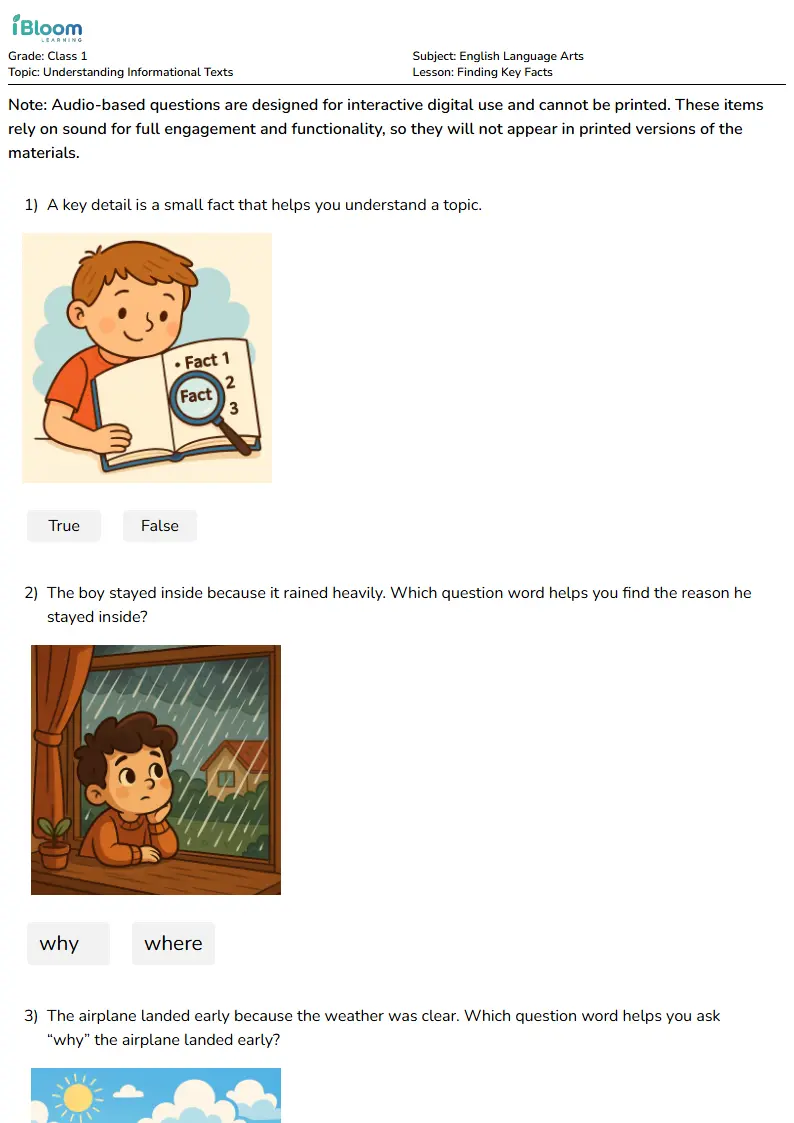
Free Finding Key Facts Worksheets for Class 1
Looking for class 1 english language arts help? Download free, interactive finding key facts worksheets. AI-personalized and Common Core-aligned. Practice early literacy with iBloom.
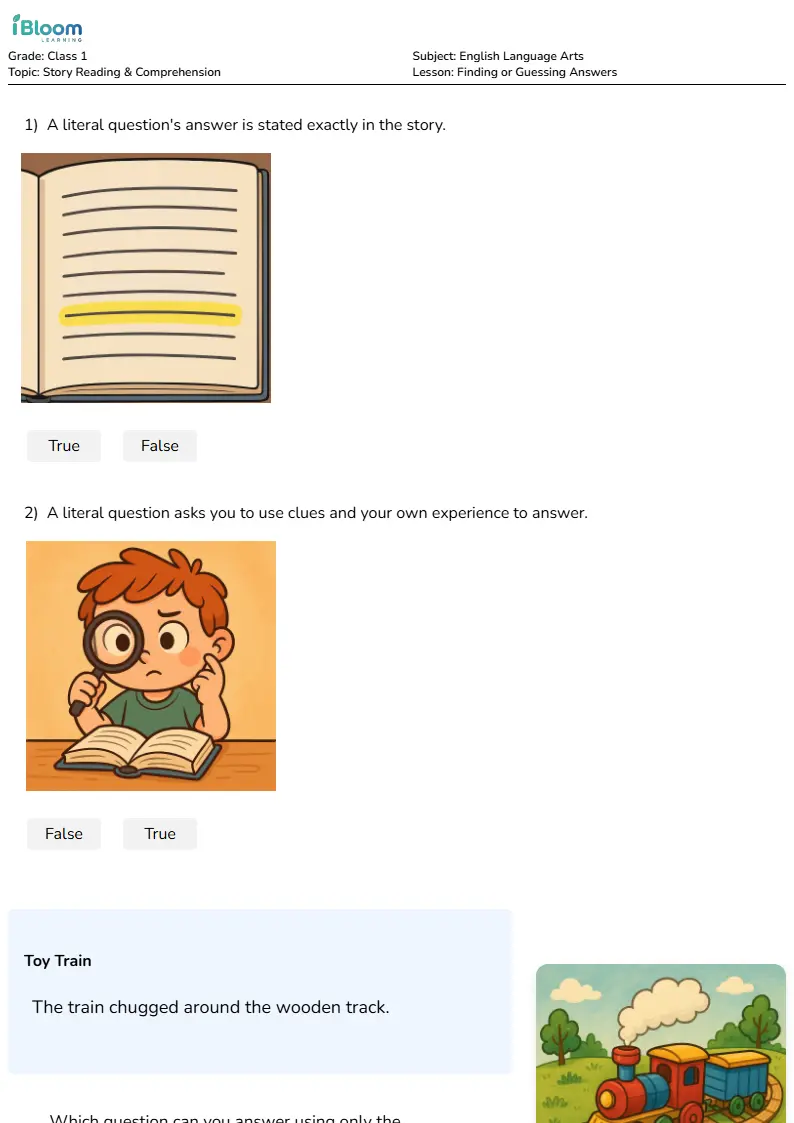
Free Finding or Guessing Answers Worksheets for Class 1
Looking for class 1 english language arts help? Download free, interactive finding or guessing answers worksheets. AI-personalized and Common Core-aligned. Practice early literacy with iBloom.
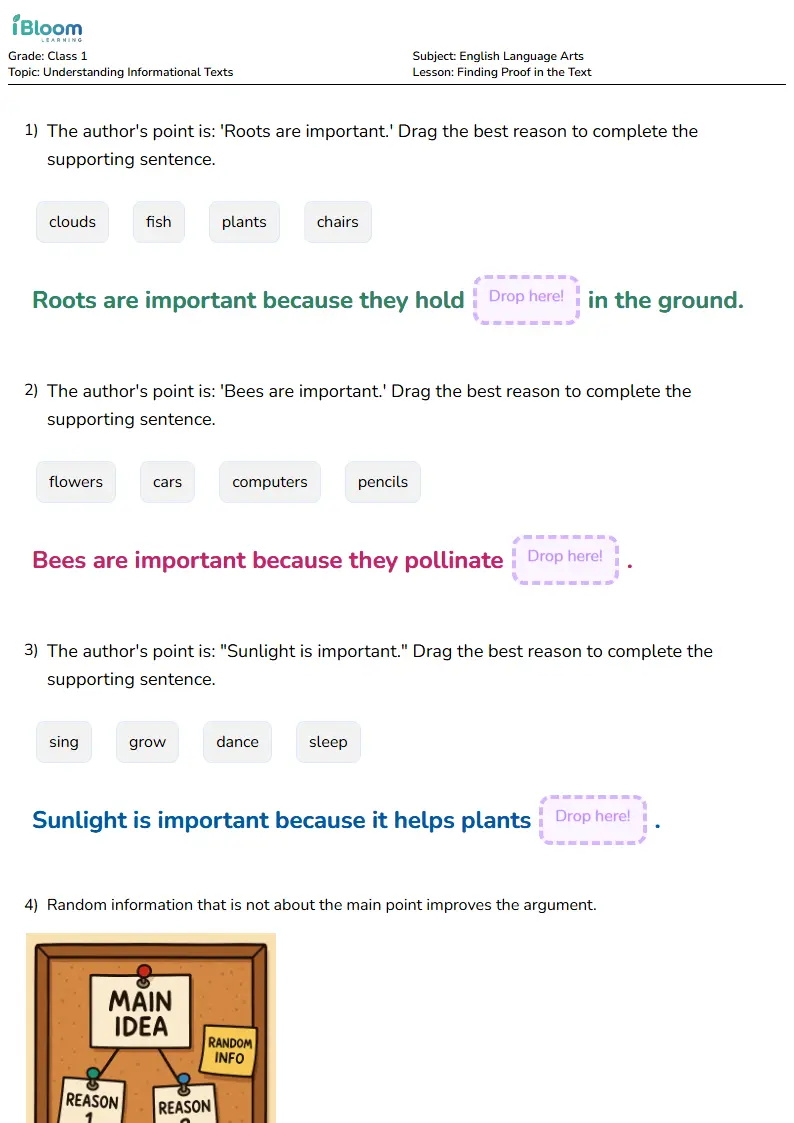
Free Finding Proof in the Text Worksheets for Class 1
Looking for class 1 english language arts help? Download free, interactive finding proof in the text worksheets. AI-personalized and Common Core-aligned. Practice early literacy with iBloom.
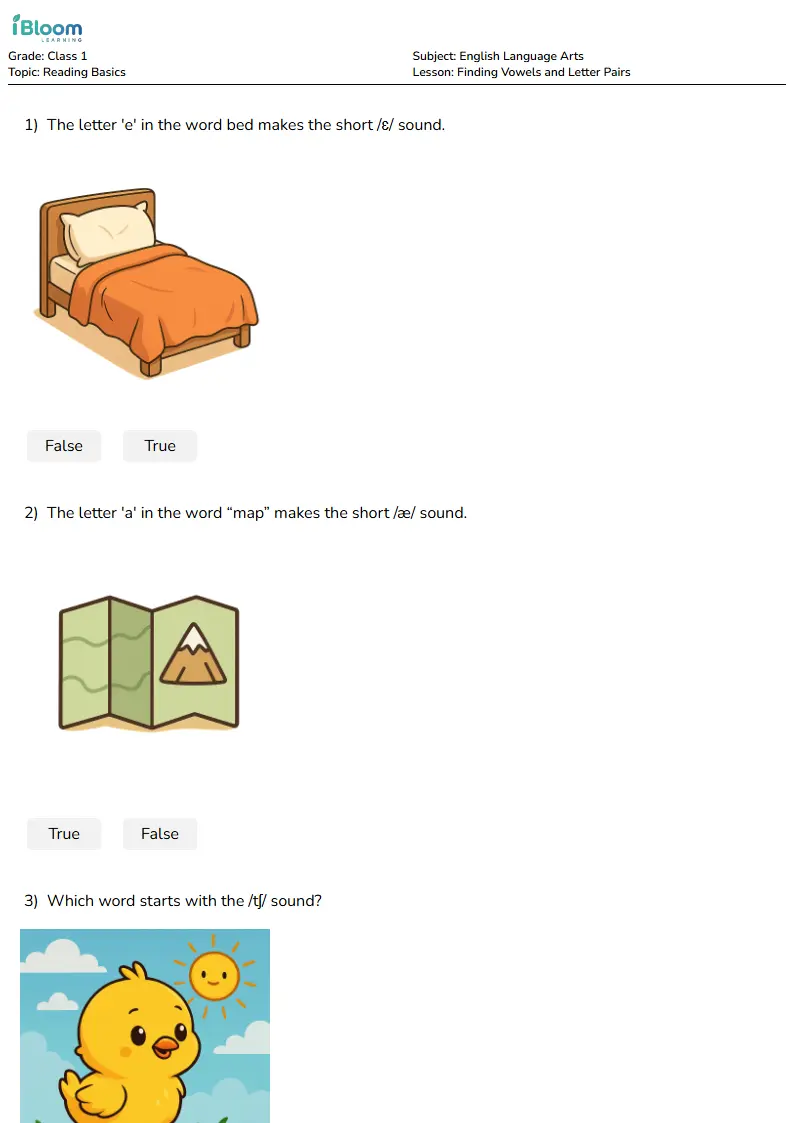
Free Finding Vowels and Letter Pairs Worksheets for Class 1
Looking for class 1 english language arts help? Download free, interactive finding vowels and letter pairs worksheets. AI-personalized and Common Core-aligned. Practice early literacy with iBloom.
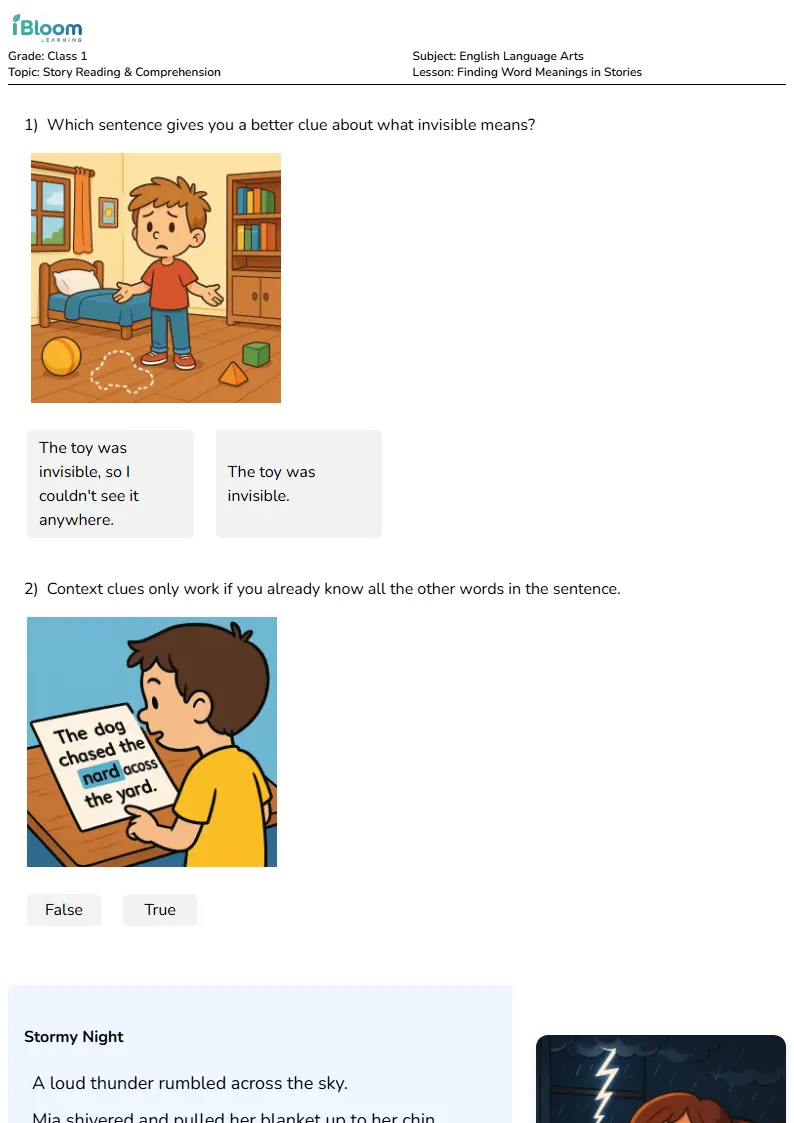
Free Finding Word Meanings in Stories Worksheets for Class 1
Looking for class 1 english language arts help? Download free, interactive finding word meanings in stories worksheets. AI-personalized and Common Core-aligned. Practice early literacy with iBloom.
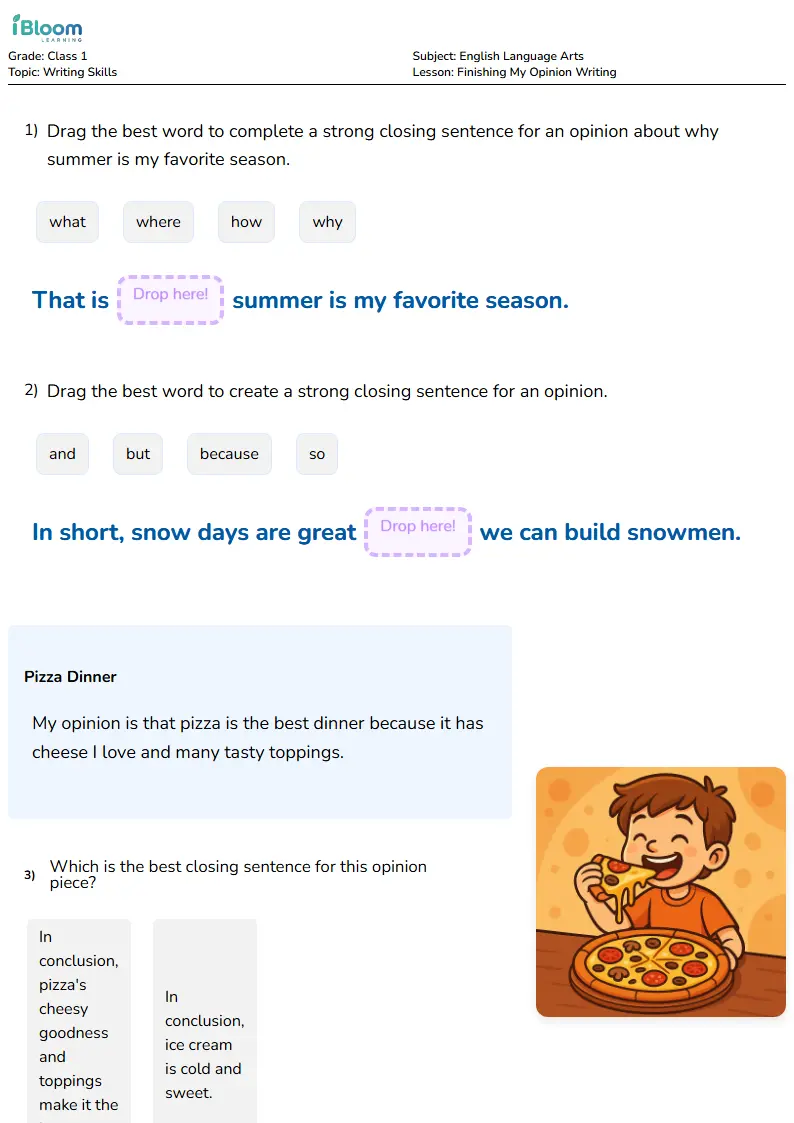
Free Finishing My Opinion Writing Worksheets for Class 1
Looking for class 1 english language arts help? Download free, interactive finishing my opinion writing worksheets. AI-personalized and Common Core-aligned. Practice early literacy with iBloom.