Finding Word Meanings worksheet for Class 3

Lesson-Wise Builder
A premium AI tool that creates syllabus-aligned questions and worksheets for any lesson in seconds.
Context clues are words, phrases and sentences around an unfamiliar word that help a reader infer its meaning. A strong answer identifies the likely meaning and points to the exact evidence that supports it. In this activity, learners use sensory phrases to understand fragrant and character actions to understand cautious.
What this Class 3 activity asks
The first task presents a sentence about a fragrant garden and asks which phrases explain the word. The second task asks learners to choose two sentences that reveal the meaning of cautious in a short road-safety passage. Both require evidence: a nearby word is useful only when it helps explain the unfamiliar word.
The activity includes audio controls, but the visible sentences and choices provide the vocabulary evidence described here. Learners should read or listen to the complete item before selecting clues.
A five-step context-clue routine
- Read the whole sentence or passage. Do not stop at the unfamiliar word.
- Name the word's job. Decide whether it functions as a noun, verb, adjective or adverb. This narrows possible meanings.
- Underline useful evidence. Look for definitions, restatements, synonyms, contrasts, examples, sensory details, causes or actions.
- Suggest a meaning. State it in simple words.
- Substitute and check. Replace the unfamiliar word with the possible meaning and reread. The sentence should remain logical and grammatically sensible.
A dictionary is valuable after this process. Looking up the word can confirm the inference and add pronunciation or additional meanings, but the learner should first practise reasoning from the text.
Worked example: finding the meaning of fragrant
The visible sentence says that the garden was fragrant with the scent of roses and lavender, filling the air with sweet perfume. Two phrases provide strong evidence:
- “the scent of roses and lavender” points to a pleasant smell;
- “filling the air with sweet perfume” restates the idea with another smell-related description.
Together, these clues show that fragrant means having a pleasant or sweet smell. Replacing the word confirms the inference: “The garden was sweet-smelling with the scent of roses and lavender” makes sense.
Why “garden” and “air” are weak clues by themselves
Both words are related to the sentence, but neither explains the meaning. A garden can have many qualities, and air can be clean, cold, smoky or humid. Strong context clues narrow the possible meaning; they do not merely appear nearby.
This distinction prevents a common error: choosing the closest familiar word instead of the phrase that actually supplies evidence.
Worked example: finding the meaning of cautious
The visible passage describes Ben near a busy road. He stops at the curb, looks both ways before stepping forward and moves slowly so he will not slip. It then says he was cautious. The actions reveal the meaning.
- Stopping and looking both ways show that Ben checks for danger before acting.
- Moving slowly so he will not slip shows that he takes care to avoid harm.
These details support the meaning careful to avoid danger or mistakes. The substitution also works: “He was careful near the busy road.” The sentence about a car honking adds danger to the setting, but Ben's own careful actions are the most direct evidence of his cautious behaviour.
Common types of context clues
Definition or restatement
The text explains the word directly, sometimes after a comma, dash or phrase such as “that is.” Example: “The path was narrow—only wide enough for one person.”
Synonym
A nearby word has a similar meaning. Example: “The puppy was timid and shy around strangers.”
Contrast or antonym
A word such as but, unlike or instead introduces an opposite idea. Example: “Unlike the noisy market, the library was tranquil.”
Example
Specific examples show the category or action. Example: “The child was generous, sharing crayons, books and snacks with classmates.”
Cause and effect
A result helps reveal the cause, or a cause explains the word. Example: “The soil was arid after months without rain.”
Sensory detail or action
Descriptions of sight, sound, smell, taste, touch or behaviour can show meaning. The fragrant example uses smell; the cautious example uses careful actions.
How to judge whether a clue is strong
Ask three questions:
- Does it narrow the possible meaning? “Sweet perfume” narrows fragrant toward a pleasant smell.
- Does it connect directly to the word? Looking both ways directly demonstrates cautious behaviour.
- Does the inferred meaning fit when substituted? A useful synonym should preserve the sentence's logic and grammar.
One clue may suggest a meaning, while a second confirms it. When several details point in the same direction, the inference becomes more defensible.
Explaining an answer with evidence
A complete explanation can be short:
- “Fragrant means sweet-smelling because the sentence mentions roses, lavender and sweet perfume.”
- “Cautious means careful because Ben looks both ways and moves slowly to avoid danger.”
- “The phrase ___ is a stronger clue than ___ because it directly shows ___.”
- “I replaced ___ with ___, and the sentence still made sense.”
The explanation shows that the learner reasoned from the passage instead of guessing from prior knowledge.
When two meanings seem possible
Read the sentence before and after the word, identify its grammatical role and test both meanings. Prefer the meaning supported by more than one detail. If neither option fits, revise the inference rather than forcing the sentence. Some words have multiple dictionary meanings, so the correct meaning is the one that fits this specific context.
Parent guidance
During shared reading, pause at one unfamiliar but understandable word. Ask, “Which words nearby help?” Let the child point to the evidence before giving a definition. After the inference, check a dictionary together and use the word in a new sentence.
- Ask for one clue, then a second clue.
- Accept an explanation in a familiar language first if needed, then connect it to the English word.
- Compare a related word with a genuinely explanatory phrase.
- Revisit the new word after a day or two in a different sentence.
- Keep the focus on reasoning, not memorising a long word list.
Teacher and tutor guidance
Model the full process with a think-aloud: identify the word's part of speech, mark the clues, propose a meaning and test it. Then give pairs one clue-rich sentence and one weakly supported sentence to compare.
- Use colour or underlining to separate the unfamiliar word from its evidence.
- Ask learners to rank two clues from stronger to weaker.
- Include definition, contrast, example and action clues across practice sets.
- Assess the explanation separately from whether the learner already knew the word.
- Use an exit response with a meaning, an evidence phrase and a substitution check.
For multilingual learners, connect the inferred meaning to a known synonym or home-language concept without turning the task into translation-only practice. The goal is to make the English context do useful work.
Common mistakes to watch for
- Choosing the nearest familiar word even though it does not explain the meaning.
- Reading only the target sentence when the strongest clue appears later.
- Guessing from the picture and ignoring the text.
- Selecting a topic word, such as “garden,” instead of a meaning clue.
- Using a possible synonym without checking it in the sentence.
- Naming a meaning but giving no evidence.
- Assuming every unfamiliar word has a direct definition beside it.
- Looking up the word immediately and missing the chance to infer.
Practice ideas
- Write a new sentence for fragrant using two smell clues.
- Write a new sentence for cautious using actions rather than a definition.
- Remove the clue phrase from a sentence and discuss what becomes uncertain.
- Add a contrast clue to explain an unfamiliar adjective.
- Sort phrases into strong clues, related details and unrelated details.
- Replace a target word with a possible synonym and test the result.
- Create a two-sentence passage in which the clue appears after the word.
Related concepts
Context-clue work connects with synonyms, antonyms, descriptive language, parts of speech, close reading, inference, character traits and dictionary skills. The next step is to track a word across several sentences and decide whether its meaning changes with context.
Continue with related iBloom practice
- practise finding word meanings with clues: Extends the same context-clue reasoning with closely related practice.
- find useful clues in complete sentences: Builds the evidence-finding step used to infer an unfamiliar word's meaning.
Frequently Asked Questions
What are context clues?
They are nearby words, phrases or sentences that help explain an unfamiliar word. They may provide a definition, synonym, contrast, example, cause, sensory detail or action.
What does fragrant mean in the activity?
It means having a pleasant or sweet smell. The phrases about roses, lavender and sweet perfume provide the evidence.
What does cautious mean in the passage?
It means careful to avoid danger or mistakes. Ben's actions—stopping, looking both ways and moving slowly—show that meaning.
Why is a nearby word not always a context clue?
Proximity is not enough. A useful clue narrows or explains the meaning. “Garden” is near fragrant, but “sweet perfume” is much more informative.
Should a learner use a dictionary?
Yes, after making an evidence-based inference. The dictionary can confirm the meaning and add information, while the initial inference builds independent reading skill.
More practice for this grade
More English Language Arts worksheets
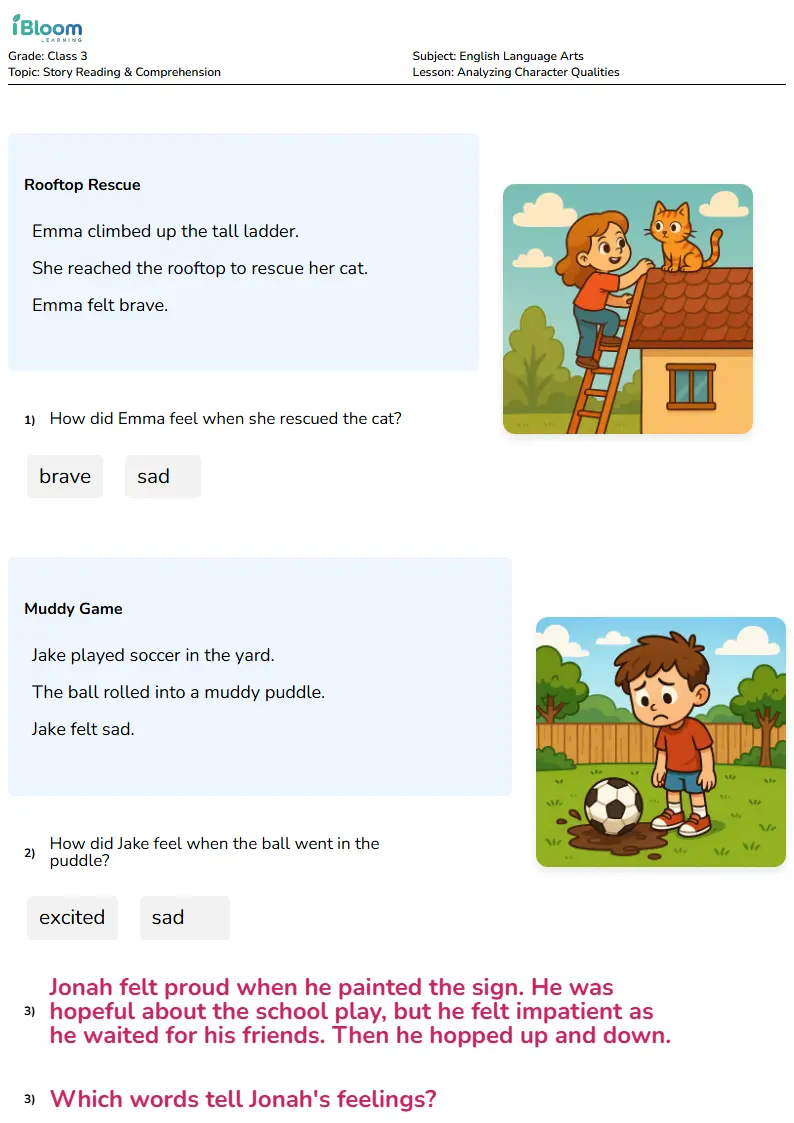
Free Analyzing Character Qualities Worksheets for Class 3
Looking for class 3 english language arts help? Download free, interactive analyzing character qualities worksheets. AI-personalized and Common Core-aligned. Practice early literacy with iBloom.
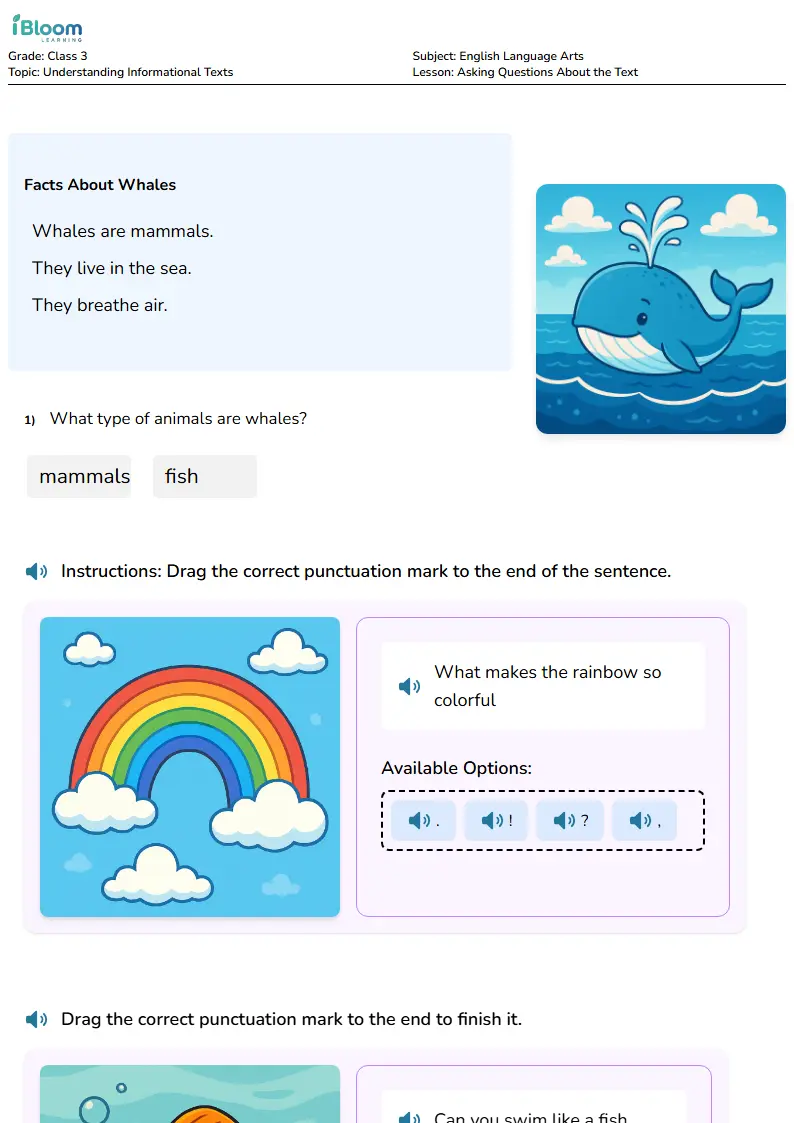
Free Asking Questions About the Text Worksheets for Class 3
Looking for class 3 english language arts help? Download free, interactive asking questions about the text worksheets. AI-personalized and Common Core-aligned. Practice early literacy with iBloom.
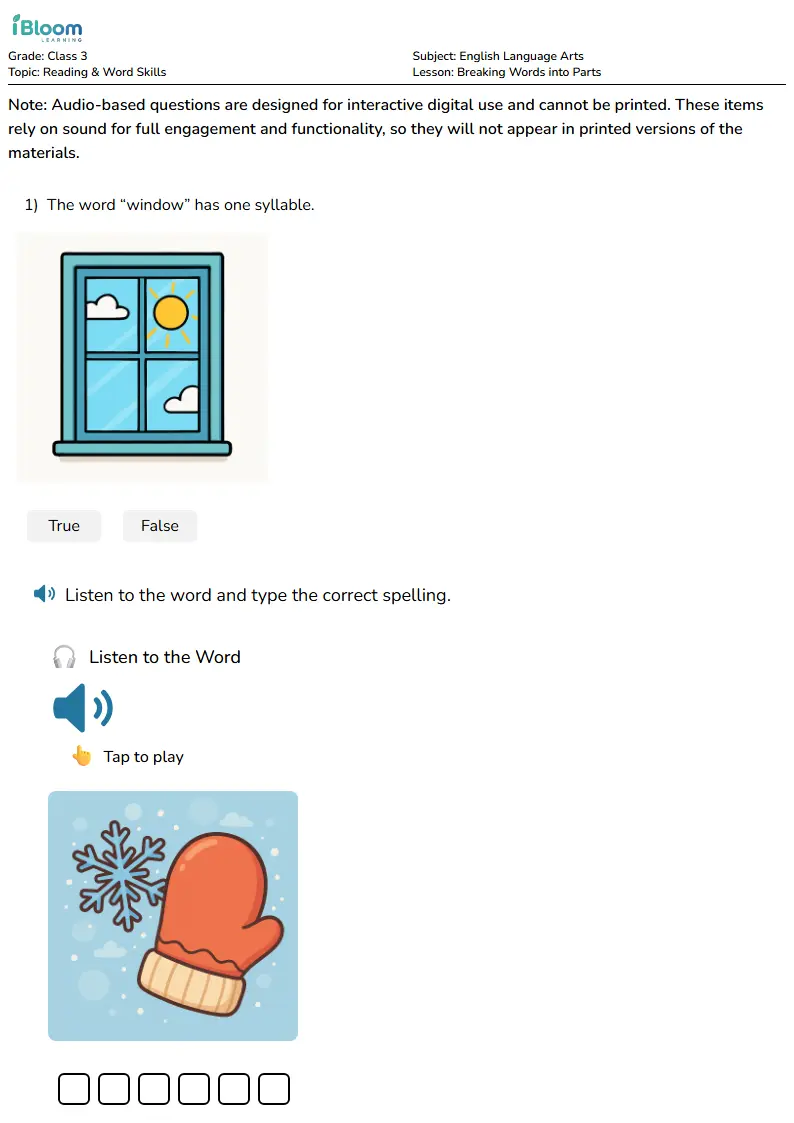
Free Breaking Words into Parts Worksheets for Class 3
Looking for class 3 english language arts help? Download free, interactive breaking words into parts worksheets. AI-personalized and Common Core-aligned. Practice early literacy with iBloom.
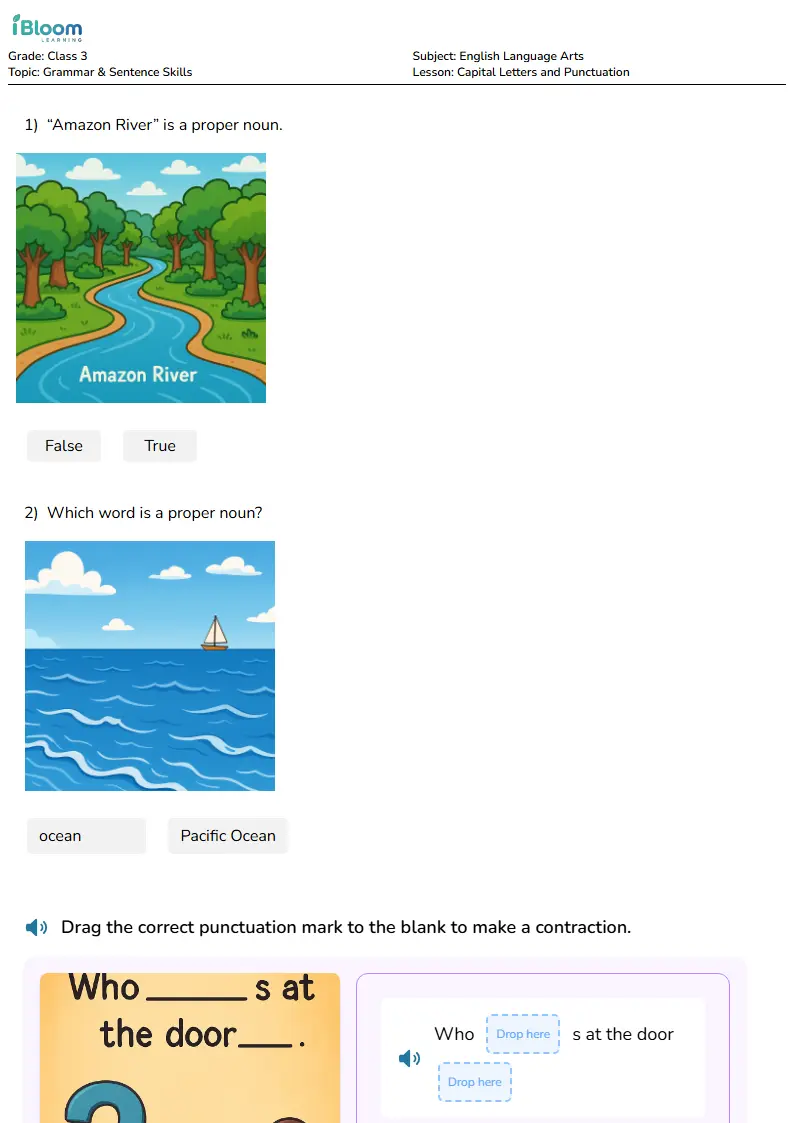
Free Capital Letters and Punctuation Worksheets for Class 3
Looking for class 3 english language arts help? Download free, interactive capital letters and punctuation worksheets. AI-personalized and Common Core-aligned. Practice early literacy with iBloom.
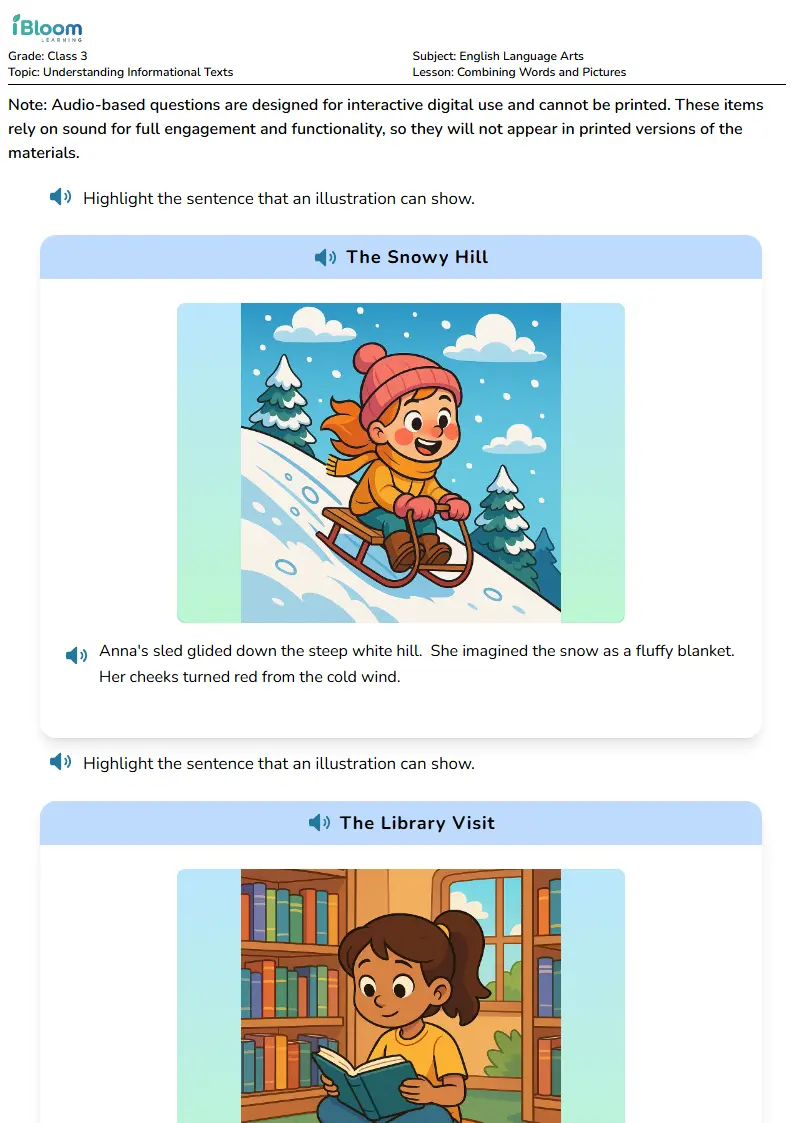
Free Combining Words and Pictures Worksheets for Class 3
Looking for class 3 english language arts help? Download free, interactive combining words and pictures worksheets. AI-personalized and Common Core-aligned. Practice early literacy with iBloom.
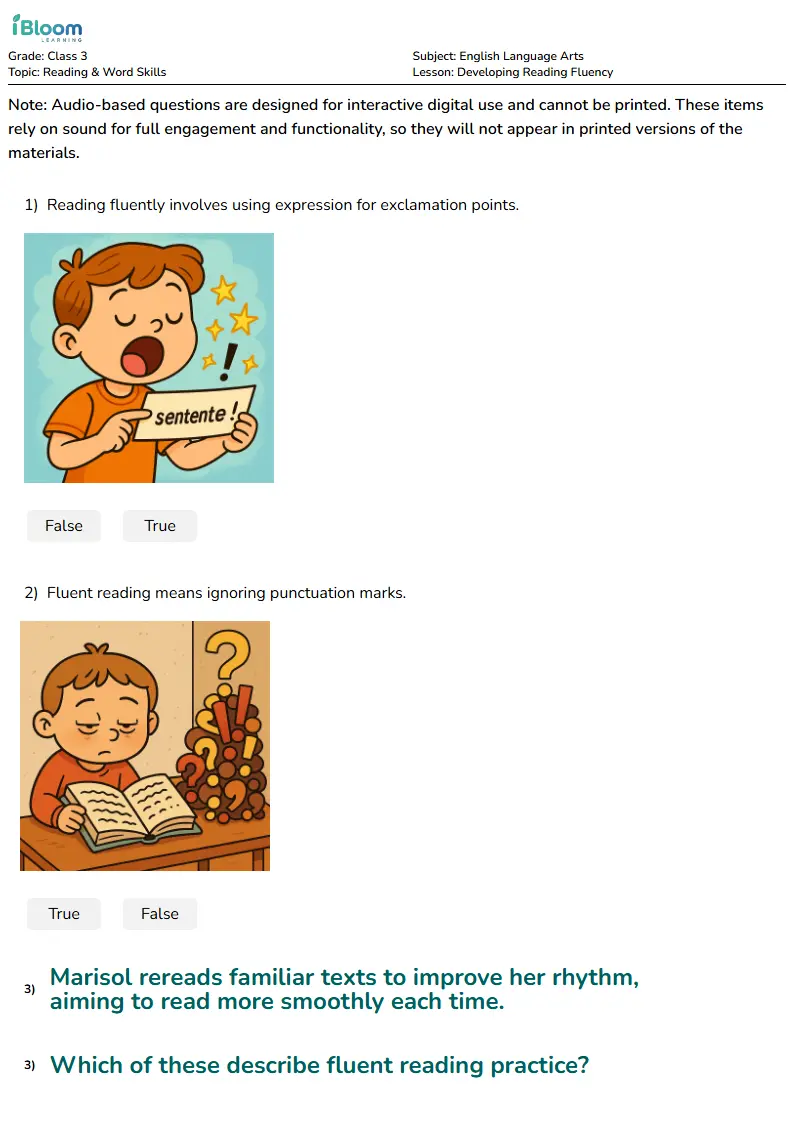
Free Developing Reading Fluency Worksheets for Class 3
Looking for class 3 english language arts help? Download free, interactive developing reading fluency worksheets. AI-personalized and Common Core-aligned. Practice early literacy with iBloom.
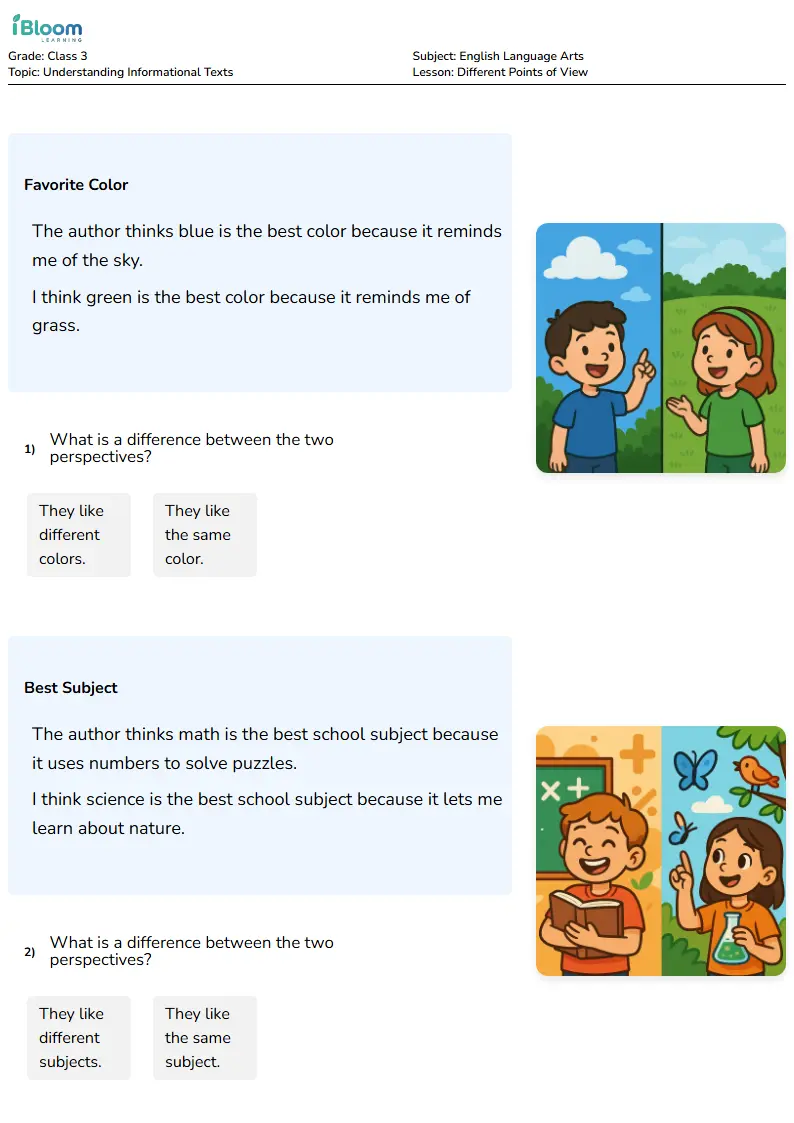
Free Different Points of View Worksheets for Class 3
Looking for class 3 english language arts help? Download free, interactive different points of view worksheets. AI-personalized and Common Core-aligned. Practice early literacy with iBloom.
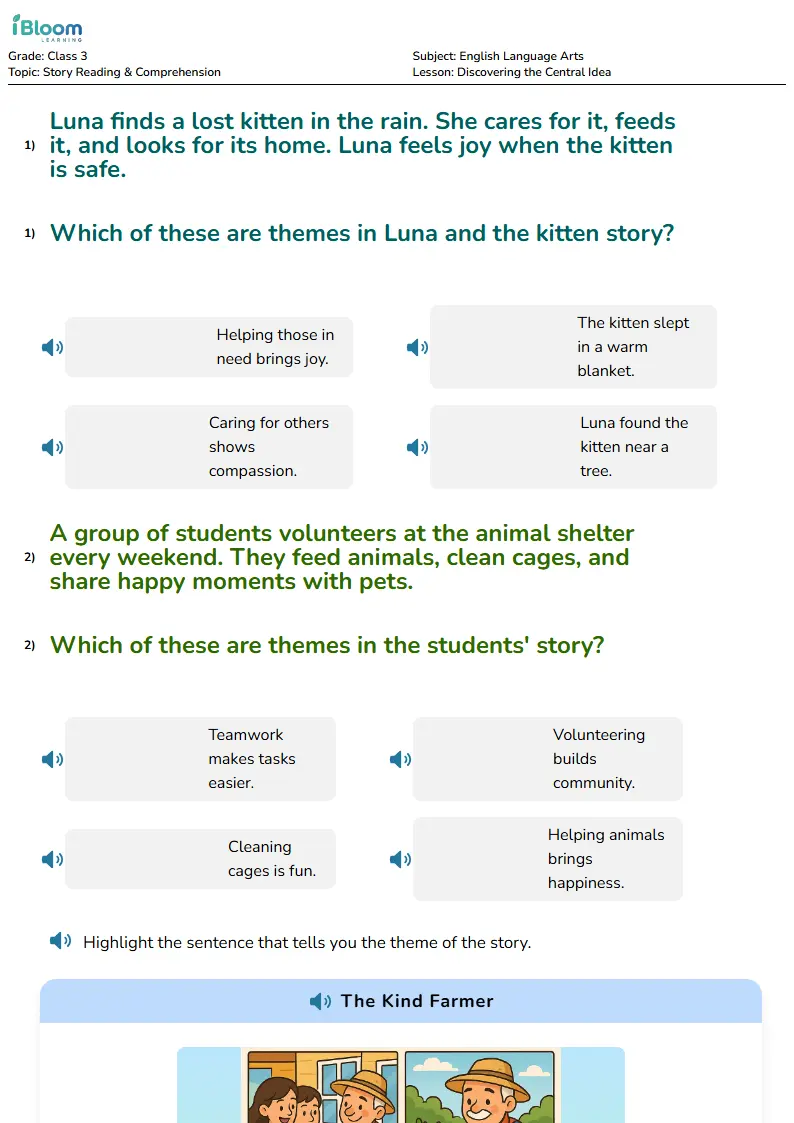
Free Discovering the Central Idea Worksheets for Class 3
Looking for class 3 english language arts help? Download free, interactive discovering the central idea worksheets. AI-personalized and Common Core-aligned. Practice early literacy with iBloom.
Free Finding Clues in Sentences Worksheets for Class 3
Looking for class 3 english language arts help? Download free, interactive finding clues in sentences worksheets. AI-personalized and Common Core-aligned. Practice early literacy with iBloom.
Free Finding Details in the Text Worksheets for Class 3
Looking for class 3 english language arts help? Download free, interactive finding details in the text worksheets. AI-personalized and Common Core-aligned. Practice early literacy with iBloom.
Free Finding Important Facts Worksheets for Class 3
Looking for class 3 english language arts help? Download free, interactive finding important facts worksheets. AI-personalized and Common Core-aligned. Practice early literacy with iBloom.
Free Finding Key Details Worksheets for Class 3
Looking for class 3 english language arts help? Download free, interactive finding key details worksheets. AI-personalized and Common Core-aligned. Practice early literacy with iBloom.
Free Finding or Guessing Information? Worksheets for Class 3
Looking for class 3 english language arts help? Download free, interactive finding or guessing information? worksheets. AI-personalized and Common Core-aligned. Practice early literacy with iBloom.
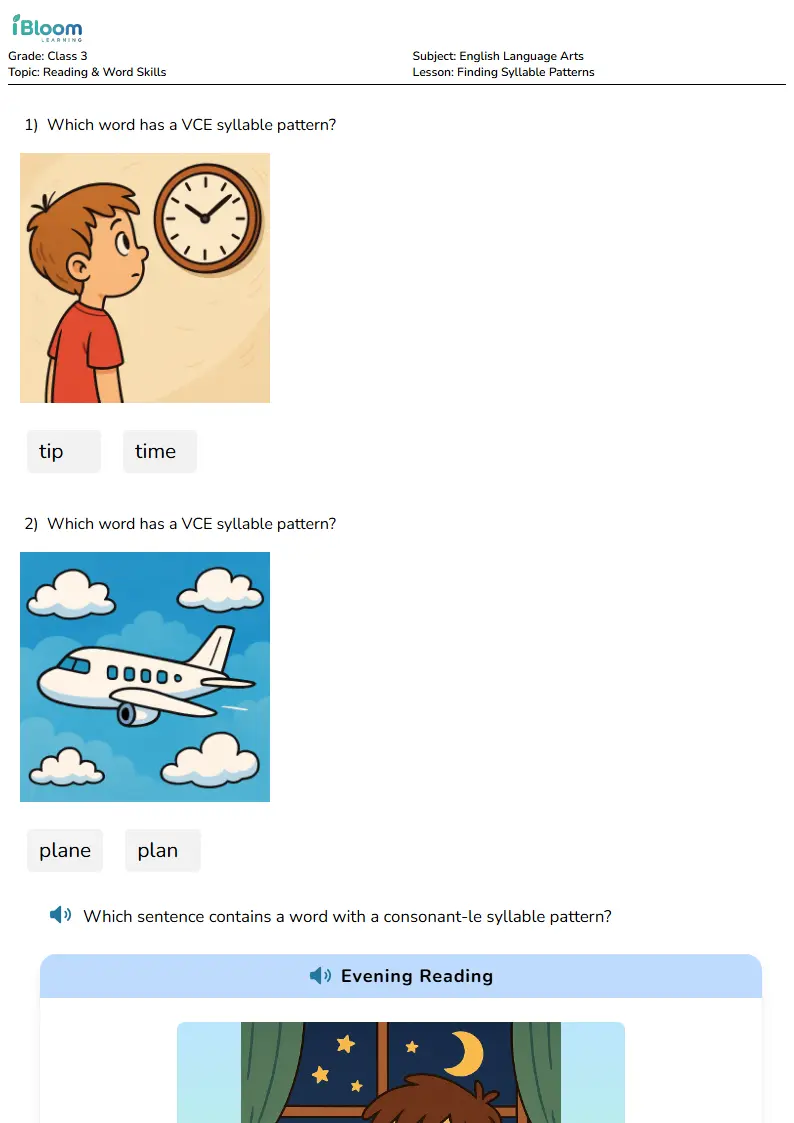
Free Finding Syllable Patterns Worksheets for Class 3
Looking for class 3 english language arts help? Download free, interactive finding syllable patterns worksheets. AI-personalized and Common Core-aligned. Practice early literacy with iBloom.
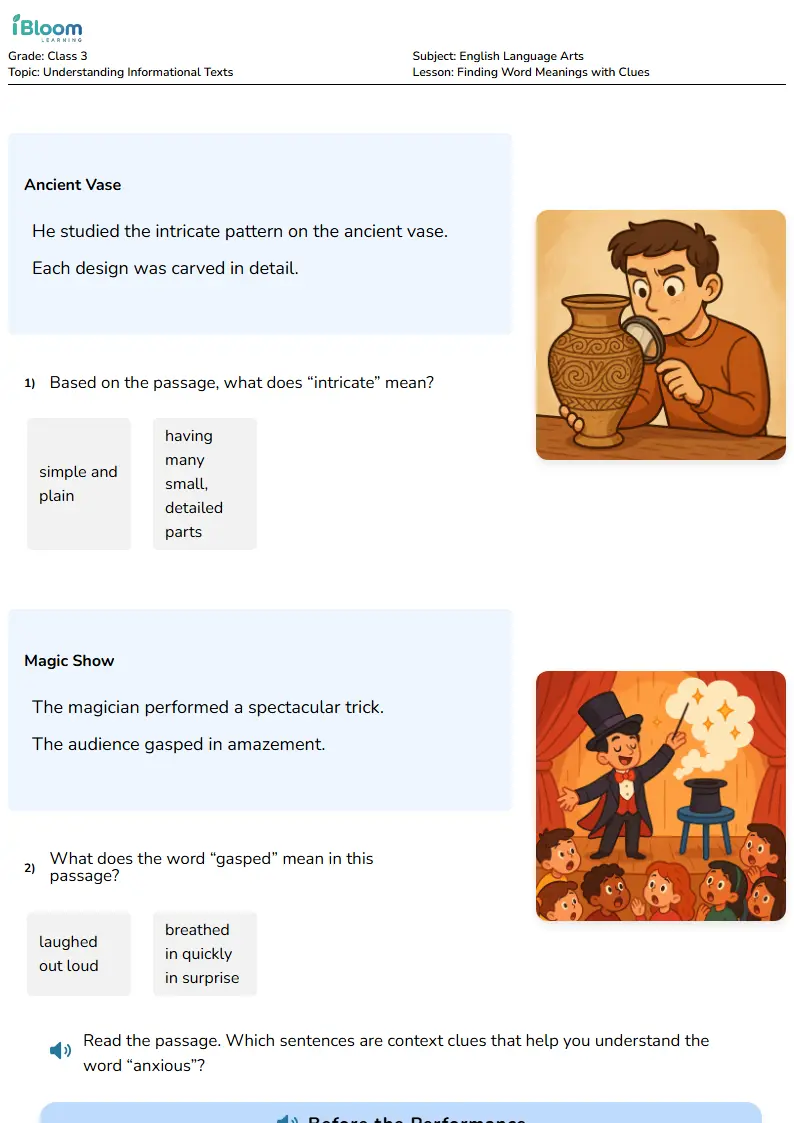
Free Finding Word Meanings with Clues Worksheets for Class 3
Looking for class 3 english language arts help? Download free, interactive finding word meanings with clues worksheets. AI-personalized and Common Core-aligned. Practice early literacy with iBloom.
Free How Are Story Plots Different? Worksheets for Class 3
Looking for class 3 english language arts help? Download free, interactive how are story plots different? worksheets. AI-personalized and Common Core-aligned. Practice early literacy with iBloom.
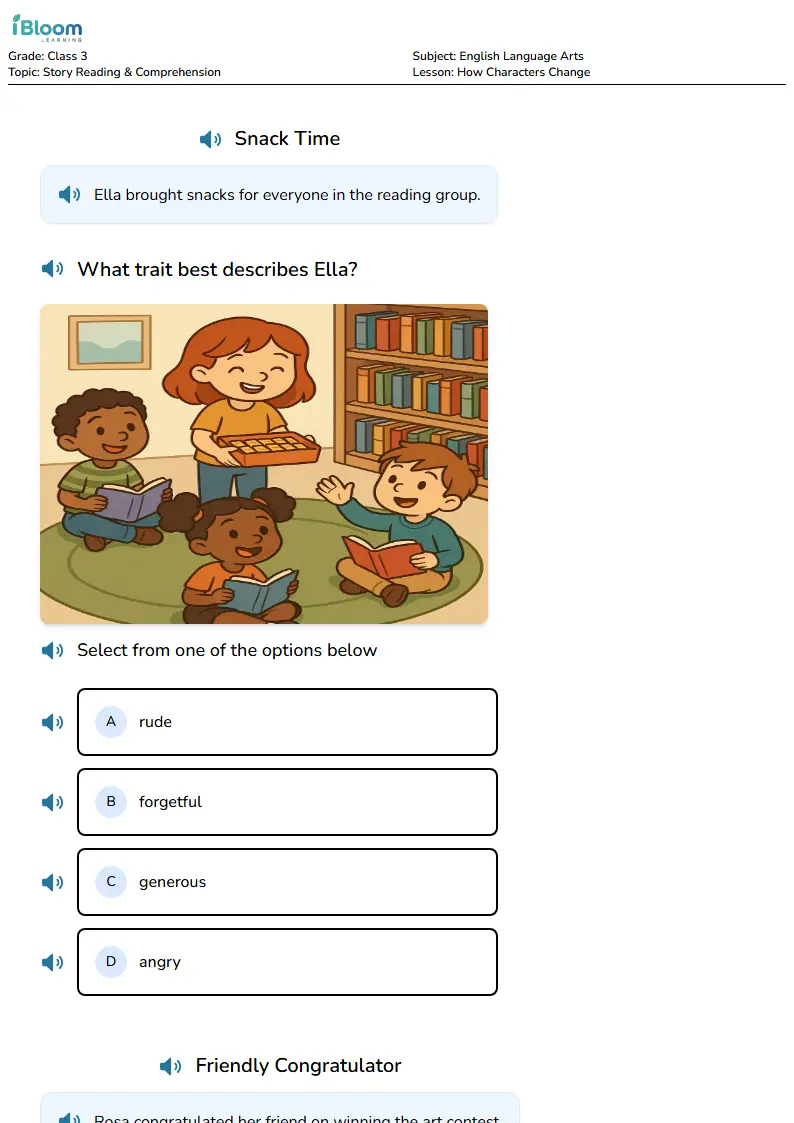
Free How Characters Change Worksheets for Class 3
Looking for class 3 english language arts help? Download free, interactive how characters change worksheets. AI-personalized and Common Core-aligned. Practice early literacy with iBloom.
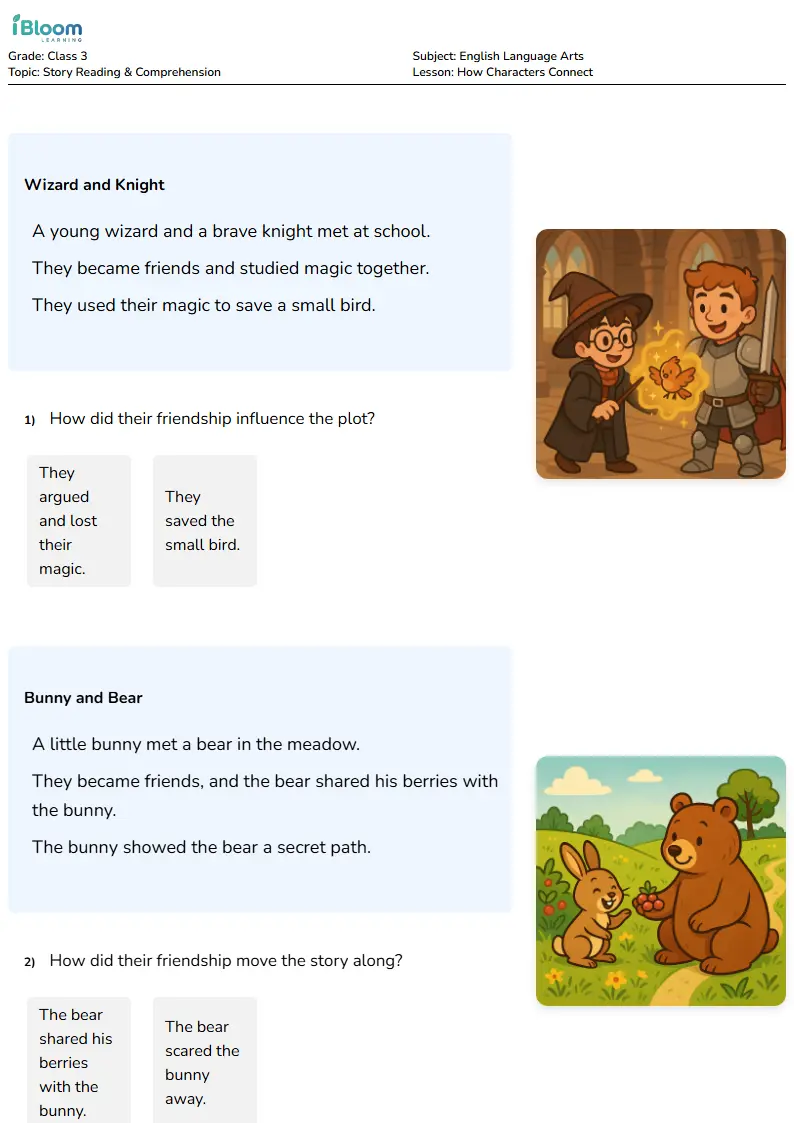
Free How Characters Connect Worksheets for Class 3
Looking for class 3 english language arts help? Download free, interactive how characters connect worksheets. AI-personalized and Common Core-aligned. Practice early literacy with iBloom.
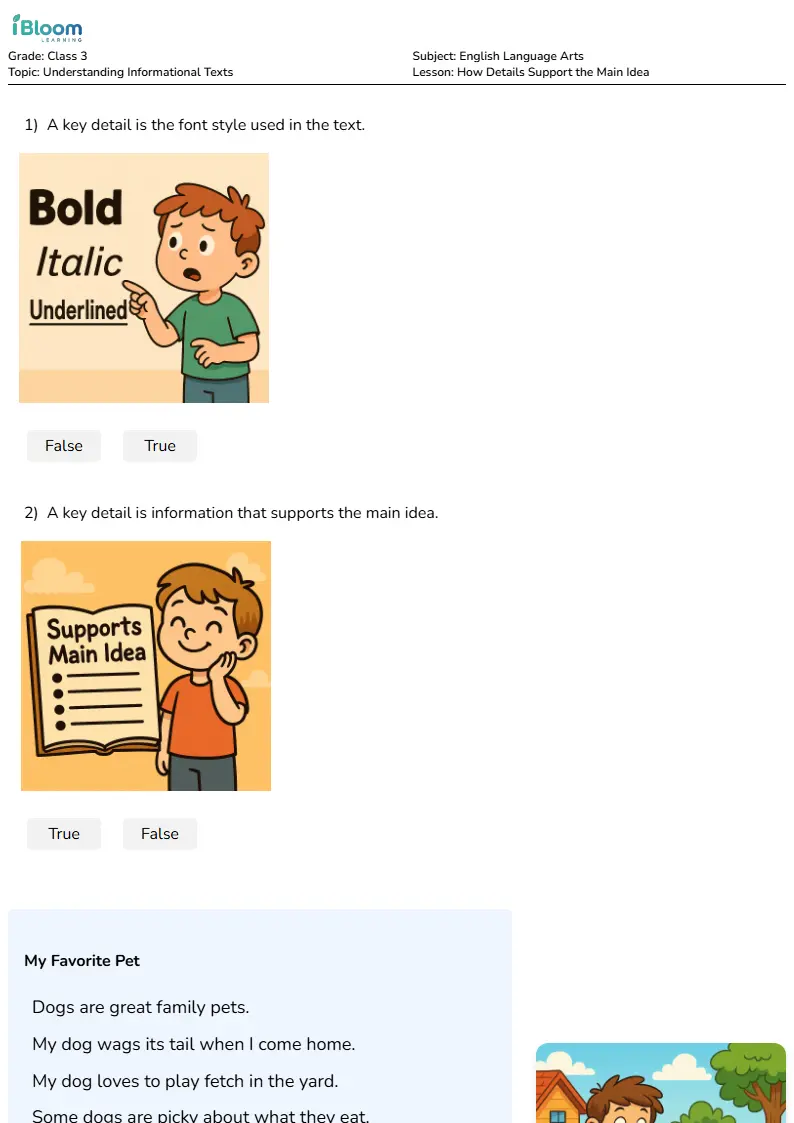
Free How Details Support the Main Idea Worksheets for Class 3
Looking for class 3 english language arts help? Download free, interactive how details support the main idea worksheets. AI-personalized and Common Core-aligned. Practice early literacy with iBloom.
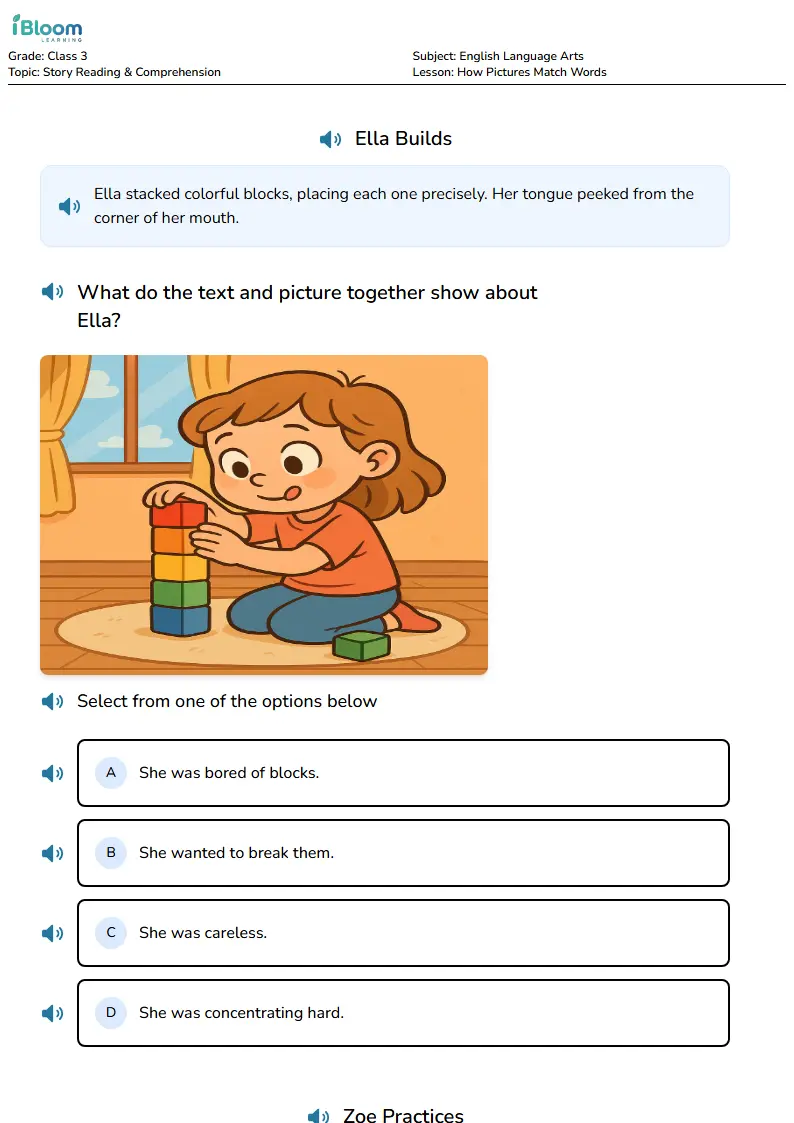
Free How Pictures Match Words Worksheets for Class 3
Looking for class 3 english language arts help? Download free, interactive how pictures match words worksheets. AI-personalized and Common Core-aligned. Practice early literacy with iBloom.
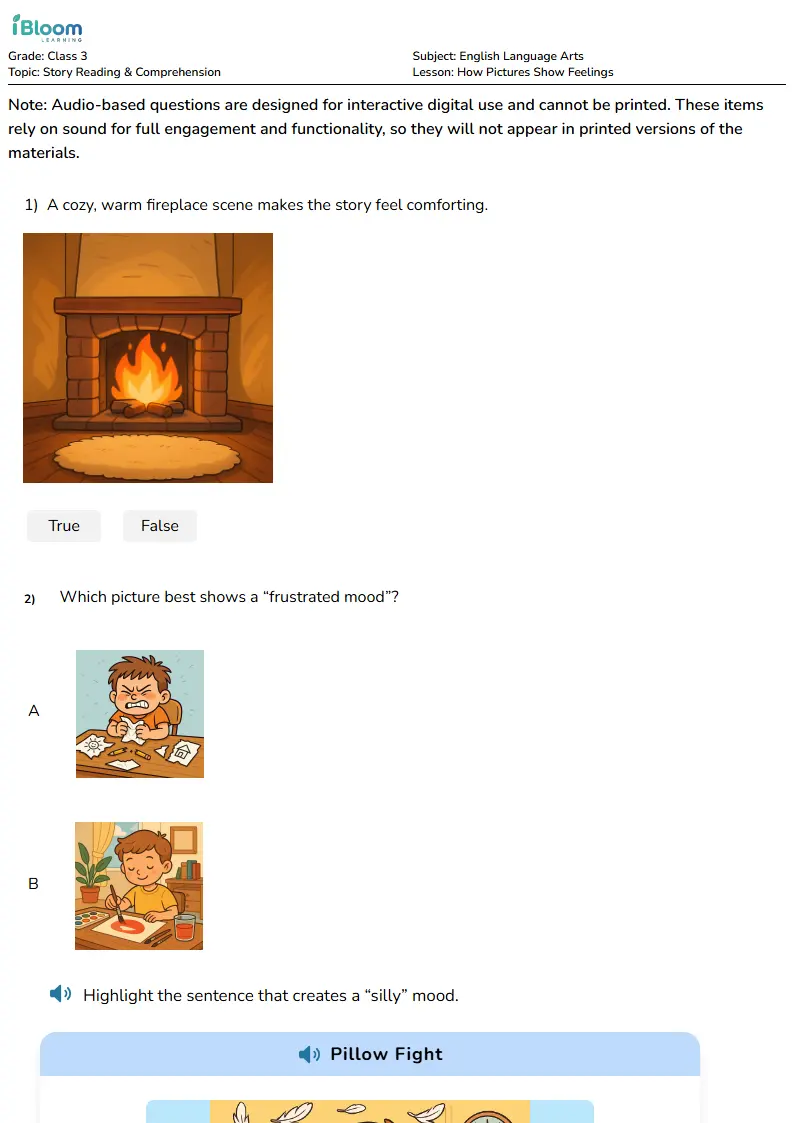
Free How Pictures Show Feelings Worksheets for Class 3
Looking for class 3 english language arts help? Download free, interactive how pictures show feelings worksheets. AI-personalized and Common Core-aligned. Practice early literacy with iBloom.
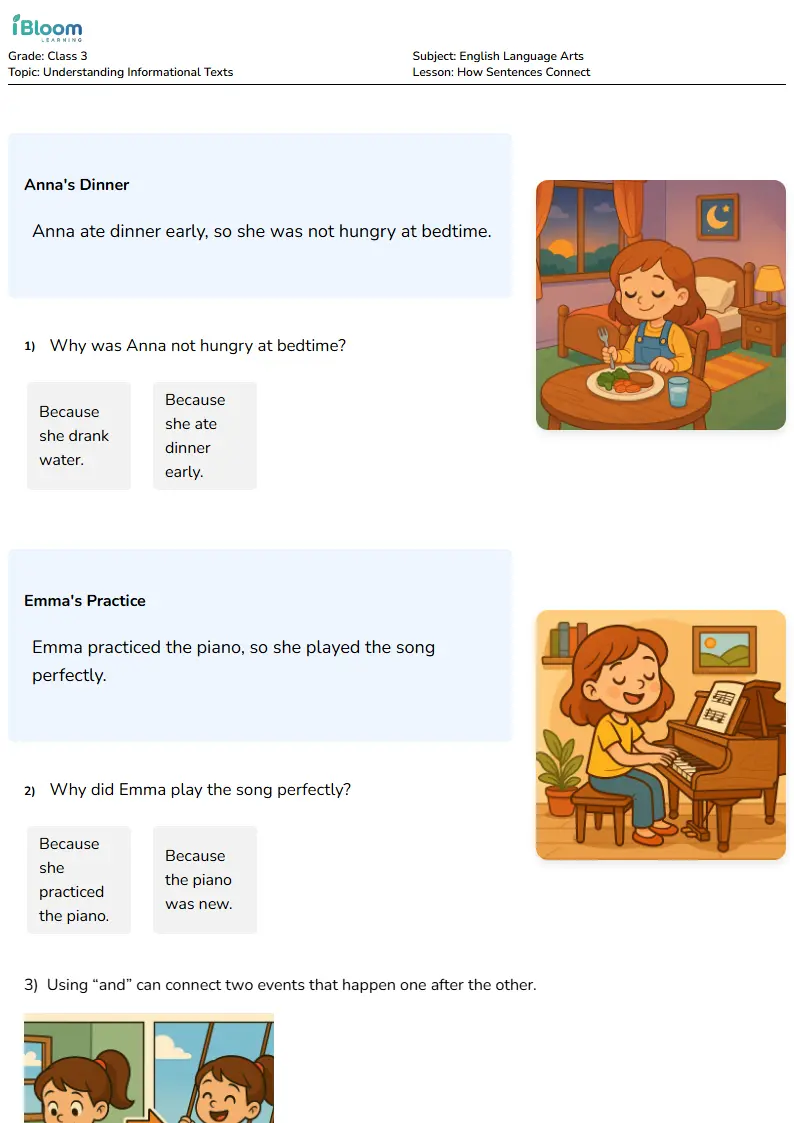
Free How Sentences Connect Worksheets for Class 3
Looking for class 3 english language arts help? Download free, interactive how sentences connect worksheets. AI-personalized and Common Core-aligned. Practice early literacy with iBloom.
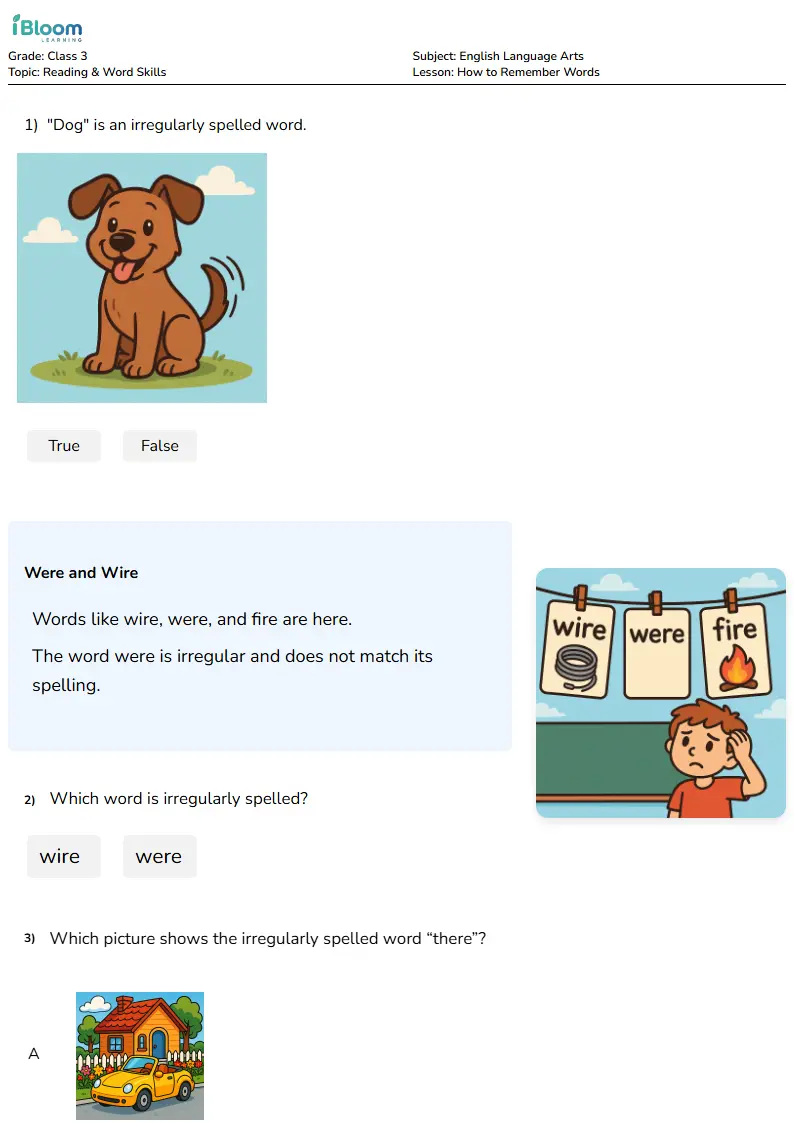
Free How to Remember Words Worksheets for Class 3
Looking for class 3 english language arts help? Download free, interactive how to remember words worksheets. AI-personalized and Common Core-aligned. Practice early literacy with iBloom.
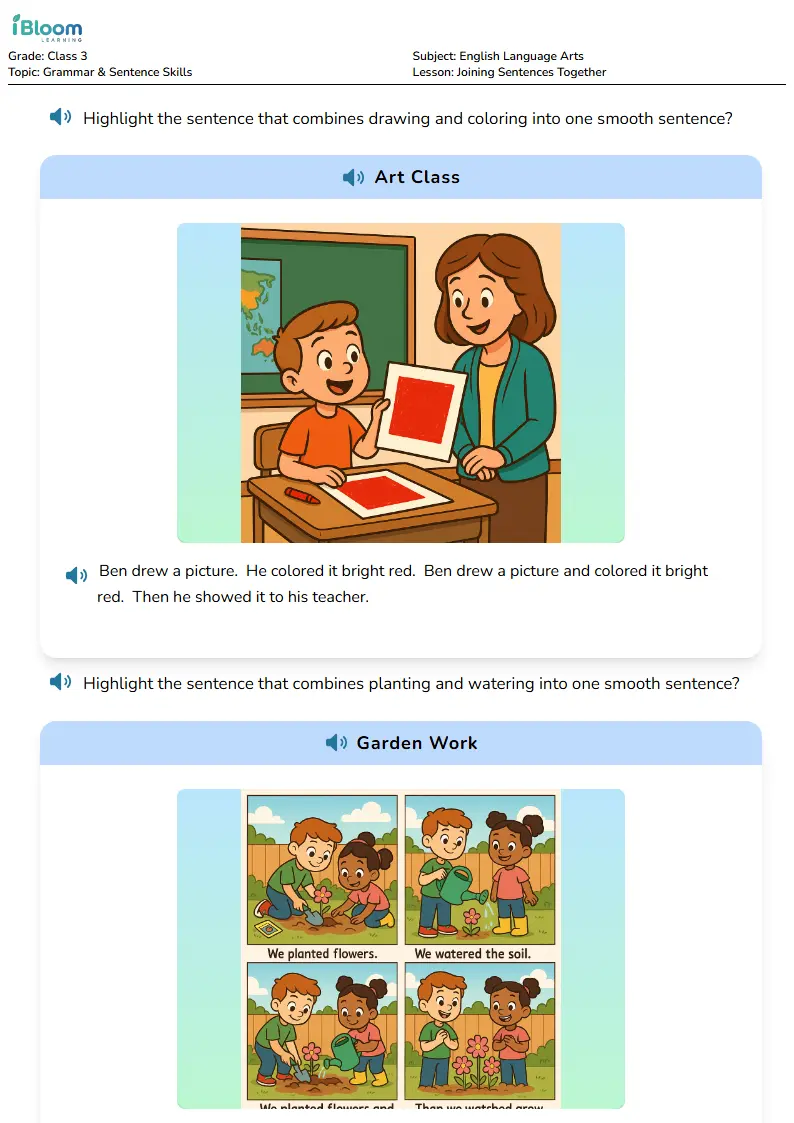
Free Joining Sentences Together Worksheets for Class 3
Looking for class 3 english language arts help? Download free, interactive joining sentences together worksheets. AI-personalized and Common Core-aligned. Practice early literacy with iBloom.