Finding Missing Numbers In Multiplication (4,5) worksheet for Class 3

Lesson-Wise Builder
A premium AI tool that creates syllabus-aligned questions and worksheets for any lesson in seconds.
A missing-factor equation asks for the number that combines with a known factor to make a stated product. In __ x 5 = 20, the blank is not the product; it is one of the factors. A child can recall that 4 x 5 = 20, build four groups of five, or use the inverse calculation 20 ÷ 5 = 4. This activity centres on missing factors of 4 and 5 while presenting blanks in different positions, so children must read the whole equation rather than follow the location of the box.
Ways to find a missing factor
Begin by naming the known parts. The multiplication sign joins two factors, and the number after the equals sign is the product. Ask, “What number multiplied by the known factor gives this product?” If the fact is known, retrieve it. If not, reconstruct it with equal groups, repeated addition, skip counting, or inverse division.
- Identify the known factor and the product.
- Say the unknown-factor question in words.
- Choose a fact, model, or division calculation.
- Put the proposed factor back into the original equation.
- Multiply to confirm that the product matches exactly.
Why inverse division works
Multiplication and division describe the same equal-group relationship from different directions. If 4 x 5 = 20, then 20 ÷ 5 = 4 and 20 ÷ 4 = 5. Division is therefore a way to uncover either missing factor when the product and the other factor are known.
Worked examples from the activity
__ x 5 = 20
Ask how many groups of five make twenty. Counting 5, 10, 15, 20 gives four groups, so the missing factor is 4. The inverse check is 20 ÷ 5 = 4.
10 x __ = 40
Four groups of ten make forty. The missing factor is 4. Its position after 10 does not change its role: both numbers on the multiplication side are factors.
12 x __ = 60
Use division or known products: 60 ÷ 12 = 5, so the missing factor is 5. Substitution confirms 12 x 5 = 60.
8 x __ = 40
Five groups of eight make forty, so the factor is 5. A child might also use the commutative fact 5 x 8 = 40.
__ x 2 = 8 and __ x 10 = 40
For the first equation, 8 ÷ 2 = 4. For the second, 40 ÷ 10 = 4. Both blanks contain 4, even though the known factor and product differ.
Reading the worksheet activity carefully
The verified image repeatedly uses the instruction “Find the missing factor.” Some answers are entered into a blank, and one visible item asks the learner to choose among 5, 3, 4, and 6 for __ x 2 = 8. The equation, not the shape or position of the blank, determines the answer. Children should test the selected value: 4 x 2 equals 8, while the other visible choices do not.
The visible equations use products from 8 to 60 and known factors including 2, 5, 8, 10, and 12. The missing values themselves repeatedly draw attention to 4 and 5. This variation is useful because it checks whether the child understands the factor-product relationship rather than only reciting one table in order.
Common mistakes and how to address them
- Putting the product in the blank: Label both sides of the equation and ask which number is already the product.
- Adding instead of multiplying: Build equal groups and compare repeated addition with the multiplication expression.
- Dividing in the wrong order: Divide the product by the known factor, not the known factor by the product.
- Guessing from choices: Substitute every uncertain choice and test the full equation.
- Confusing factor and product: Use the sentence “factor times factor equals product” while pointing to each part.
Reliable ways to check the unknown
The strongest check is substitution. Replace the blank with the proposed factor and multiply. A division fact offers an independent check, and an equal-groups model can make the relationship visible. For 12 x 5 = 60, five groups of twelve, twelve groups of five, 60 ÷ 12, and 60 ÷ 5 all belong to the same fact family.
Encourage exact language: “I chose 5 because twelve groups of five make sixty,” or “Sixty divided by twelve is five.” This reveals the reasoning and makes a lucky guess easier to distinguish from understanding.
Guidance for parents
Use small objects when a fact is not yet secure. To solve __ x 5 = 20, make groups of five counters until the total reaches twenty, then count the groups. Ask the child to write the matching multiplication and division facts. Short conversations about one equation can build more understanding than rapid questioning without explanation.
If the child hesitates, offer a known related fact instead of the answer. For example, knowing 5 x 5 = 25 can help reason that 4 x 5 is one group of five less, or 20. Praise a correct check and a corrected misconception, not only quick recall.
Guidance and practice ideas for teachers
Vary the position of the blank: __ x 5 = 20 and 5 x __ = 20 should lead to the same factor. Then keep the product fixed and vary a factor, such as 4 x 10 = 40 and 5 x 8 = 40. Ask pupils what changes, what remains constant, and which division fact matches each equation.
- Build one equation with counters or an array before using symbols alone.
- Sort equations by missing factor, known factor, or product.
- Discuss an incorrect factor and locate the fact it actually produces.
- Use partner explanations in which one pupil solves and the other verifies.
Related concepts that support the activity
Fluency with the 4 and 5 times tables reduces memory load, but conceptual tools remain important. Equal groups and arrays give factors a visible meaning. The commutative property explains why 4 x 5 and 5 x 4 share a product. Division supplies the inverse operation. These foundations later support missing numbers in longer multiplication sentences and more formal unknowns without requiring a change in the underlying relationship.
Continue with related iBloom practice
- practise missing factors with 2 and 3: Builds the inverse reasoning used to find an unknown factor.
- connect multiplication with equal groups: Shows what each factor represents before learners solve missing-factor equations.
Useful questions and answers
What is a factor?
A factor is a number being multiplied. In 4 x 5 = 20, both 4 and 5 are factors, while 20 is the product.
Why can division find the blank?
Dividing the product by one known factor gives the other factor because multiplication and division are inverse operations.
Does the position of the blank matter?
It matters for reading, but a blank before or after the multiplication sign can still represent a factor. The equals sign and product clarify the equation.
Must a child know every fact from memory?
Recall helps, but a child can also use equal groups, skip counting, a related fact, or division. The answer should always be checked in the original equation.
How can an adult tell whether the child understands?
Ask the child to name the factor and product, show one model or inverse fact, and explain why the proposed number makes the equation true.
More practice for this grade
More Math worksheets
.webp)
Free Add Three-digit Numbers (With Carry) Worksheets for Class 3
Looking for class 3 math help? Download free, interactive add three-digit numbers (with carry) worksheets. AI-personalized and Common Core-aligned. Practice math with iBloom.
.webp)
Free Add Three-digit Numbers (Without Carry) Worksheets for Class 3
Looking for class 3 math help? Download free, interactive add three-digit numbers (without carry) worksheets. AI-personalized and Common Core-aligned. Practice math with iBloom.
.webp)
Free Add Two-digit Numbers (With Carry) Worksheets for Class 3
Looking for class 3 math help? Download free, interactive add two-digit numbers (with carry) worksheets. AI-personalized and Common Core-aligned. Practice math with iBloom.
.webp)
Free Add Two-digit Numbers (Without Carry) Worksheets for Class 3
Looking for class 3 math help? Download free, interactive add two-digit numbers (without carry) worksheets. AI-personalized and Common Core-aligned. Practice math with iBloom.
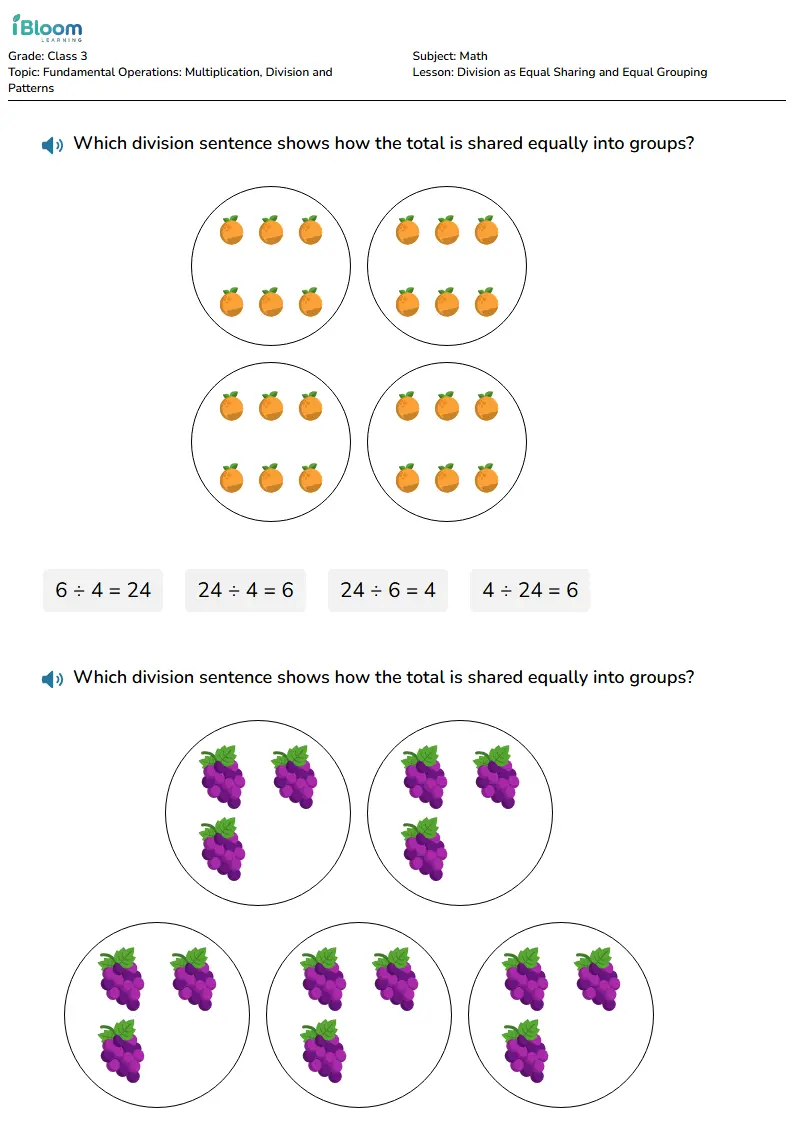
Free Division as Equal Sharing and Equal Grouping Worksheets for Class 3
Looking for class 3 math help? Download free, interactive division as equal sharing and equal grouping worksheets. AI-personalized and Common Core-aligned. Practice math with iBloom.
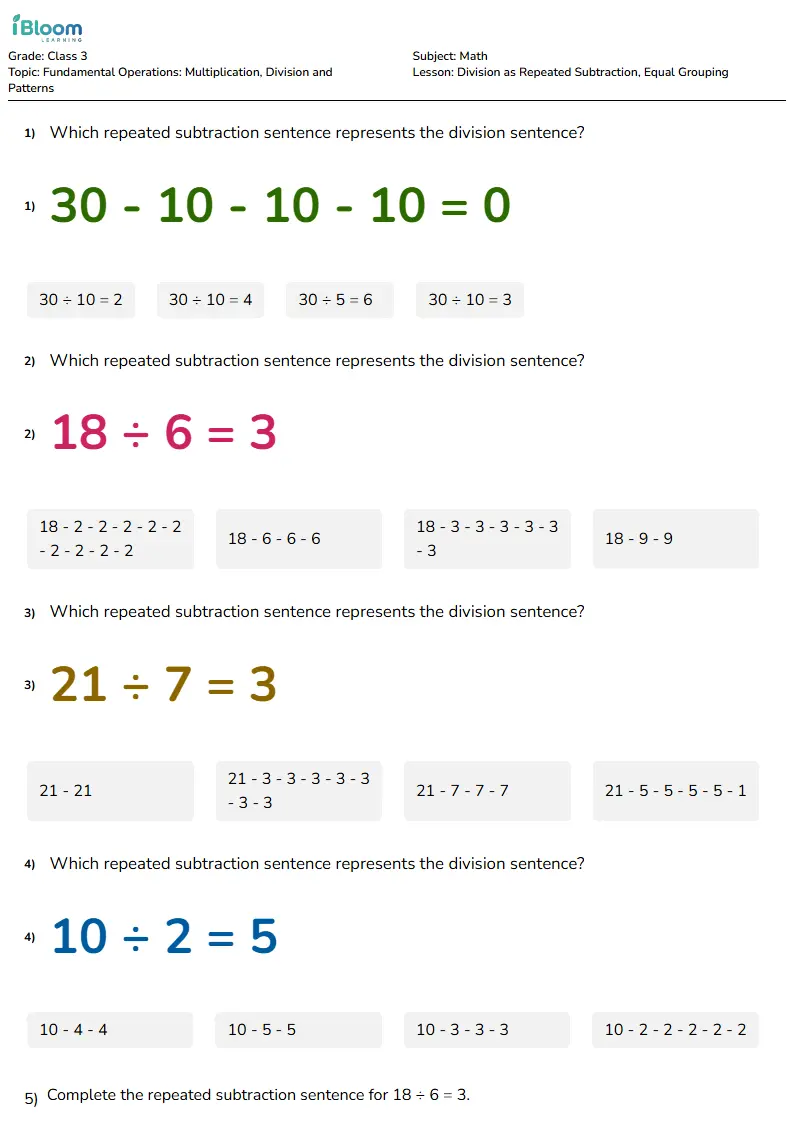
Free Division as Repeated Subtraction, Equal Grouping Worksheets for Class 3
Looking for class 3 math help? Download free, interactive division as repeated subtraction, equal grouping worksheets. AI-personalized and Common Core-aligned. Practice math with iBloom.
.webp)
Free Finding Missing Numbers in Multiplication (2,3) Worksheets for Class 3
Looking for class 3 math help? Download free, interactive finding missing numbers in multiplication (2,3) worksheets. AI-personalized and Common Core-aligned. Practice math with iBloom.
.webp)
Free Finding Missing Numbers in Multiplication (6,7) Worksheets for Class 3
Looking for class 3 math help? Download free, interactive finding missing numbers in multiplication (6,7) worksheets. AI-personalized and Common Core-aligned. Practice math with iBloom.
.webp)
Free Finding Missing Numbers in Multiplication (8,9) Worksheets for Class 3
Looking for class 3 math help? Download free, interactive finding missing numbers in multiplication (8,9) worksheets. AI-personalized and Common Core-aligned. Practice math with iBloom.
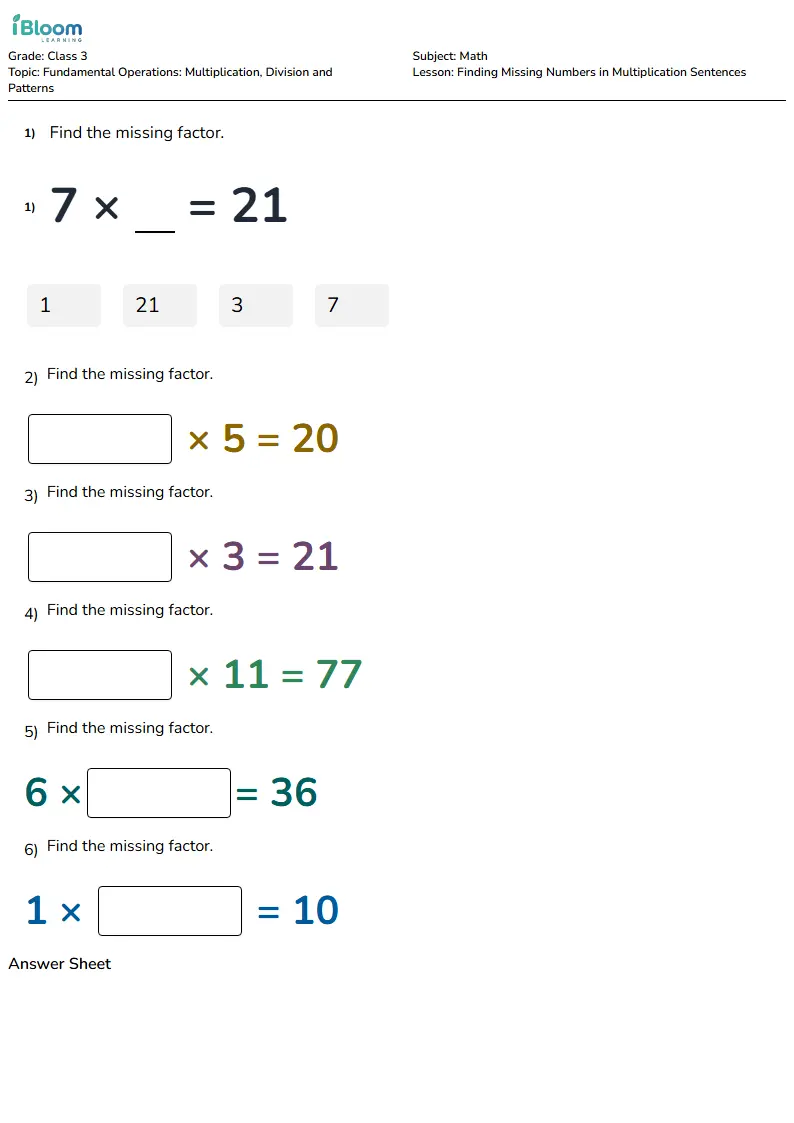
Free Finding Missing Numbers in Multiplication Sentences Worksheets for Class 3
Looking for class 3 math help? Download free, interactive finding missing numbers in multiplication sentences worksheets. AI-personalized and Common Core-aligned. Practice math with iBloom.
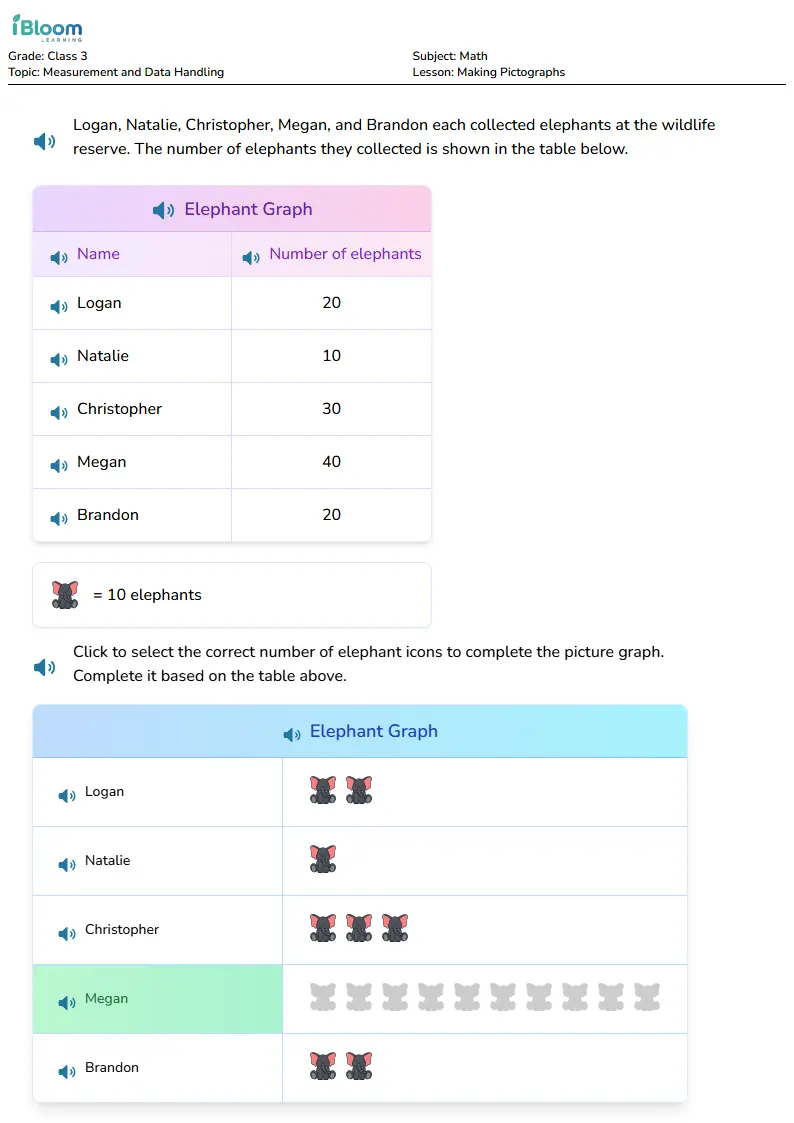
Free Making Pictographs Worksheets for Class 3
Looking for class 3 math help? Download free, interactive making pictographs worksheets. AI-personalized and Common Core-aligned. Practice math with iBloom.
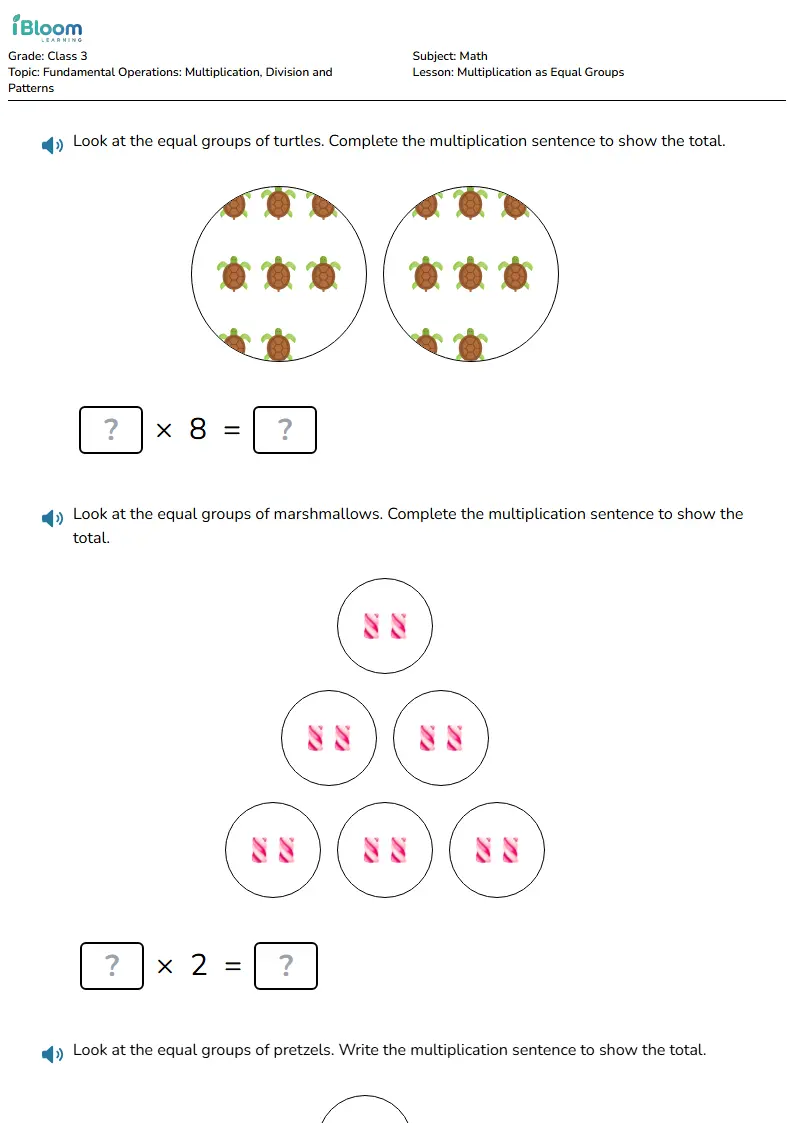
Free Multiplication as Equal Groups Worksheets for Class 3
Looking for class 3 math help? Download free, interactive multiplication as equal groups worksheets. AI-personalized and Common Core-aligned. Practice math with iBloom.
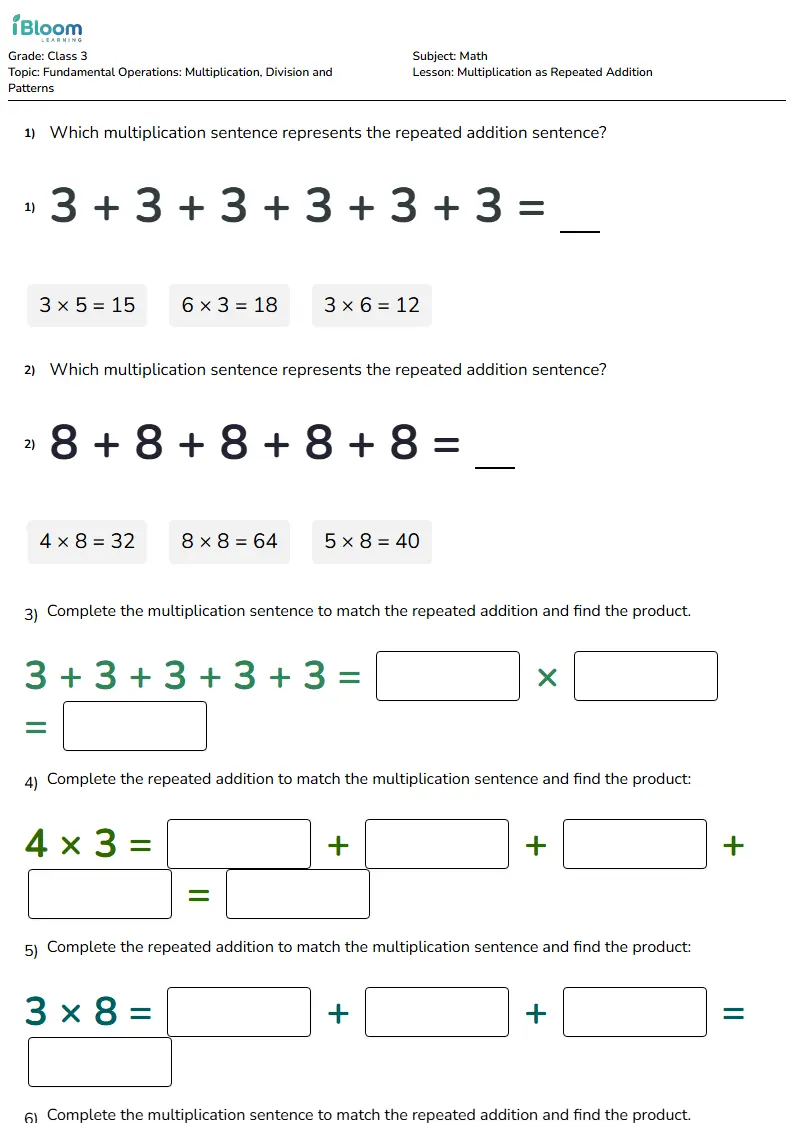
Free Multiplication as Repeated Addition Worksheets for Class 3
Looking for class 3 math help? Download free, interactive multiplication as repeated addition worksheets. AI-personalized and Common Core-aligned. Practice math with iBloom.
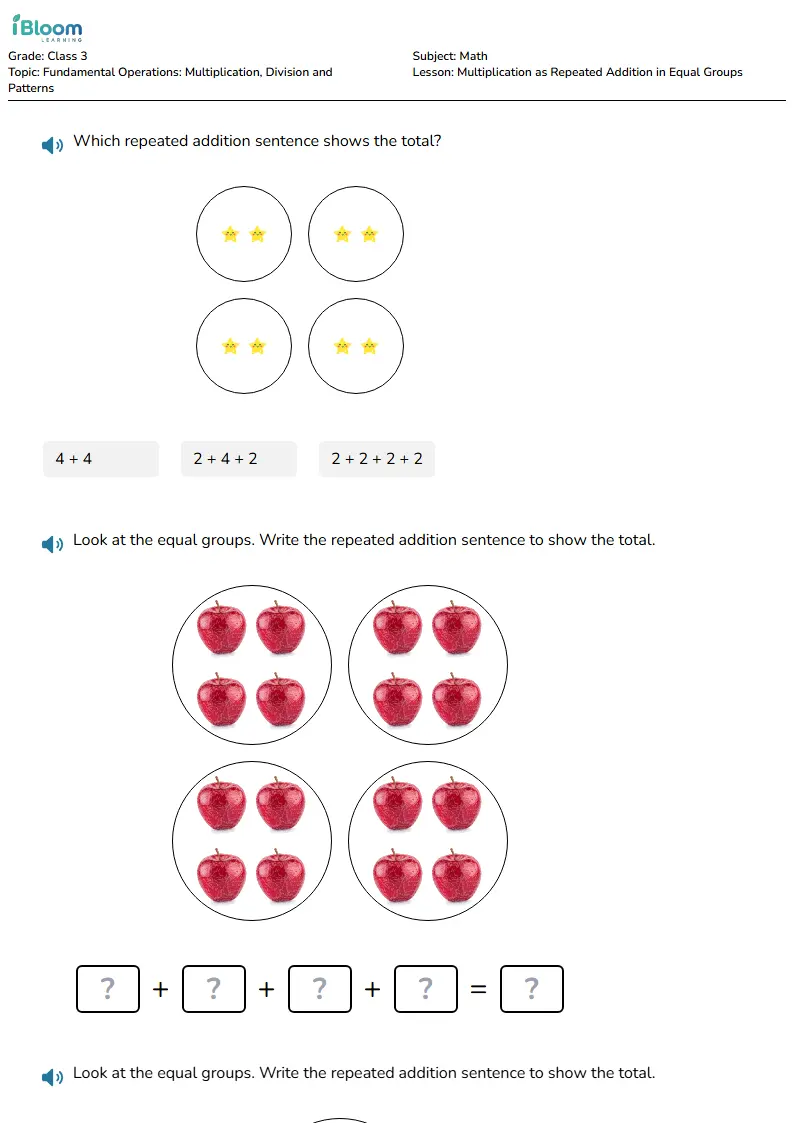
Free Multiplication as Repeated Addition in Equal Groups Worksheets for Class 3
Looking for class 3 math help? Download free, interactive multiplication as repeated addition in equal groups worksheets. AI-personalized and Common Core-aligned. Practice math with iBloom.
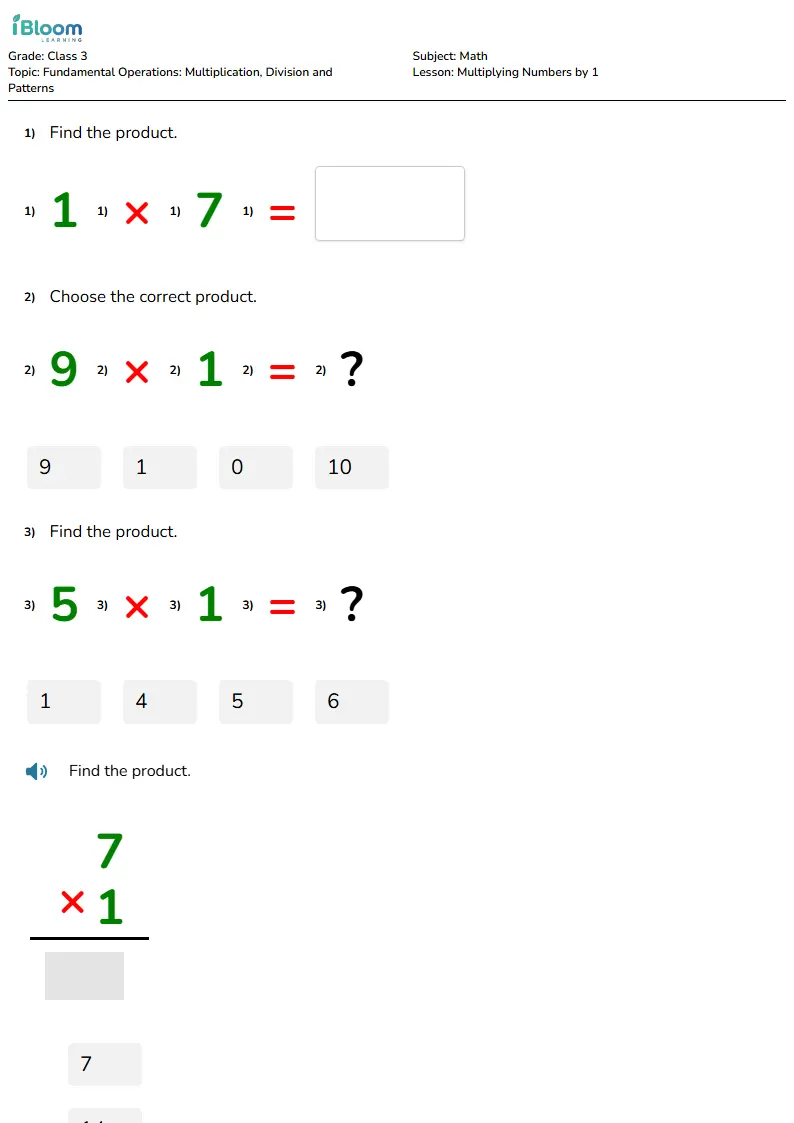
Free Multiplying Numbers by 1 Worksheets for Class 3
Looking for class 3 math help? Download free, interactive multiplying numbers by 1 worksheets. AI-personalized and Common Core-aligned. Practice math with iBloom.
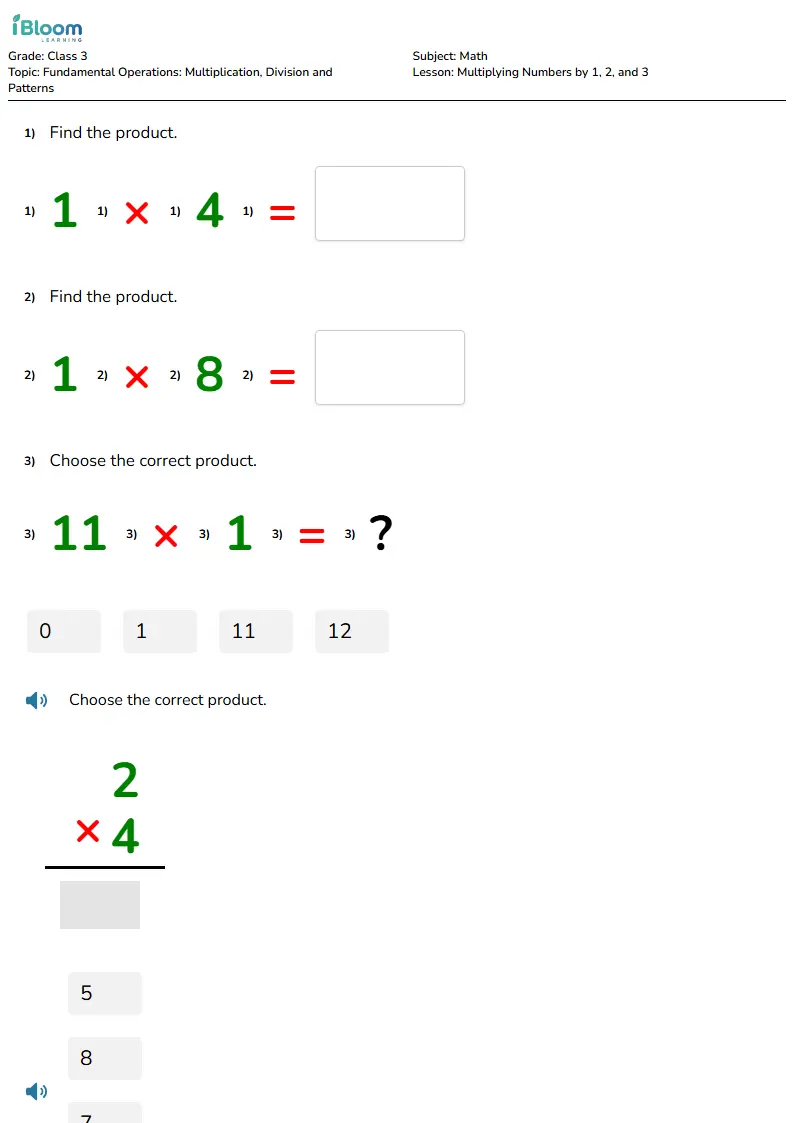
Free Multiplying Numbers by 1, 2, and 3 Worksheets for Class 3
Looking for class 3 math help? Download free, interactive multiplying numbers by 1, 2, and 3 worksheets. AI-personalized and Common Core-aligned. Practice math with iBloom.
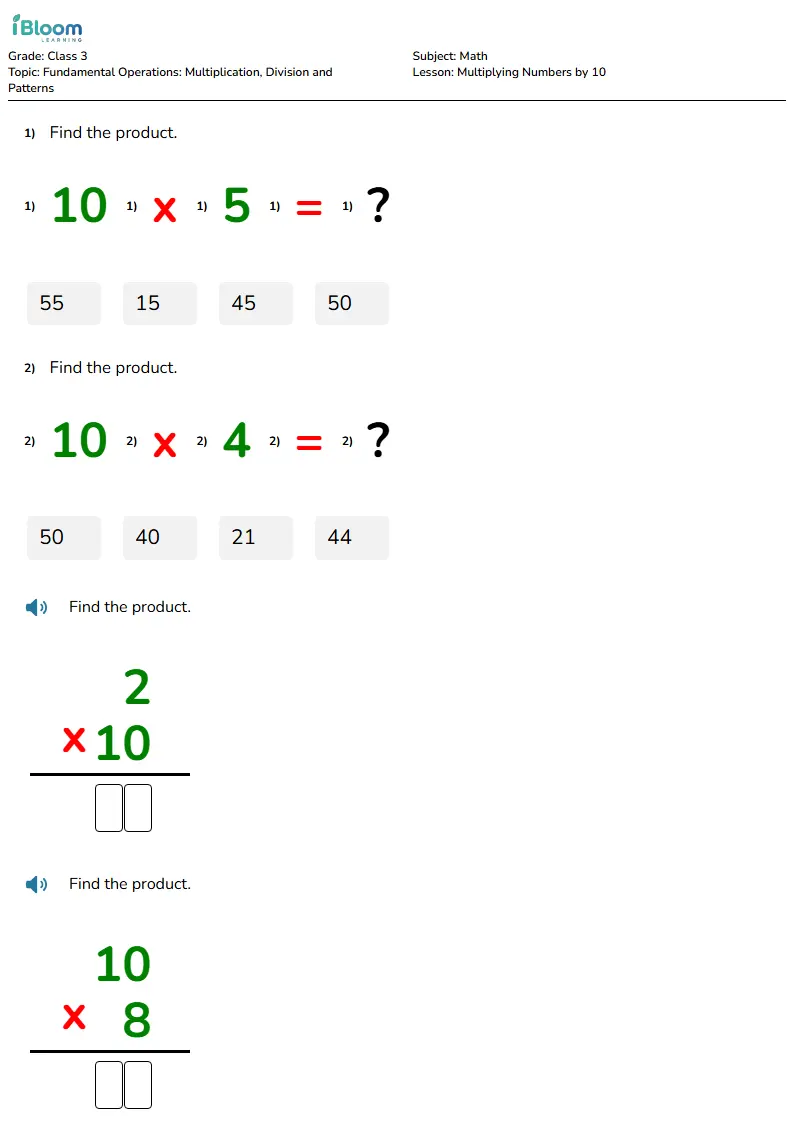
Free Multiplying Numbers by 10 Worksheets for Class 3
Looking for class 3 math help? Download free, interactive multiplying numbers by 10 worksheets. AI-personalized and Common Core-aligned. Practice math with iBloom.
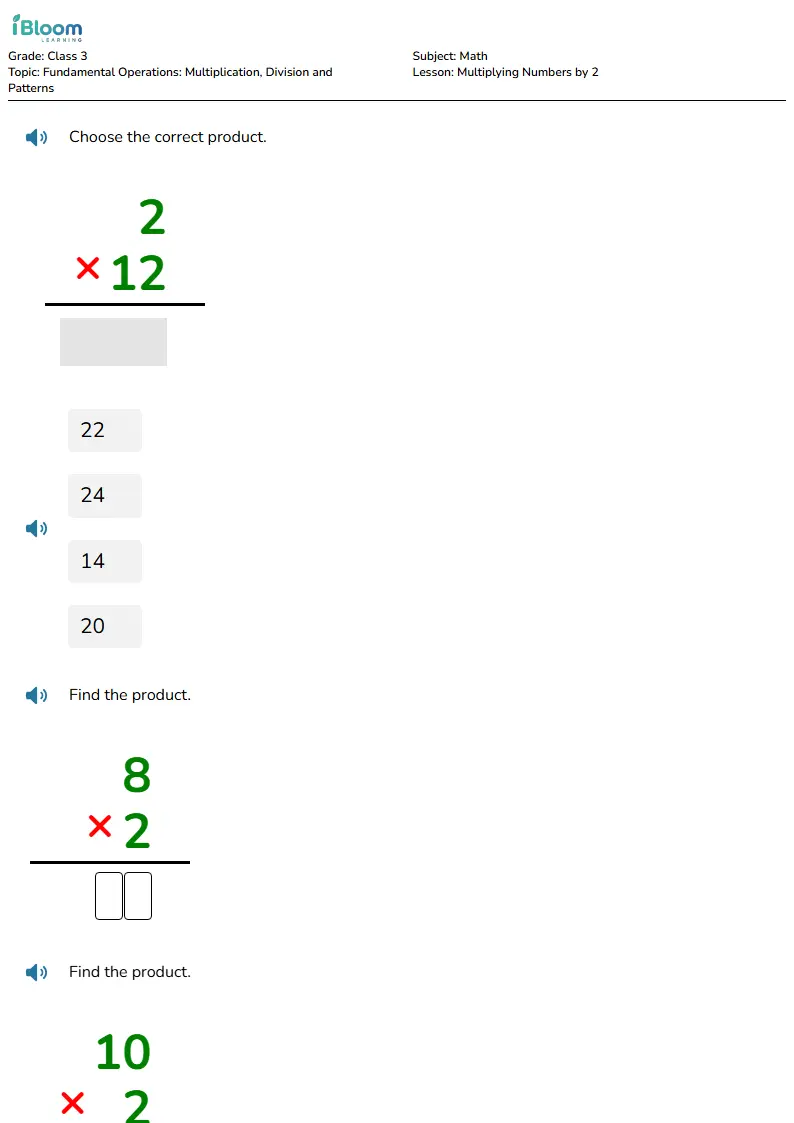
Free Multiplying Numbers by 2 Worksheets for Class 3
Looking for class 3 math help? Download free, interactive multiplying numbers by 2 worksheets. AI-personalized and Common Core-aligned. Practice math with iBloom.
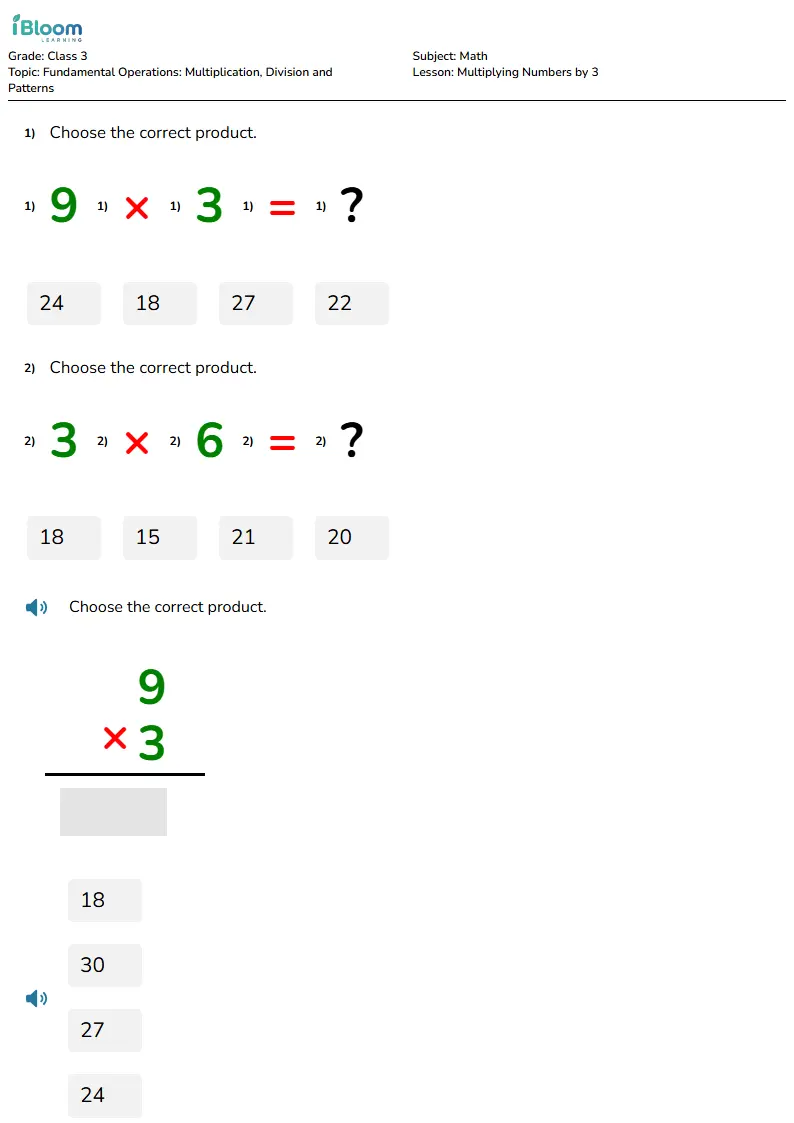
Free Multiplying Numbers by 3 Worksheets for Class 3
Looking for class 3 math help? Download free, interactive multiplying numbers by 3 worksheets. AI-personalized and Common Core-aligned. Practice math with iBloom.
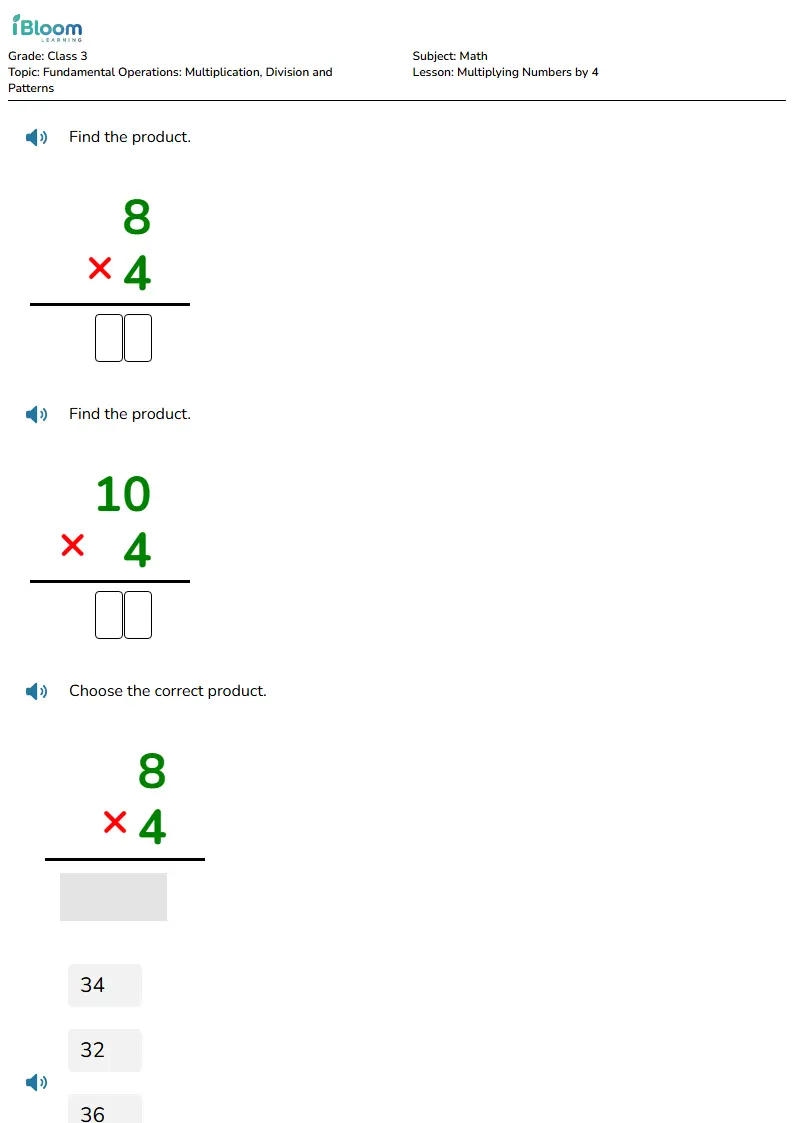
Free Multiplying Numbers by 4 Worksheets for Class 3
Looking for class 3 math help? Download free, interactive multiplying numbers by 4 worksheets. AI-personalized and Common Core-aligned. Practice math with iBloom.
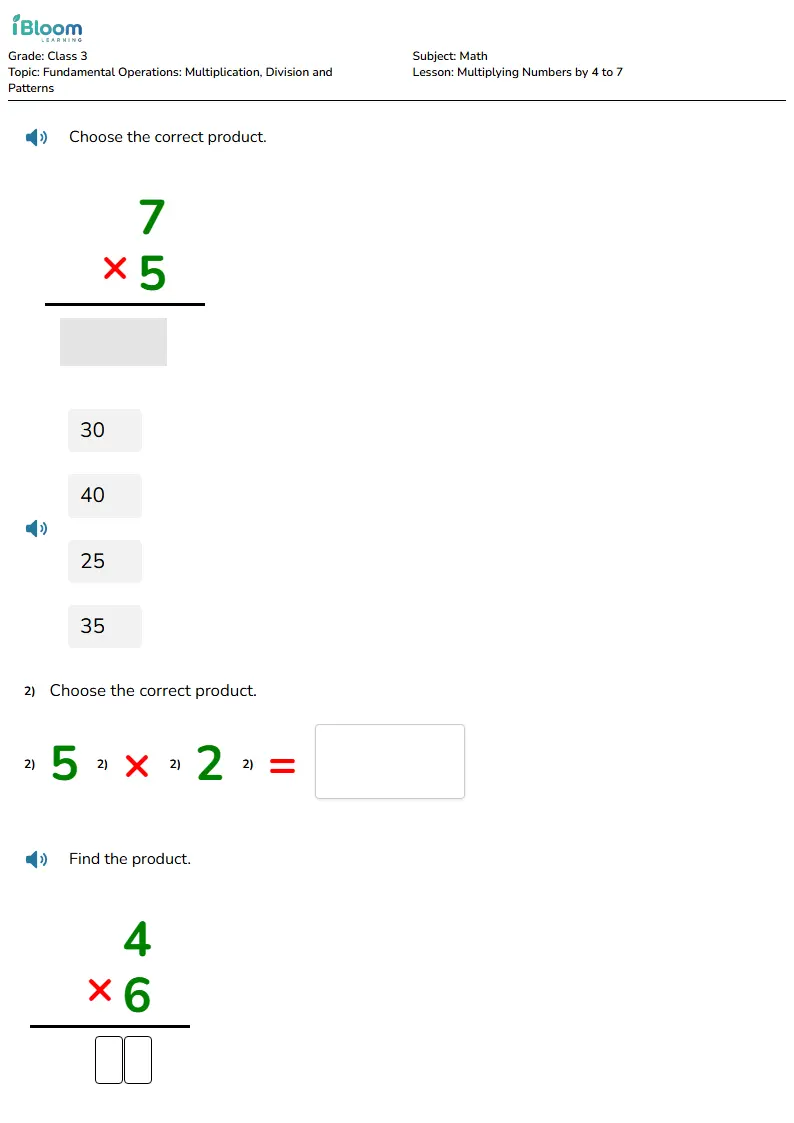
Free Multiplying Numbers by 4 to 7 Worksheets for Class 3
Looking for class 3 math help? Download free, interactive multiplying numbers by 4 to 7 worksheets. AI-personalized and Common Core-aligned. Practice math with iBloom.
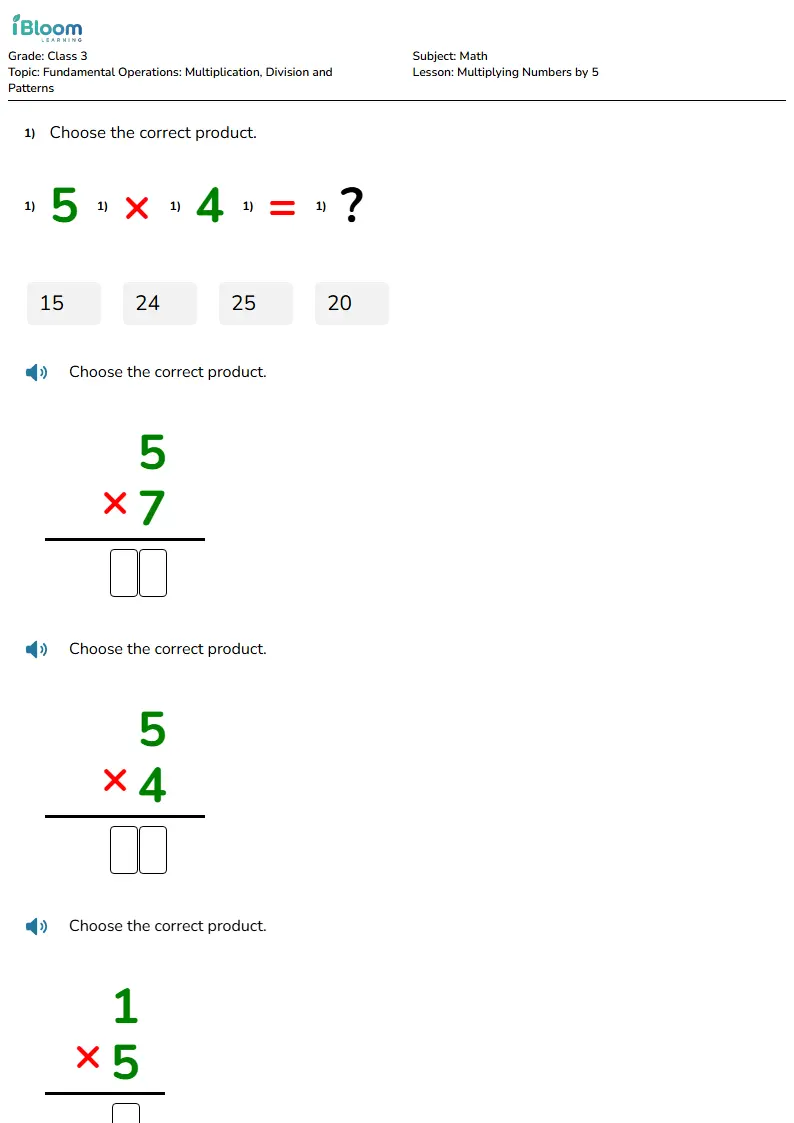
Free Multiplying Numbers by 5 Worksheets for Class 3
Looking for class 3 math help? Download free, interactive multiplying numbers by 5 worksheets. AI-personalized and Common Core-aligned. Practice math with iBloom.
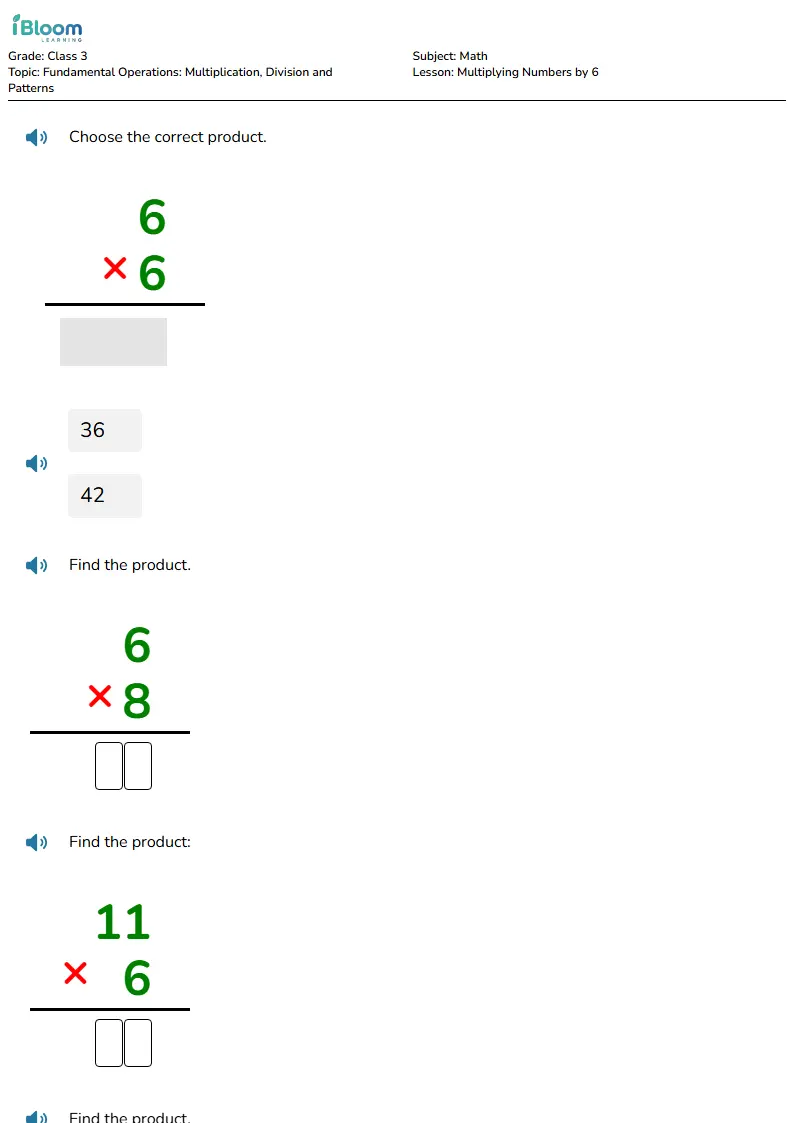
Free Multiplying Numbers by 6 Worksheets for Class 3
Looking for class 3 math help? Download free, interactive multiplying numbers by 6 worksheets. AI-personalized and Common Core-aligned. Practice math with iBloom.
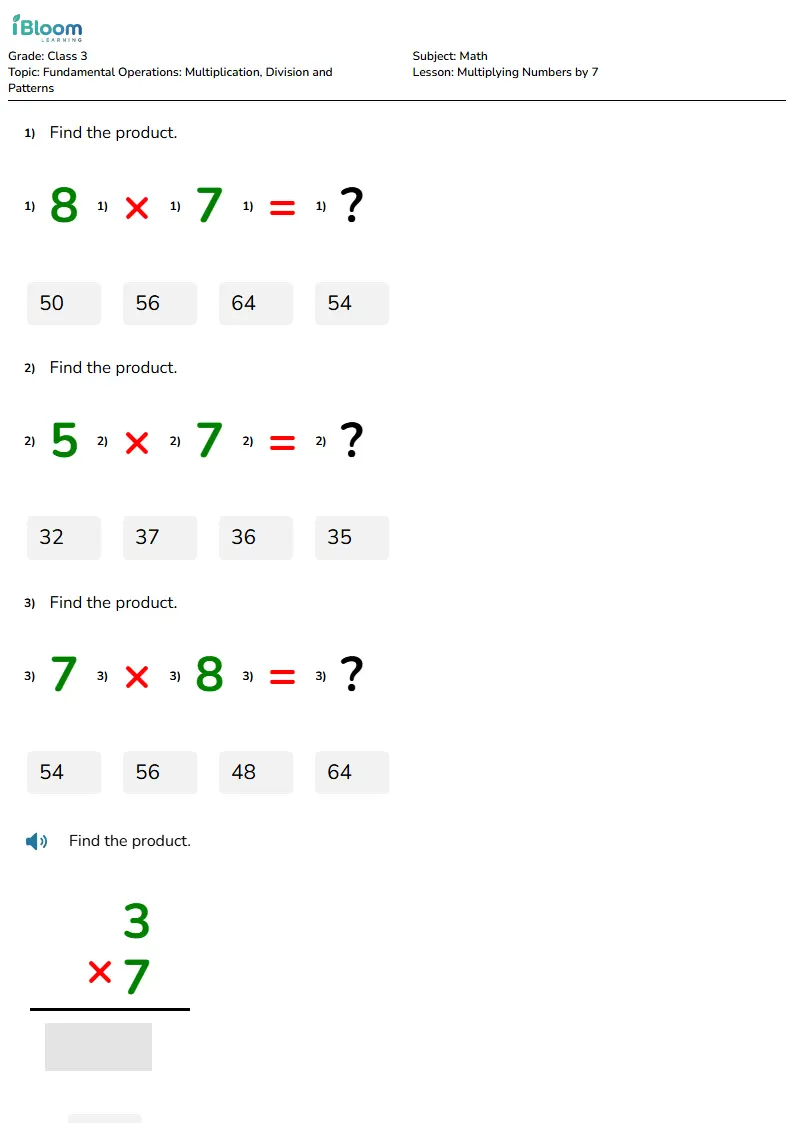
Free Multiplying Numbers by 7 Worksheets for Class 3
Looking for class 3 math help? Download free, interactive multiplying numbers by 7 worksheets. AI-personalized and Common Core-aligned. Practice math with iBloom.