Listening Carefully To Stories worksheet for Class 4

Lesson-Wise Builder
A premium AI tool that creates syllabus-aligned questions and worksheets for any lesson in seconds.
Tone of voice is the attitude or feeling a listener hears in the way words are spoken. To identify it, listen beyond the sentence itself and notice pitch, pace, volume, emphasis, pauses and energy. In the visible activity, a flat, uninterested delivery communicates boredom even though the spoken words sound agreeable.
What this Class 4 listening activity tests
The task asks learners to hear a line of dialogue, identify the tone conveyed by the voice and choose the most precise option. It is an oral-comprehension and inference activity: the answer comes from how the speaker delivers the words, not only from their dictionary meaning.
The page states that its audio-based questions are designed for interactive digital use and cannot be printed. Learners need to hear the sound to use the activity as intended. The picture can support understanding, but it should not replace the vocal evidence.
Listen for five kinds of vocal evidence
Pitch
Pitch describes how high, low or varied a voice sounds. A rising pitch may suggest surprise or a question. Very little pitch change can contribute to a flat or uninterested impression, although pitch should be considered with other clues.
Pace
Pace is the speed of speech. Fast delivery can show excitement, urgency or nervousness. Slow delivery may sound calm, tired, reluctant or thoughtful. The sentence and situation help distinguish those possibilities.
Volume
Volume can signal intensity, but loud does not always mean angry and soft does not always mean sad. A careful listener combines volume with pace, pitch and emphasis.
Emphasis
Stress on one word can change the implied meaning. Saying “Sure, whatever you want” may sound different from stressing “whatever” or “fine.” Listen for the word the speaker makes prominent.
Pauses and energy
Long pauses, drawn-out words or low energy may suggest hesitation, reluctance or boredom. Quick, energetic phrasing may point toward joy or excitement. These features provide evidence, not automatic labels.
Worked example: a flat, uninterested voice
The visible audio line is: “Sure, whatever you want to do is fine.” The prompt describes the delivery as flat and uninterested, then asks which tone it expresses. The options are boredom, surprise, joy and excitement.
Boredom is the best-supported choice. A flat delivery has little vocal variation and low energy. Surprise, joy and excitement usually need stronger changes in pitch, pace, volume or emphasis. The words “sure” and “fine” may look positive on the page, but the delivery shows that the speaker lacks enthusiasm.
This example teaches an important reading and listening habit: literal words and implied attitude can differ. A character can appear to agree while the voice communicates reluctance or disinterest.
A repeatable tone-listening routine
- Listen once for the basic message. Paraphrase what the speaker says without naming the tone yet.
- Listen again for delivery. Notice pitch, pace, volume, emphasis, pauses and overall energy.
- Name the strongest vocal clue. For example: “The pitch stays flat and the voice has little energy.”
- Compare the choices. Ask which options require vocal features that are absent.
- Select the most precise tone word. Choose boredom rather than a broad word such as “bad” or “unhappy” when the evidence supports it.
- Explain the answer. Complete the thought: “The voice sounds ___ because ___.”
Replaying the audio is useful when the first listening was spent understanding the words. A second listening lets the learner focus on how those words are delivered.
Distinguishing similar tones
Bored versus calm
Both may sound quiet or steady. Calm speech usually sounds controlled and settled; bored speech often sounds low-energy, disengaged or flat. Context and emphasis help separate them.
Joyful versus excited
Joy suggests happiness, while excitement adds heightened energy or anticipation. A joyful voice may be warm and bright without being fast or loud.
Surprised versus confused
Surprise often includes a sudden pitch rise or sharp reaction. Confusion may include hesitation, questioning emphasis or uncertain pauses.
Tired versus bored
Both can sound low-energy. Tired speech may be slow or weak because the speaker lacks energy; bored speech communicates a lack of interest. Learners should use the situation and wording as well as the sound.
Same sentence, different meaning
Try reading “That's exactly what I wanted” in several ways:
- with a bright pitch and lively pace to convey joy;
- with a sudden rise and sharp emphasis to convey surprise;
- with little pitch change and low energy to convey boredom;
- with slow pace and a pause before “wanted” to convey uncertainty;
- with strong stress on “exactly” to convey confidence or insistence.
The words stay the same, but the listener's interpretation changes. This helps learners understand dialogue, character attitude and implied meaning in stories.
Tone, mood and character feeling
Speaker tone is the attitude heard in a particular voice. Character feeling is the emotion a character experiences. Mood is the broader feeling created for the audience. They can overlap, but they are not interchangeable. A bored speaker can appear in a tense scene, and a calm speaker can create reassurance for the listener.
When a question asks about tone of voice, cite evidence from the sound. When it asks about mood, consider the whole scene. When it asks about a character's feeling, combine dialogue, actions and context.
Parent guidance
At home, say one neutral sentence in three different ways and ask the child to describe each delivery. Begin with clearly different tones, such as excitement, boredom and worry. After the child answers, ask which vocal feature provided the strongest clue.
- Let the child close their eyes for the first listening so the voice receives full attention.
- Teach a small set of precise tone words before adding more.
- Ask for evidence rather than accepting a guess.
- Allow a multilingual learner to name the feeling in a familiar language first, then connect it to the English tone word.
- Use a quiet setting so background sound does not obscure pace or emphasis.
Teacher and tutor guidance
Model a think-aloud that separates words from delivery: “The sentence says yes, but the pitch is flat and the energy is low, so I hear boredom rather than excitement.” Then let pairs read a short line in assigned tones while classmates identify the vocal clues.
Assess listening separately from reading whenever possible. A learner may understand tone in a voice but struggle to decode the written answer choices, or may read fluently without attending to expression. Short oral explanations reveal which part needs support.
- Use one dialogue line as a warm-up.
- Replay the audio before revealing or discussing the choices.
- Ask learners to eliminate one option with evidence.
- Compare two reasonable interpretations and decide which has stronger vocal support.
- Use an exit response containing a tone word and one specific vocal clue.
Common mistakes to watch for
- Choosing from the words alone and ignoring delivery.
- Using the picture as the only evidence.
- Assuming every loud voice is angry or every quiet voice is sad.
- Selecting a broad emotion when a more precise tone word fits.
- Confusing the speaker's tone with the mood of the whole story.
- Guessing after one unclear listening instead of replaying the audio.
- Naming the tone without explaining pitch, pace, volume, emphasis or energy.
Practice ideas
- Read “I can do that” as confident, worried, bored and excited.
- Record a learner's own expressive reading with permission, replay it and name the audible clues.
- Sort tone words by energy level, then discuss exceptions.
- Remove the picture and identify tone from audio alone.
- Read a dialogue with mismatched words and delivery, then explain the implied attitude.
- Write one sentence that could carry three different meanings when spoken differently.
Related concepts
Listening for tone connects with oral fluency, prosody, dialogue, characterisation, inference, point of view, mood and implied meaning. The next step is to explain how a character's tone affects another character or changes the listener's interpretation of a scene.
Continue with related iBloom practice
- explore bringing stories to life: Extends expressive voice, delivery, and story meaning.
- continue with Class 4 story understanding: Connects careful listening with identifying the important meaning of a story.
Frequently Asked Questions
What is tone of voice?
It is the attitude or feeling conveyed through vocal delivery. Listeners infer it from features such as pitch, pace, volume, emphasis, pauses and energy.
Why does the flat voice in the activity express boredom?
The delivery is described as flat and uninterested. Its low energy and limited variation fit boredom better than surprise, joy or excitement.
Can the same words communicate different tones?
Yes. Changing pitch, pace, volume or emphasis can make one sentence sound joyful, doubtful, bored, annoyed or excited.
Should a learner use the picture to answer?
The picture may support context, but this activity is specifically audio-based. The answer should be justified with vocal evidence rather than the image alone.
What if two tone words seem possible?
Compare the exact vocal clues and the context. Choose the most precise word, then explain why it fits better than the alternative.
More practice for this grade
More English Language Arts worksheets
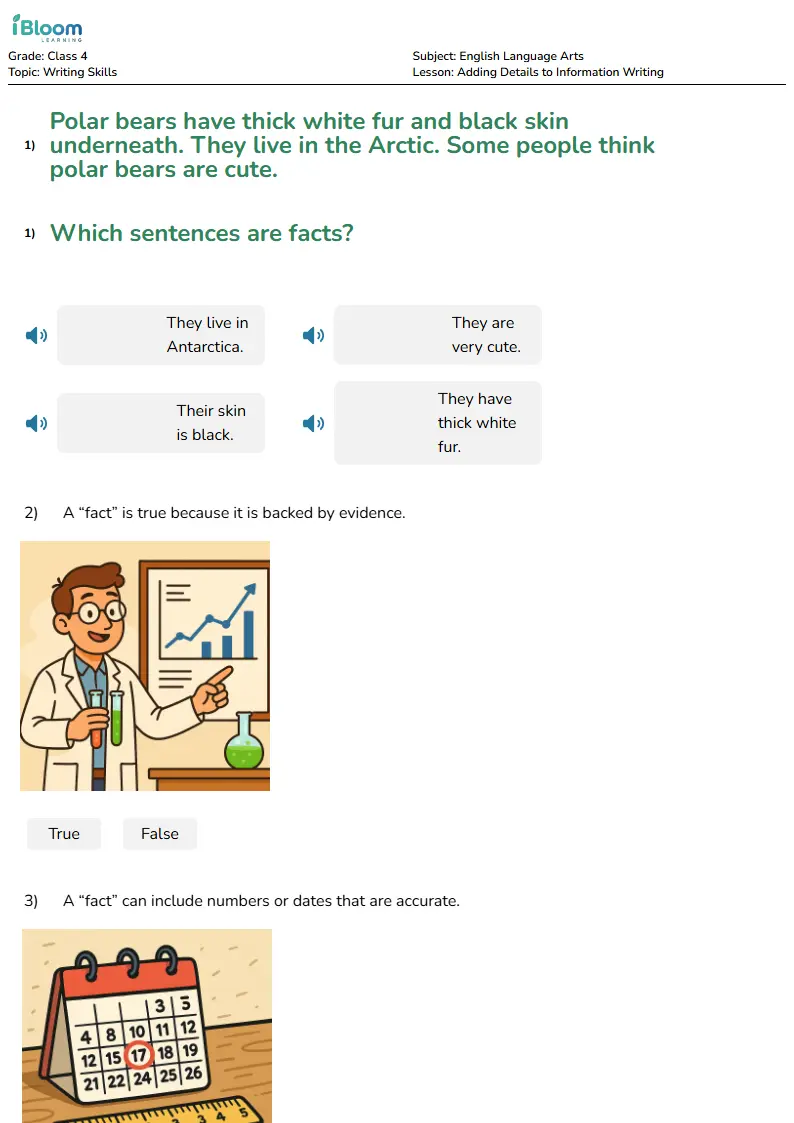
Free Adding Details to Information Writing Worksheets for Class 4
Looking for class 4 english language arts help? Download free, interactive adding details to information writing worksheets. AI-personalized and Common Core-aligned. Practice early literacy with iBloom.
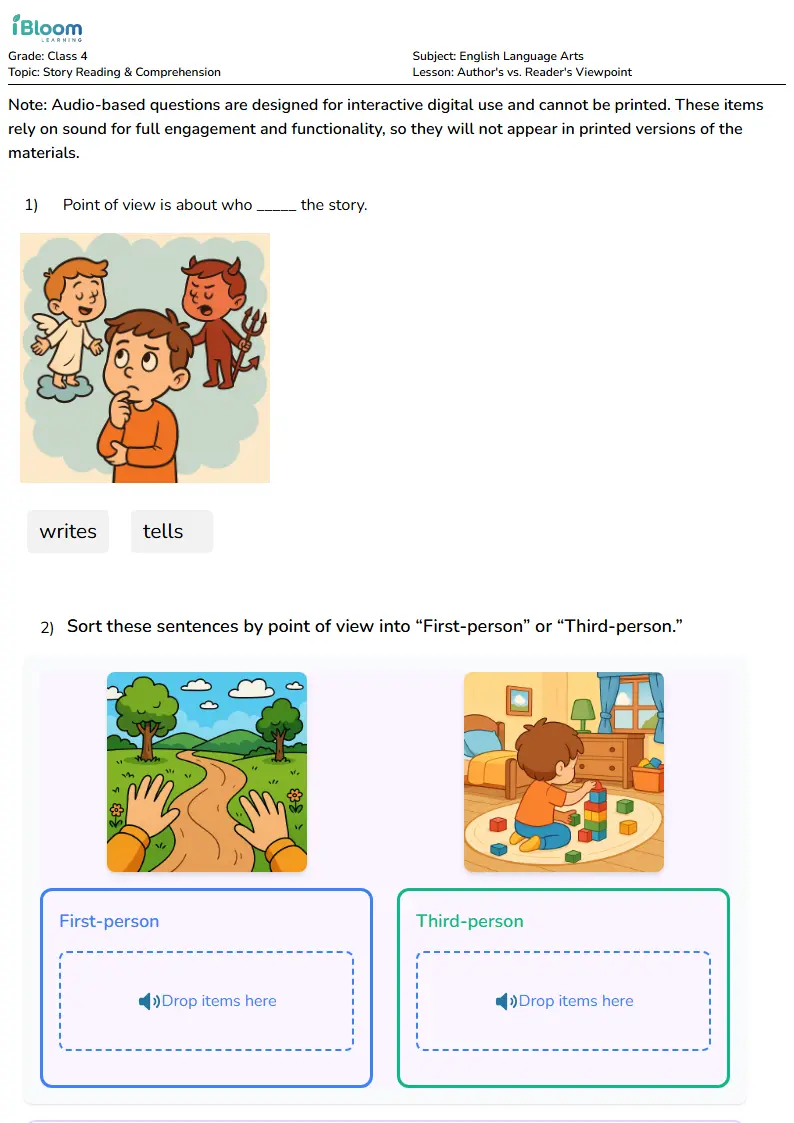
Free Author's vs. Reader's Viewpoint Worksheets for Class 4
Looking for class 4 english language arts help? Download free, interactive author's vs. reader's viewpoint worksheets. AI-personalized and Common Core-aligned. Practice early literacy with iBloom.
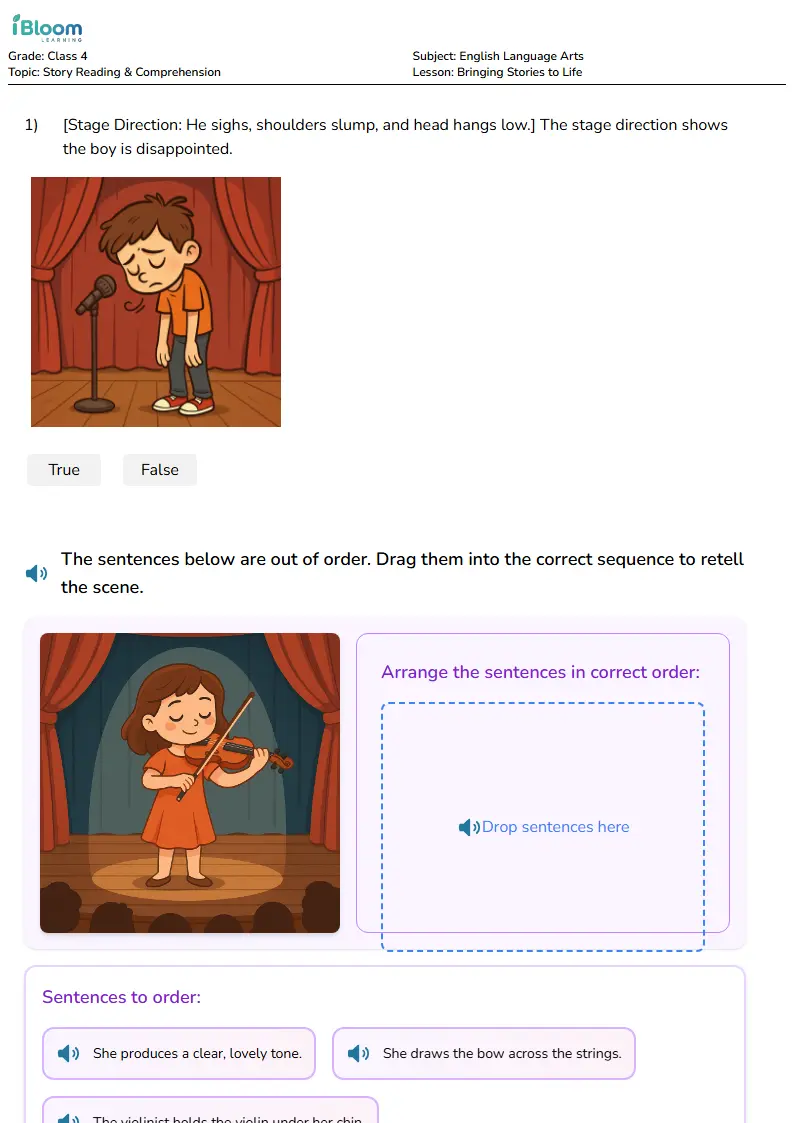
Free Bringing Stories to Life Worksheets for Class 4
Looking for class 4 english language arts help? Download free, interactive bringing stories to life worksheets. AI-personalized and Common Core-aligned. Practice early literacy with iBloom.
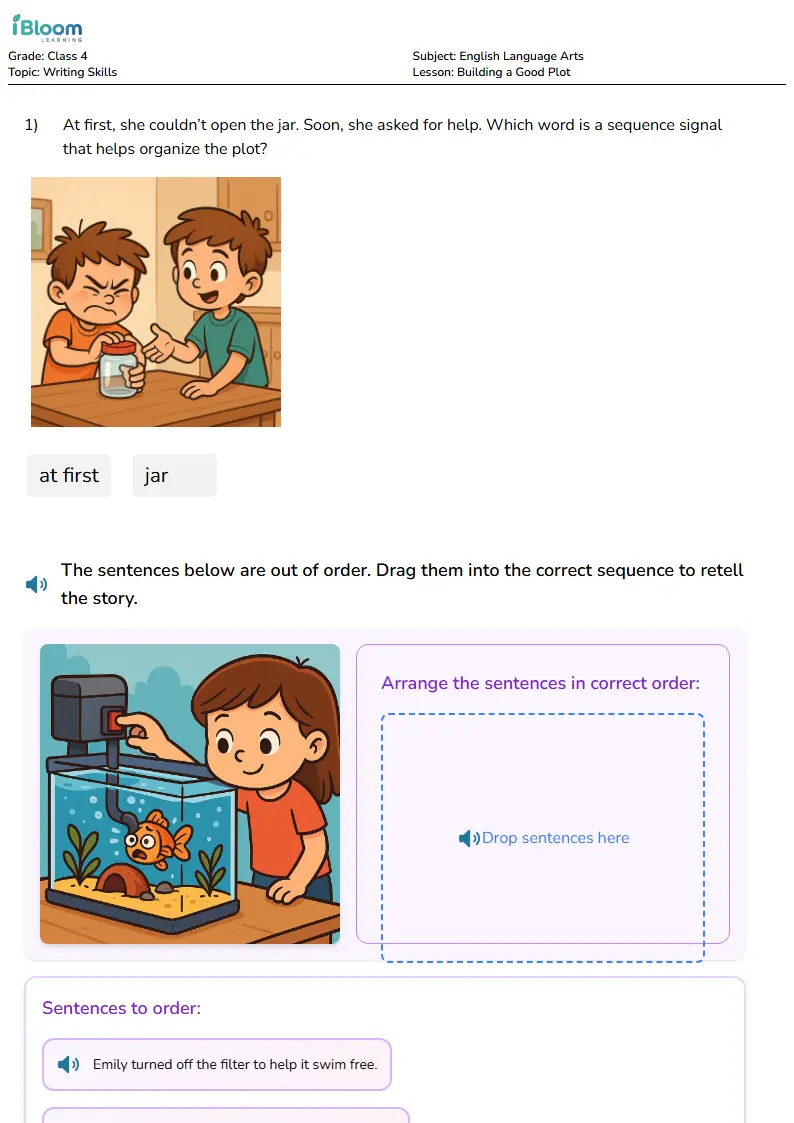
Free Building a Good Plot Worksheets for Class 4
Looking for class 4 english language arts help? Download free, interactive building a good plot worksheets. AI-personalized and Common Core-aligned. Practice early literacy with iBloom.
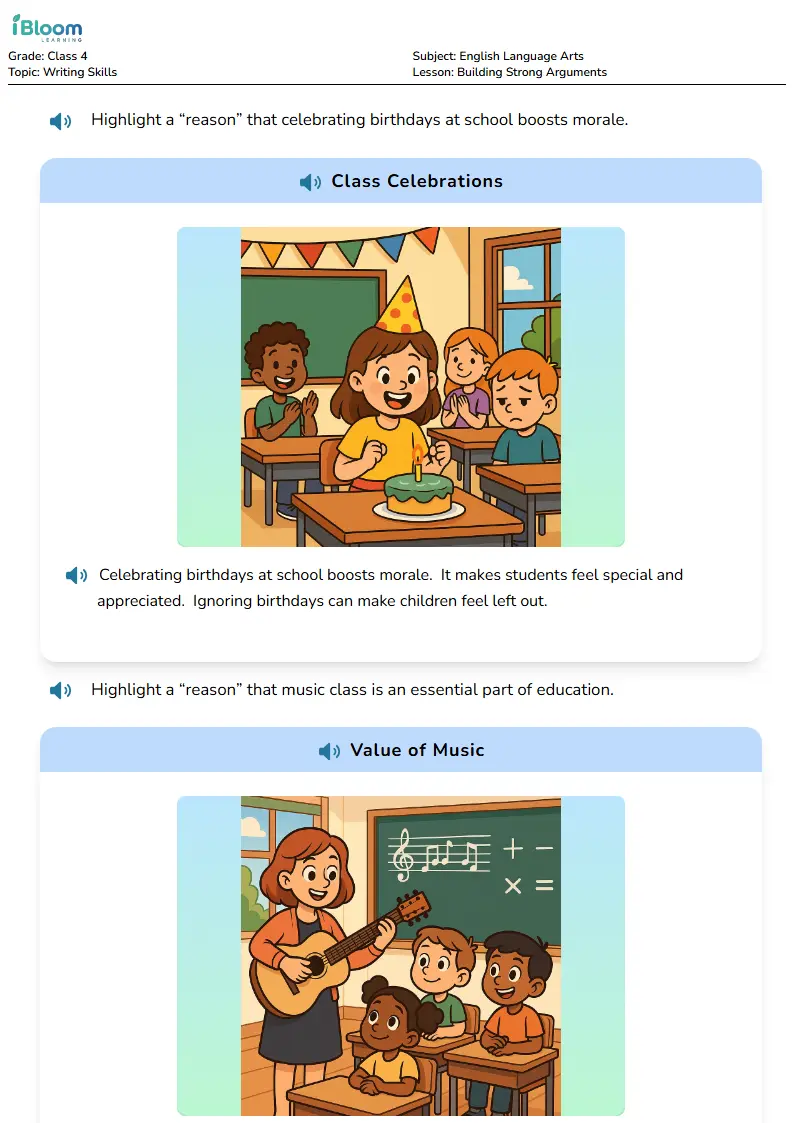
Free Building Strong Arguments Worksheets for Class 4
Looking for class 4 english language arts help? Download free, interactive building strong arguments worksheets. AI-personalized and Common Core-aligned. Practice early literacy with iBloom.
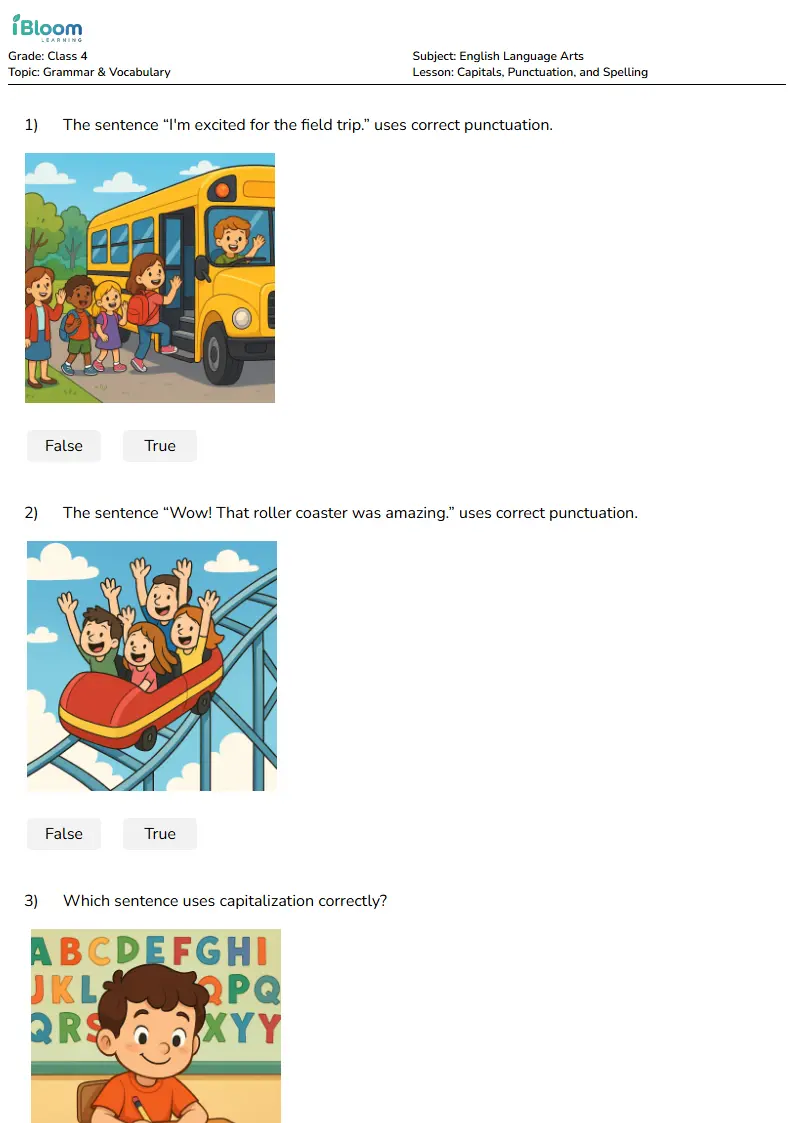
Free Capitals, Punctuation, and Spelling Worksheets for Class 4
Looking for class 4 english language arts help? Download free, interactive capitals, punctuation, and spelling worksheets. AI-personalized and Common Core-aligned. Practice early literacy with iBloom.
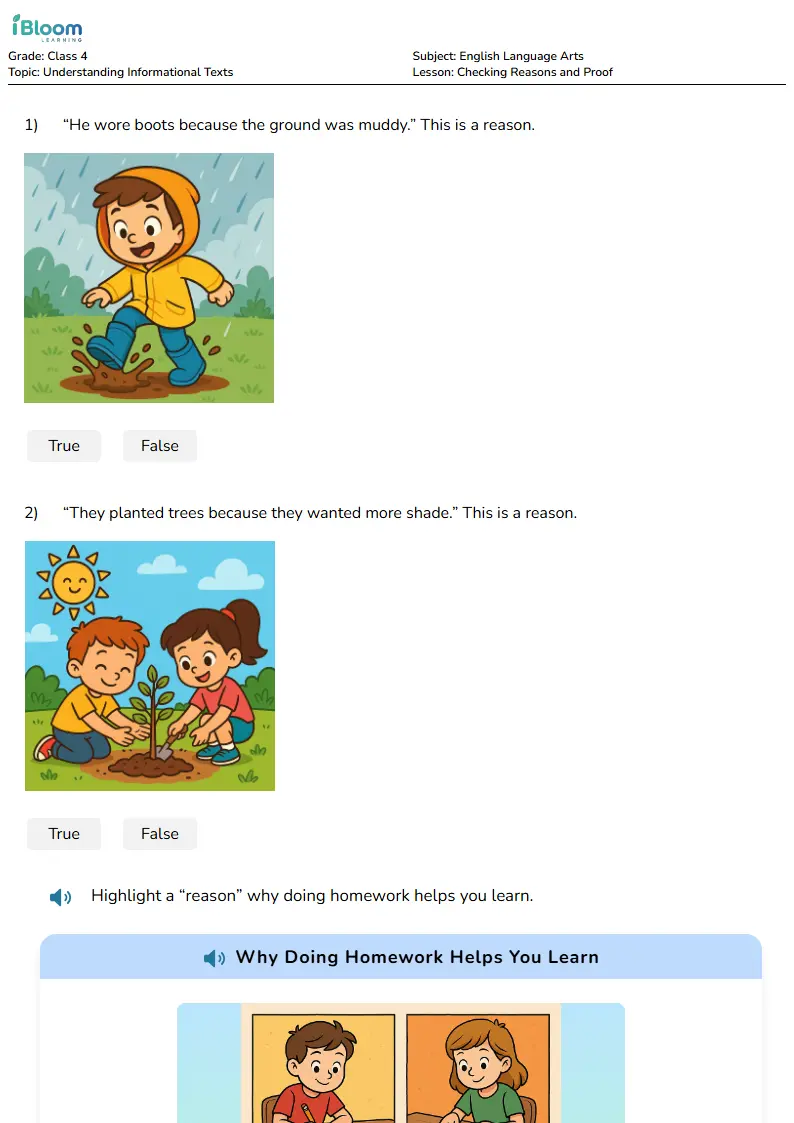
Free Checking Reasons and Proof Worksheets for Class 4
Looking for class 4 english language arts help? Download free, interactive checking reasons and proof worksheets. AI-personalized and Common Core-aligned. Practice early literacy with iBloom.
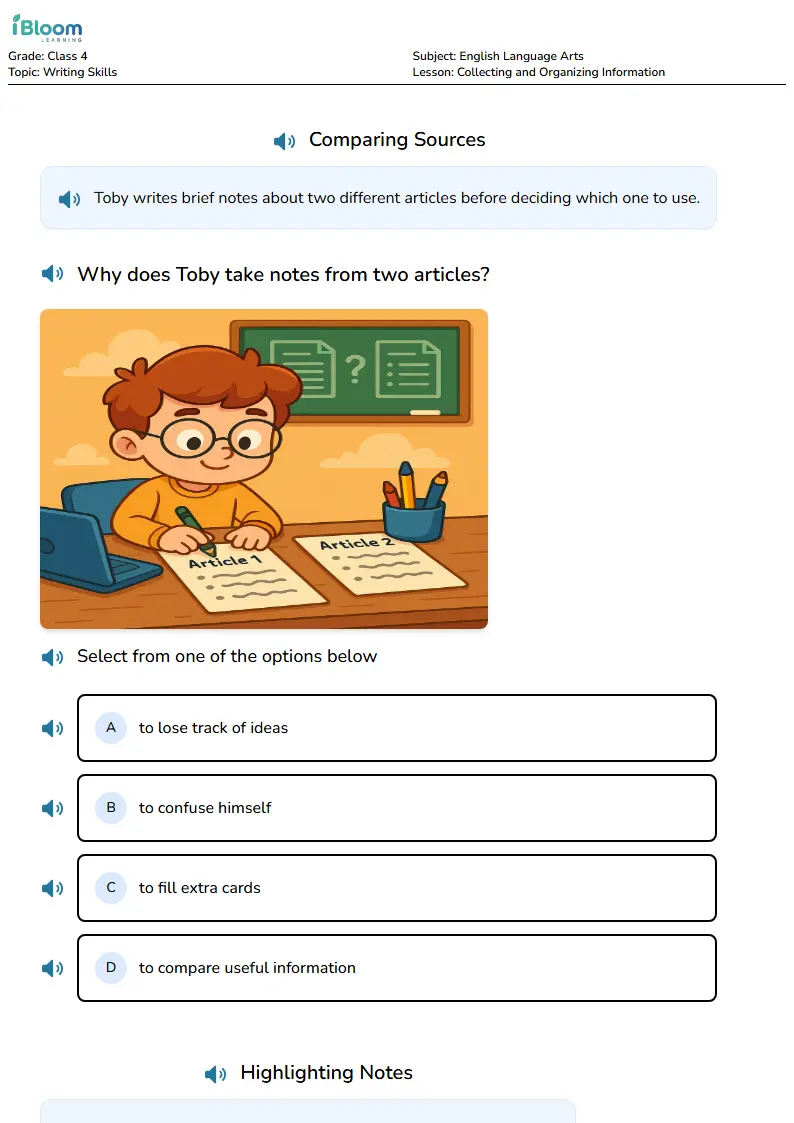
Free Collecting and Organizing Information Worksheets for Class 4
Looking for class 4 english language arts help? Download free, interactive collecting and organizing information worksheets. AI-personalized and Common Core-aligned. Practice early literacy with iBloom.
Free Combining Information from Two Texts Worksheets for Class 4
Looking for class 4 english language arts help? Download free, interactive combining information from two texts worksheets. AI-personalized and Common Core-aligned. Practice early literacy with iBloom.
Free Comparing Arguments Worksheets for Class 4
Looking for class 4 english language arts help? Download free, interactive comparing arguments worksheets. AI-personalized and Common Core-aligned. Practice early literacy with iBloom.
Free Comparing Different Accounts Worksheets for Class 4
Looking for class 4 english language arts help? Download free, interactive comparing different accounts worksheets. AI-personalized and Common Core-aligned. Practice early literacy with iBloom.
Free Comparing How Texts Are Organized Worksheets for Class 4
Looking for class 4 english language arts help? Download free, interactive comparing how texts are organized worksheets. AI-personalized and Common Core-aligned. Practice early literacy with iBloom.
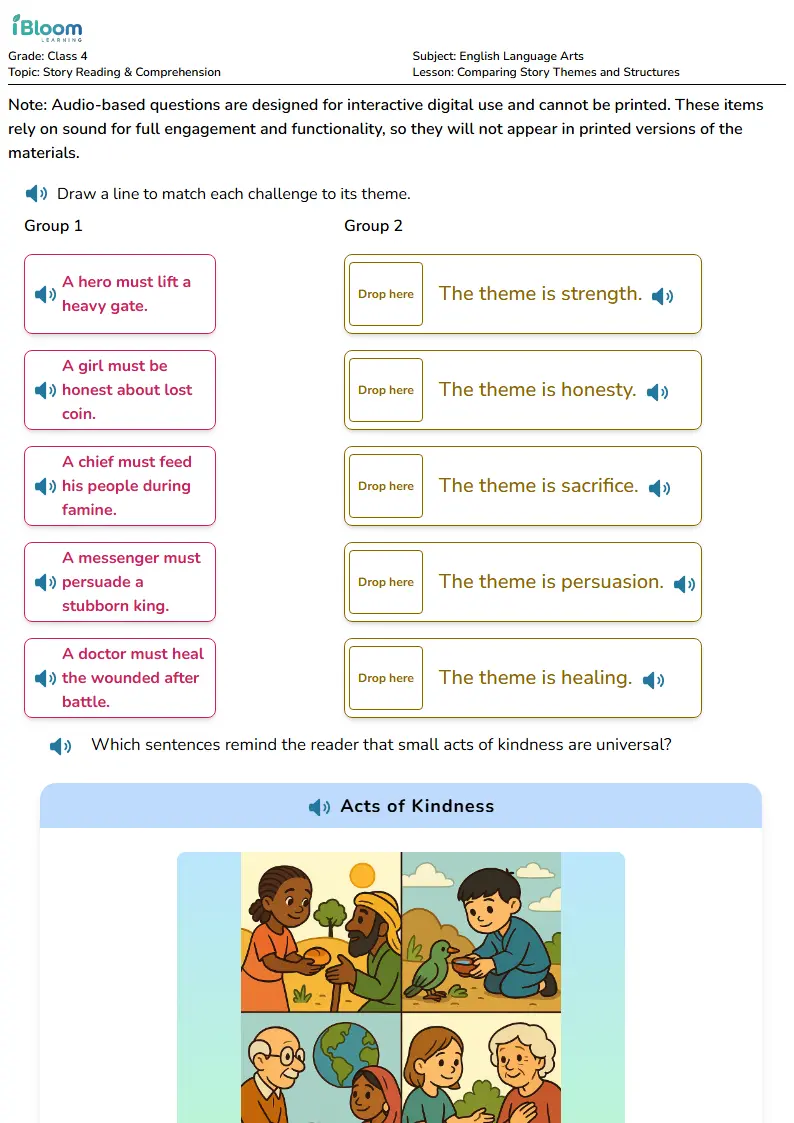
Free Comparing Story Themes and Structures Worksheets for Class 4
Looking for class 4 english language arts help? Download free, interactive comparing story themes and structures worksheets. AI-personalized and Common Core-aligned. Practice early literacy with iBloom.
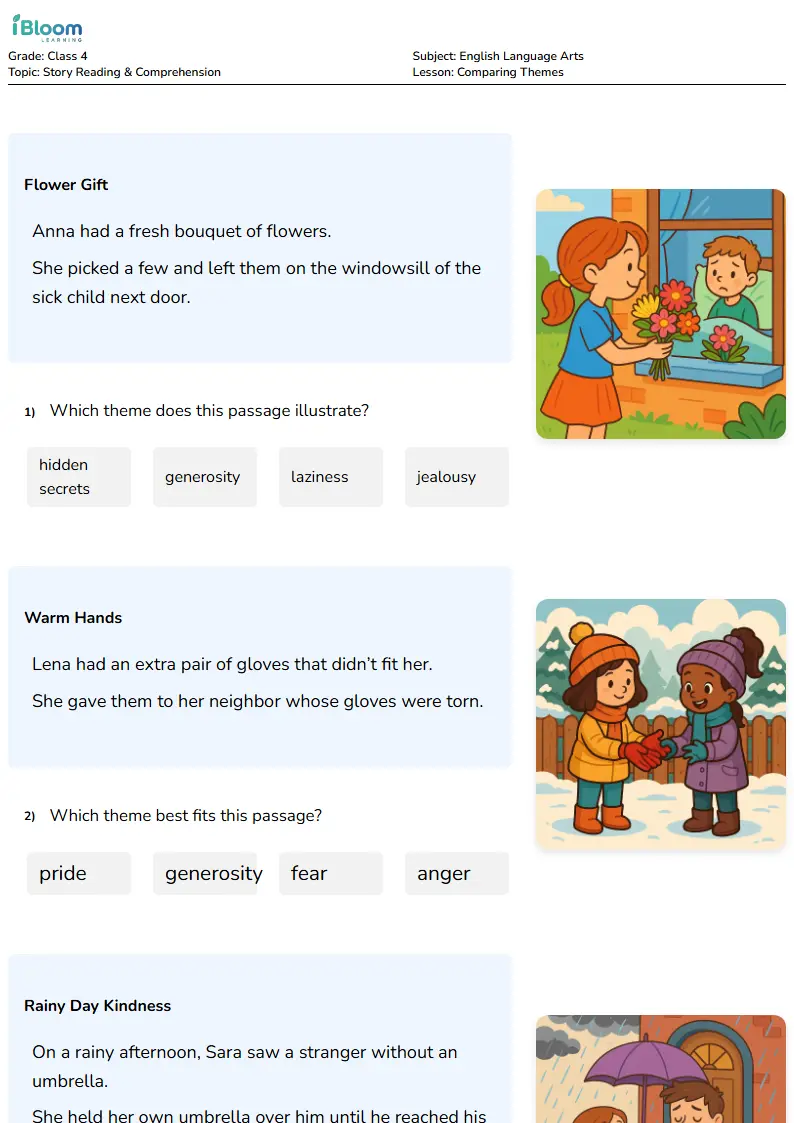
Free Comparing Themes Worksheets for Class 4
Looking for class 4 english language arts help? Download free, interactive comparing themes worksheets. AI-personalized and Common Core-aligned. Practice early literacy with iBloom.
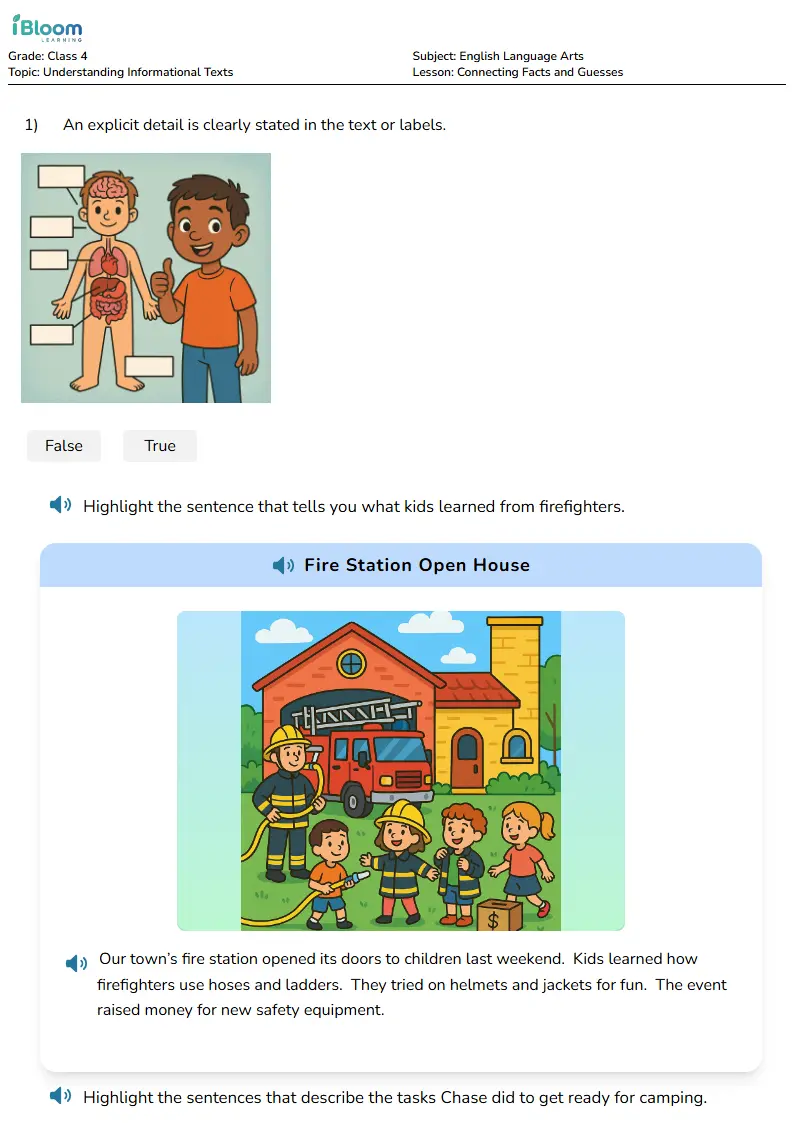
Free Connecting Facts and Guesses Worksheets for Class 4
Looking for class 4 english language arts help? Download free, interactive connecting facts and guesses worksheets. AI-personalized and Common Core-aligned. Practice early literacy with iBloom.
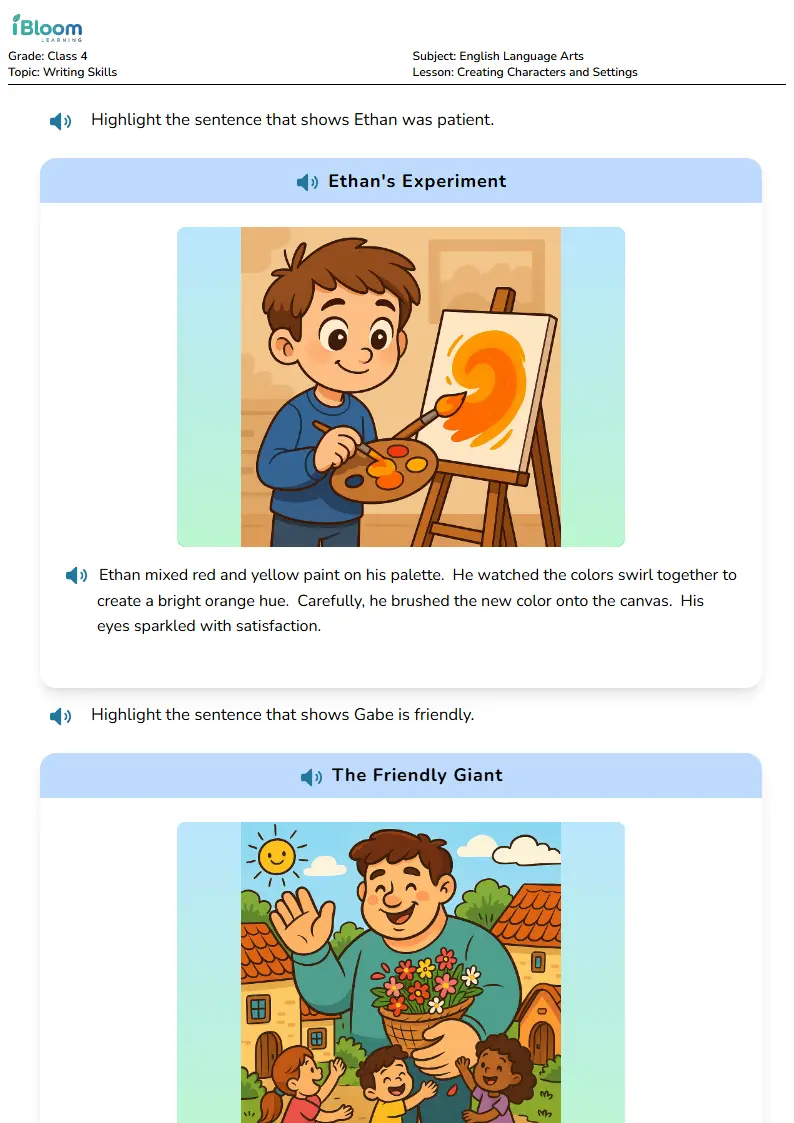
Free Creating Characters and Settings Worksheets for Class 4
Looking for class 4 english language arts help? Download free, interactive creating characters and settings worksheets. AI-personalized and Common Core-aligned. Practice early literacy with iBloom.
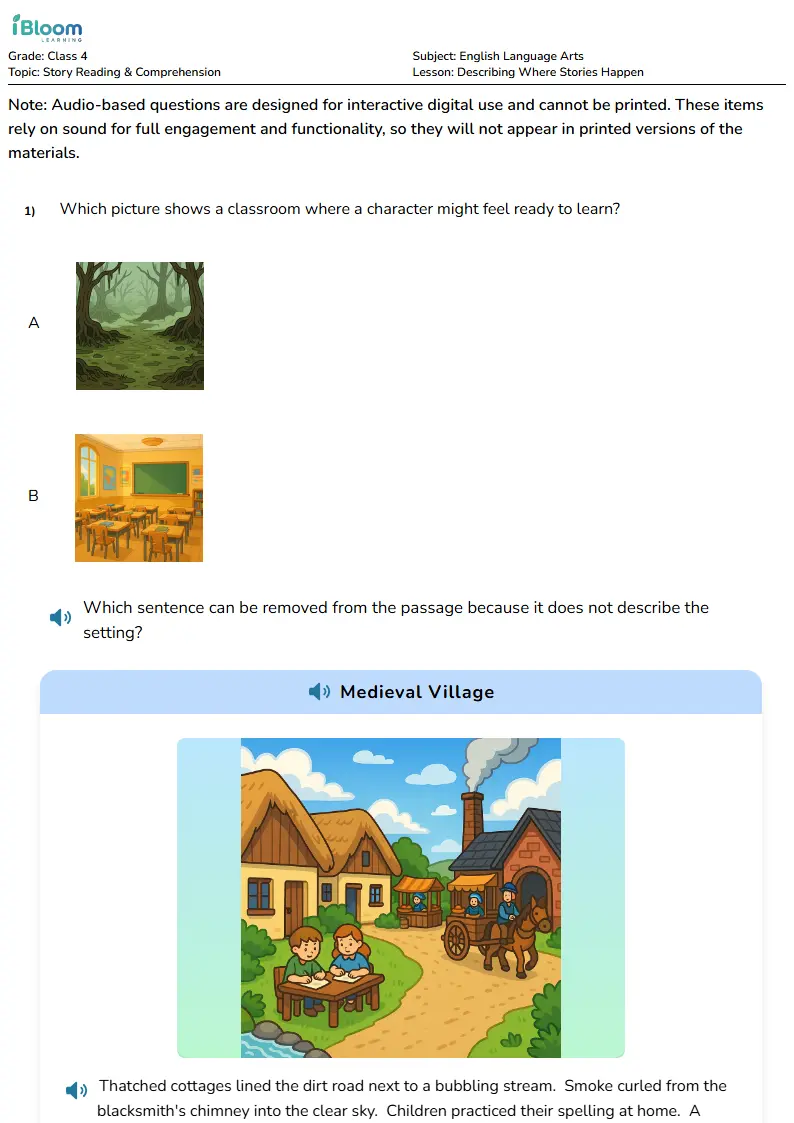
Free Describing Where Stories Happen Worksheets for Class 4
Looking for class 4 english language arts help? Download free, interactive describing where stories happen worksheets. AI-personalized and Common Core-aligned. Practice early literacy with iBloom.
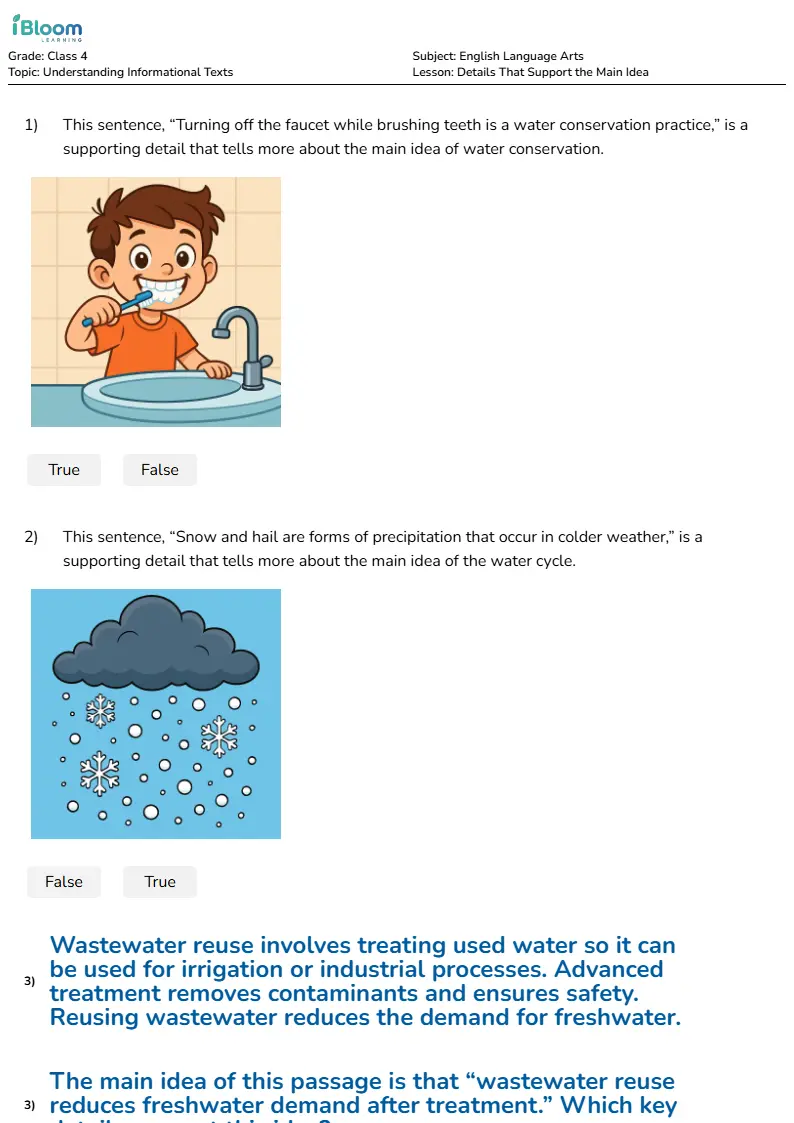
Free Details That Support the Main Idea Worksheets for Class 4
Looking for class 4 english language arts help? Download free, interactive details that support the main idea worksheets. AI-personalized and Common Core-aligned. Practice early literacy with iBloom.
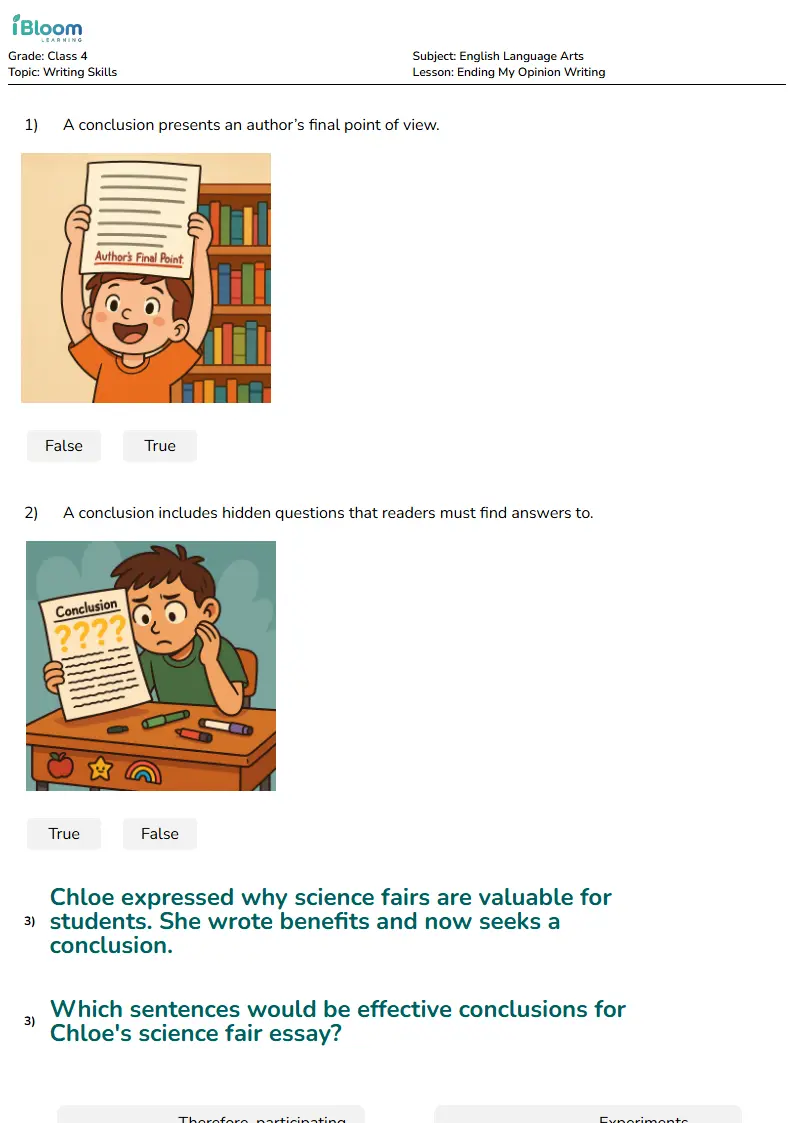
Free Ending My Opinion Writing Worksheets for Class 4
Looking for class 4 english language arts help? Download free, interactive ending my opinion writing worksheets. AI-personalized and Common Core-aligned. Practice early literacy with iBloom.
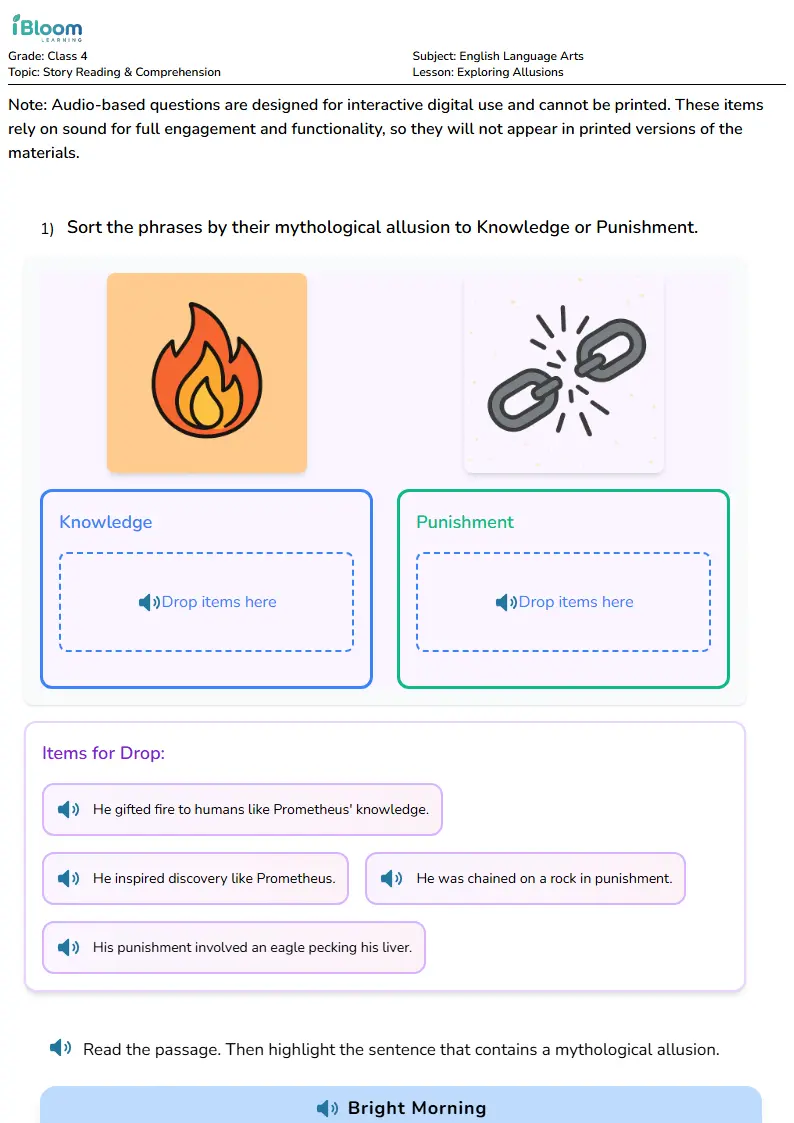
Free Exploring Allusions Worksheets for Class 4
Looking for class 4 english language arts help? Download free, interactive exploring allusions worksheets. AI-personalized and Common Core-aligned. Practice early literacy with iBloom.
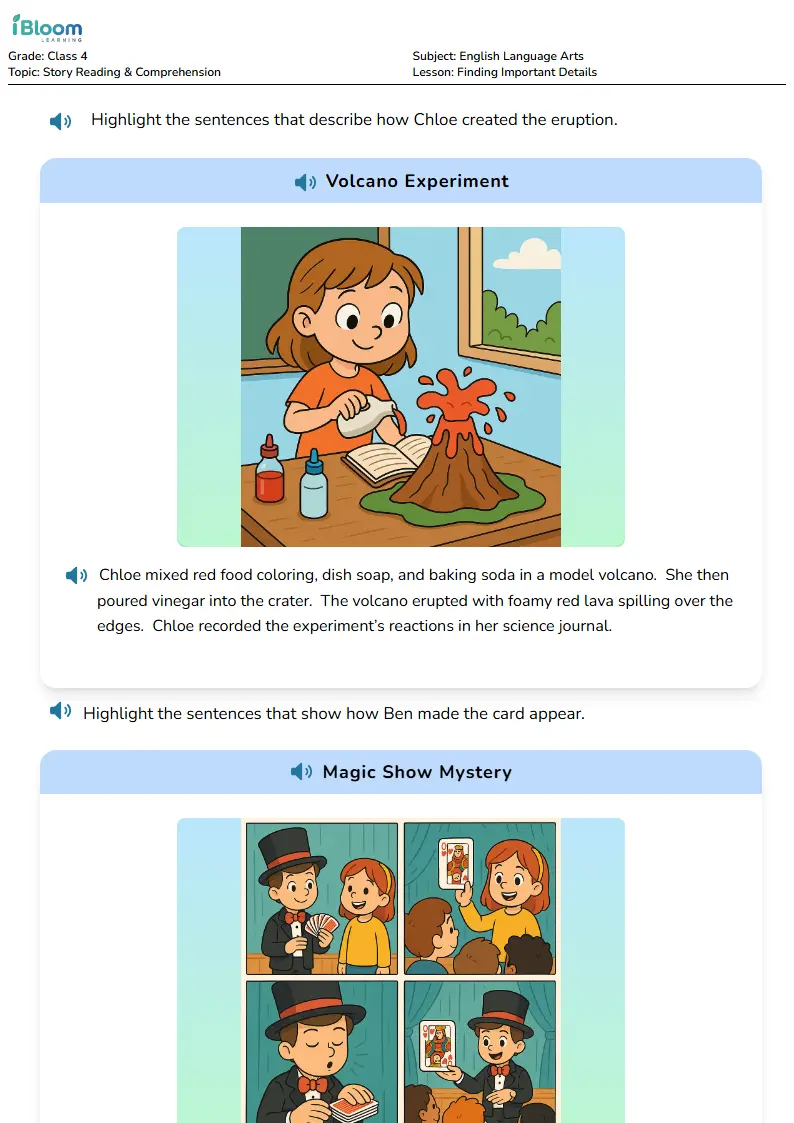
Free Finding Important Details Worksheets for Class 4
Looking for class 4 english language arts help? Download free, interactive finding important details worksheets. AI-personalized and Common Core-aligned. Practice early literacy with iBloom.
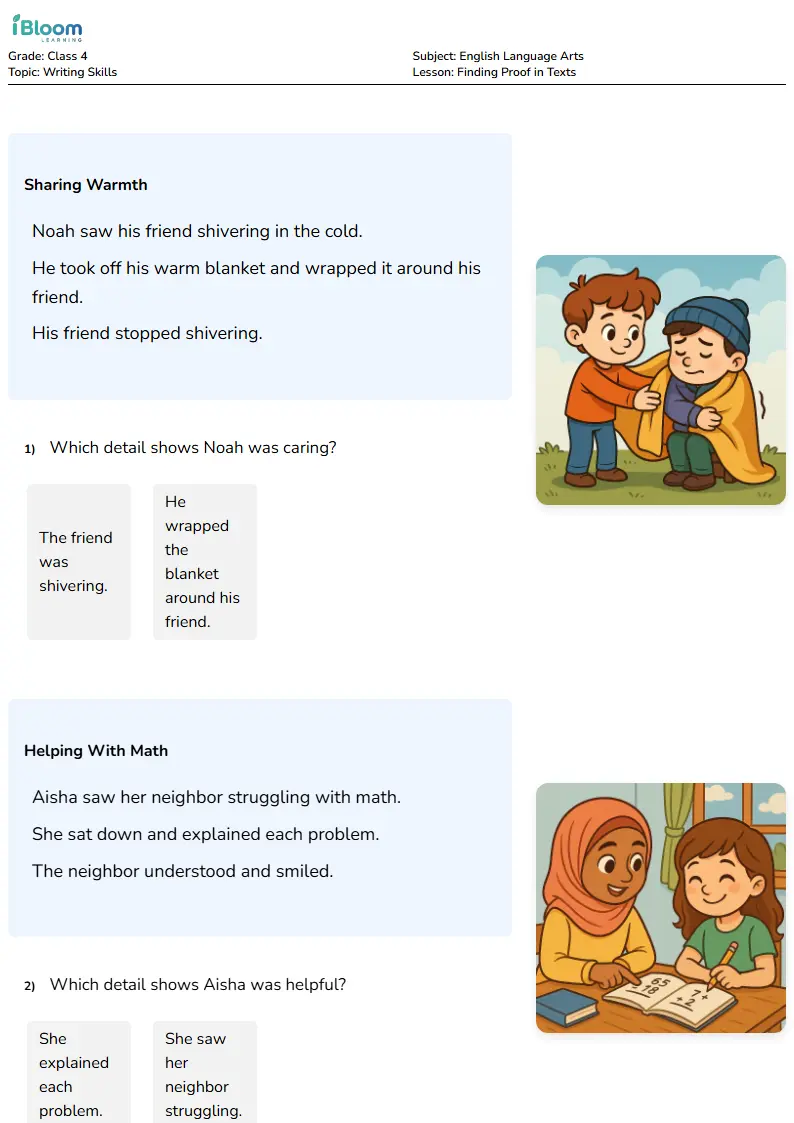
Free Finding Proof in Texts Worksheets for Class 4
Looking for class 4 english language arts help? Download free, interactive finding proof in texts worksheets. AI-personalized and Common Core-aligned. Practice early literacy with iBloom.
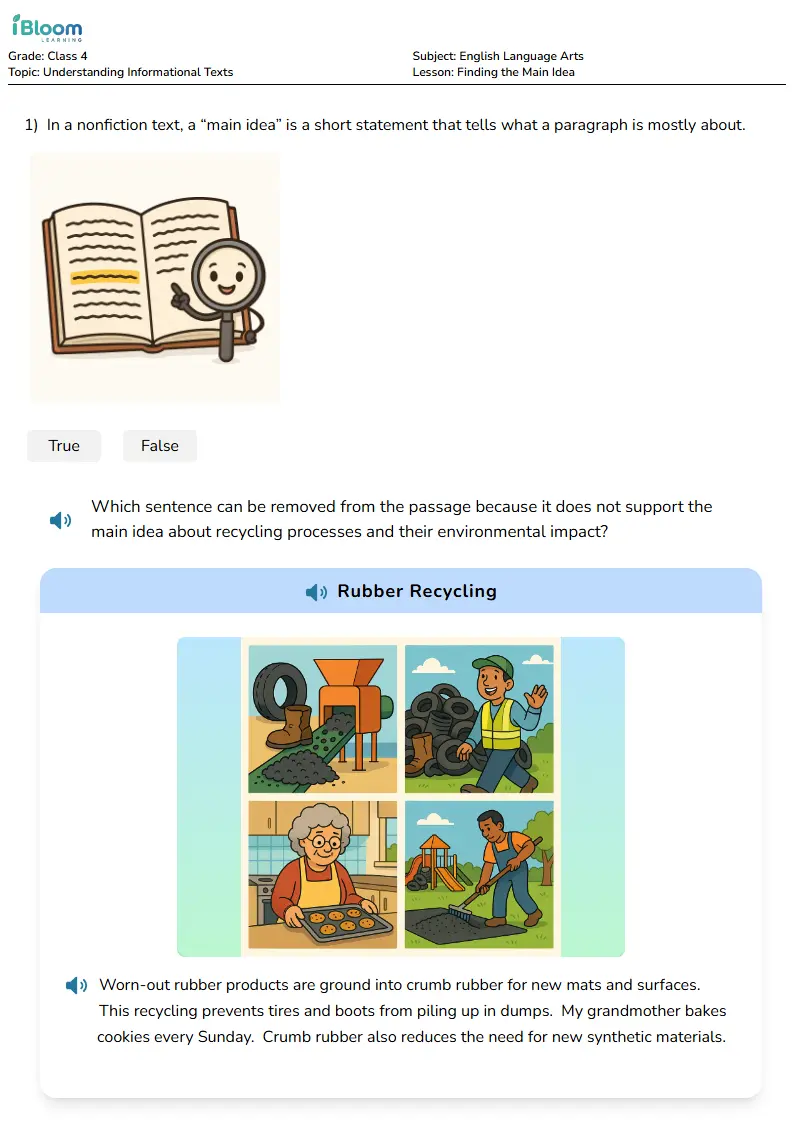
Free Finding the Main Idea Worksheets for Class 4
Looking for class 4 english language arts help? Download free, interactive finding the main idea worksheets. AI-personalized and Common Core-aligned. Practice early literacy with iBloom.
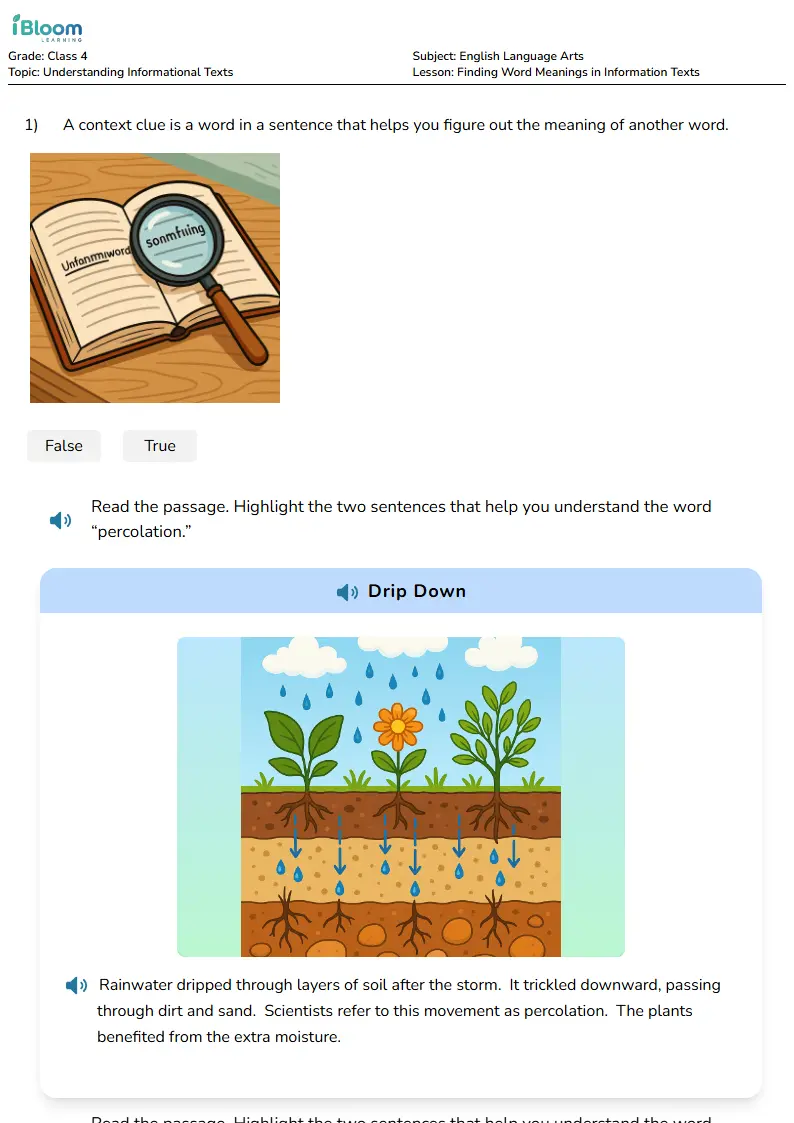
Free Finding Word Meanings in Information Texts Worksheets for Class 4
Looking for class 4 english language arts help? Download free, interactive finding word meanings in information texts worksheets. AI-personalized and Common Core-aligned. Practice early literacy with iBloom.