Summarizing Important Information worksheet for Class 4

Lesson-Wise Builder
A premium AI tool that creates syllabus-aligned questions and worksheets for any lesson in seconds.
Summarising important information means stating what an informational passage is mainly about and including only the key details that explain that idea. For Class 4, a useful summary is accurate, brief, written in the learner’s own words, and free from personal feelings that are not in the source.
What an effective summary includes
A strong summary combines the central idea with a small number of supporting details. It does not copy every sentence, list every interesting fact, or add a reaction such as “I loved this passage.” The reader should understand the source without being misled about what it actually said.
- Main idea: the most important point the writer communicates.
- Key details: facts, causes, effects, examples, or explanations that make the main idea clear.
- Objective language: neutral wording that reports the source rather than judging it.
- Logical order: related ideas grouped so the summary reads as a connected explanation.
Two statements in the activity
“Summaries must include the writer’s personal feelings.”
This statement is false for an objective information summary. A writer may have a viewpoint in the source, but the learner should report that viewpoint accurately rather than add a new personal reaction. A response or review may include feelings; a summary has a different purpose.
“A summary helps readers understand the text better.”
This statement is true. Selecting the main idea and organising essential details helps a reader see how the information fits together. The process also reveals whether a learner has understood the source or merely remembered isolated sentences.
A six-step Class 4 method
- Read once for the topic. Name the subject in a short phrase, such as “climate change in rainforests.”
- Read again for the main idea. Ask what the writer wants the reader to understand about that topic.
- Mark possible key details. Look for causes, effects, examples, explanations, and recommendations that directly develop the central idea.
- Remove minor or repeated points. A detail may be interesting without being essential.
- Paraphrase and combine. Put related information into one clear sentence instead of copying a row of source sentences.
- Check against the passage. Make sure the summary is accurate, objective, concise, and complete enough to make sense.
Main idea first, supporting details second
The topic is usually one or two words; the main idea is a complete thought about that topic. “Rainforests” is a topic. “Climate change is harming rainforest health by changing rainfall patterns” is a main idea. The details about longer dry seasons, tree die-off, and habitat loss explain how that harm occurs.
One helpful test is to ask, “If I remove this detail, does the main idea become harder to understand?” If yes, it may be important. If the passage still makes the same point clearly, the detail may be minor, repeated, or better left out of a short summary.
Worked example: climate change and rainforest health
The visible passage explains that climate change affects rainforest rainfall patterns, causes longer dry seasons in some areas, and can lead to tree die-off and habitat loss. It also says that scientists recommend policies to limit greenhouse gas emissions.
Identify the central idea
The prompt names the idea that climate change threatens rainforest health. That wording gives the learner a clear test: choose sentences that show a threat to rainforest health, not simply any sentence connected with climate change.
Select direct support
Longer dry seasons are a relevant cause, while tree die-off and habitat loss are direct harmful effects. Those details show why the main idea is true. The recommendation about limiting emissions describes a response to the problem. It may belong in a fuller summary, but it is less direct when the narrow question asks for evidence of the threat itself.
Build an objective summary
A concise model would be: “Climate change is altering rainfall in rainforests, creating longer dry seasons that can damage trees and habitats; scientists recommend limiting greenhouse gas emissions.” This sentence preserves the cause, important effects, and proposed response without adding a personal opinion.
Use text structure to decide what matters
Cause and effect
When a passage explains that one condition produces another, include the cause and the most important effects. Words such as because, causes, leads to, and as a result can reveal this structure.
Problem and response
A problem-and-response passage describes a concern and what people propose doing about it. Keep the problem clear before adding the response; otherwise the recommendation may seem disconnected.
Main idea and examples
Named examples can make a broad point concrete. Use enough examples to clarify the main idea, but do not turn the summary into a list.
Revise for accuracy and brevity
Read the draft beside the passage. Circle any claim that the source does not support. Cross out repeated wording and combine details that describe the same effect. Check names, cause-and-effect links, and important vocabulary. A short summary is not automatically a good summary; it must still include the central idea.
Try the “one breath, then two sentences” routine. First say the main idea in one breath. Then write one sentence for that idea and one for the key supporting details. Expand only if something essential is missing.
Parent guidance: talk, select, then write
Before asking for writing, invite the child to explain the passage aloud. Ask, “What is this mostly teaching us?” and “Which two details make that clear?” Oral rehearsal reduces the load of organising ideas and writing them at the same time.
- Use a short informational paragraph rather than a long chapter.
- Let the child place three key facts on separate notes, then remove one that is least essential.
- Ask the child to paraphrase one detail without looking at the original sentence.
- If the learner uses a home language to explain the idea, confirm the meaning first and then shape the English summary together.
- Praise accurate selection and clear connections, not merely a low word count.
Teacher and tutor guidance
Model the invisible decisions. Think aloud about why one sentence is central, another is useful support, and a third is interesting but not essential. In pairs, learners can compare selected details before they write. Disagreement becomes productive when each choice must be connected to the main idea.
For a quick check, provide a main-idea statement and ask learners to mark two supporting sentences. For a deeper check, ask them to write a two-sentence summary and explain what they deliberately left out. Assess the selection and reasoning separately from spelling or handwriting.
Common mistakes and how to repair them
- The summary copies the passage: close the source and say the idea aloud before writing.
- The summary is a list: group related details and use a linking word that shows their relationship.
- The main idea is missing: begin with what the passage is mostly explaining.
- Personal feelings appear: remove “I think,” “I like,” and judgment words unless the source itself presents that view.
- A new fact is added: compare every claim with the source and delete unsupported knowledge.
- The summary is too long: keep one main idea and only the details necessary to explain it.
- An important cause or effect is lost: trace the relationship again before shortening.
Practice ideas beyond the screen
- Read a short science paragraph and sort statements into main idea, key detail, and extra detail.
- Compare two possible summaries and explain which is more accurate and objective.
- Turn a heading and three bullet points into two connected sentences.
- Replace copied phrases with the learner’s own wording while preserving the meaning.
- Give an overlong summary and ask the child to remove repetition without losing the central idea.
Related concepts
Summarising informational text depends on finding the main idea, selecting important details, recognising text structure, distinguishing fact from opinion, and paraphrasing accurately. Once these are secure, learners can compare two sources or combine information across texts without confusing their ideas.
Frequently asked questions
Is a summary the same as a retelling?
No. A retelling may include many events or details in sequence. A summary compresses the source to its central idea and the details that matter most.
Can a summary include the learner’s opinion?
An objective summary should not add a personal opinion. A separate response can explain what the learner thinks after the source has been summarised accurately.
How long should a Class 4 summary be?
Length depends on the source. For a short paragraph, one or two complete sentences may be enough if they include the main idea and key support.
How can a child stop copying?
After reading and marking key ideas, cover the source and explain the meaning aloud. Write from that explanation, then reopen the passage to check accuracy.
More practice for this grade
More English Language Arts worksheets
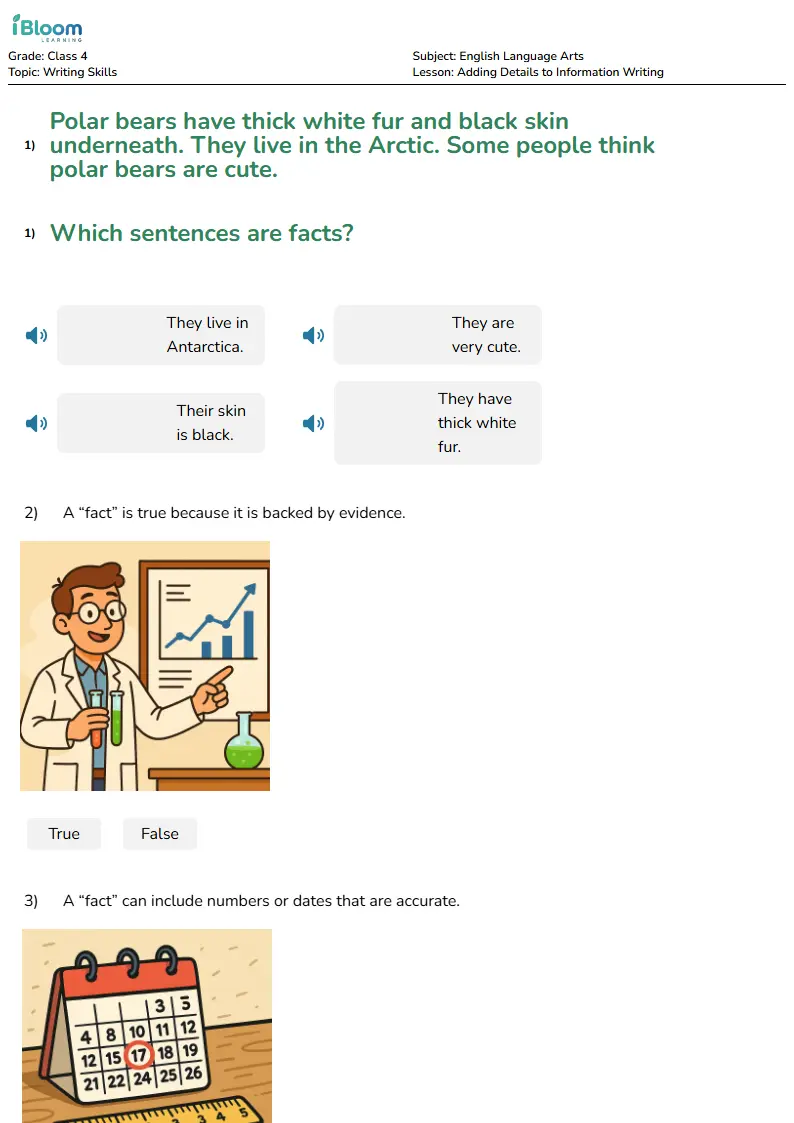
Free Adding Details to Information Writing Worksheets for Class 4
Looking for class 4 english language arts help? Download free, interactive adding details to information writing worksheets. AI-personalized and Common Core-aligned. Practice early literacy with iBloom.
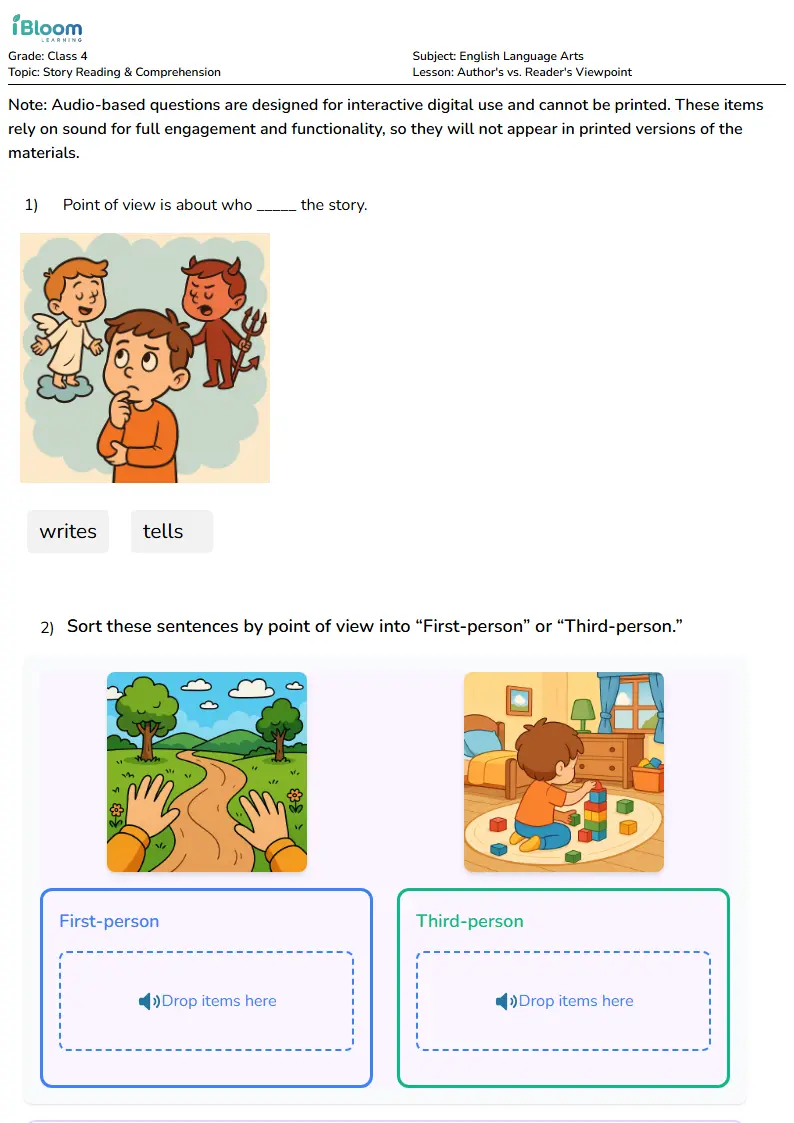
Free Author's vs. Reader's Viewpoint Worksheets for Class 4
Looking for class 4 english language arts help? Download free, interactive author's vs. reader's viewpoint worksheets. AI-personalized and Common Core-aligned. Practice early literacy with iBloom.
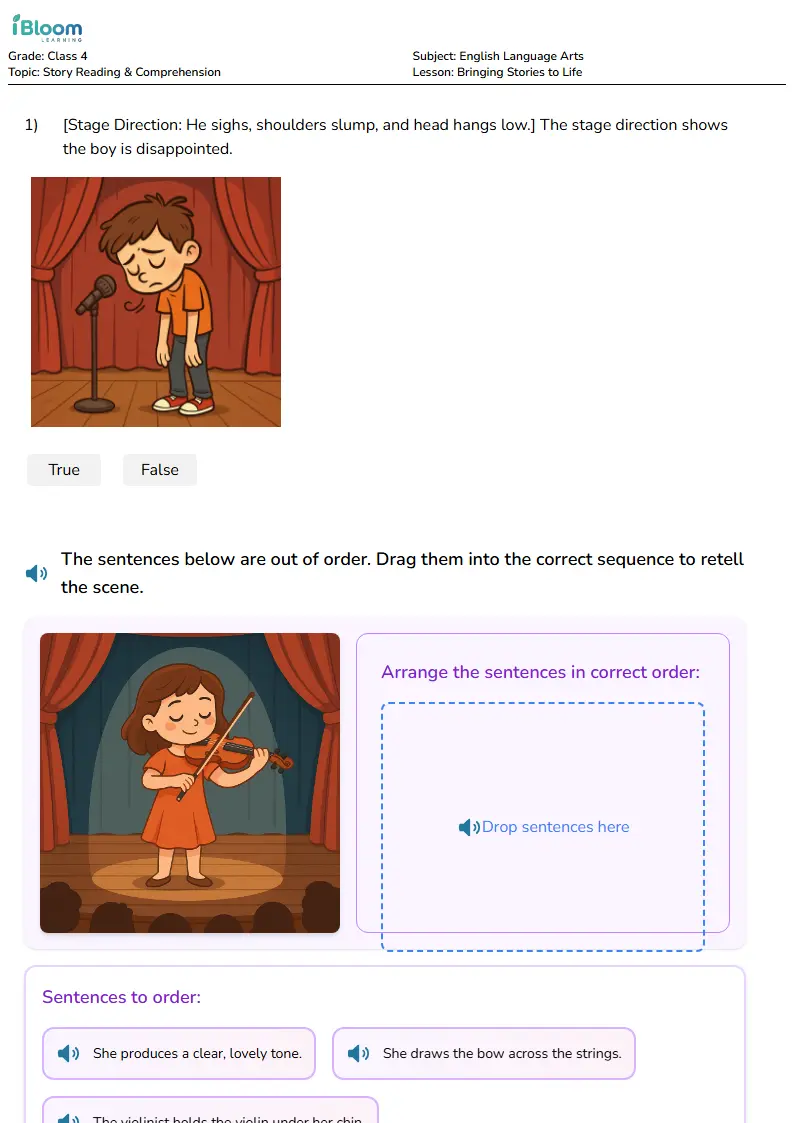
Free Bringing Stories to Life Worksheets for Class 4
Looking for class 4 english language arts help? Download free, interactive bringing stories to life worksheets. AI-personalized and Common Core-aligned. Practice early literacy with iBloom.
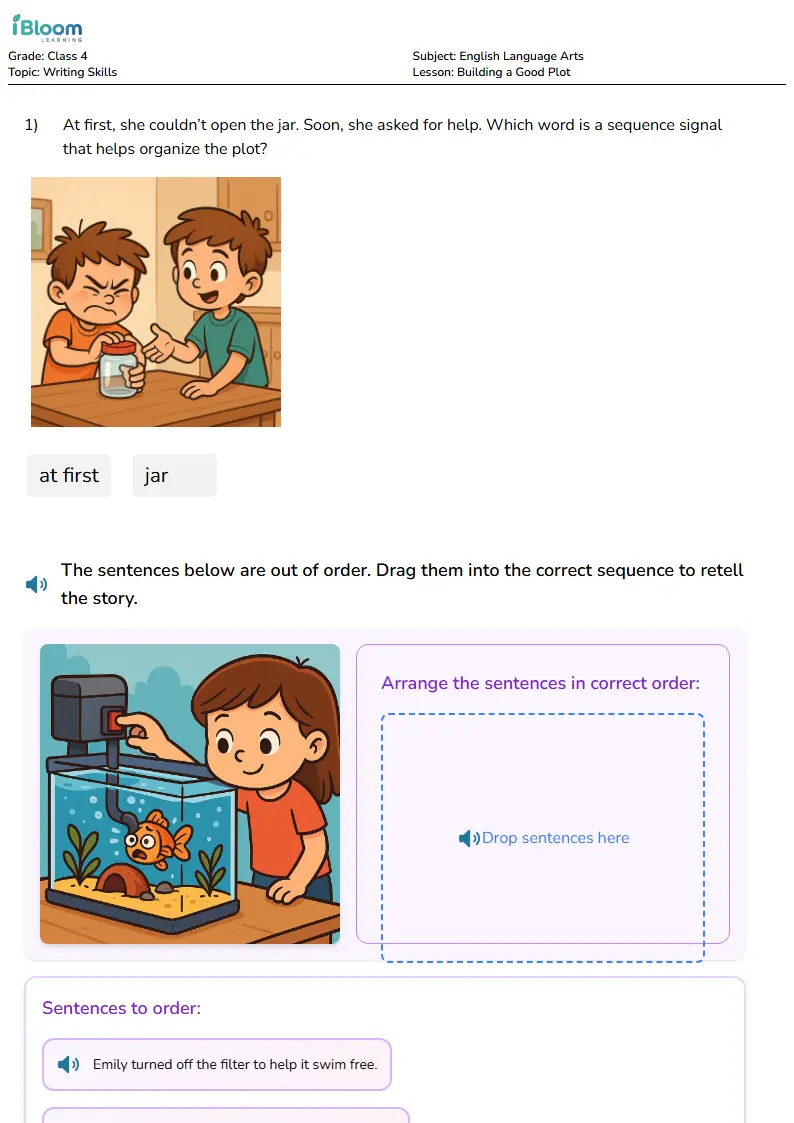
Free Building a Good Plot Worksheets for Class 4
Looking for class 4 english language arts help? Download free, interactive building a good plot worksheets. AI-personalized and Common Core-aligned. Practice early literacy with iBloom.
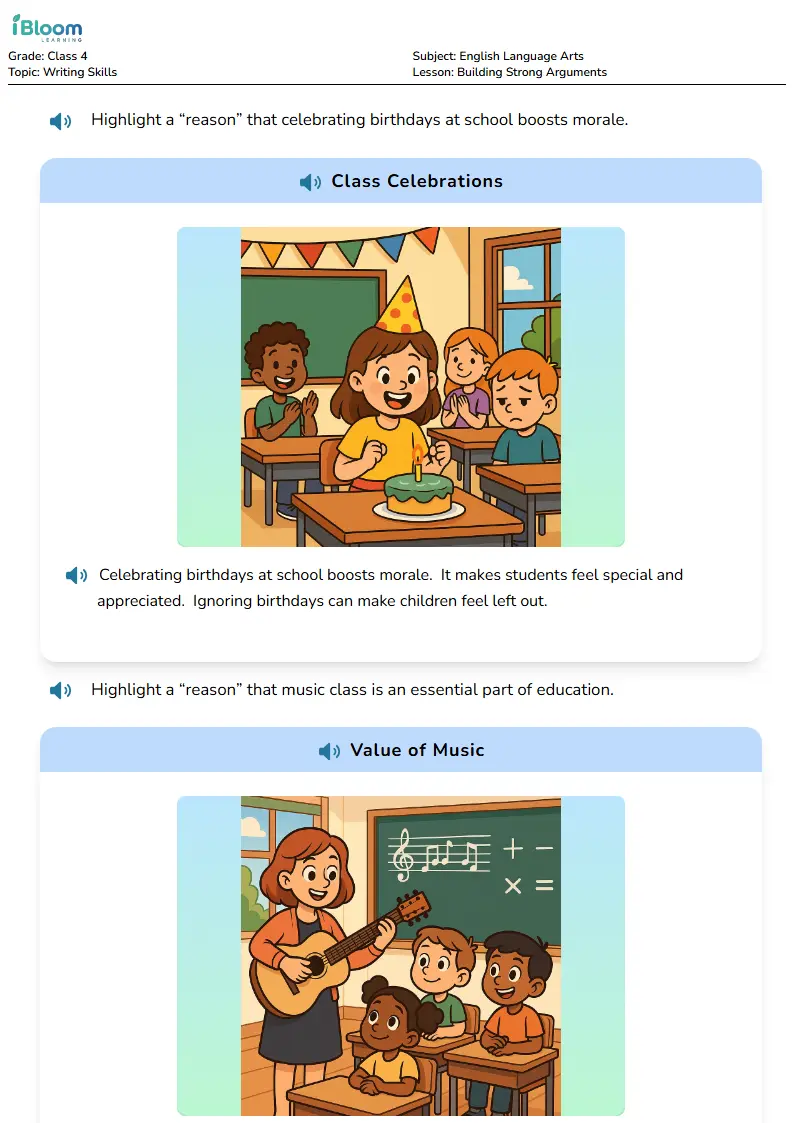
Free Building Strong Arguments Worksheets for Class 4
Looking for class 4 english language arts help? Download free, interactive building strong arguments worksheets. AI-personalized and Common Core-aligned. Practice early literacy with iBloom.
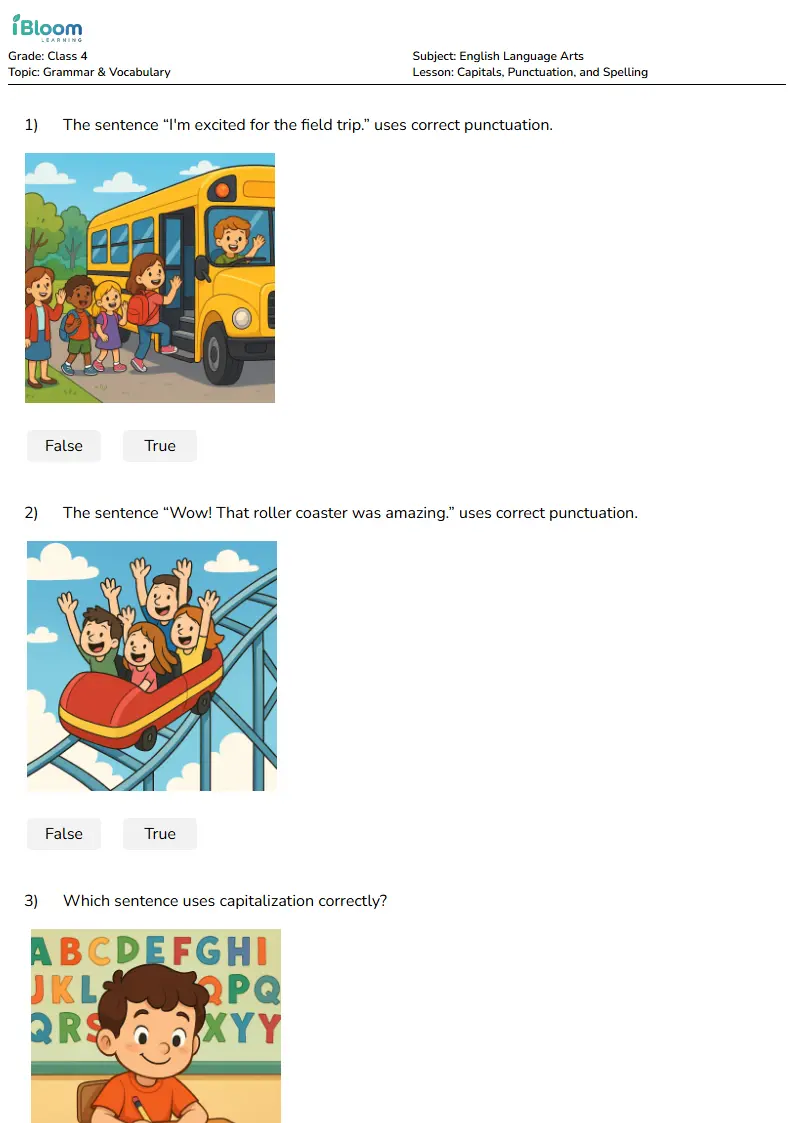
Free Capitals, Punctuation, and Spelling Worksheets for Class 4
Looking for class 4 english language arts help? Download free, interactive capitals, punctuation, and spelling worksheets. AI-personalized and Common Core-aligned. Practice early literacy with iBloom.
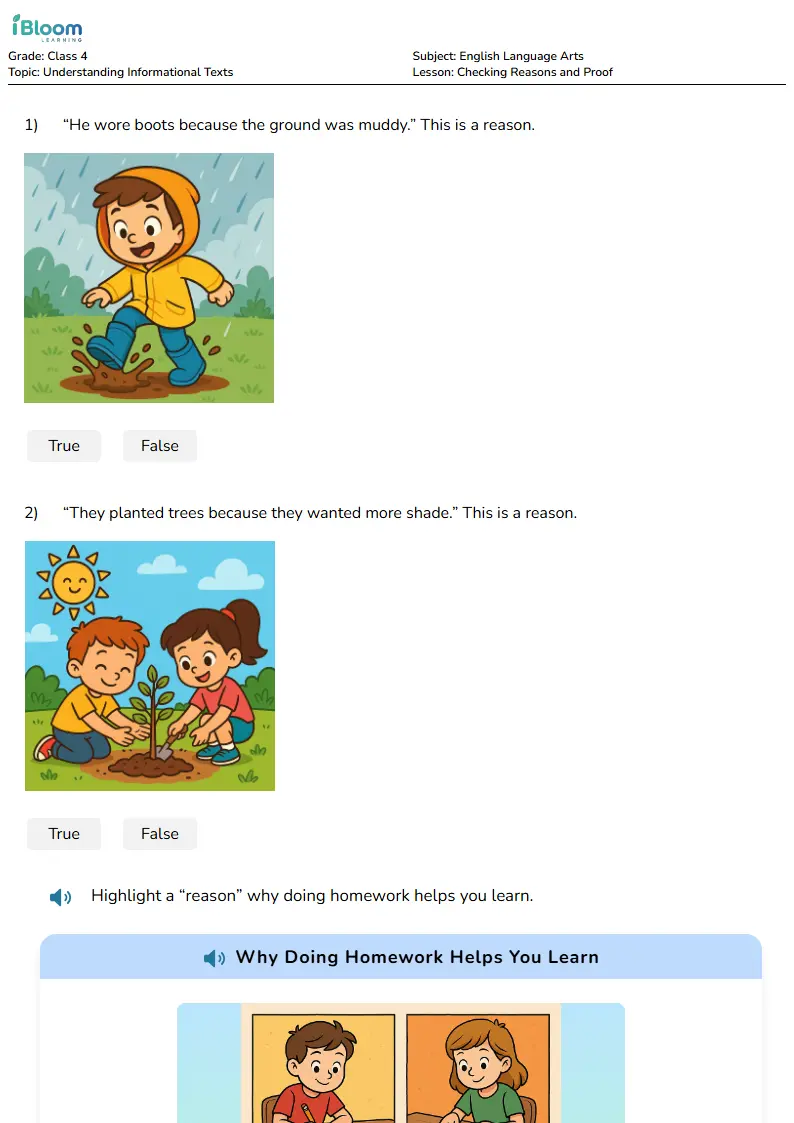
Free Checking Reasons and Proof Worksheets for Class 4
Looking for class 4 english language arts help? Download free, interactive checking reasons and proof worksheets. AI-personalized and Common Core-aligned. Practice early literacy with iBloom.
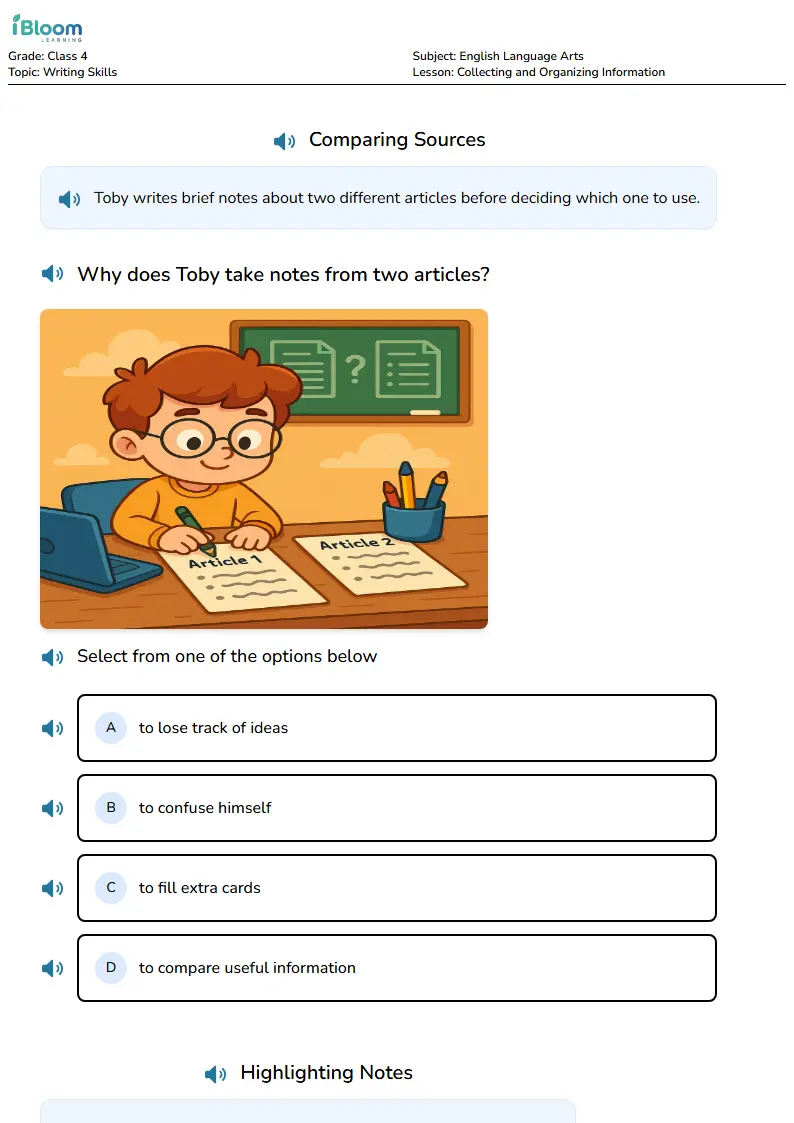
Free Collecting and Organizing Information Worksheets for Class 4
Looking for class 4 english language arts help? Download free, interactive collecting and organizing information worksheets. AI-personalized and Common Core-aligned. Practice early literacy with iBloom.
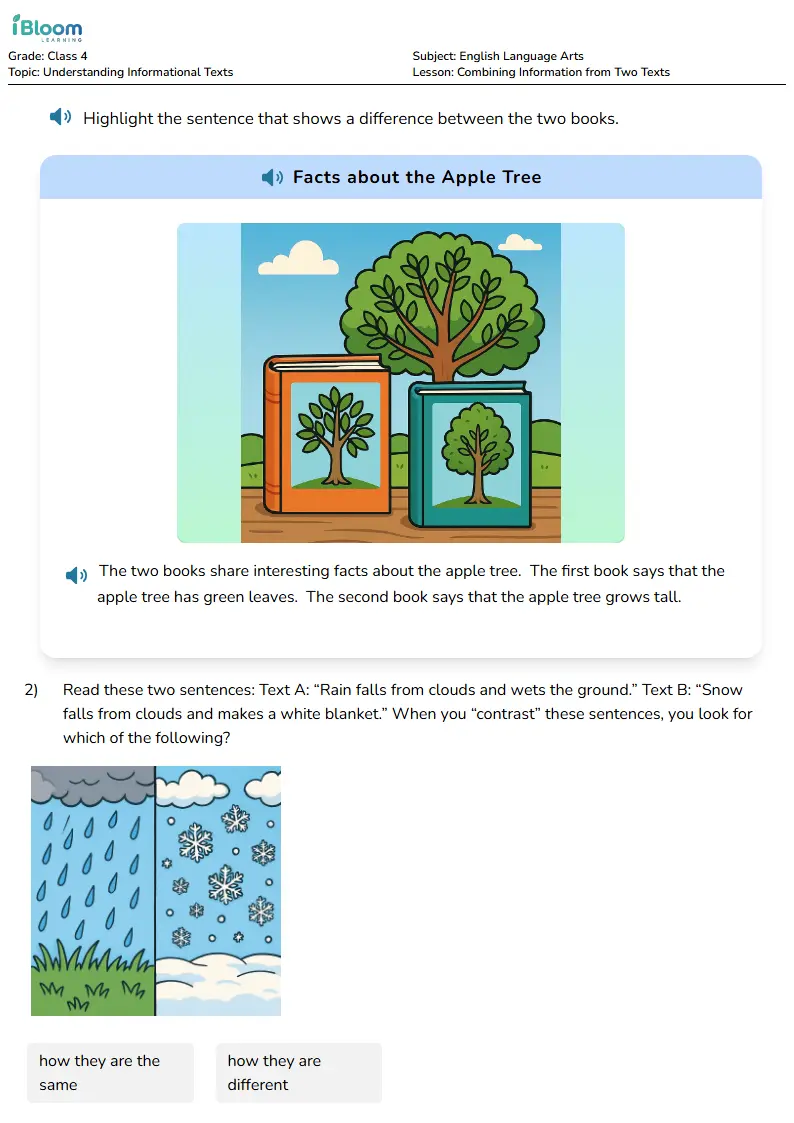
Free Combining Information from Two Texts Worksheets for Class 4
Looking for class 4 english language arts help? Download free, interactive combining information from two texts worksheets. AI-personalized and Common Core-aligned. Practice early literacy with iBloom.
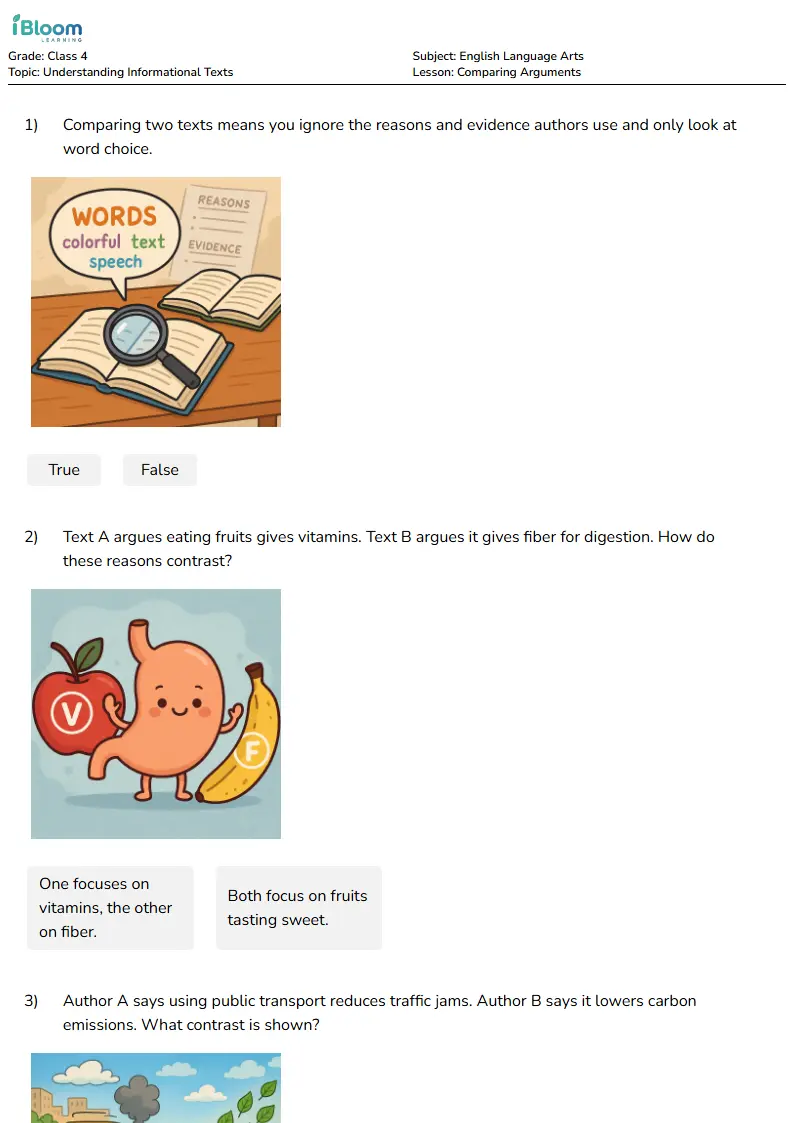
Free Comparing Arguments Worksheets for Class 4
Looking for class 4 english language arts help? Download free, interactive comparing arguments worksheets. AI-personalized and Common Core-aligned. Practice early literacy with iBloom.
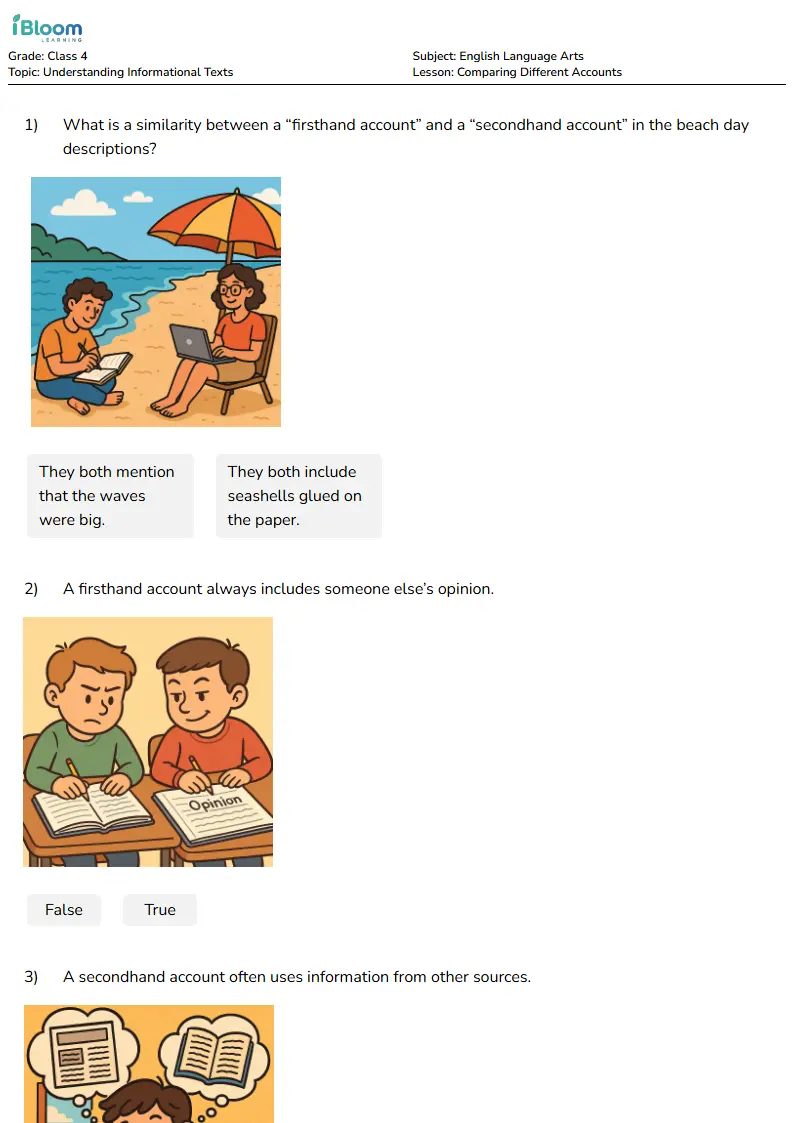
Free Comparing Different Accounts Worksheets for Class 4
Looking for class 4 english language arts help? Download free, interactive comparing different accounts worksheets. AI-personalized and Common Core-aligned. Practice early literacy with iBloom.
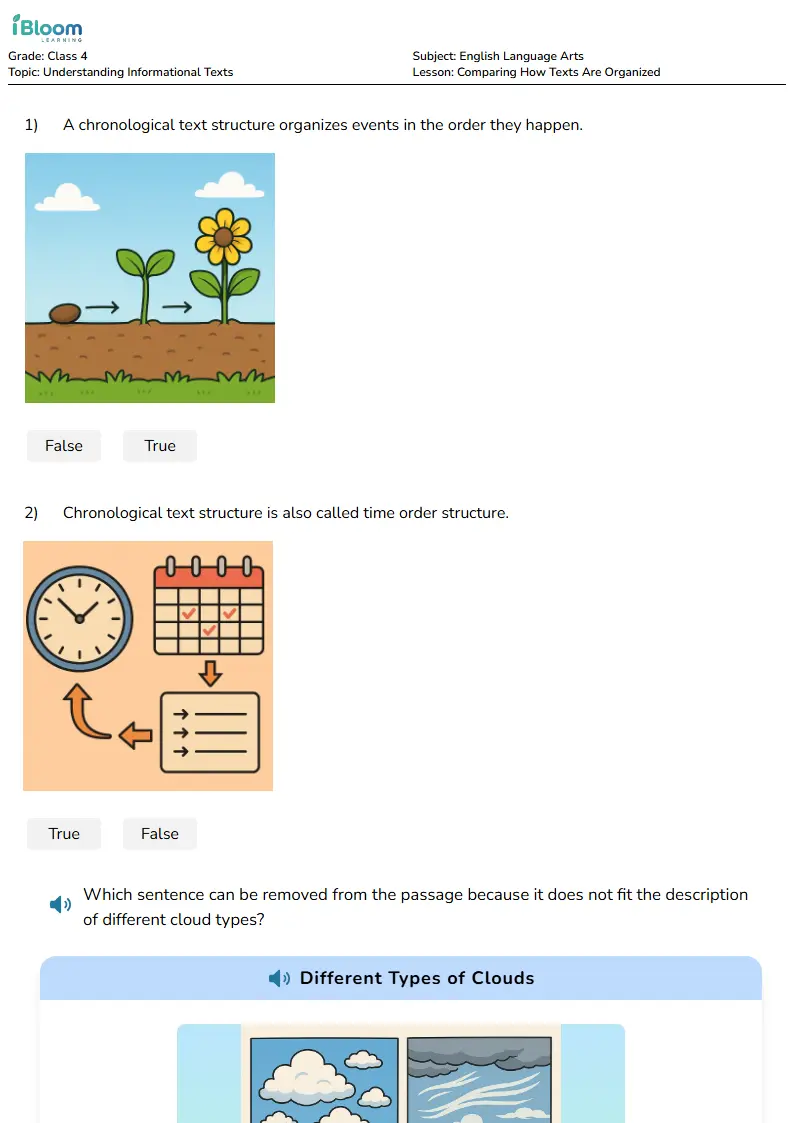
Free Comparing How Texts Are Organized Worksheets for Class 4
Looking for class 4 english language arts help? Download free, interactive comparing how texts are organized worksheets. AI-personalized and Common Core-aligned. Practice early literacy with iBloom.
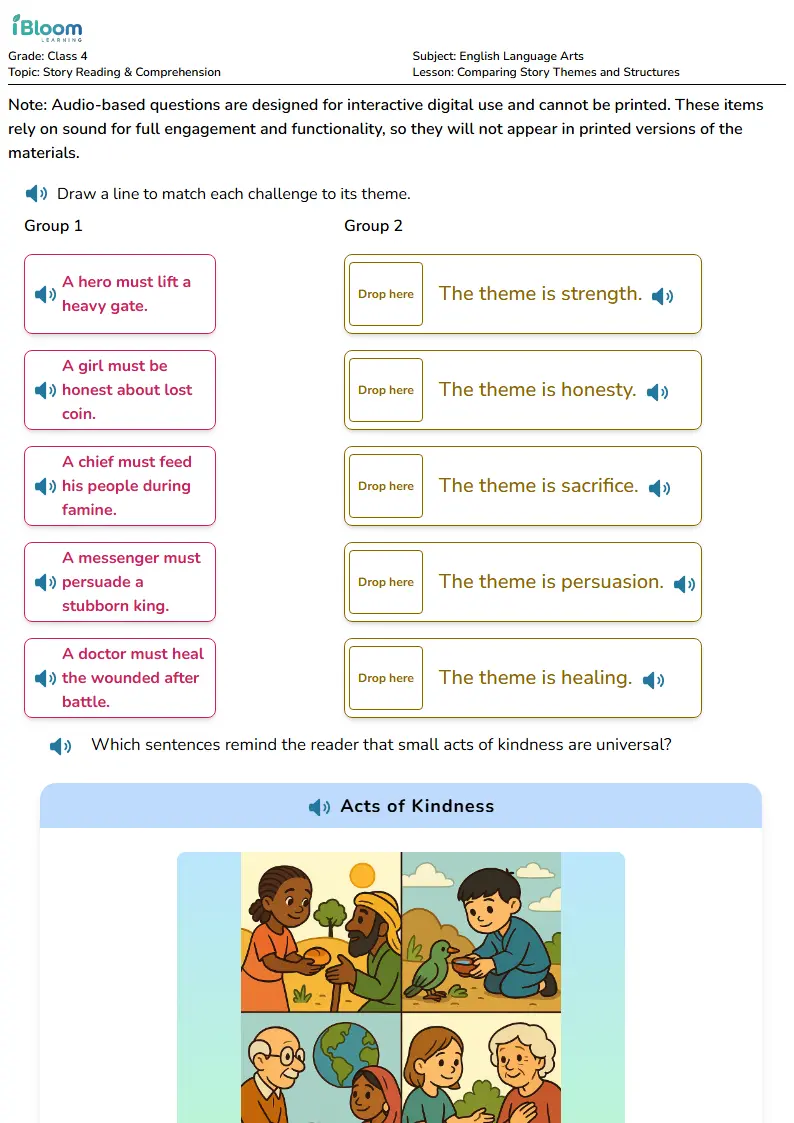
Free Comparing Story Themes and Structures Worksheets for Class 4
Looking for class 4 english language arts help? Download free, interactive comparing story themes and structures worksheets. AI-personalized and Common Core-aligned. Practice early literacy with iBloom.
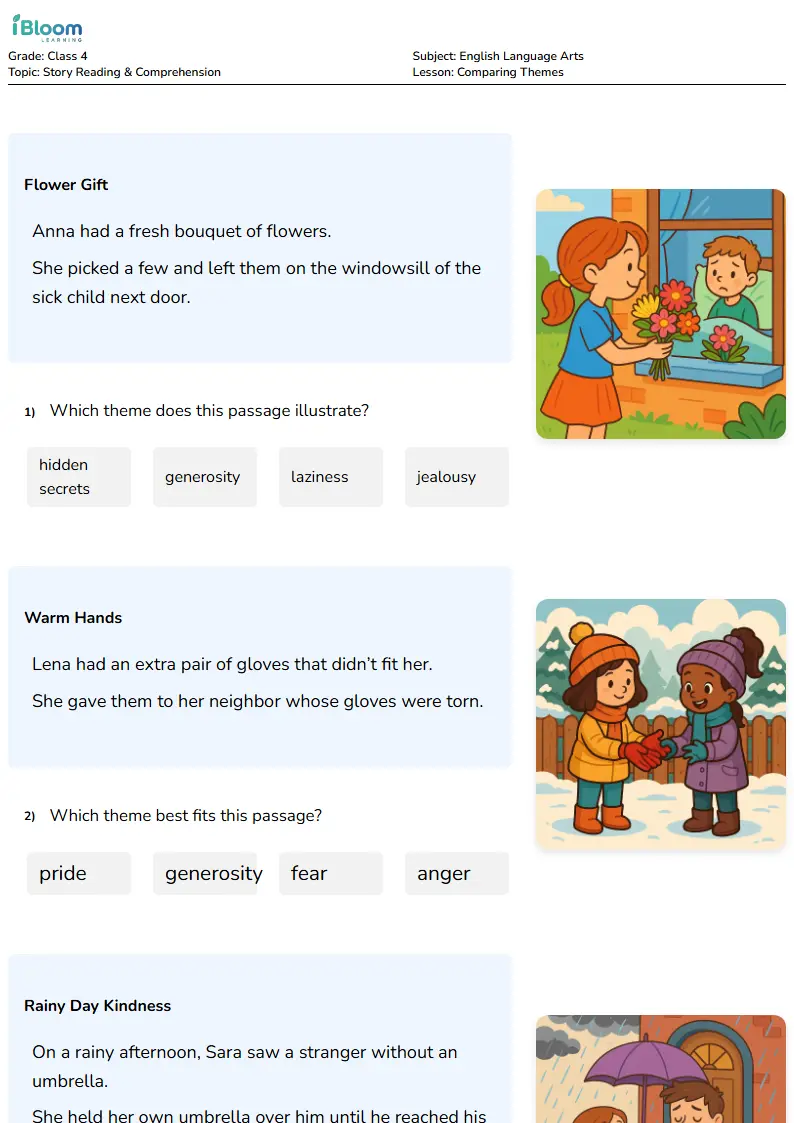
Free Comparing Themes Worksheets for Class 4
Looking for class 4 english language arts help? Download free, interactive comparing themes worksheets. AI-personalized and Common Core-aligned. Practice early literacy with iBloom.
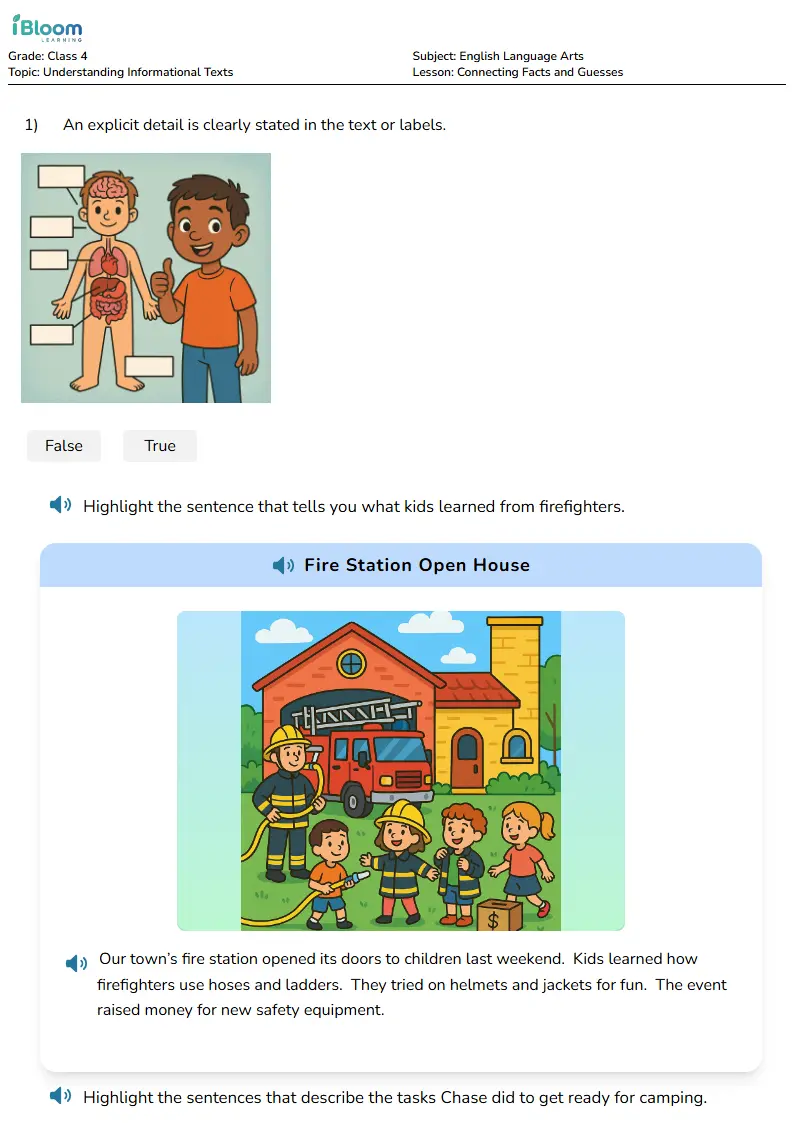
Free Connecting Facts and Guesses Worksheets for Class 4
Looking for class 4 english language arts help? Download free, interactive connecting facts and guesses worksheets. AI-personalized and Common Core-aligned. Practice early literacy with iBloom.
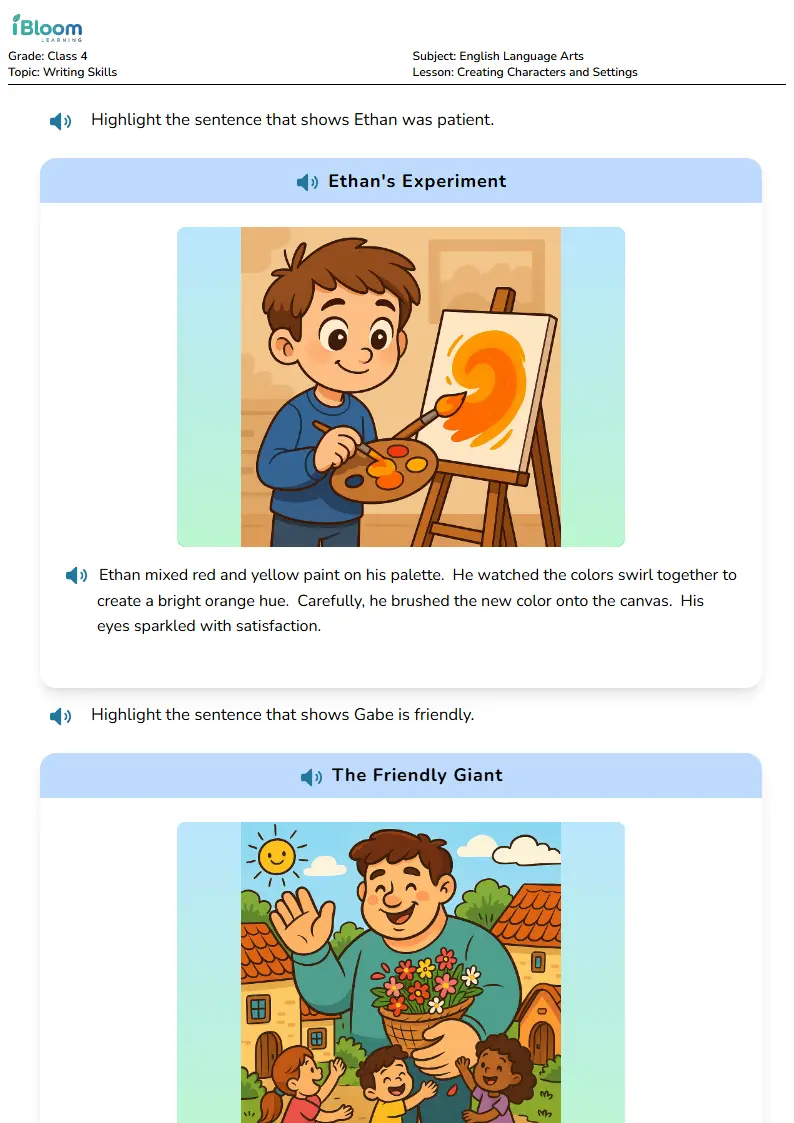
Free Creating Characters and Settings Worksheets for Class 4
Looking for class 4 english language arts help? Download free, interactive creating characters and settings worksheets. AI-personalized and Common Core-aligned. Practice early literacy with iBloom.
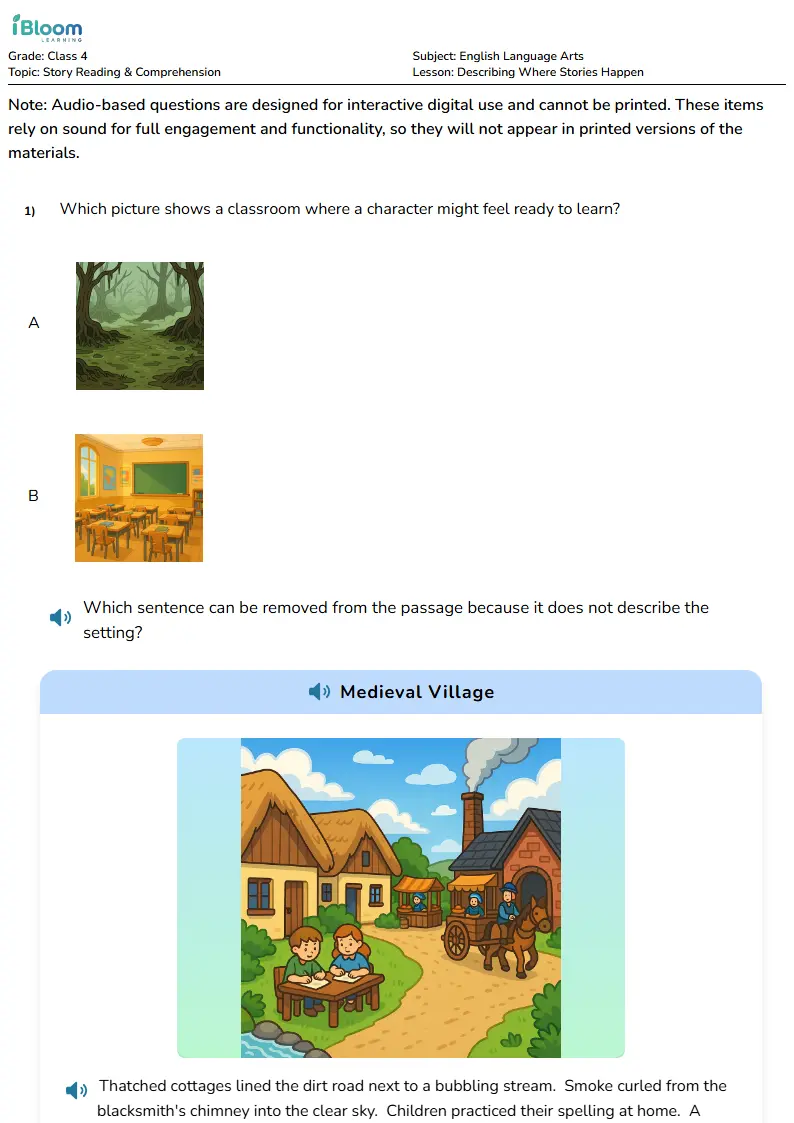
Free Describing Where Stories Happen Worksheets for Class 4
Looking for class 4 english language arts help? Download free, interactive describing where stories happen worksheets. AI-personalized and Common Core-aligned. Practice early literacy with iBloom.
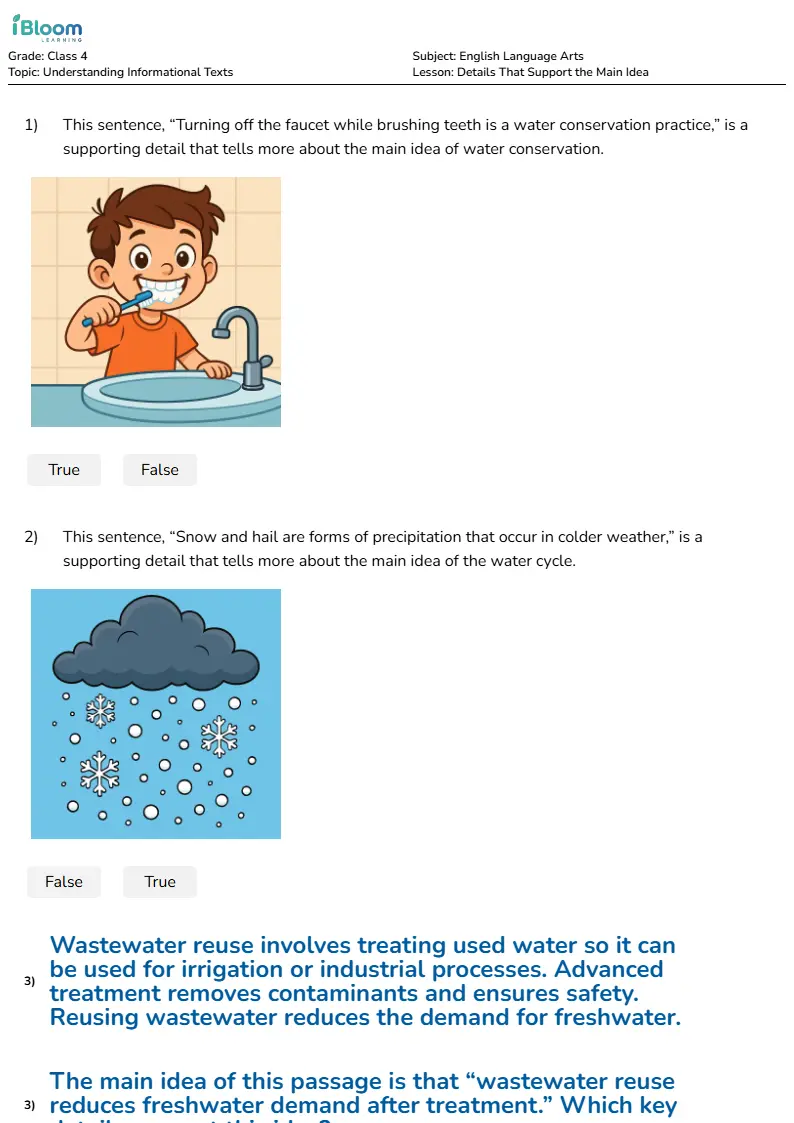
Free Details That Support the Main Idea Worksheets for Class 4
Looking for class 4 english language arts help? Download free, interactive details that support the main idea worksheets. AI-personalized and Common Core-aligned. Practice early literacy with iBloom.
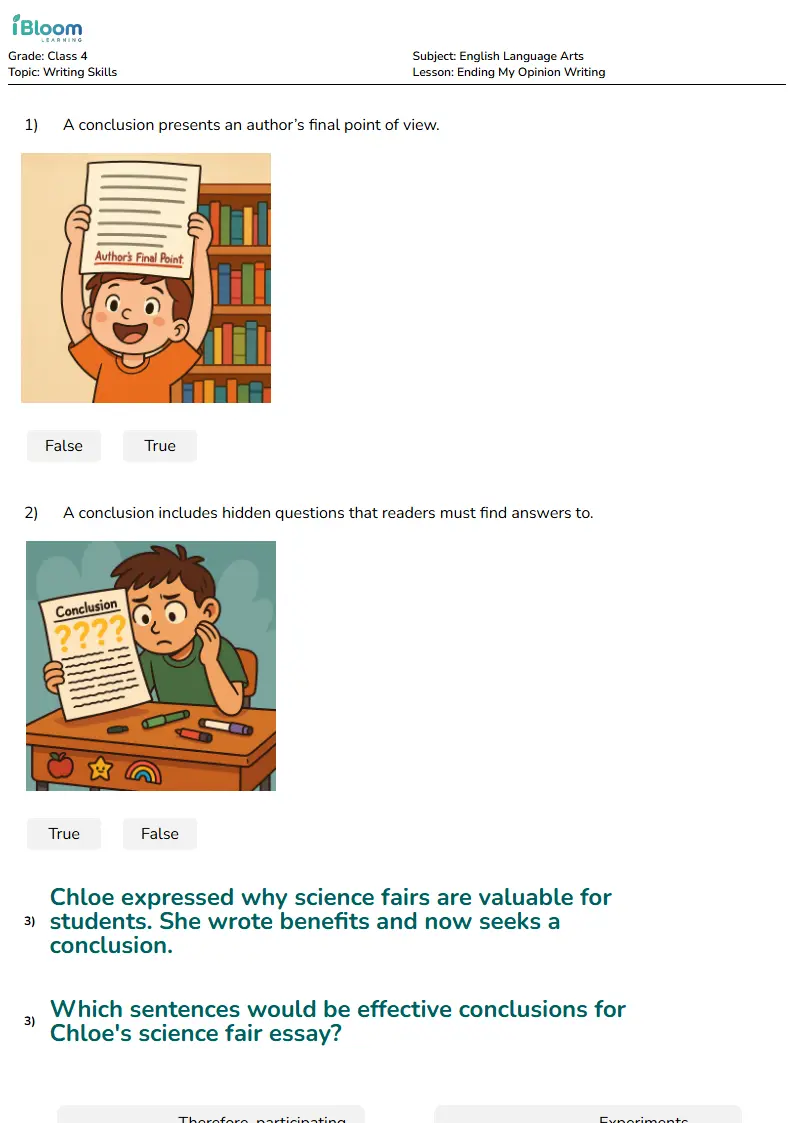
Free Ending My Opinion Writing Worksheets for Class 4
Looking for class 4 english language arts help? Download free, interactive ending my opinion writing worksheets. AI-personalized and Common Core-aligned. Practice early literacy with iBloom.
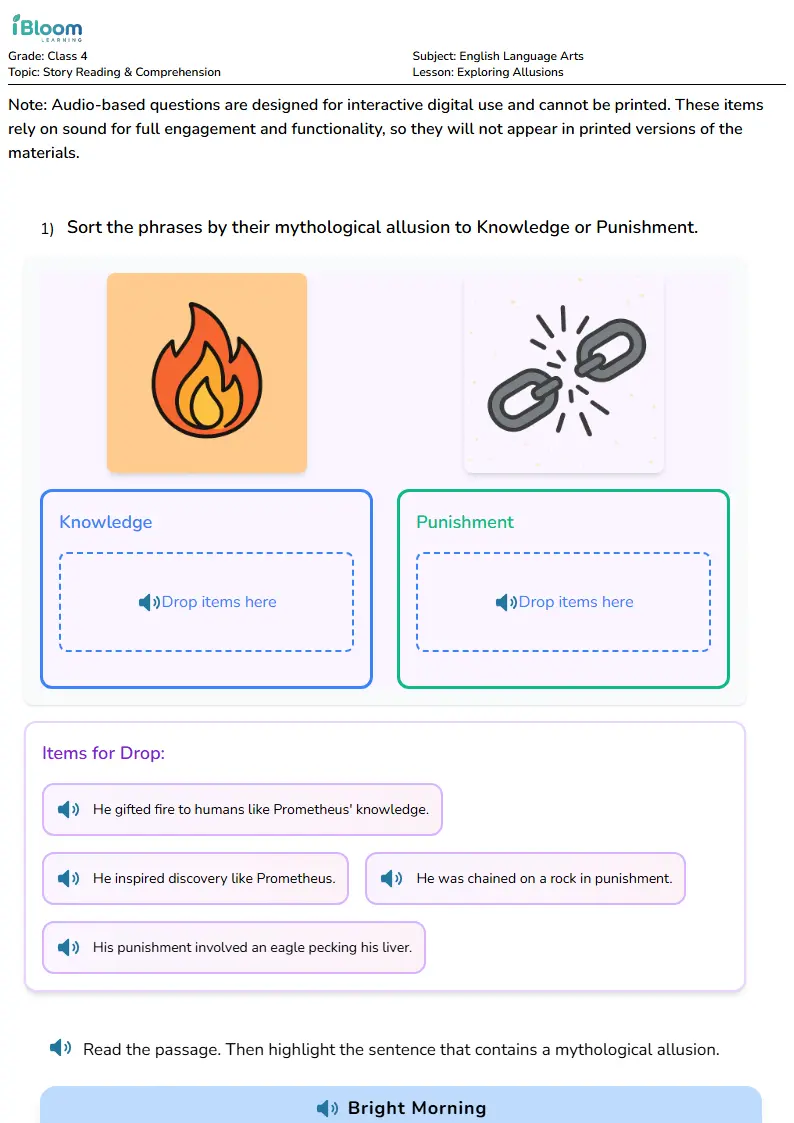
Free Exploring Allusions Worksheets for Class 4
Looking for class 4 english language arts help? Download free, interactive exploring allusions worksheets. AI-personalized and Common Core-aligned. Practice early literacy with iBloom.
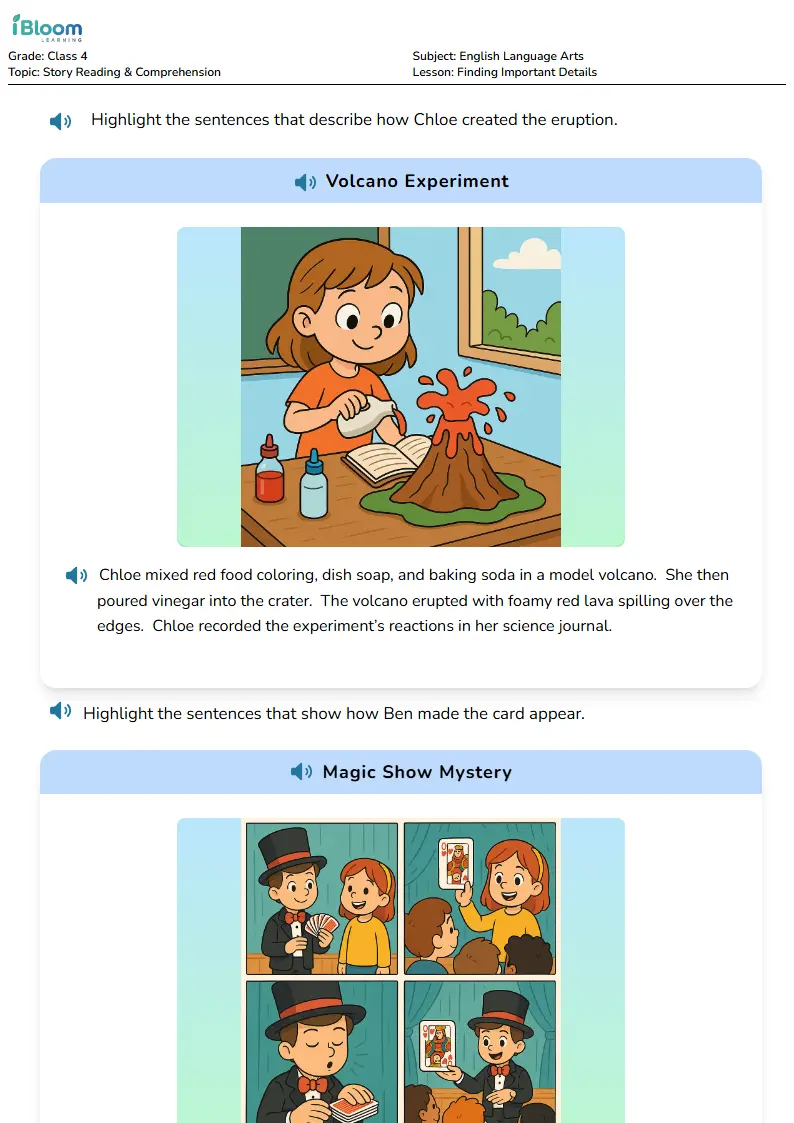
Free Finding Important Details Worksheets for Class 4
Looking for class 4 english language arts help? Download free, interactive finding important details worksheets. AI-personalized and Common Core-aligned. Practice early literacy with iBloom.
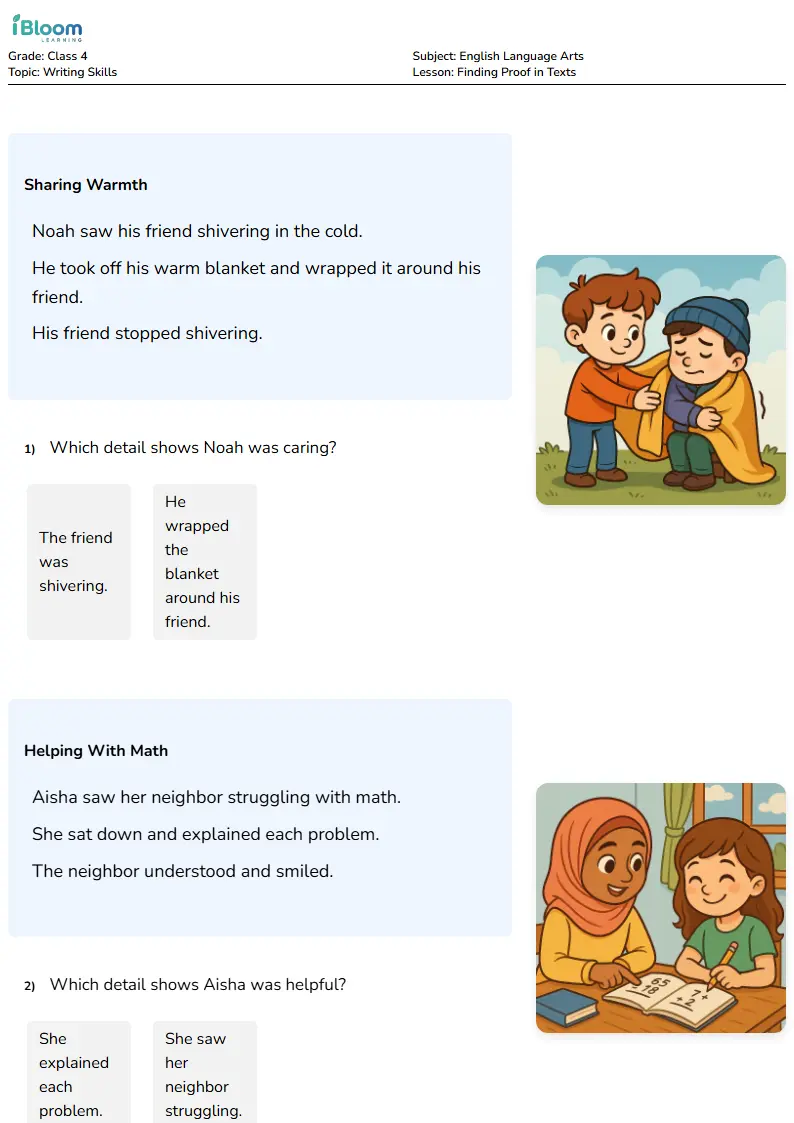
Free Finding Proof in Texts Worksheets for Class 4
Looking for class 4 english language arts help? Download free, interactive finding proof in texts worksheets. AI-personalized and Common Core-aligned. Practice early literacy with iBloom.
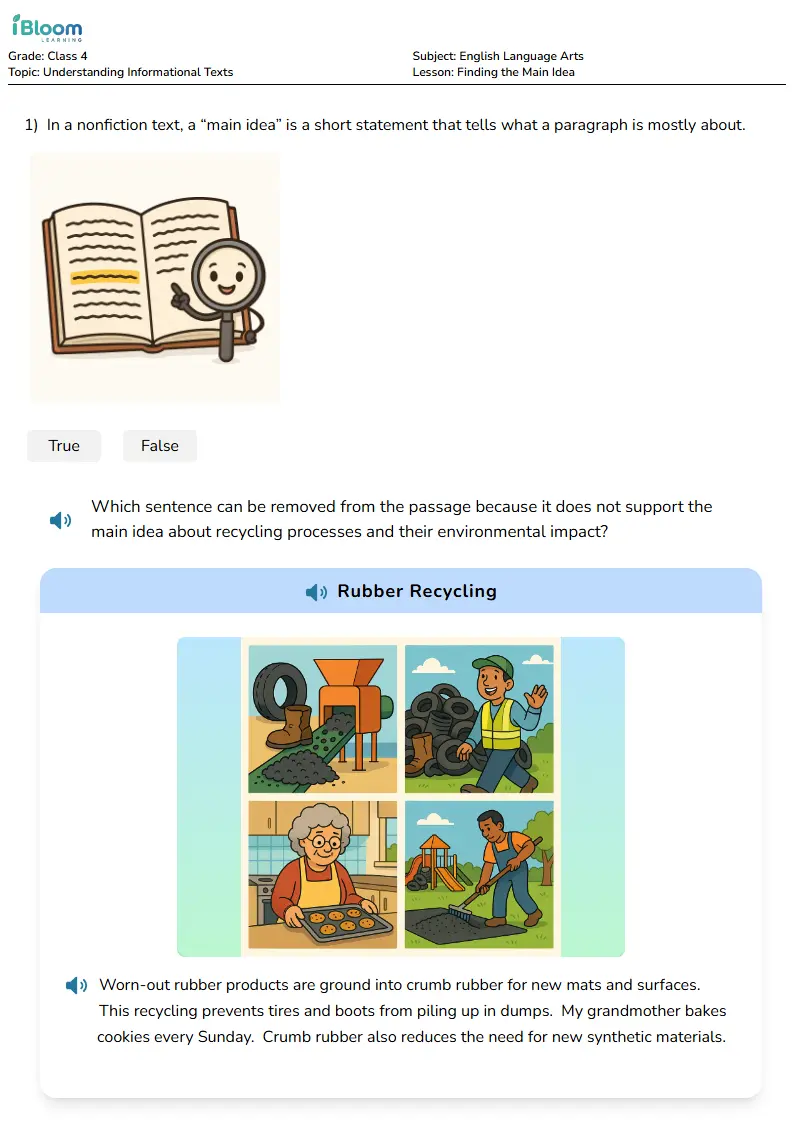
Free Finding the Main Idea Worksheets for Class 4
Looking for class 4 english language arts help? Download free, interactive finding the main idea worksheets. AI-personalized and Common Core-aligned. Practice early literacy with iBloom.
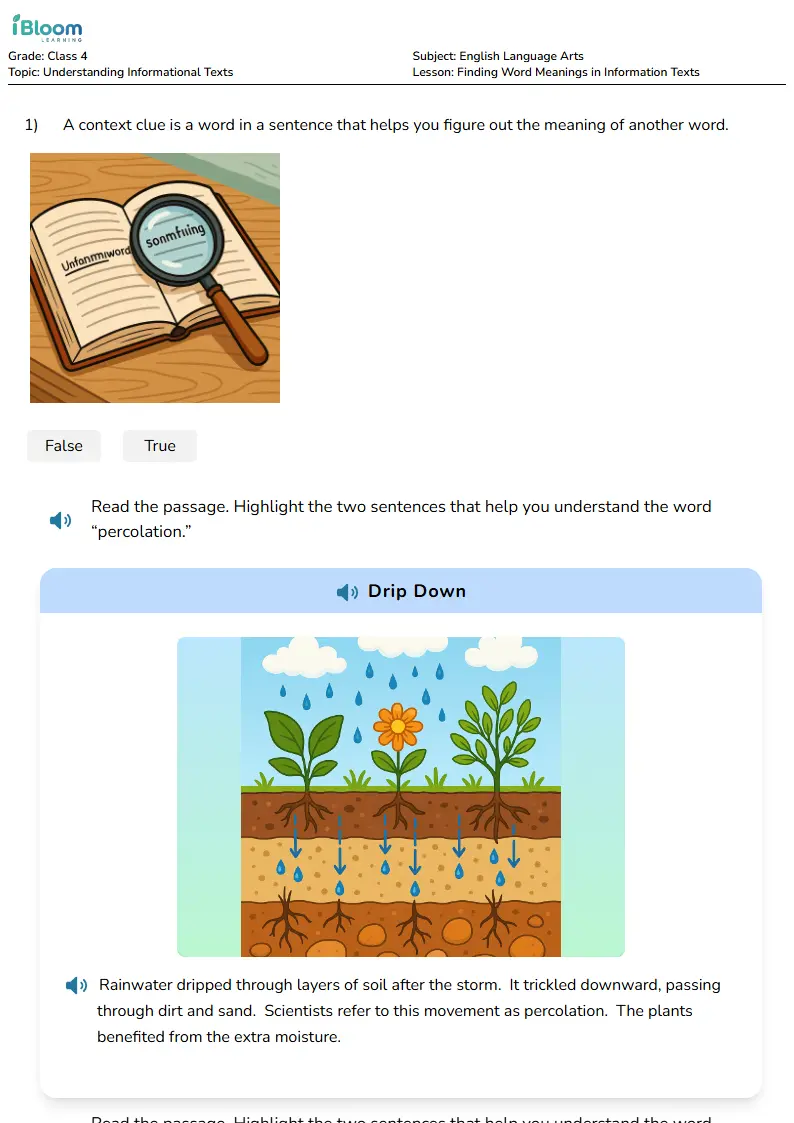
Free Finding Word Meanings in Information Texts Worksheets for Class 4
Looking for class 4 english language arts help? Download free, interactive finding word meanings in information texts worksheets. AI-personalized and Common Core-aligned. Practice early literacy with iBloom.