Learning New Words worksheet for LKG

Lesson-Wise Builder
A premium AI tool that creates syllabus-aligned questions and worksheets for any lesson in seconds.
A learning new words worksheet for LKG can help a child notice how a familiar word works inside a short passage. In this activity, children read River Run and Soft Wind, look at the accompanying pictures, and choose the word that directly answers each question. The key examples are fast for the river's movement and gentle for how the wind feels. A later item is audio based and asks an everyday vocabulary question, so sound is needed for that part.
What the child does in this activity
The page presents two short passages made of three simple sentences. Each passage repeats the useful answer word in a complete sentence. The child reads or listens to the passage, reads the question, compares four word choices, and selects the choice that matches what the question asks.
- River Run: the passage says that water moves fast over rocks. The question asks for a word describing movement.
- Soft Wind: the passage says that the wind feels gentle and cool. The question asks for a word describing how the wind feels.
- Audio item: the visible prompt asks what someone uses to drink. The child needs to hear the complete digital item before choosing an answer.
This is focused word-choice practice. The child is not required to define an unfamiliar word from hidden clues. The answer is stated in the short text, and the task is to connect the wording of the question with the relevant detail.
River Run: choosing a word for movement
The River Run passage says: the river flows down the hill, the water moves fast over rocks, and the river is clear and cool. The answer choices are clear, fast, cool and rock. The question asks, Which word describes the movement of the water?
Fast is the useful answer because the sentence uses it to tell how the water moves. Clear and cool describe other qualities of the river. Rock names something in the scene. All four words belong to the passage or picture, but only one answers the movement question.
How to talk through the answer
- Read the question and emphasise the word movement.
- Reread the sentence that contains moves.
- Ask the child to point to the word immediately after moves.
- Read the full answer aloud: The water moves fast.
The river picture can support attention and conversation, but the written sentence gives the exact answer. If a child chooses clear or cool, acknowledge that those words do describe the river, then return to the particular question about movement.
Soft Wind: choosing a word for how something feels
The Soft Wind passage says that the wind blows soft, feels gentle and cool, and makes the leaves dance quietly. The choices are loud, quiet, strong and gentle. The question asks, What word describes how the wind feels?
Gentle answers that question because the passage directly says that the wind feels gentle. Quiet is tempting because the leaves dance quietly, but that detail describes how the leaves move. Loud and strong do not match the description in the passage.
Compare soft and gentle without overloading the child
In this passage, soft and gentle both help create the idea of a mild wind. Keep the explanation concrete: a gentle breeze does not push hard. Invite the child to move one hand gently and then quickly. The contrast makes the words meaningful without turning the activity into a grammar lesson.
A simple strategy for passage word-choice questions
- Read the question first. Notice whether it asks about movement, feeling, appearance, an object or an action.
- Return to the passage. Find the sentence about that exact idea.
- Point to the useful word. Say the sentence with the answer word still inside it.
- Compare the choices. Cross out choices that answer a different question.
- Explain briefly. Use a frame such as I chose fast because the passage says the water moves fast.
An LKG child may need an adult to read the sentences and options aloud. That support does not remove the vocabulary thinking. The child can still listen for the relevant detail, point to the answer, repeat the sentence and explain the match in a few words.
Question words to notice
What asks for a thing or idea. Which word asks the child to select from the choices. How can ask about the way something moves or feels. Draw attention to one question word at a time and avoid adding terminology the child does not need.
Using the audio-based vocabulary item
The activity includes an item that relies on sound for full use. The visible question asks, What do you use to drink? Because the complete spoken content and all response information are not shown in the preview image, do not supply an assumed answer before the child hears the item.
- Check that the device sound is on.
- Play the prompt once without interrupting.
- Replay it if the child missed a word.
- Ask the child to repeat the question in their own words.
- Let the child choose from the available digital responses and name the everyday object aloud.
This item combines listening with familiar-object vocabulary. It needs digital sound, so a paper-only version would not reproduce the complete task. If sound is unavailable, practise the same oral question separately rather than pretending the unseen item is complete.
Describing words in the two passages
| Word | What it describes here | Child-friendly sentence |
|---|---|---|
| Fast | The movement of the water | The river moves fast over the rocks. |
| Clear | How the river water looks | The clear water lets us see the stones. |
| Cool | How the water or wind may feel | The cool breeze feels nice. |
| Gentle | How the soft wind feels | A gentle wind moves the leaves softly. |
| Quietly | How the leaves dance in the passage | The leaves move quietly. |
These examples show why the question matters. Several words can describe the same scene, but the child must choose the one that answers the stated idea. Use the words in short speech after the activity: The fan turns fast. The cloth feels soft. The breeze is gentle.
Parent guide for LKG vocabulary practice
Keep home practice short. Read one passage aloud while the child follows with a finger. Ask the question, wait, and then offer the four choices. If the child guesses from the picture, say, Let us check the sentence too. Point to the useful line without giving the answer immediately.
- Ask the child to finish one sentence: The water moves ___.
- Use hand movements to show fast and gentle.
- Look outdoors and describe a moving object with one word.
- Let the child explain the passage in a familiar home language first, then repeat the English answer word.
- Revisit fast and gentle the next day in new oral sentences.
Praise a clear connection rather than quick clicking. You found the sentence about movement is more useful feedback than You finished fast. Stop after one or two successful explanations while the child is still attentive.
Teacher and tutor guidance
Use the passages as a brief guided-reading or vocabulary warm-up. Model the first reasoning step rather than the whole answer: The question says movement, so I will find the sentence about moving. Then let children locate and say the word.
- Read each three-sentence passage chorally before showing the choices.
- Ask partners to point to the sentence that supports their answer.
- Compare a tempting choice with the correct one: Cool describes the river, but does it describe movement?
- Observe whether the child understands the question, finds the right sentence and selects the matching word.
- After the page, ask for a new sentence using fast or gentle.
A picture-only guess and a text-supported answer are different. If a child chooses correctly from the picture, ask them to find the same idea in the sentence. If reading the text is too difficult, read it aloud and keep the child's task focused on listening and choosing.
Common mistakes and helpful prompts
- Choosing any word that fits the picture: ask which choice answers the exact question.
- Picking clear for movement: reread The water moves fast over rocks.
- Picking quiet for how the wind feels: separate the sentence about the wind from the sentence about the leaves.
- Ignoring the passage after seeing the picture: ask the child to point to a supporting word in the text.
- Explaining too much vocabulary at once: teach the answer word and one useful contrast, then continue.
- Guessing the audio answer without sound: play the complete item before discussing the response.
Practice ideas after the worksheet
Fast and slow
Move a toy car fast and then slow. Ask the child to describe the movement. Change the object so the word is used in more than one setting.
Strong and gentle
Move a scarf with a strong wave and then a gentle wave. Ask which movement would suit the Soft Wind passage and why.
Picture and sentence match
Draw a simple river or breeze. Say two sentences about it and ask the child which sentence matches the picture. Keep the vocabulary familiar and the choice small.
Everyday listening questions
Ask one spoken question such as What do you use to brush your teeth? or What do you wear on your feet? Let the child answer with the object word and then use it in a full sentence.
Related concepts to build next
The core skill is selecting a word that answers a specific question about a short text. Useful next steps include learning more describing words, comparing opposites such as fast and slow, naming action words, and using a new word in a spoken sentence. These are extensions; the verified worksheet itself stays focused on the two passages and the audio-based everyday vocabulary item.
Related iBloom practice
- Learning More Words worksheet for LKG continues early vocabulary practice.
- Learning More Words lesson for LKG offers a related lesson route.
- Words to Describe and Do worksheet for LKG connects describing and action vocabulary.
Frequently Asked Questions
Is this activity about context clues?
Not in the usual sense of working out an unknown word's meaning from indirect clues. The two passages state the useful words directly. The child reads or hears the detail and chooses the word that answers the question.
Does the worksheet teach word meanings?
It supports meaning through use. The child sees how fast describes movement and how gentle describes the wind. An adult can reinforce each word with a gesture and a new sentence.
Can an LKG child complete the passages independently?
Some children may read the short sentences, while others will need an adult to read aloud. Either approach is suitable when the child still chooses the relevant word and explains the match.
Why are pictures shown beside the passages?
The pictures establish the river and wind scenes and support conversation. The exact answers should still be checked against the written sentences.
What should a child do before choosing an answer?
Read or listen to the question, find the sentence about the same idea, point to the useful word and then compare the options.
What if a child uses only the picture?
Accept the first idea, then ask the child to find a word in the passage that confirms it. This joins picture understanding with attention to text.
What should we practise after fast and gentle?
Try one close contrast at a time, such as fast and slow or strong and gentle, and use each word in a short spoken sentence.
More practice for this grade
More English Language Arts worksheets
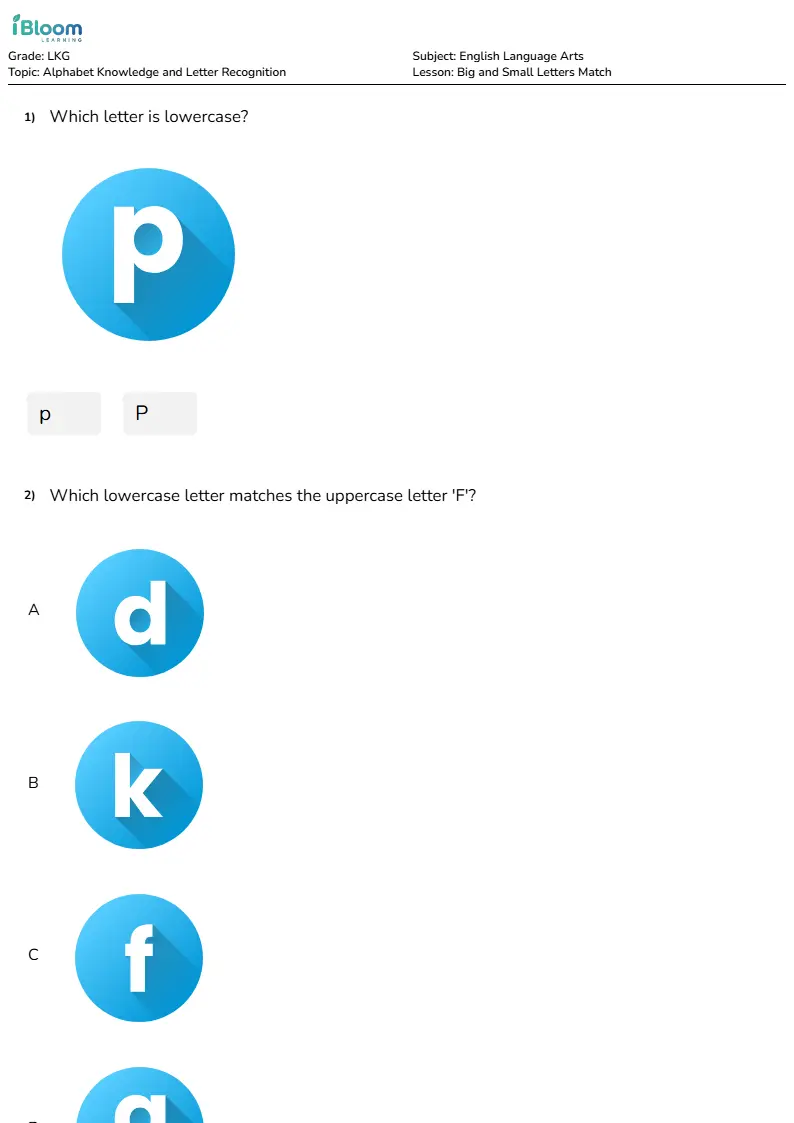
Free Big and Small Letters Match Worksheets for Lkg
Looking for lkg english language arts help? Download free, interactive big and small letters match worksheets. AI-personalized and Common Core-aligned. Practice early literacy with iBloom.
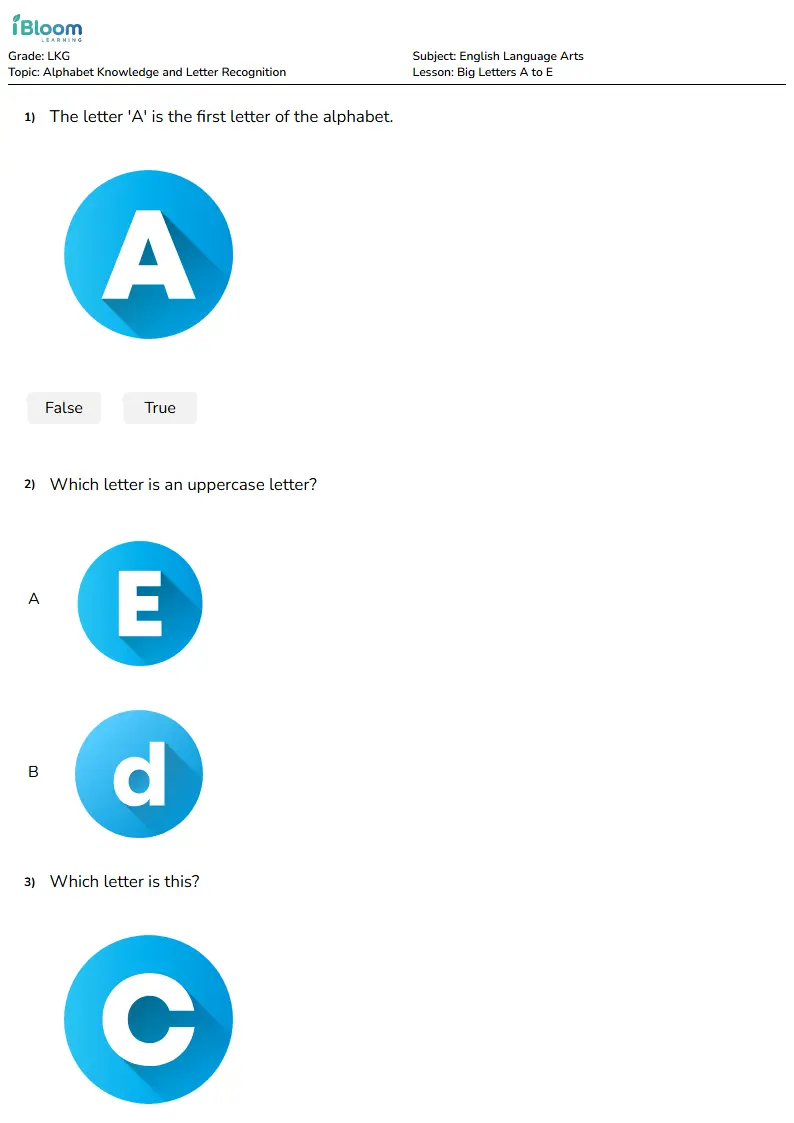
Free Big Letters A to E Worksheets for Lkg
Looking for lkg english language arts help? Download free, interactive big letters a to e worksheets. AI-personalized and Common Core-aligned. Practice early literacy with iBloom.
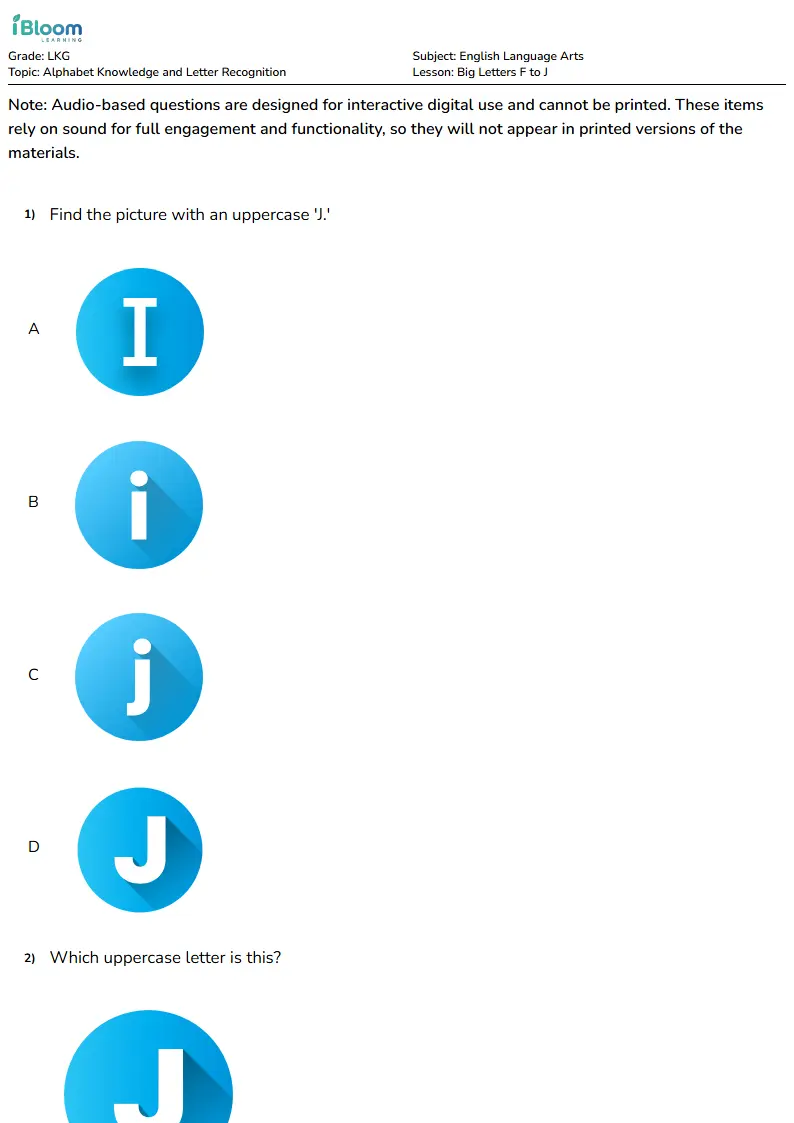
Free Big Letters F to J Worksheets for Lkg
Looking for lkg english language arts help? Download free, interactive big letters f to j worksheets. AI-personalized and Common Core-aligned. Practice early literacy with iBloom.
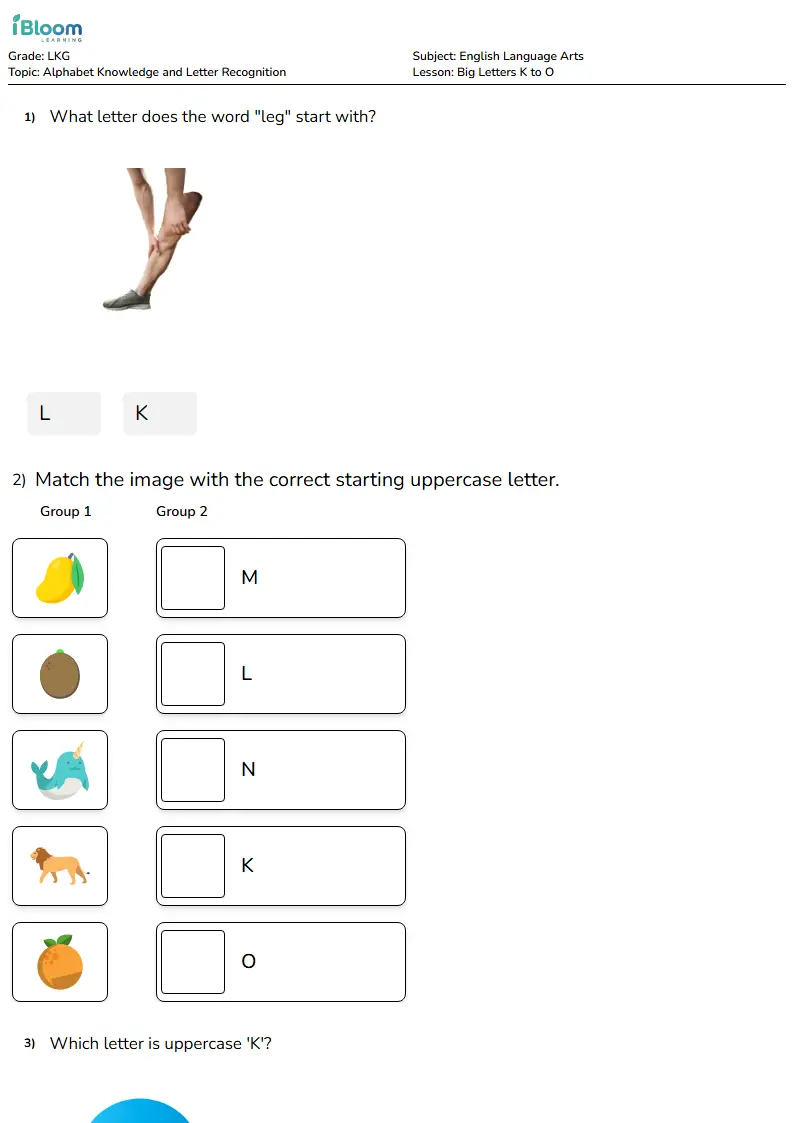
Free Big Letters K to O Worksheets for Lkg
Looking for lkg english language arts help? Download free, interactive big letters k to o worksheets. AI-personalized and Common Core-aligned. Practice early literacy with iBloom.
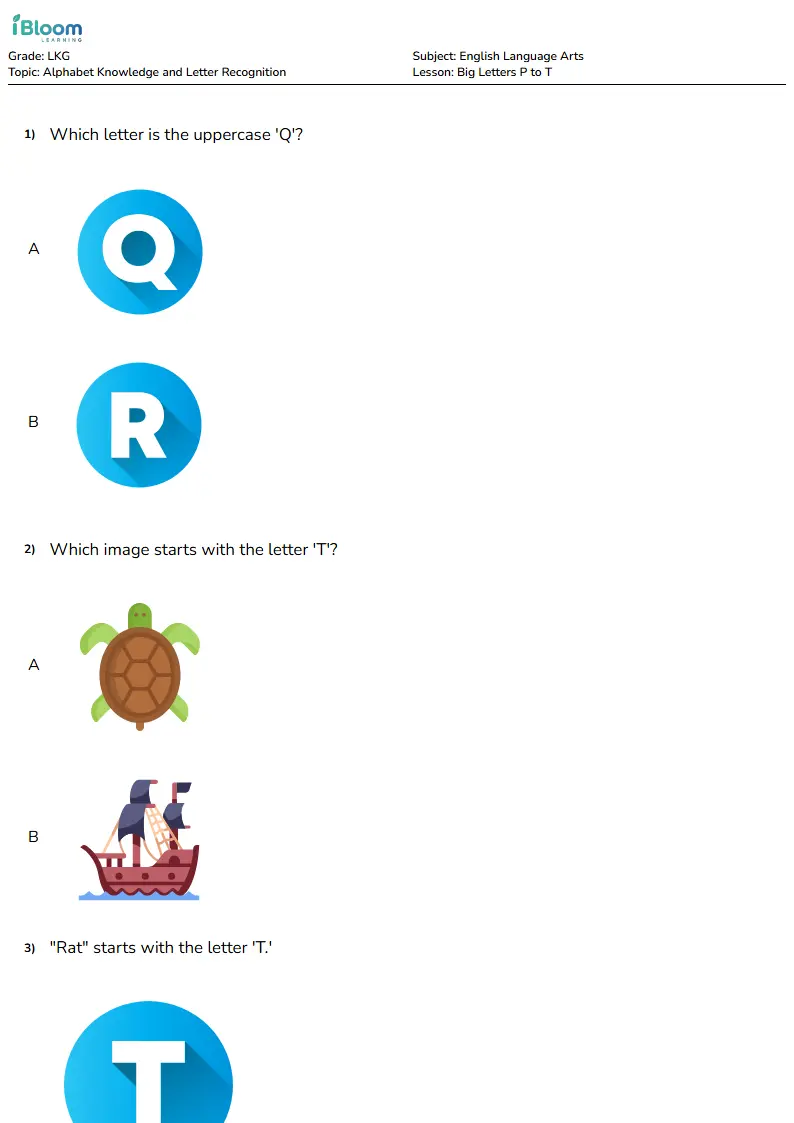
Free Big Letters P to T Worksheets for Lkg
Looking for lkg english language arts help? Download free, interactive big letters p to t worksheets. AI-personalized and Common Core-aligned. Practice early literacy with iBloom.
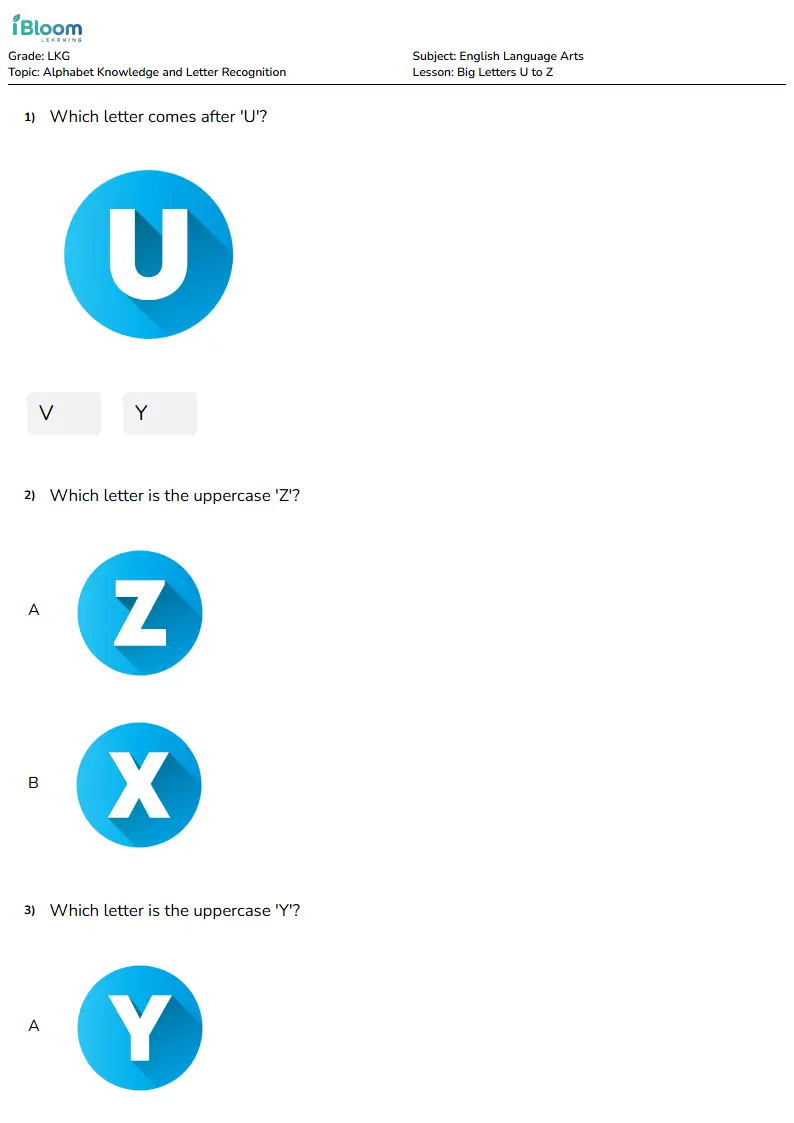
Free Big Letters U to Z Worksheets for Lkg
Looking for lkg english language arts help? Download free, interactive big letters u to z worksheets. AI-personalized and Common Core-aligned. Practice early literacy with iBloom.
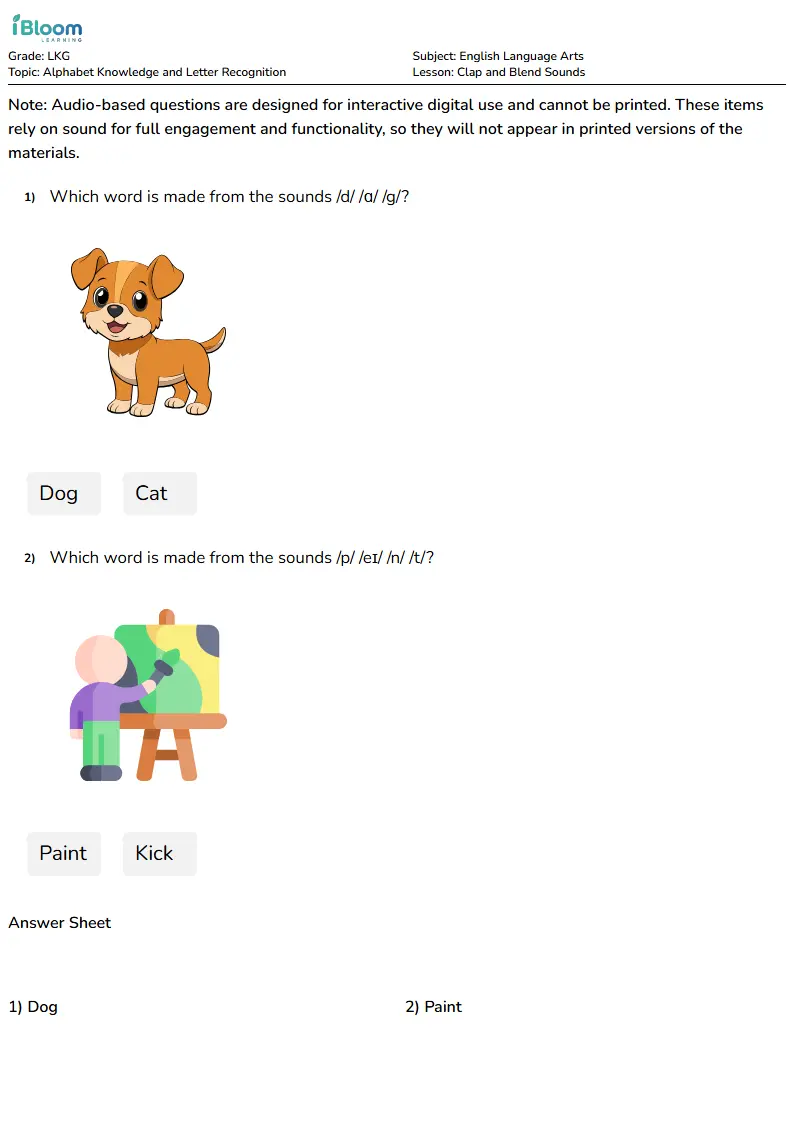
Free Clap and Blend Sounds Worksheets for Lkg
Looking for lkg english language arts help? Download free, interactive clap and blend sounds worksheets. AI-personalized and Common Core-aligned. Practice early literacy with iBloom.
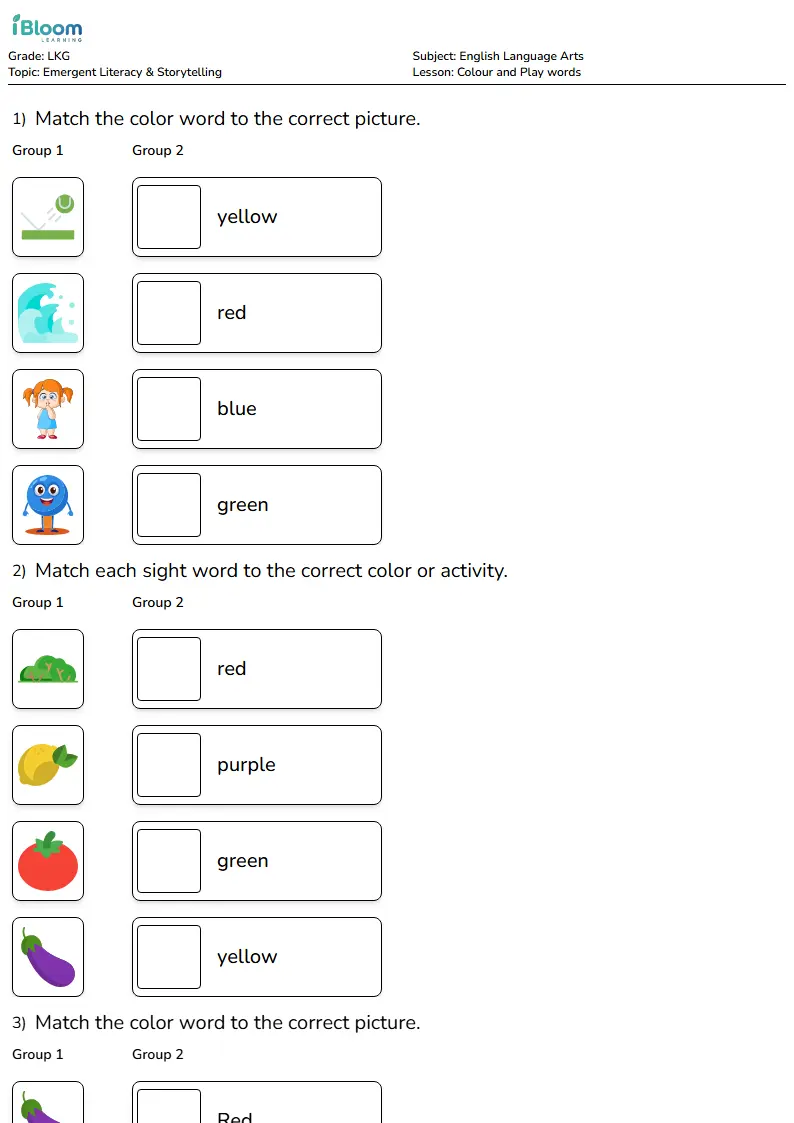
Free Colour and Play words Worksheets for Lkg
Looking for lkg english language arts help? Download free, interactive colour and play words worksheets. AI-personalized and Common Core-aligned. Practice early literacy with iBloom.
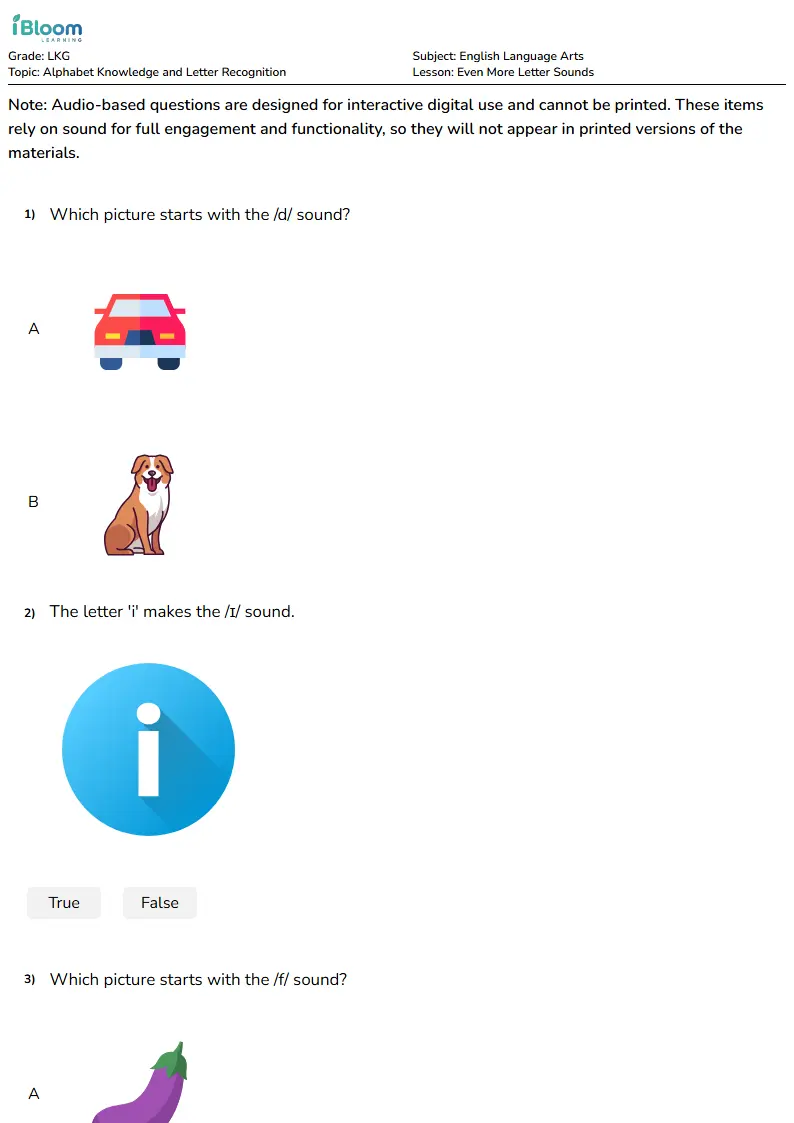
Free Even More Letter Sounds Worksheets for Lkg
Looking for lkg english language arts help? Download free, interactive even more letter sounds worksheets. AI-personalized and Common Core-aligned. Practice early literacy with iBloom.

Free Even More Sight Words Worksheets for Lkg
Looking for lkg english language arts help? Download free, interactive even more sight words worksheets. AI-personalized and Common Core-aligned. Practice early literacy with iBloom.
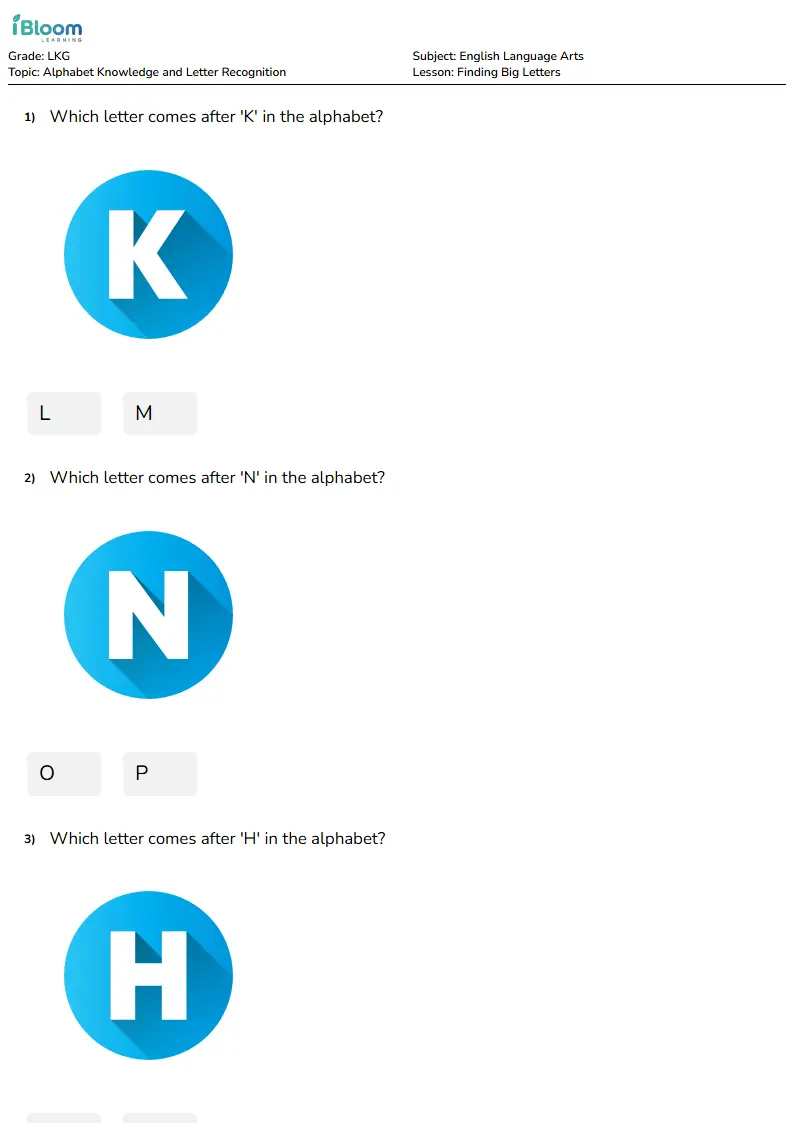
Free Finding Big Letters Worksheets for Lkg
Looking for lkg english language arts help? Download free, interactive finding big letters worksheets. AI-personalized and Common Core-aligned. Practice early literacy with iBloom.
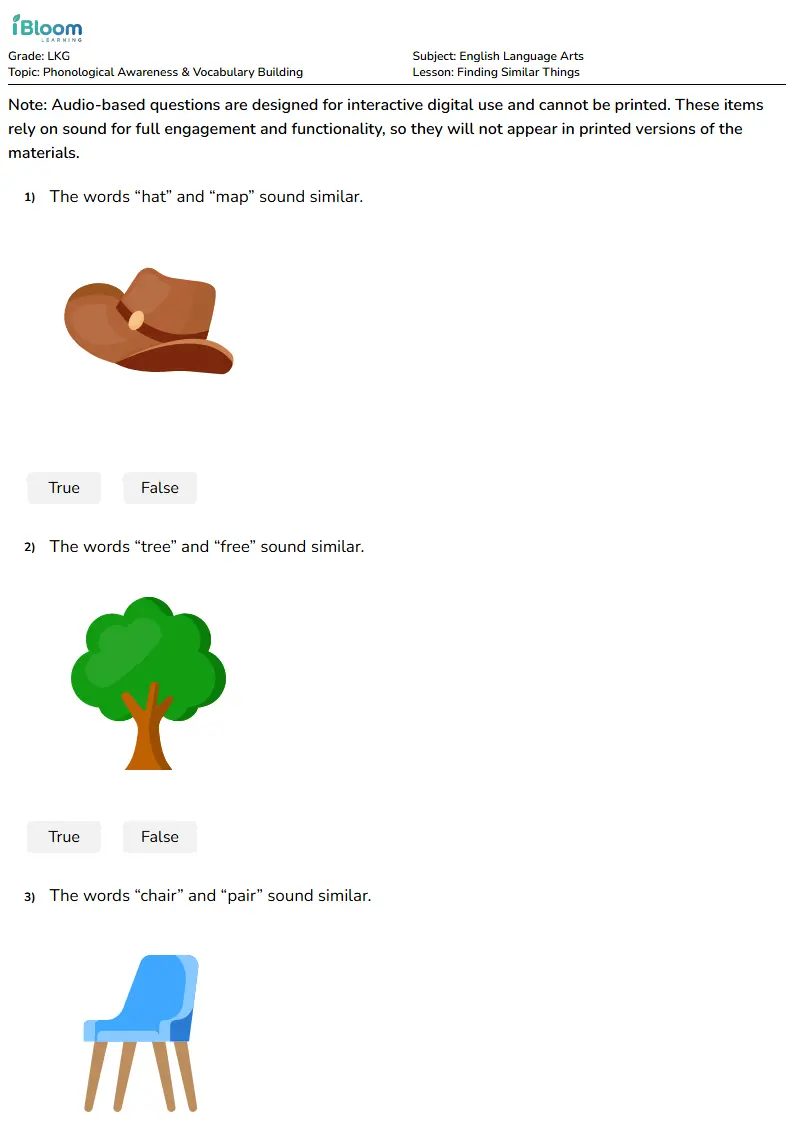
Free Finding Similar Things Worksheets for Lkg
Looking for lkg english language arts help? Download free, interactive finding similar things worksheets. AI-personalized and Common Core-aligned. Practice early literacy with iBloom.
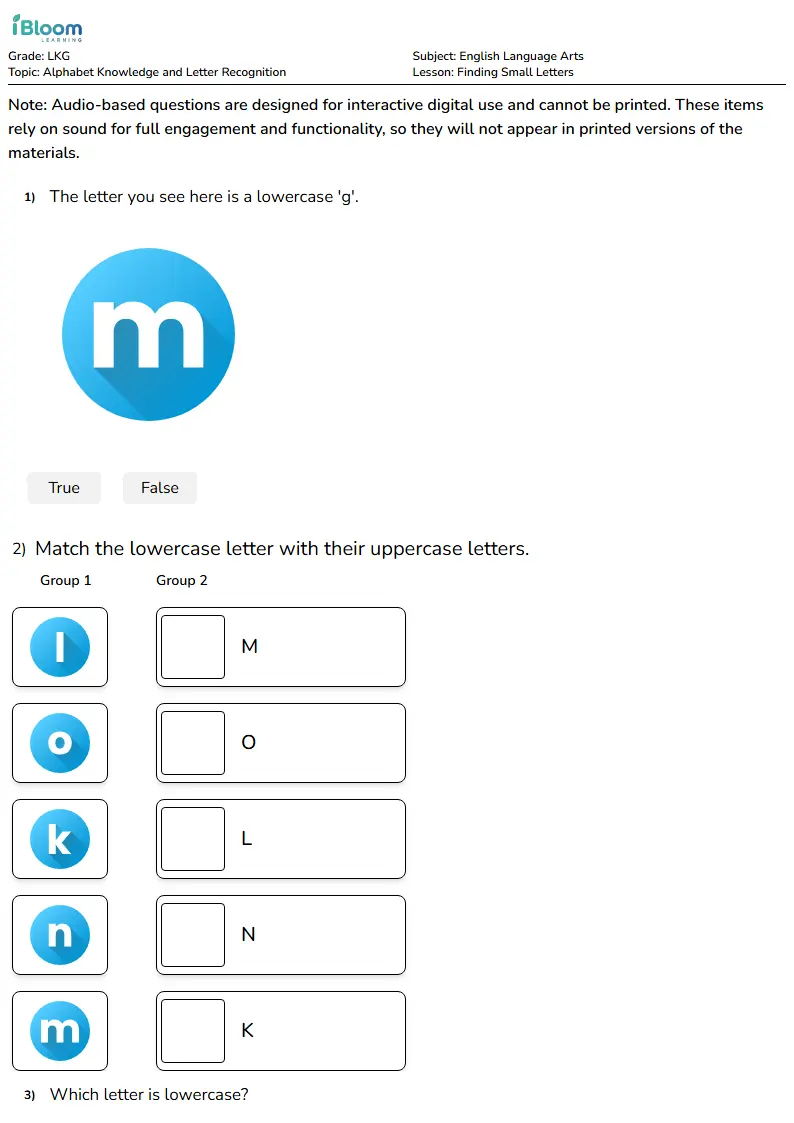
Free Finding Small Letters Worksheets for Lkg
Looking for lkg english language arts help? Download free, interactive finding small letters worksheets. AI-personalized and Common Core-aligned. Practice early literacy with iBloom.
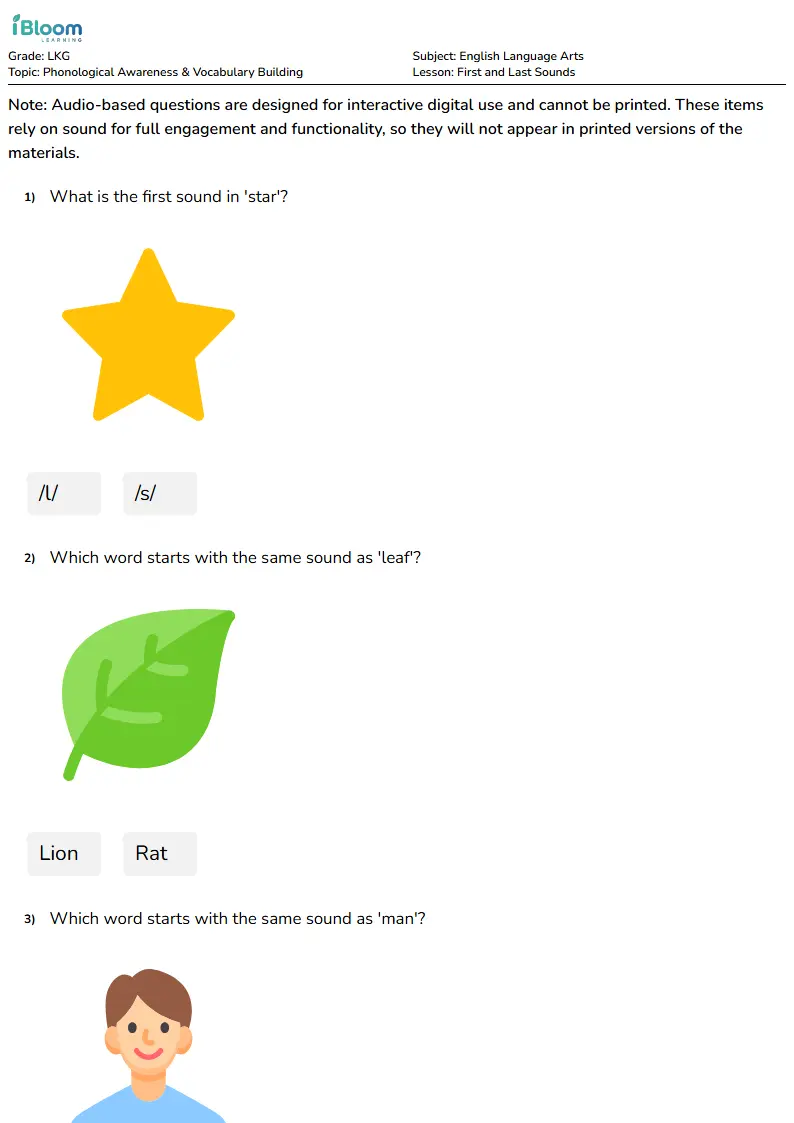
Free First and Last Sounds Worksheets for Lkg
Looking for lkg english language arts help? Download free, interactive first and last sounds worksheets. AI-personalized and Common Core-aligned. Practice early literacy with iBloom.
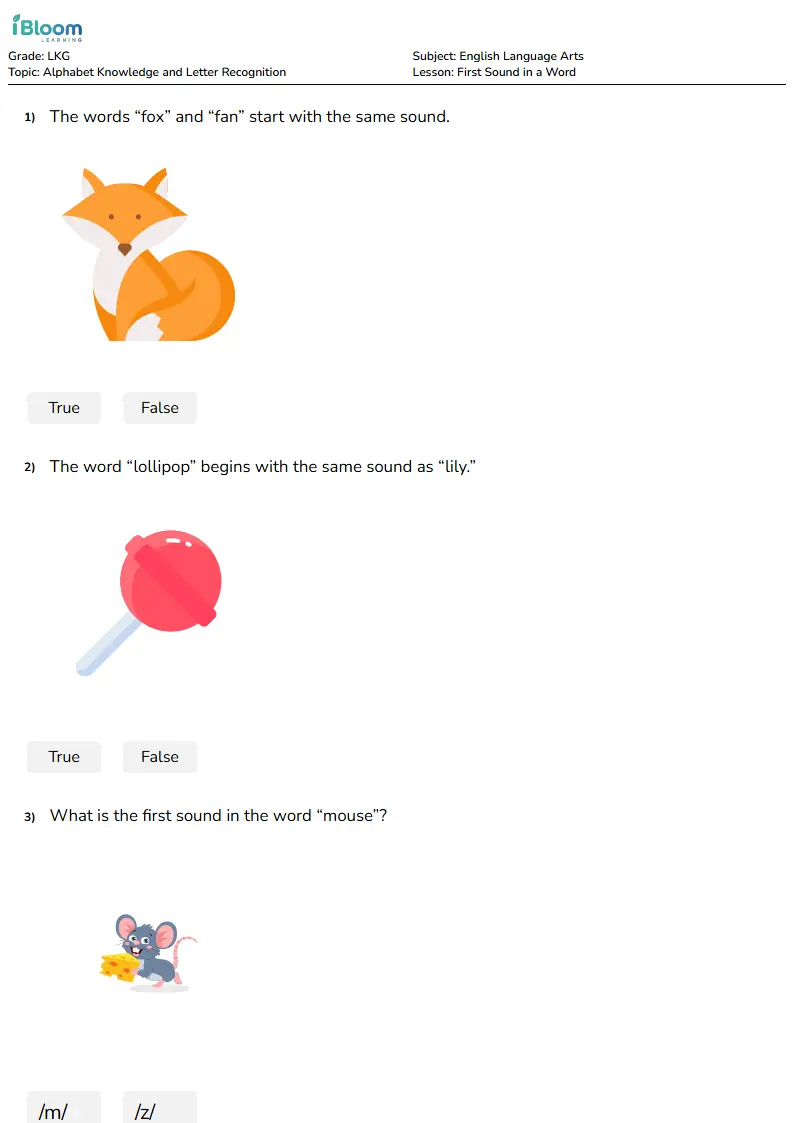
Free First Sound in a Word Worksheets for Lkg
Looking for lkg english language arts help? Download free, interactive first sound in a word worksheets. AI-personalized and Common Core-aligned. Practice early literacy with iBloom.

Free Harder Words I Can Read Worksheets for Lkg
Looking for lkg english language arts help? Download free, interactive harder words i can read worksheets. AI-personalized and Common Core-aligned. Practice early literacy with iBloom.

Free I Know All My Sight Words! Worksheets for Lkg
Looking for lkg english language arts help? Download free, interactive i know all my sight words! worksheets. AI-personalized and Common Core-aligned. Practice early literacy with iBloom.
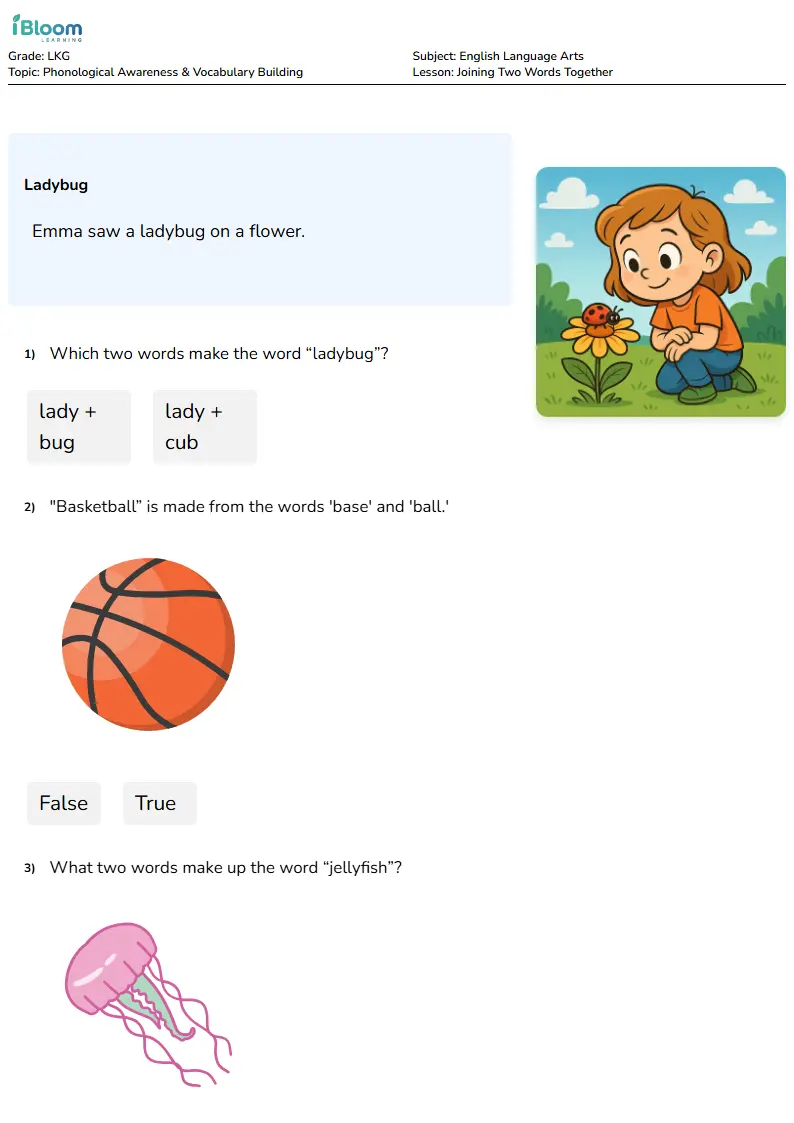
Free Joining Two Words Together Worksheets for Lkg
Looking for lkg english language arts help? Download free, interactive joining two words together worksheets. AI-personalized and Common Core-aligned. Practice early literacy with iBloom.
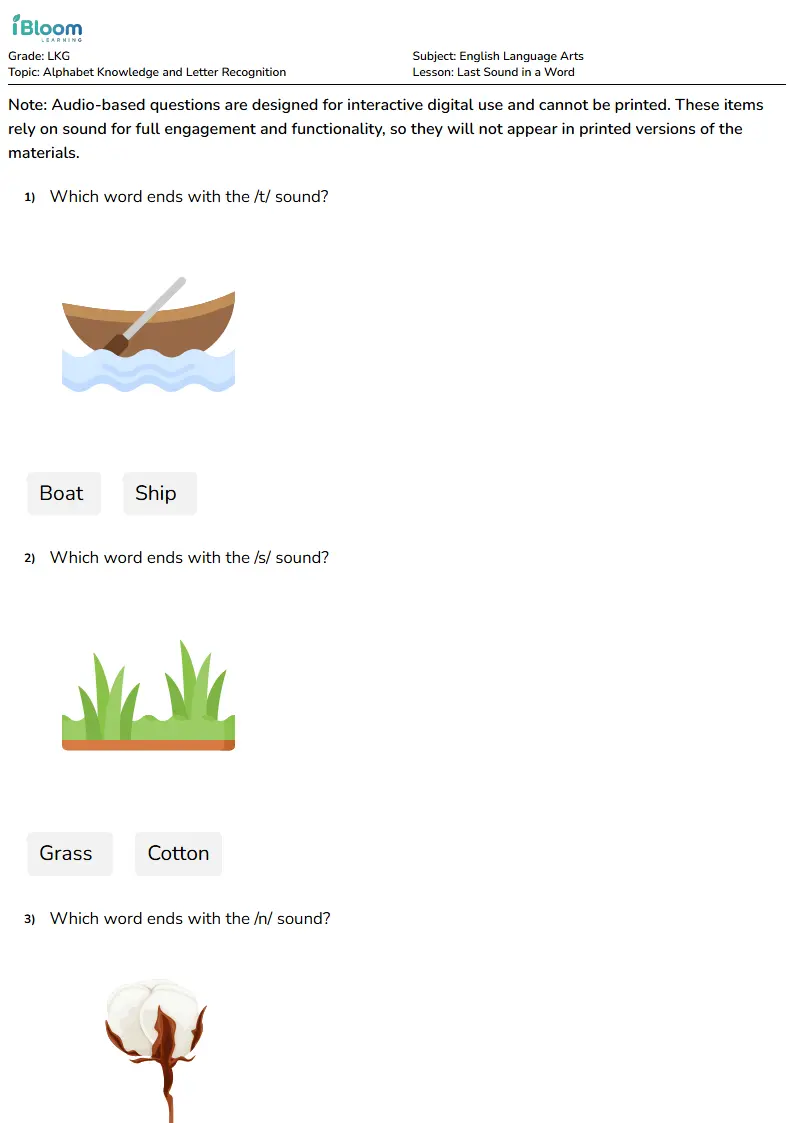
Free Last Sound in a Word Worksheets for Lkg
Looking for lkg english language arts help? Download free, interactive last sound in a word worksheets. AI-personalized and Common Core-aligned. Practice early literacy with iBloom.
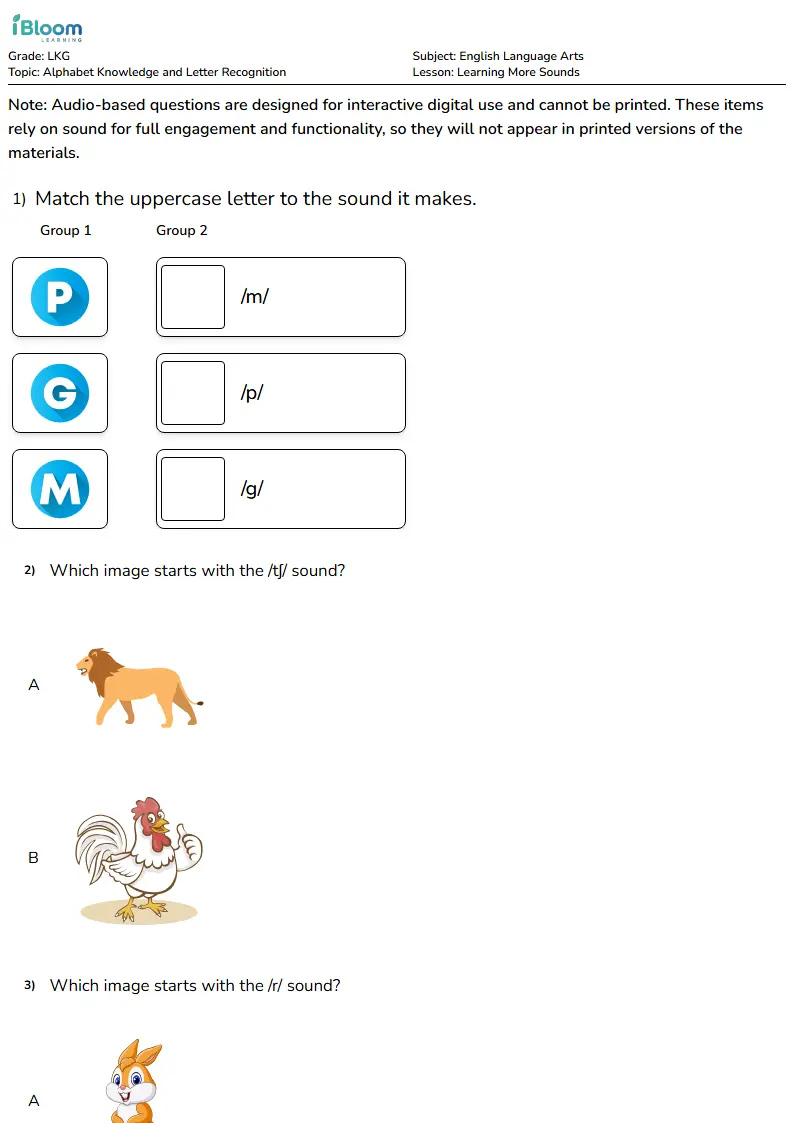
Free Learning More Sounds Worksheets for Lkg
Looking for lkg english language arts help? Download free, interactive learning more sounds worksheets. AI-personalized and Common Core-aligned. Practice early literacy with iBloom.
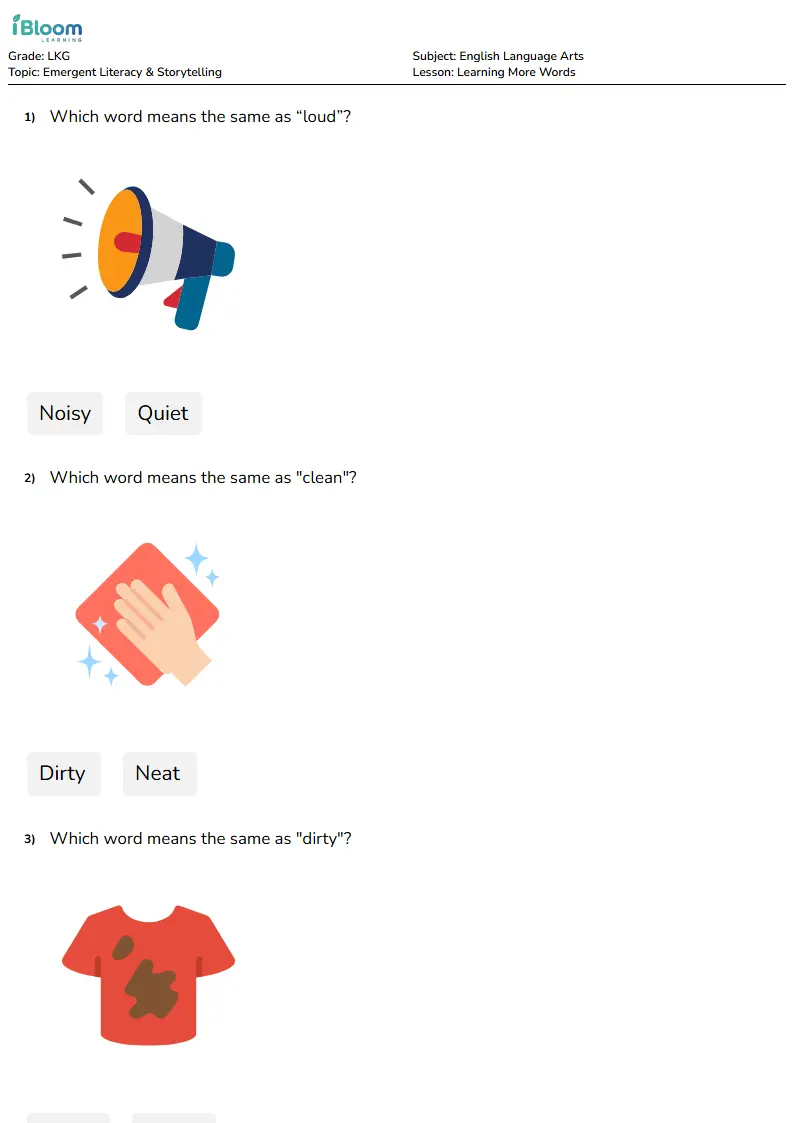
Free Learning More Words Worksheets for Lkg
Looking for lkg english language arts help? Download free, interactive learning more words worksheets. AI-personalized and Common Core-aligned. Practice early literacy with iBloom.
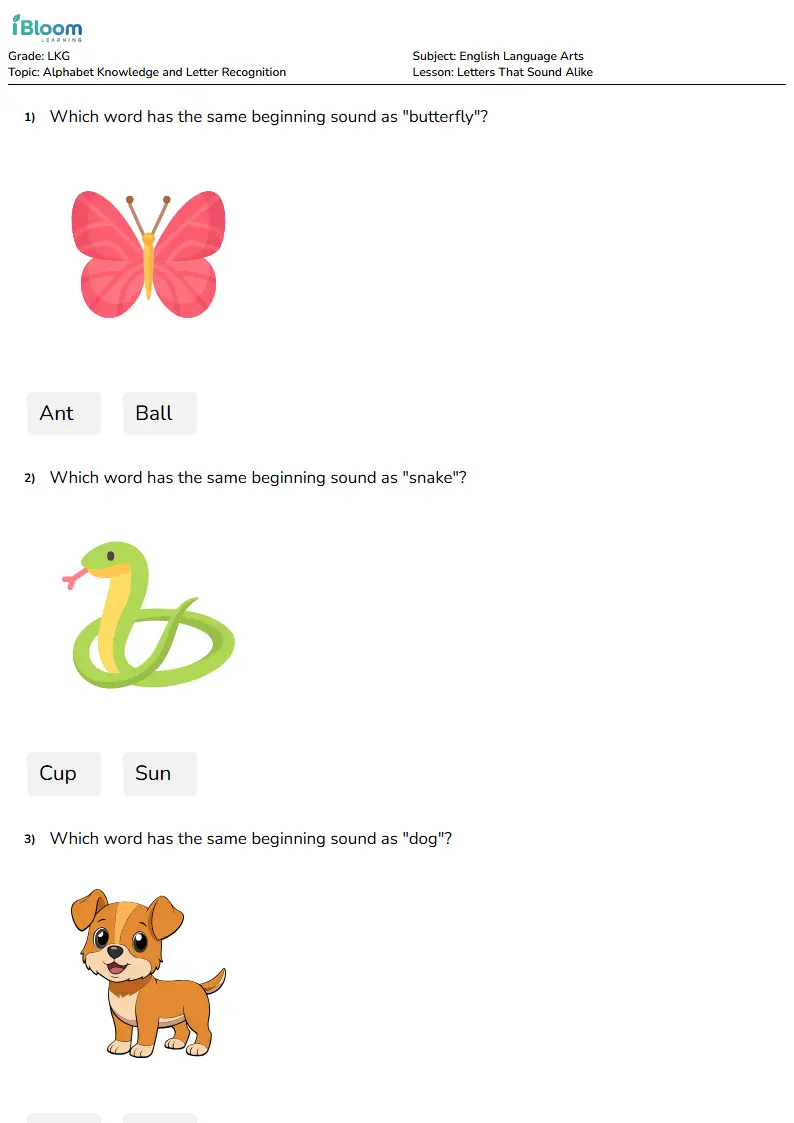
Free Letters That Sound Alike Worksheets for Lkg
Looking for lkg english language arts help? Download free, interactive letters that sound alike worksheets. AI-personalized and Common Core-aligned. Practice early literacy with iBloom.
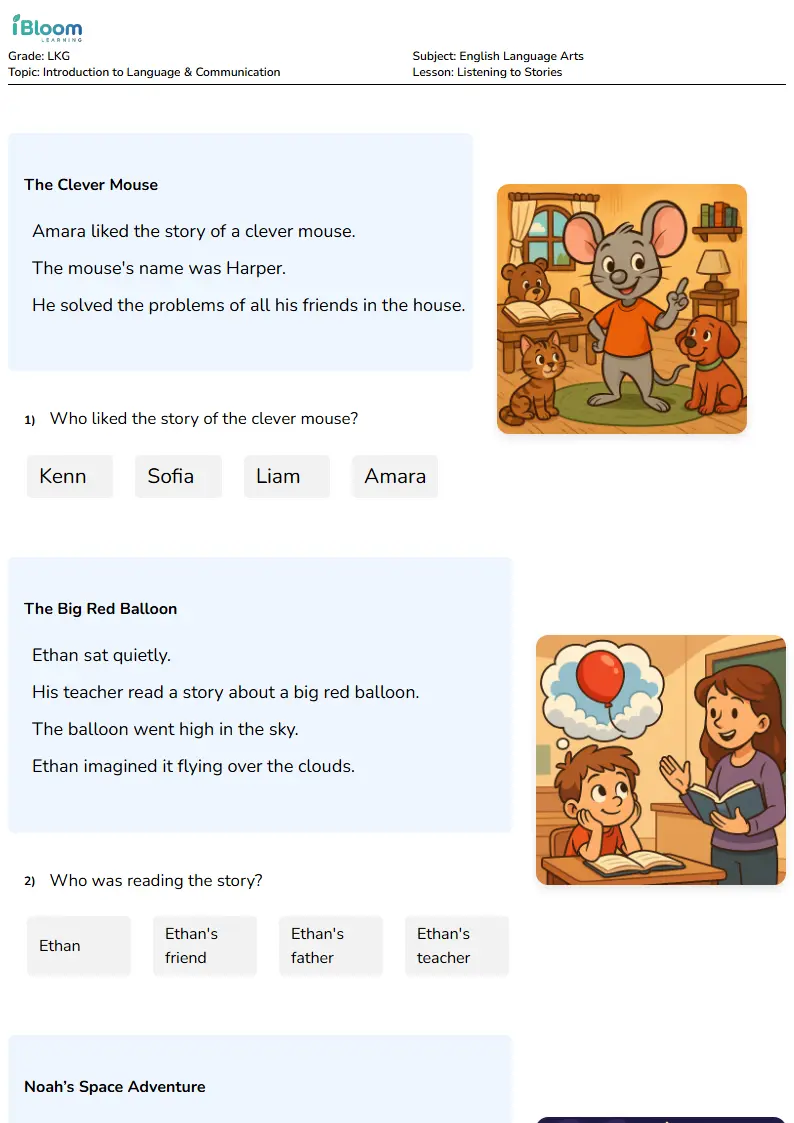
Listening to Stories Worksheet for LKG
Read The Clever Mouse and The Big Red Balloon with an LKG child, then answer who questions and use clear story details to check understanding.
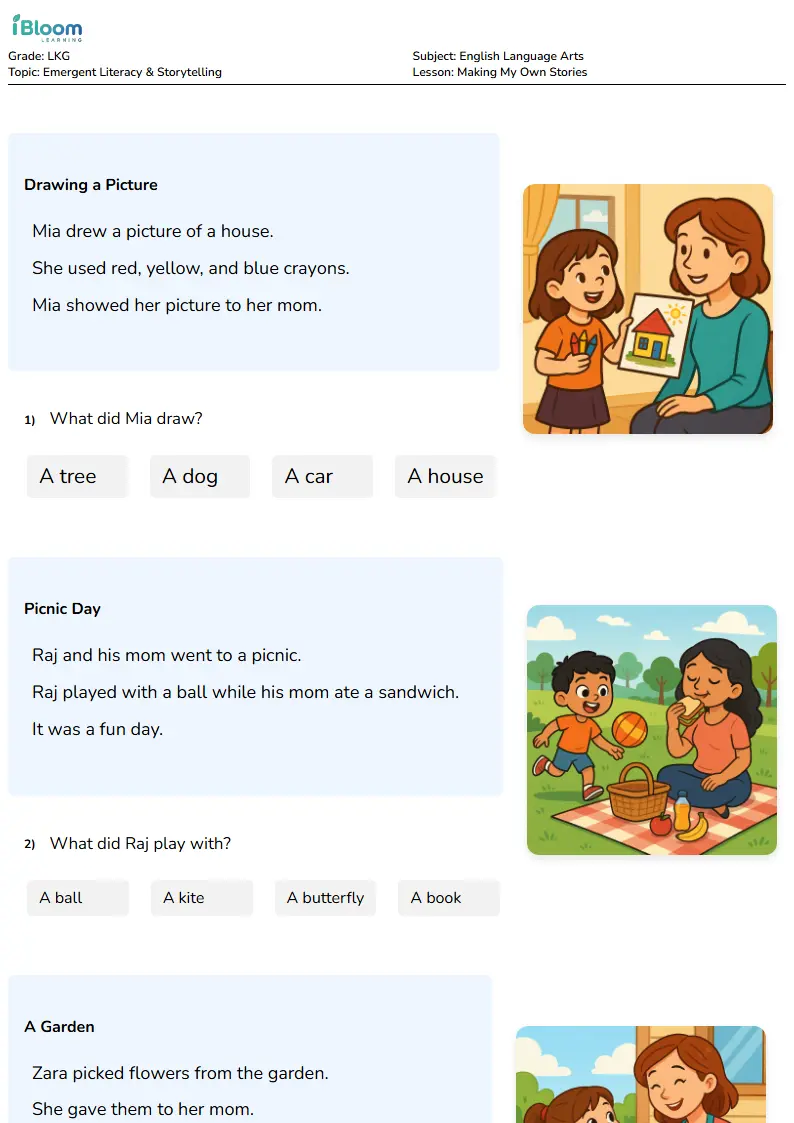
Free Making My Own Stories Worksheets for Lkg
Looking for lkg english language arts help? Download free, interactive making my own stories worksheets. AI-personalized and Common Core-aligned. Practice early literacy with iBloom.