Spotting New Words worksheet for UKG
Lesson-Wise Builder
A premium AI tool that creates syllabus-aligned questions and worksheets for any lesson in seconds.
A spotting new words worksheet for UKG should help a child connect a word with meaning in a sentence, picture or familiar synonym. This activity uses three visible examples: kind matches nice; tiptoed means walked quietly in a short forest passage; and the statement that giggle means cry loudly must be checked against the child's understanding. One item relies on audio for full digital use, so sound should be available when the page asks for it.
What the child does with each new word
The questions change format instead of repeating one routine. The child selects a synonym, uses a sentence to work out an action word, and judges whether a proposed meaning is accurate. This variety makes the page useful UKG vocabulary in context activity practice.
- Compare kind with the choices nice and mean.
- Read how Jacob moved through a quiet forest and infer tiptoed.
- Decide whether giggle can mean to cry loudly.
Each task asks for attention to meaning, but the evidence differs. A child should learn to ask, What clue is available here?
Kind and nice: a direct synonym
The first visible question asks which word means the same as kind. The choices are nice and mean, beside a picture of one child sharing an apple with another. Nice is the matching word. Mean expresses the opposite idea in this choice set.
Use the full sentence frame, A kind person can be nice to others. The illustration supports the idea of helpful behaviour, but the answer still depends on comparing the two word meanings.
Keep the synonym explanation concrete
At UKG level, it is enough to say that the words can share a close meaning in this situation. Avoid claiming that every synonym can replace another word in every sentence. Give one familiar example: sharing a toy can be a kind or nice action.
Tiptoed: meaning from the forest passage
The passage says Jacob tiptoed through a quiet forest and that leaves rustled softly under his feet. The question asks what tiptoed means in this story. The choices are walked quietly and ran quickly.
Walked quietly fits the action and the surrounding words quiet forest and softly. Running quickly would conflict with the calm description. The picture of Jacob taking careful steps also supports the reading.
Act out the contrast
Invite the child to take two silent, careful steps and then show a safe pretend run without moving far. Ask which movement matches tiptoed. The body movement makes the word memorable while the sentence remains the evidence.
Giggle: checking a false meaning
The third visible item states that giggle means to cry loudly. A giggle is a light, small laugh, so that statement does not describe the word correctly. Let the child make a quiet giggle sound and compare it with the sound or expression of crying.
The aim is not to embarrass a child who accepts the statement. Ask, What does your face do when you giggle? and Does a giggle sound like crying? Familiar experience can help the learner reject an incorrect definition.
A word detective routine for UKG
- Say the target word clearly.
- Read the whole question or short passage.
- Notice whether the clue is a synonym, an opposite, an action or a surrounding detail.
- Try each choice inside the sentence or scene.
- Remove the choice that conflicts with the clue.
- Explain the answer in a short phrase.
For tiptoed, the explanation might be, I chose walked quietly because the forest is quiet and the leaves move softly. For kind, the explanation can be, Nice means almost the same here.
Parent prompts for vocabulary practice
Use one word at a time during a short home session. Read the item aloud and wait before offering help. If the child guesses, ask what in the sentence or picture supports that idea.
- Show me how someone tiptoes.
- Which choice has a close meaning to kind?
- Can you use nice in a sentence?
- What sound do you make when you giggle?
- Which word in the passage tells us the forest is calm?
A familiar home language may be used to clarify the idea first. Then repeat the English target word and one simple English sentence so meaning and usage stay connected.
Teacher guidance for mixed question types
Tell learners which kind of thinking each item requires. The first is a same-meaning choice, the second uses story clues, and the third checks a proposed definition. Naming the task in child-friendly language prevents a correct strategy from being applied to the wrong question.
- Model one think-aloud: Softly and quiet make ran quickly unlikely.
- Ask children to underline or repeat the helpful clue.
- Let pairs act out an action word before choosing.
- Invite a learner to explain why the other option does not fit.
- Reuse the word later in a new oral sentence.
Listen for whether the child can connect evidence to a choice. A lucky click and a reasoned answer may look the same on screen, so the spoken explanation matters.
Common word-meaning mistakes
- Choosing by picture only: ask for one supporting word from the sentence.
- Thinking a new word must be difficult: show that a familiar synonym can explain it.
- Ignoring the passage mood: contrast quiet and softly with the idea of running.
- Accepting every definition statement: compare it with a known action or feeling.
- Repeating a word without understanding: ask the child to use it or act it out.
- Using too many new terms at once: finish one word and revisit it before continuing.
Practice ideas with everyday words
Synonym pairs
Say happy and offer glad or angry. Ask which word is closer in meaning and use both in short sentences.
Quiet action challenge
Try tiptoe, stomp and skip. Let the child match each verb to an acted movement.
Meaning check
Give a playful true-or-false statement such as, Whisper means shout loudly. Ask the child to correct it in their own words.
Clue hunt
Read a two-sentence mini-story with one describing word. Ask which nearby detail helps explain it.
Related vocabulary skills
After this activity, children can explore more opposites, action verbs, character-feeling words and direct story clues. Keep examples short and concrete. Formal context-clue labels are less important than the habit of reading around a word and checking whether a meaning fits.
Related iBloom activities
- Special Words in Stories worksheet for UKG continues story-based vocabulary work.
- Looking Inside the Story worksheet for UKG gives young readers another reason to use passage details.
Frequently Asked Questions
Is kind exactly the same as nice in every sentence?
No. They are close enough for the verified choice in this item, but word use can vary with context.
What clue explains tiptoed?
The passage describes a quiet forest and leaves rustling softly, which supports the meaning walked quietly.
Why is ran quickly not the best choice?
It conflicts with the careful movement suggested by tiptoed and the calm surrounding details.
What does giggle mean?
It means a light or small laugh. It does not mean to cry loudly.
Should a child use the audio controls?
Yes when an item depends on sound. Play the full digital prompt before asking the child to choose.
How can we tell whether the child understood?
Ask for one brief reason, example or action that connects the target word with its meaning.
More practice for this grade
More English Language Arts worksheets
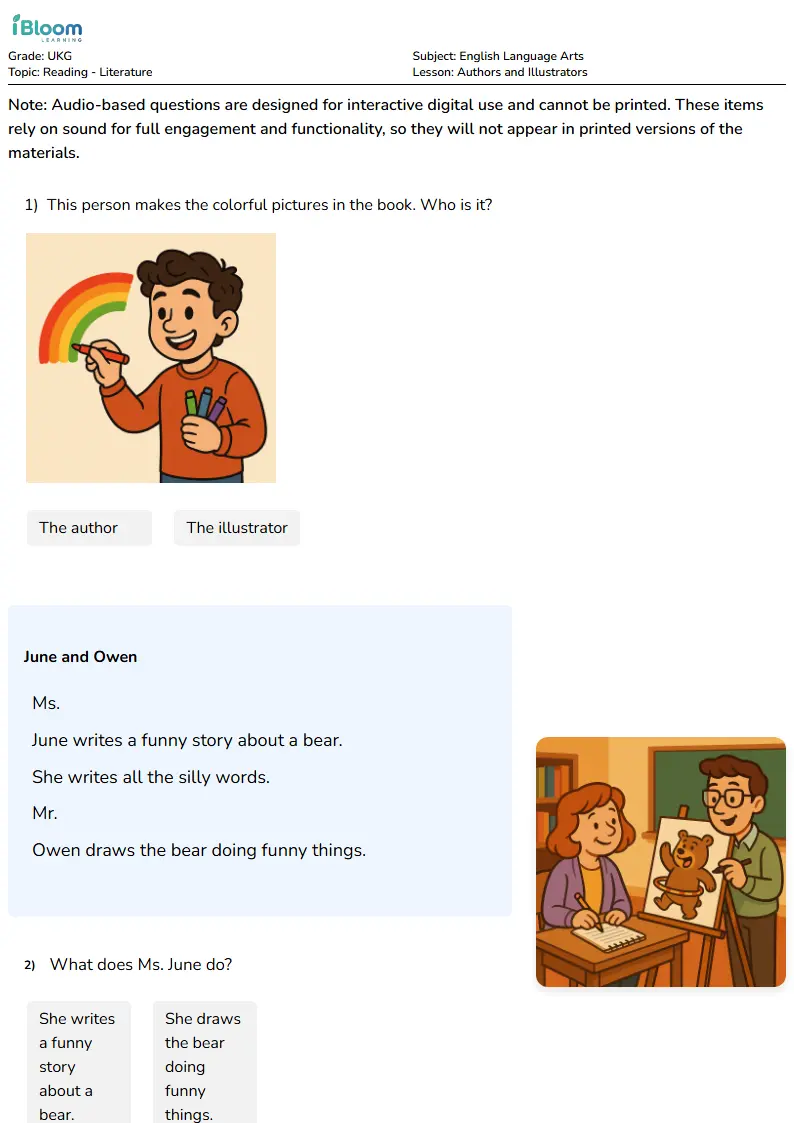
Free Authors and Illustrators Worksheets for Ukg
Looking for ukg english language arts help? Download free, interactive authors and illustrators worksheets. AI-personalized and Common Core-aligned. Practice early literacy with iBloom.
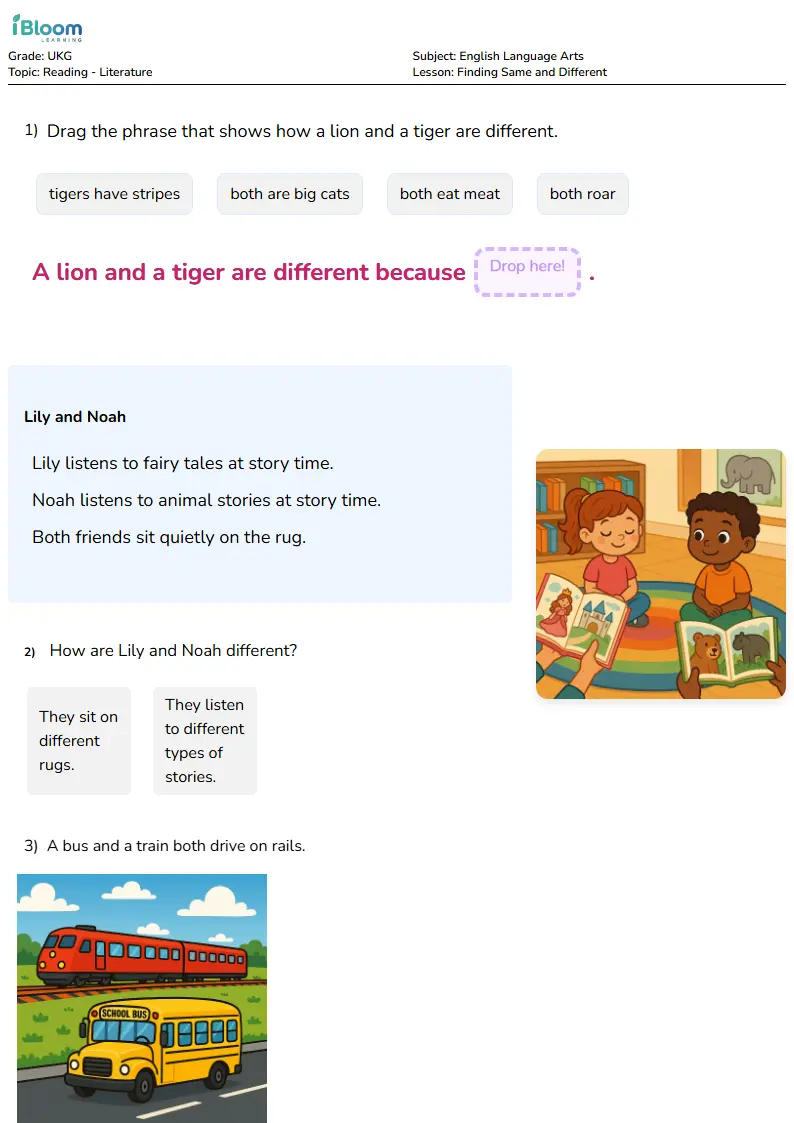
Free Finding Same and Different Worksheets for Ukg
Looking for ukg english language arts help? Download free, interactive finding same and different worksheets. AI-personalized and Common Core-aligned. Practice early literacy with iBloom.
Free How Do Characters Feel? Worksheets for Ukg
Looking for ukg english language arts help? Download free, interactive how do characters feel? worksheets. AI-personalized and Common Core-aligned. Practice early literacy with iBloom.
Free How Do They Feel? Worksheets for Ukg
Looking for ukg english language arts help? Download free, interactive how do they feel? worksheets. AI-personalized and Common Core-aligned. Practice early literacy with iBloom.
Free Important Things That Happen Worksheets for Ukg
Looking for ukg english language arts help? Download free, interactive important things that happen worksheets. AI-personalized and Common Core-aligned. Practice early literacy with iBloom.
Free Joining Story Parts Together Worksheets for Ukg
Looking for ukg english language arts help? Download free, interactive joining story parts together worksheets. AI-personalized and Common Core-aligned. Practice early literacy with iBloom.
Free Learning About Fables Worksheets for Ukg
Looking for ukg english language arts help? Download free, interactive learning about fables worksheets. AI-personalized and Common Core-aligned. Practice early literacy with iBloom.
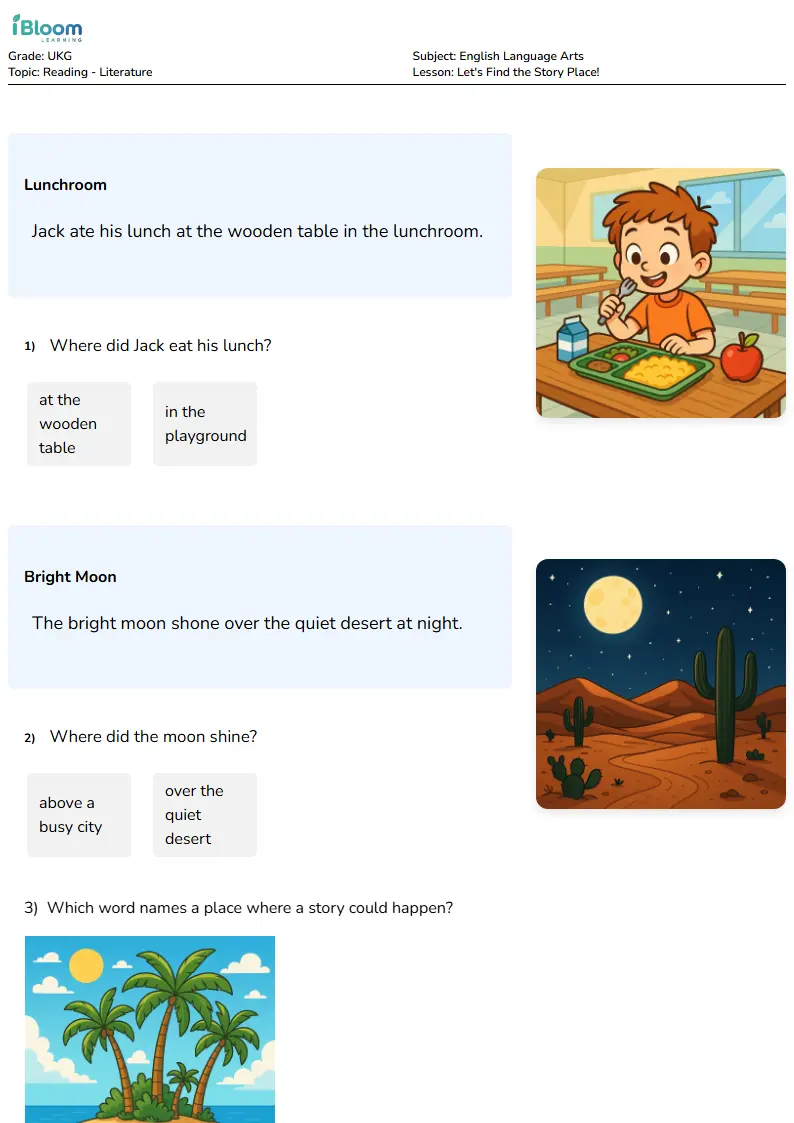
Free Let's Find the Story Place! Worksheets for Ukg
Looking for ukg english language arts help? Download free, interactive let's find the story place! worksheets. AI-personalized and Common Core-aligned. Practice early literacy with iBloom.
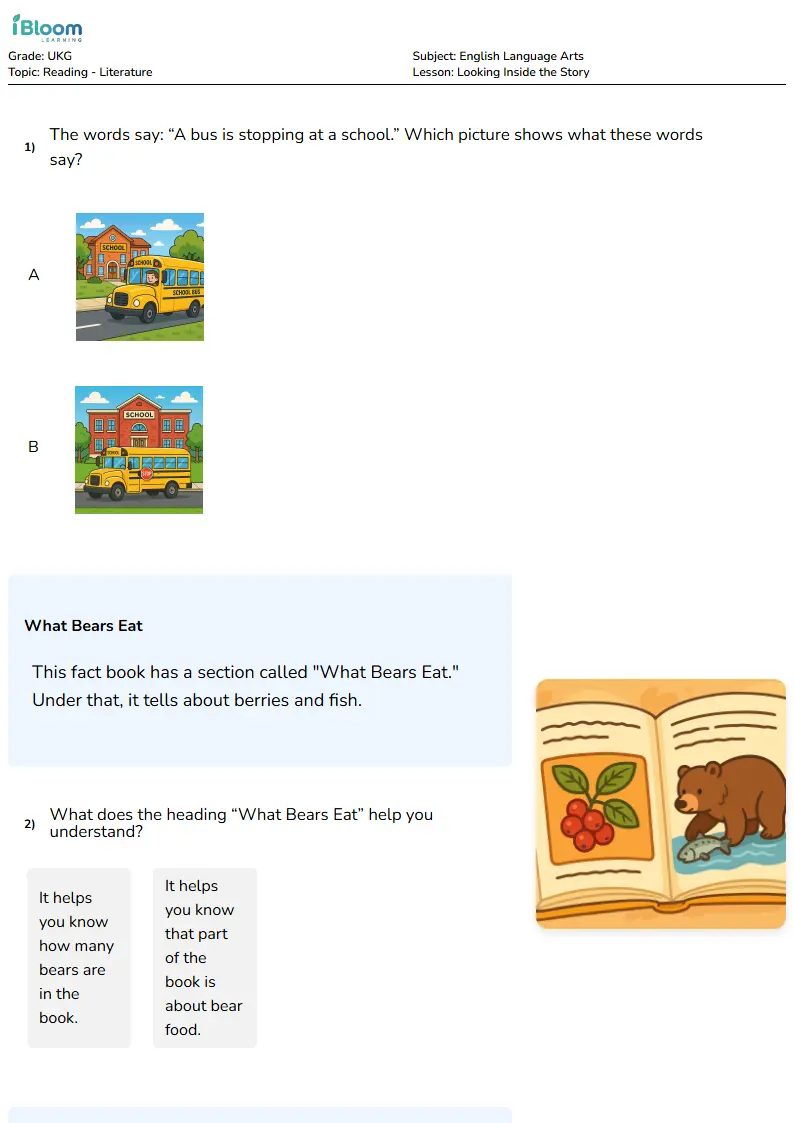
Free Looking Inside the Story Worksheets for Ukg
Looking for ukg english language arts help? Download free, interactive looking inside the story worksheets. AI-personalized and Common Core-aligned. Practice early literacy with iBloom.
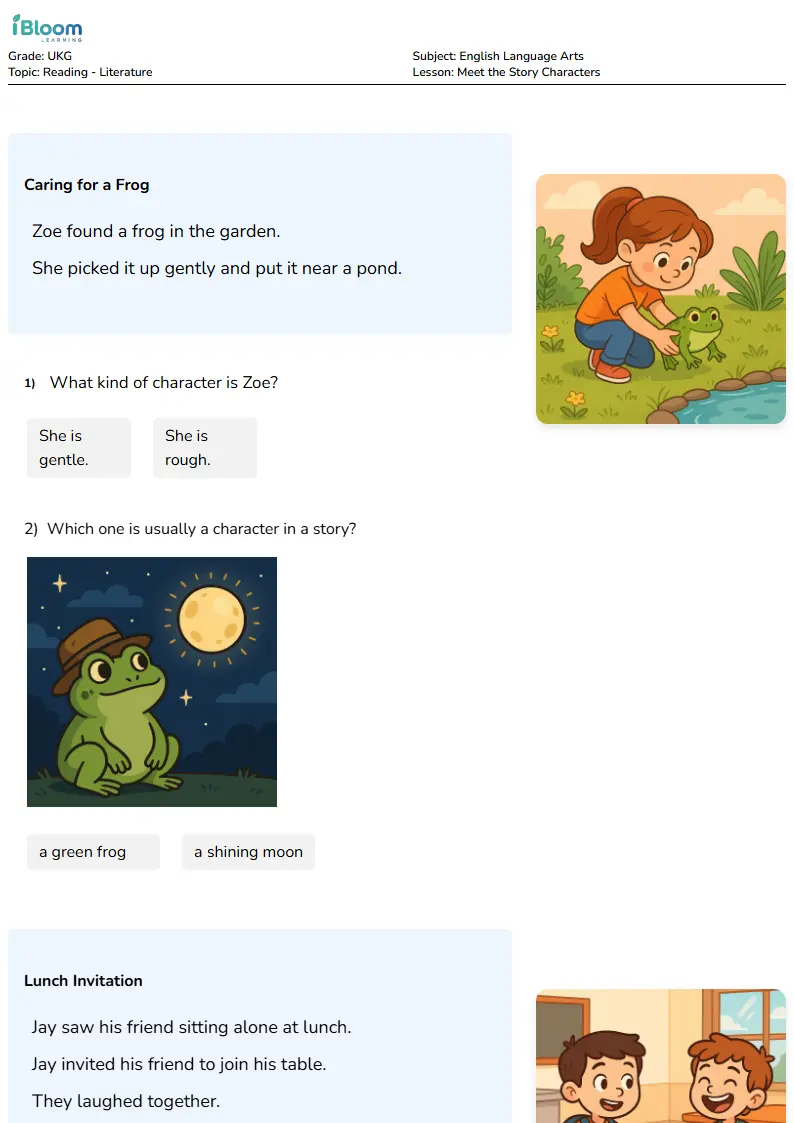
Free Meet the Story Characters Worksheets for Ukg
Looking for ukg english language arts help? Download free, interactive meet the story characters worksheets. AI-personalized and Common Core-aligned. Practice early literacy with iBloom.
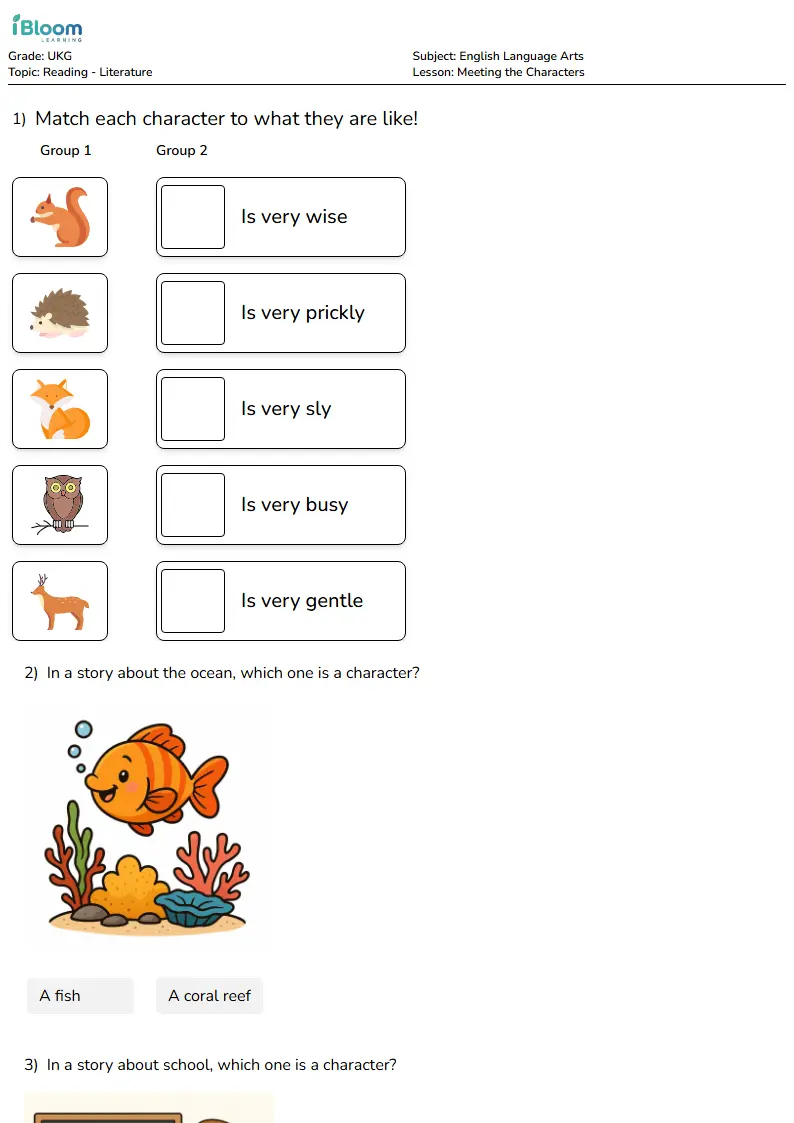
Free Meeting the Characters Worksheets for Ukg
Looking for ukg english language arts help? Download free, interactive meeting the characters worksheets. AI-personalized and Common Core-aligned. Practice early literacy with iBloom.
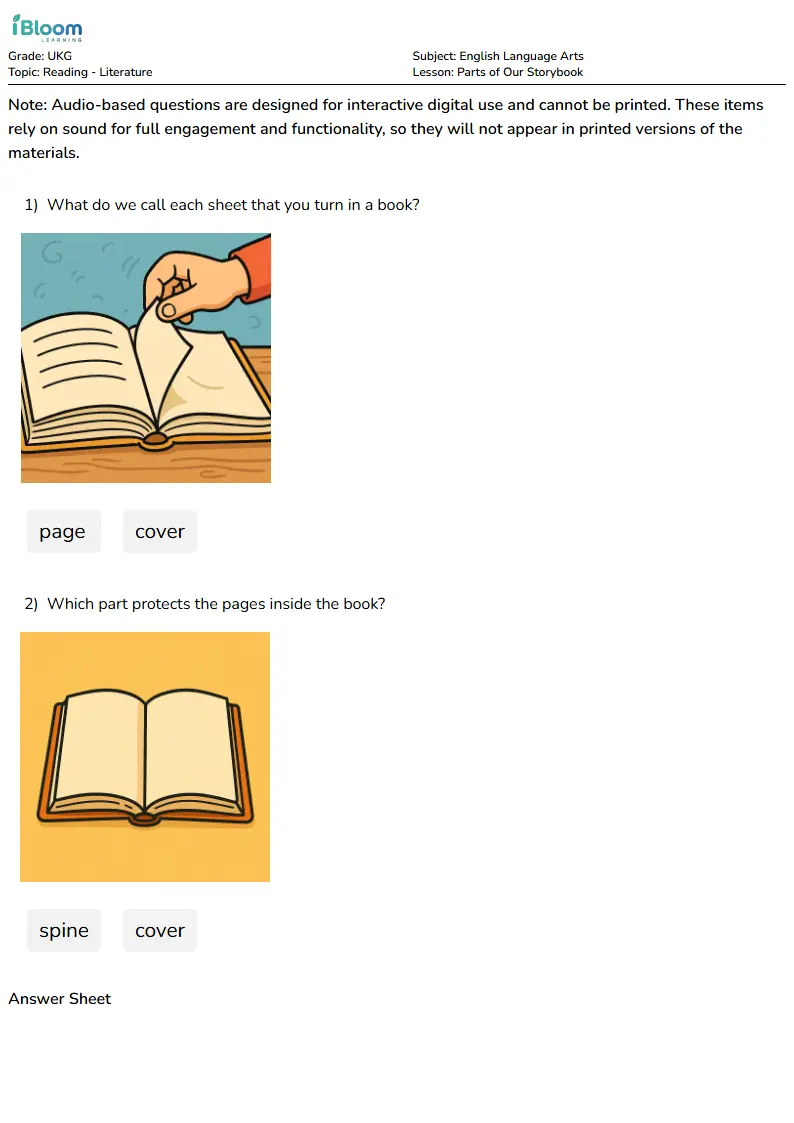
Free Parts of Our Storybook Worksheets for Ukg
Looking for ukg english language arts help? Download free, interactive parts of our storybook worksheets. AI-personalized and Common Core-aligned. Practice early literacy with iBloom.
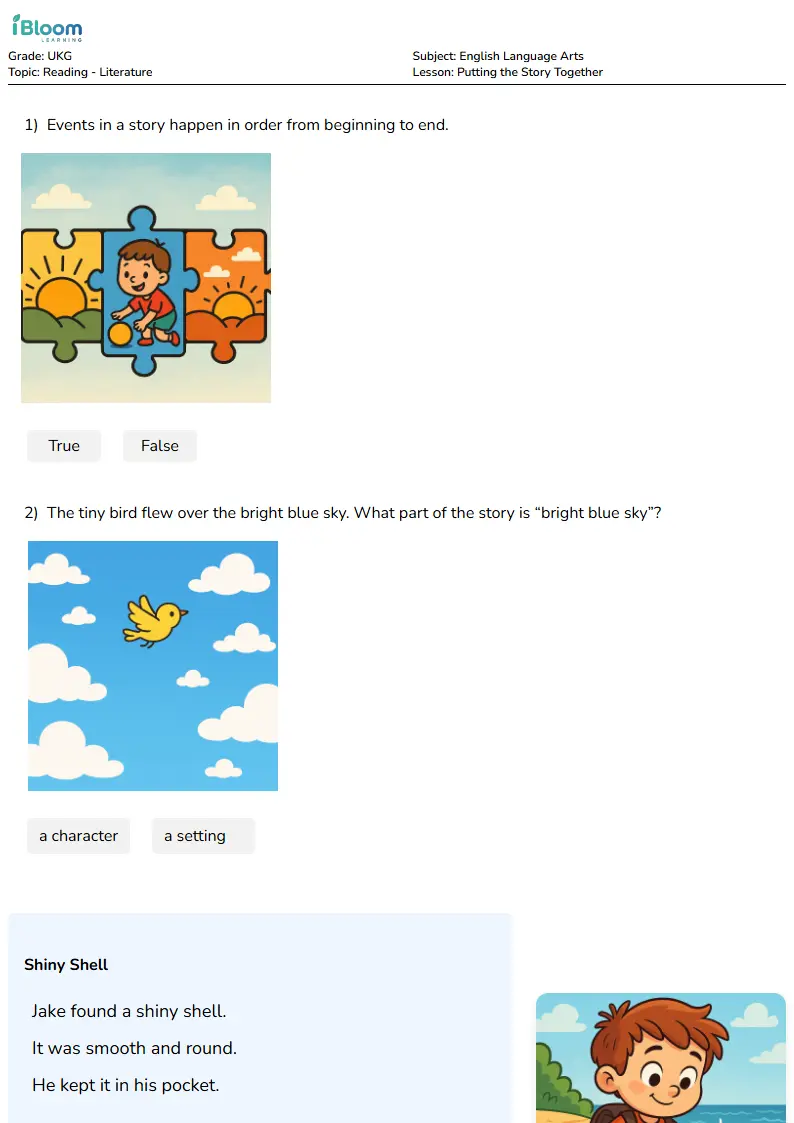
Free Putting the Story Together Worksheets for Ukg
Looking for ukg english language arts help? Download free, interactive putting the story together worksheets. AI-personalized and Common Core-aligned. Practice early literacy with iBloom.
Free Same or Different Adventures? Worksheets for Ukg
Looking for ukg english language arts help? Download free, interactive same or different adventures? worksheets. AI-personalized and Common Core-aligned. Practice early literacy with iBloom.
Free Same or Different Characters? Worksheets for Ukg
Looking for ukg english language arts help? Download free, interactive same or different characters? worksheets. AI-personalized and Common Core-aligned. Practice early literacy with iBloom.
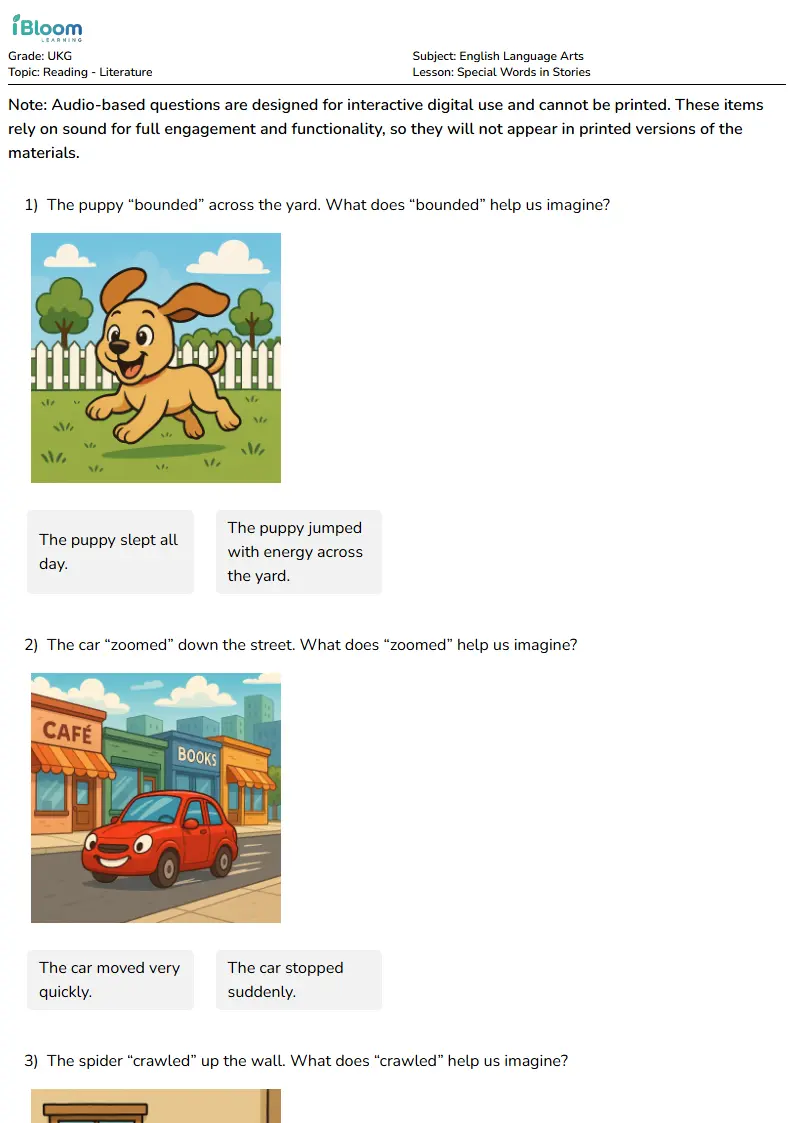
Free Special Words in Stories Worksheets for Ukg
Looking for ukg english language arts help? Download free, interactive special words in stories worksheets. AI-personalized and Common Core-aligned. Practice early literacy with iBloom.
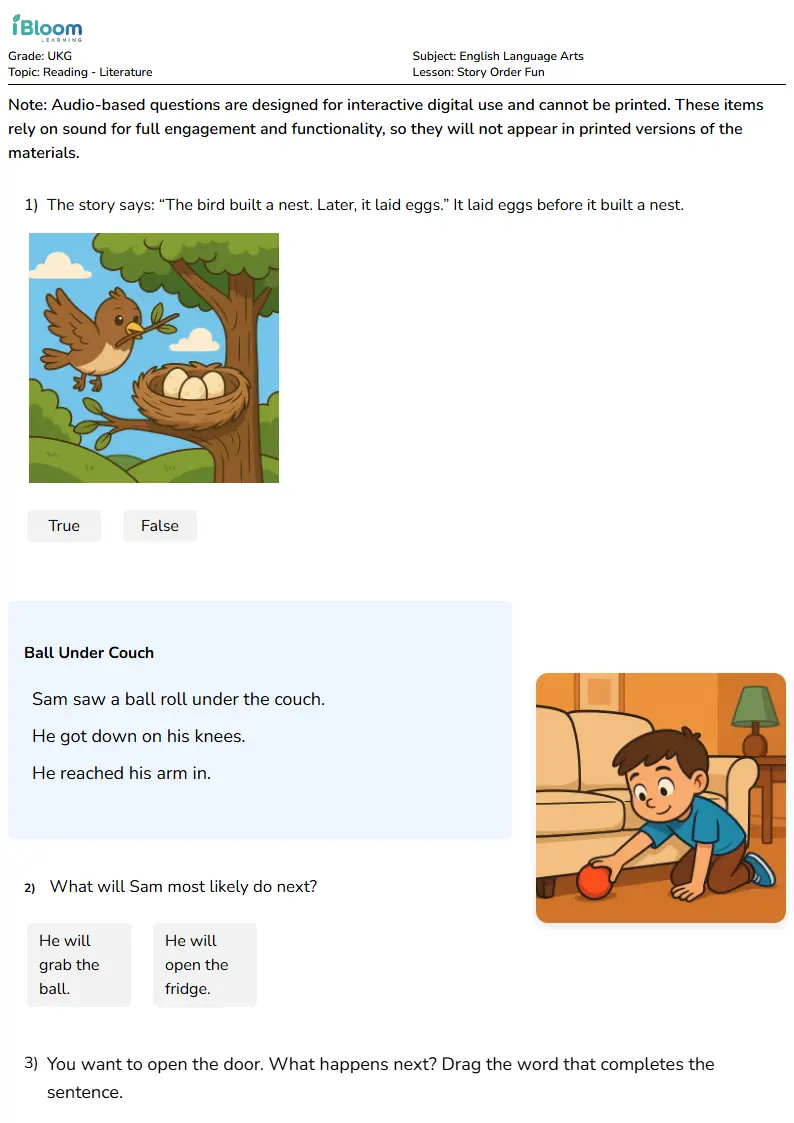
Free Story Order Fun Worksheets for Ukg
Looking for ukg english language arts help? Download free, interactive story order fun worksheets. AI-personalized and Common Core-aligned. Practice early literacy with iBloom.
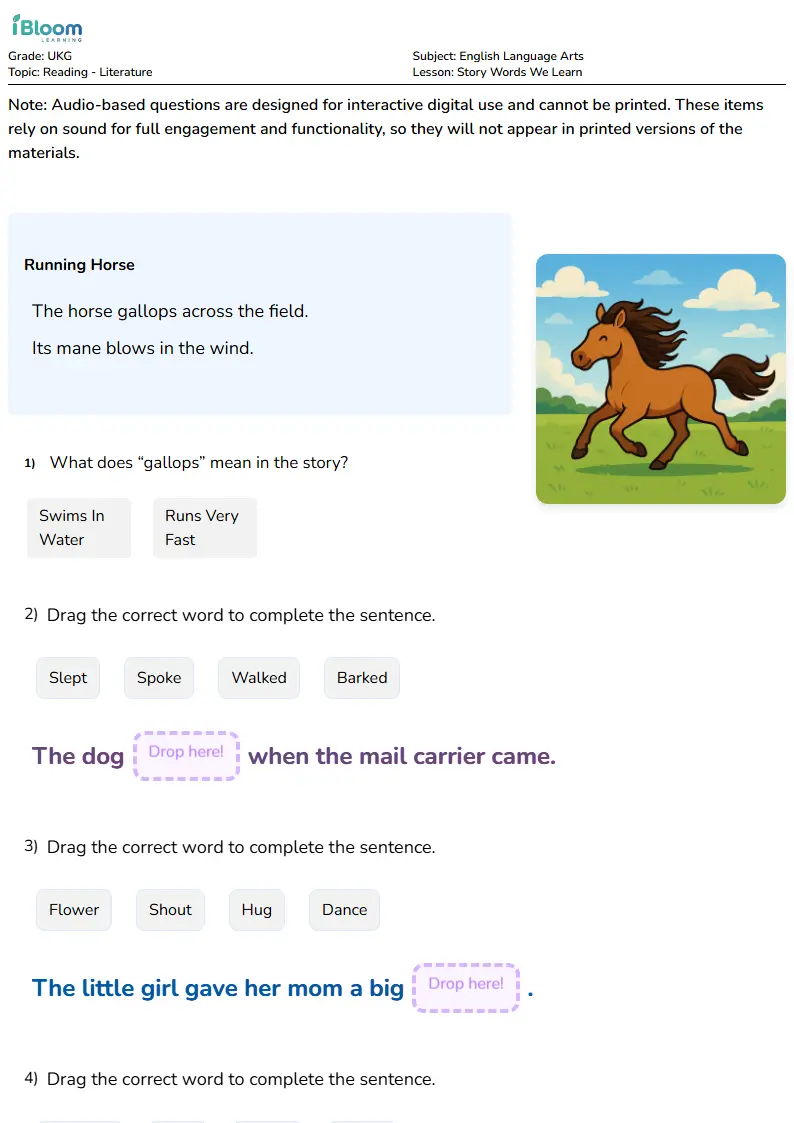
Free Story Words We Learn Worksheets for Ukg
Looking for ukg english language arts help? Download free, interactive story words we learn worksheets. AI-personalized and Common Core-aligned. Practice early literacy with iBloom.
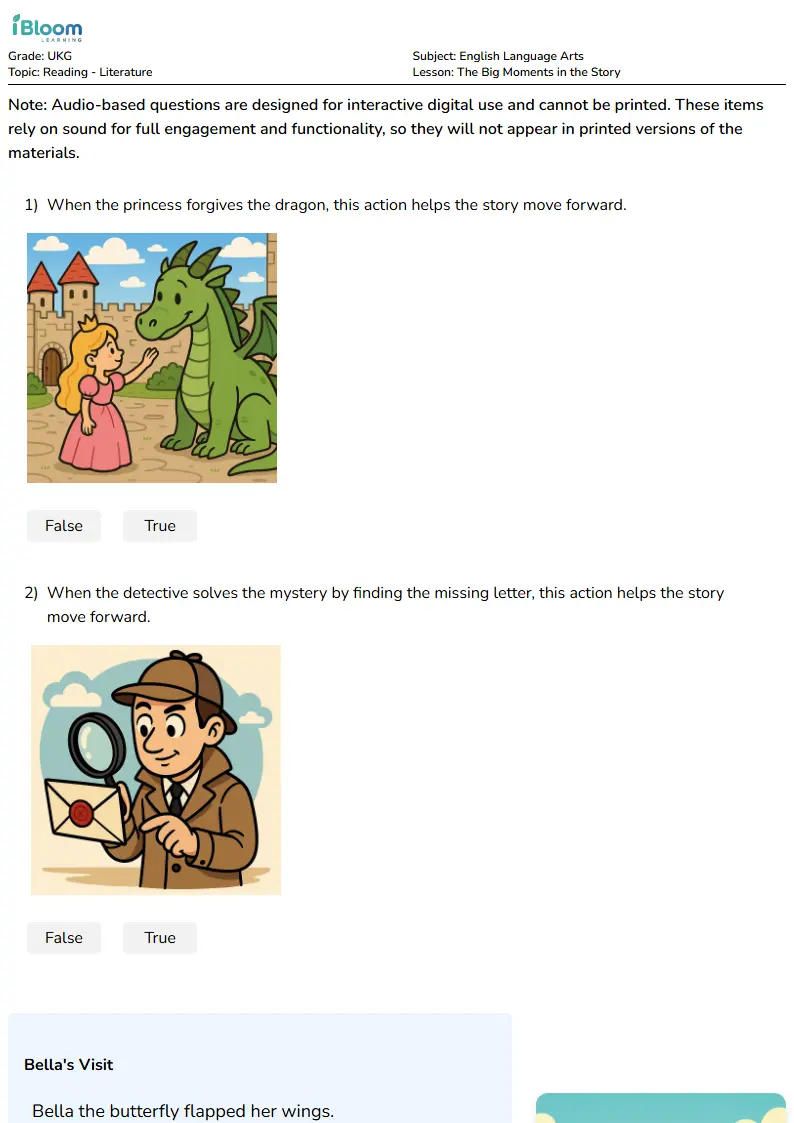
Free The Big Moments in the Story Worksheets for Ukg
Looking for ukg english language arts help? Download free, interactive the big moments in the story worksheets. AI-personalized and Common Core-aligned. Practice early literacy with iBloom.
Free What Happens First, Next, Last? Worksheets for Ukg
Looking for ukg english language arts help? Download free, interactive what happens first, next, last? worksheets. AI-personalized and Common Core-aligned. Practice early literacy with iBloom.
Free What Happens in the Fable? Worksheets for Ukg
Looking for ukg english language arts help? Download free, interactive what happens in the fable? worksheets. AI-personalized and Common Core-aligned. Practice early literacy with iBloom.
Free What's in a Book? Worksheets for Ukg
Looking for ukg english language arts help? Download free, interactive what's in a book? worksheets. AI-personalized and Common Core-aligned. Practice early literacy with iBloom.
Free What's Inside the Book? Worksheets for Ukg
Looking for ukg english language arts help? Download free, interactive what's inside the book? worksheets. AI-personalized and Common Core-aligned. Practice early literacy with iBloom.
Free Where is the Story Set? Worksheets for Ukg
Looking for ukg english language arts help? Download free, interactive where is the story set? worksheets. AI-personalized and Common Core-aligned. Practice early literacy with iBloom.