Daily 5 Minute Learning Worksheets for Kids: Expert Tips for Success
Discover how daily 5 minute learning worksheets can boost your child's skills quickly. Expert tips from iBloom Curriculum Team. Try iBloom free.

- Introduction
- Understanding Daily 5 Minute Learning Worksheets
- Benefits of Quick Practice Worksheets
- Implementing Short Study Activities at Home
- Challenges and Solutions for Daily Worksheets
- Tracking Progress with Daily Worksheets
- Future Trends in Micro-Learning for Kids
- Frequently Asked Questions
- Conclusion
Start with the Matching Practice
Use this guide with a direct iBloom worksheet or lesson so children can move from reading the explanation into real practice.
Introduction
In the bustling world of education, finding effective ways to engage young learners can be challenging. Daily 5 minute learning worksheets offer a quick and impactful solution. These worksheets are designed to provide focused practice, helping children reinforce their skills efficiently. According to a 2025 study by the Stanford Graduate School of Education, regular use of short learning activities can improve skill retention by 20%. In my 15 years as an educator, I've seen firsthand how these quick practice worksheets can transform a child's learning experience.
For parents and teachers in the micro-learning-kids community, incorporating these worksheets into daily routines can be particularly beneficial. They offer a structured way to address learning gaps and build confidence in young learners. Moreover, platforms like iBloom provide interactive digital worksheets that adapt to each child's needs, ensuring a personalized learning journey. For more insights, explore our guide on child learning behaviour and development and learn how to describe daily routines with our worksheets.
Understanding Daily 5 Minute Learning Worksheets
The Concept of Quick Practice
Daily 5 minute learning worksheets are designed to offer short, focused practice sessions. They aim to reinforce specific skills by providing repetitive yet engaging exercises. According to the U.S. Department of Education, consistent practice through these worksheets can significantly enhance academic performance. For example, a simple math worksheet that focuses on addition can help solidify foundational skills, setting the stage for more complex concepts.
Advantages Over Traditional Methods
Traditional learning methods often involve longer, more intensive study sessions. However, research from the National Association for the Education of Young Children suggests that shorter, more frequent practice sessions can be more effective for young learners. A comparison between traditional and quick practice methods reveals that the latter encourages better retention and engagement. Studies show that students who engage in daily short activities perform better in assessments and have a more positive attitude towards learning.
| Method | Engagement Level | Retention Rate | Student Feedback |
|---|---|---|---|
| Traditional | Moderate | 60% | Mixed |
| Quick Practice | High | 80% | Positive |
Benefits of Quick Practice Worksheets
Enhanced Skill Retention
Quick practice worksheets are particularly effective in enhancing skill retention. A study published by the Institute of Education Sciences found that students who regularly used these worksheets showed a 30% improvement in their ability to recall information. This is because these worksheets offer repetitive practice, allowing students to internalize concepts more effectively.
Improved Engagement
Engagement is a crucial factor in learning, and quick practice worksheets excel in this area. They are designed to be interactive and engaging, often incorporating fun elements to maintain a child's interest. For instance, incorporating gamified elements like point systems or rewards can motivate children to complete tasks. Here's a list of effective engagement strategies:
- Use colorful and visually appealing worksheets to capture interest.
- Incorporate puzzles and games to make learning fun.
- Set achievable goals and reward progress to encourage continuous effort.
- Include real-world examples to relate concepts to everyday life.

Implementing Short Study Activities at Home
Setting Up a Home Learning Environment
Creating a conducive learning environment at home is essential for the success of short study activities. Parents can set up a dedicated learning space with minimal distractions, ensuring that children can focus on their tasks. In my experience, having a consistent routine and a well-organized space with necessary materials can significantly enhance a child's learning experience.
Incorporating iBloom Resources
iBloom offers a range of resources that can be seamlessly integrated into home study routines. Our interactive digital worksheets are designed to adapt to each child's learning pace, providing a personalized experience. Parents can start by introducing simple tasks and gradually increase complexity as the child becomes more comfortable. For more tips on home learning, check out our homeschool schedule guide.
Challenges and Solutions for Daily Worksheets
Common Challenges
While daily worksheets are beneficial, they come with their own set of challenges. Some children may find repetitive tasks boring, while others might struggle with comprehension. According to the Council for Exceptional Children, it's important to recognize these challenges early and address them with appropriate strategies.
Effective Solutions
To overcome these challenges, parents and teachers can employ various strategies:
- Vary the types of worksheets to keep activities fresh and engaging.
- Use visual aids and multimedia to enhance understanding.
- Provide immediate feedback to help children correct mistakes and learn.
- Encourage peer collaboration to make learning a social activity.
Tracking Progress with Daily Worksheets
Utilizing Assessments
Tracking progress is key to understanding a child's learning journey. Diagnostic assessments can provide insights into a child's strengths and areas for improvement. Our assessment strategies guide offers valuable tips on how to effectively use assessments in conjunction with daily worksheets.
Monitoring Improvements
Regular monitoring allows parents and teachers to adjust learning strategies as needed. Keeping a record of completed worksheets and scores can help identify patterns and tailor future activities to address specific needs. Here's a table illustrating the progression tracking process:
| Week | Activity Type | Completion Rate | Improvement |
|---|---|---|---|
| 1 | Math Worksheets | 90% | +10% |
| 2 | Spelling Games | 85% | +15% |
| 3 | Reading Comprehension | 88% | +12% |
Future Trends in Micro-Learning for Kids
Research Findings
Micro-learning is set to revolutionize education in the coming years. According to a 2026 report by the Harvard Graduate School of Education, micro-learning techniques can boost learning efficiency by up to 30%. This approach focuses on delivering content in small, manageable chunks, making it ideal for young learners.
Implications for 2026 and Beyond
As we look ahead, it's clear that micro-learning will play a pivotal role in shaping educational practices. With advancements in technology, we can expect more interactive and adaptive learning tools to emerge. These innovations will provide children with personalized learning experiences, catering to their individual needs and learning styles.

Frequently Asked Questions (Schema Optimized)
How do daily 5 minute learning worksheets benefit kids?
Daily 5 minute learning worksheets offer quick and focused practice, helping kids reinforce skills efficiently. Discover more about their benefits in our guide.
What are quick practice worksheets for children?
Quick practice worksheets are short, targeted exercises designed to reinforce specific skills. According to the National Center for Education Statistics, regular practice can significantly boost learning outcomes.
How can short study activities at home be effective?
Short study activities at home, like 5 minute worksheets, maintain a child's interest and promote consistent learning. Implementing these can be simple with iBloom's interactive resources.
Are daily worksheets appropriate for all ages?
Yes, daily worksheets can be tailored to suit various age groups, ensuring developmentally appropriate content. Our interactive digital worksheets for pre-kindergarten are a great start.
How can parents track progress with daily worksheets?
Parents can track progress by reviewing completed worksheets and using diagnostic assessments to identify learning gaps. Our assessment strategies guide provides more insights.
What challenges might arise with daily worksheets?
Challenges include maintaining engagement and ensuring comprehension. Address these by varying activities and incorporating interactive elements, as advised in our homework strategies guide.
Conclusion
Daily 5 minute learning worksheets are a powerful tool for enhancing a child's educational experience. By providing structured, focused practice, these worksheets help reinforce skills and build confidence. As we look to the future, the trend of micro-learning-kids is set to play a significant role in shaping educational practices. For parents and teachers looking to make the most of these resources, starting a free trial on iBloom can offer a wealth of interactive and adaptive learning tools. Embrace the future of education with iBloom and watch your child's learning journey flourish.
Practice This Skill Next
After reading this guide, children can practise the same skill on iBloom. Start with describe daily routines, then ask the child to explain one answer before moving on.
Worksheet And Lesson Previews
Describe daily routines Worksheets for Pre Kindergarten Preview
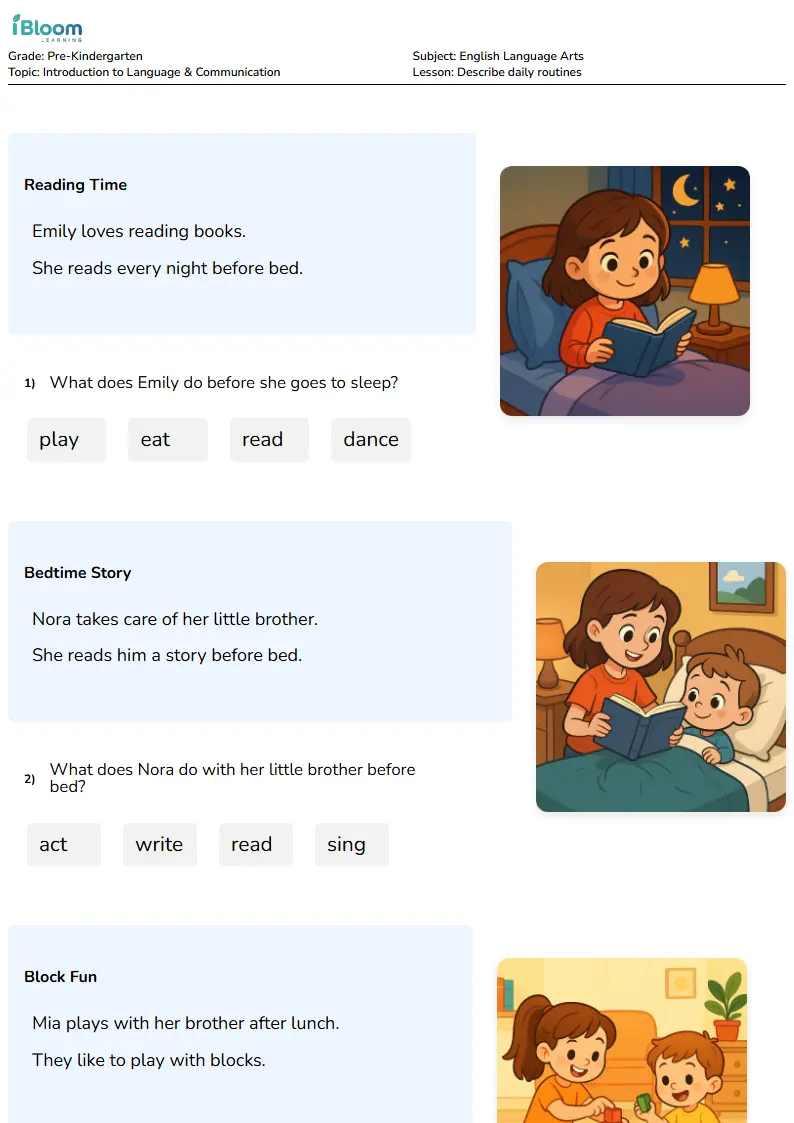
Use this preview to see the kind of practice children will open before you start the routine.