Spelling Bee Words for Kids: Lists by Grade and Level
Choose spelling bee practice words by grade and difficulty, then teach meaning, pronunciation, syllables, and tricky letter patterns.
A useful spelling bee list is not simply a staircase from short words to spectacularly obscure ones. It helps a child notice spelling patterns, connect pronunciation with print, build vocabulary, and remember difficult forms after the practice page is closed.
The lists and routines here are for general practice in Grade/Class 1 through 5. They are not an official competition list. If a child is entering a school, regional, or national bee, obtain the current list and rules directly from the organiser. For a Scripps-affiliated event, begin with its official study guidance. This page is also unrelated to answers for the New York Times Spelling Bee puzzle.
Use the spelling bee word generator guide when you need to build a themed or levelled list, then apply the study method below instead of asking a child to memorise the generated output unchanged.
Download the word-list and study pack
The free Spelling Bee Word-List Practice Pack contains twenty practice words for each Grade/Class 1 through 5 and a reusable word-study tracker. You can print the relevant grade pages, but do not ask a child to memorise every word in one sitting.
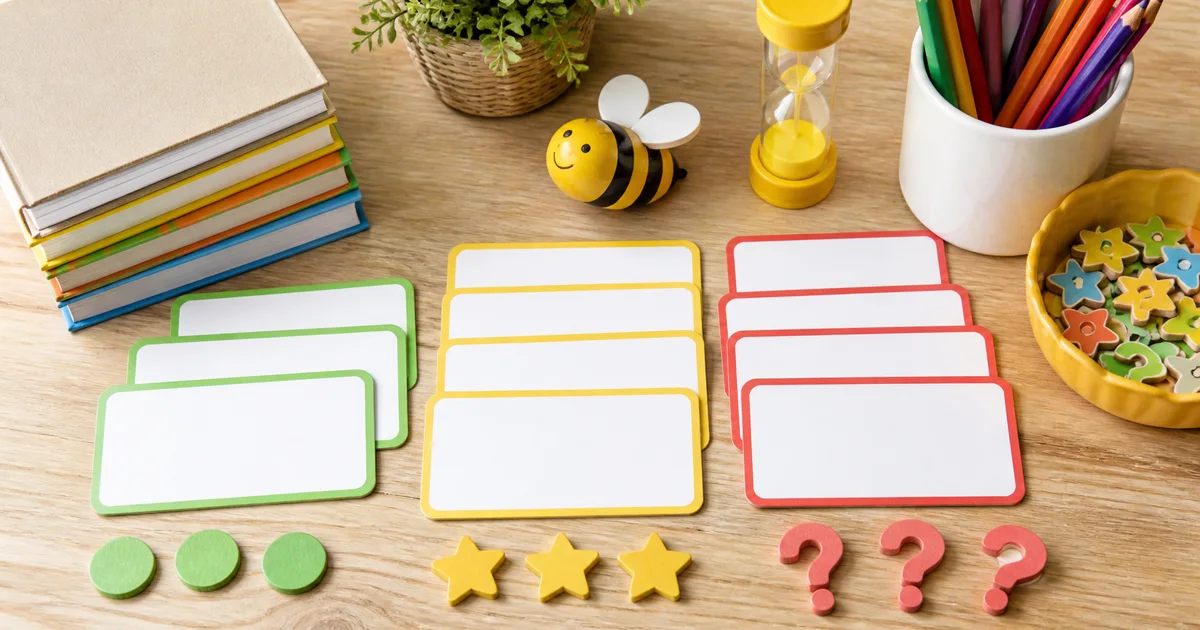
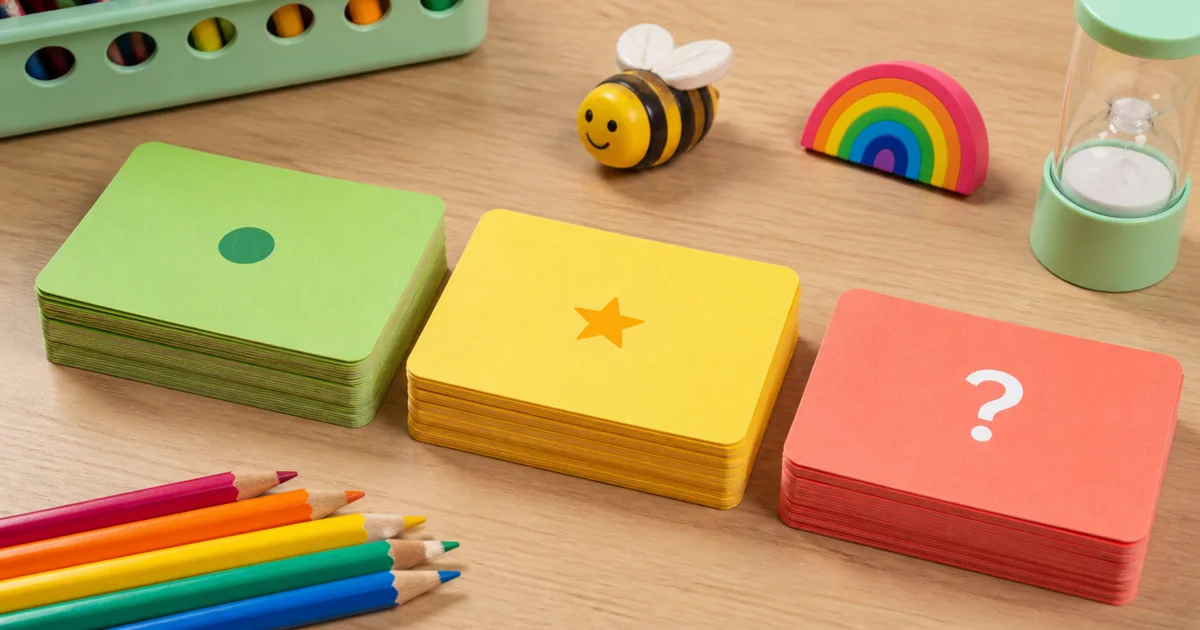
Start by folding or covering the printed list. Say each word naturally and let the child attempt it without seeing the letters. Mark secure words with a dot, learning words with a star, and unfamiliar words with a question mark. That simple diagnostic turns the PDF into a personalised plan.
Use the tracker for words that need more than one correction. Record the pronunciation, a concise meaning, an original sentence, the tricky letter pattern, and the next retest date. A completed tracker should explain how to remember the word, not merely display it.
Grade or Class 1: build reliable sound-to-letter habits
Early lists should contain mostly words a child can analyse with known sounds and patterns. Try cat, fish, jump, nest, rain, shop, clap, frog, hand, and little. Mix short vowels, common consonant blends, digraphs such as sh and ch, and a small number of high-frequency words whose spelling needs explicit attention.
Teach the child to stretch a word, move a counter for each sound, and then write the matching letters. In fish, the three sounds are /f/ /i/ /sh/, even though four letters appear. That distinction prevents “count the letters” from replacing listening.
Keep sentence meaning simple but real: “The fish hid under a rock.” Ask the learner to point to or explain the word before spelling it. For a word such as little, identify the predictable beginning and treat the ending as the part to remember.
Grade 1 practice should end with a tiny piece of writing. Choose two list words and make one sensible sentence. This confirms that the child knows more than an oral letter sequence.
Grade or Class 2: add syllables, endings, and vowel choices
Useful Grade 2 words include basket, bright, careful, carry, floated, garden, rabbit, teacher, window, and yellow. These introduce two-syllable words, common suffixes, doubled consonants, and several ways to spell long vowel sounds.
Ask the child to say the syllables and identify the base word where one exists. In careful, the base care keeps its final e before -ful. In carried, carry changes y to i before -ed. Do not teach a rule without examples and non-examples; the goal is to see when it applies.
Compare similar words aloud: hoping and hopping, riding and ridding. Let the learner explain why the middle consonant changes. A short word sort can expose understanding more clearly than a copied list.
At this level, introduce a missed-word box. Cards enter after an error and leave only after correct retrieval on three separated days. The box stays small because secure words do not need equal practice time.
Grade or Class 3: connect spelling with meaning and word families
Try words such as adventure, calendar, discover, enough, favourite/favorite, journey, measure, promise, suddenly, and thoughtful. Confirm whether the event expects British or American spelling; both may be correct in ordinary contexts, but a competition may specify one convention.
Grade 3 learners benefit from word families. Link measure with measurement, decide with decision, and promise with promising. Ask what changed and what stayed visible. Morphology—the meaningful parts inside words—often explains a spelling that sound alone does not.
Meaning now matters even more. Stationary and stationery sound alike but have different meanings. The sentence supplied by a pronouncer can distinguish them. Practise listening to a definition before rushing into the letters.
Include words from the child’s current reading. When a learner notices adventure in a novel or measure in a math task, add the real sentence to the notebook. Encounters across subjects make spelling study less artificial.
Grade or Class 4: work with roots and less predictable patterns
A balanced Grade 4 set might include curious, environment, familiar, generous, language, necessary, separate, temperature, unusual, and valuable. These words contain unstressed vowels, suffixes, roots, and letter sequences that cannot always be recovered from pronunciation.
Teach a concise memory cue only after the learner understands the word. For necessary, one c and two s letters may be enough. For separate, briefly emphasise the par in the middle, then return to normal pronunciation. Mnemonics should support accurate language, not become the only way the child knows the word.
Explore roots when they pay off. The Latin root port means carry and appears in transport, portable, and import. A child who learns the connection gains several spellings and meanings together. Keep the explanation age-appropriate and verify it before teaching.
Retest in mixed order. If all -tion words appear together, the heading gives away the pattern. Competition retrieval requires selecting the pattern from the word itself.
Grade or Class 5: study precision, origin, and change across forms
Grade 5 practice can include apparent, conscience, convenience, foreign, maintenance, privilege, rhythm, sufficient, vocabulary, and Wednesday. Difficulty should come from meaningful language, not a contest to find the longest word online.
At this stage, contrast related forms: maintain becomes maintenance; pronounce becomes pronunciation; explain becomes explanation. The spelling change is exactly what deserves study. Have the learner create a small family tree with the shared meaning and changed letters.
Language of origin can sometimes explain patterns, but it should be a clue rather than a guessing trick. A learner still needs the word’s pronunciation, meaning, and structure. During a mock bee, practise requesting origin only when the rules allow it and when the answer might inform a real choice.
Invite Grade 5 learners to take ownership of the list. They can rank uncertain words, write accurate definitions, research examples, and schedule retests. Independent planning is part of the skill being built.
Decide whether a word is easy, medium, or hard
Difficulty is individual. Rhythm may be memorable to a musical child, while calendar repeatedly causes trouble because of its unstressed vowels. Label difficulty after a blind attempt, not from word length.
An easy word is retrieved accurately and used correctly across more than one day. A medium word requires thought but has an understood clue. A hard word is unfamiliar, repeatedly missed, confused with another word, or dependent on a pattern the child has not learned.
Move cards between levels. If a hard word becomes secure, remove it from daily practice but return to it after a week. If an easy word is suddenly missed, diagnose the context before sending it back to the beginning.

Turn any list into a four-day study cycle
On Day 1, run a no-copy diagnostic and select five to twelve learning words. Confirm pronunciation and meaning. On Day 2, sort the words by sound, syllable, suffix, root, or tricky part. Spell them from memory after each explanation.
On Day 3, dictate the words in a new order and place each in a meaningful sentence. Add one or two previously secure words. On Day 4, hold a brief mock round without visible choices. Retire words retrieved accurately and move misses into the next cycle.
After a two- or three-day gap, run a surprise review. Correct recall after a gap is stronger evidence than a perfect score immediately after copying. Keep practice around ten to fifteen focused minutes for younger children, extending only when the learner remains engaged.
Use iBloom SpellBee for an additional retrieval format. The complete SpellBee product guide explains how to turn feedback into a routine, while the competition preparation guide covers mock rounds and stage confidence.
Correct a miss in under two minutes
First, show or say the correct spelling. Ask the child to compare it with the attempt and point to the first difference. Name the relevant feature: a missed sound, doubled consonant, suffix change, homophone, silent letter, or unusual vowel sequence.
Next, have the learner pronounce the word, explain its meaning, spell it once without looking, and place it in a sentence. Schedule a later retest. Do not demand a page of copying; the correction should improve the mental representation, not punish the error.
If the same error appears across several words, pause list practice for a focused lesson. Use a related English worksheet, a short word sort, or a teacher model. One underlying pattern may solve many future misspellings.
For instruction that connects phonological awareness, letter-sound knowledge, decoding, and word reading, consult the What Works Clearinghouse foundational skills guide.
Use the lists in classrooms and at home
Teachers can create flexible groups from a shared diagnostic. One group may work on vowel patterns while another studies suffix changes. Give all groups opportunities to learn meanings and use words in writing, so harder lists do not become a badge of status.
Parents can choose school words first, then add only a few personal words from homework, reading, or everyday writing. Keep the list visible to the adult but hidden during retrieval. Celebrate explanations such as “I remembered the base word” rather than speed alone.
For broader practice, combine spelling with free printable worksheets, reading aloud, and short written messages. Correct spelling develops inside language; a list is the laboratory, not the whole world.
Frequently asked questions
Are these official spelling bee competition words?
No. They are age-banded practice examples. Use the current official list and rules from the school or organiser when preparing for a particular event.
Where can I get the printable lists without signing in?
Use the illustrated Grade/Class preview cards directly above this FAQ. Every card shows the actual printable worksheet and has its own Download free PDF button, so you can check the activity before choosing a file.
Should a child move to the next grade list after one perfect test?
Wait for accurate retrieval on separated days and correct use in context. Then introduce a few words from the next level while continuing spaced review of previously difficult patterns.
Which spelling convention should we use in India or the UAE?
Follow the school or competition’s stated convention. British and American forms can differ, as in favourite/favorite. Teach the expected form without describing the other standard form as universally wrong.
Is it better to type, write, or spell aloud?
Use all three for different evidence. Oral spelling practises listening and sequence, handwriting reveals letter-level errors, and typing may support quick retrieval. Competition preparation should emphasise the format used in the event.
What if my child can spell the list but misspells the words in writing?
Add dictated sentences and original writing. Ask the learner to proofread specifically for current study patterns. List recall has not fully transferred until the child can recognise and produce the spelling during real composition.