Free printable practice
Cursive Letter Joins Practice Activities
Printable cursive letter-join activities for children to practise smooth C-shaped, bottom, bottom-e, top, and top-e joins with better flow and spacing.
Explore Cursive Letter Joins
Free printable worksheet PDFs
Preview every available page, then download the free worksheet PDF for home, homeschool, tutoring, or classroom practice.
Preview the exact activity before downloading it.
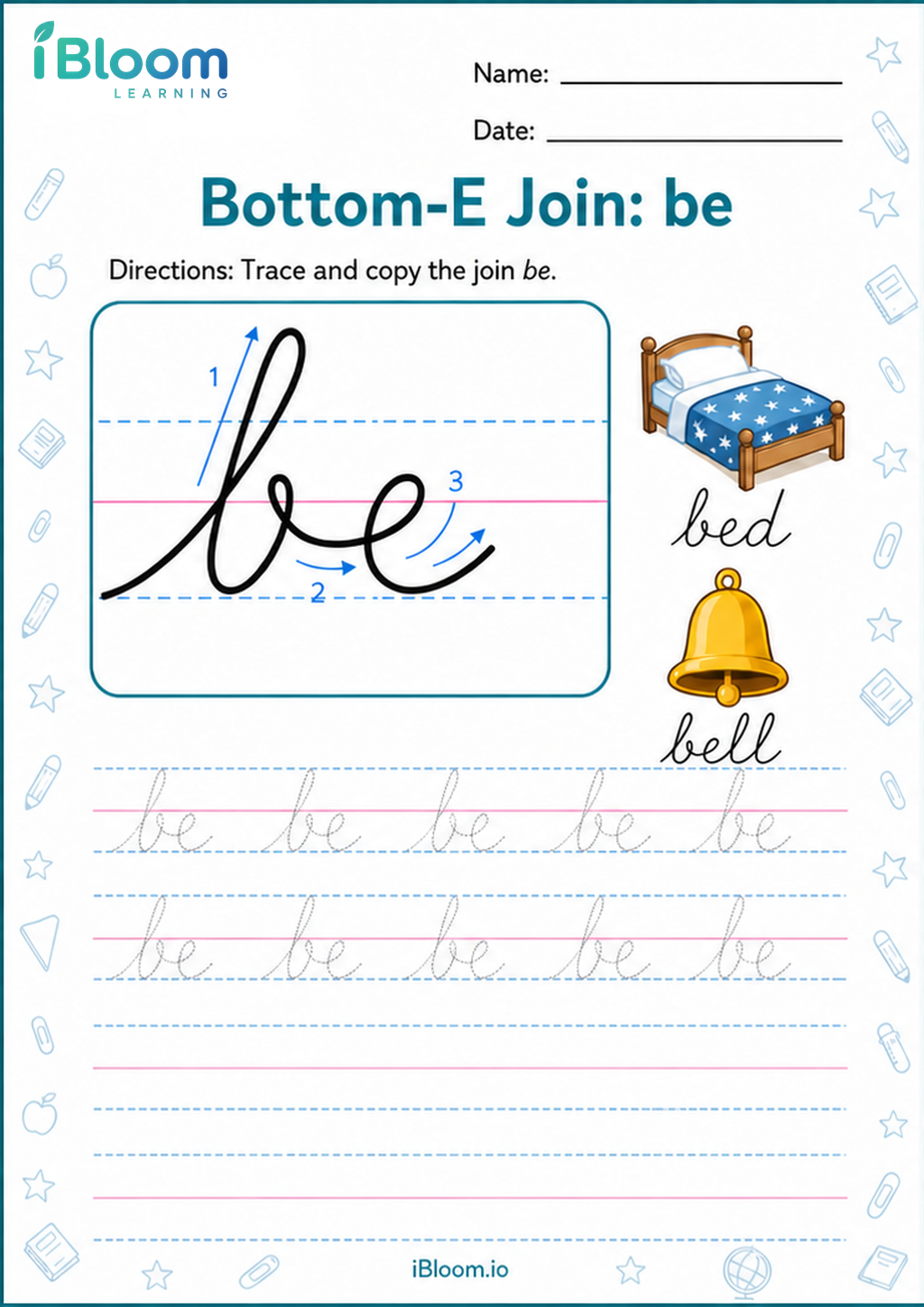 Bottom-E Join: beClass 2 printable practice for Bottom-E Cursive Joins.Class 2Free PDF preview
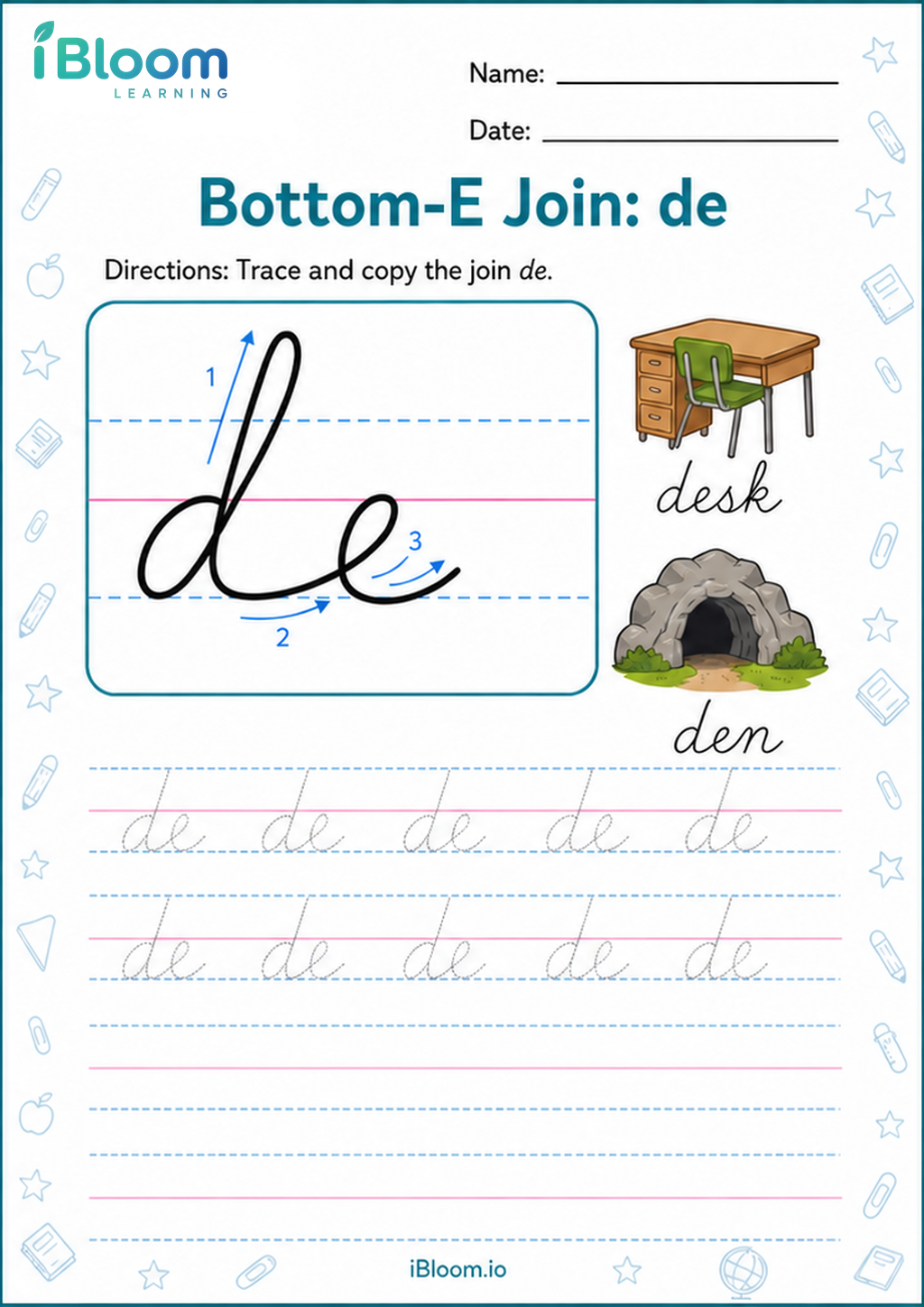 Bottom-E Join: deClass 2 printable practice for Bottom-E Cursive Joins.Class 2Free PDF preview
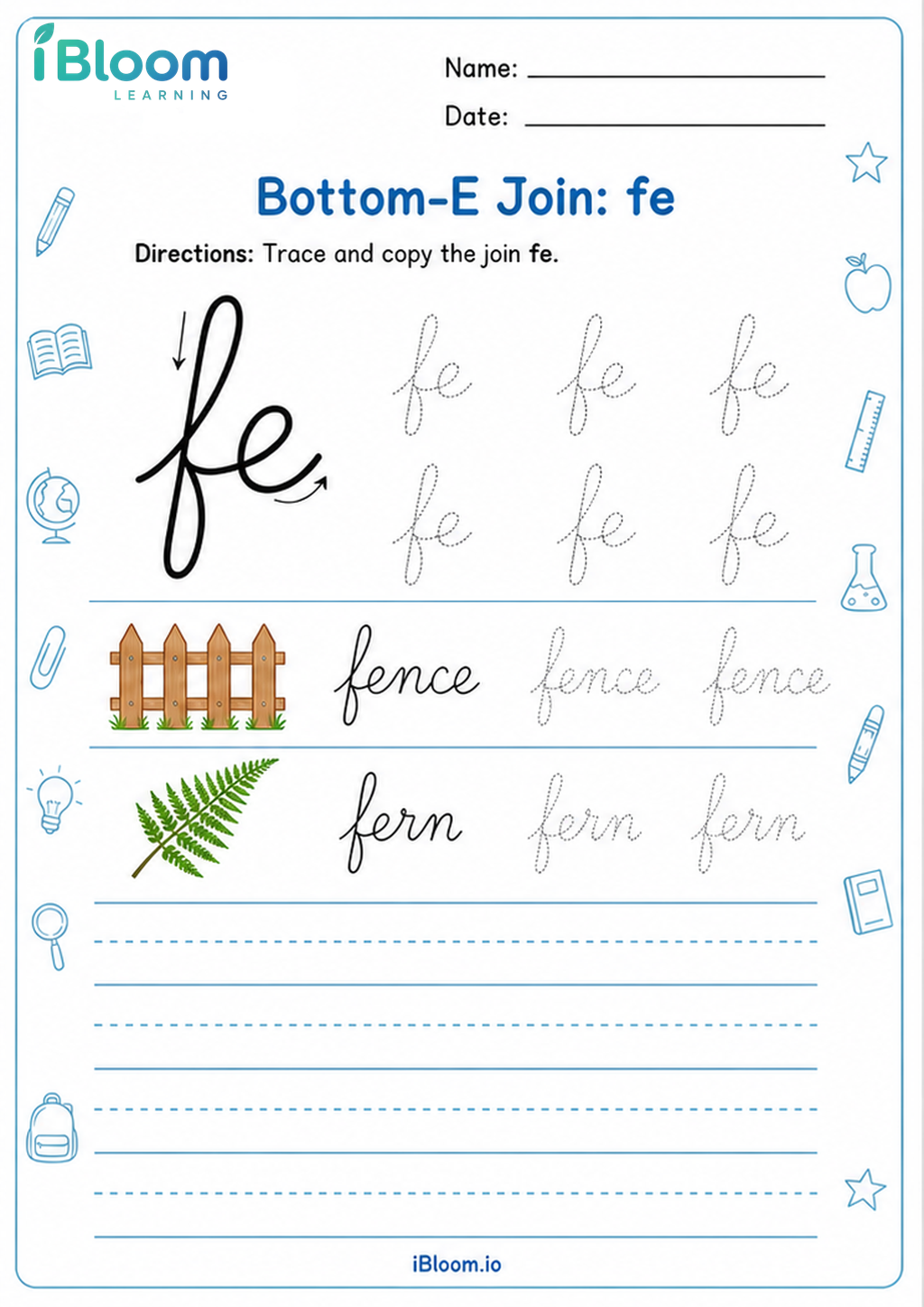 Bottom-E Join: feClass 2 printable practice for Bottom-E Cursive Joins.Class 2Free PDF preview
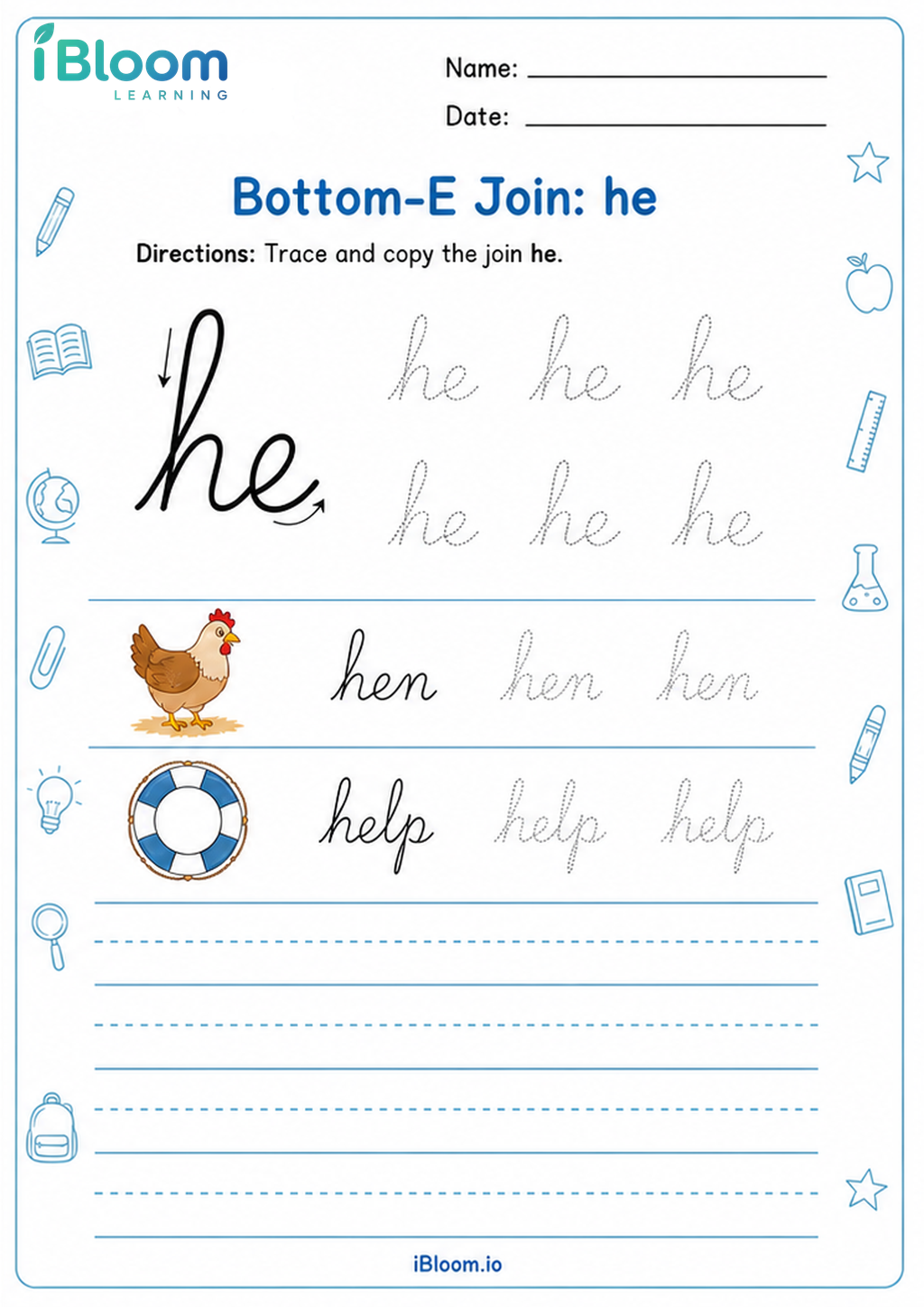 Bottom-E Join: heClass 2 printable practice for Bottom-E Cursive Joins.Class 2Free PDF preview
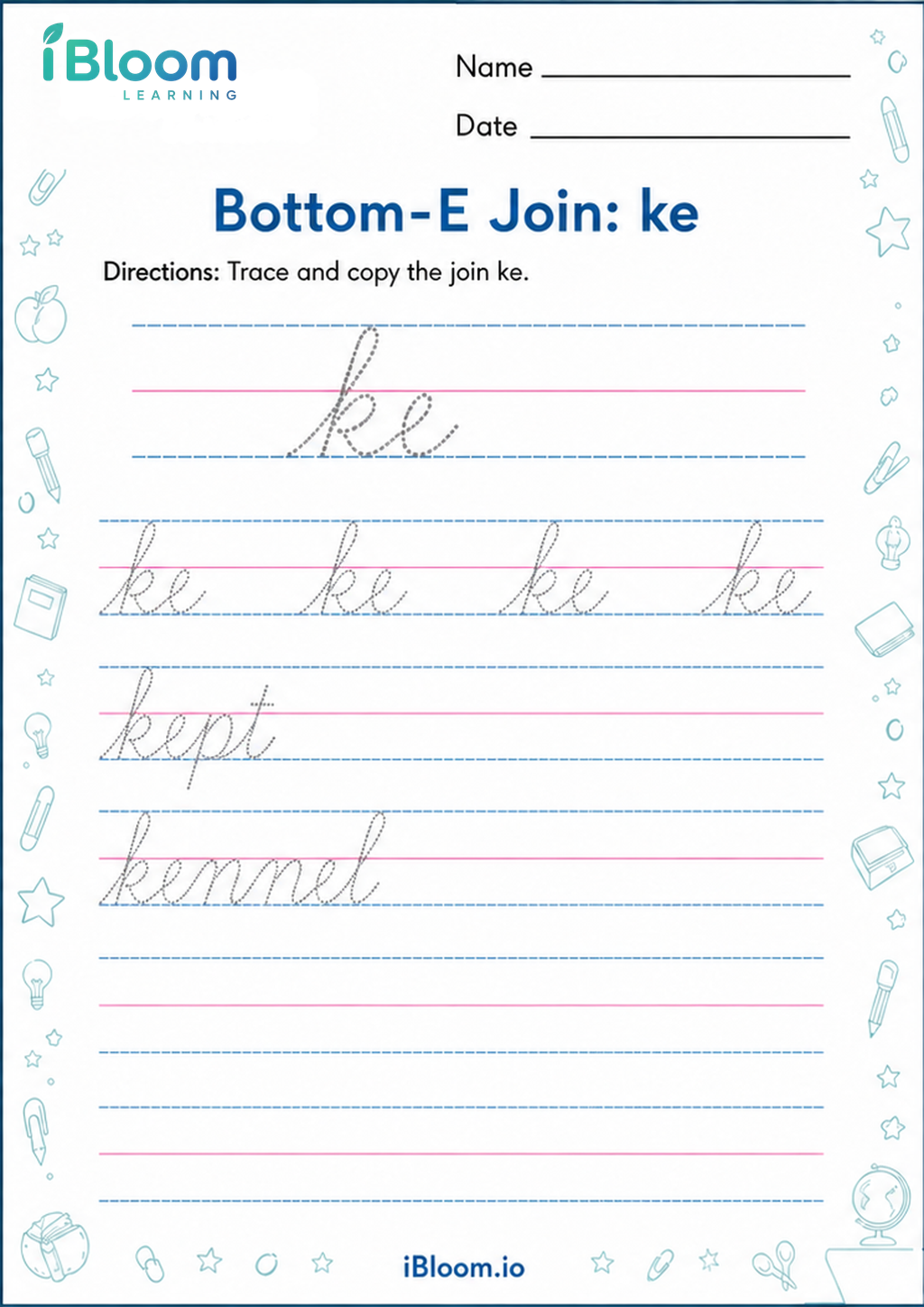 Bottom-E Join: keClass 2 printable practice for Bottom-E Cursive Joins.Class 2Free PDF preview
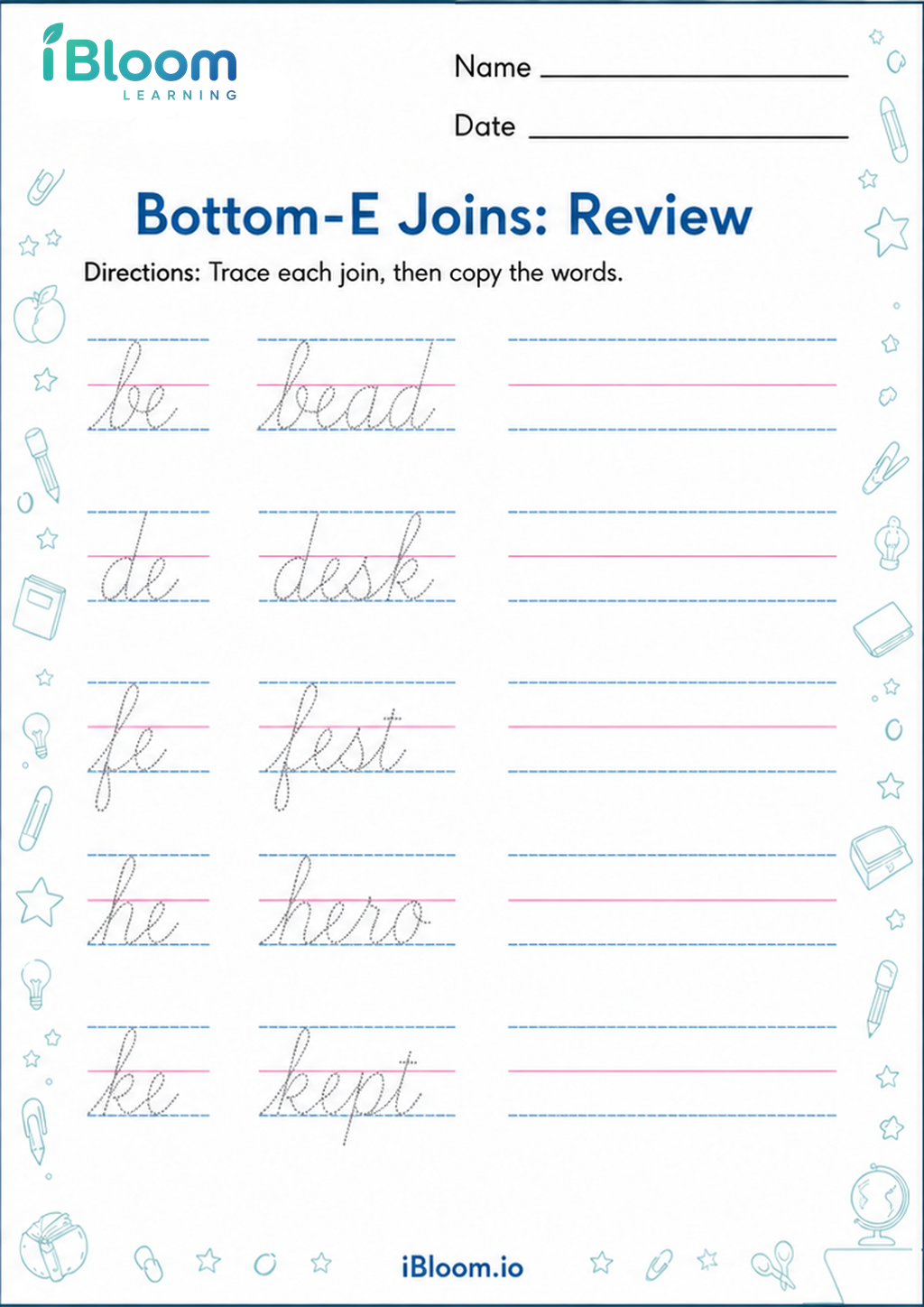 Bottom-E Joins: ReviewClass 2 printable practice for Bottom-E Cursive Joins.Class 2Free PDF preview
Practice that builds confidence
What children learn in cursive joins
These cursive letter joins practice activities help children move from writing single letters to connecting letters smoothly. Learners practise how one letter leads into the next, with attention to entry strokes, exit strokes, slant, size, and spacing.
The printable sheets focus on specific join families: Join C Shaped Letters, Bottom Letter Joins, Bottom E Letter Joins, Top Letter Joins, and Top E Letter Joins. Activities include guided tracing, repeated joins, short letter groups, and word-level practice to build neat, confident cursive writing.
Cursive writing becomes easier when children understand that not all letters join in the same way. These worksheets group joins by movement, so children can see why a c-shaped letter behaves differently from a letter that exits from the bottom or the top. They practise keeping letters connected without lifting the pencil unnecessarily, while still maintaining readable shapes.

Progression across the join types
The collection begins with controlled joins such as C shaped letters, where children notice rounded movement and careful closing of curves. Bottom Letter Joins and Bottom E Letter Joins then build control from low exit points, helping children avoid cramped writing. Top Letter Joins and Top E Letter Joins develop the higher linking strokes needed for fluent cursive. Moving from isolated joins to small word patterns helps children apply the skill naturally.
A simple home practice routine
Parents can ask the child to first trace one line slowly, saying the movement aloud: “round, up, join” or “down, curve, across.” Next, the child copies one line independently and circles the neatest join. End with one short word that uses the same join pattern. Keep the focus on smooth movement rather than speed, and use a sharp pencil with comfortable paper positioning.

Classroom uses for teachers
Teachers can use these printables during handwriting practice, remedial support, or literacy centres. One group can trace joins while another writes short words using the same pattern. The sheets are also useful for quick observation: check pencil lifts, join height, spacing between letters, and whether the child can keep the baseline steady across a line.

Common errors to watch for
Children may make joins too high, flatten rounded letters, leave gaps between letters, or turn an e join into a loop that is too large. Some may press too hard or rush, making the writing uneven. A helpful child-friendly strategy is: “Start neat, travel smoothly, finish ready for the next letter.” This reminds learners that each letter must both look correct and prepare for the next join.
Free printable PDF download
Use this cursive letter joins worksheet page to preview the activity, print it, or download it as a PDF for quick practice. It works well for homework, homeschool lessons, tutoring, morning work, revision, and classroom centers.
Answers and answer key support
After the child completes the worksheet independently, parents and teachers can use the answer support or answer key information to check the work, review mistakes, and choose the next practice step.
Why iBloom worksheets help
The iBloom cursive letter joins worksheets isolate one joining behaviour at a time before mixing it into words. This reduces confusion and gives children repeated, purposeful practice with the exact movements they need for fluent cursive handwriting.
Helpful answers
Frequently asked questions
What are cursive letter joins?
Cursive letter joins are the connecting strokes that link one letter to the next. They help children write words smoothly without treating every letter as a separate shape.
Why are joins grouped as C shaped, bottom, and top joins?
Different letters exit and connect from different points. Grouping joins by movement helps children practise one pattern at a time, making the joining action easier to understand and repeat.
How can I help my child if the joins look messy?
Ask your child to slow down, trace the join once, then copy it independently. Focus on one issue at a time, such as keeping the letters on the baseline or making the connecting stroke lighter.
Should children lift the pencil between cursive letters?
For most joined cursive letter pairs, children should avoid unnecessary pencil lifts. However, they may need to lift the pencil for dots, crosses, or when a specific letter form requires it.
Can these worksheets be used after basic cursive letters are learnt?
Yes. These activities are best used once children can form individual cursive letters and are ready to connect them into letter pairs, patterns, and short words.
Is this cursive letter joins worksheet free?
Yes. You can preview it for free and use the printable worksheet for home or classroom practice.
Can I download this cursive letter joins worksheet as a PDF?
Yes. Use the worksheet download option to save a printable PDF, or print the worksheet directly from the page.
Does this cursive letter joins worksheet include answers or an answer key?
When the activity has fixed answers, iBloom includes answer support so parents and teachers can check the completed worksheet.