Free printable practice
Bottom E Letter Joins Practice Activities
Printable cursive activities for practising bottom e joins with steady entry strokes, neat loops, spacing, and smooth joined handwriting.
Free printable worksheet PDFs
Preview every available page, then download the free worksheet PDF for home, homeschool, tutoring, or classroom practice.
Preview the exact activity before downloading it.
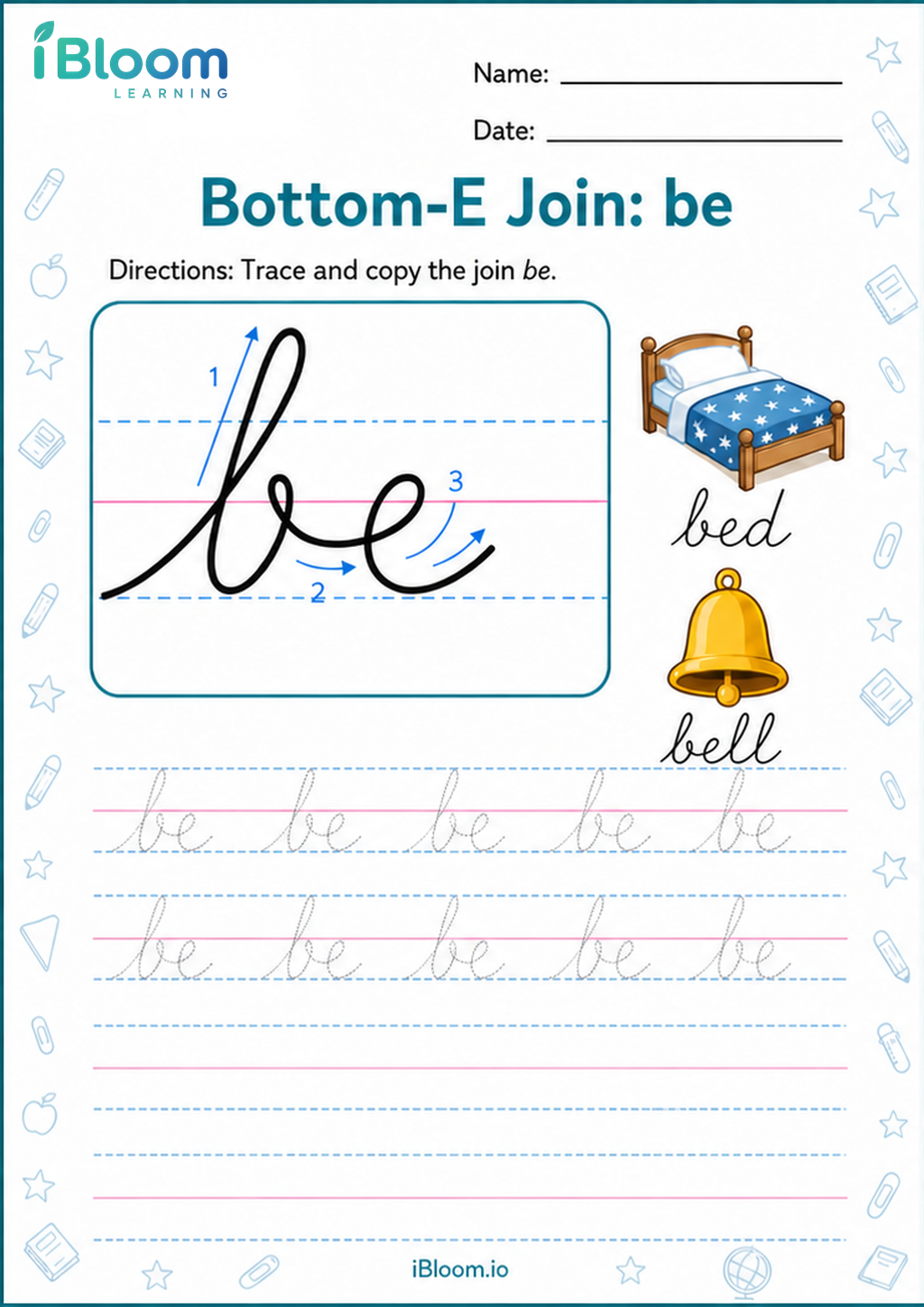 Bottom-E Join: beClass 2 printable practice for Bottom-E Cursive Joins.Class 2Free PDF preview
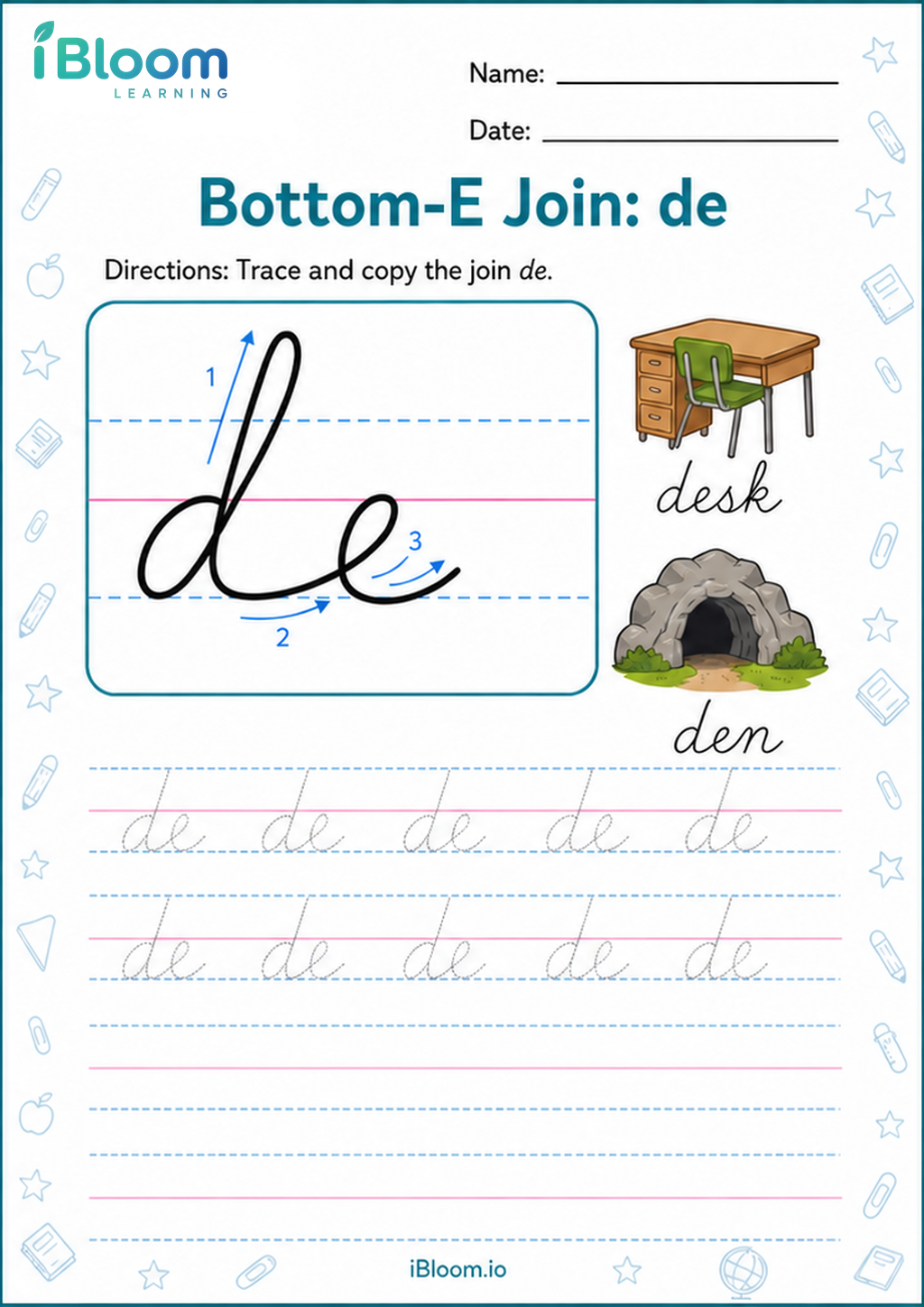 Bottom-E Join: deClass 2 printable practice for Bottom-E Cursive Joins.Class 2Free PDF preview
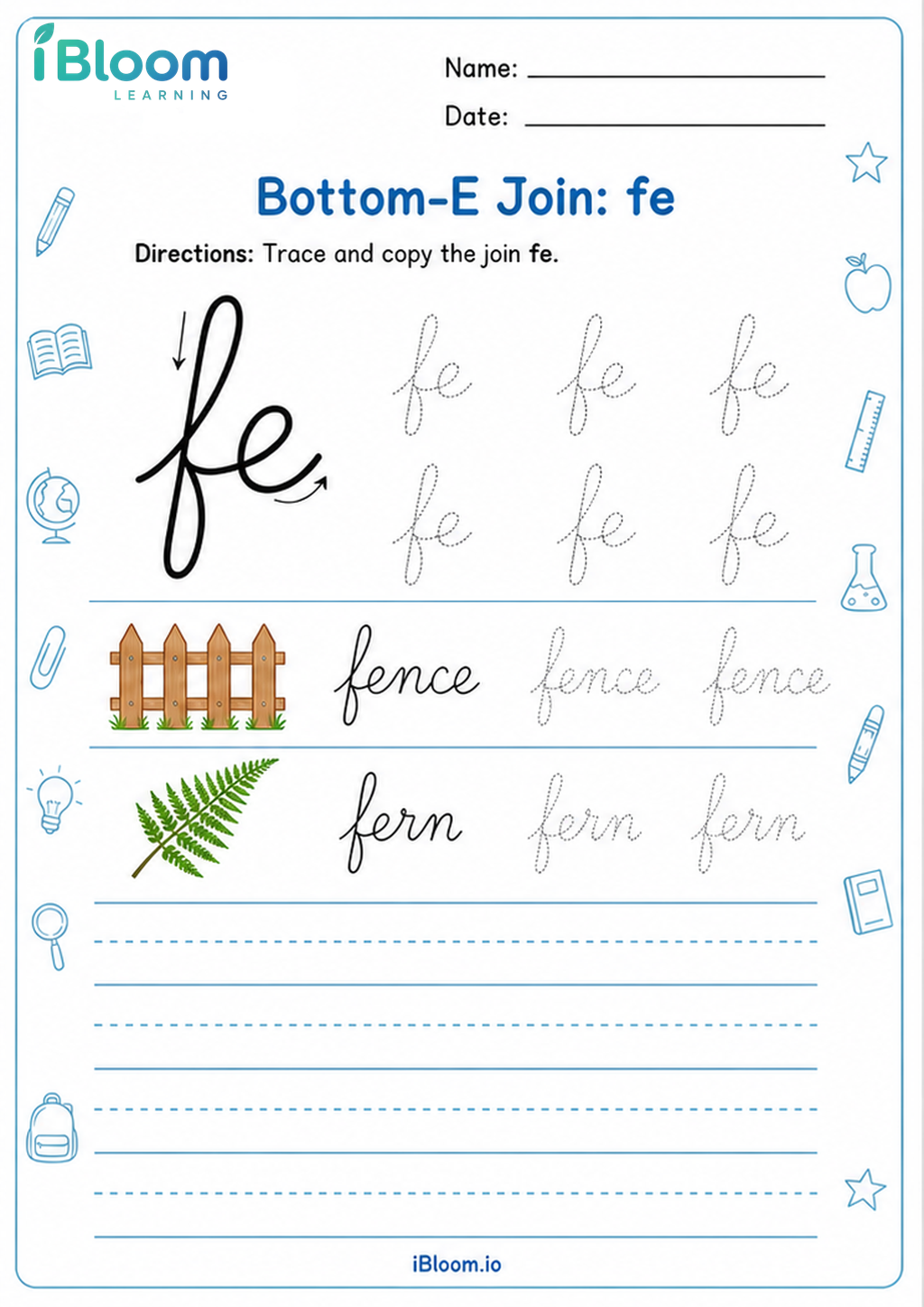 Bottom-E Join: feClass 2 printable practice for Bottom-E Cursive Joins.Class 2Free PDF preview
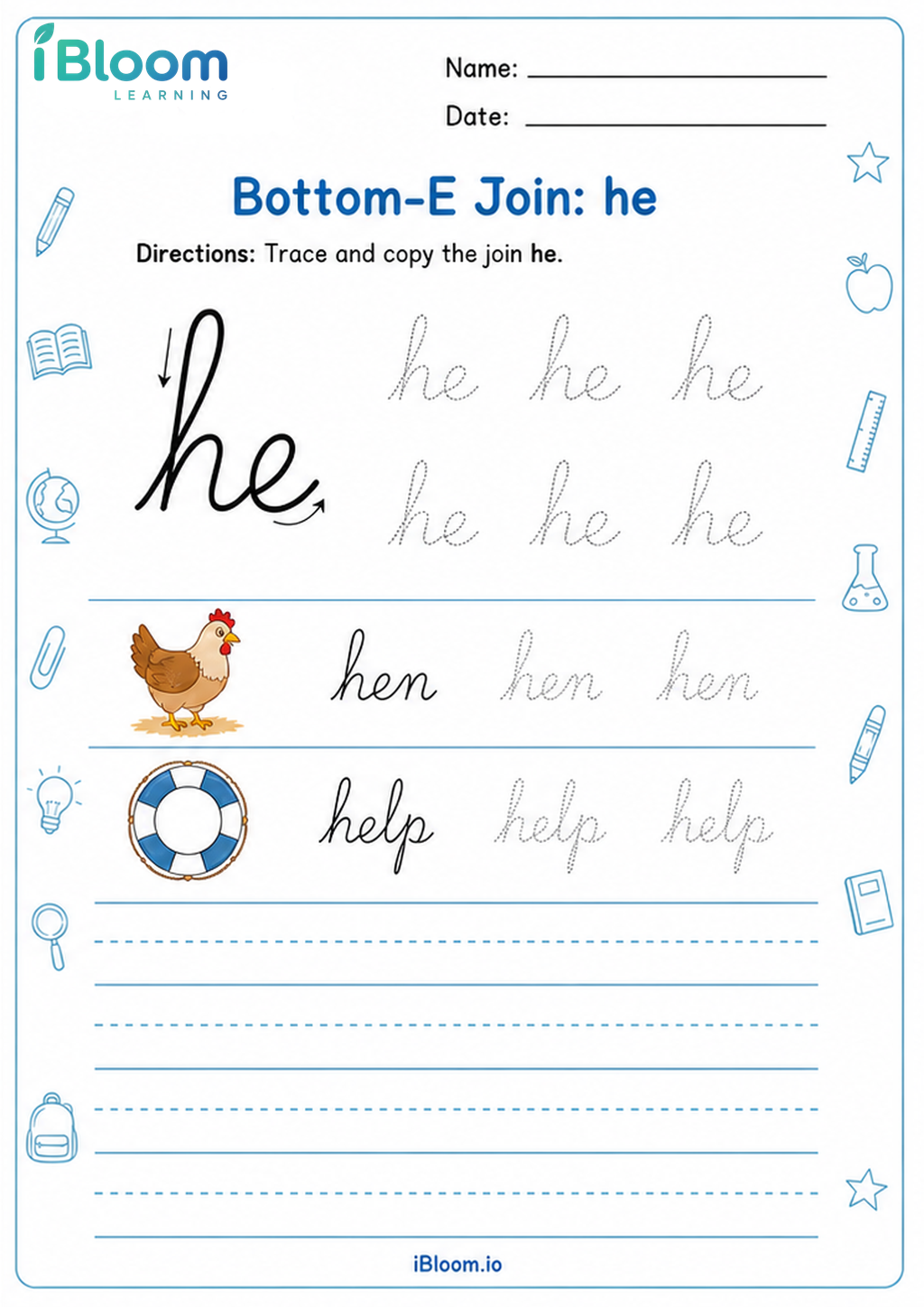 Bottom-E Join: heClass 2 printable practice for Bottom-E Cursive Joins.Class 2Free PDF preview
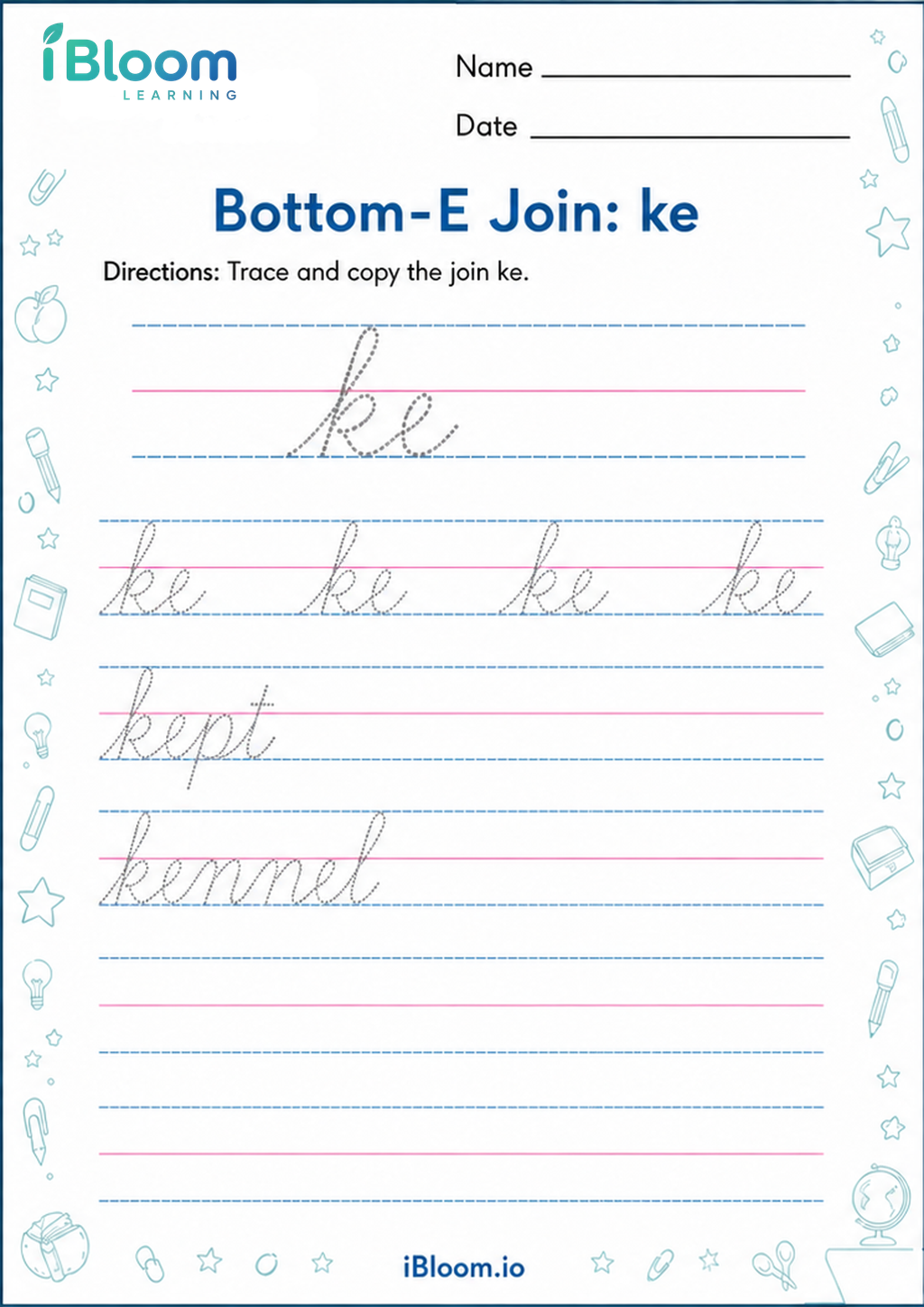 Bottom-E Join: keClass 2 printable practice for Bottom-E Cursive Joins.Class 2Free PDF preview
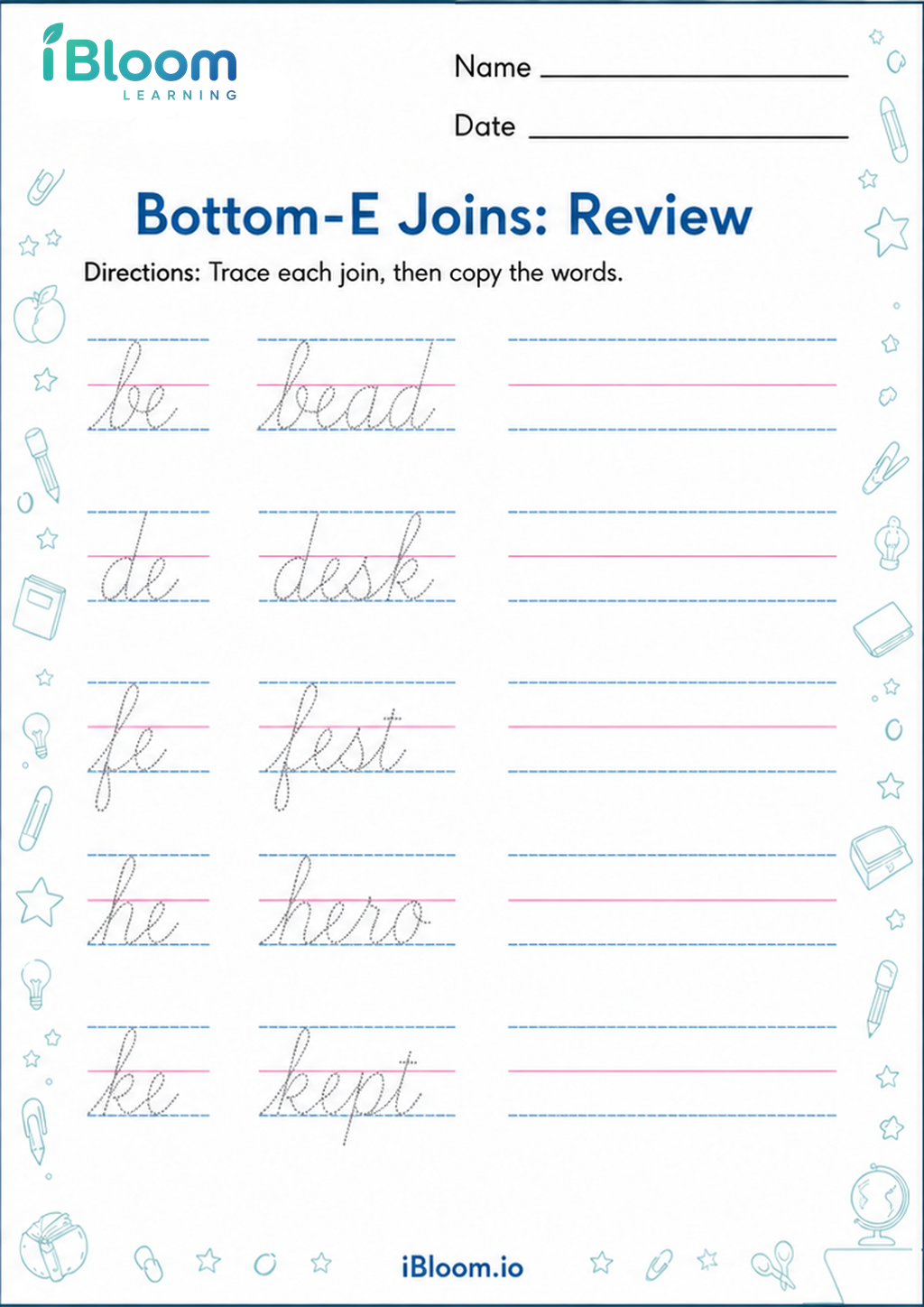 Bottom-E Joins: ReviewClass 2 printable practice for Bottom-E Cursive Joins.Class 2Free PDF preview
Practice that builds confidence
What this cursive join practises
These Bottom E Letter Joins worksheets help children practise the lowercase cursive e when it is formed from a low, bottom entry stroke and connected smoothly to nearby letters. The focus is on control: starting at the correct point, making the small e loop clearly, and keeping the join light and continuous.
The printable activities include tracing, guided joining, independent writing, and short word practice so learners can move from careful stroke formation to more natural cursive writing. They are useful for primary class handwriting practice at home or in school.
Bottom e joins train children to approach the letter e from the lower writing line, curve into the small loop, and leave the letter with a neat exit stroke. This matters because e appears often in English words, and a poorly made e can look like i, c, or l. Children practise the vocabulary of handwriting too: baseline, entry stroke, loop, exit stroke, spacing, and slant.

How the practice progresses
The pages begin with clear models and traceable joins so the hand learns the path before speed is expected. Children then complete joined letter patterns and short word groups where e must remain open and readable. The aim is not decorative writing; it is steady, legible cursive with even size and smooth movement from one letter to the next.
A simple parent routine
Ask your child to sit with the paper slightly tilted and to trace the first line slowly with a finger before using a pencil. Say the movement aloud: “start low, curve in, make the e, flick out.” After one row, pause and choose the best e together. Look for a small open loop, a join that touches cleanly, and letters that sit on the line. If the hand becomes tense, stop and shake out the fingers before continuing.

Classroom uses for teachers
Teachers can use these sheets during handwriting lessons, literacy centres, morning work, or as extra support for pupils who break the join before e. They also work well for a quick small-group check: one group traces, one copies, and one writes selected words independently. Displaying one enlarged example helps the class notice the entry stroke and the exit stroke before they begin.

Common errors and a child-friendly strategy
Watch for e loops that are closed too tightly, joins that start above the line, oversized e letters, heavy pencil pressure, and gaps between letters. A helpful strategy is: touch the line, make a tiny hill, open the window, then glide out. This gives children a memorable way to keep the e open and connected.
Free printable PDF download
Use this bottom e letter joins worksheet page to preview the activity, print it, or download it as a PDF for quick practice. It works well for homework, homeschool lessons, tutoring, morning work, revision, and classroom centers.
Answers and answer key support
After the child completes the worksheet independently, parents and teachers can use the answer support or answer key information to check the work, review mistakes, and choose the next practice step.
Why iBloom worksheets help
The iBloom practice sequence keeps attention on one join type at a time, so children are not overwhelmed by a full page of mixed cursive. The layout gives enough repetition to build muscle memory while still including independent writing to check whether the join has become secure.
Helpful answers
Frequently asked questions
What is a bottom e letter join?
It is a cursive join where the child approaches lowercase e from a low or bottom entry stroke, forms the small e loop, and then exits smoothly into the next movement.
Why does my child’s cursive e look unclear?
The e often becomes unclear when the loop is closed too tightly, the entry stroke starts too high, or the pencil pressure is heavy. Slow tracing and saying the stroke path aloud can help.
Should children trace every line before writing independently?
Tracing the first few models is useful, but children should also copy without tracing so you can see whether they can form the join on their own.
How can I help my child keep the e open?
Use the phrase, “open the window,” while forming the loop. It reminds children not to close the e into a blob or make it look like another letter.
Can these worksheets be used in Indian classrooms?
Yes. They are suitable for primary class cursive writing practice, handwriting periods, remedial support, or short literacy centre activities.
Is this bottom e letter joins worksheet free?
Yes. You can preview it for free and use the printable worksheet for home or classroom practice.
Can I download this bottom e letter joins worksheet as a PDF?
Yes. Use the worksheet download option to save a printable PDF, or print the worksheet directly from the page.
Does this bottom e letter joins worksheet include answers or an answer key?
When the activity has fixed answers, iBloom includes answer support so parents and teachers can check the completed worksheet.