Free printable practice
Adjectives Adverbs Practice Activities
Class 4 grammar worksheets help children use adjectives and adverbs correctly, including adjective order, relative adverbs, and linking verbs.
Explore Adjectives Adverbs
Free printable worksheet PDFs
Preview every available page, then download the free worksheet PDF for home, homeschool, tutoring, or classroom practice.
Preview the exact activity before downloading it.
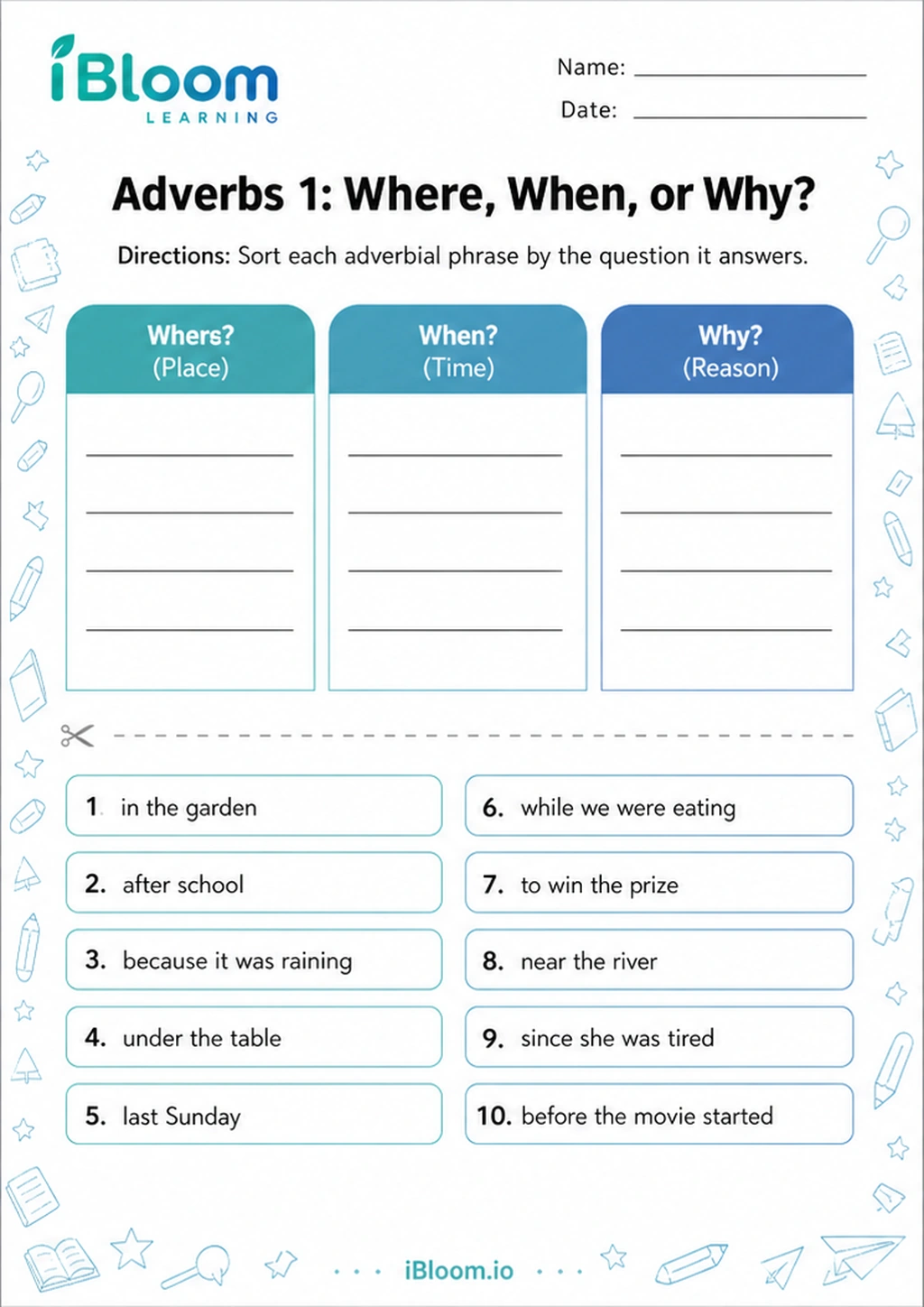 Adverbs 1: Where, When, or Why?Class 4 printable practice for Adverbs of Where, Why, and When.Class 4Free PDF preview
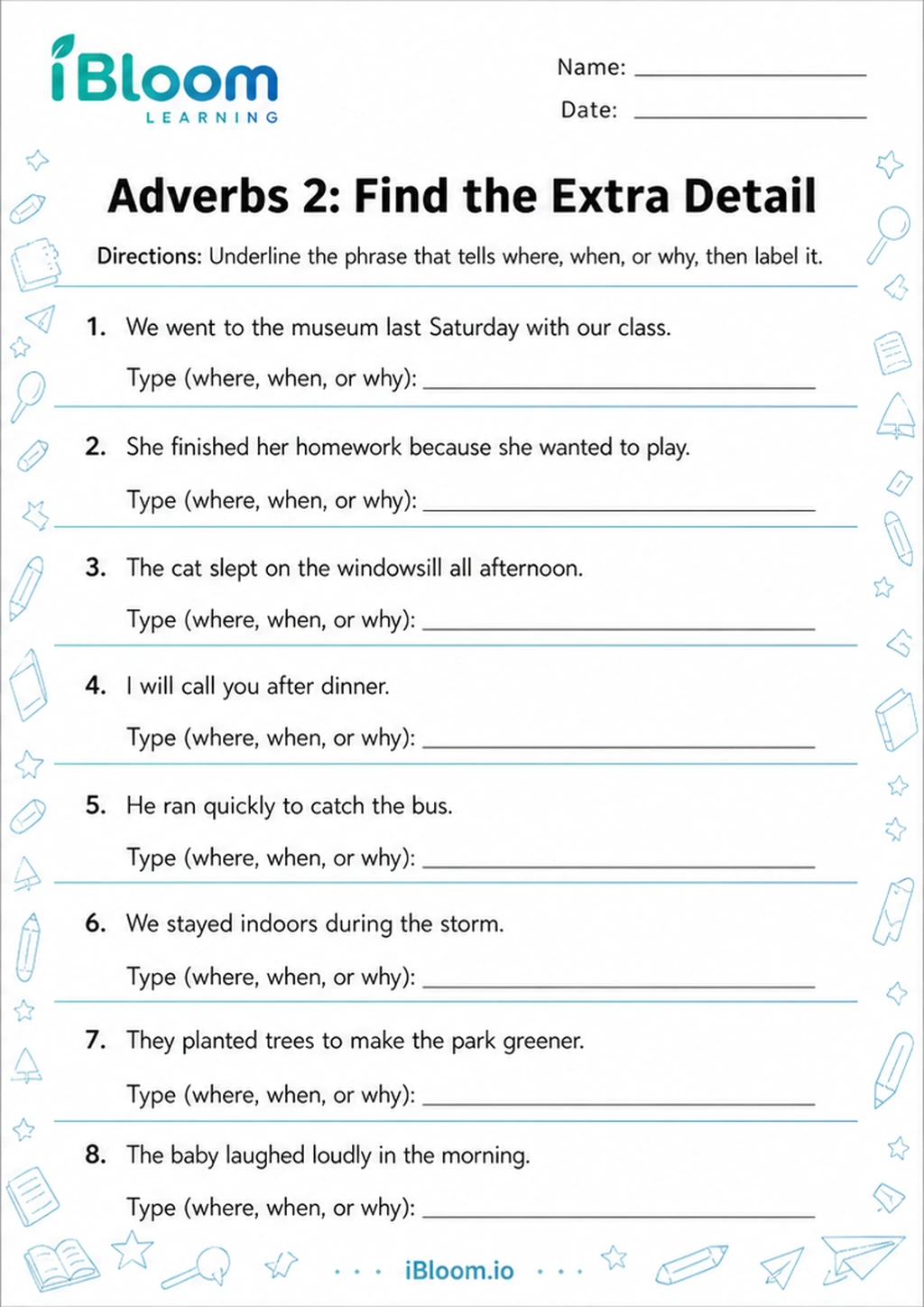 Adverbs 2: Find the Extra DetailClass 4 printable practice for Adverbs of Where, Why, and When.Class 4Free PDF preview
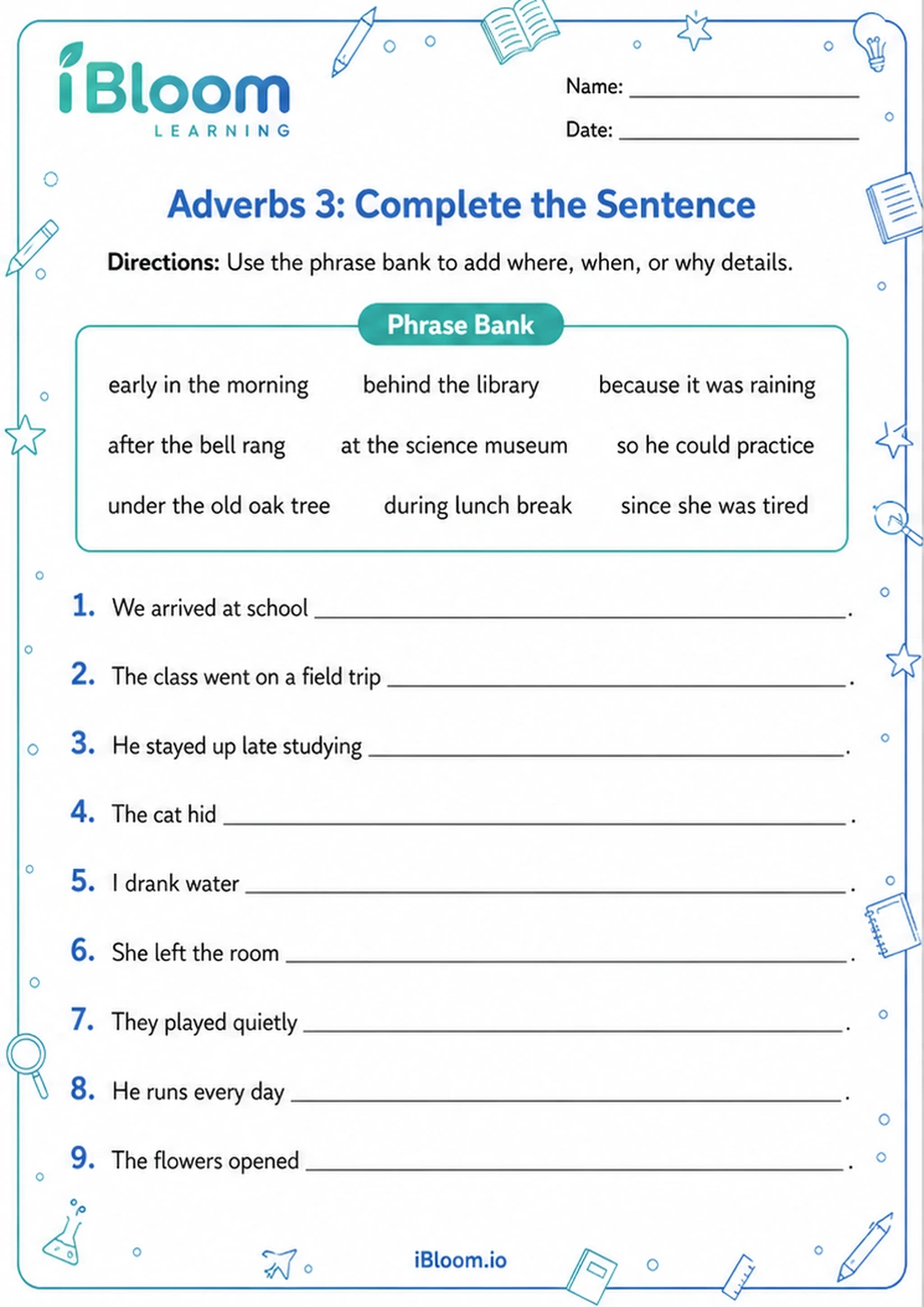 Adverbs 3: Complete the SentenceClass 4 printable practice for Adverbs of Where, Why, and When.Class 4Free PDF preview
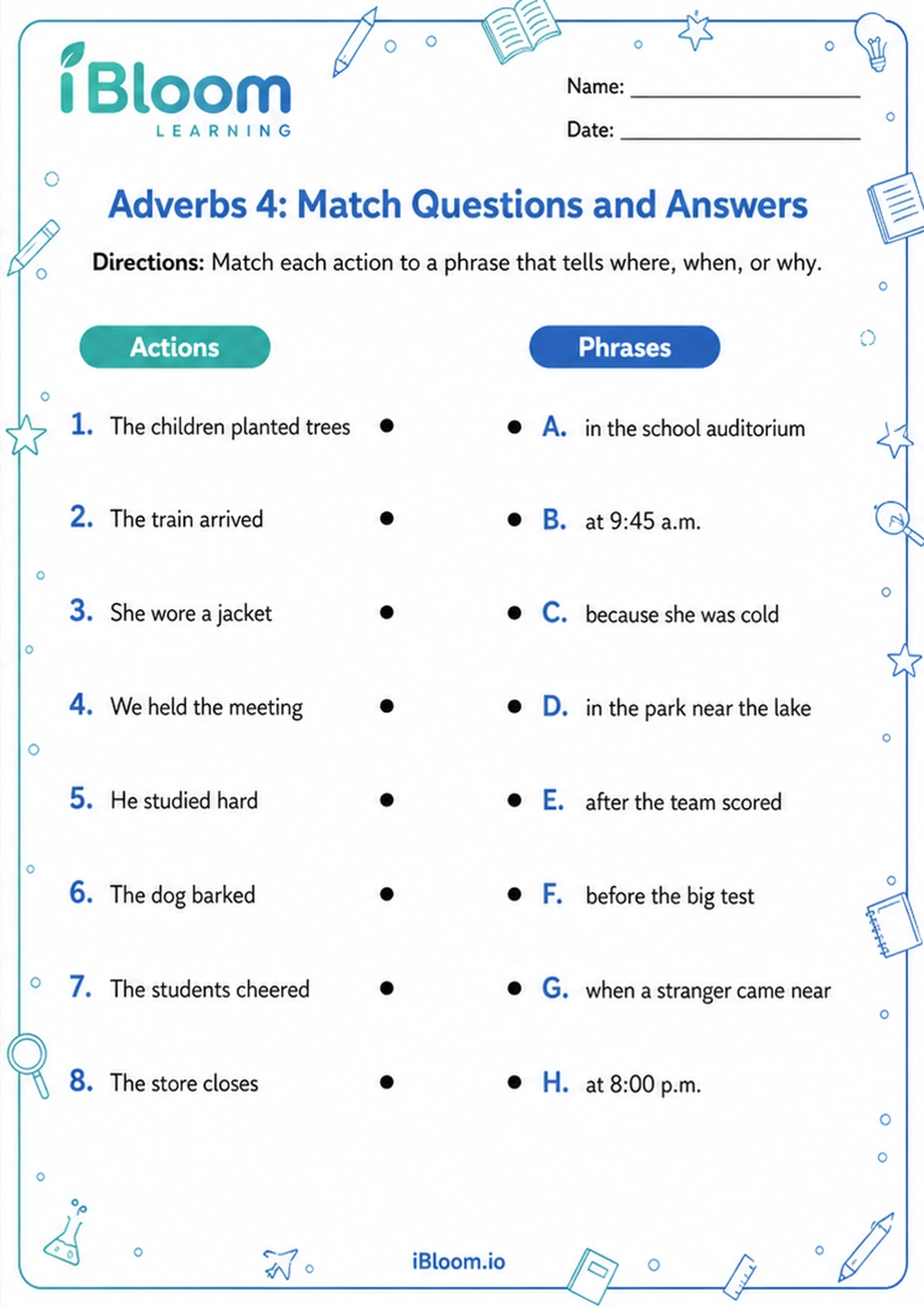 Adverbs 4: Match Questions and AnswersClass 4 printable practice for Adverbs of Where, Why, and When.Class 4Free PDF preview
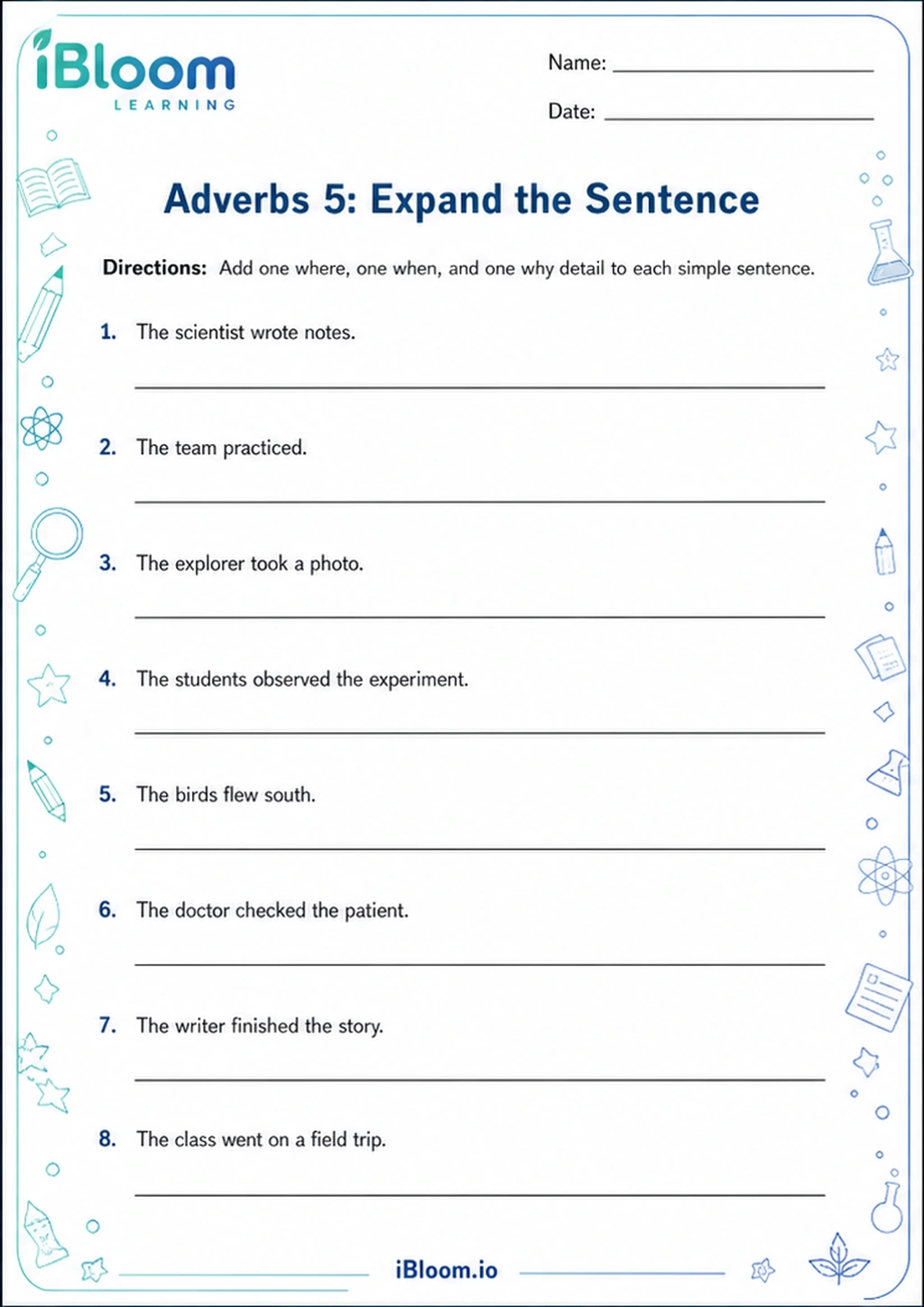 Adverbs 5: Expand the SentenceClass 4 printable practice for Adverbs of Where, Why, and When.Class 4Free PDF preview
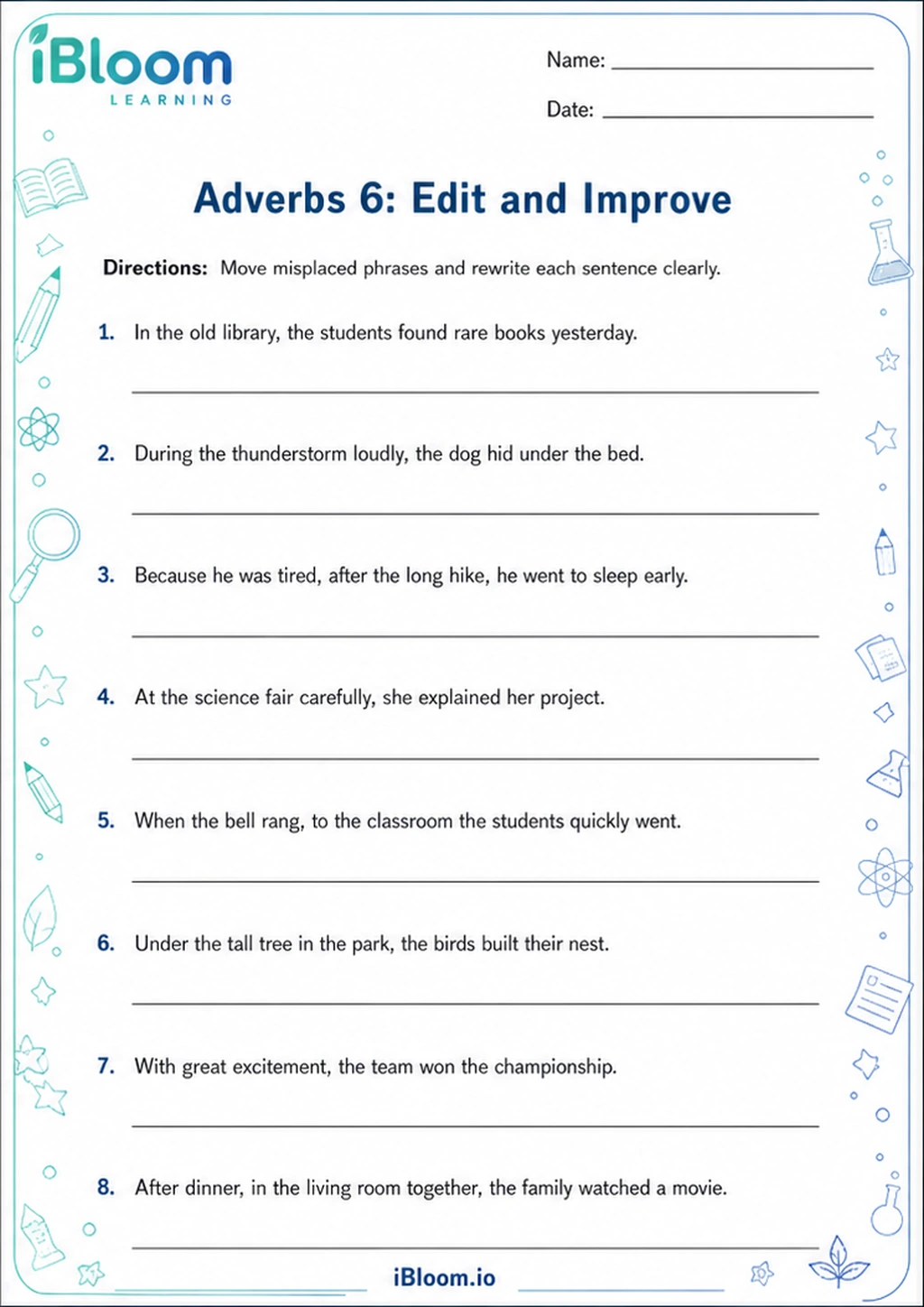 Adverbs 6: Edit and ImproveClass 4 printable practice for Adverbs of Where, Why, and When.Class 4Free PDF preview
Practice that builds confidence
Adjectives and Adverbs in Sentences
These Class 4 Grammar and Writing worksheets help children tell the difference between adjectives and adverbs and use both more accurately in sentences. Learners practise describing nouns, describing verbs, and answering where, why, and when.
The printable activities cover adjective order, ordering adjectives, relative adverbs, and linking verbs used with adjectives. Children edit sentences, choose suitable describing words, complete blanks, and improve sentence detail without making writing confusing.
Adjectives describe nouns and pronouns, as in “a bright lamp” or “the soup is hot.” Adverbs often describe verbs and can tell where, when, why, or how something happens. In Class 4, children begin to notice the job a word is doing in the sentence, not just the word itself.

Where, Why, When and Relative Adverbs
The worksheets include adverbs that answer where, why, and when. Children also meet relative adverbs such as where, when, and why in sentences like “This is the place where we met.” This helps them join ideas smoothly and understand how one part of a sentence gives more information about another.
Ordering Adjectives Clearly
When more than one adjective describes a noun, the order matters. Children practise natural phrasing such as “a small red box” rather than “a red small box.” The focus is on reading the phrase aloud, noticing what sounds right, and understanding that adjectives can describe size, colour, shape, number, or opinion.
Linking Verbs as Adjective Clues
Some sentences use linking verbs such as is, are, was, were, seem, or feel. The word after the linking verb may be an adjective describing the subject: “The flowers are fresh.” These activities help children avoid treating every word after a verb as an adverb.
Parent and Teacher Practice Ideas
At home, ask your child to describe one object with two adjectives, then describe one action with an adverb. In class, teachers can use the worksheets for grammar centres, sentence-improvement tasks, peer editing, or quick checks after a mini lesson. Students can underline the noun or verb first, then choose the describing word.

Free printable PDF download
Use this class 4 adjectives adverbs worksheet page to preview the activity, print it, or download it as a PDF for quick practice. It works well for homework, homeschool lessons, tutoring, morning work, revision, and classroom centers.
Answers and answer key support
After the child completes the worksheet independently, parents and teachers can use the answer support or answer key information to check the work, review mistakes, and choose the next practice step.
Why iBloom Worksheets Help
The pages mix identification, ordering, sentence completion, and editing so children practise grammar as part of real writing. A child-friendly strategy is: “Find the word being described. If it is a noun, think adjective. If it is an action, think adverb.” This reduces guessing and builds clearer sentences.
Helpful answers
Frequently asked questions
What is the main difference between an adjective and an adverb?
An adjective describes a noun or pronoun, while an adverb usually describes a verb and may tell where, when, why, or how something happens.
Why is adjective order included in Class 4 practice?
Children often use more than one adjective in writing. Practising order helps them write phrases that sound natural, such as “a small blue bag.”
What are relative adverbs?
Relative adverbs such as where, when, and why connect ideas and give more information, as in “That is the day when we visited the museum.”
How do linking verbs relate to adjectives?
After linking verbs like is, are, was, seem, or feel, the describing word often tells about the subject, as in “The mango is sweet.”
How can I help my child stop confusing adjectives and adverbs?
Ask your child to find the word being described first. If the describing word tells about a noun, it is an adjective; if it tells about an action, it is usually an adverb.
Is this class 4 adjectives adverbs worksheet free?
Yes. You can preview it for free and use the printable worksheet for home or classroom practice.
Can I download this class 4 adjectives adverbs worksheet as a PDF?
Yes. Use the worksheet download option to save a printable PDF, or print the worksheet directly from the page.
Does this class 4 adjectives adverbs worksheet include answers or an answer key?
When the activity has fixed answers, iBloom includes answer support so parents and teachers can check the completed worksheet.