Free printable practice
Where Why When Practice Activities
Class 4 grammar worksheets for practising where, why and when in questions, answers and meaningful sentences.
Free printable worksheet PDFs
Preview every available page, then download the free worksheet PDF for home, homeschool, tutoring, or classroom practice.
Preview the exact activity before downloading it.
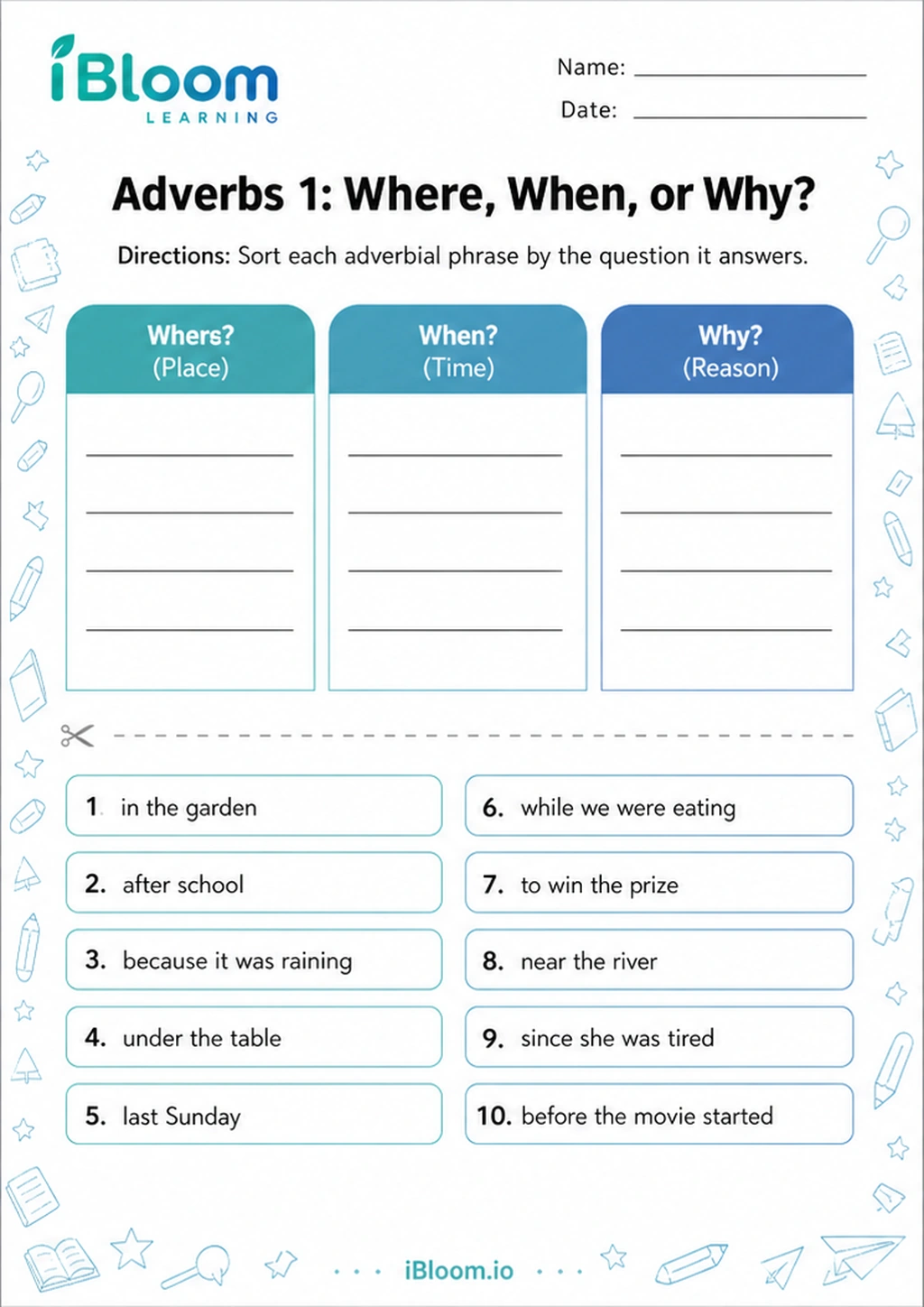 Adverbs 1: Where, When, or Why?Class 4 printable practice for Adverbs of Where, Why, and When.Class 4Free PDF preview
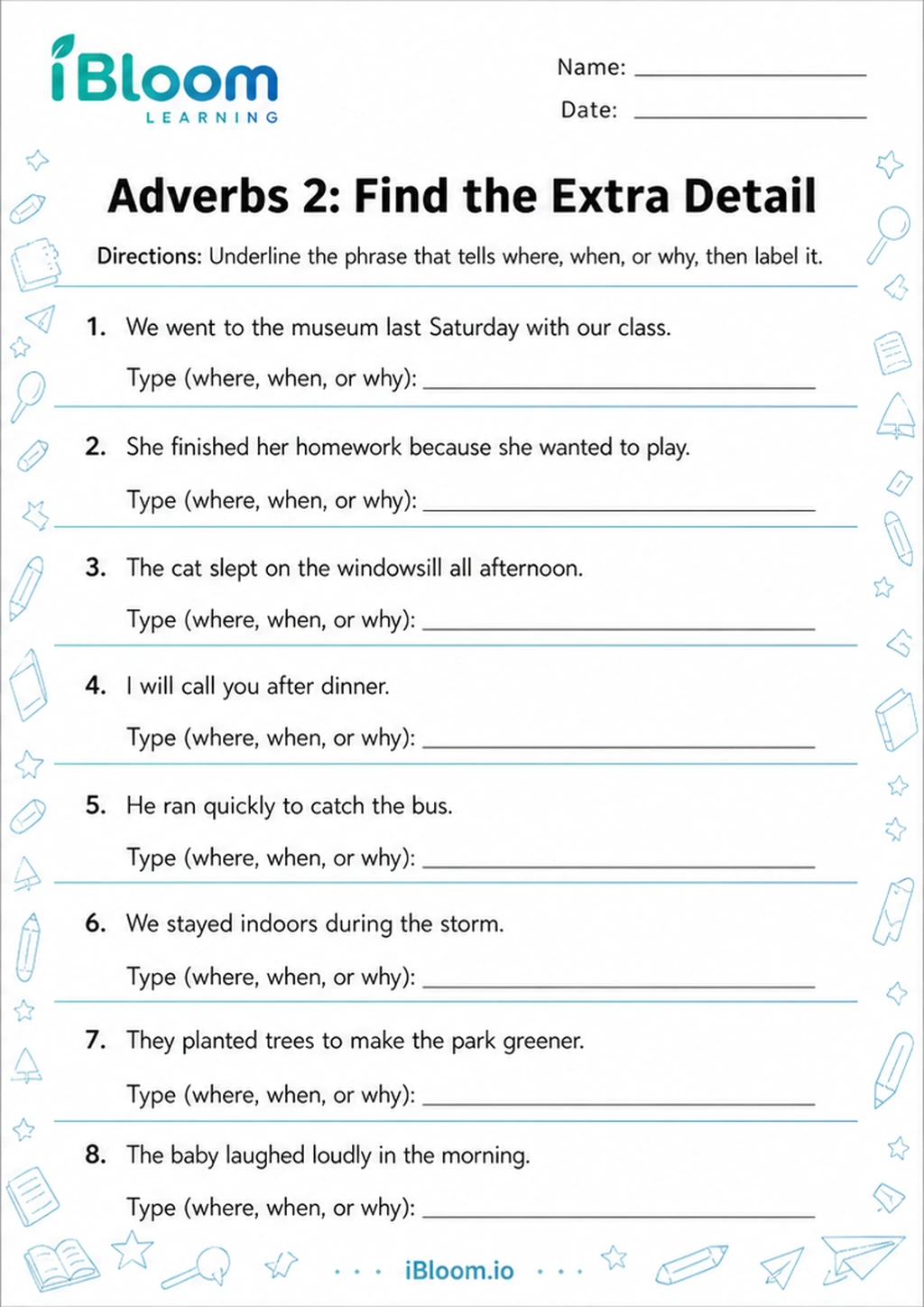 Adverbs 2: Find the Extra DetailClass 4 printable practice for Adverbs of Where, Why, and When.Class 4Free PDF preview
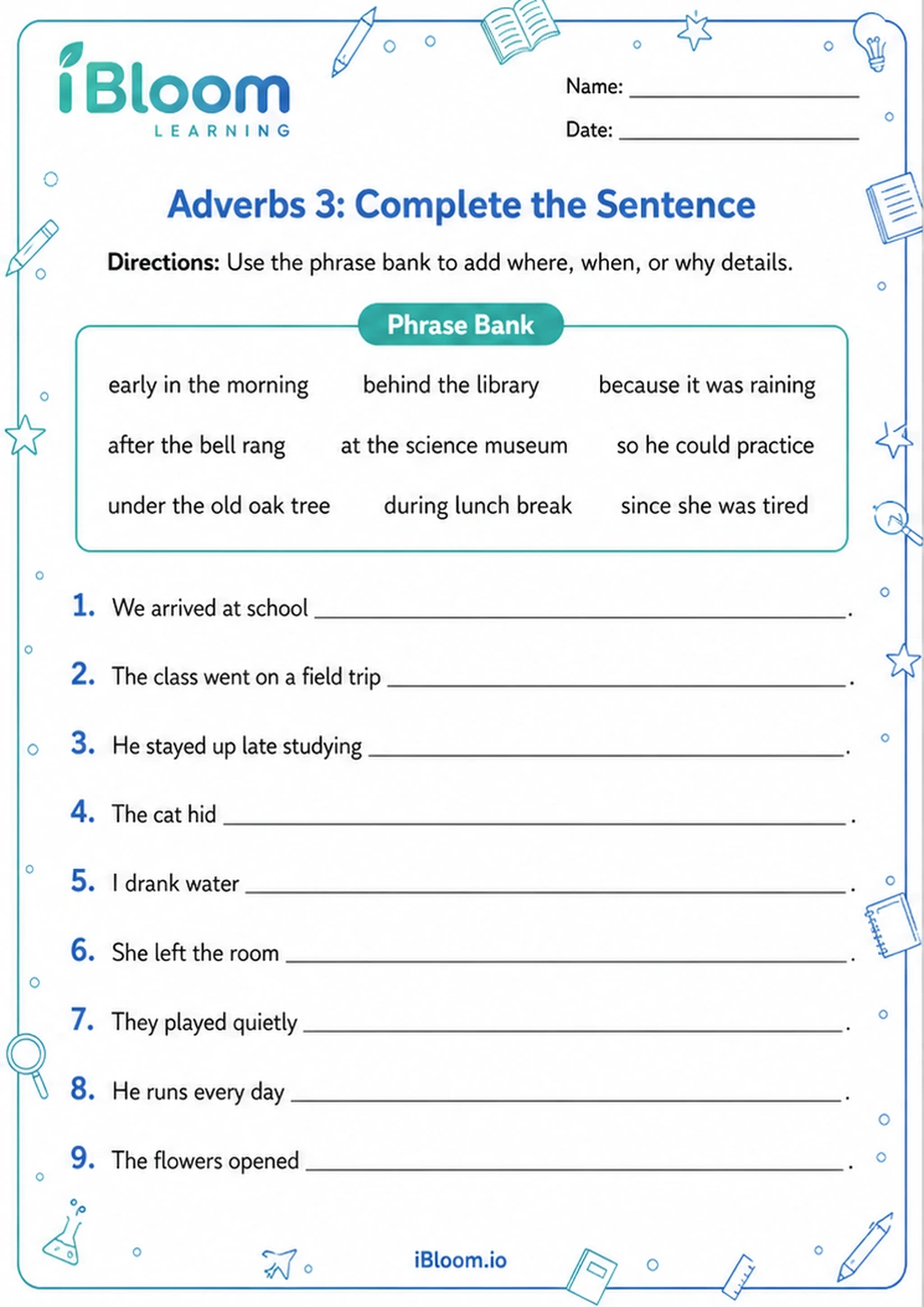 Adverbs 3: Complete the SentenceClass 4 printable practice for Adverbs of Where, Why, and When.Class 4Free PDF preview
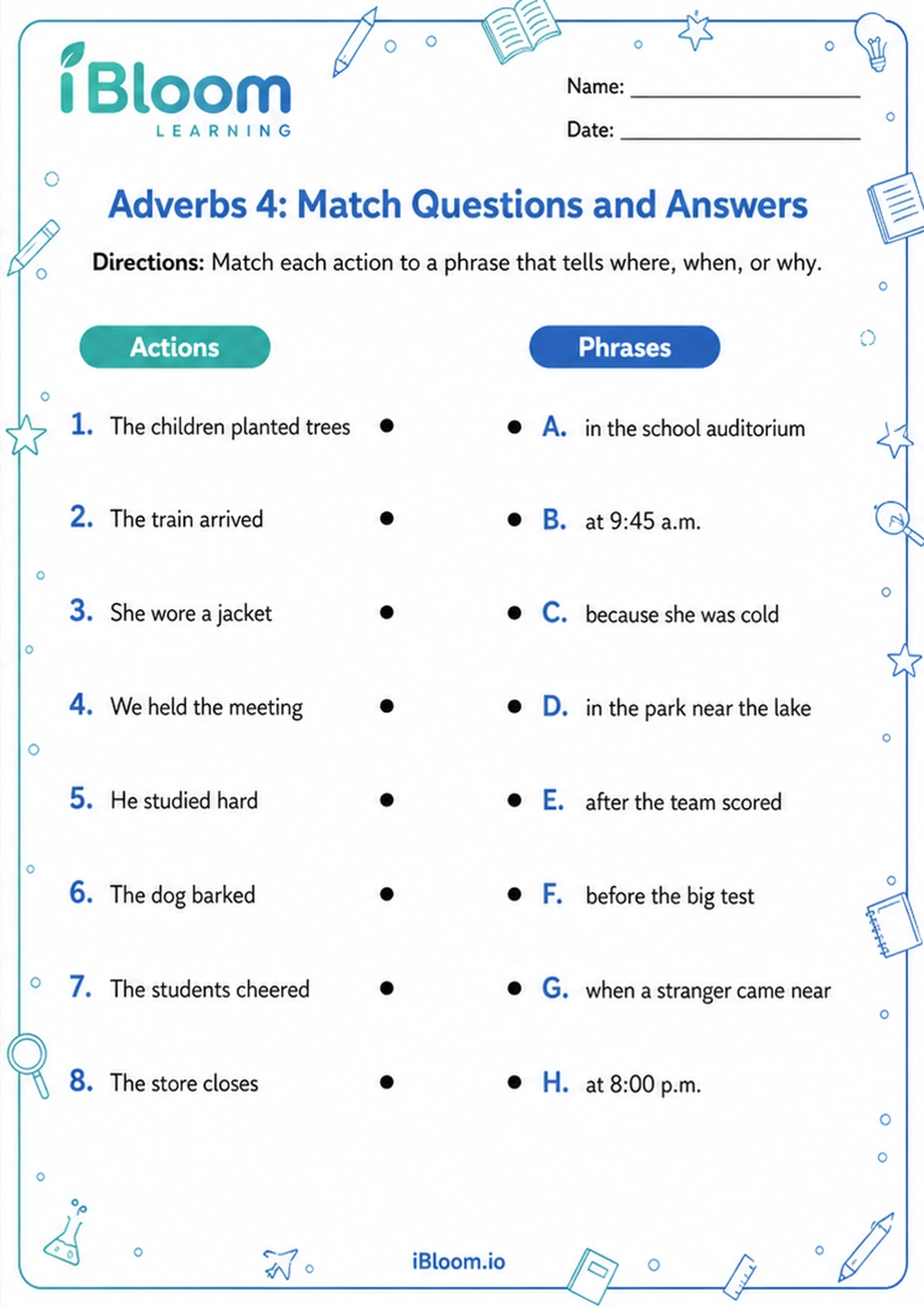 Adverbs 4: Match Questions and AnswersClass 4 printable practice for Adverbs of Where, Why, and When.Class 4Free PDF preview
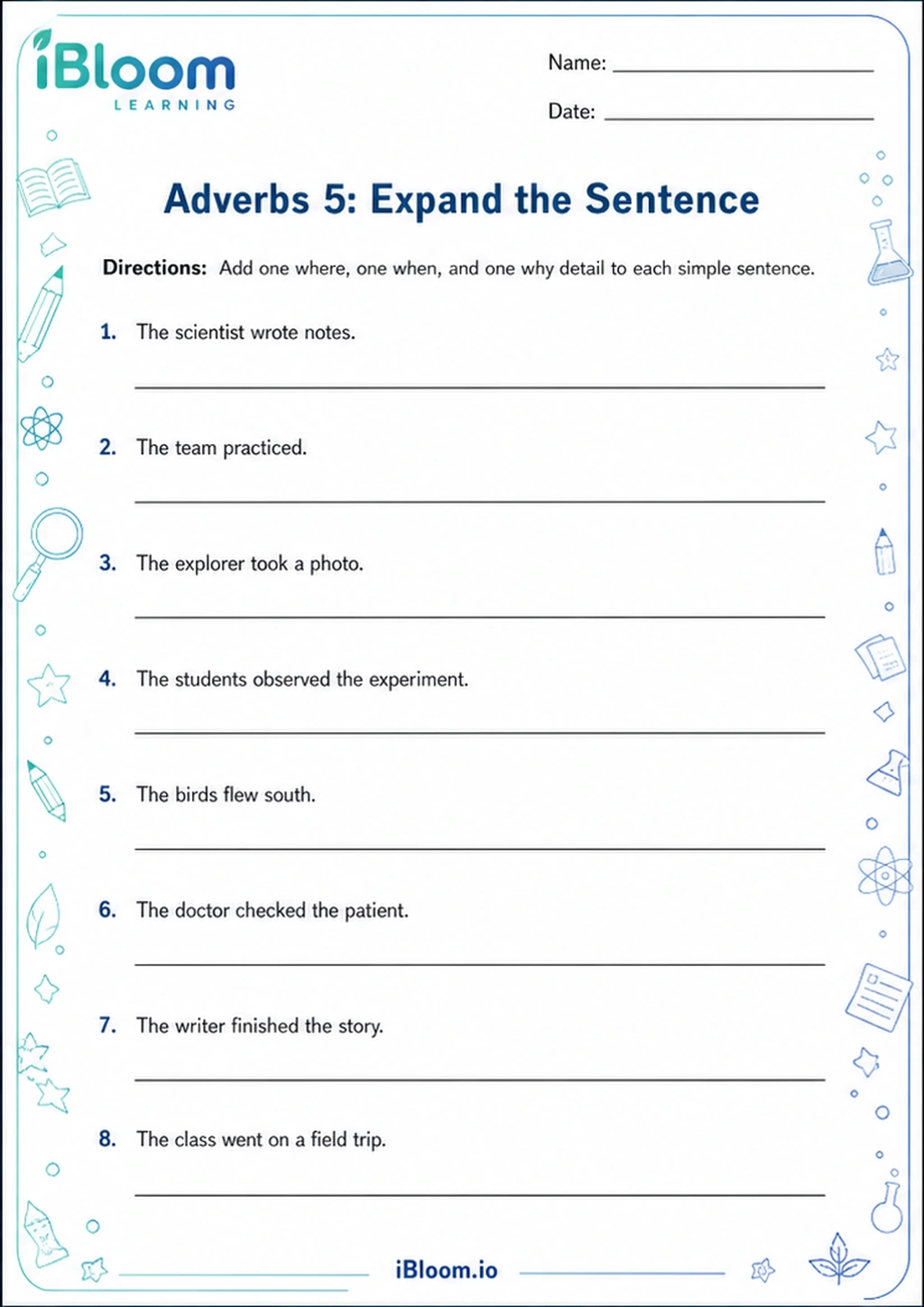 Adverbs 5: Expand the SentenceClass 4 printable practice for Adverbs of Where, Why, and When.Class 4Free PDF preview
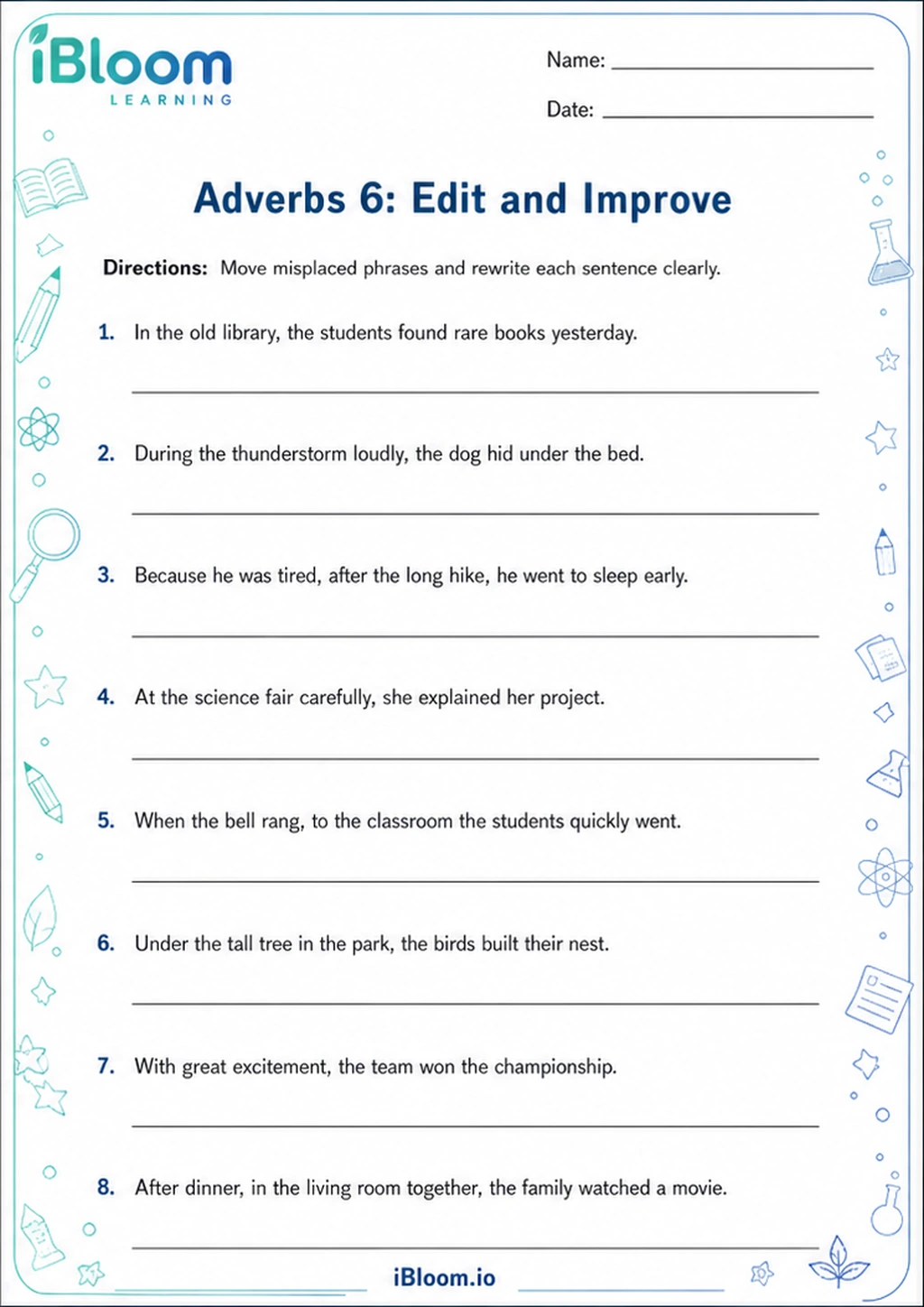 Adverbs 6: Edit and ImproveClass 4 printable practice for Adverbs of Where, Why, and When.Class 4Free PDF preview
Practice that builds confidence
What children learn
These Class 4 grammar and writing worksheets help children practise using where, why and when accurately. Learners identify which word asks about a place, a reason or a time, then use it to complete questions and respond with sensible answers.
The printable activities include sentence completion, question building, matching, rewriting and short writing tasks. They connect the skill to the Adjectives and Adverbs topic by showing how these question words point to information about place, time and reason in a sentence.
In this collection, children work with three important question words: where for place, when for time and why for reason. A Class 4 learner may see prompts such as “___ did you keep your bag?”, “___ is the school assembly?” or “___ are you late?” and choose the word that fits the meaning. This builds both grammar awareness and clear sentence sense.

Progression across the worksheets
The practice usually begins with recognition: matching where, when and why to place, time and reason. It then moves to completing questions, choosing the best word in context and writing answers that match the question. Later tasks may ask children to create their own questions from short clues, so they are not only selecting words but also forming complete, meaningful sentences with correct punctuation.
Parent practice routine
At home, use a simple three-question routine after reading or conversation. Ask: “Where did it happen?”, “When did it happen?” and “Why did it happen?” Encourage your child to answer in full sentences, such as “It happened in the playground,” “It happened after lunch,” or “It happened because the bell rang.” Then let the child write one question of each type in a notebook. This keeps the practice natural and linked to daily language.

Classroom uses
Teachers can use these printables for grammar revision, morning work, pair practice or literacy centres. They also work well before creative writing: pupils can plan a short incident by answering where, when and why, then turn the answers into a paragraph. For quick assessment, ask students to underline the clue in a sentence that tells them whether the missing word should ask for place, time or reason.

Common errors to watch for
Some children use where when the answer is a time, or when when the answer is a place. Others begin a why-question correctly but answer it without because or another reason phrase. Watch for missing question marks and incomplete questions such as “Why you are sad?” Help children hear the correct order: “Why are you sad?”
Free printable PDF download
Use this where why when worksheets class 4 page to preview the activity, print it, or download it as a PDF for quick practice. It works well for homework, homeschool lessons, tutoring, morning work, revision, and classroom centers.
Answers and answer key support
After the child completes the worksheet independently, parents and teachers can use the answer support or answer key information to check the work, review mistakes, and choose the next practice step.
Why iBloom worksheets help
The iBloom activities keep the focus narrow, so children can compare the three words repeatedly without confusion. A child-friendly strategy is: Where = place, When = time, Why = reason. Before writing the answer, children can circle the clue word or imagine the answer: a location, a time word or a reason. This makes the grammar visible and easier to apply in speaking and writing.
Helpful answers
Frequently asked questions
What do children practise in these Where, Why and When worksheets?
They practise choosing and using where for place, when for time and why for reason in questions, answers and short sentences.
How is this topic connected to adjectives and adverbs?
Where, when and why help ask for adverbial information: place, time and reason. This supports the Class 4 study of how words add detail to actions and sentences.
What is a simple way to explain the difference to my child?
Use the memory cue: where means place, when means time and why means reason. Ask your child to predict what kind of answer the question needs before writing it.
Which common mistakes should I check for?
Look for children mixing up place and time questions, forgetting the question mark, or writing why-questions in the wrong order, such as “Why you are late?” instead of “Why are you late?”
Can these worksheets support writing practice?
Yes. Children can use where, when and why to plan details for a story or event, then turn their answers into clear sentences or a short paragraph.
Is this where why when worksheets class 4 free?
Yes. You can preview it for free and use the printable worksheet for home or classroom practice.
Can I download this where why when worksheets class 4 as a PDF?
Yes. Use the worksheet download option to save a printable PDF, or print the worksheet directly from the page.
Does this where why when worksheets class 4 include answers or an answer key?
When the activity has fixed answers, iBloom includes answer support so parents and teachers can check the completed worksheet.