Free printable practice
Traditions Practice Activities
Class 4 informative writing prompts that help children explain traditions with clear facts, organised details, and respectful examples.
Free printable worksheet PDFs
Preview every available page, then download the free worksheet PDF for home, homeschool, tutoring, or classroom practice.
Preview the exact activity before downloading it.
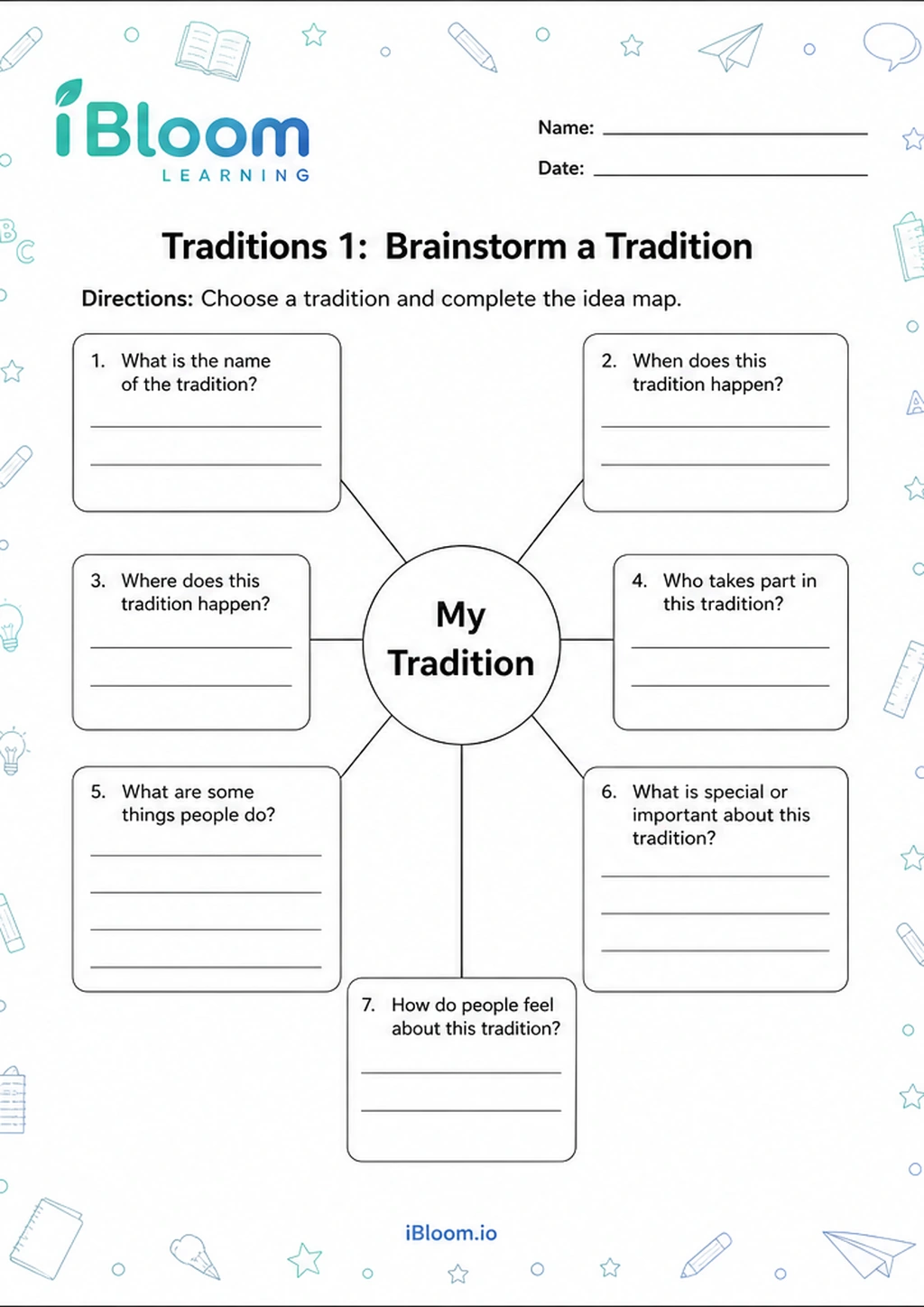 Traditions 1: Brainstorm a TraditionClass 4 printable practice for Writing About Traditions.Class 4Free PDF preview
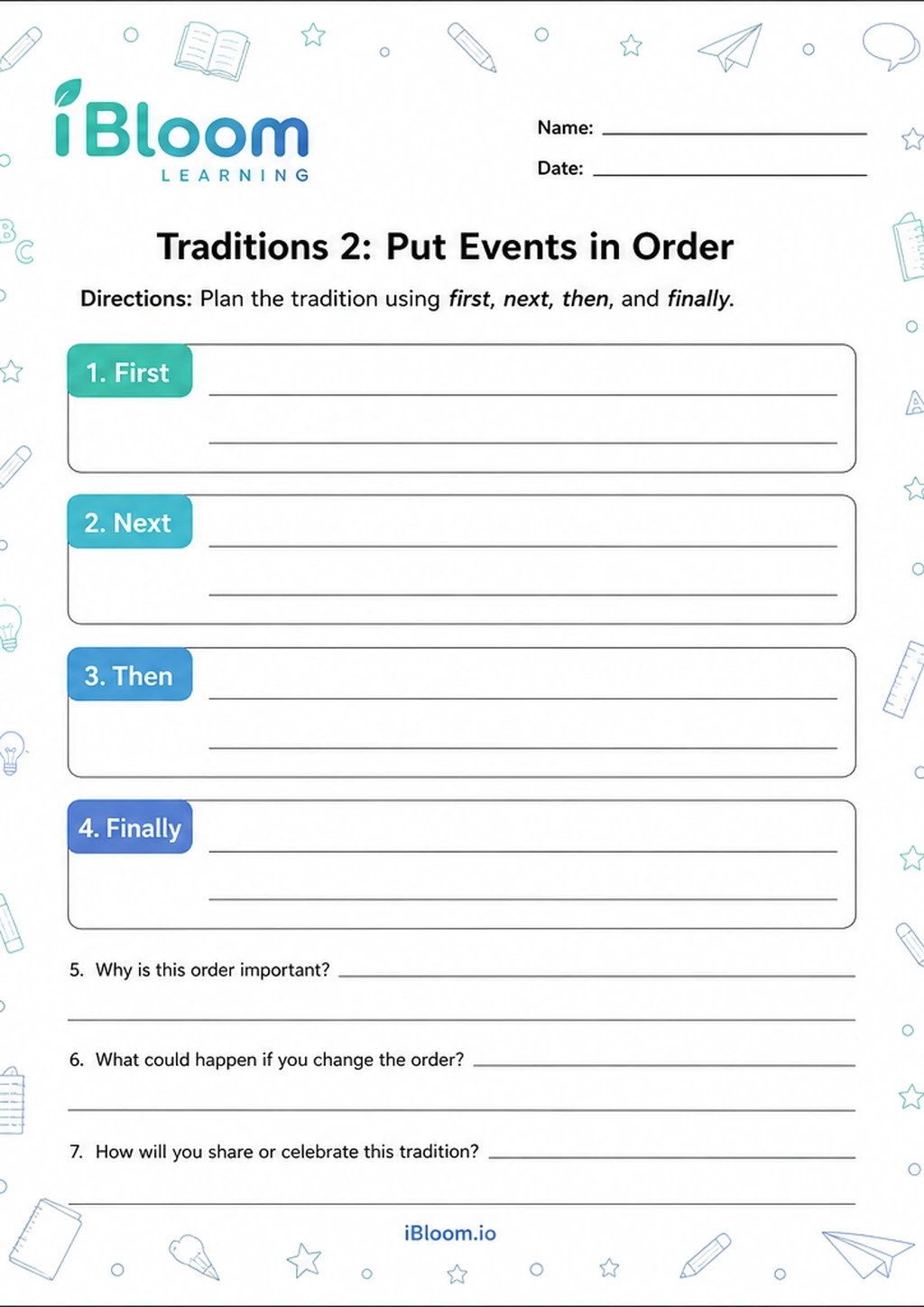 Traditions 2: Put Events in OrderClass 4 printable practice for Writing About Traditions.Class 4Free PDF preview
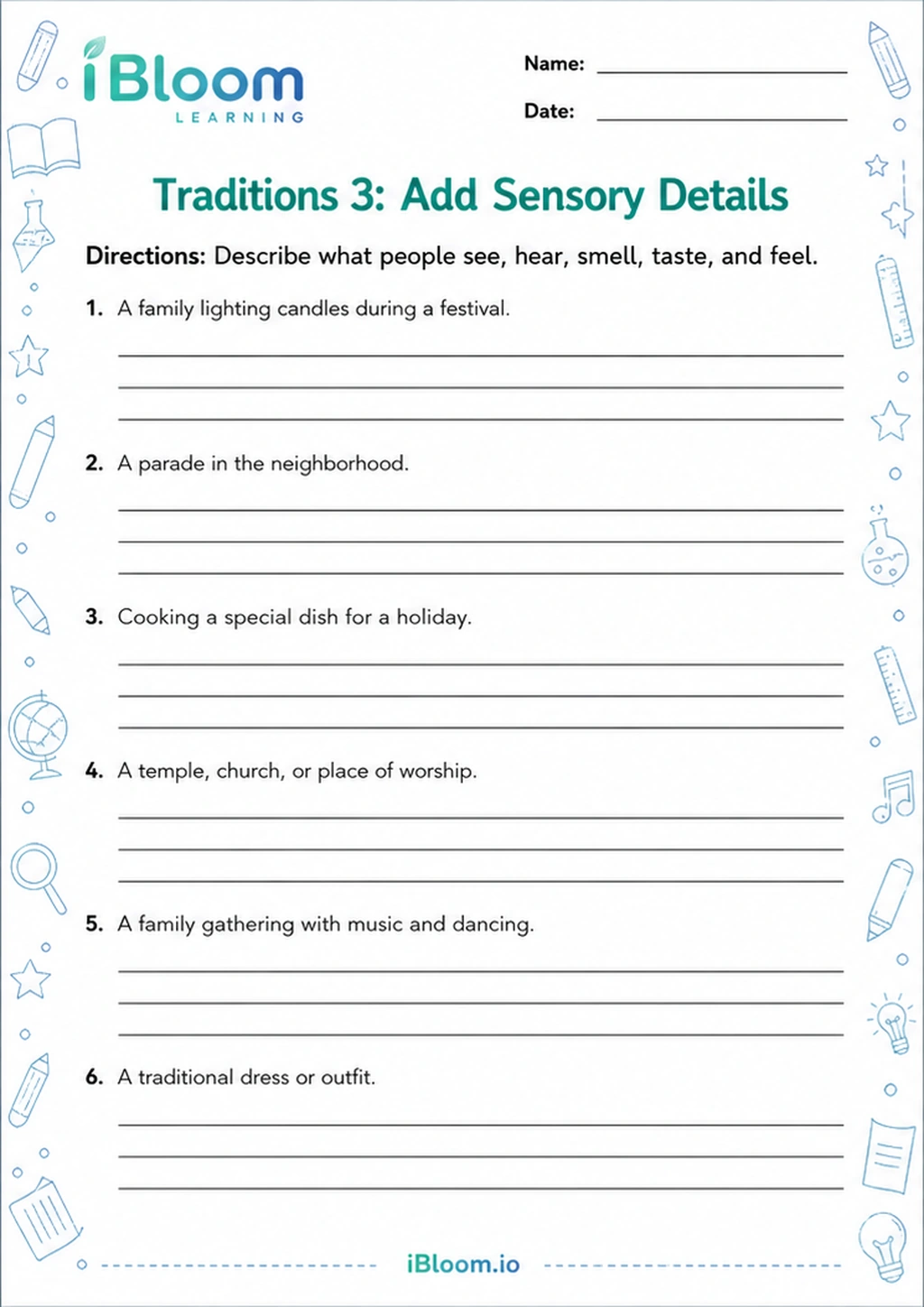 Traditions 3: Add Sensory DetailsClass 4 printable practice for Writing About Traditions.Class 4Free PDF preview
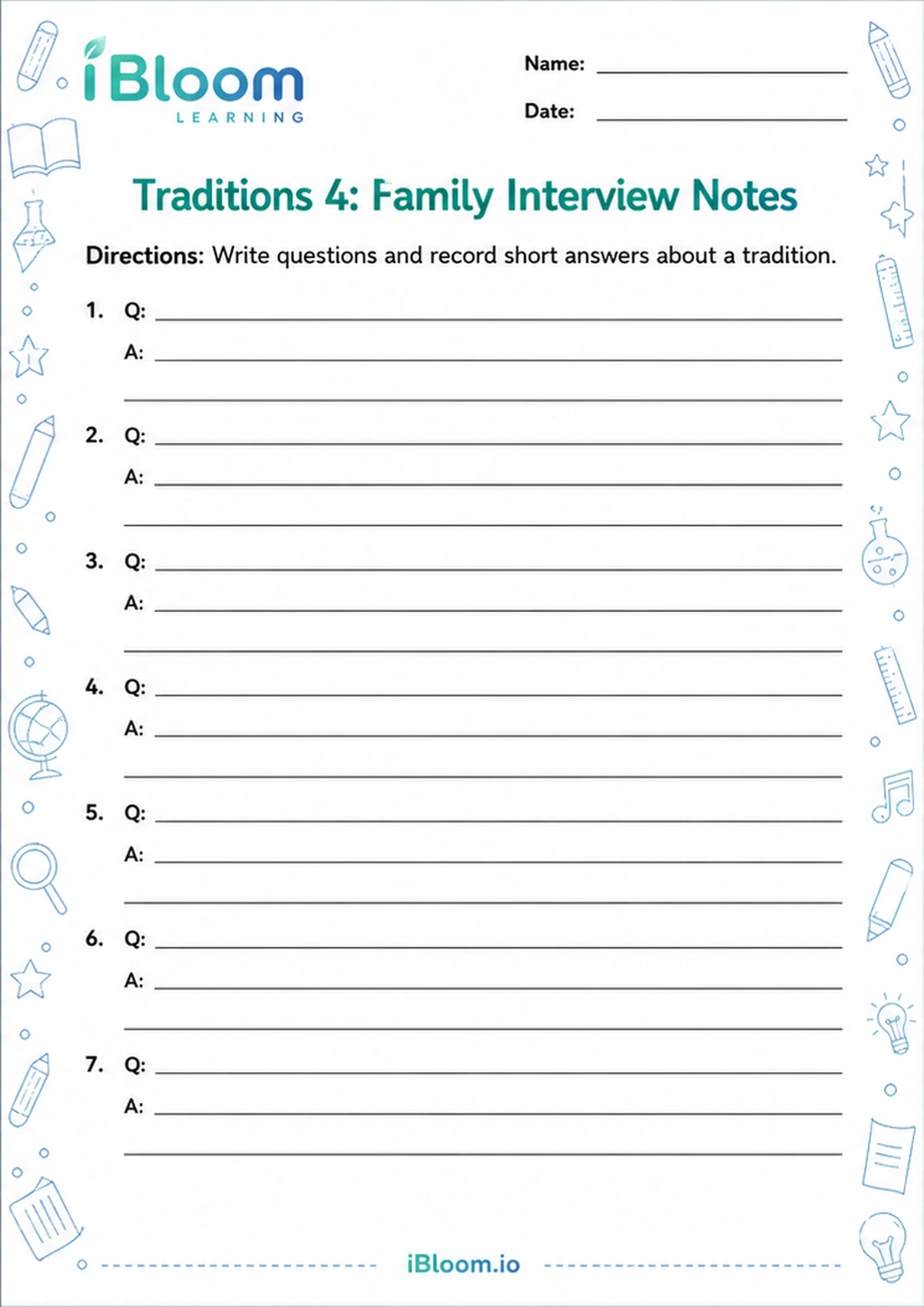 Traditions 4: Family Interview NotesClass 4 printable practice for Writing About Traditions.Class 4Free PDF preview
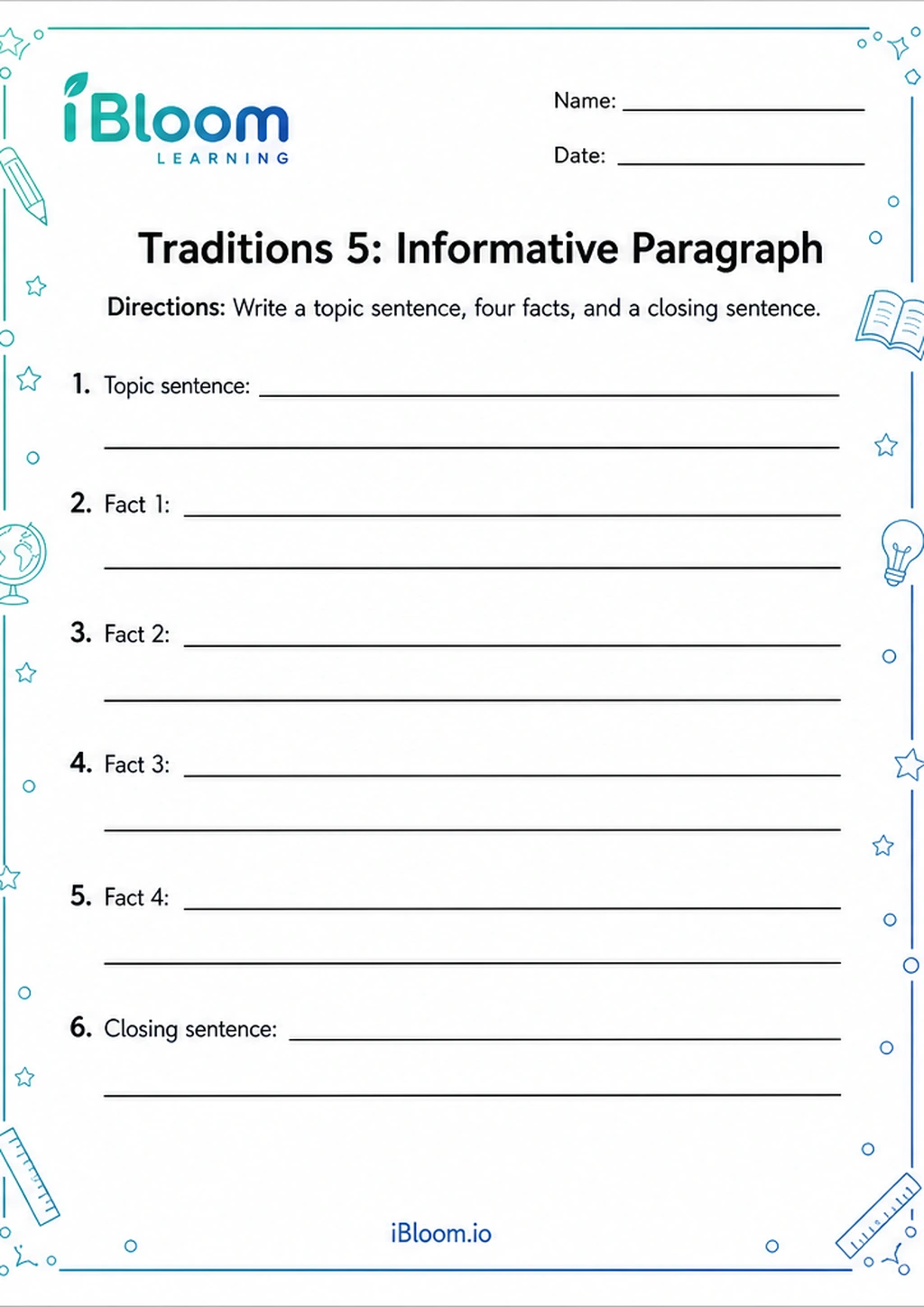 Traditions 5: Informative ParagraphClass 4 printable practice for Writing About Traditions.Class 4Free PDF preview
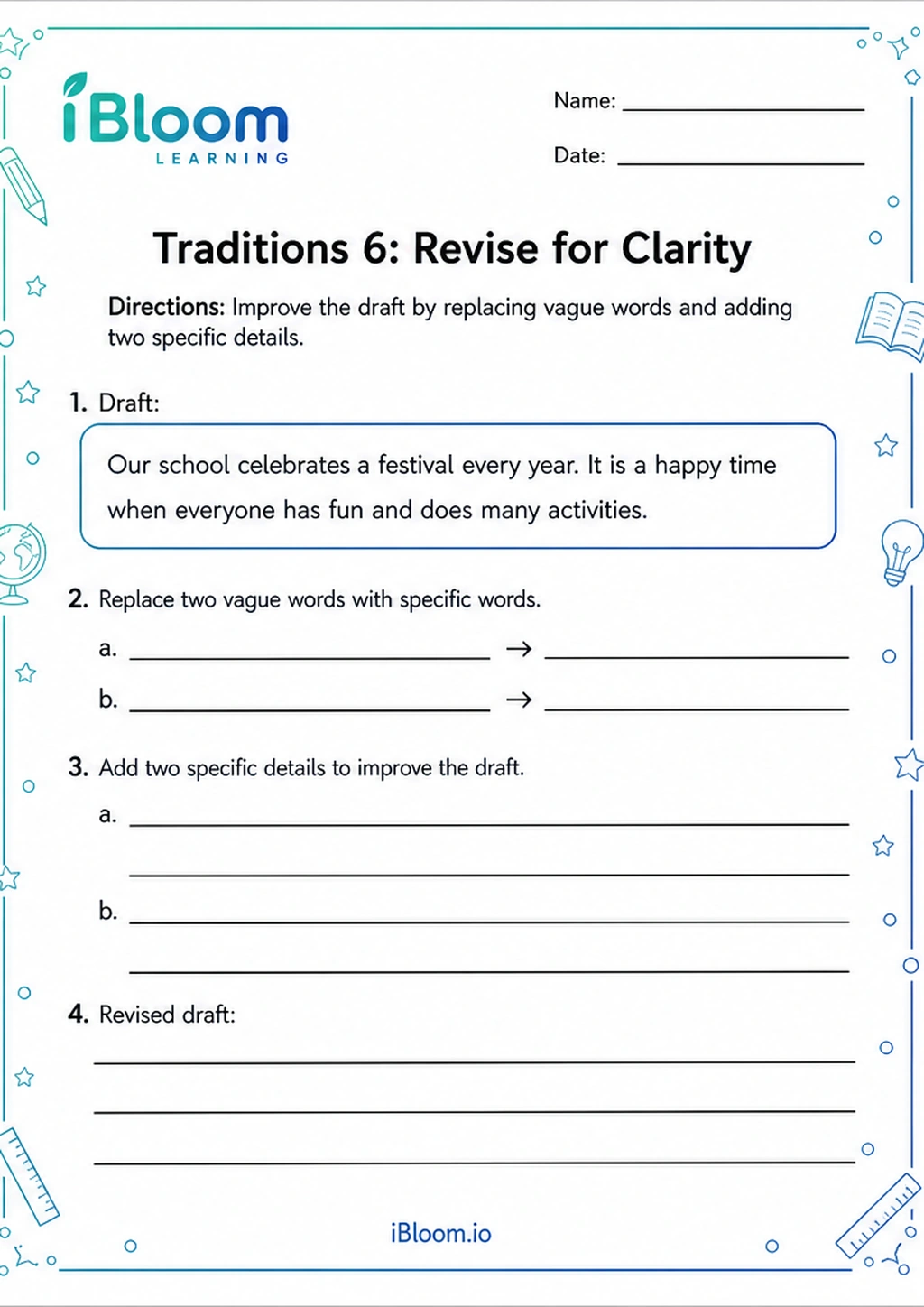 Traditions 6: Revise for ClarityClass 4 printable practice for Writing About Traditions.Class 4Free PDF preview
Practice that builds confidence
What children learn about traditions
These Class 4 informative writing worksheets help children explain traditions clearly, using facts, details, and organised paragraphs rather than only personal memories. Learners practise describing what a tradition is, who follows it, when it happens, and why it matters.
The printable prompts invite children to write about family, school, community, and festival traditions. Activities support planning, topic sentences, relevant examples, sequence words, and concluding lines so each response sounds informative and respectful.
A tradition is a practice repeated by a family, group, school, or community. In this Class 4 Grammar and Writing set, children learn to explain traditions as informative topics: naming the tradition, giving background, describing the steps, and adding reasons for its importance.

Building an informative response
The prompts guide learners from idea gathering to paragraph writing. They may note who takes part, where the tradition happens, what people do first, next, and last, and what objects, clothes, food, songs, or greetings are connected to it. This helps them use precise nouns, time words, and clear explanations instead of vague lines such as, “It is very nice.”
A simple parent routine
At home, ask your child to choose one tradition they know well. Talk through four questions: What is it called? When does it happen? What do people do? Why is it meaningful? Then let the child complete the worksheet, read it aloud, and underline one fact, one sequence word, and one explaining sentence.

Classroom uses for teachers
Teachers can use these pages for writing practice after a discussion on culture, festivals, families, or community life. They also work well in writing centres, morning work, holiday writing, or peer sharing. A class chart of useful words like custom, celebrate, prepare, gather, symbol, and remember can support independent writing.

Common errors and a child-friendly strategy
Watch for lists without explanation, sentences that shift into storytelling, missing introductions, and opinions stated as facts. A helpful strategy is “Name, Explain, Example, Importance”: name the tradition, explain what happens, add one clear example, and tell why people continue it.
Free printable PDF download
Use this Class 4 traditions informative writing worksheet page to preview the activity, print it, or download it as a PDF for quick practice. It works well for homework, homeschool lessons, tutoring, morning work, revision, and classroom centers.
Answers and answer key support
After the child completes the worksheet independently, parents and teachers can use the answer support or answer key information to check the work, review mistakes, and choose the next practice step.
Why iBloom worksheets help
The worksheets keep the focus on writing skill, not memorising one “correct” tradition. Children can write about a home ritual, a school annual day practice, a harvest celebration, a birthday custom, or a neighbourhood event. The prompts encourage respect for different customs while strengthening topic sentences, supporting details, and closing sentences.
Helpful answers
Frequently asked questions
What kind of traditions can children write about in these worksheets?
Children can write about family customs, school practices, festival routines, community events, birthday rituals, food traditions, or any repeated practice they can explain respectfully and clearly.
How do these worksheets keep the writing informative?
The prompts ask children to explain who follows the tradition, when it happens, what steps are involved, and why it matters. This shifts the writing from a personal story to a fact-based explanation.
Are these activities suitable for Indian Class 4 learners?
Yes. The language, class level, and examples are suitable for Class 4 children in India, and the prompts allow learners to write about traditions from their own home, school, or community.
What writing skills are practised through the traditions prompts?
Children practise planning ideas, writing topic sentences, adding relevant details, using sequence words, explaining meaning, and ending with a clear concluding sentence.
How can parents help if a child says they do not know a tradition?
Parents can discuss a simple repeated practice, such as lighting a lamp, visiting relatives, preparing a special dish, wearing certain clothes for an event, or following a school assembly routine, then help the child answer what, when, who, and why.
Is this Class 4 traditions informative writing worksheet free?
Yes. You can preview it for free and use the printable worksheet for home or classroom practice.
Can I download this Class 4 traditions informative writing worksheet as a PDF?
Yes. Use the worksheet download option to save a printable PDF, or print the worksheet directly from the page.
Does this Class 4 traditions informative writing worksheet include answers or an answer key?
When the activity has fixed answers, iBloom includes answer support so parents and teachers can check the completed worksheet.