
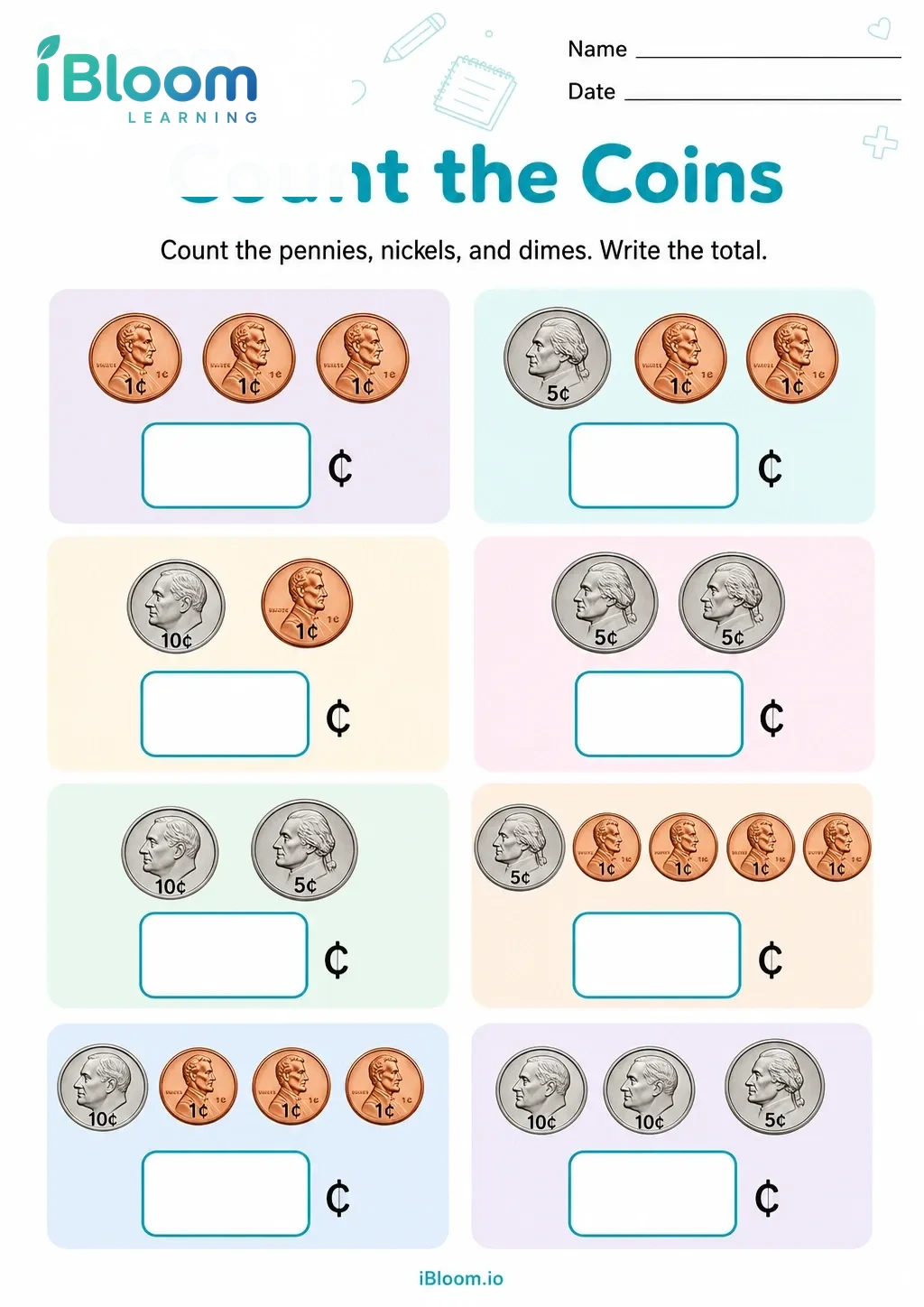
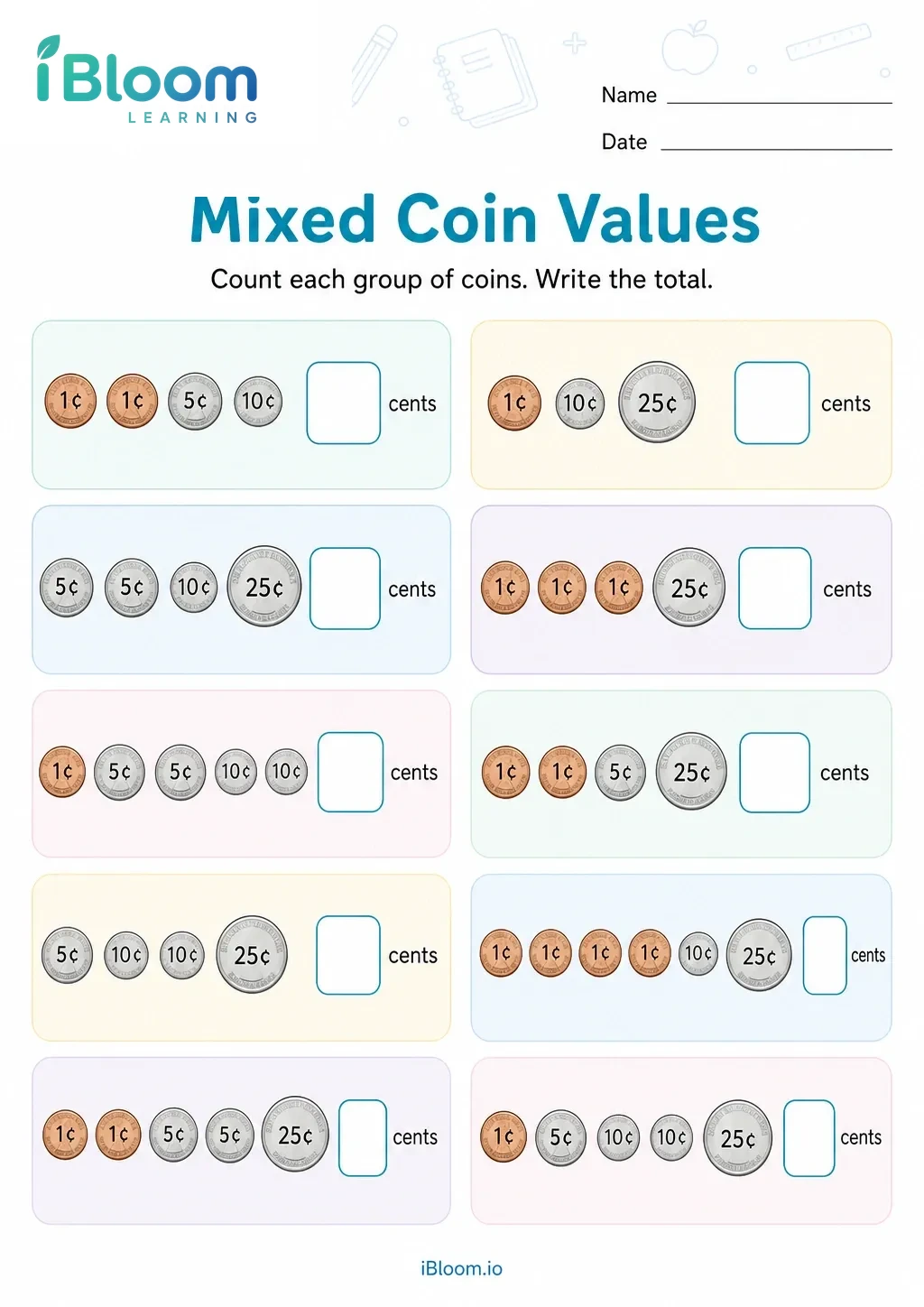
About this worksheet
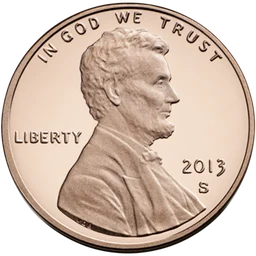
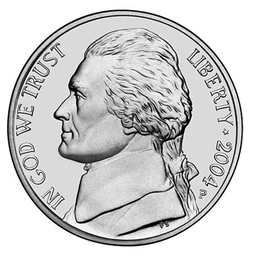
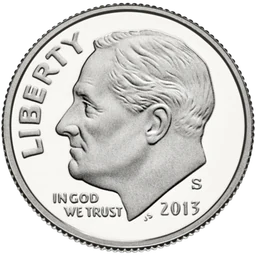
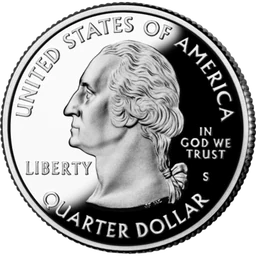
This Grade 1 printable gives 14 multiple-choice questions in two parts: identify and order familiar US coins, then add coin values in short questions. A pictured group supports coin identification, and the text names each coin in the remaining problems. The money totals connect the sorting practice to Common Core 2.MD.C.8. A separate answer key lists each value and total.
Aligned to 2.MD.C.8
What is each US coin worth?
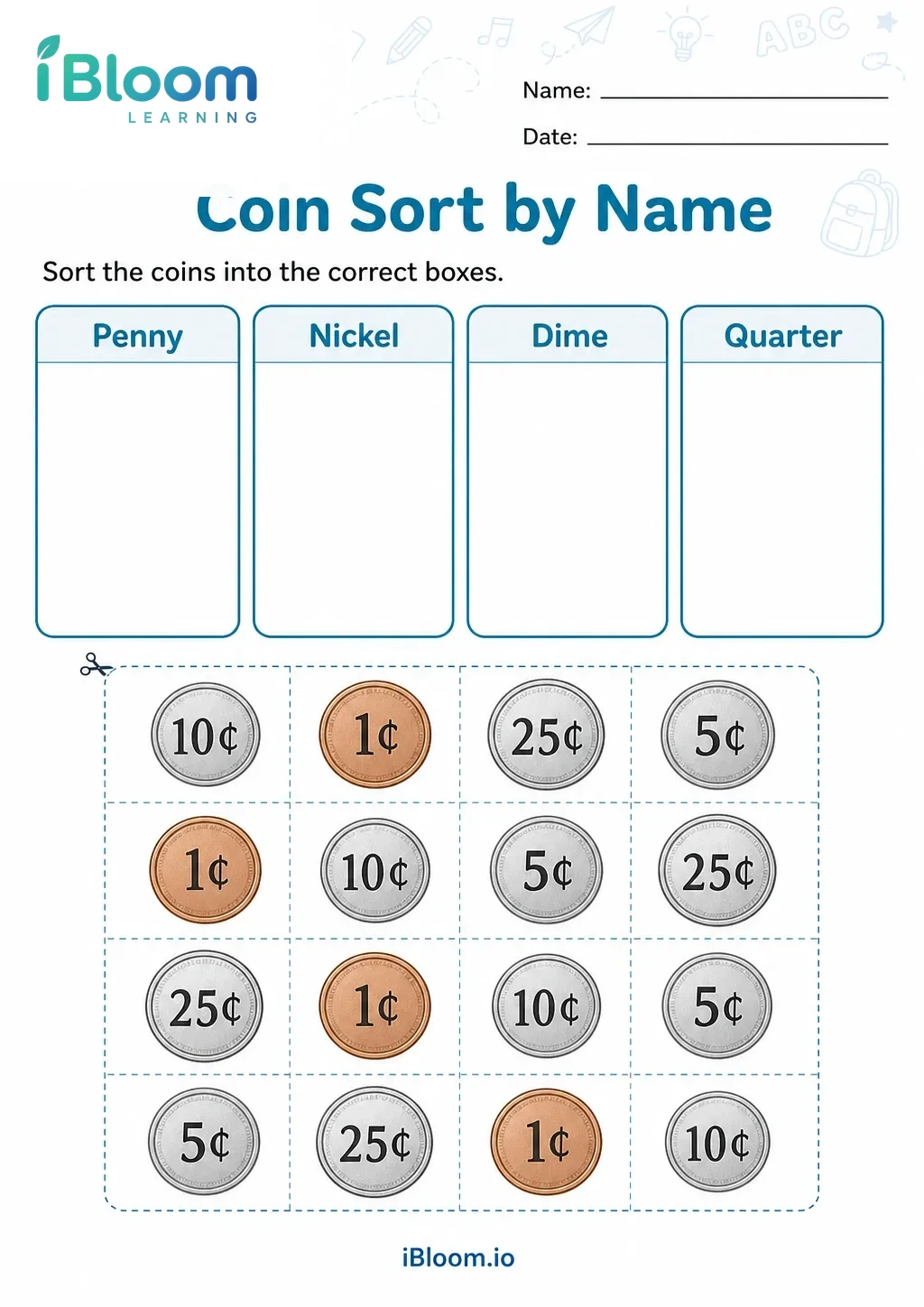
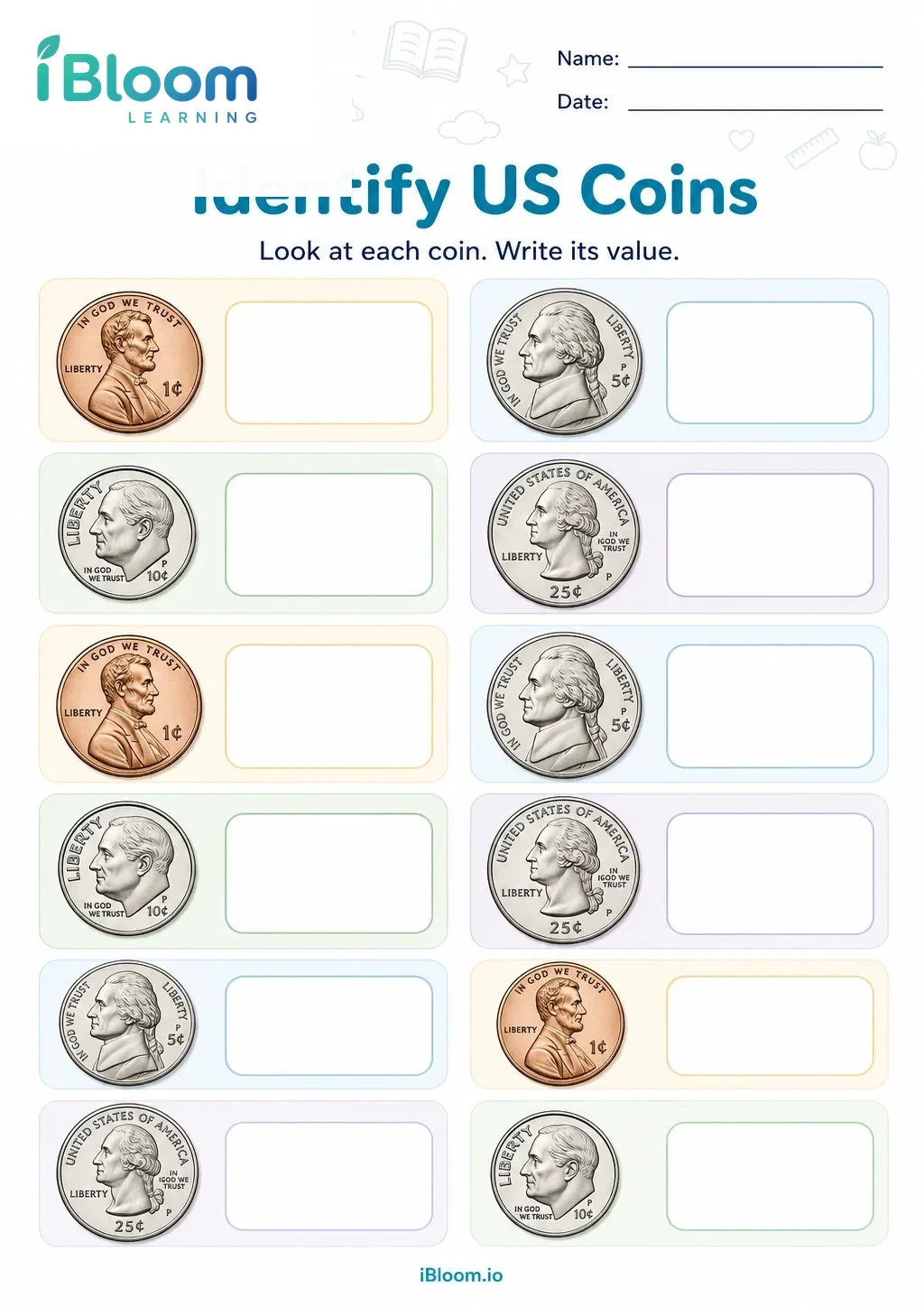
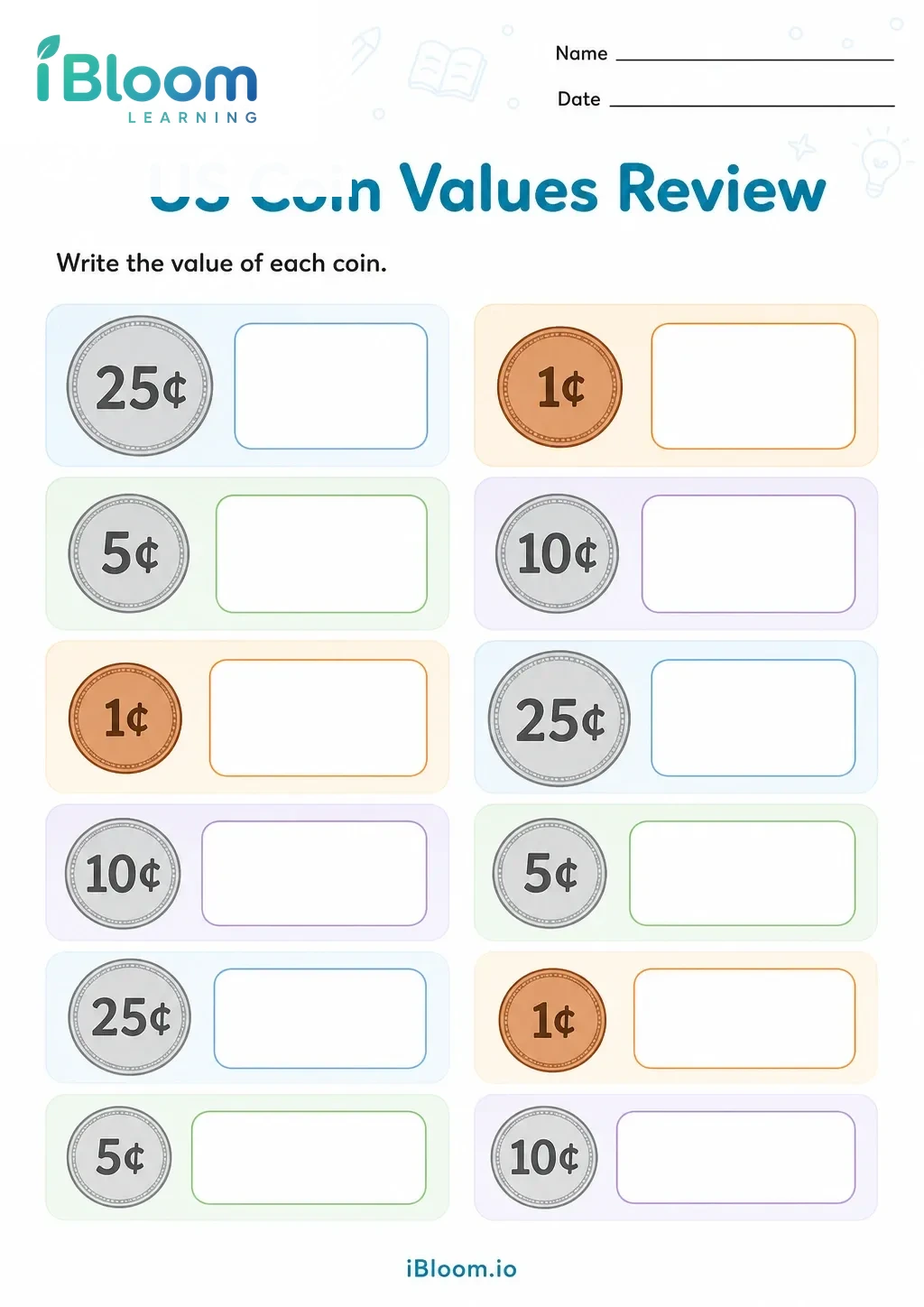
A penny is 1 cent, a nickel is 5 cents, a dime is 10 cents, and a quarter is 25 cents. In question 1, identify the pictured coin worth 25 cents: the quarter.
- 1Penny = 1¢
- 2Nickel = 5¢
- 3Dime = 10¢
- 4Quarter = 25¢
How do you sort coins by value?
Compare the number of cents each coin represents. Put 1 cent before 5 cents, then 10 cents, then 25 cents. This order helps children compare values even though coin size and value do not always match.
How do you find the value of a coin group?
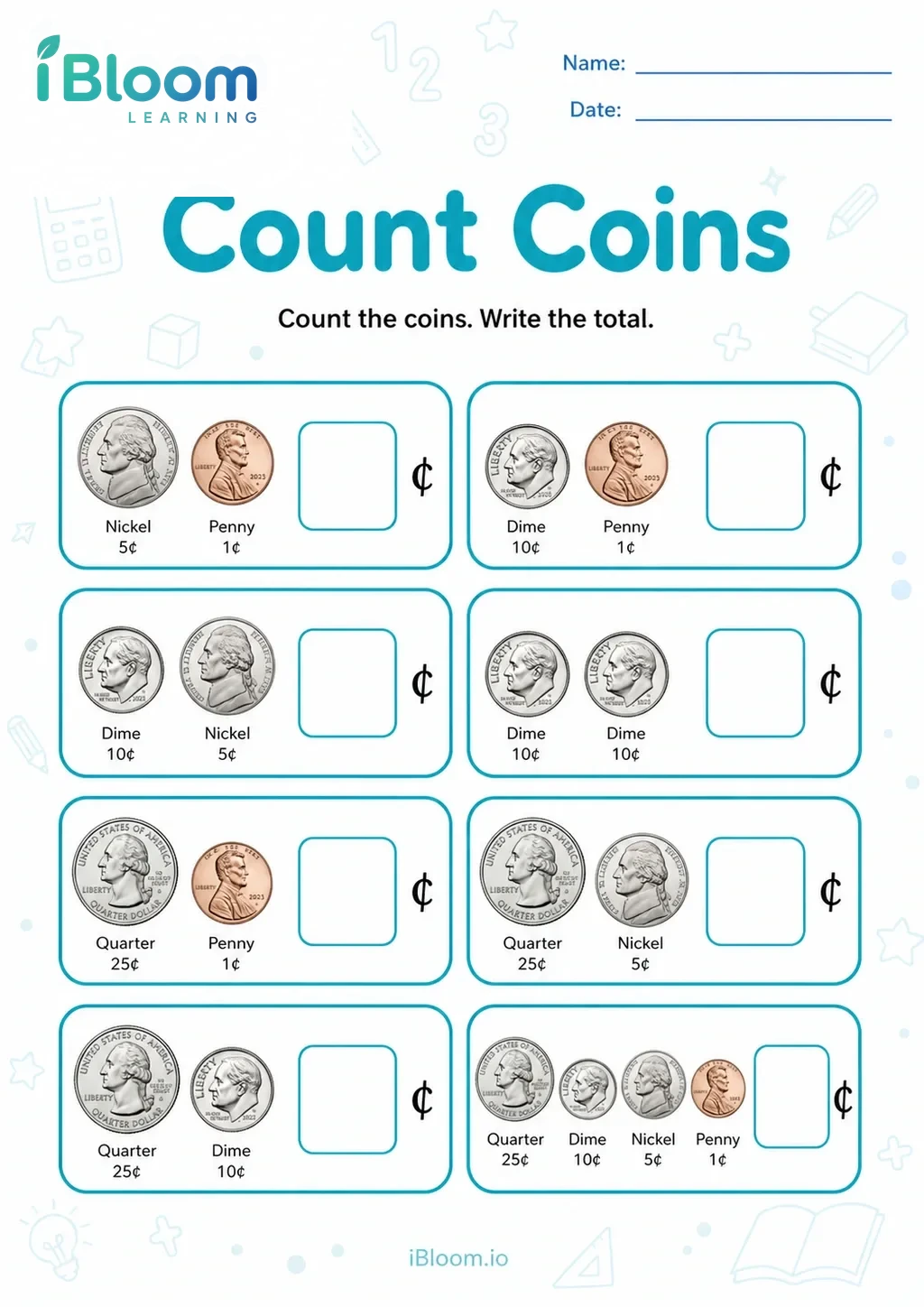
Name each coin, then add its value. A quarter and a dime make 25 + 10 = 35 cents. Keep the unit cents in the answer so the amount is clear.
How to use this worksheet
- 1Say each coin name and value before solving.
- 2For sorting, compare cents from smallest to largest.
- 3For a group, start with the largest value and count on.
- 4Write cents with each total.
- 5Use the key to check every value and comparison.
Common mistakes and quick fixes
The mistake
Assume a larger-looking coin is always worth more.
The fix
Use the coin name and its value rather than its diameter.
The mistake
Count every coin as one cent.
The fix
Say each coin’s value aloud before adding.
The mistake
Leave off a coin in a group.
The fix
Point to each coin once as you count its value.
Common Core alignment
This worksheet gives children focused practice with the listed skill.
Add values of coins to solve simple money questions.
On this sheet: Several questions add coin values and compare their totals.
Show the official wordingHide the official wording
Solve word problems involving dollar bills, quarters, dimes, nickels, and pennies, using $ and ¢ symbols appropriately. Example: If you have 2 dimes and 3 pennies, how many cents do you have?
What to practice next
Make more practice
Further reading
Questions parents and teachers ask
What does this coin worksheet practice?
The 14 questions first name coin values and order coins from least to greatest, then add and compare small groups of pennies, nickels, dimes, and quarters. A pictured set shows all four coin types. Invite the learner to say which detail, number, or clue in the prompt helped them choose, then check the result together with the key.
What is the least-to-greatest order of US coins by value?
The penny is worth 1 cent, the nickel 5 cents, the dime 10 cents, and the quarter 25 cents. Question 5 asks learners to order three of those coins by value. Invite the learner to say which detail, number, or clue in the prompt helped them choose, then check the result together with the key.
Is an answer key included?
Yes. A separate answer key follows the worksheet order and lists each coin name, comparison, or total. Check that each coin was counted by its value, rather than as one cent. Invite the learner to say which detail, number, or clue in the prompt helped them choose, then check the result together with the key.
How long does the coin practice take?
About 15 minutes is a reasonable estimate for these 14 multiple-choice questions. Take time to name each coin and count a group aloud before selecting an answer. Invite the learner to say which detail, number, or clue in the prompt helped them choose, then check the result together with the key.
What is an example of adding coin values?
Question 8 asks about two pennies and a nickel. Add 1 + 1 + 5 to get 7 cents. Invite the learner to say which detail, number, or clue in the prompt helped them choose, then check the result together with the key.
Why does the worksheet show a picture of several coins?
The pictured set includes a penny, nickel, dime, and quarter so learners can connect the coin names in the questions with familiar US coin designs. The remaining prompts focus on value and ordering. Invite the learner to say which detail, number, or clue in the prompt helped them choose, then check the result together with the key.