
About this worksheet
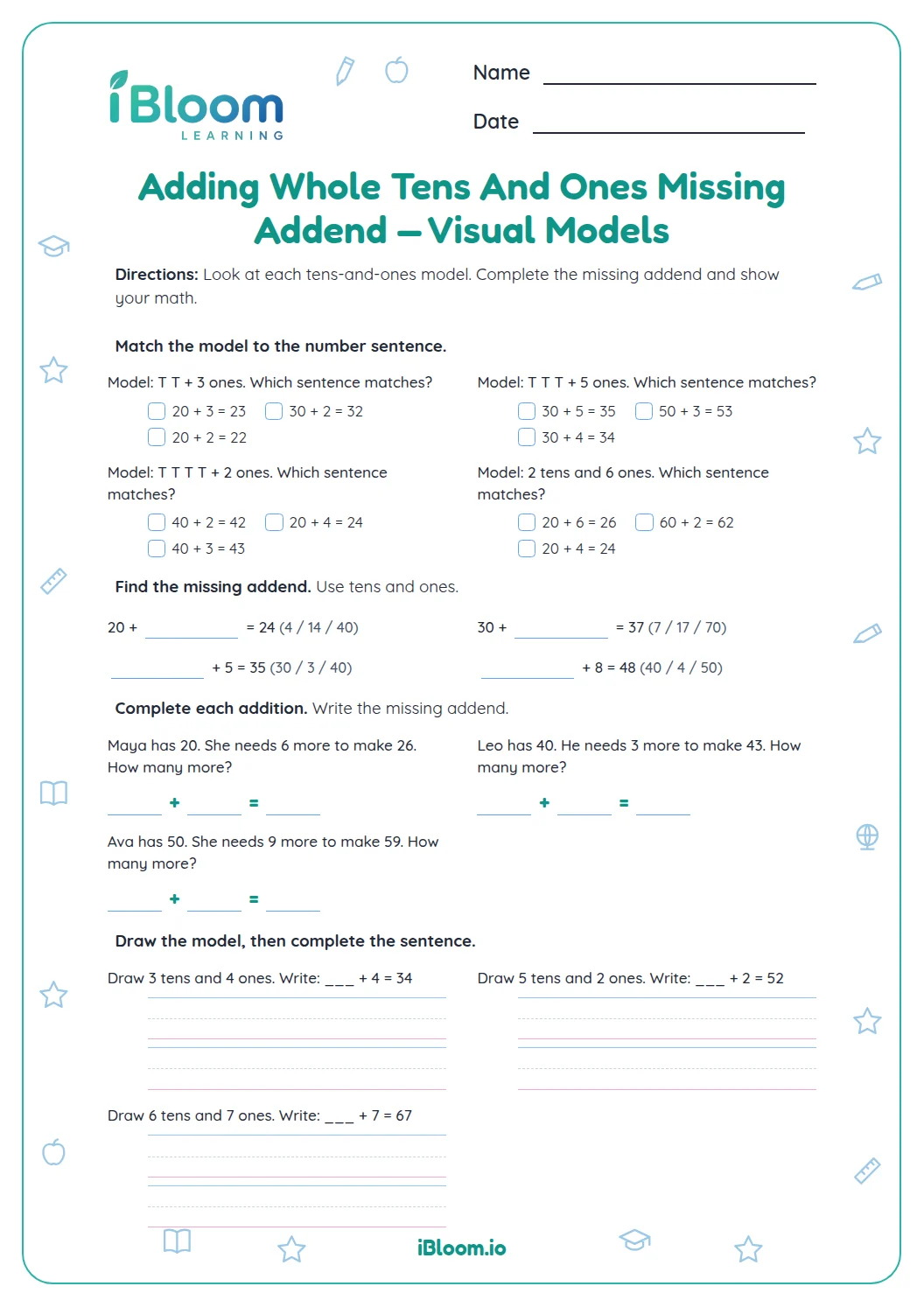
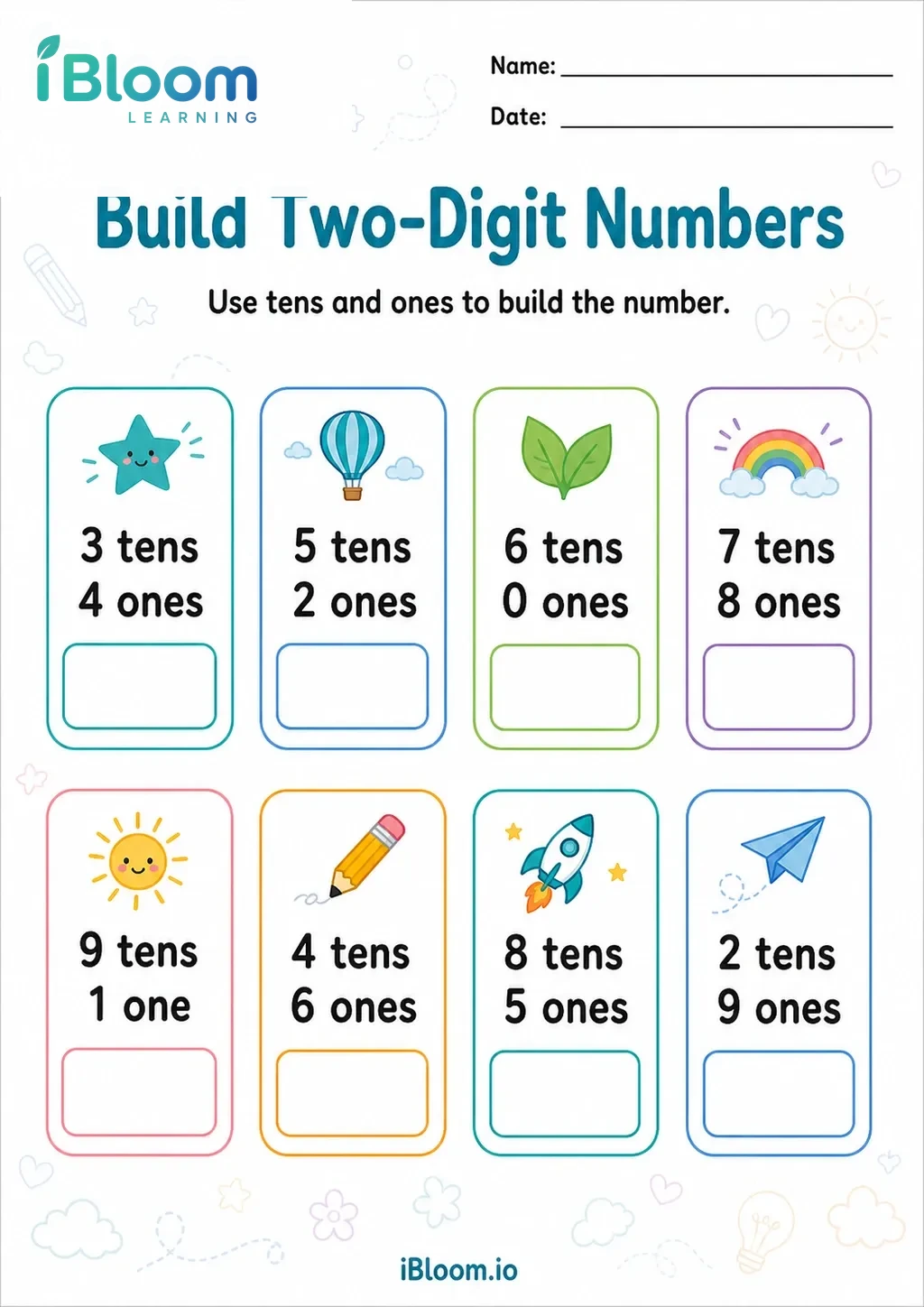
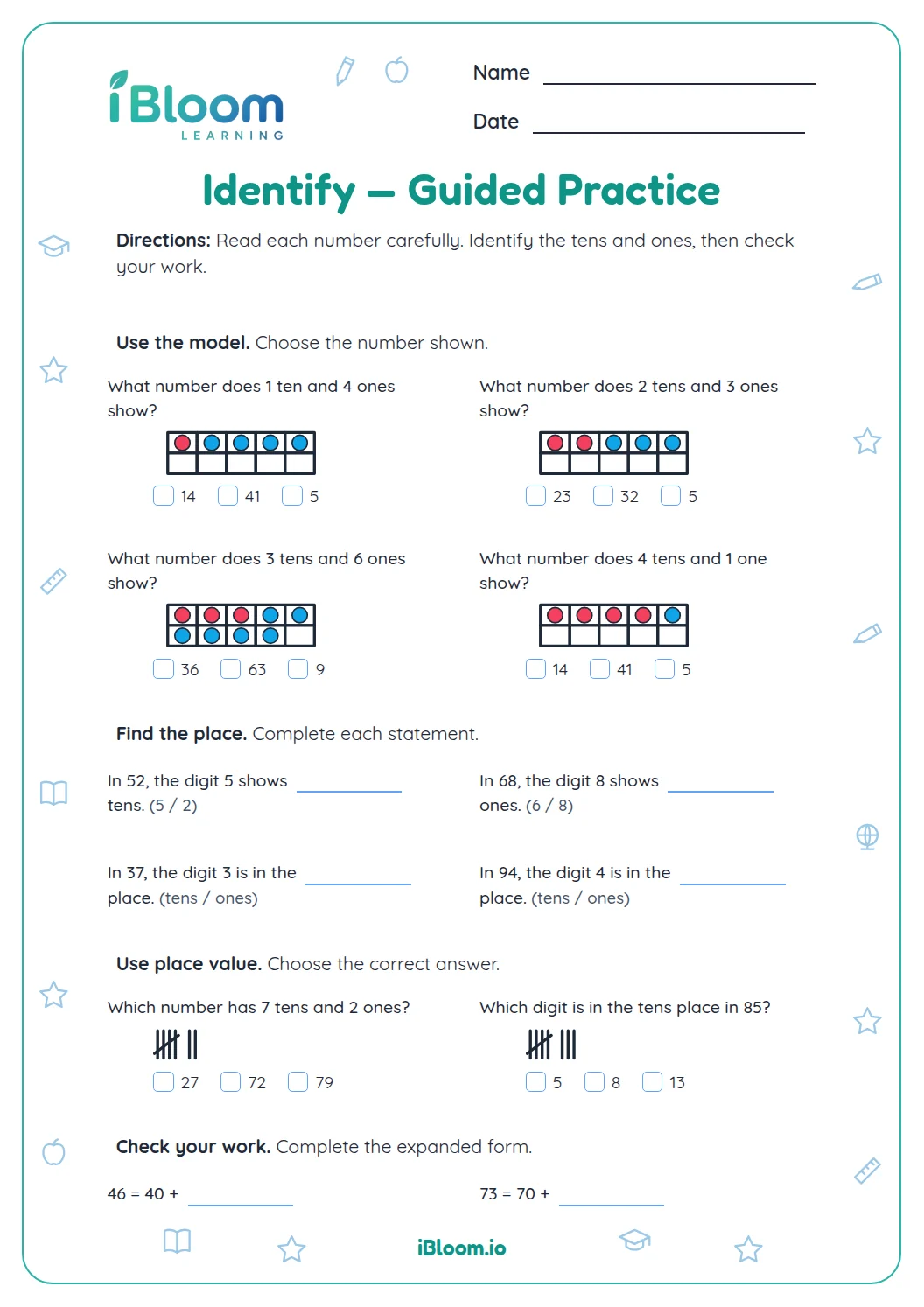
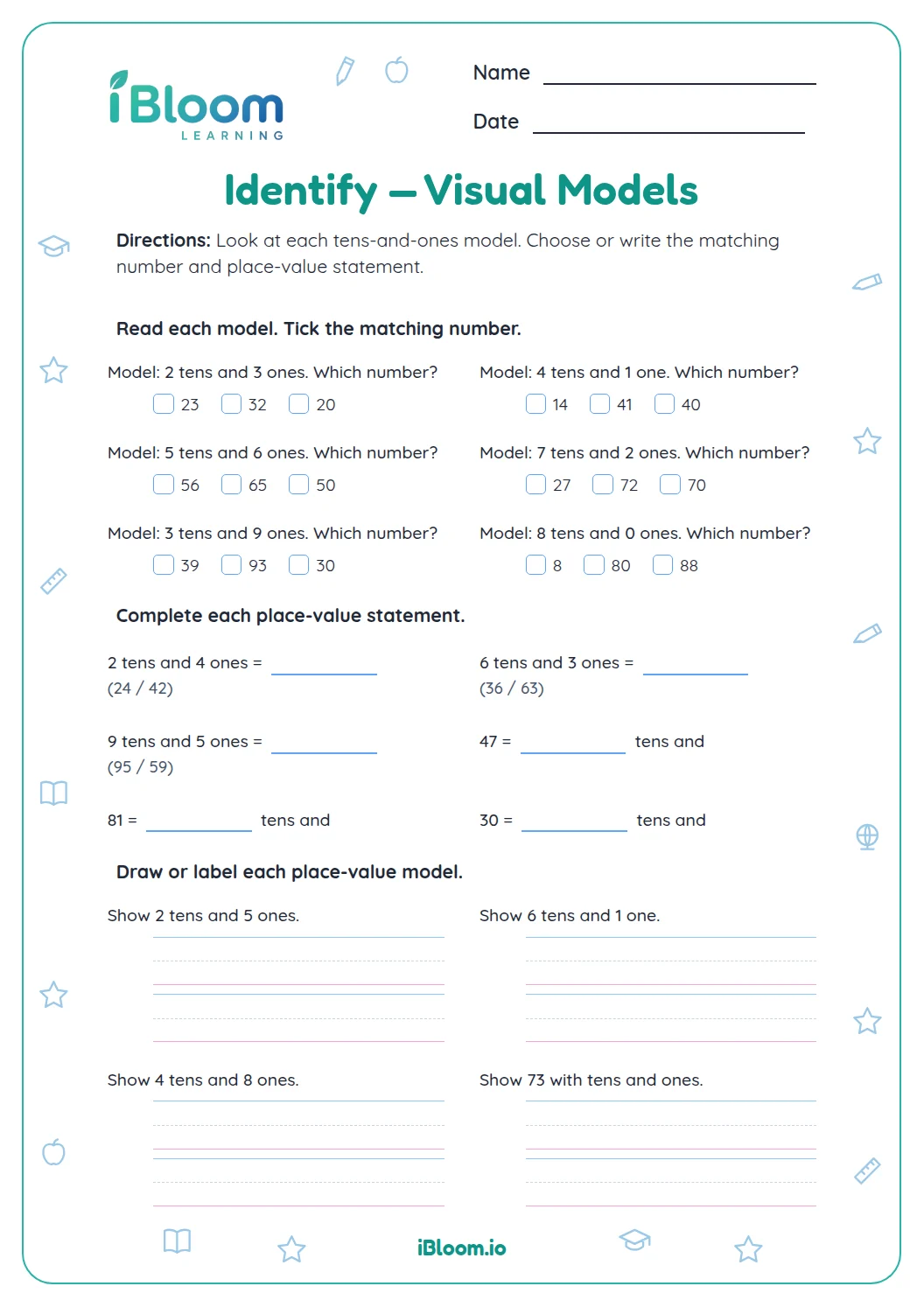
This Grade 1 place-value worksheet uses base-ten block drawings to show tens and ones. Students count the rods and cubes in 12 models and write each quantity as one two-digit number, including examples with zero ones. The visual practice makes the value of each digit concrete before students move to written numbers. It aligns with CCSS 1.NBT.B.2, understanding that a two-digit number represents tens and ones. A separate answer key lists each number.
Aligned to 1.NBT.B.2
What do the blocks represent?
Each long rod represents one ten, and each small cube represents one one. Students count each kind separately before combining the amounts into a two-digit number.
How do tens and ones become a number?
The tens count gives the digit in the tens place; the ones count gives the digit in the ones place. A model with 6 rods and 2 cubes represents 62, while 6 rods and no cubes represents 60.
- 16 tens rods and 2 ones cubes
- 2Tens digit: 6; ones digit: 2
- 3Write 62.
What if a model has no ones cubes?
A zero in the ones place shows there are no extra ones. It keeps the tens in the correct place: 8 tens and zero ones is 80.
Count each model carefully
- 1Count the long rods and record how many tens there are.
- 2Count the small cubes and record the ones.
- 3Write the tens count in the tens place.
- 4Write the ones count in the ones place, including zero when there are no cubes.
- 5Check that the number matches the model.
Common place-value slips
The mistake
Writing the tens count and ones count as separate digits without considering place.
The fix
Remember that each rod is worth ten, so 6 rods means 60 before adding any ones.
The mistake
Leaving off the zero when a model has no ones.
The fix
Write zero in the ones place: 8 tens and 0 ones is 80.
The mistake
Counting every small unit in a rod as a separate cube.
The fix
Treat one full rod as one ten; do not count its drawn segments as ones.
Common Core alignment
The base-ten models show how tens and ones compose two-digit numbers.
Understand a two-digit number as tens and ones.
On this sheet: Students read tens rods and ones cubes and record the matching two-digit number.
Show the official wordingHide the official wording
Understand that the two digits of a two-digit number represent amounts of tens and ones. Understand the following as special cases:
What to practice next
Make more practice
Further reading
Questions parents and teachers ask
What do the rods and cubes mean?
A long base-ten rod represents one ten, while each small cube represents one one. Children count the rods for the tens digit and the cubes for the ones digit, then write the two digits together. A quick place-value sketch can make the tens and ones easier to keep track of.
How many models are on the worksheet?
There are 12 visual models. Each one shows a two-digit quantity using tens rods and ones cubes, including some models with no ones cubes. The answer key lists the number represented by each model. A quick place-value sketch can make the tens and ones easier to keep track of.
How do you write a model with zero ones?
Keep a zero in the ones place. For example, eight tens rods and no ones cubes represent 80. The zero shows that there are no extra ones while preserving the tens value. A quick place-value sketch can make the tens and ones easier to keep track of.
Can students write expanded form instead?
The worksheet asks for the number in standard form, meaning one two-digit numeral such as 62. Expanded form would write the value as tens plus ones, such as 60 + 2, so it is a different response. A quick place-value sketch can make the tens and ones easier to keep track of.
What is the answer when there are six tens and two ones?
Six tens rods and two ones cubes make 62. The six is in the tens place and represents 60; the two is in the ones place and represents 2. A quick place-value sketch can make the tens and ones easier to keep track of.