





About this worksheet
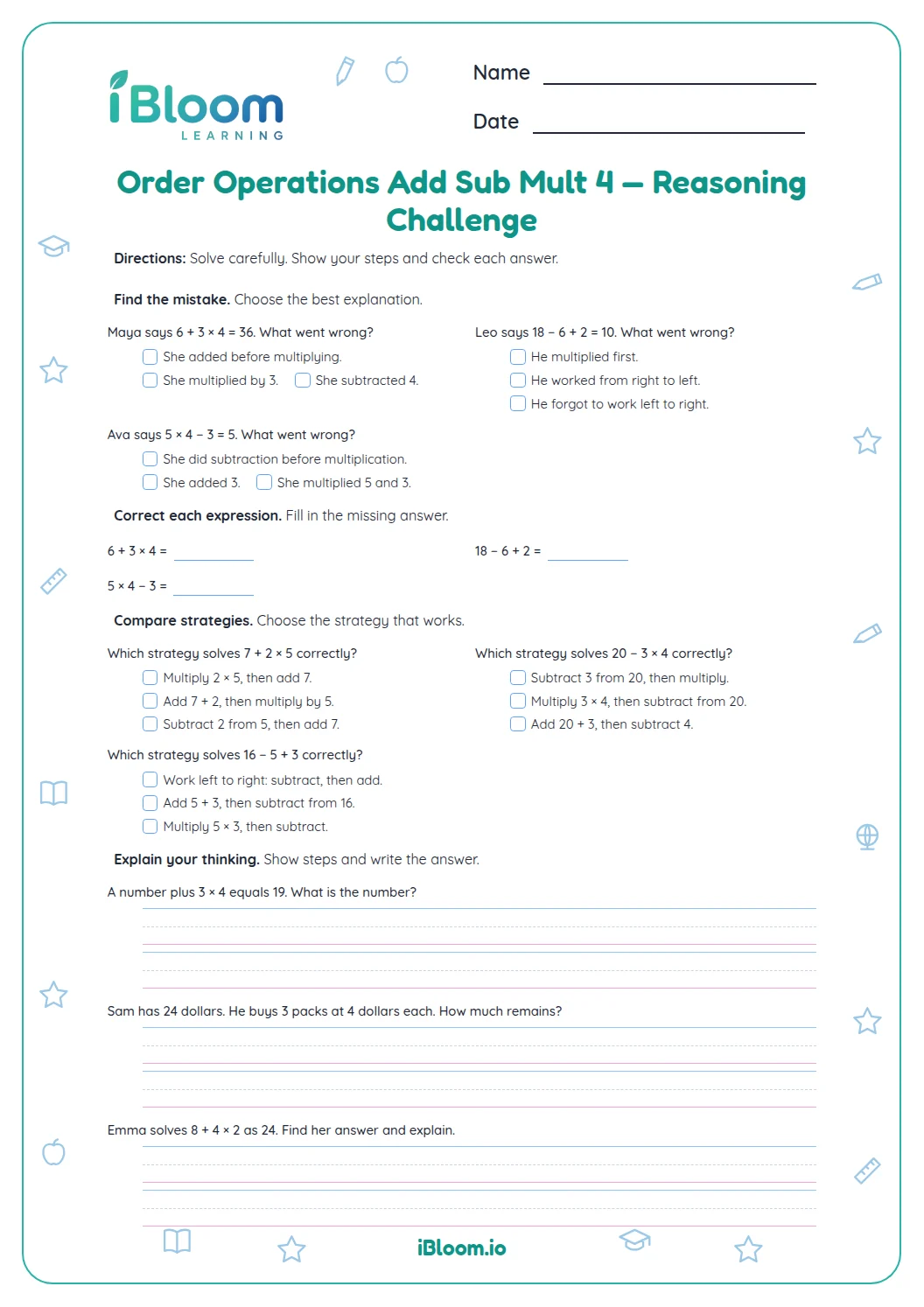
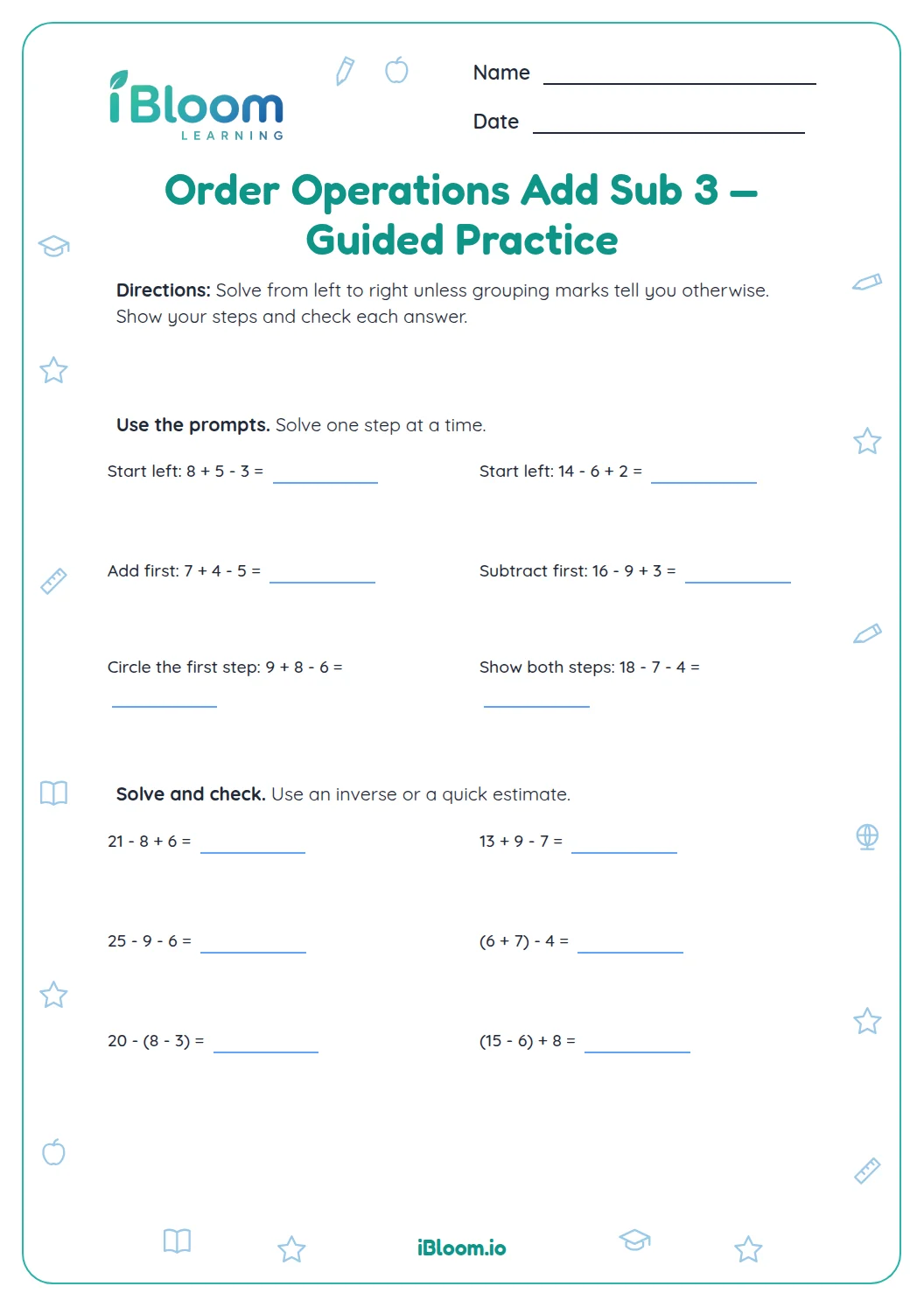
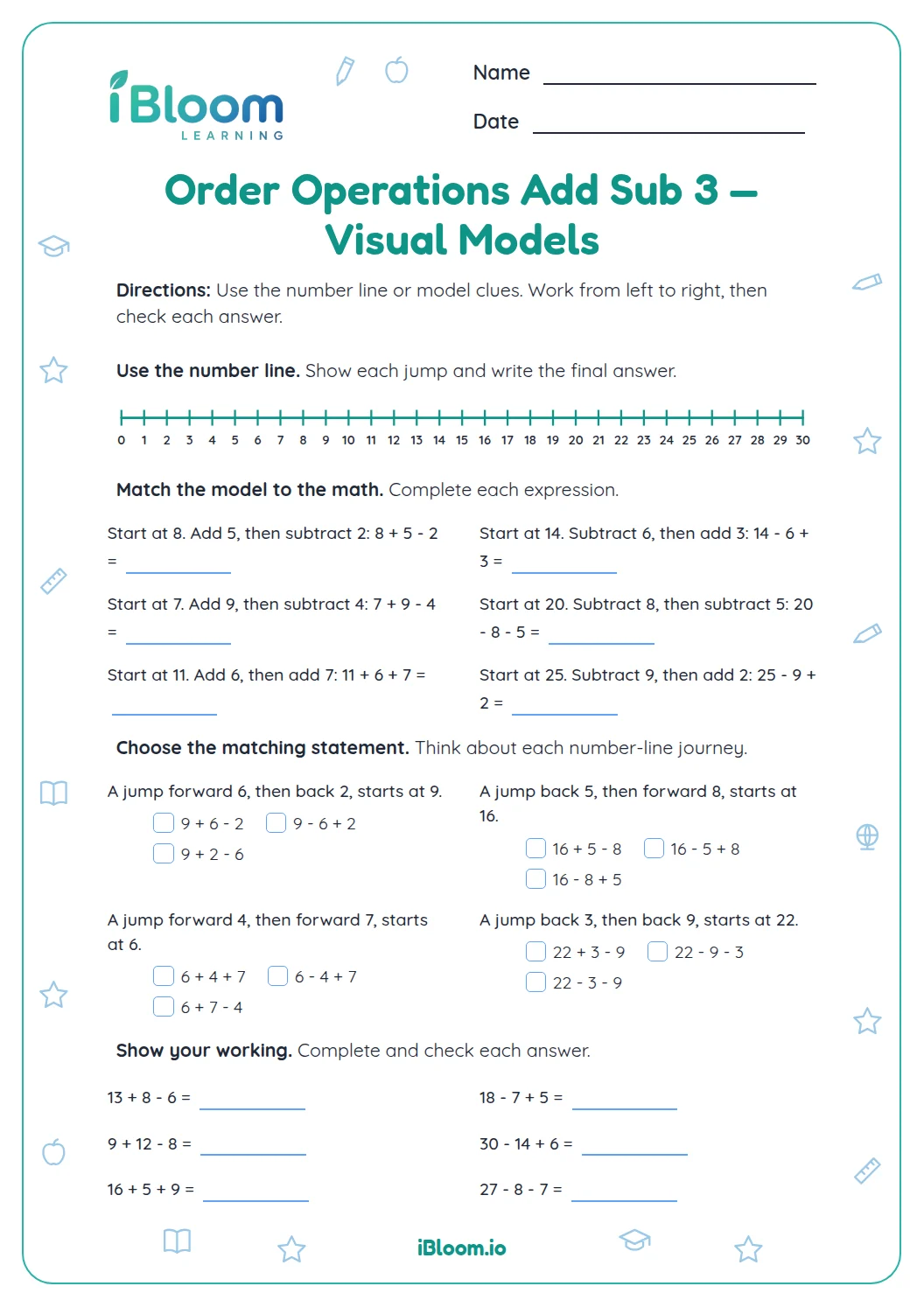
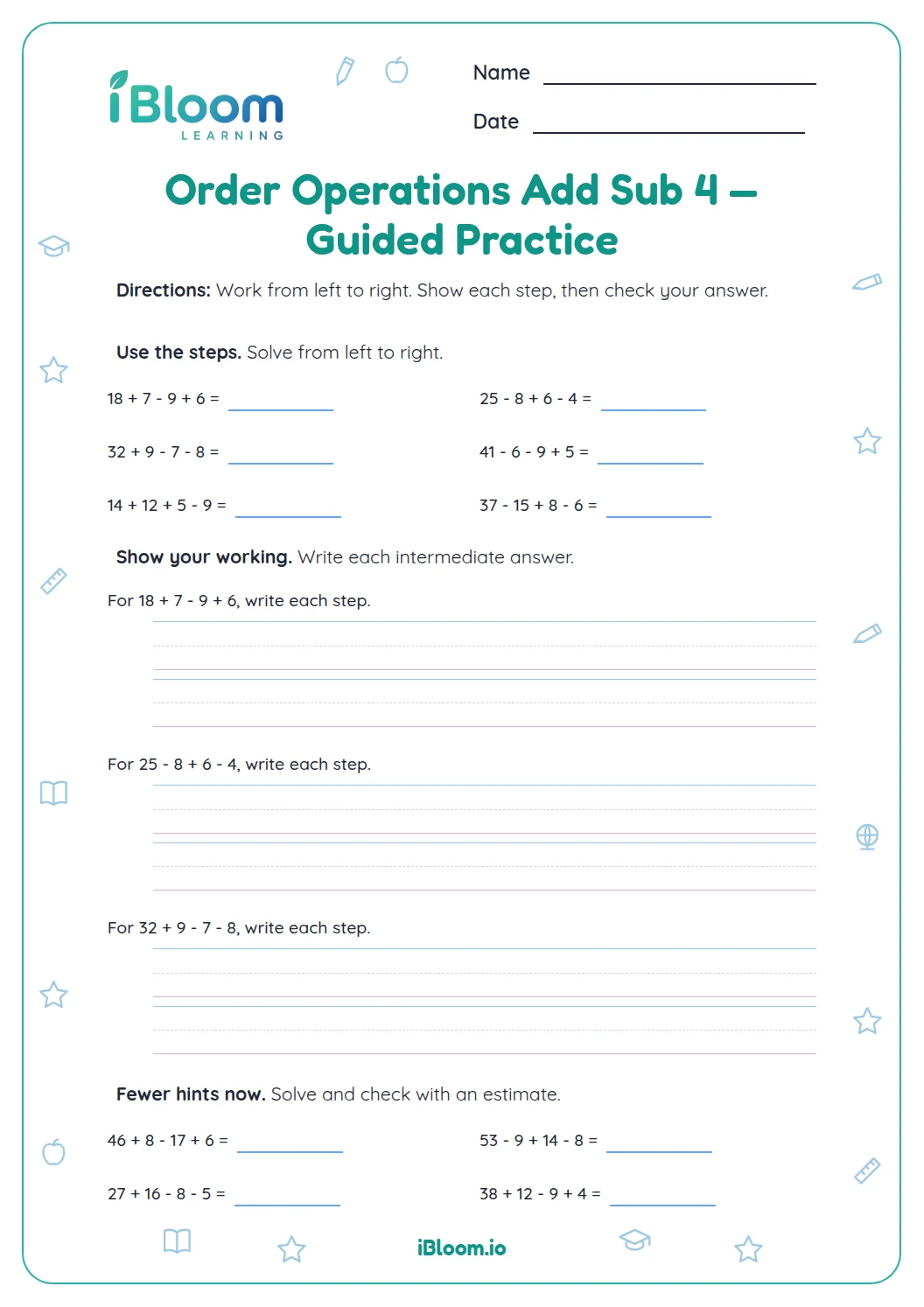
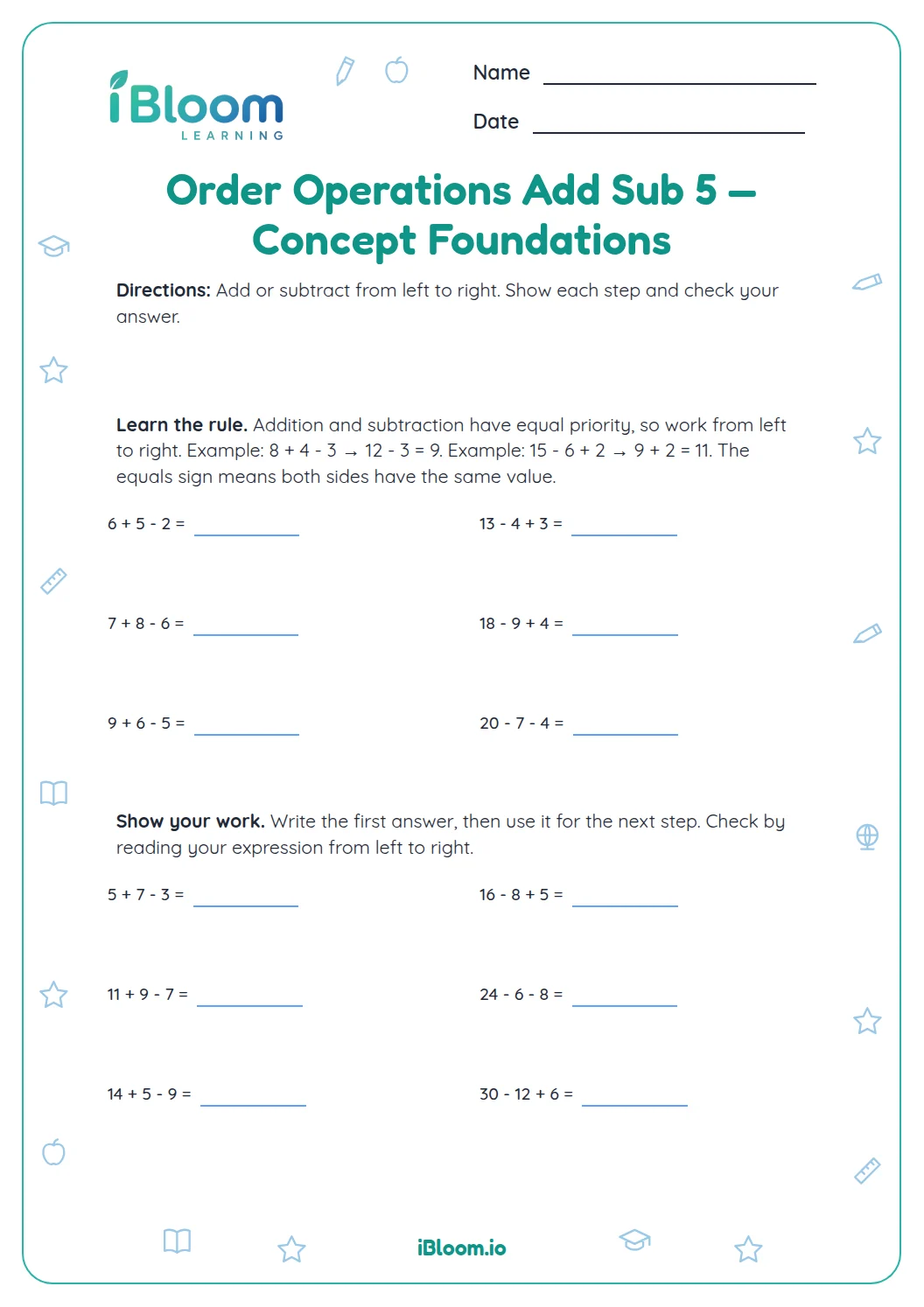
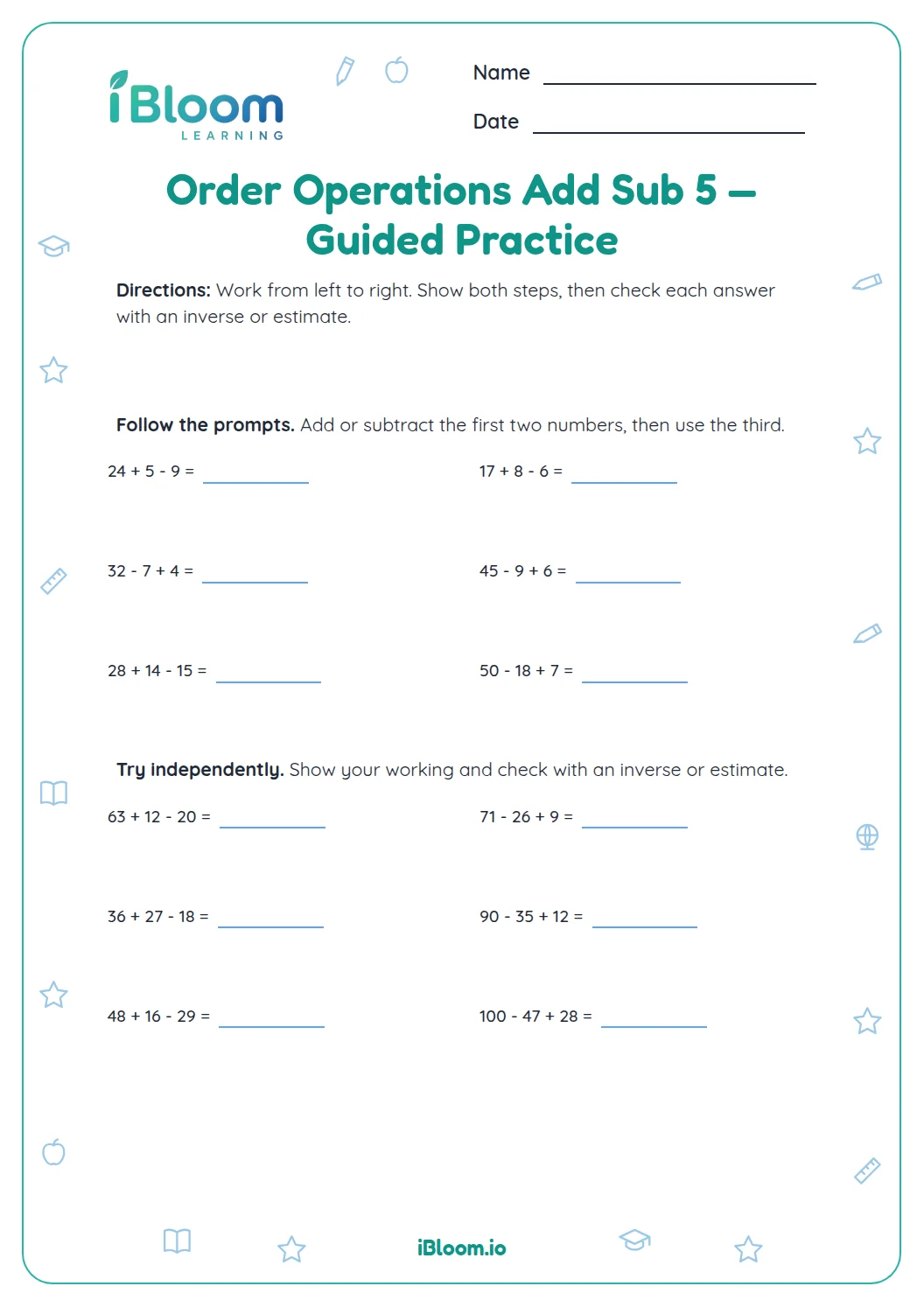
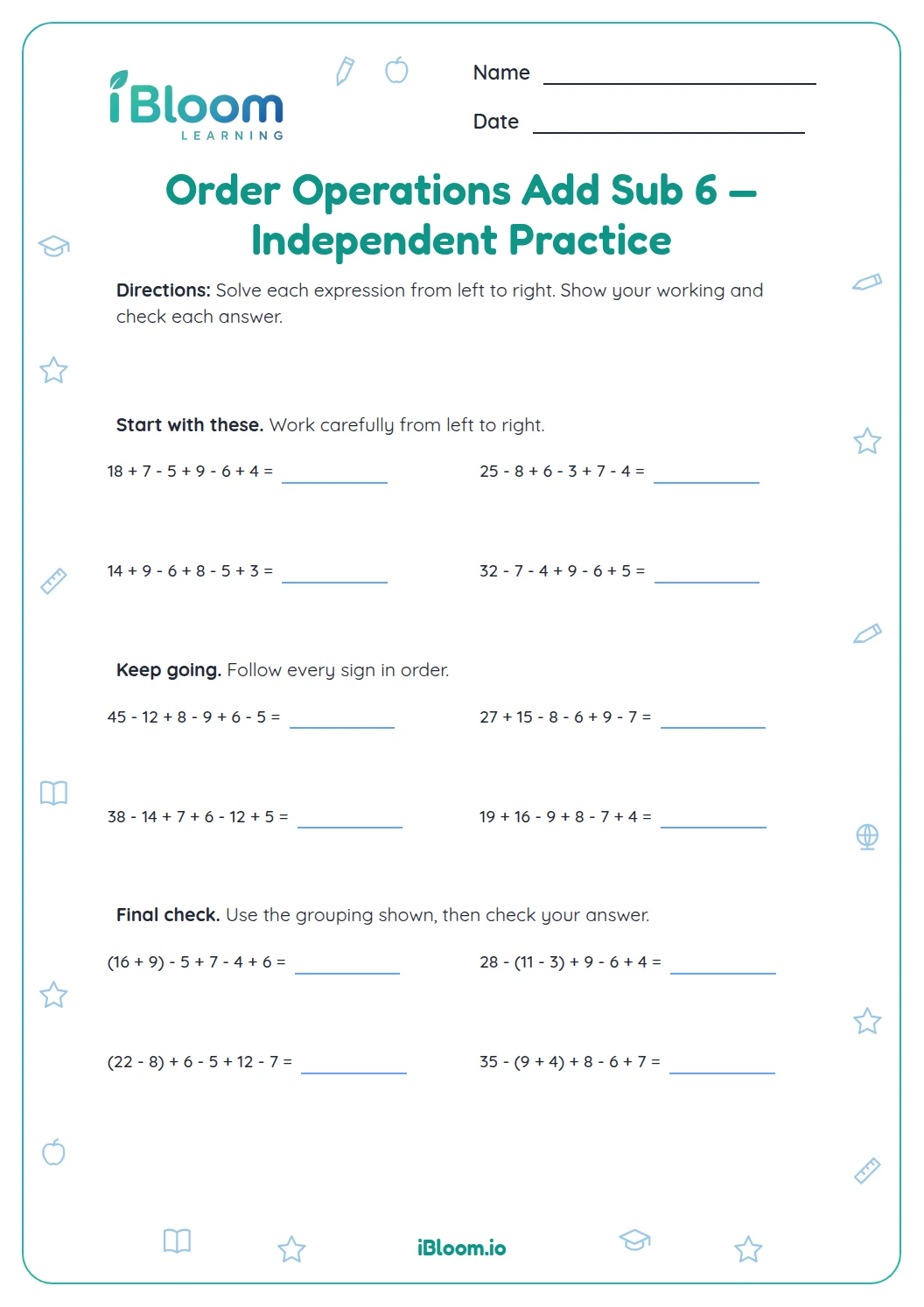
Eight drawn arrays let students count equal rows and columns. Seven more questions combine multiplication with addition or subtraction, so students apply multiplication first. The printable uses three worksheet pages and includes a matching three-page answer key.
Which operation do you do first?
An array shows equal rows and columns. Multiply the rows by the columns to count the total. The later expressions combine multiplication with addition or subtraction; complete multiplication first.
- 1Count the rows and columns in the array.
- 23 rows of 4 counters means 3 × 4.
- 33 × 4 = 12 counters.
How is the practice organized?
Part A starts with direct practice. Part B gives another set of questions, and Part C applies the skill in the final items. Across all three parts, the questions practice arrays and multiplication-first expressions.
What is in the printable?
The student sheet has 15 questions: 8 array models and 7 expressions, arranged in three parts. The answer key follows on 3 pages and lists the result for every item.
How can students check a result?
Recalculate the first required operation, then check the remaining steps in order. For an error question, name the first step that went wrong; changing that step often changes every value that follows.
Common mistakes and quick fixes
The mistake
Adding before multiplying
The fix
Find the multiplication product first.
The mistake
Starting outside parentheses
The fix
Evaluate the grouped calculation before the rest.
The mistake
Changing direction between addition and subtraction
The fix
After priority operations, work left to right.
What to practice next
Make more practice
Further reading
Questions parents and teachers ask
What does this worksheet practice?
It practices arrays and multiplication-first expressions. Students work through 15 questions in three parts, using the instructions printed above each group. The questions give the values needed for each calculation, and the separate answer key lets an adult check results after students have tried the page.
How many questions and pages are included?
There are 15 questions. The student worksheet uses 3 pages, and its separate answer key uses the same number of pages. Questions are grouped into three parts so students can move from the first set to the final application without switching to a different skill.
Is an answer key included?
Yes. A separate answer key follows the student pages and shows an answer for each of the 15 questions. Students can first solve the problems on their own, then compare their results with the key and revisit any calculation that differs.
What should students do when they get stuck?
Have the student copy the expression and identify which operation must happen first. Complete that operation, rewrite the remaining expression, and continue one step at a time. For a story, underline the quantities and write a matching expression before calculating its value.
Can this worksheet be used for independent practice?
Yes. The directions appear on the sheet, and the questions include the numbers needed to solve them. Students who are still learning the rule may benefit from an adult modeling one question first; the key can then support a check after the student finishes each part.