






About this worksheet
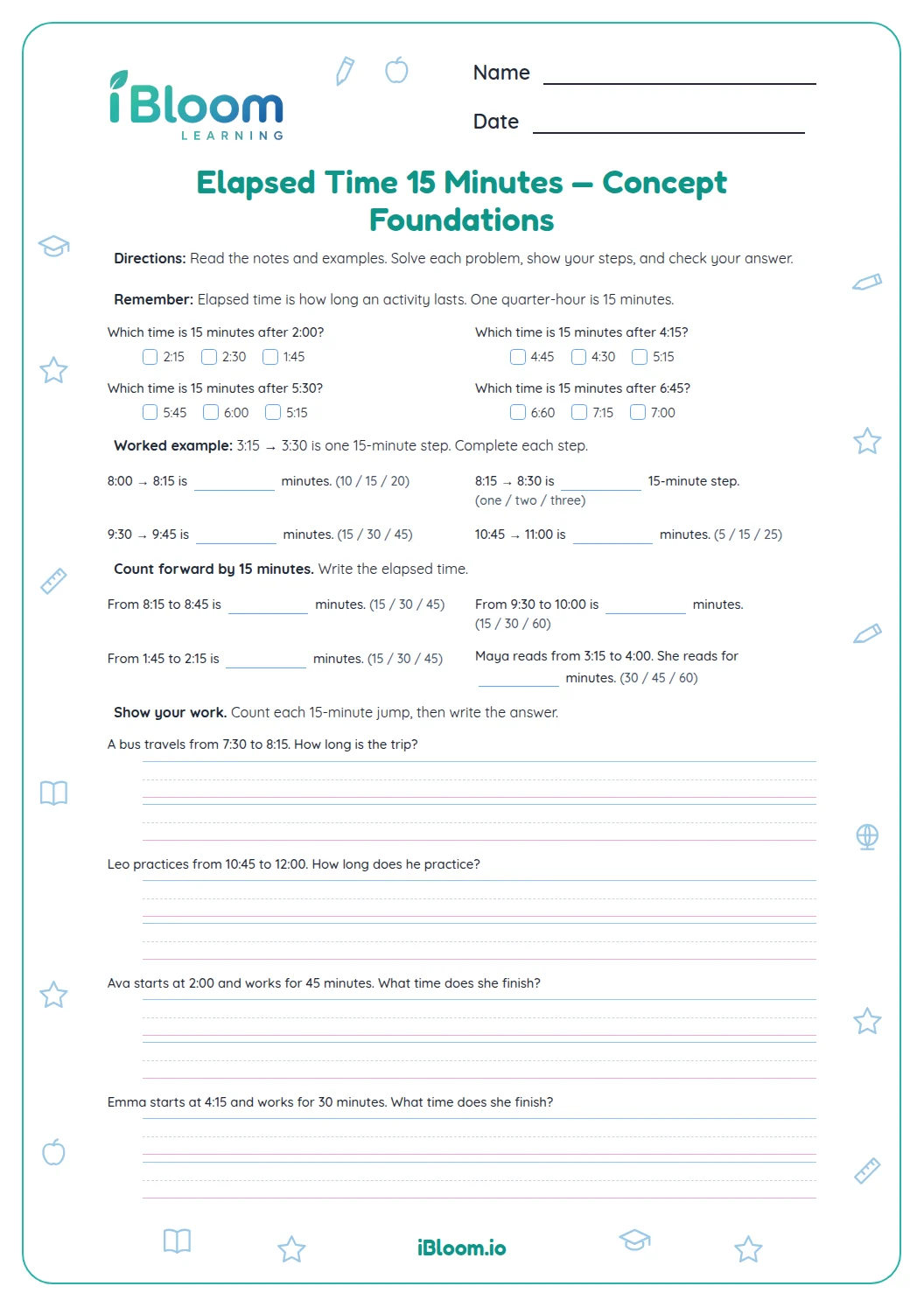
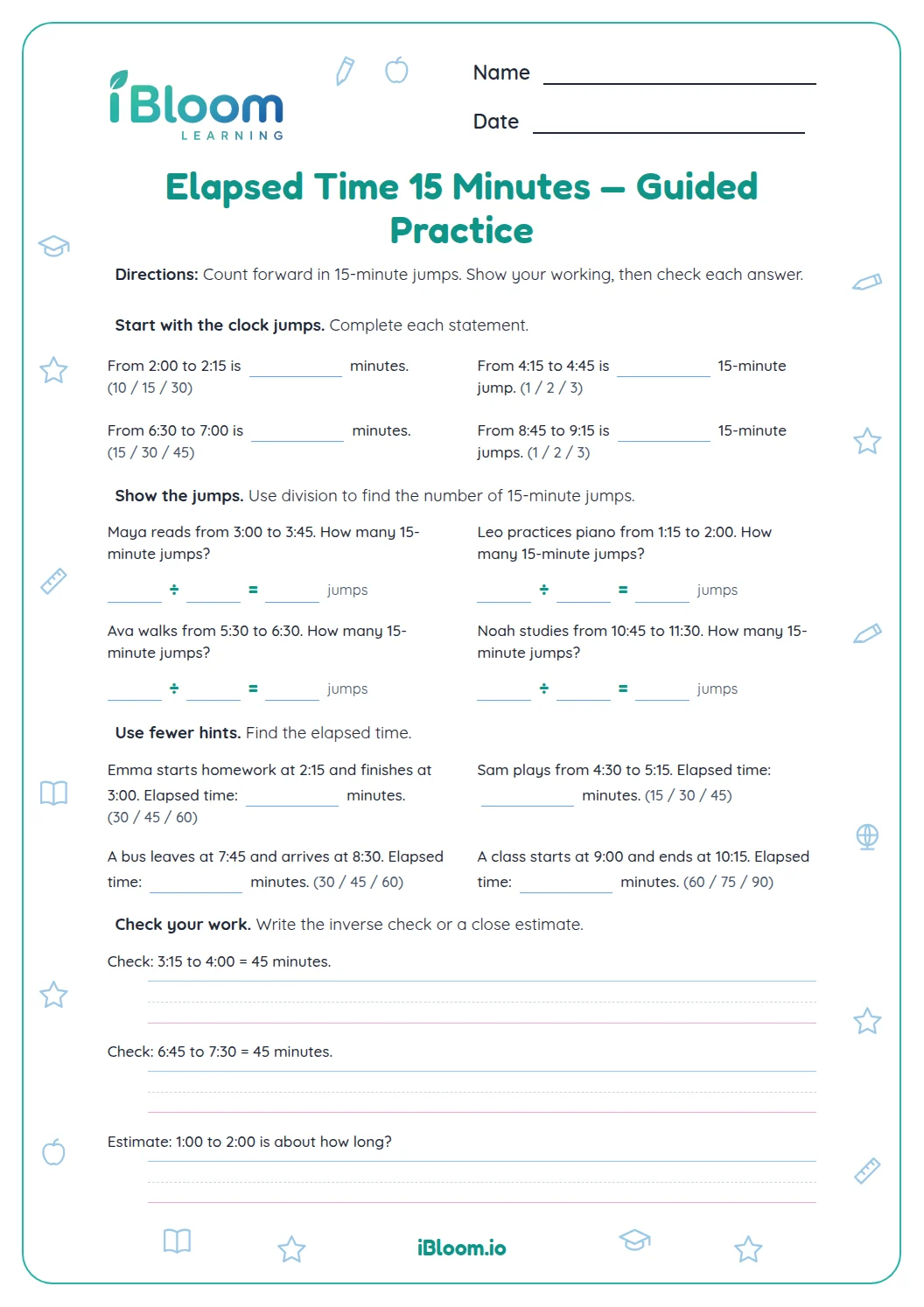
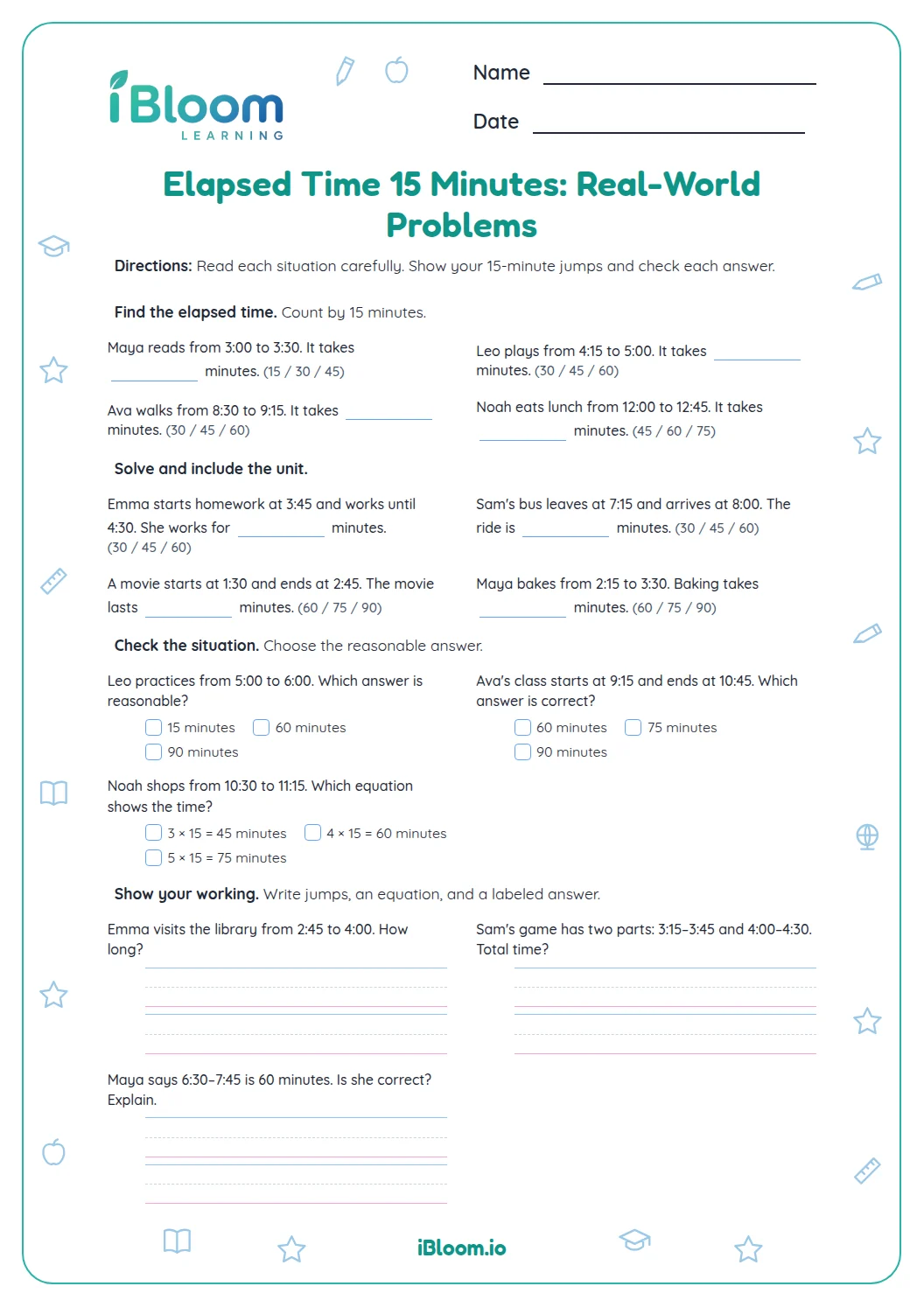
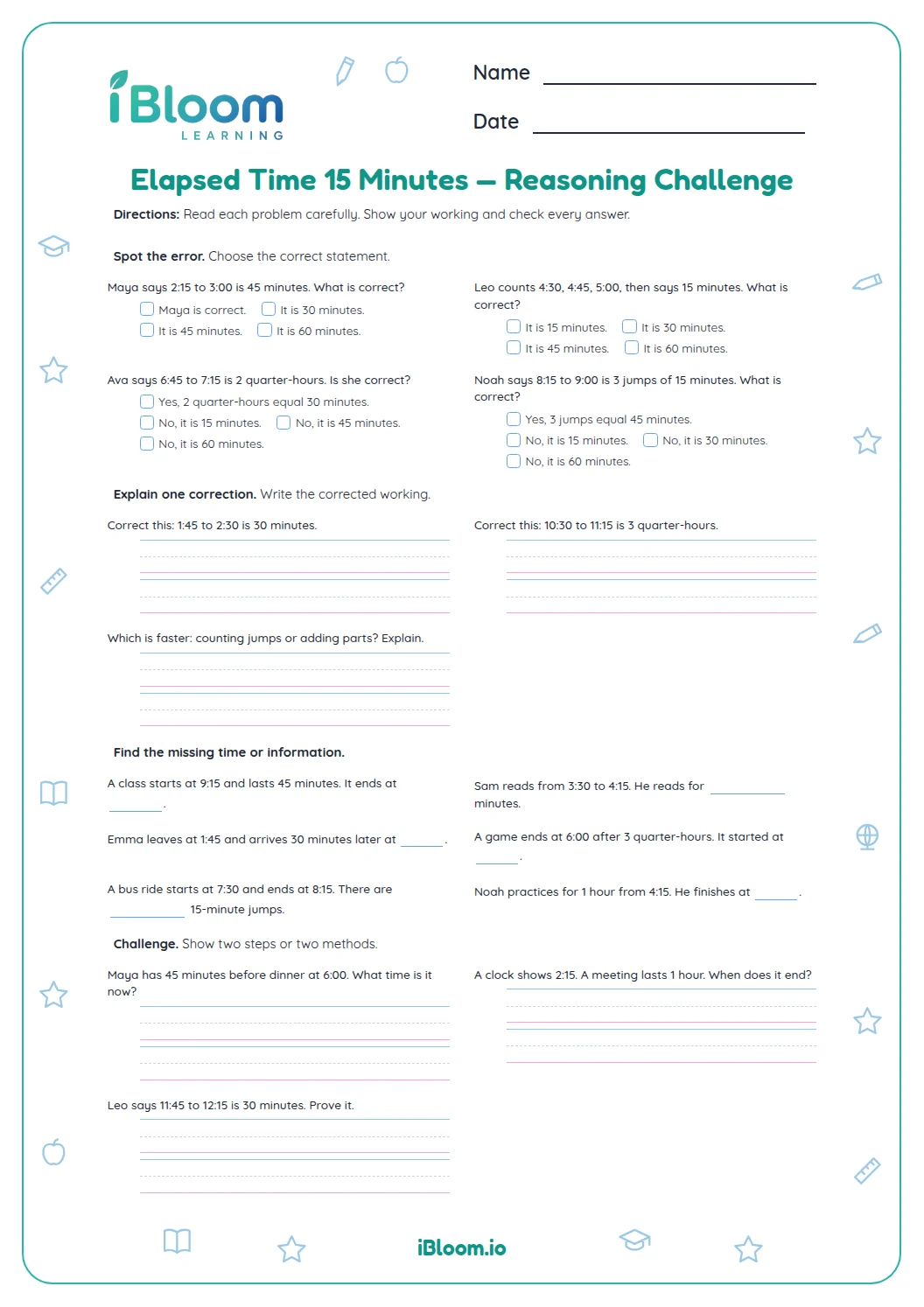
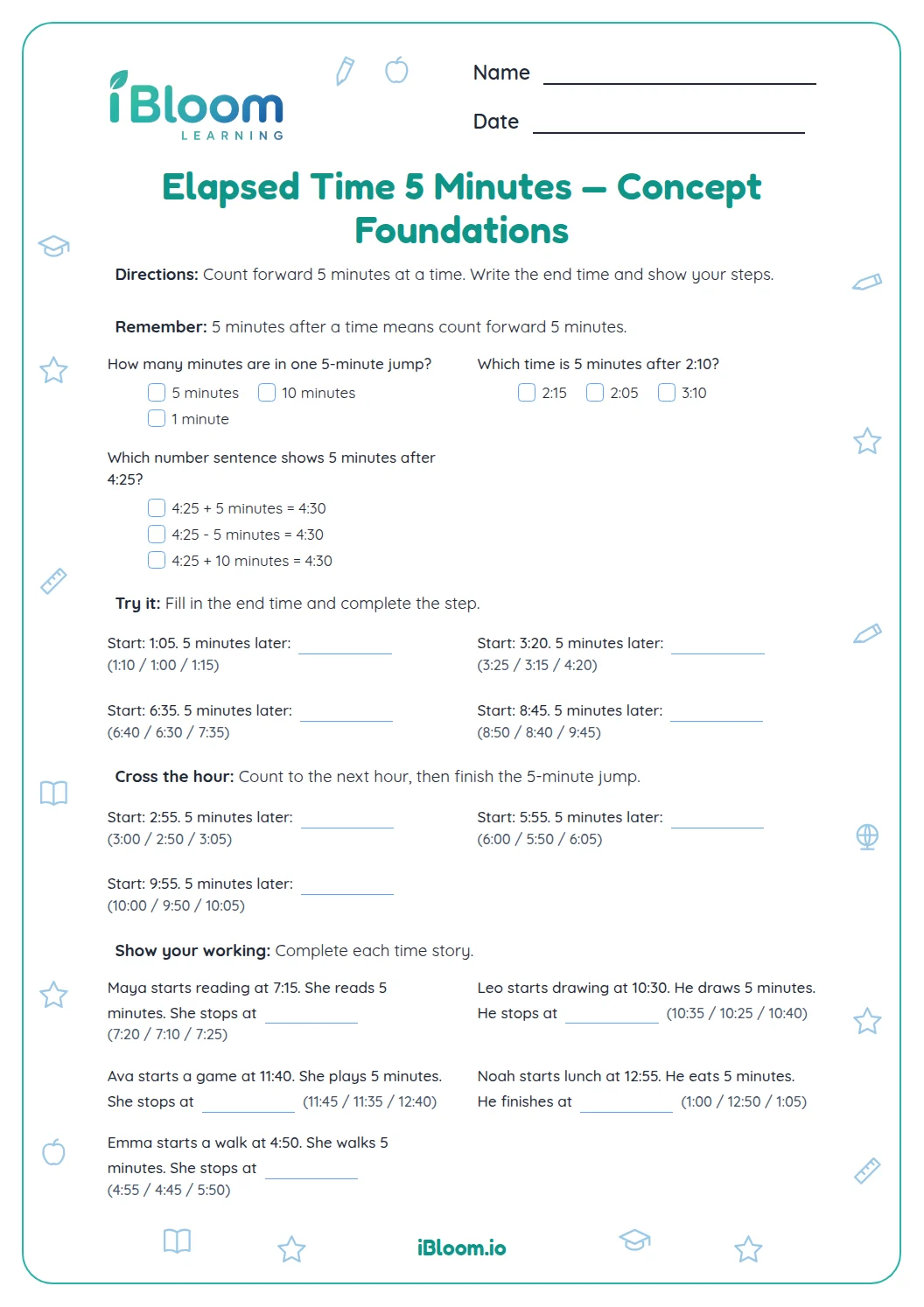
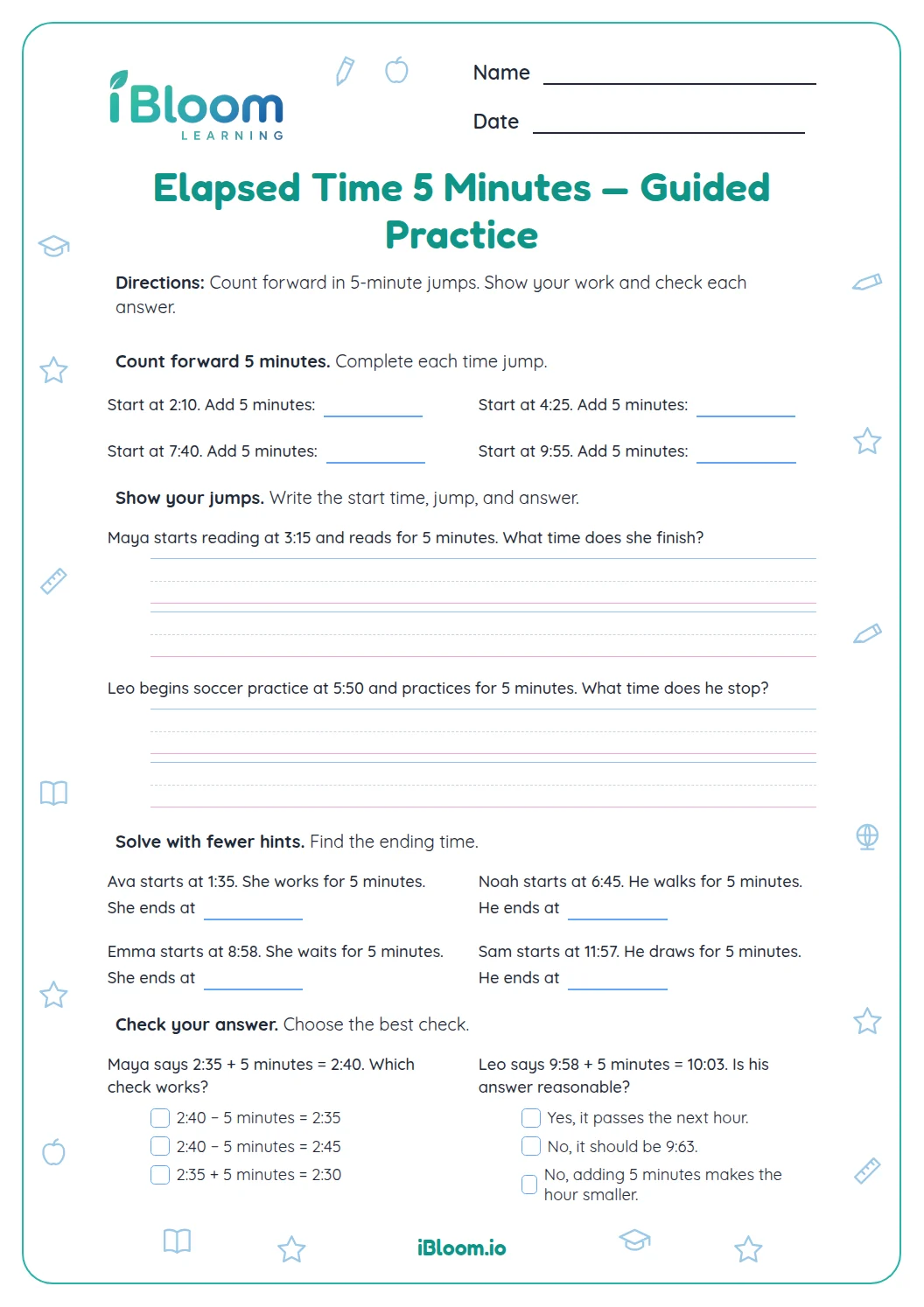
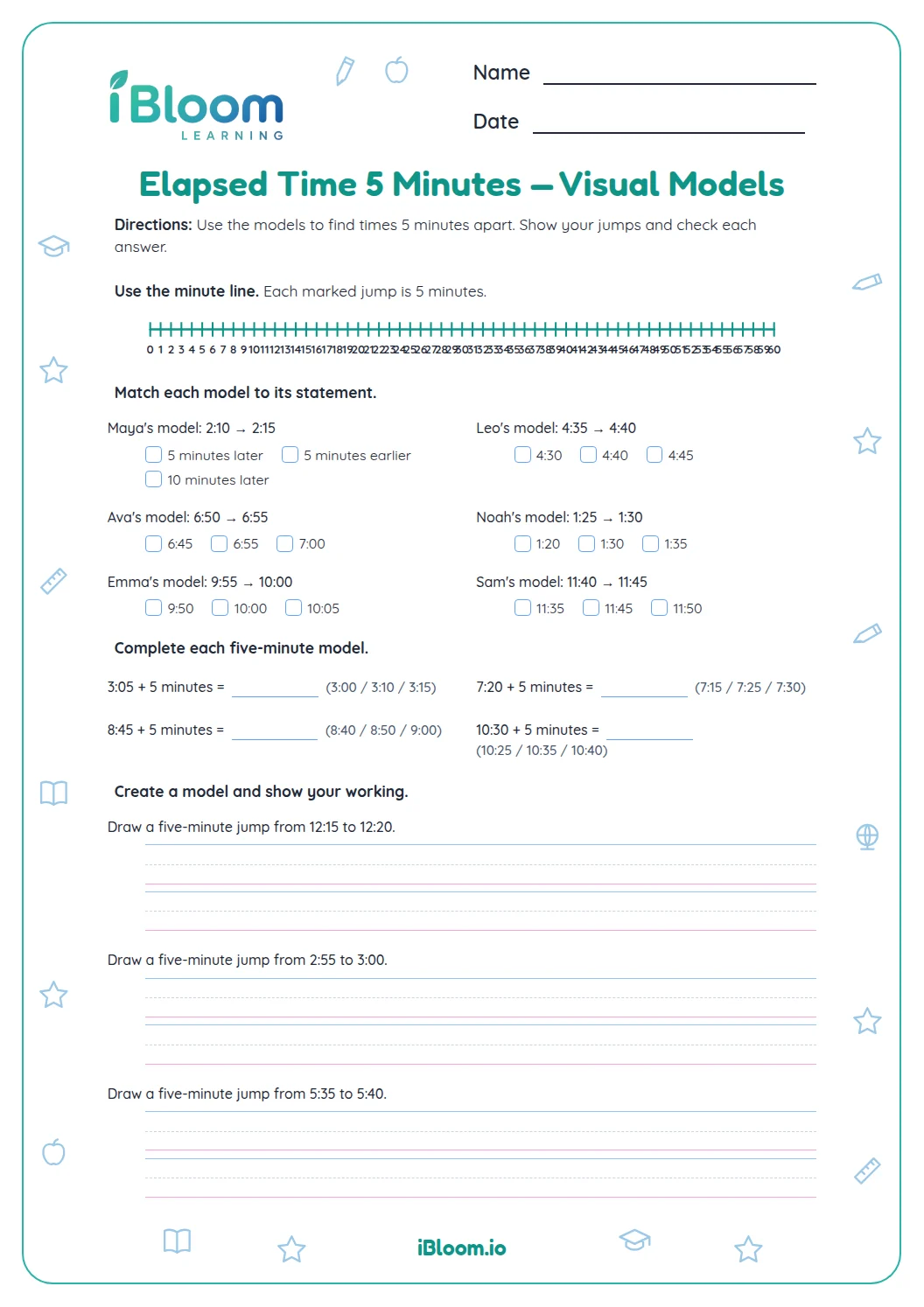
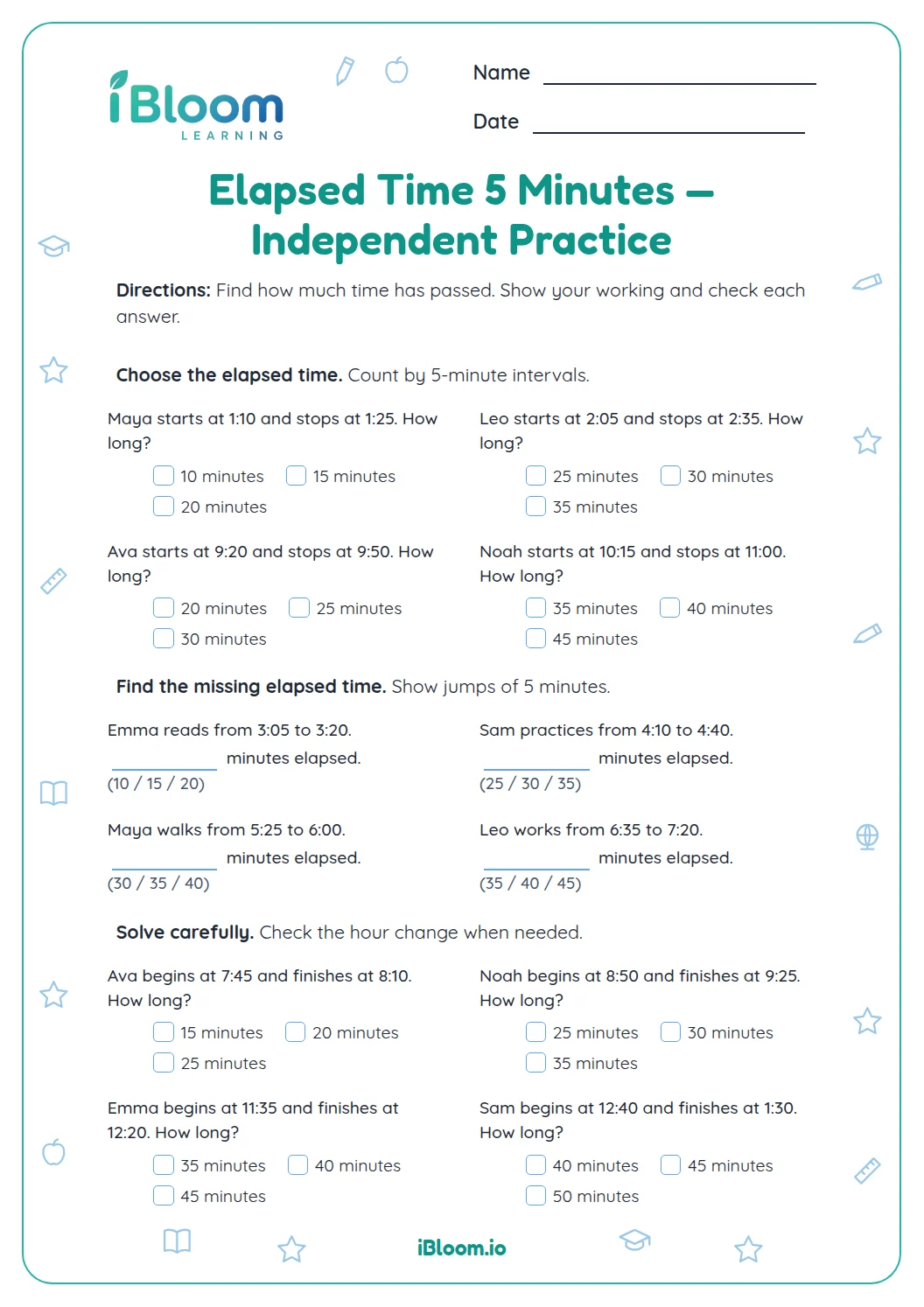
This Grade 3 printable worksheet gives students 14 questions about elapsed time in minutes. It practices CCSS 3.MD.A.1 through clock-time pairs, minute intervals and short real-world situations. Students count across hour changes, show their thinking and check each result with the separate answer key.
Aligned to 3.MD.A.1
How do the clock questions work?
Questions 1–4 give a start time and a later time. For example, 7:15 to 7:30 is 15 minutes: count one 15-minute jump.
How can minute jumps help?
For intervals that cross an hour, count to the next hour and then add the minutes after that hour. Keep the two jumps separate before adding.
What should students record?
Write only the number when the prompt prints “minutes” after the blank. In a story with a work area, write the number of minutes in the answer.
How can I use this worksheet?
- 1Read the start and finish times in each question.
- 2Notice whether the interval crosses an hour.
- 3Count from the start time to the next hour.
- 4Count the remaining minutes after the hour and add both jumps.
- 5Write the number of minutes and check the finish time is later.
Common mistakes and quick fixes
The mistake
Subtracting the minute digits when the interval crosses an hour.
The fix
Count to the next hour first, then count the minutes after it.
The mistake
Repeating “minutes” in the blank after it is already printed.
The fix
Write only the number when the question supplies the unit.
The mistake
Treating the hour change as a full 60-minute interval.
The fix
Separate the minutes before and after the hour and add those smaller jumps.
This sheet gives students practice with the stated Common Core skill.
Find and interpret elapsed time in minutes in clocks and everyday situations.
On this sheet:
Show the official wordingHide the official wording
Tell and write time to the nearest minute and measure time intervals in minutes. Solve word problems involving addition and subtraction of time intervals in minutes, e.g., by representing the problem on a number line diagram.
What to practice next
Make more practice
Further reading
Questions parents and teachers ask
How do you find elapsed time across an hour?
Count from the start time to the next hour, then from that hour to the finish time, and add the jumps. For example, 8:42 to 9:16 is 18 minutes to 9:00 plus 16 minutes, or 34 minutes total. Keep the hour change in your work.
What does “15-minute steps” mean?
Each start and finish time is separated by a multiple of 15 minutes. Students can count one 15-minute jump at a time; some items have two or three jumps, and some cross an hour. They should keep a running total of the jumps.
Should the answer include the word minutes?
For the four questions with “___ minutes,” enter only the number because the unit is already printed. Story questions provide a work area and ask for elapsed time, so record the numeric total there. The answer key lists the correct number for every question.
What grade is this worksheet for?
This worksheet is written for Grade 3 students practicing elapsed time in minutes. The page pairs analog start clocks with printed finish times, then adds minute intervals and short time stories. Students track both minutes and the hour when an interval crosses an hour.
Is there an answer key?
Yes. A separate answer key gives the elapsed-minute answers for all 18 questions. Students can show their time jumps on the worksheet and use the key to check each total, including those that cross an hour or contain several different minute intervals.