

About this worksheet
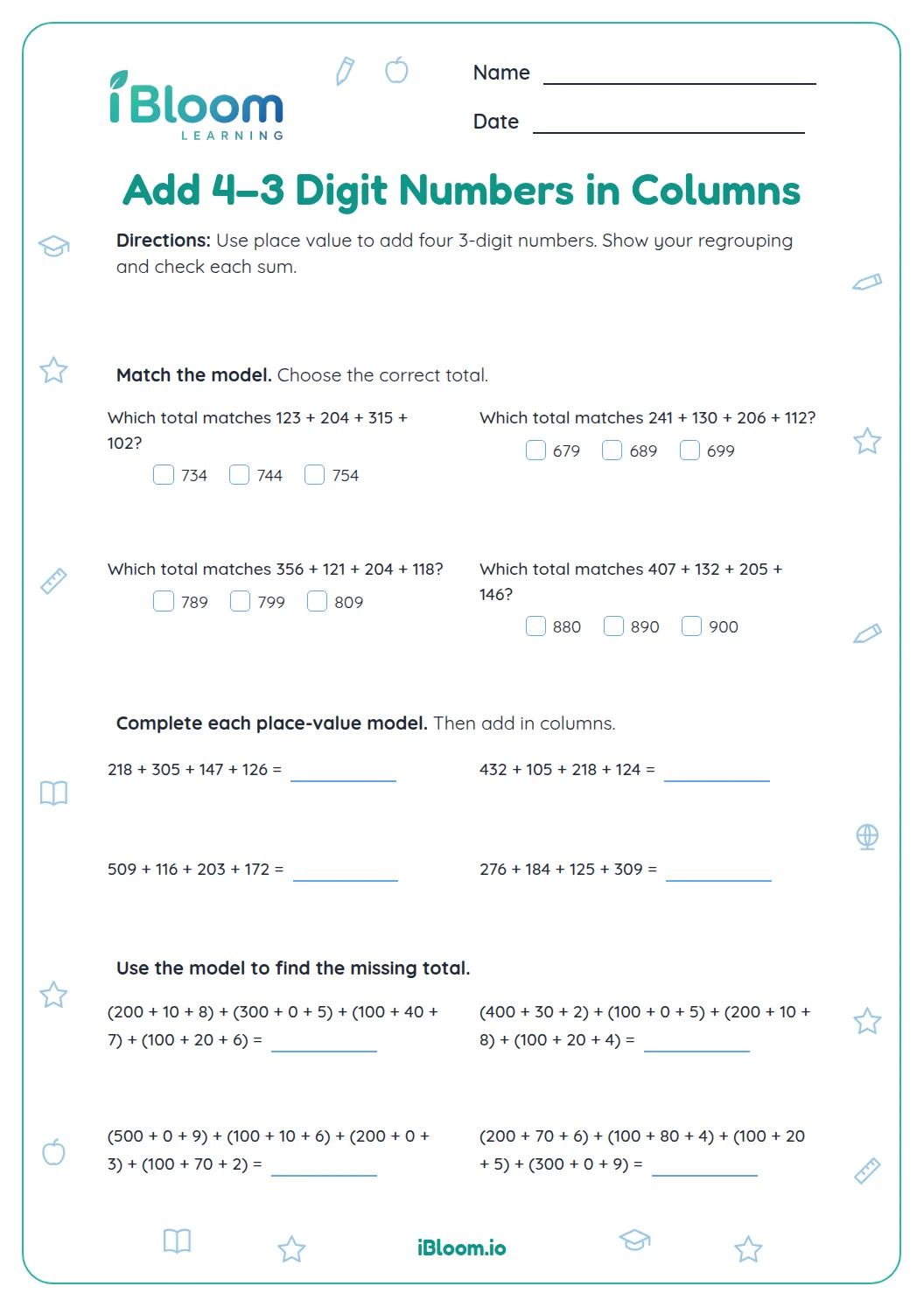
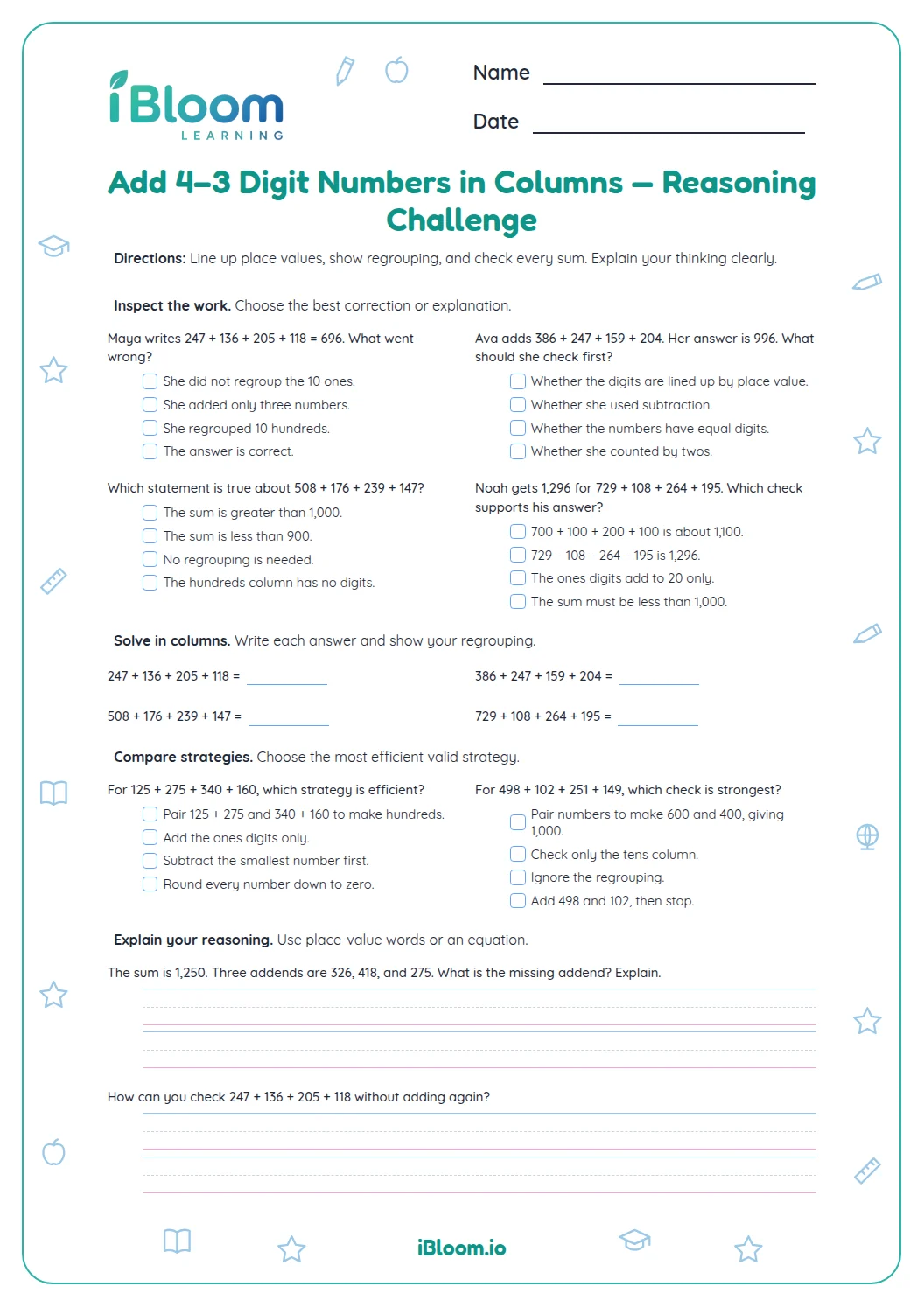
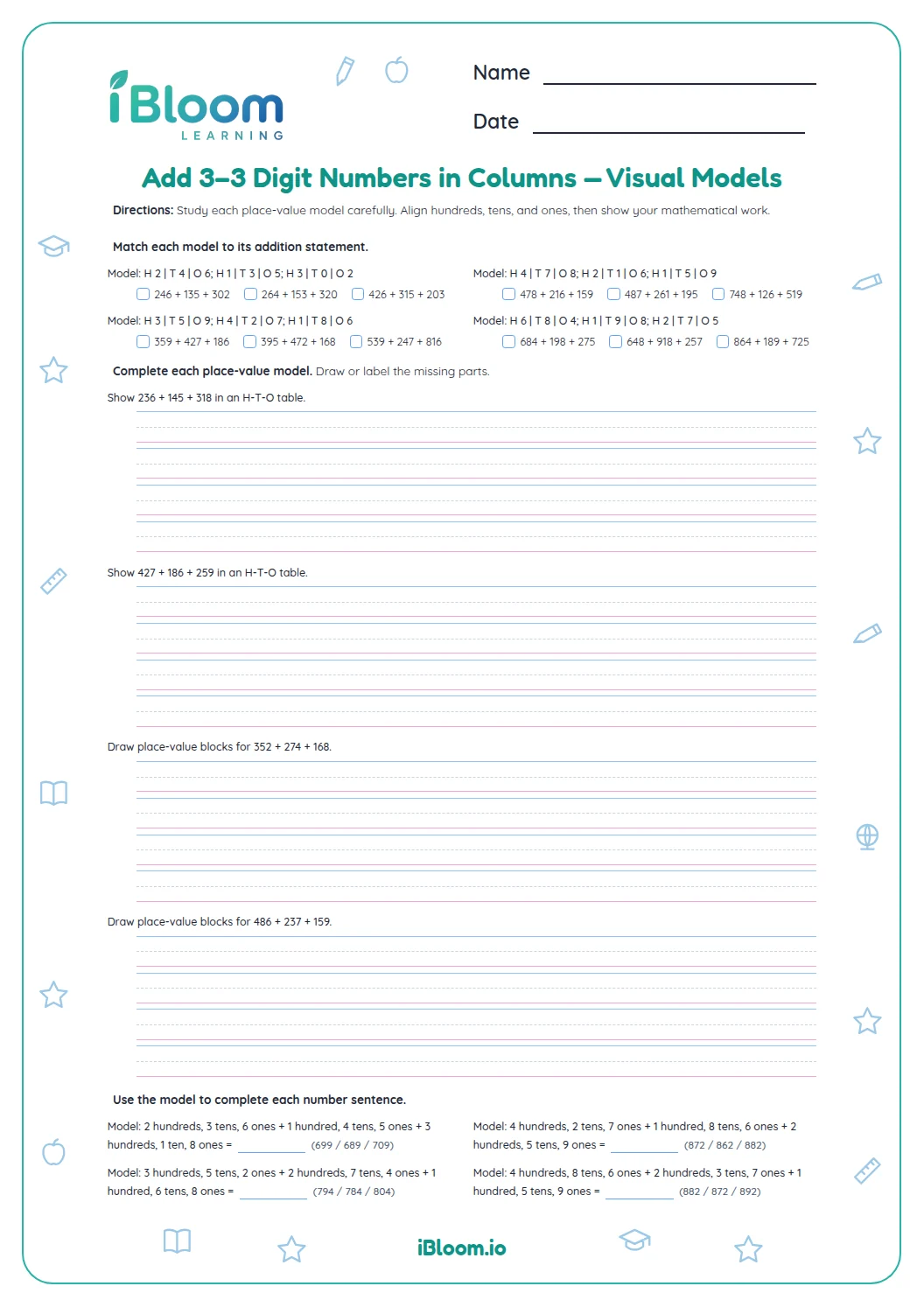
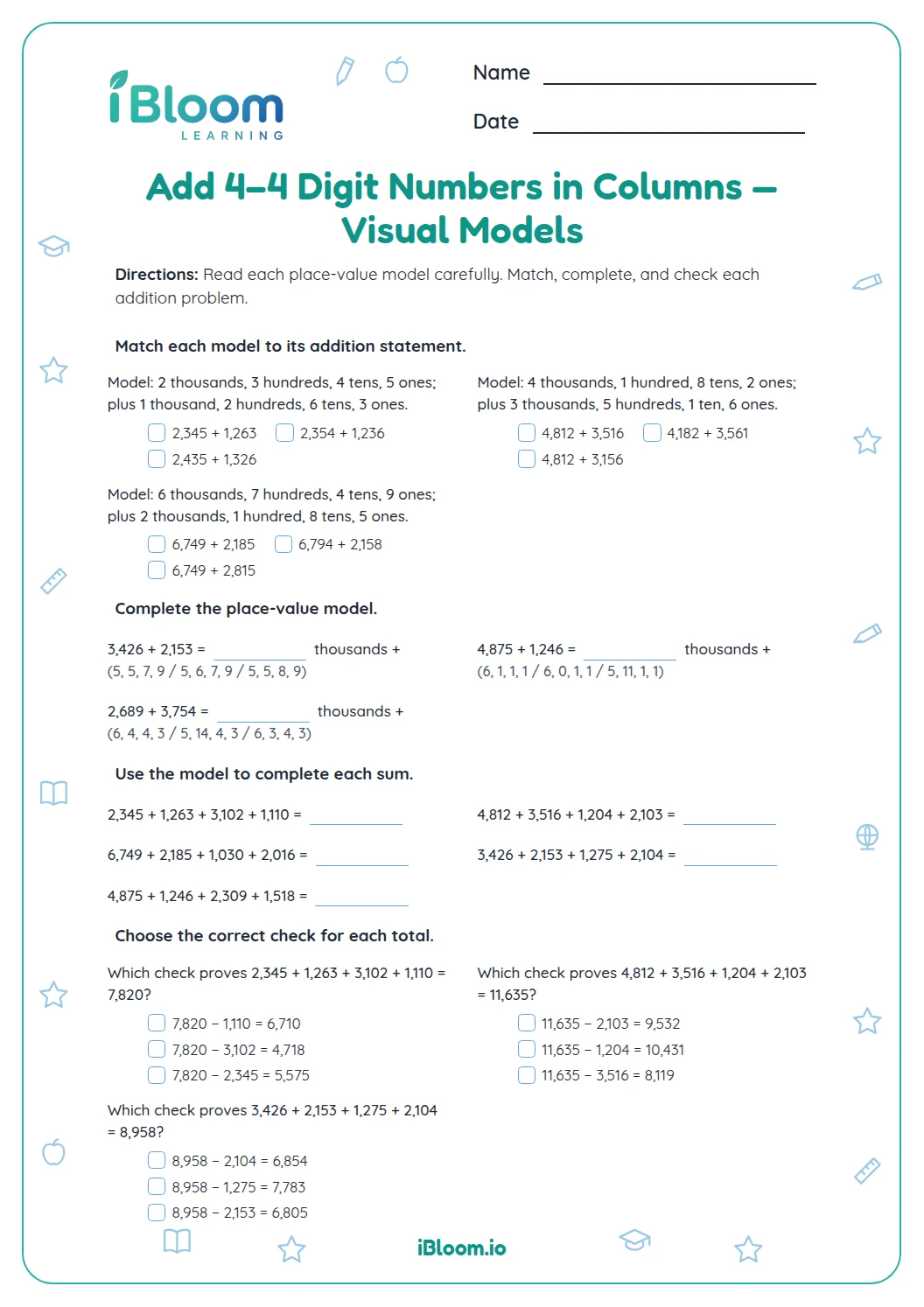
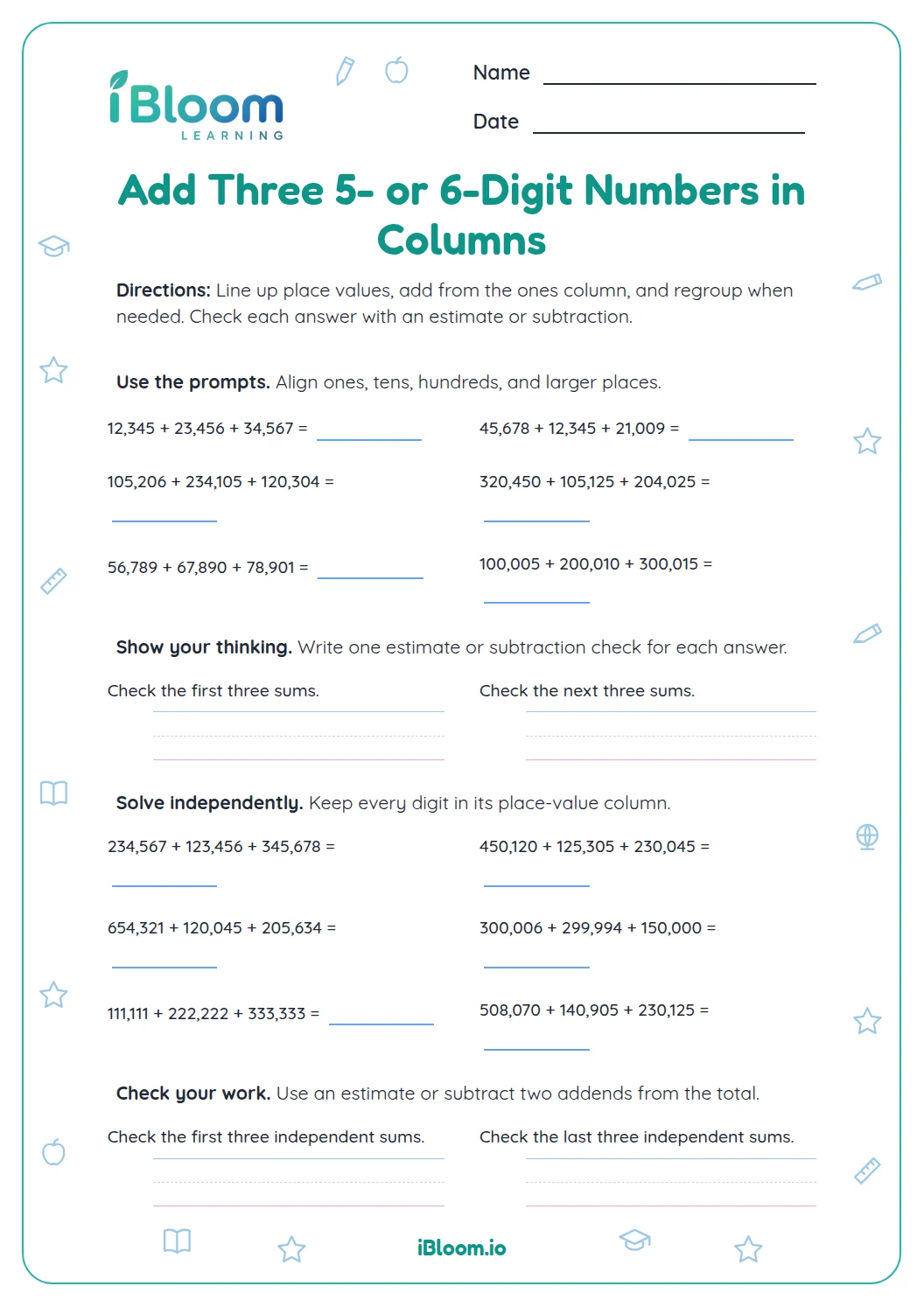
This Grade 4 printable gives students 16 problems adding four three-digit numbers. Part A builds column-addition practice; Part B asks students to estimate before solving. The answer key lists each sum. The work supports CCSS 4.NBT.B.4 by practicing multi-digit addition with the standard algorithm.
Aligned to 4.NBT.B.4
How do you line up four addends?
Write each number so its ones digits share a column, its tens digits share a column, and its hundreds digits share a column. Add from right to left and regroup whenever a column reaches ten.
For example, q1 is 101 + 184 + 267 + 350. In the ones column, 1 + 4 + 7 + 0 = 12, so write 2 ones and regroup 1 ten before adding the tens.
What happens in each part?
Part A contains eight four-addend sums for column practice. Part B contains eight more; estimate each total before calculating exactly. All 16 questions print the addends and leave room for the answer.
- Part A: add four three-digit numbers
- Part B: estimate, then add
- Answer key: all 16 sums
How can an estimate help?
Round each addend to a nearby hundred to predict the size of the total. After solving, compare the exact sum with that estimate. If the answers are far apart, check for a missed addend or a regrouping error.
How to use this worksheet
- 1Read the addends and check that there are four.
- 2Align the ones digits, then the tens and hundreds.
- 3Add the ones column and record any regrouped ten.
- 4Continue through the tens and hundreds columns.
- 5For Part B, round to estimate before finding the exact sum.
- 6Compare each answer with the key after finishing.
Common mistakes and quick fixes
The mistake
Starting with the hundreds column.
The fix
Begin with the ones, then move left so regrouped tens and hundreds are included.
The mistake
Forgetting to add one of the four numbers in a column.
The fix
Point to each addend as you include its digit in that column.
The mistake
Treating a regrouped 10 as 10 in the next column.
The fix
Write 1 in the next place-value column after regrouping.
Common Core alignment
This worksheet practices the following Common Core math standard through its 16 problems.
Students fluently add multi-digit whole numbers with the standard algorithm.
On this sheet: Each question directly practices addition in columns.
Show the official wordingHide the official wording
Fluently add and subtract multi-digit whole numbers using the standard algorithm.
What to practice next
Make more practice
Further reading
Questions parents and teachers ask
What does this worksheet ask students to add?
Each of its 16 questions has four three-digit addends. Students align the numbers by place value, add from ones to hundreds, and regroup when needed. The first part focuses on exact sums; the second adds an estimate before each calculation.
How should a student set up the four numbers?
Write one addend per row and align the ones digits in a vertical column. Keep tens under tens and hundreds under hundreds, even when a digit is zero. Then add each column from right to left and carry any regrouped ten.
What is the example in question 1?
Question 1 is 101 + 184 + 267 + 350. In the ones place, 1 + 4 + 7 + 0 makes 12, so write 2 and regroup 1 ten. Continue the same way through the tens and hundreds.
Why estimate before solving Part B?
Rounding gives a quick prediction for the size of a four-number total. It does not replace the exact column calculation; it helps catch a misplaced digit or a missed regroup. Students can compare their final sum with the estimate before checking the key.
What is included in the answer key?
The separate key gives the correct total for each of the 16 questions. Students can compare their final sums after completing the work, then revisit any column where a regrouped value was added incorrectly. Review the place values together after checking.