


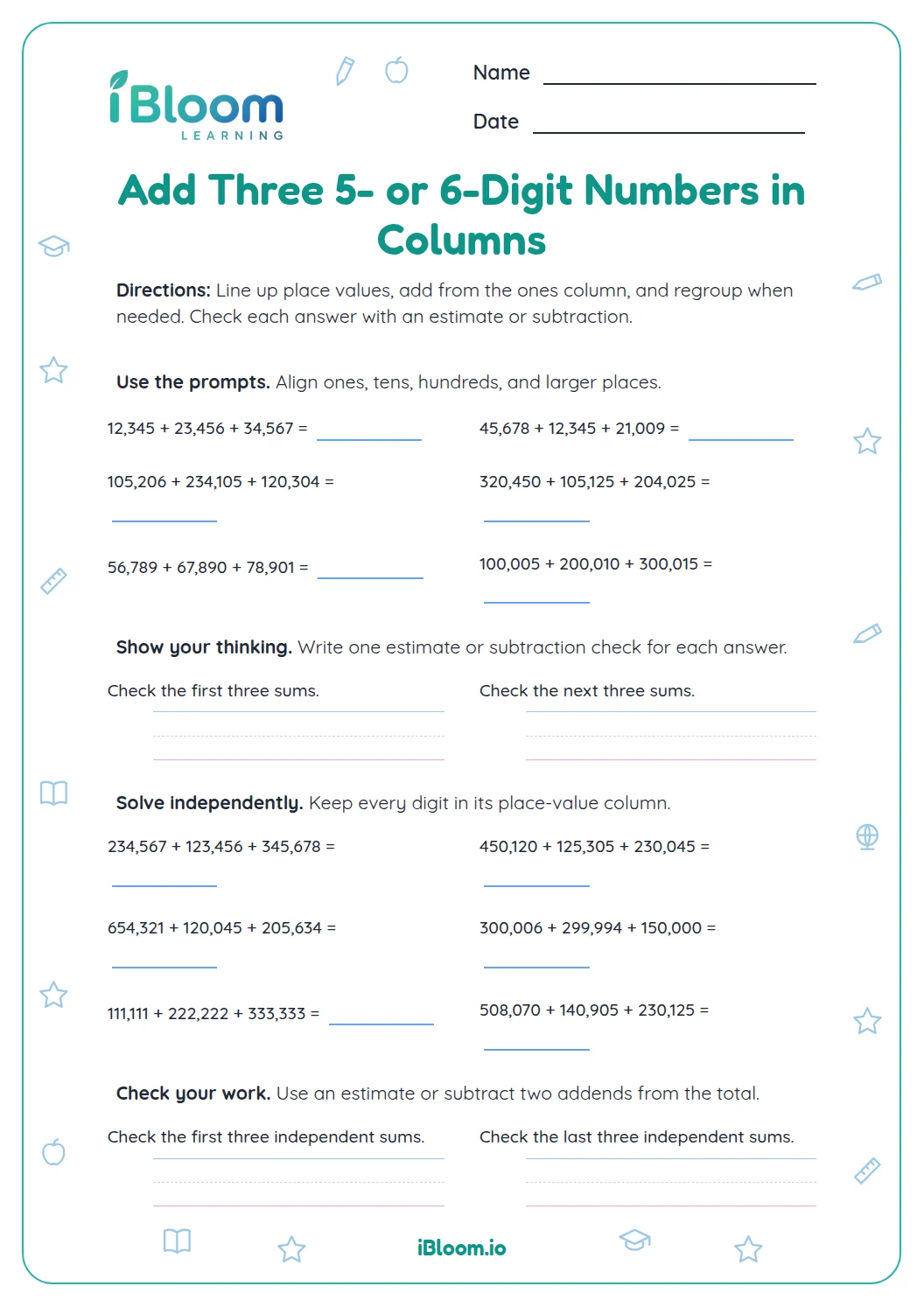
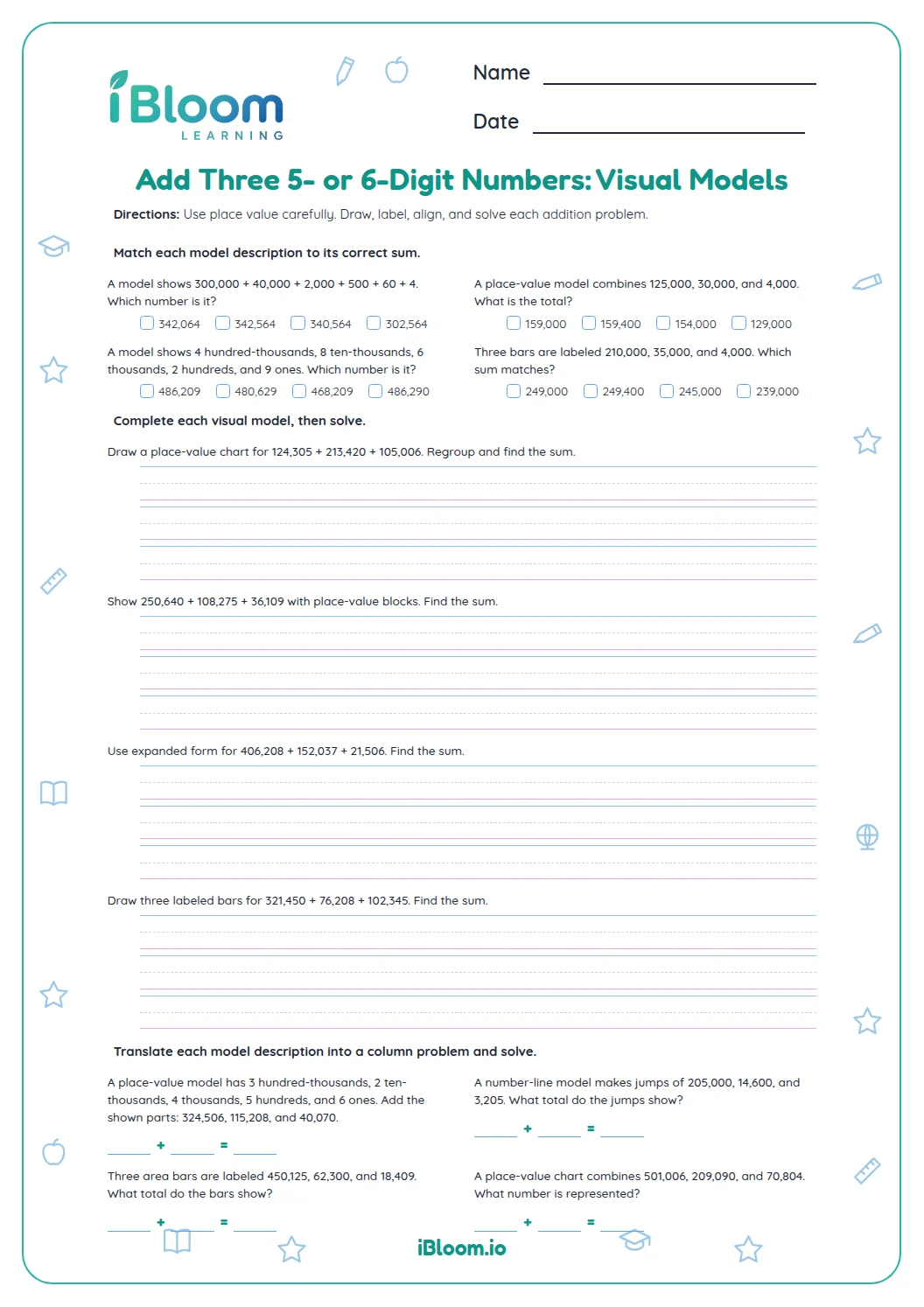

About this worksheet
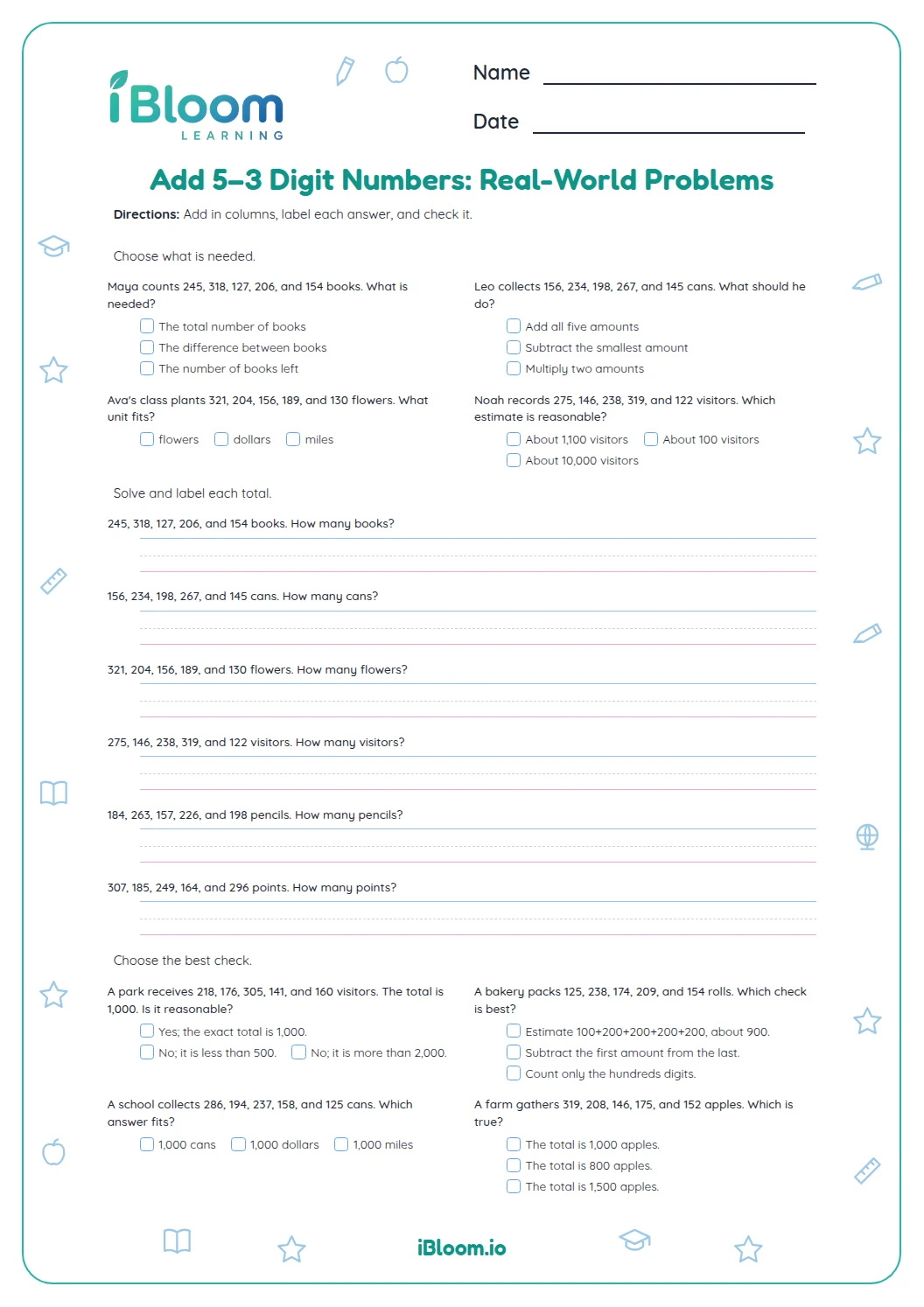
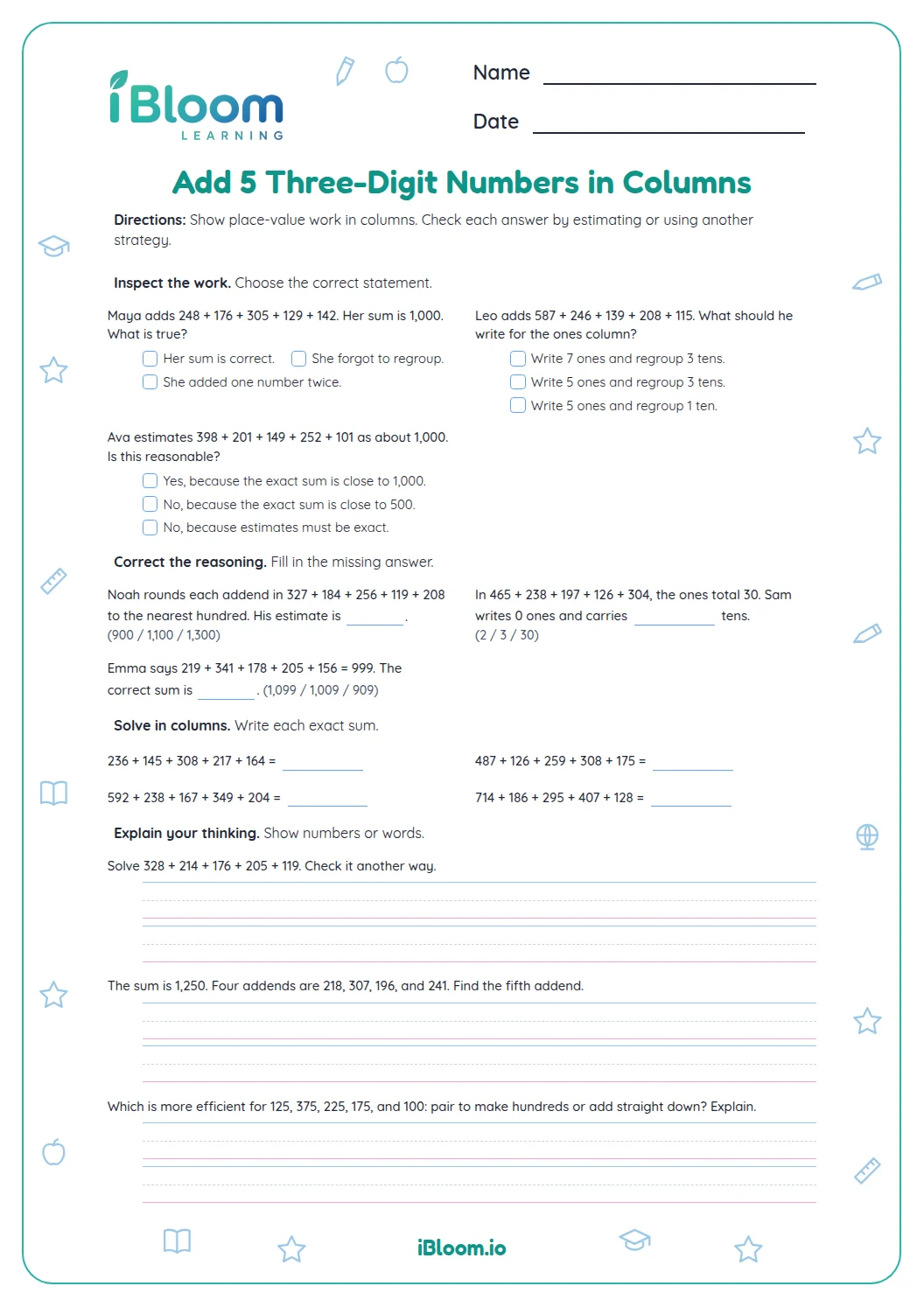
This Grade 4 printable gives students 16 problems adding five three-digit numbers. Part A develops column setup and regrouping; in Part B, students estimate before solving. A separate answer key lists every total. The questions practice multi-digit addition with the standard algorithm described in CCSS 4.NBT.B.4.
Aligned to 4.NBT.B.4
How do five addends fit in columns?
Write each number on its own row, lining up the ones, tens, and hundreds. Add from right to left. A column may total more than ten because it combines five digits, so regroup before moving to the next place.
For example, q1 is 101 + 184 + 267 + 350 + 433. The ones digits total 15: write 5 ones and carry 1 ten into the tens column.
What changes in Part B?
Part A has eight sums to set up and solve. Part B has eight additional sums; first round each addend to the nearest hundred for an estimate, then calculate the exact total.
- Part A: five three-digit addends
- Part B: estimate, then calculate
- Answer key: 16 totals
How can you check a five-addend sum?
Compare the exact result with your estimate. You can also add the numbers in a different order to check the total. Make sure the regrouped amount from each column is included once in the next column.
How to use this worksheet
- 1Read all five addends before starting.
- 2Align ones under ones, tens under tens, and hundreds under hundreds.
- 3Add the ones digits and regroup any tens.
- 4Repeat for tens and hundreds, including each regrouped value.
- 5In Part B, round to estimate before calculating exactly.
- 6Use the key to check each final total.
Common mistakes and quick fixes
The mistake
Leaving out a digit because there are five rows.
The fix
Scan all five addends once in every place-value column.
The mistake
Adding five digits but forgetting to carry the tens.
The fix
Regroup the column total before adding the next place.
The mistake
Comparing the exact answer to an estimate as if they must match.
The fix
Use the estimate to check the answer’s size; rounding makes it approximate.
Common Core alignment
This worksheet practices the following Common Core math standard through its 16 problems.
Students fluently add multi-digit whole numbers with the standard algorithm.
On this sheet: Each question directly practices addition in columns.
Show the official wordingHide the official wording
Fluently add and subtract multi-digit whole numbers using the standard algorithm.
What to practice next
Make more practice
Further reading
Questions parents and teachers ask
How many numbers are in each addition problem?
Each question has five three-digit addends, for 16 problems total. Students write the addends in separate rows, align equal place values, and add one column at a time. Part B asks for an estimate before the exact sum.
What makes adding five numbers different?
A place-value column combines five digits instead of two or three, so its total can be larger. Write the full column total, keep the ones digit, and regroup the tens into the next column before continuing. Careful alignment keeps the digits in the correct place.
What is question 1’s first regrouping?
Question 1 is 101 + 184 + 267 + 350 + 433. The ones digits add to 15. Write 5 in the ones place and carry 1 ten to the tens column, then continue with all five numbers.
How should students estimate the Part B totals?
Round each three-digit addend to the nearest hundred and add those rounded values. Then solve the original numbers exactly in columns. The estimate is a reasonableness check, so it may differ from the exact sum. This makes the estimate easy to compare with the exact total.
Does the answer key show every sum?
Yes. The separate answer key lists the total for all 16 problems. It is useful after students finish each part, especially for checking that a regrouped ten or hundred was counted in the next column. That check helps students spot a missed carry.