


About this worksheet
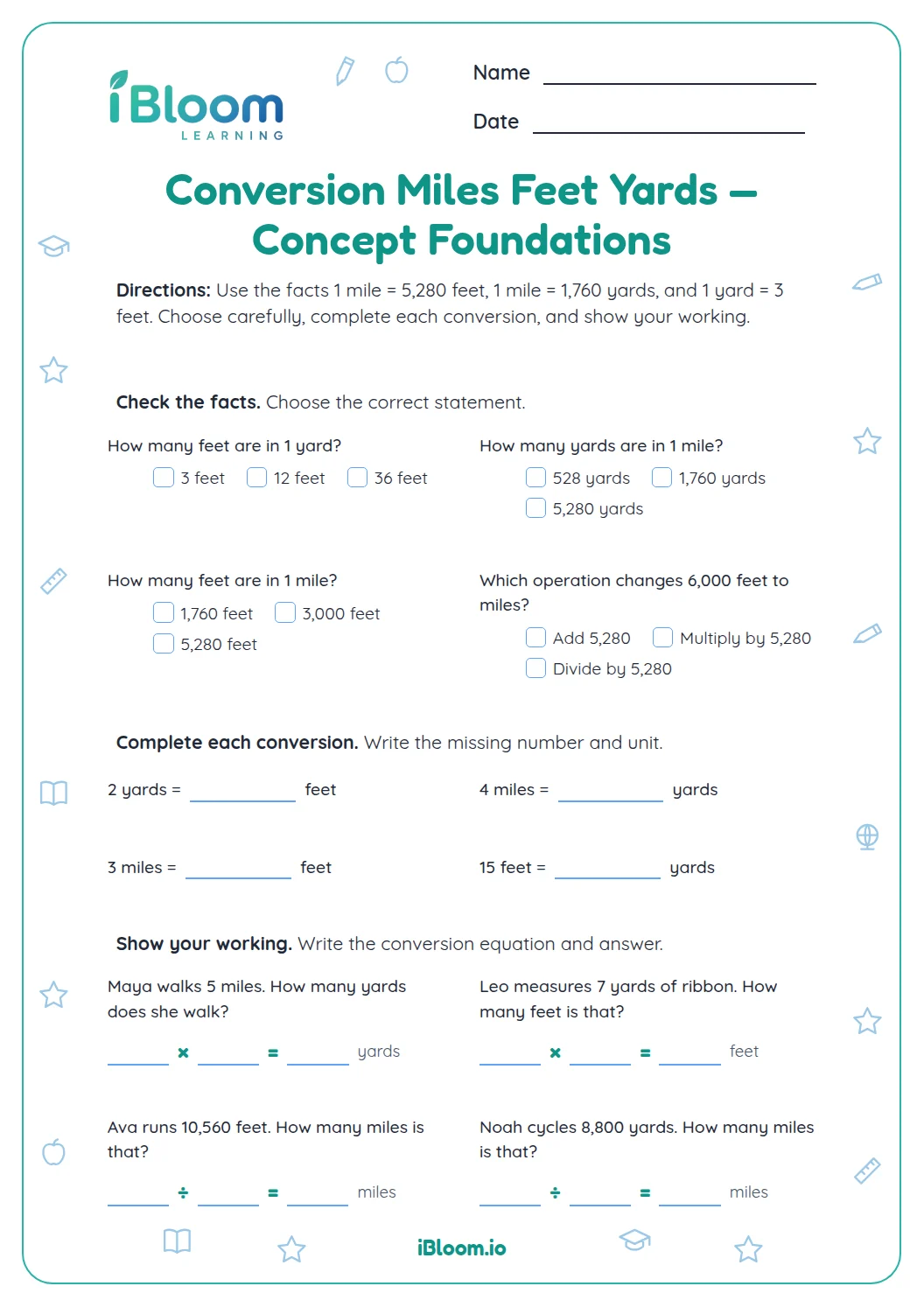
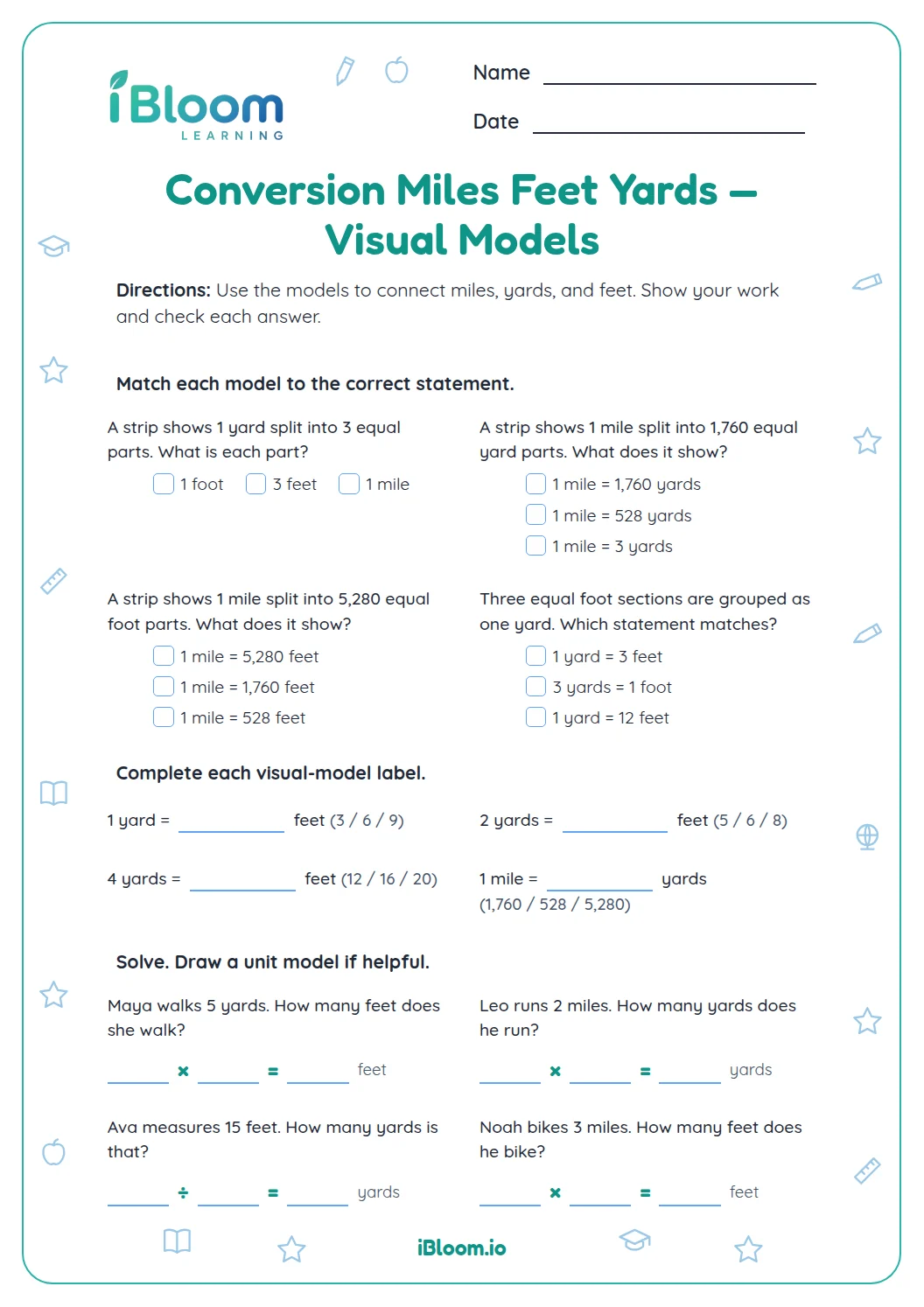
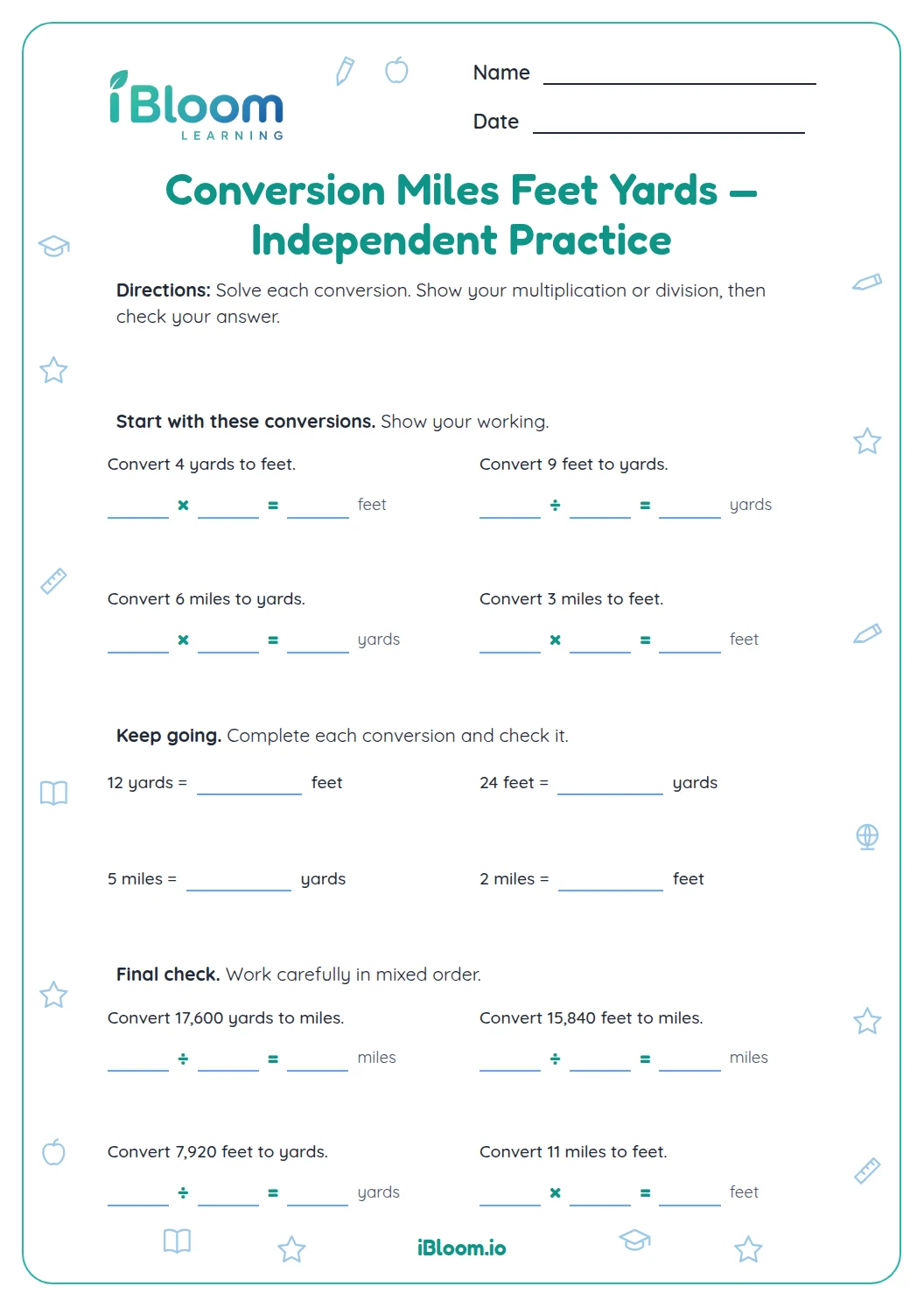
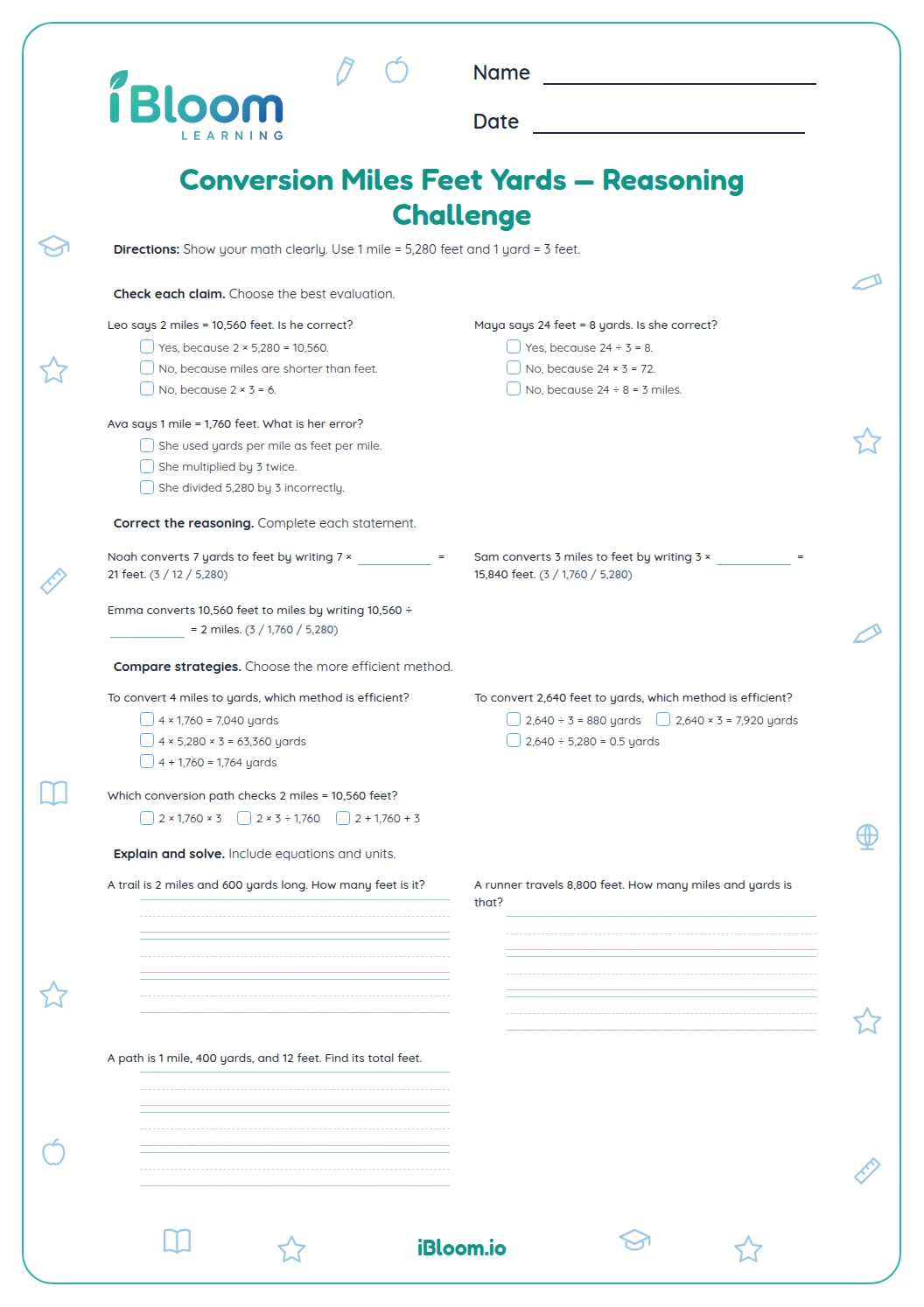
This Grade 6 worksheet applies mile, foot, and yard conversions to routes, trails, races, and road work. Students use 1 mile = 5,280 feet and 1 yard = 3 feet, then add, subtract, or compare distances when a story requires it. The 14 problems are organized from single conversions to multi-step planning situations. The page practices CCSS 5.MD.A.1, which calls for converting within a measurement system and using conversions in real-world problems.
Aligned to 5.MD.A.1
What is a reliable way to convert customary units?
Begin with the unit relationship named in the question. For example, 2.5 mi = 2.5 × 5,280 = 13,200 ft. Keep the units beside each number so the conversion factor cancels the starting unit and leaves the requested one.
After converting, reread the prompt. Some items ask only for an equivalent measure, while a story may also ask for a total, a difference, or an equal share.
- 12.5 mi = 2.5 × 5,280 = 13,200 ft.
What will students practice on this page?
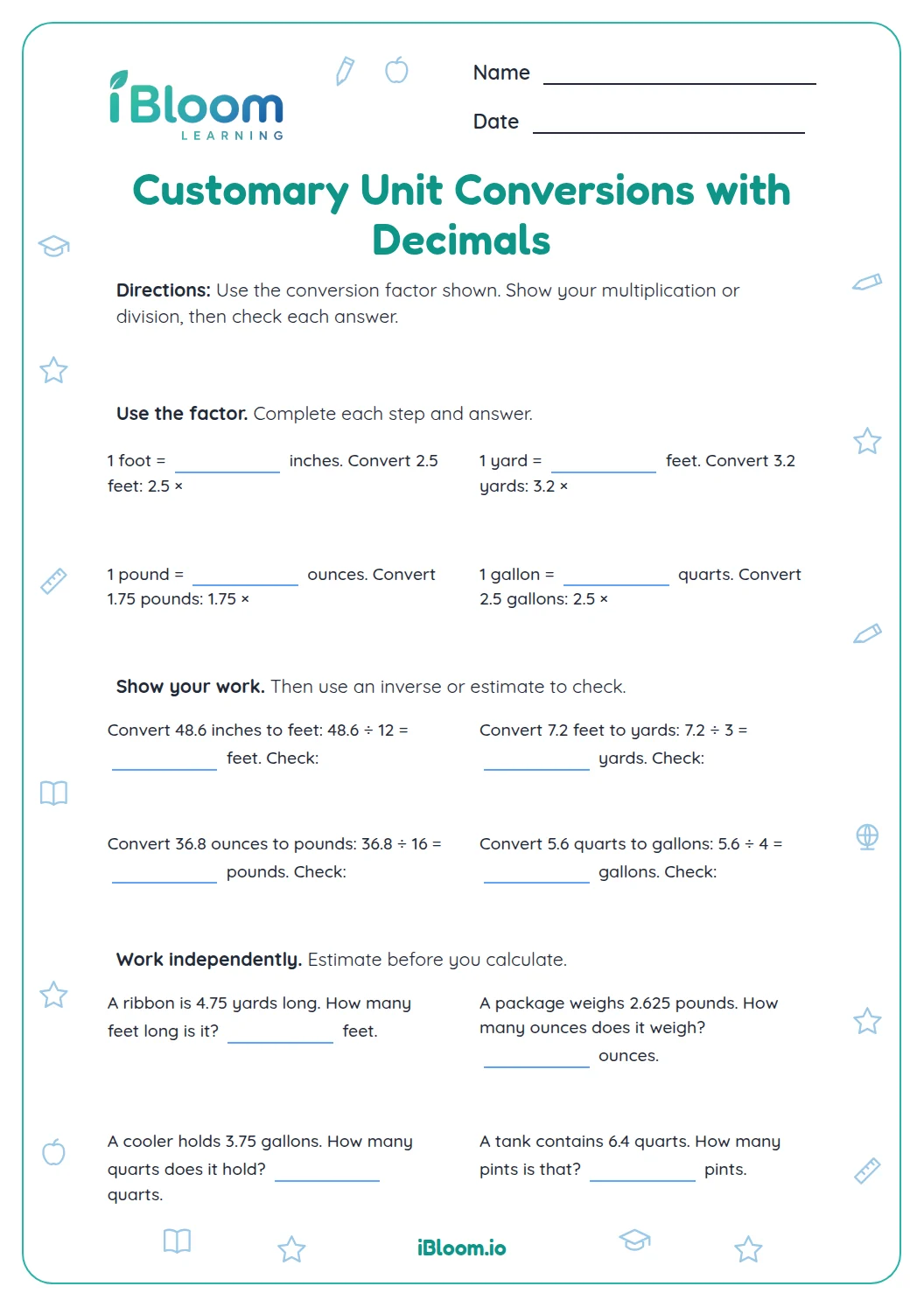
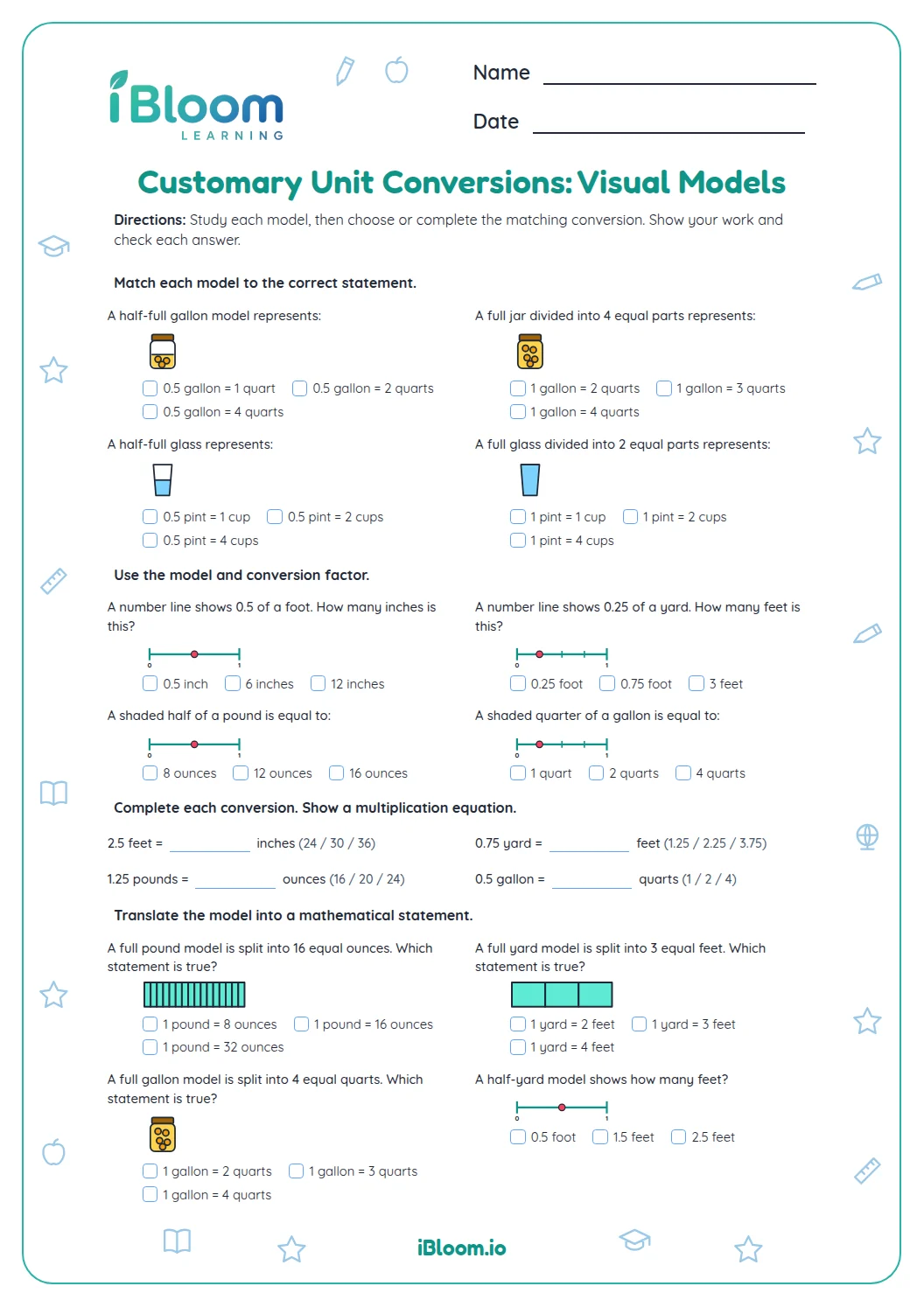
The worksheet has 2 parts and 14 questions. 6 route conversions, 8 comparison and multi-step problems. The sequence starts with the page’s central conversion skill and moves toward applications that require students to track units while calculating.
Every answer can be checked by using the conversion relationship in reverse or by estimating whether a larger or smaller unit should produce a larger or smaller number.
How can families use the answer key?
Have students show the conversion factor and any additional operation before checking the key. If an answer differs, compare the unit relationship and the operation first, then redo the arithmetic. The key gives values only when the blank already prints the unit; story answers include the requested unit.
How to use this worksheet
- 1Read the target unit before choosing a conversion factor.
- 2Write the equal-unit relationship beside the problem.
- 3Multiply when changing to smaller units and divide when changing to larger units.
- 4For a story problem, convert before adding, subtracting, or sharing.
- 5Check that the final unit matches the question.
Common mistakes and quick fixes
The mistake
Multiplying when converting to a larger unit.
The fix
Ask whether the new unit is larger or smaller, then choose division or multiplication.
The mistake
Using the wrong number of feet, ounces, or cups per unit.
The fix
Write the unit relationship first and keep its units visible while calculating.
The mistake
Stopping after conversion when a story also asks for a total or difference.
The fix
Convert first, then complete the story operation and check the requested unit.
This page practices converting customary units within one measurement system.
Convert customary measures and use those conversions in multi-step problems.
On this sheet:
Show the official wordingHide the official wording
Convert among different-sized standard measurement units within a given measurement system (e.g., convert 5 cm to 0.05 m), and use these conversions in solving multi-step, real world problems.
What to practice next
Make more practice
Further reading
Questions parents and teachers ask
Which mile and yard facts appear?
The problems use 1 mile = 5,280 feet and 1 yard = 3 feet. Together, these show that 1 mile = 1,760 yards. For example, 1.5 miles is 7,920 feet; students can use that equivalent when comparing route lengths.
Why convert distances before comparing them?
Miles, feet, and yards are different-sized units, so their numbers cannot be compared directly. Convert both distances to feet, yards, or miles first. Then subtract to find how much farther one route is, or add to find a combined distance.
Which problems require more than one step?
Several stories ask students to convert and then find a remaining distance, combine routes, or divide a course into equal sections. Read the final unit carefully: it tells which equivalent measure to report after the calculations.
Are the decimal mile amounts exact?
Yes. The decimal mile values in these problems convert to whole numbers of feet or yards. For example, 1.2 miles is 6,336 feet. Writing the conversion equation before calculating helps keep the requested unit clear.
What does the key show?
The key lists the final distance with its unit for all 14 story problems. Students can compare their work with the answer and check both the conversion factor and any addition or subtraction used along the way.