


About this worksheet
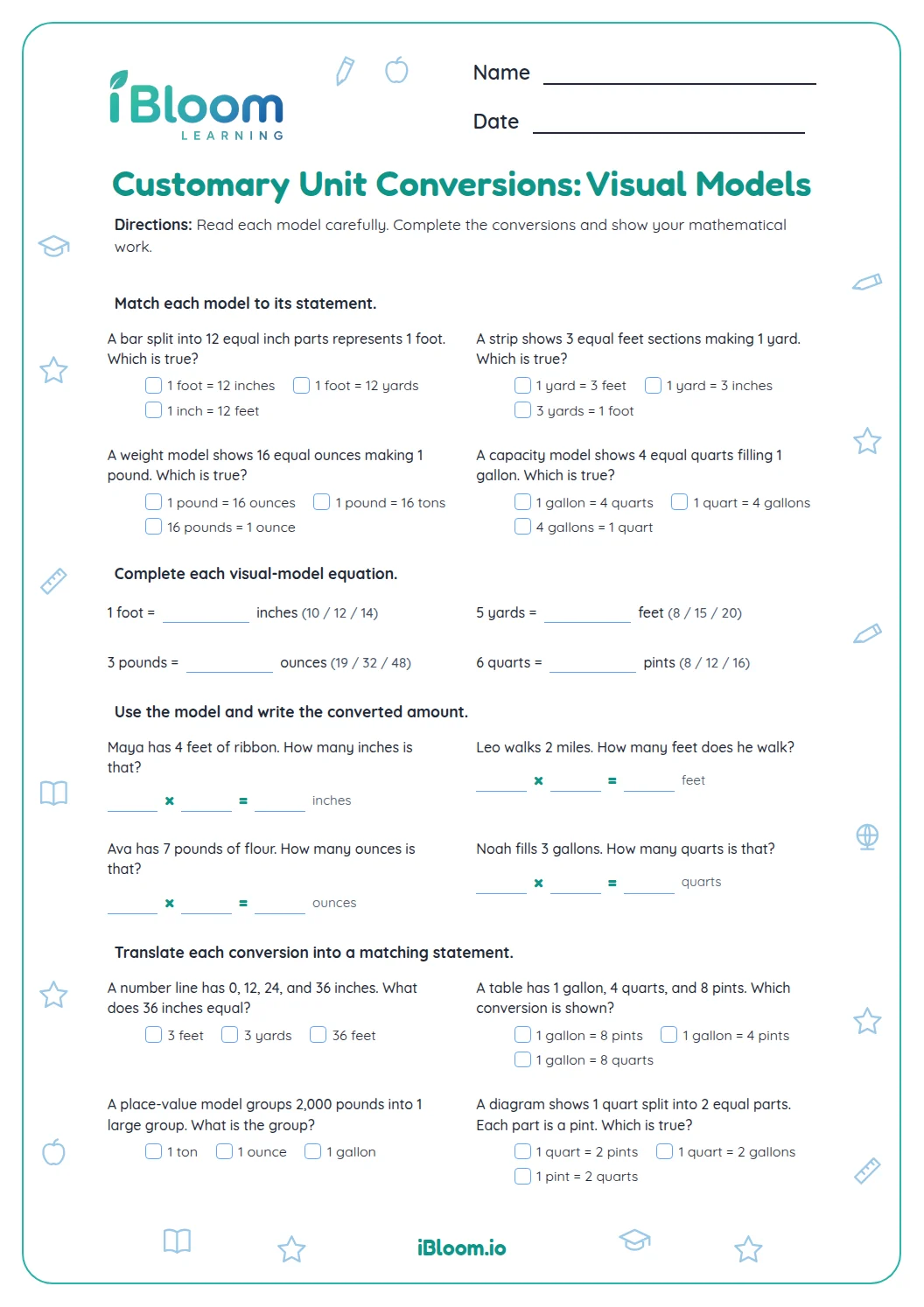
This Grade 6 real-world worksheet mixes customary length, weight, and volume conversions. Students first select equivalent measures, then solve situations involving recipes, containers, deliveries, routes, and sharing. The values include whole numbers and decimals, and each story asks for a specific unit so students must track the measurement as they calculate. It practices CCSS 5.MD.A.1 through multi-step conversions in context. There are 16 questions across three worksheet pages and a separate answer key.
Aligned to 5.MD.A.1
What is a reliable way to convert customary units?
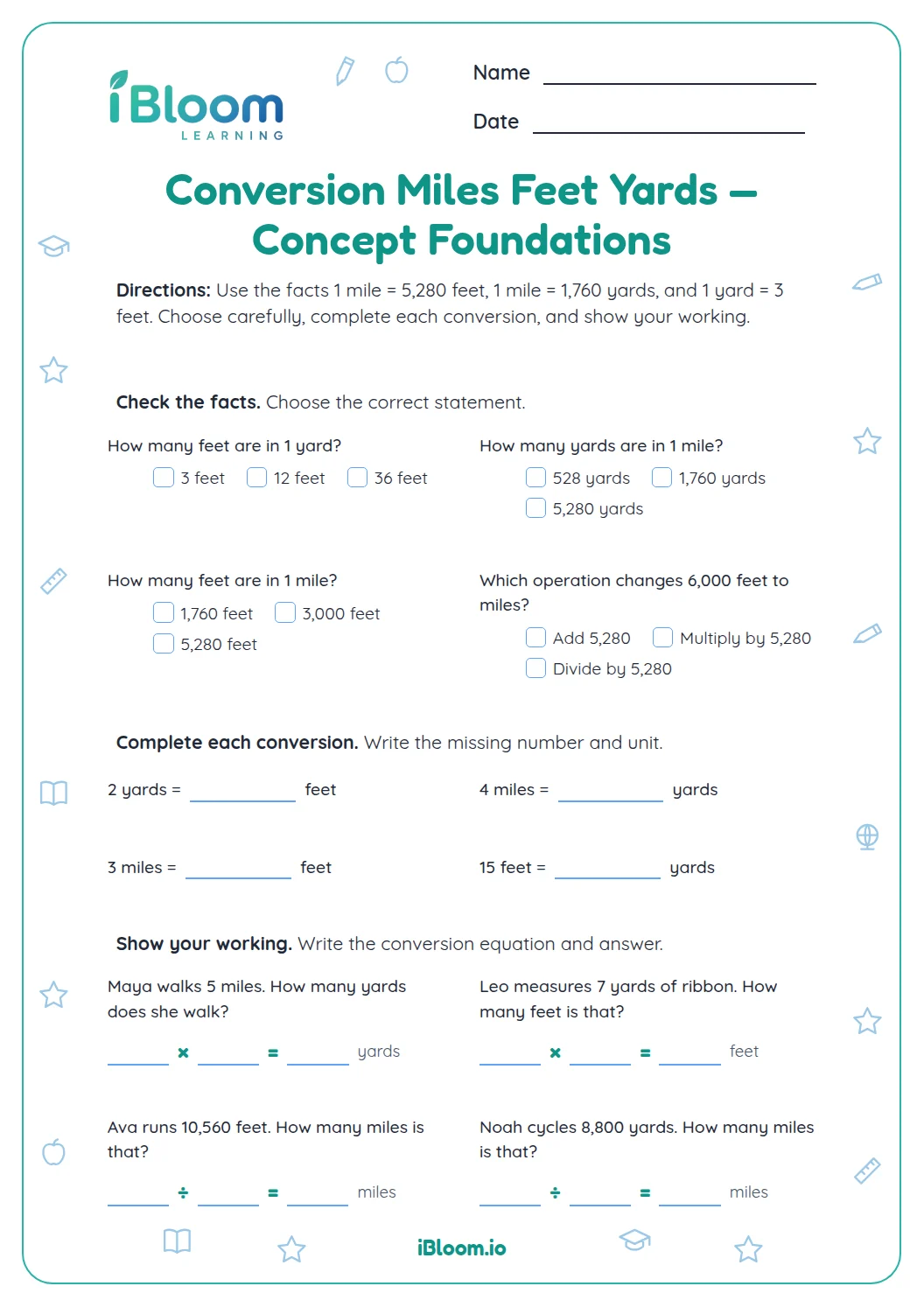
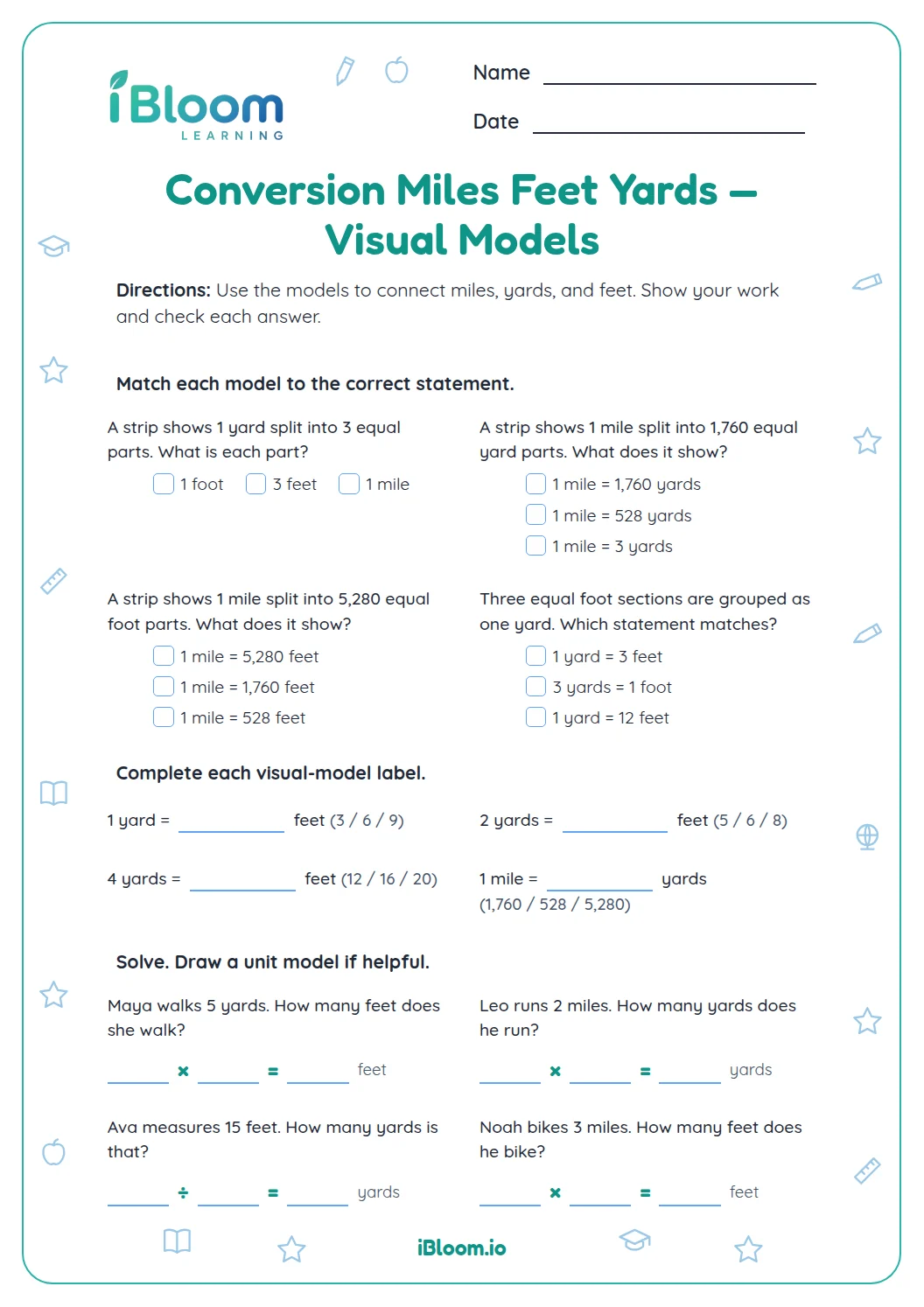
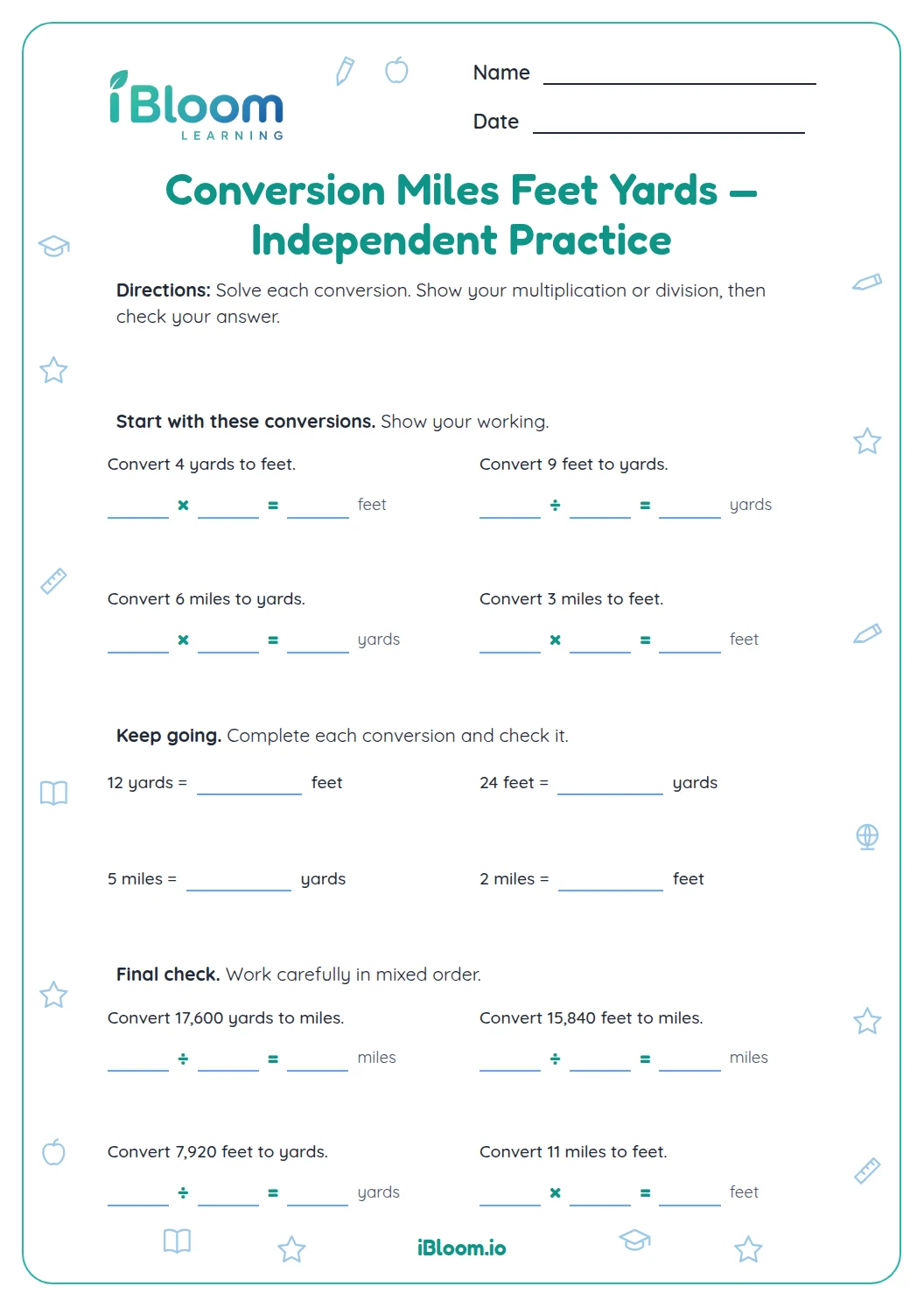
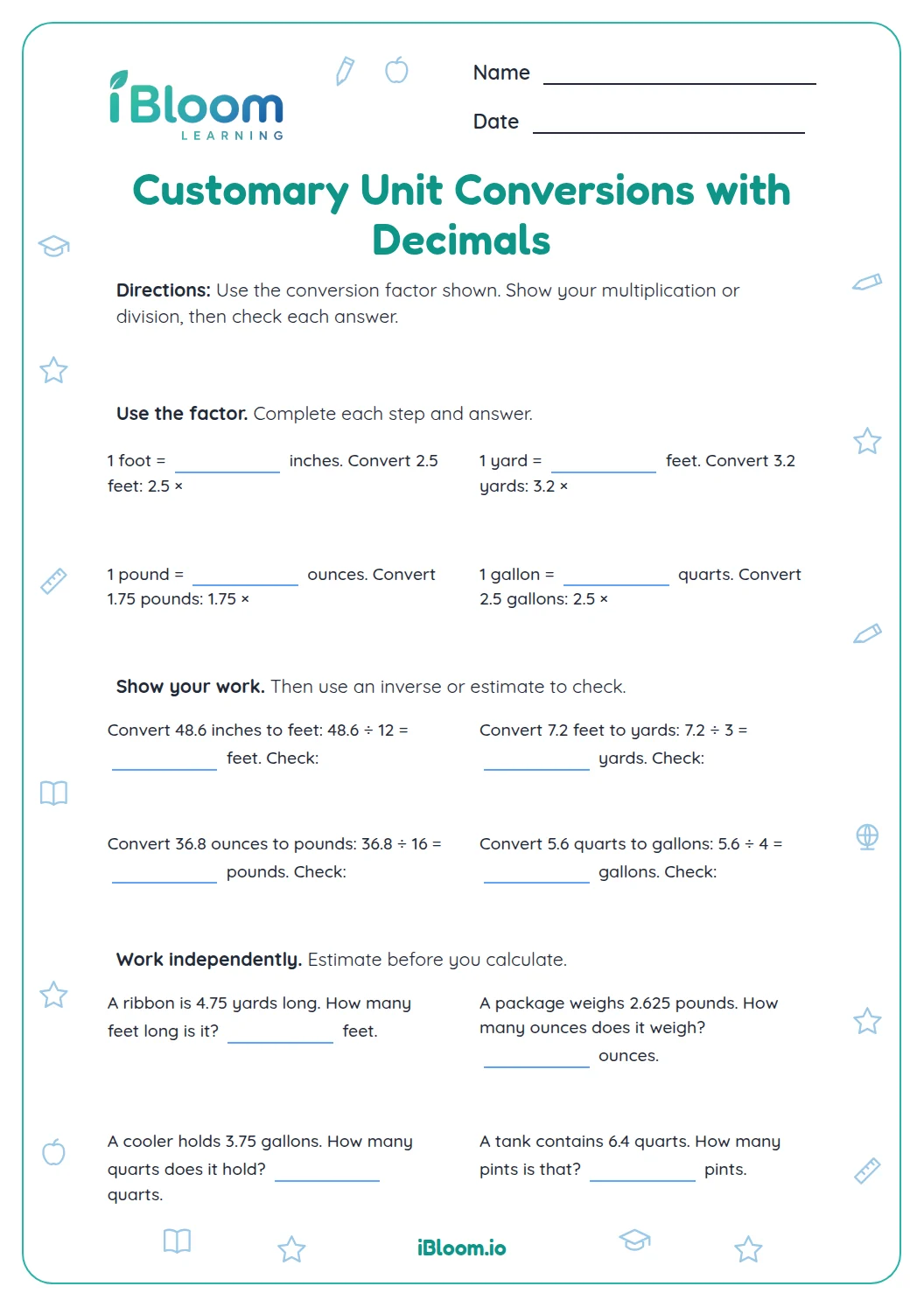
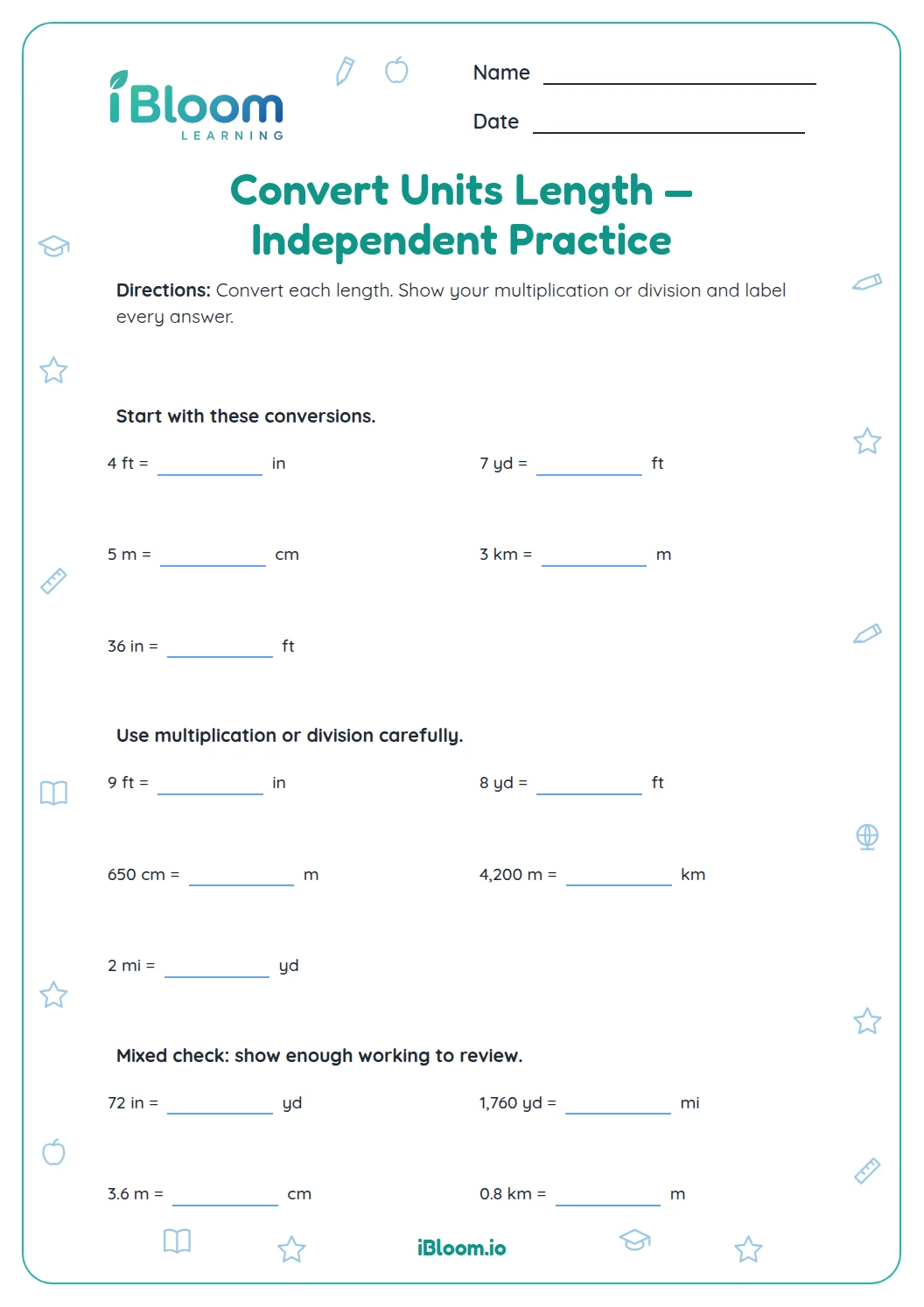
Begin with the unit relationship named in the question. For example, A 5-yd length is 5 × 3 = 15 ft. Keep the units beside each number so the conversion factor cancels the starting unit and leaves the requested one.
After converting, reread the prompt. Some items ask only for an equivalent measure, while a story may also ask for a total, a difference, or an equal share.
- 1A 5-yd length is 5 × 3 = 15 ft.
What will students practice on this page?
The worksheet has 2 parts and 16 questions. 4 multiple-choice conversions and 12 word problems. The sequence starts with the page’s central conversion skill and moves toward applications that require students to track units while calculating.
Every answer can be checked by using the conversion relationship in reverse or by estimating whether a larger or smaller unit should produce a larger or smaller number.
How can families use the answer key?
Have students show the conversion factor and any additional operation before checking the key. If an answer differs, compare the unit relationship and the operation first, then redo the arithmetic. The key gives values only when the blank already prints the unit; story answers include the requested unit.
How to use this worksheet
- 1Read the target unit before choosing a conversion factor.
- 2Write the equal-unit relationship beside the problem.
- 3Multiply when changing to smaller units and divide when changing to larger units.
- 4For a story problem, convert before adding, subtracting, or sharing.
- 5Check that the final unit matches the question.
Common mistakes and quick fixes
The mistake
Multiplying when converting to a larger unit.
The fix
Ask whether the new unit is larger or smaller, then choose division or multiplication.
The mistake
Using the wrong number of feet, ounces, or cups per unit.
The fix
Write the unit relationship first and keep its units visible while calculating.
The mistake
Stopping after conversion when a story also asks for a total or difference.
The fix
Convert first, then complete the story operation and check the requested unit.
This page practices converting customary units within one measurement system.
Convert customary measures and use those conversions in multi-step problems.
On this sheet:
Show the official wordingHide the official wording
Convert among different-sized standard measurement units within a given measurement system (e.g., convert 5 cm to 0.05 m), and use these conversions in solving multi-step, real world problems.
What to practice next
Make more practice
Further reading
Questions parents and teachers ask
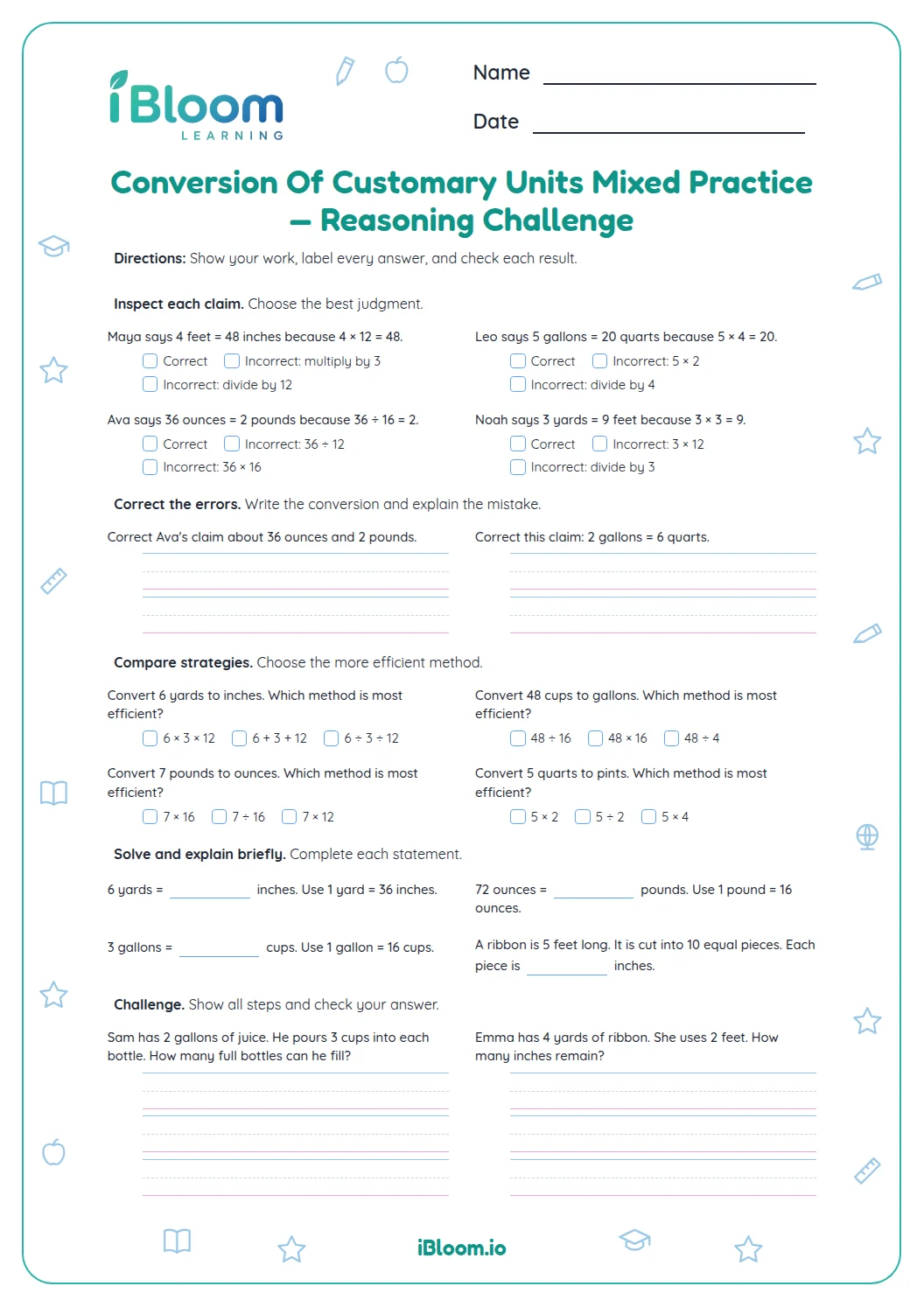
What does mixed practice mean on this sheet?
The questions move among length, weight, and volume, so students identify the relevant unit relationship in each item. The first four questions are multiple choice; the remaining 12 are situations requiring a written answer and, in some cases, an extra operation.
Do the stories involve more than conversion?
Yes. Several questions ask students to divide a converted amount among groups or containers, add distances, or find remaining capacity. Convert the measurements into compatible units before completing that second operation.
How should students use the multiple-choice questions?
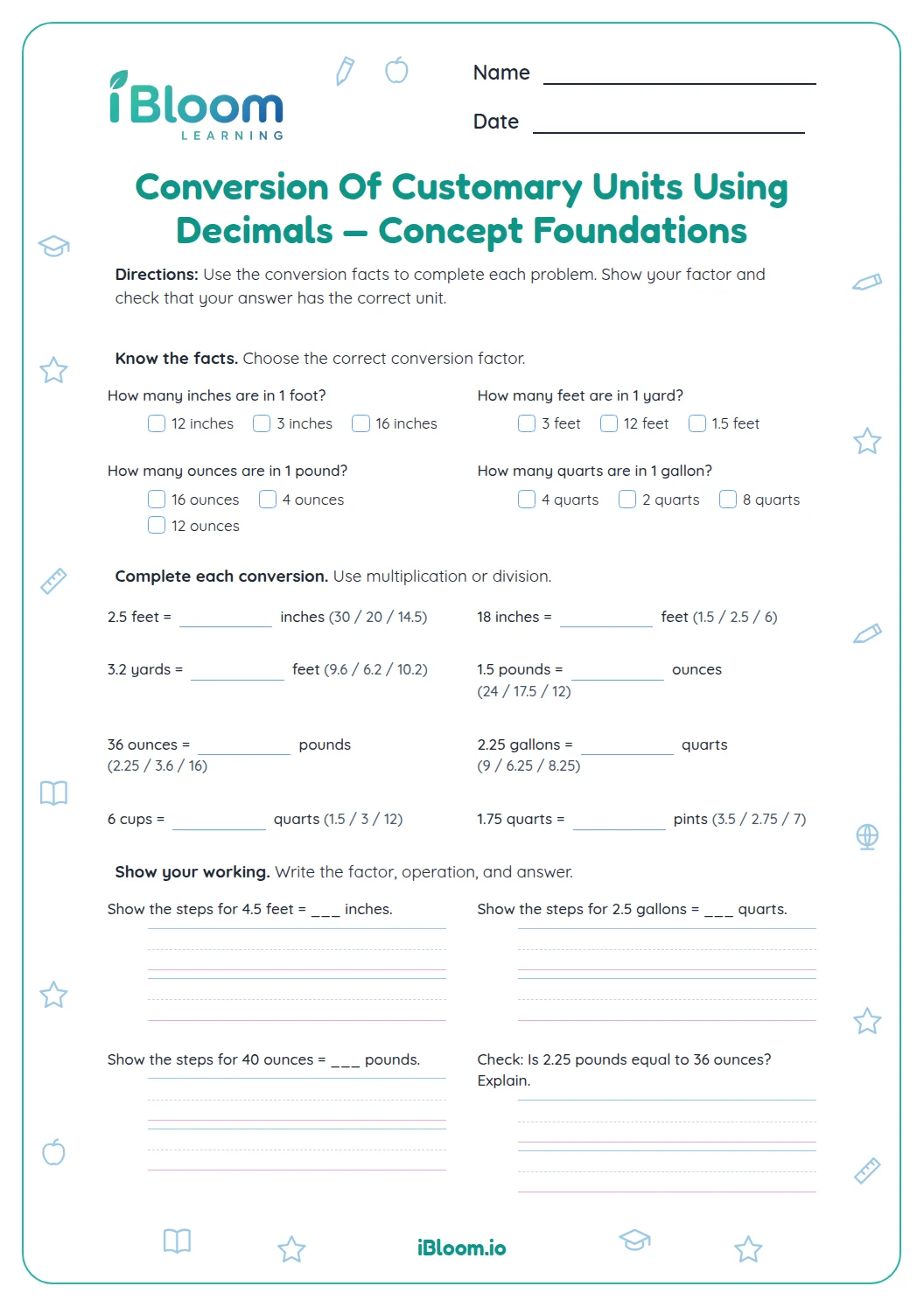
Calculate the equivalent measure using the unit relationship, then select the matching choice. Each choice set uses one target unit, so the values can be compared directly after converting.
Are answers always whole numbers?
No. Some exact answers are decimals. For example, 48 ounces shared among four teams gives 12 ounces per team, or 0.75 pound. Keep an exact decimal when the requested unit calls for it.
What is included in the answer key?
The key gives the matching choice for the first four questions and the final measurement for each story. Story answers include the unit named in the prompt, so students can check the number and its label together.