






About this worksheet
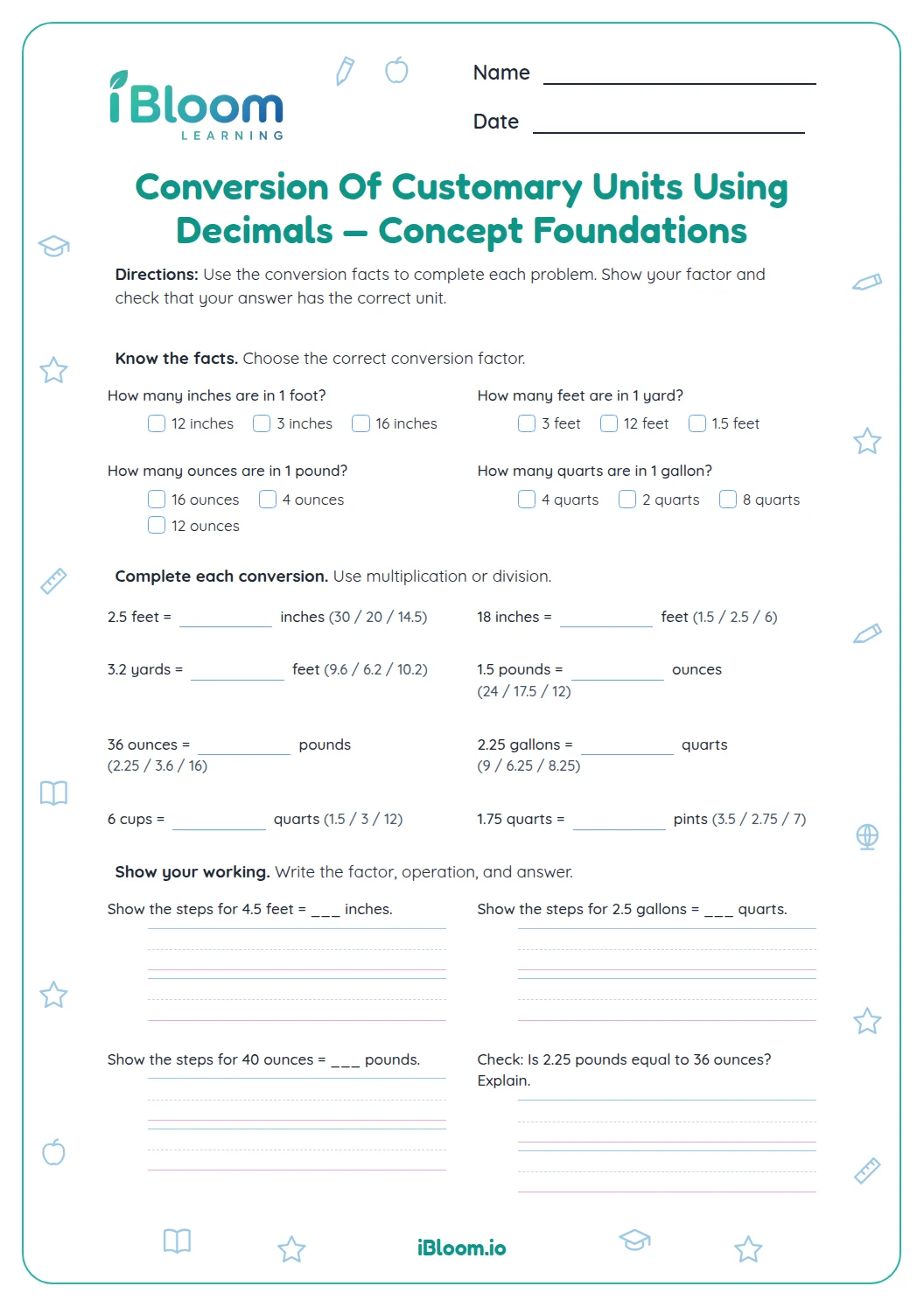
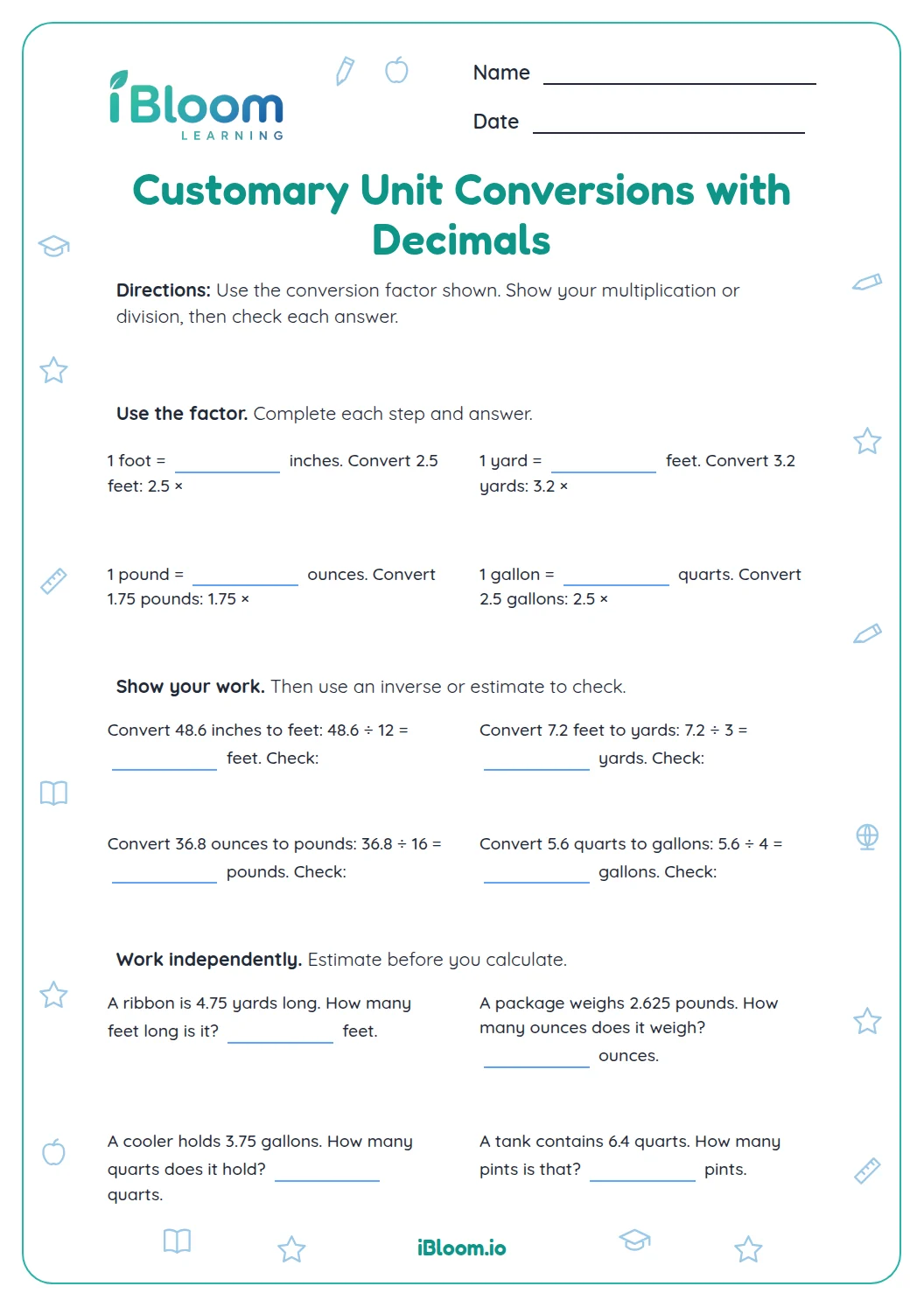
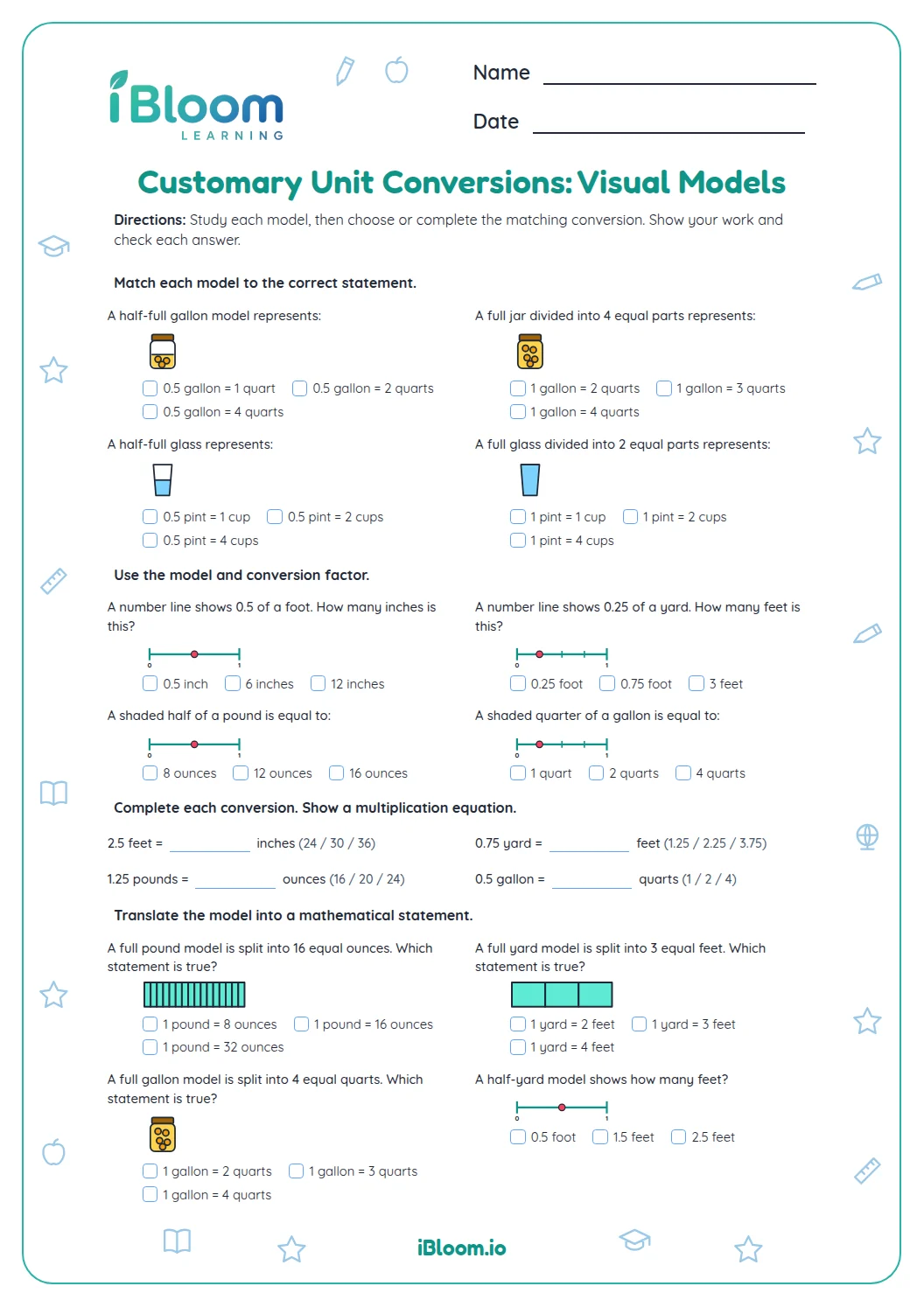
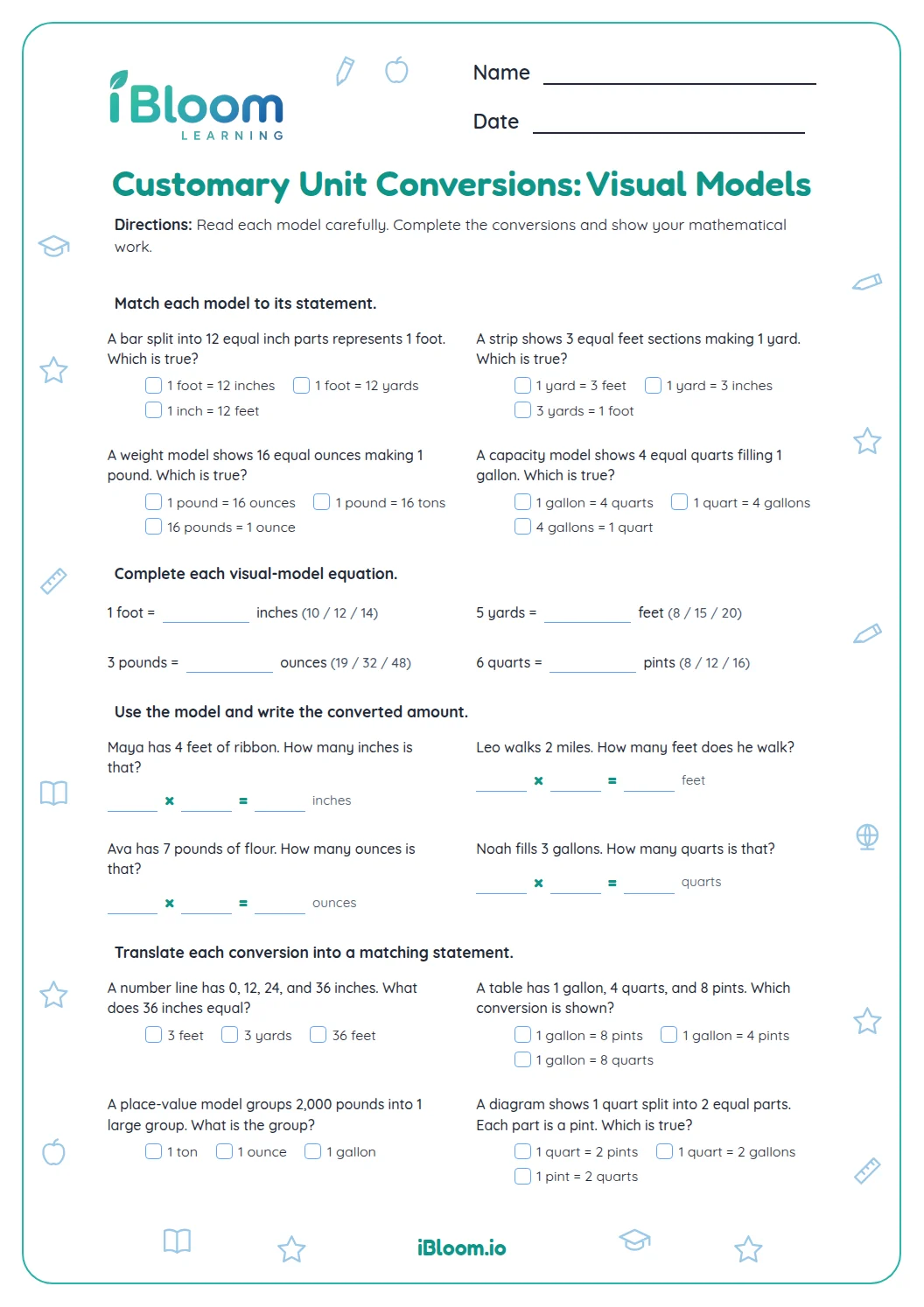
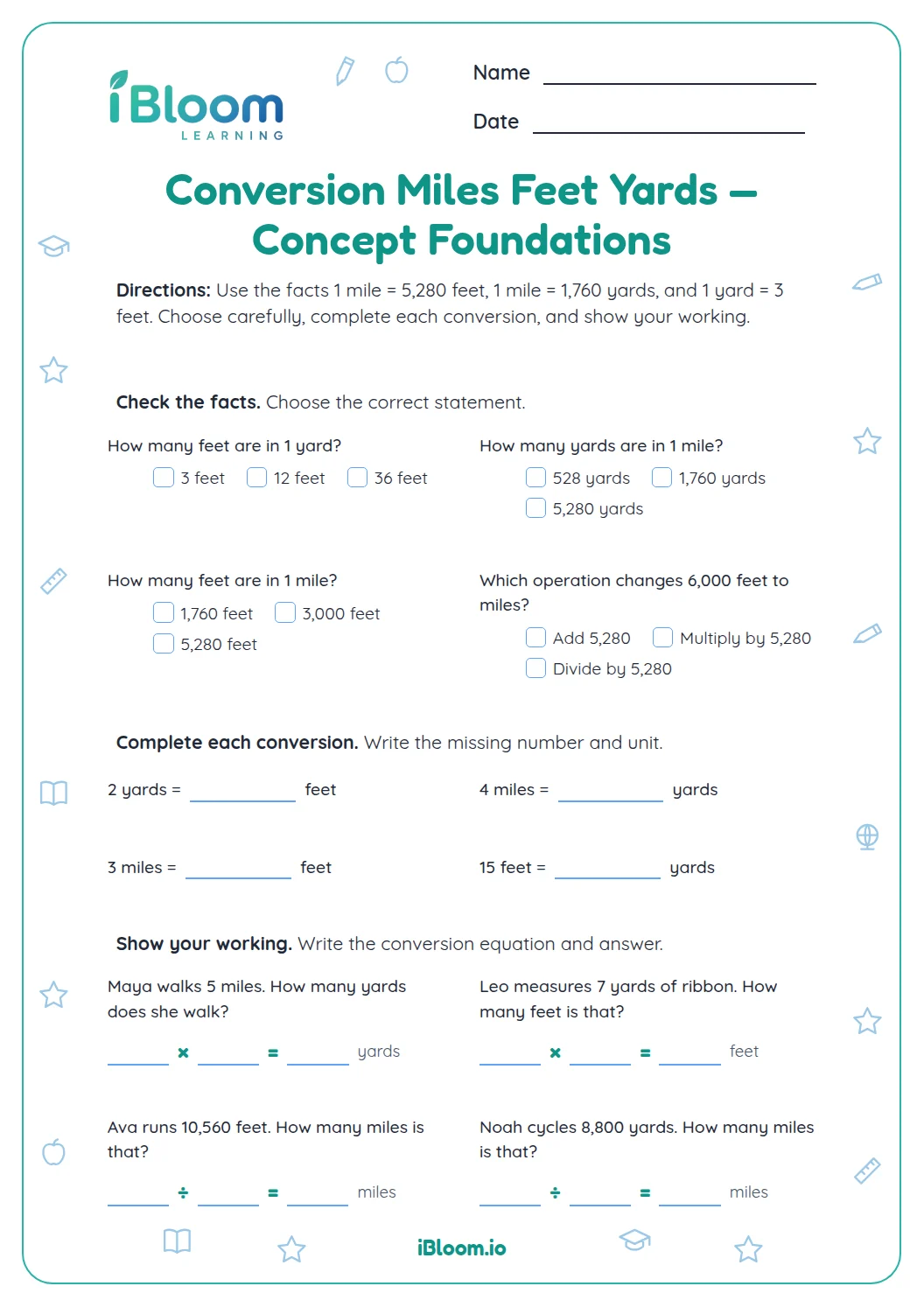
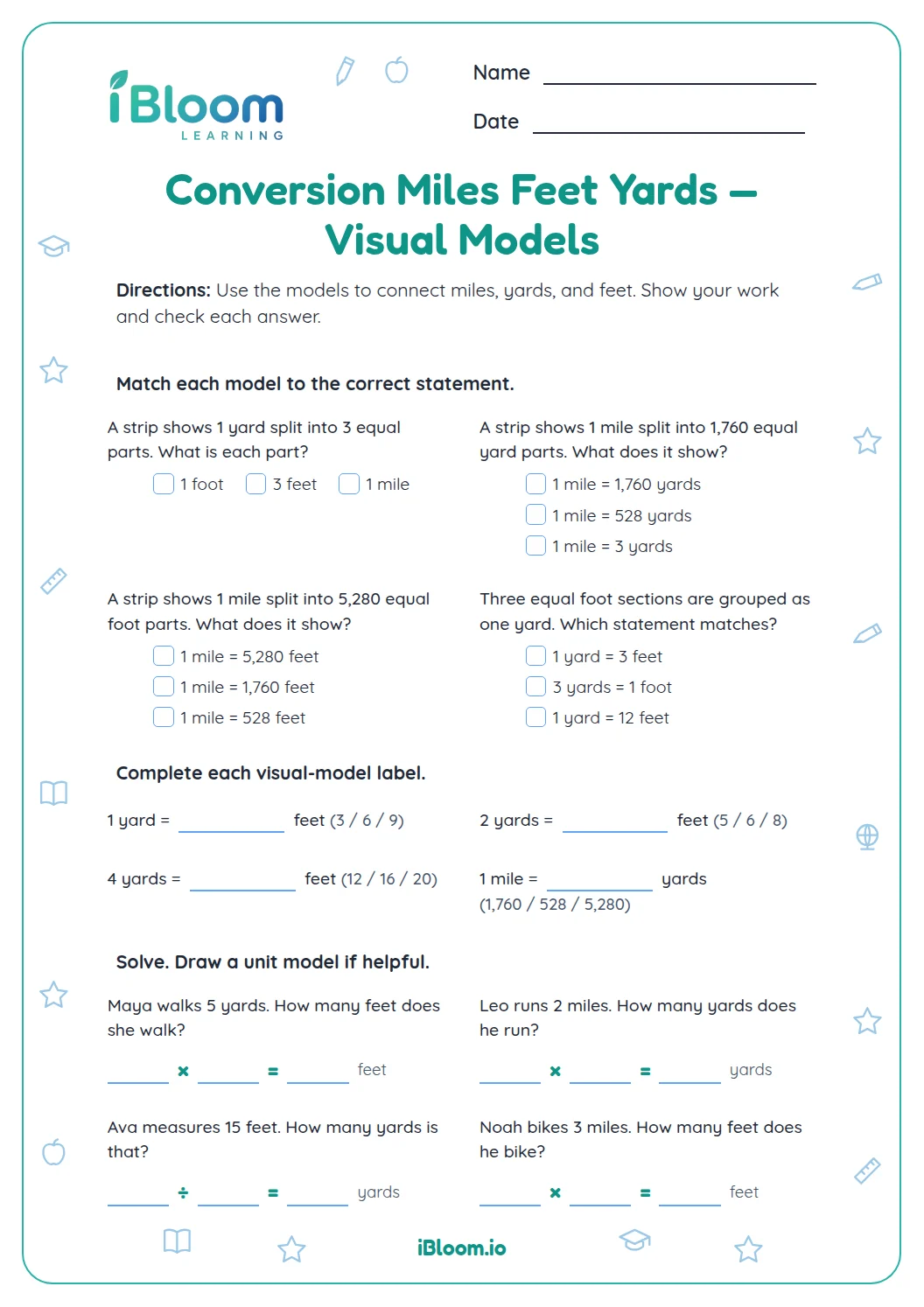
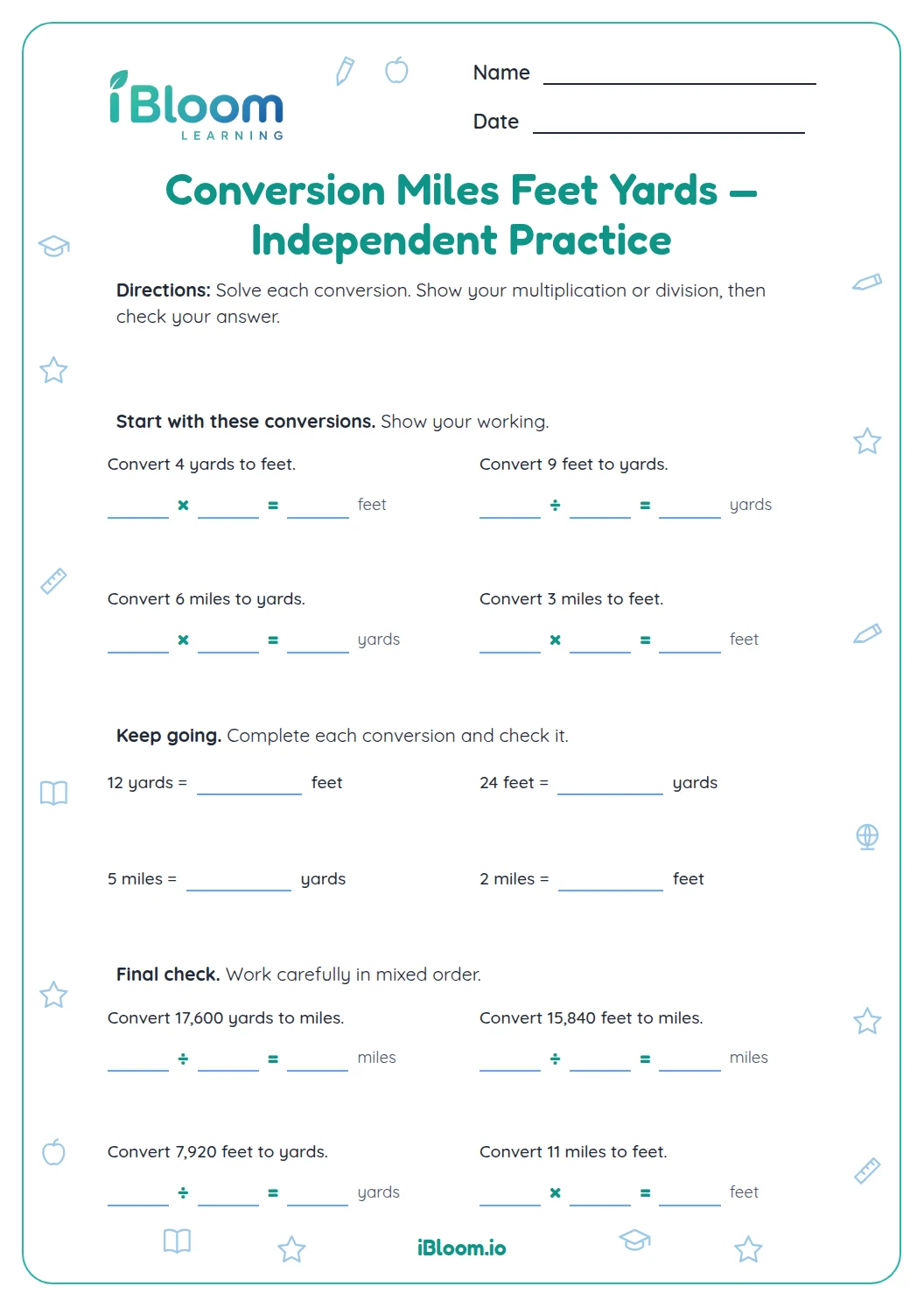
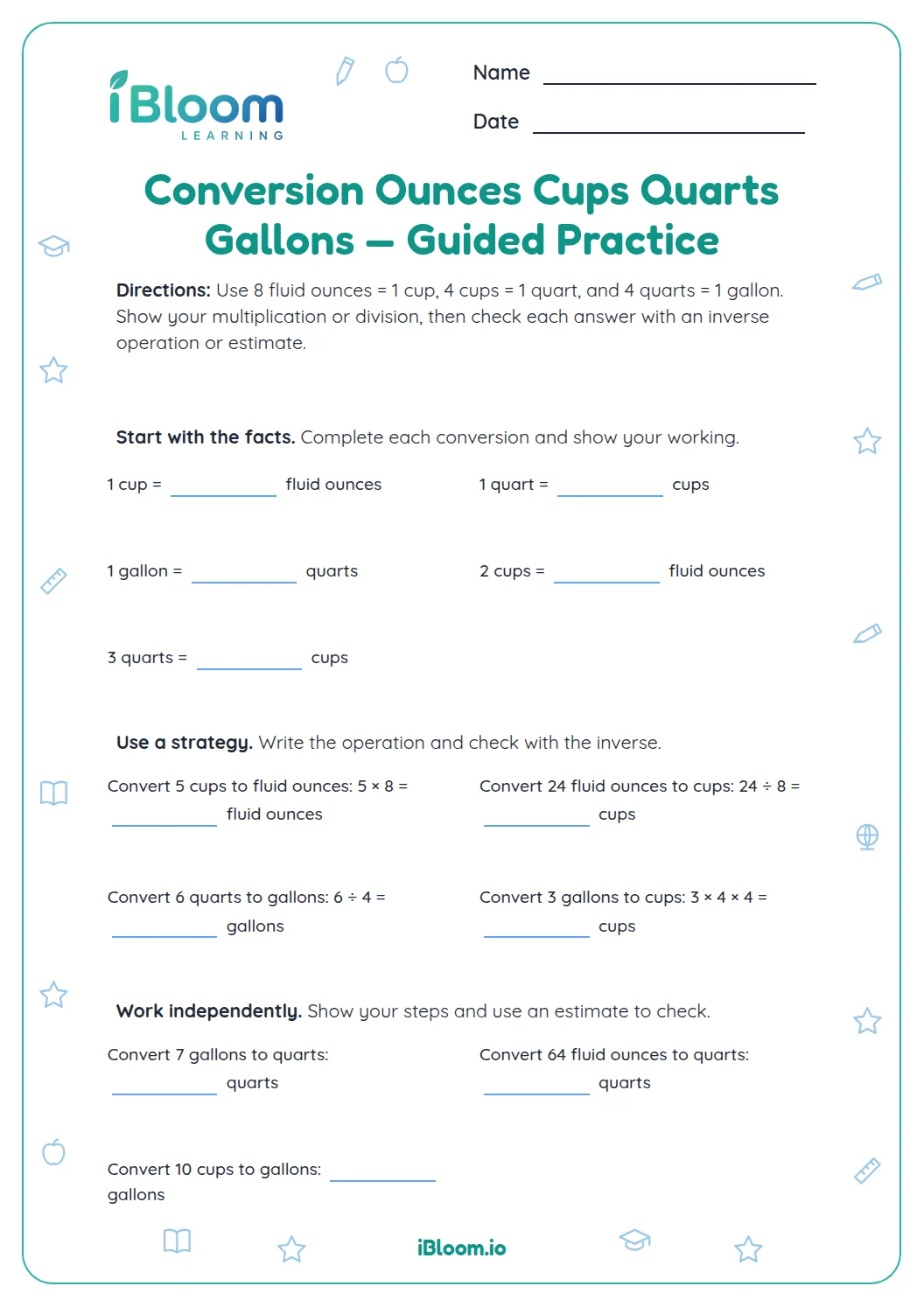
This Grade 6 worksheet puts decimal customary conversions into practical settings: craft materials, trails, shelves, recipes, coolers, containers, and packages. Students convert length, weight, or volume and often complete one more step, such as sharing a quantity or finding what remains. Every decimal produces an exact answer. The 17 questions practice CCSS 5.MD.A.1 by using unit conversions in multi-step real-world problems, with a separate answer key.
Aligned to 5.MD.A.1
What is a reliable way to convert customary units?
Begin with the unit relationship named in the question. For example, A 2.5-yd cord measures 2.5 × 3 = 7.5 ft. Keep the units beside each number so the conversion factor cancels the starting unit and leaves the requested one.
After converting, reread the prompt. Some items ask only for an equivalent measure, while a story may also ask for a total, a difference, or an equal share.
- 1A 2.5-yd cord measures 2.5 × 3 = 7.5 ft.
What will students practice on this page?
The worksheet has 2 parts and 17 questions. 5 length problems and 12 weight or volume problems. The sequence starts with the page’s central conversion skill and moves toward applications that require students to track units while calculating.
Every answer can be checked by using the conversion relationship in reverse or by estimating whether a larger or smaller unit should produce a larger or smaller number.
How can families use the answer key?
Have students show the conversion factor and any additional operation before checking the key. If an answer differs, compare the unit relationship and the operation first, then redo the arithmetic. The key gives values only when the blank already prints the unit; story answers include the requested unit.
How to use this worksheet
- 1Read the target unit before choosing a conversion factor.
- 2Write the equal-unit relationship beside the problem.
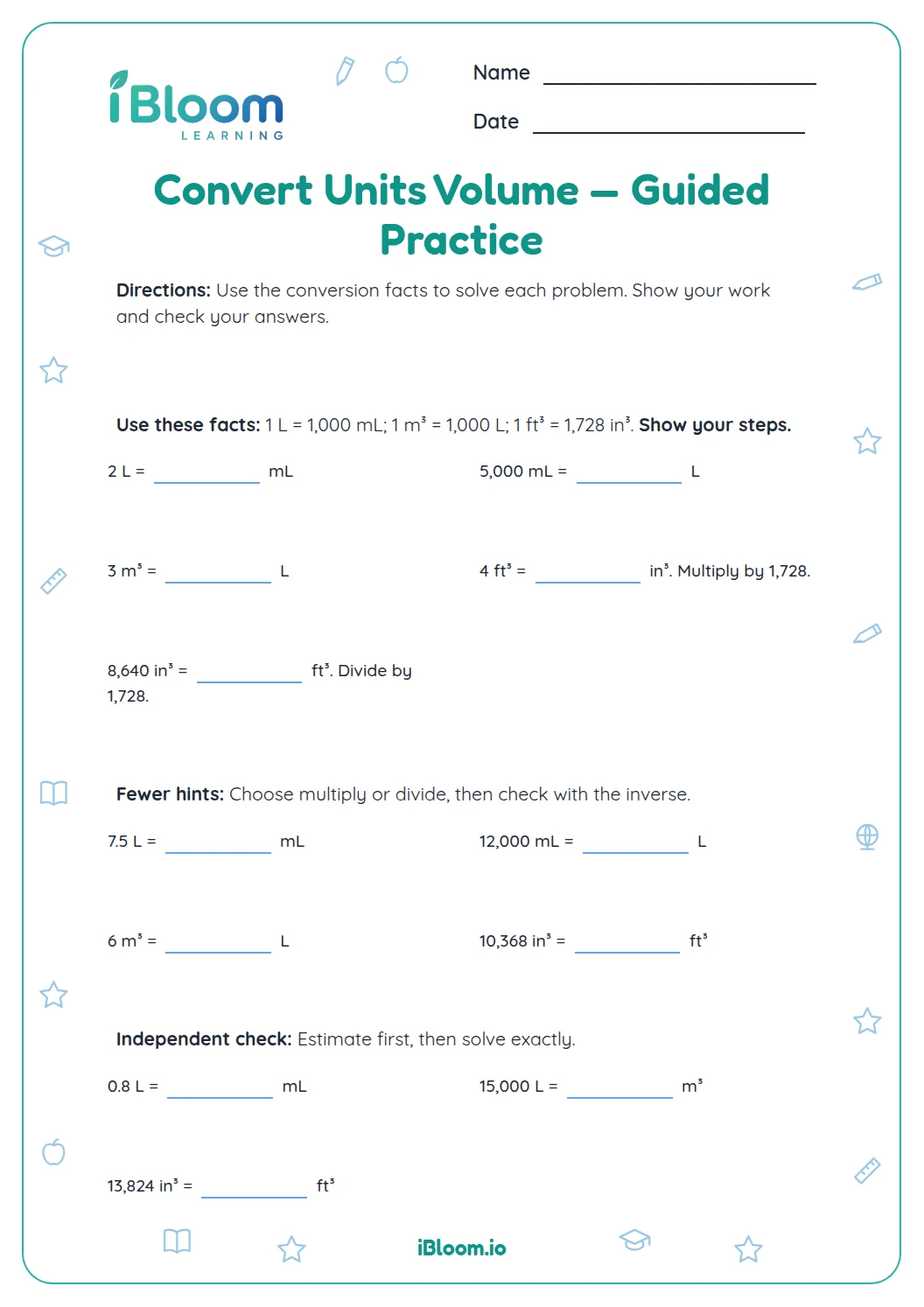
- 3Multiply when changing to smaller units and divide when changing to larger units.
- 4For a story problem, convert before adding, subtracting, or sharing.
- 5Check that the final unit matches the question.
Common mistakes and quick fixes
The mistake
Multiplying when converting to a larger unit.
The fix
Ask whether the new unit is larger or smaller, then choose division or multiplication.
The mistake
Using the wrong number of feet, ounces, or cups per unit.
The fix
Write the unit relationship first and keep its units visible while calculating.
The mistake
Stopping after conversion when a story also asks for a total or difference.
The fix
Convert first, then complete the story operation and check the requested unit.
This page practices converting customary units within one measurement system.
Convert customary measures and use those conversions in multi-step problems.
On this sheet:
Show the official wordingHide the official wording
Convert among different-sized standard measurement units within a given measurement system (e.g., convert 5 cm to 0.05 m), and use these conversions in solving multi-step, real world problems.
What to practice next
Make more practice
Further reading
Questions parents and teachers ask
What situations appear in the decimal problems?
The 17 stories use a cord, trail, shelf, bike route, banner, recipe, cooler, pitcher, and packages. Each gives a decimal customary measure or asks students to make an equal share. The prompt names the unit expected in the answer.
How should students solve a story conversion?
First write the relationship between the starting and target units. Convert the quantity, then complete any sharing or subtraction the story asks for. For instance, 2.5 yards × 3 feet per yard = 7.5 feet.
Which relationships are needed for weight?
Use 16 ounces = 1 pound and 2,000 pounds = 1 ton. For example, 1.75 pounds × 16 = 28 ounces. When the question asks for pounds from tons, multiply by 2,000.
Which relationships are needed for volume?
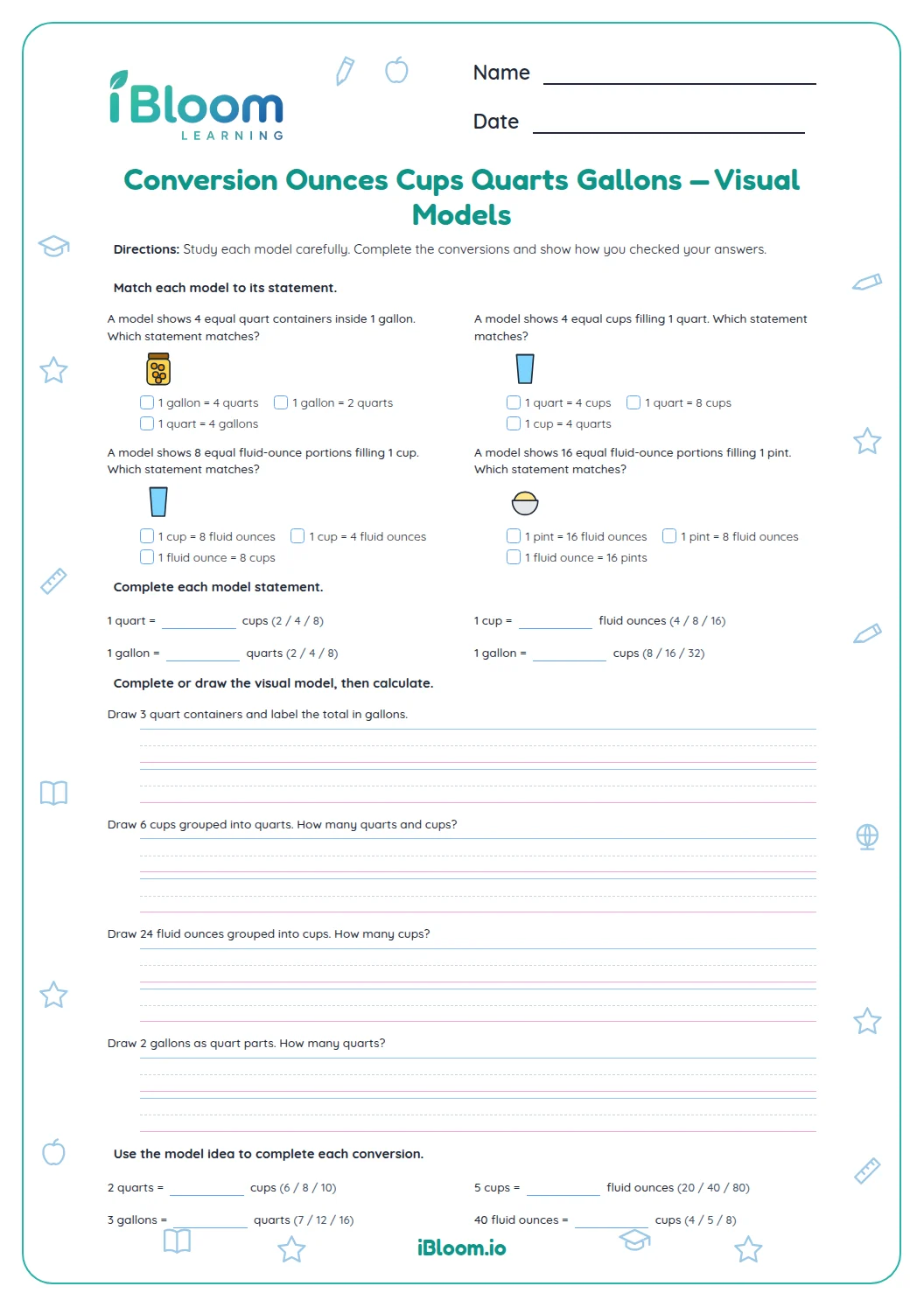
The problems use 2 cups = 1 pint, 2 pints = 1 quart, and 4 quarts = 1 gallon. These combine to 4 cups per quart and 16 cups per gallon. Students can use either the direct relationship or convert in two steps.
Should written answers include units?
Yes. Every story asks for a measurement, so students should state the requested unit with the value. The key also includes the units for these written situation answers, making it easier to check whether the conversion ended in the right unit.