


About this worksheet
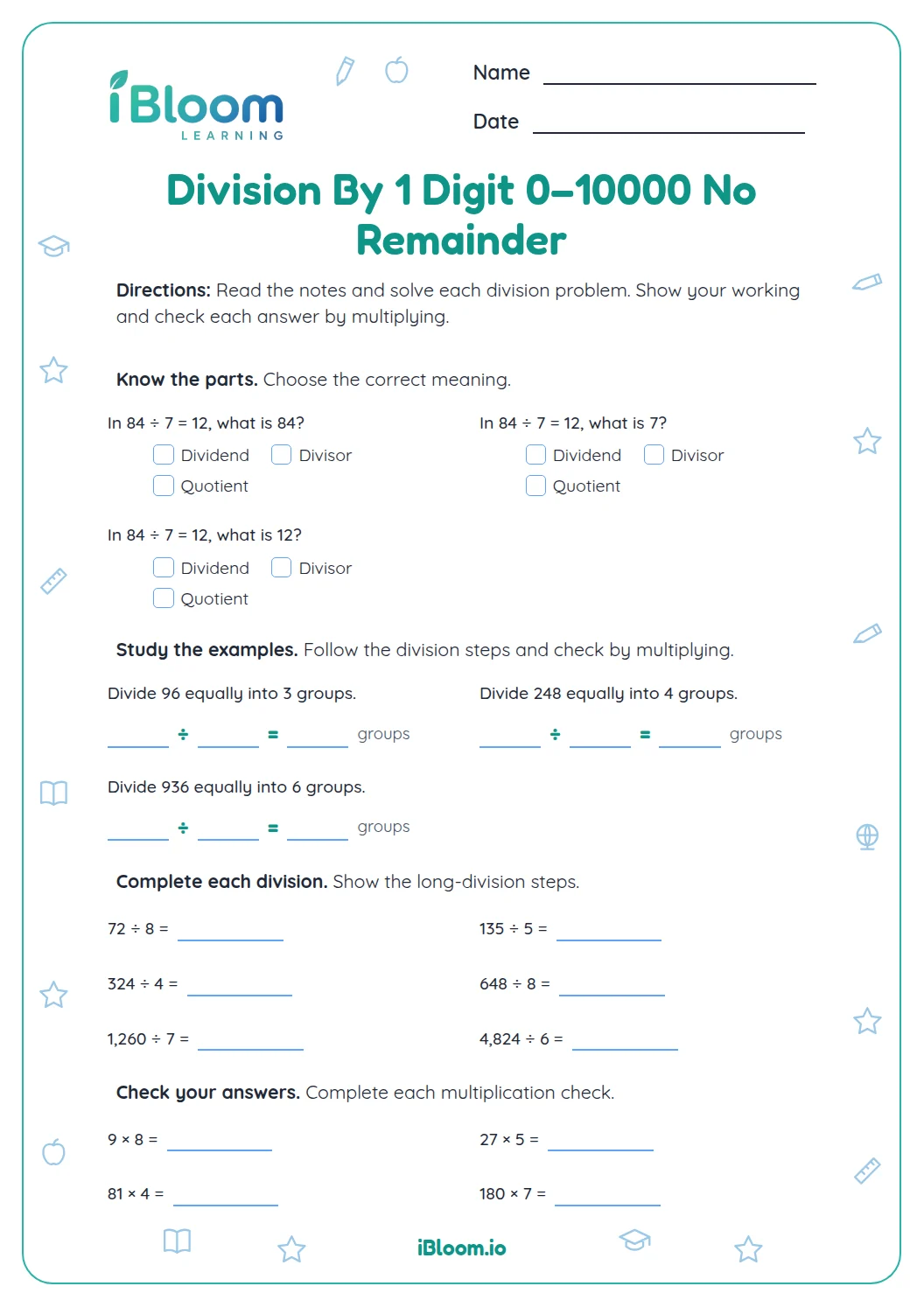
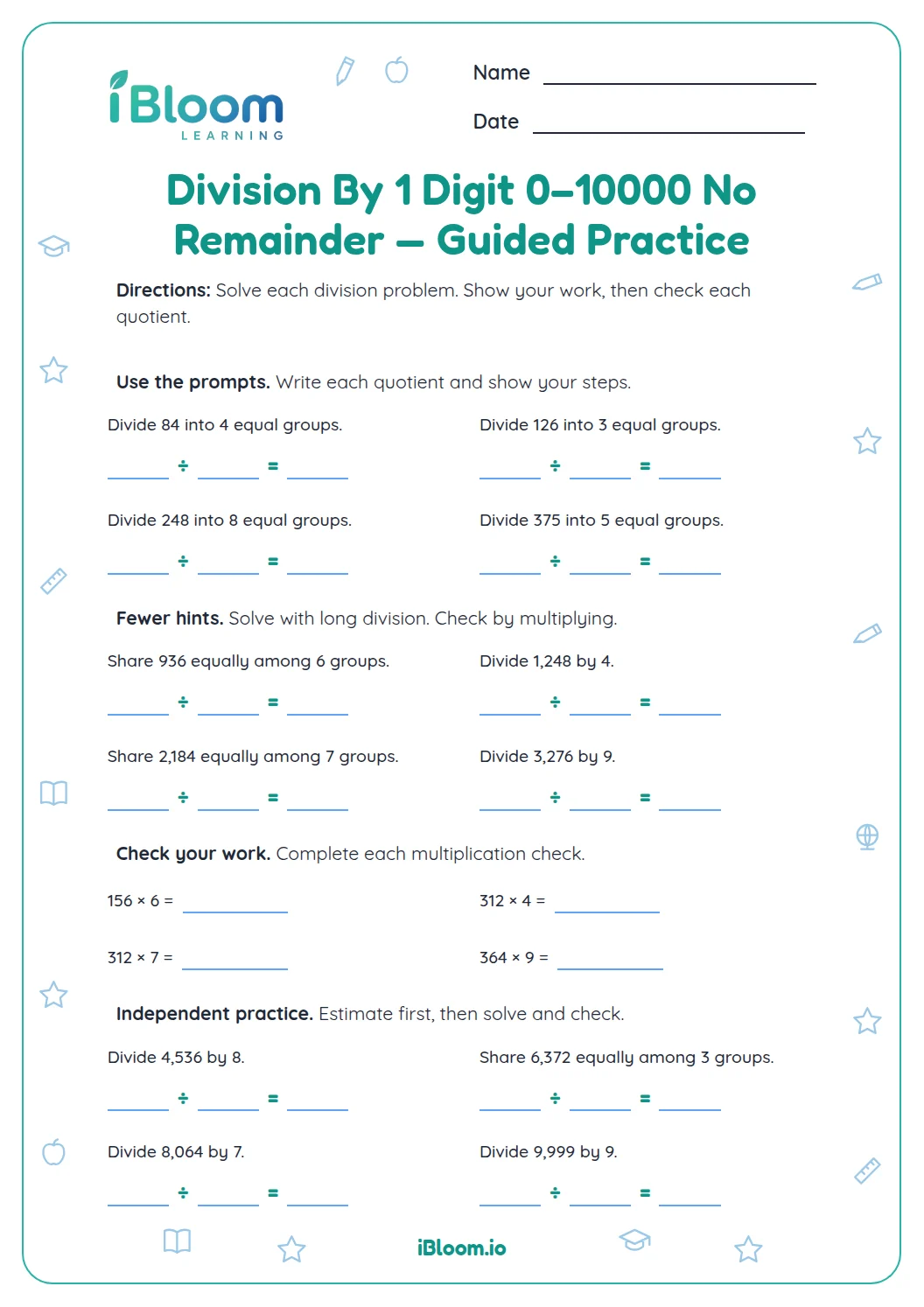
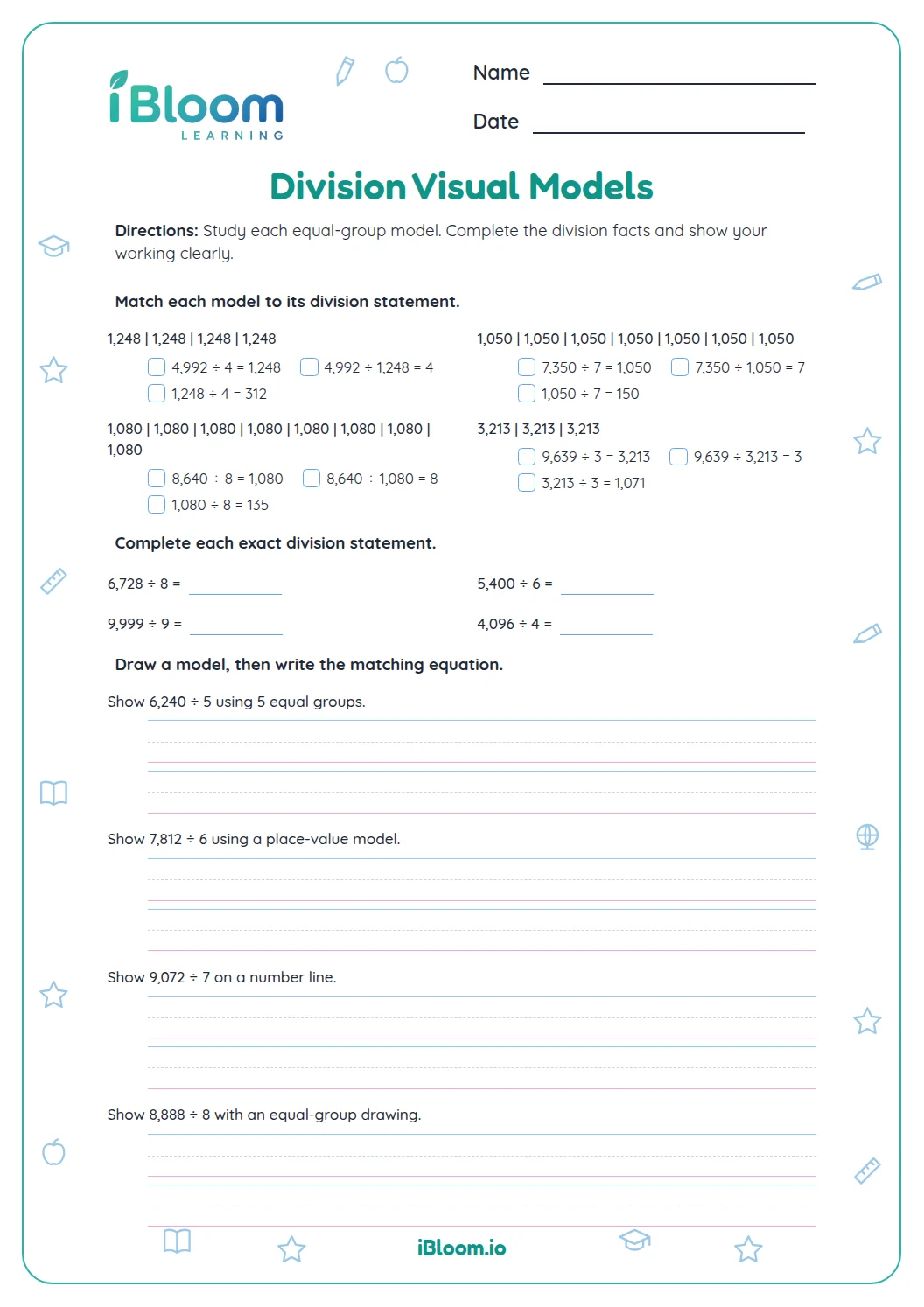
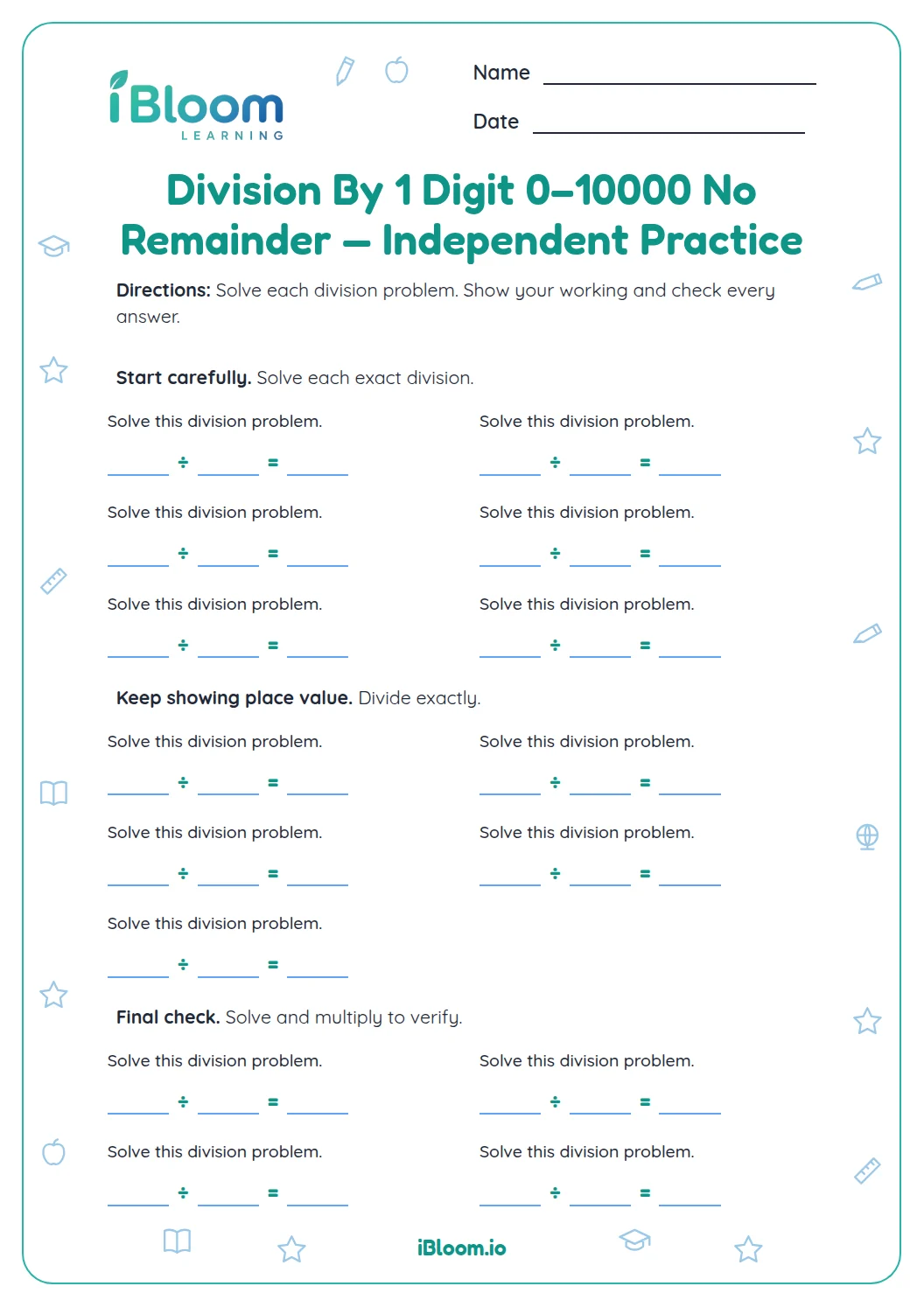
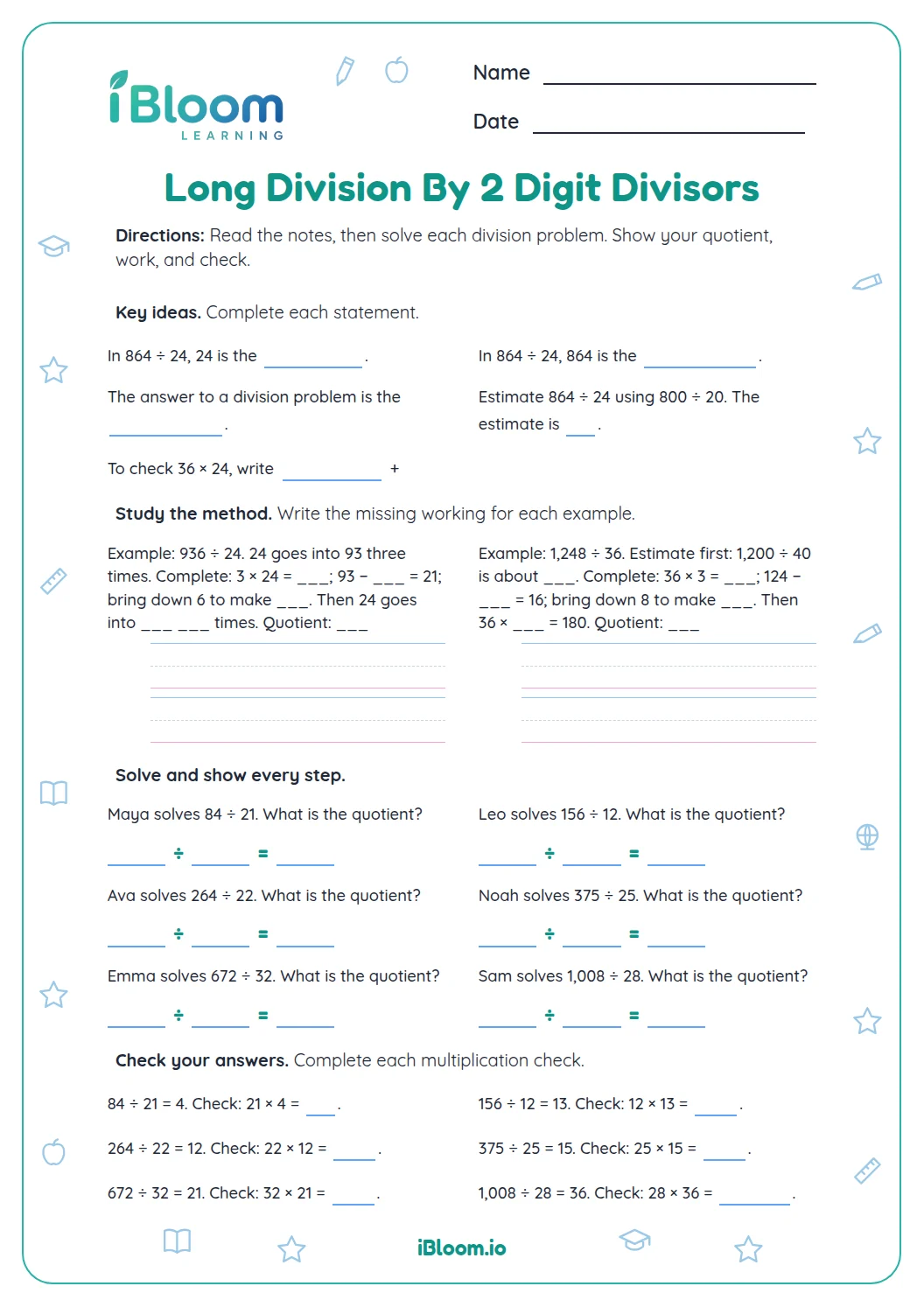
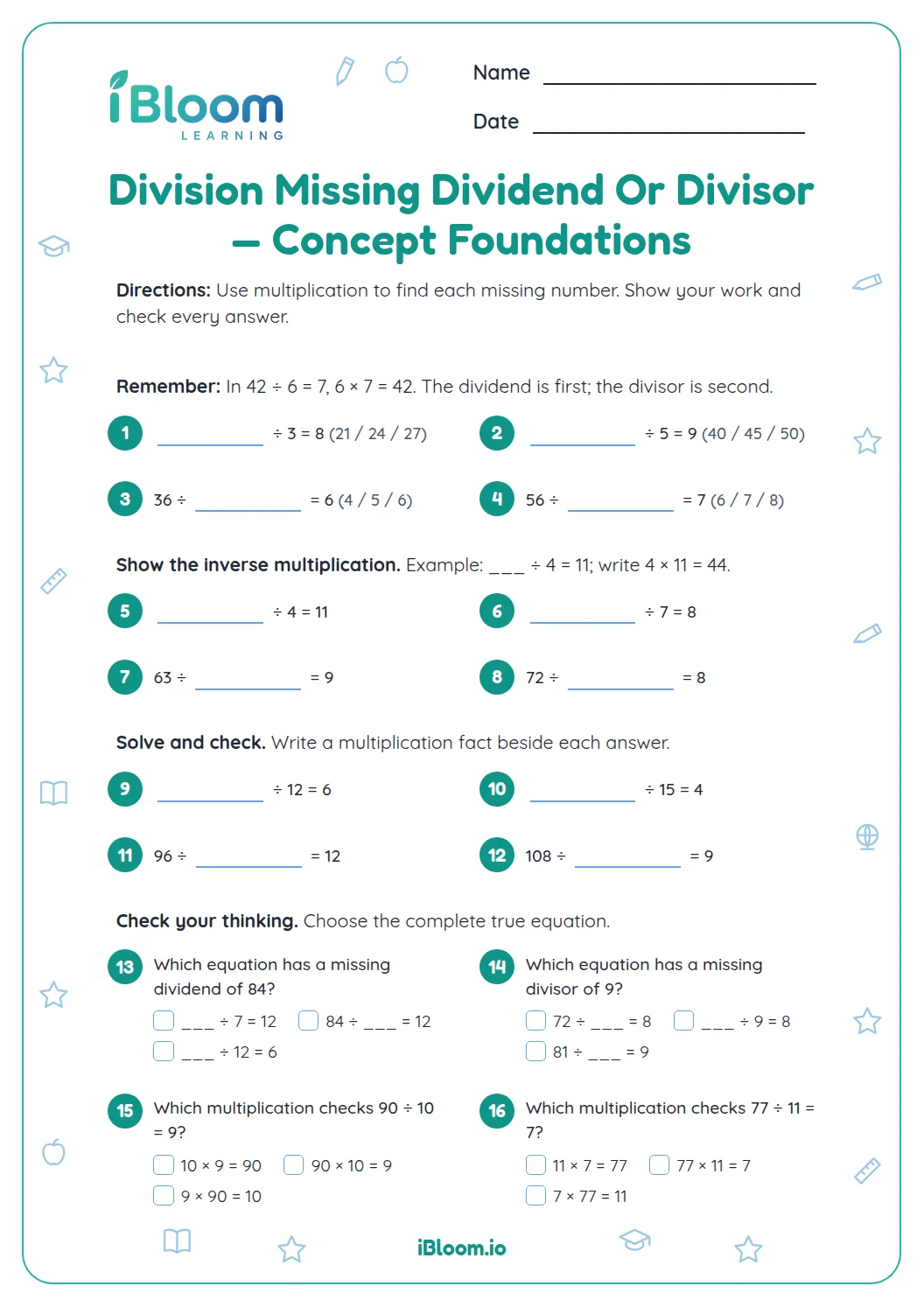
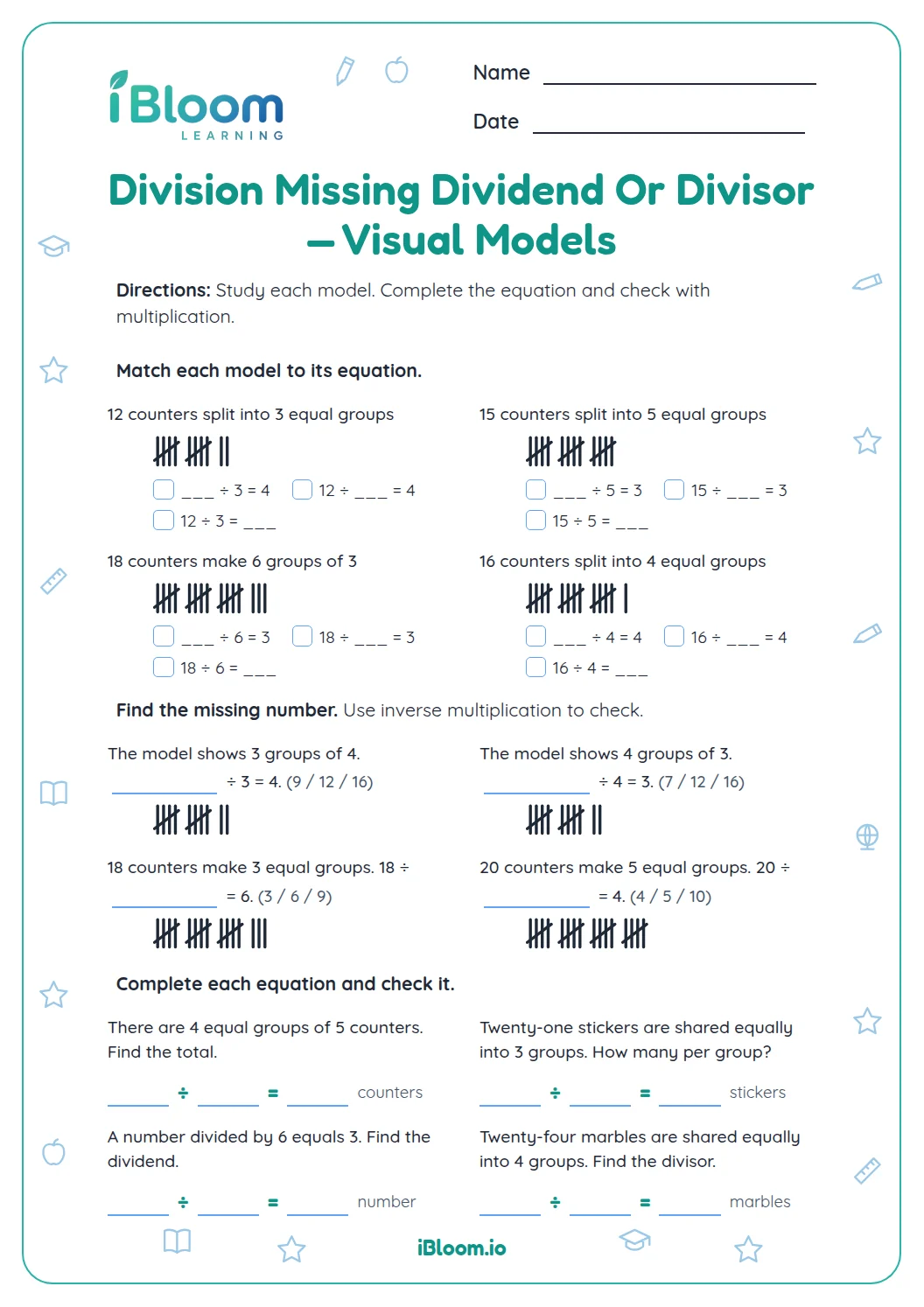
This two-page printable gives Grade 6 students practice dividing whole numbers by one-digit divisors, including dividends up to 100,000. Each item separates the quotient from the remainder with a printed R, and students can check each result by multiplication. The separate answer key lists both values for all 20 questions. It aligns with CCSS 6.NS.B.2, multi-digit division using the standard algorithm.
Aligned to 6.NS.B.2
Where do the quotient and remainder go?
In 157 ÷ 4 = ___ R ___, the quotient is 39 and the remainder is 1. Enter 39 before R and 1 after it.
Check: 4 × 39 + 1 = 157, and 1 is less than 4.
How can multiplication check a division answer?
Multiply the divisor by the quotient, then add the remainder. For 2,345 ÷ 8, 8 × 293 + 1 = 2,345, so the quotient is 293 and the remainder is 1.
What numbers are on the practice pages?
The 20 problems use one-digit divisors and dividends from 0 through 99,999. Exact divisions and divisions with a remainder both appear.
How to use this worksheet
- 1Read the dividend and divisor carefully.
- 2Estimate how many groups of the divisor fit.
- 3Subtract to find the amount left over.
- 4Record quotient and remainder in their separate spaces.
- 5Check that divisor × quotient + remainder equals the dividend.
Common mistakes and how to fix them
The mistake
Putting “39 R 1” in the quotient blank.
The fix
Write 39 before R and 1 after it.
The mistake
Keeping a remainder as large as the divisor.
The fix
Add one more group to the quotient and subtract its value.
The mistake
Forgetting to check the result.
The fix
Multiply the divisor by the quotient, then add the remainder.
Common Core alignment
The worksheet gives repeated practice with multi-digit whole-number division.
Divide multi-digit whole numbers with the standard algorithm.
On this sheet: Students divide whole numbers by one-digit divisors and record any remainder.
Show the official wordingHide the official wording
Fluently divide multi-digit numbers using the standard algorithm.
What to practice next
Make more practice
Further reading
Questions parents and teachers ask
What does the remainder represent?
The remainder is the amount left after as many full groups as possible have been made. It must be smaller than the divisor. For example, 157 ÷ 4 makes 39 groups with 1 left, because one more group of 4 would need 160 items.
How do I check a quotient and remainder?
Multiply the divisor by the quotient and add the remainder. The total must match the dividend. For 157 ÷ 4, calculate 4 × 39 + 1 to get 157. Also check that the remainder is less than 4.
Can the remainder be zero?
Yes. A remainder of zero means the dividend divides evenly by the divisor. In that case, write 0 in the blank after R. The quotient still belongs in the first blank, before the printed R. The key includes exact divisions too.
Why is there an R between the blanks?
The printed R separates the quotient from the remainder. The first answer space is for the number of complete groups. The second is for the amount left over, so write one value in each space. Keeping them separate makes each result easier to check.
What is included in the answer key?
The key gives the quotient and the remainder for each of the 20 problems. Students can compare both entries, then verify a result by multiplying the quotient by the divisor and adding the remainder. The remainder should stay smaller than the divisor.