



About this worksheet
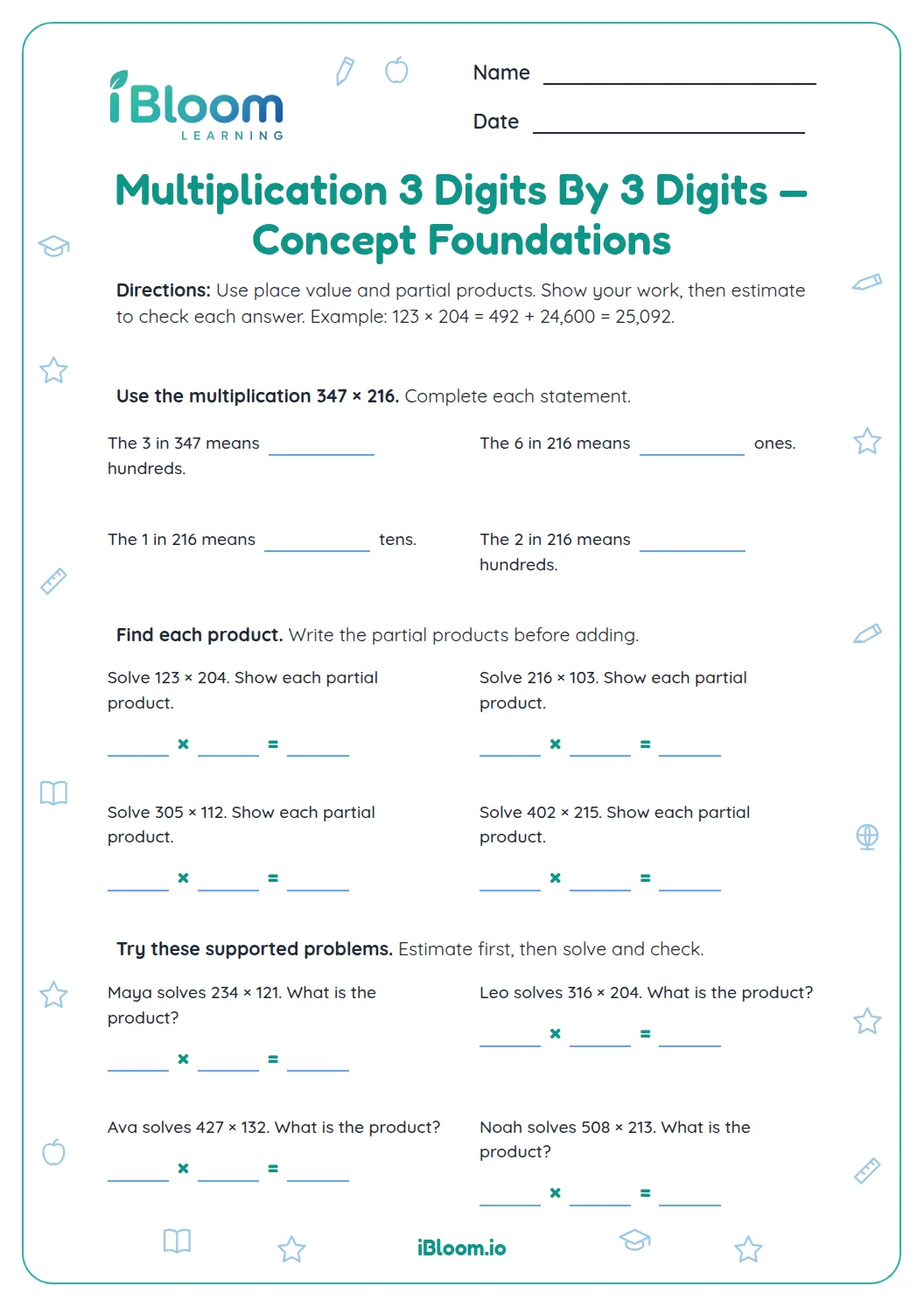
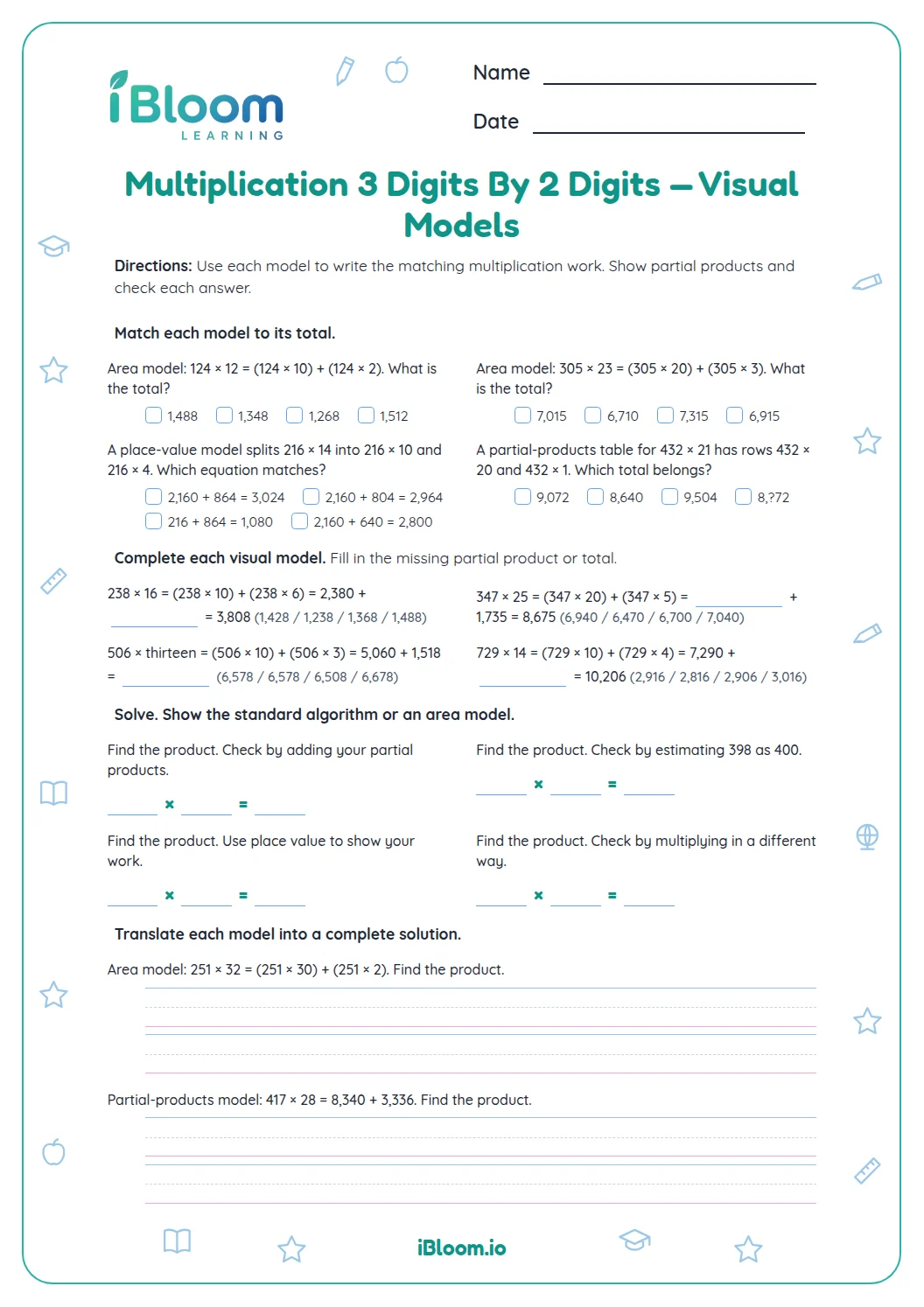
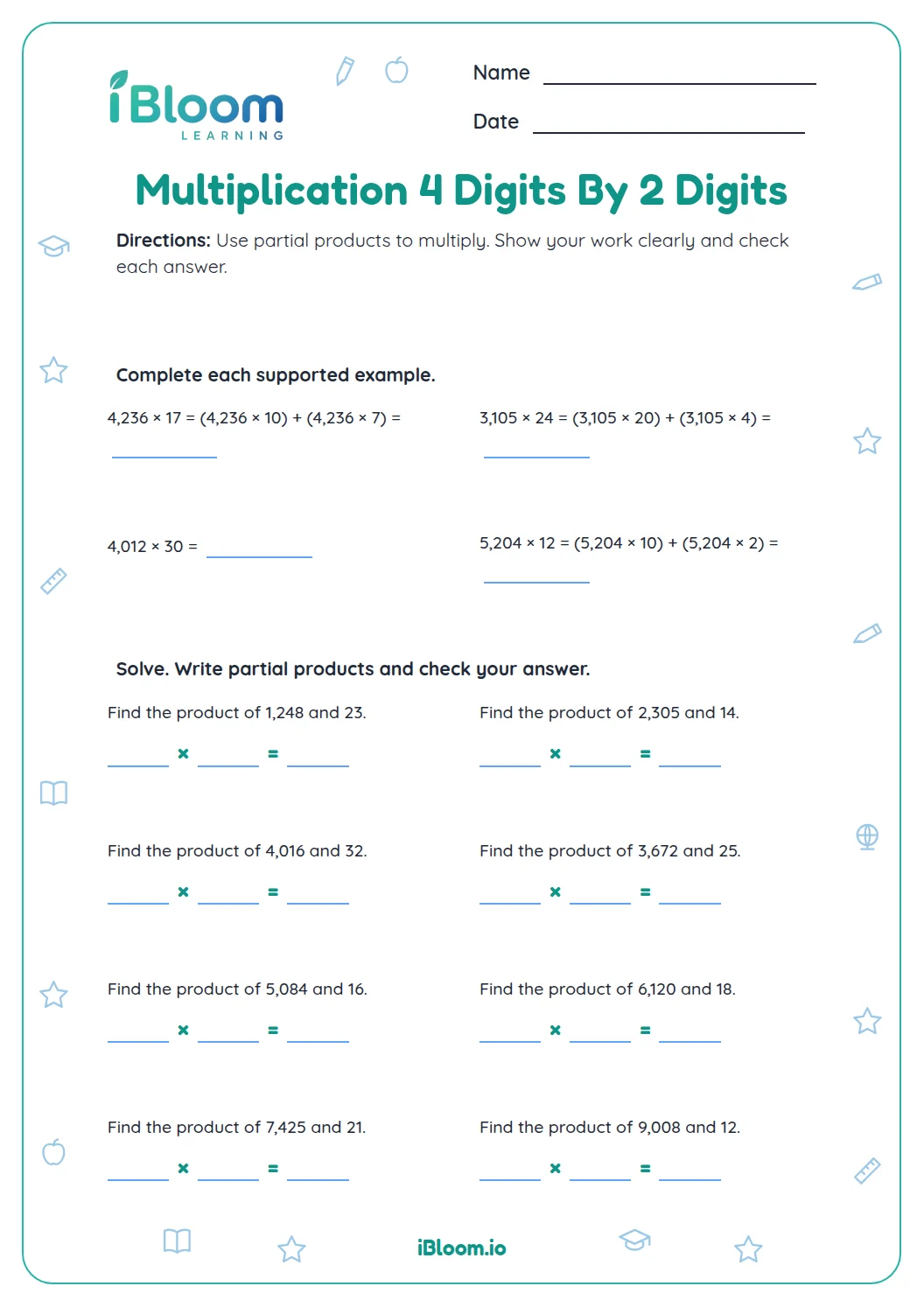
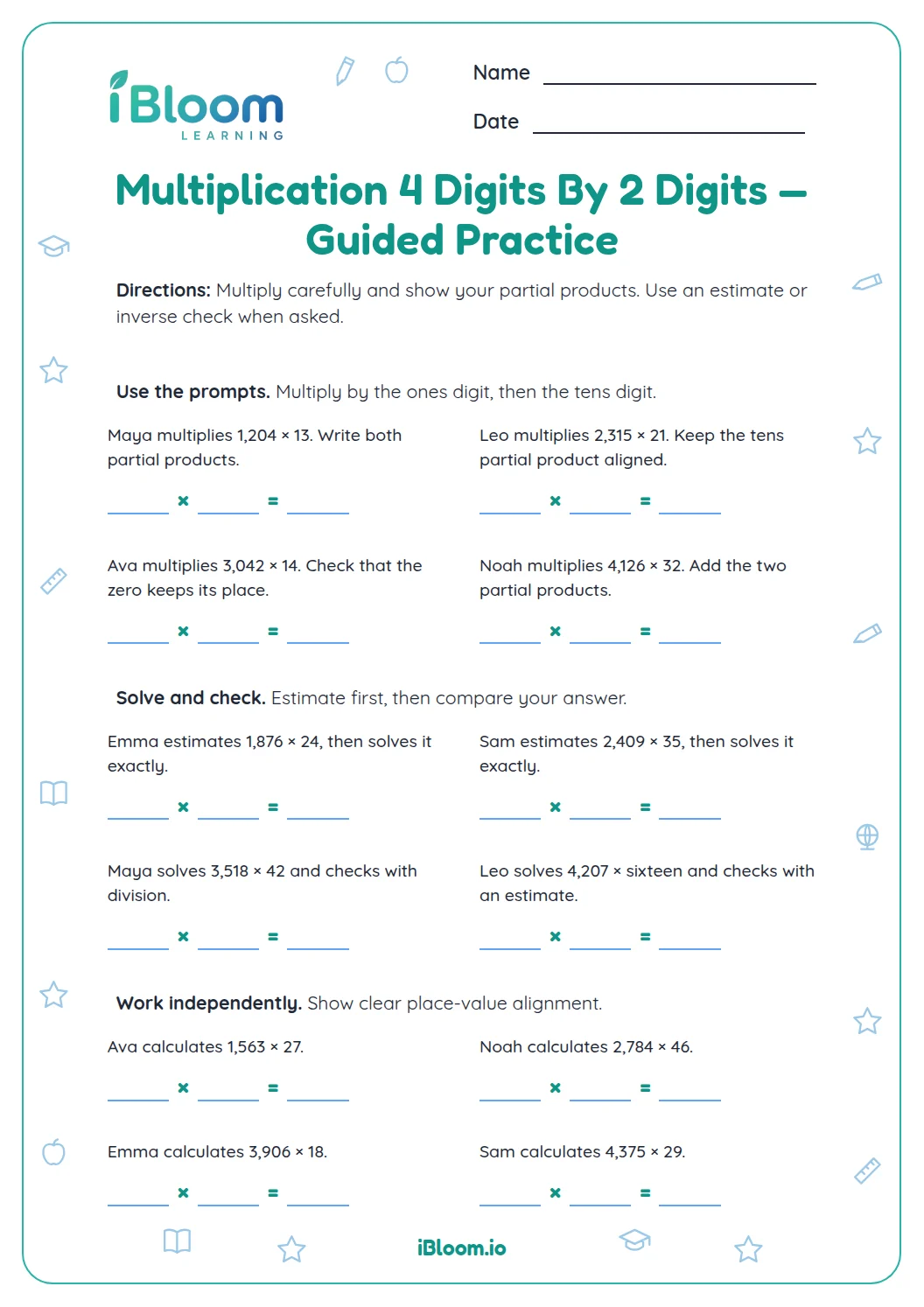
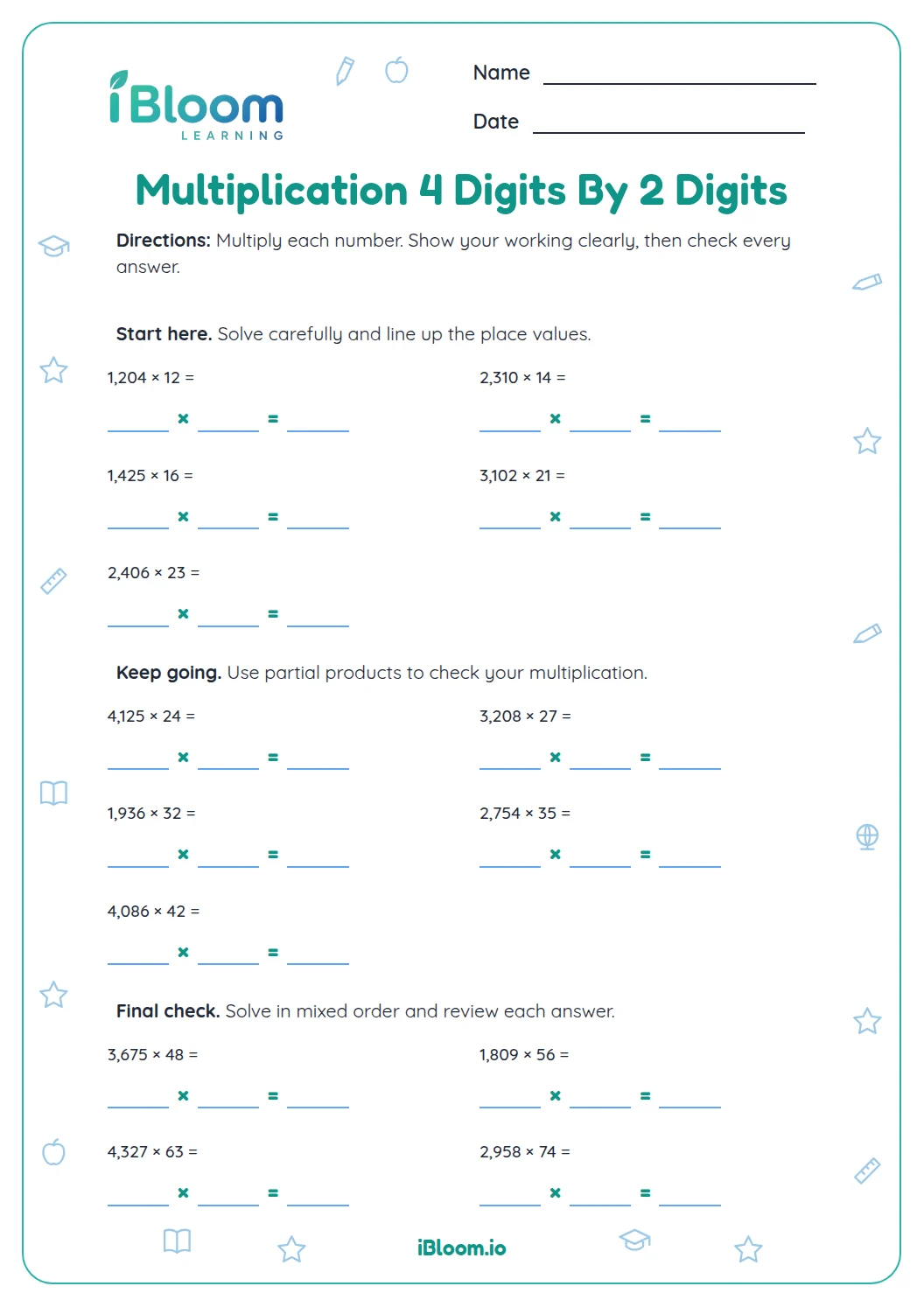
This free printable gives Grade 6 students independent practice multiplying three-digit whole numbers. It practices the Common Core 5.NBT.B.5 goal of fluently multiplying multi-digit whole numbers with the standard algorithm. All 14 problems show both factors and provide work space; a separate answer key lists the products.
Aligned to 5.NBT.B.5
How can students organize a three-digit product?
Read 123 × 214 from Part A and write the factors in place-value columns. Multiply 123 by 4, then by 10, then by 200; add the partial products to get 26,322.
How does the practice progress?
Part A begins with smaller factors and several zero digits. Part B changes the values and place-value steps. Part C mixes in larger factors, so students must keep each partial product in the correct column.
How should students check a product?
Estimate by rounding each factor to a nearby hundred, then compare the estimate with the exact product. For 123 × 214, 100 × 200 gives 20,000, a useful check on the size of 26,322.
How to use this worksheet
- 1Read both factors and the multiplication sign.
- 2Write the factors in place-value columns.
- 3Find each partial product or use the standard algorithm.
- 4Add carefully, keeping digits in the right columns.
- 5Estimate and compare with the separate answer key.
Common mistakes and quick fixes
The mistake
Misaligning a partial product.
The fix
Write each product under the place value it represents.
The mistake
Forgetting a zero placeholder when multiplying by tens or hundreds.
The fix
Label the row by its place value before multiplying.
The mistake
Copying one factor incorrectly.
The fix
Check both printed factors before starting and compare the final estimate.
Curriculum alignment
Students multiply three-digit whole numbers with the standard algorithm or partial products.
On this sheet:
Show the official wordingHide the official wording
Fluently multiply multi-digit whole numbers using the standard algorithm.
What to practice next
Make more practice
Further reading
Questions parents and teachers ask
Are the factors printed on the student page?
Yes. Every one of the 14 problems prints both three-digit factors and the multiplication sign on the student worksheet. Students do not need to copy values from the answer key; they can solve each visible problem in the provided work space.
How many problems and pages are included?
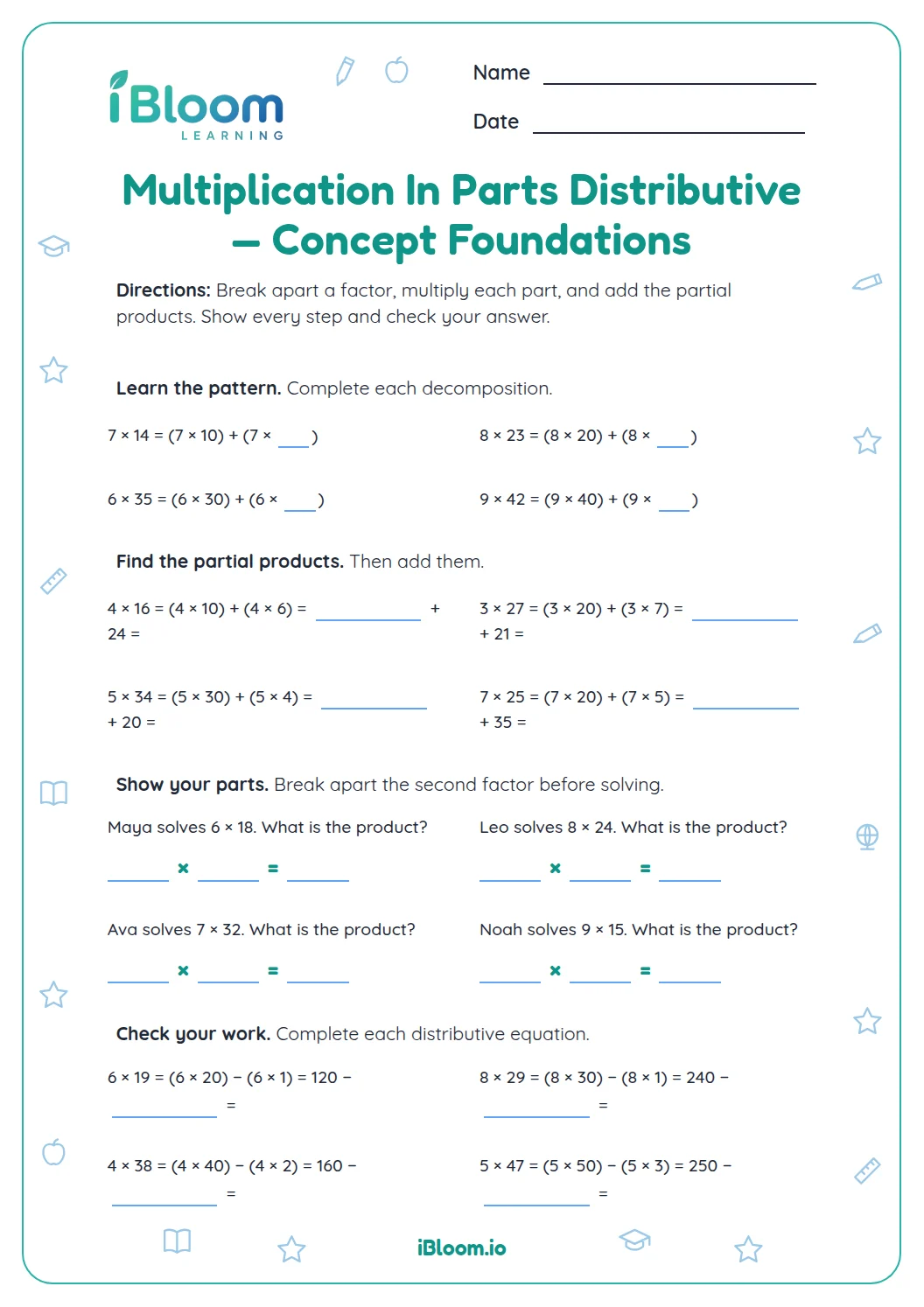
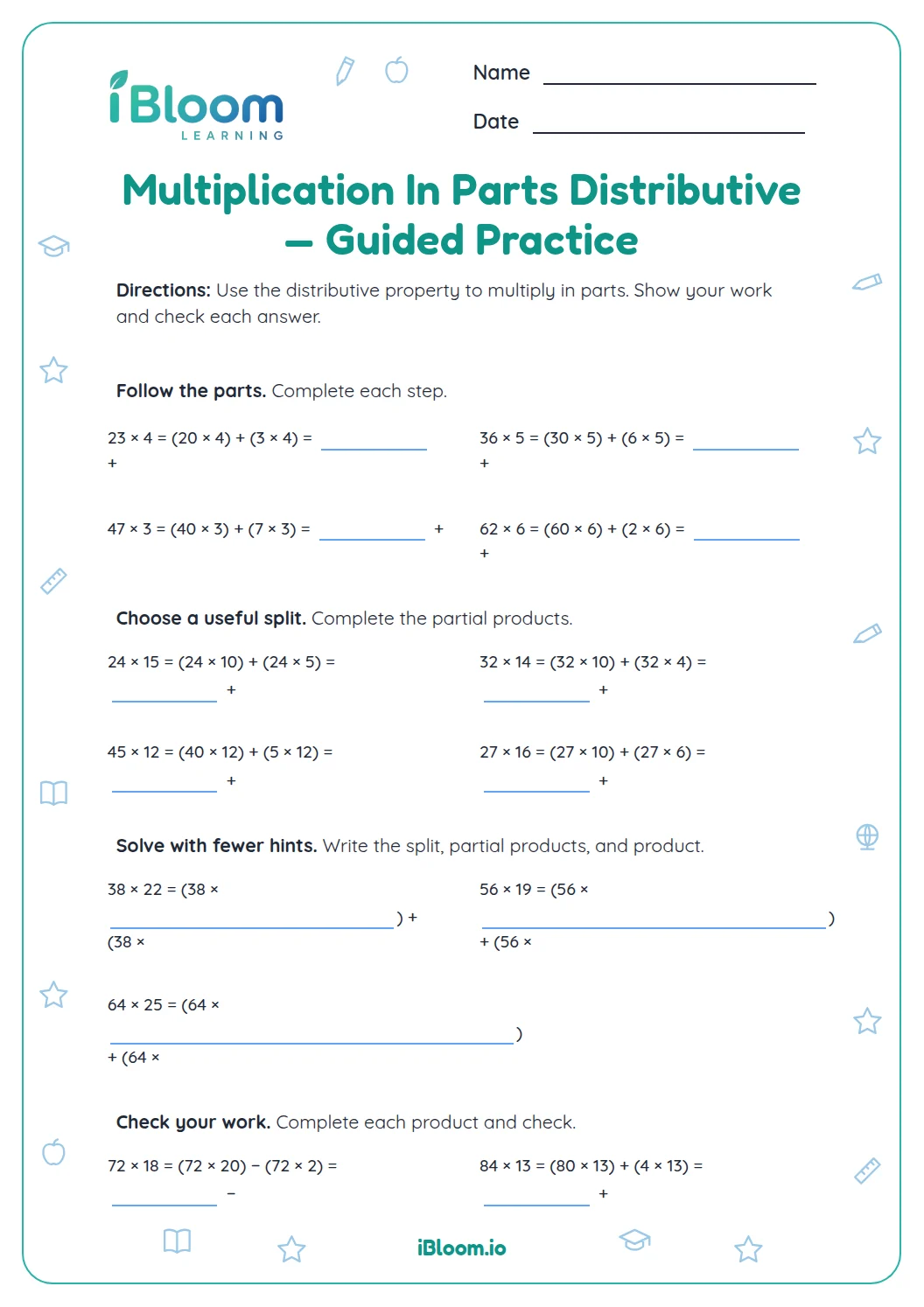
The worksheet has 14 multiplication problems arranged in three parts across two student pages. The answer key uses two separate pages. The parts begin with accuracy practice, continue with place-value work, and end with a final mixed set for students to solve independently.
Can students use partial products?
Yes. The directions allow partial products or the standard algorithm. For example, 123 × 214 can be split into 123 × 4, 123 × 10, and 123 × 200; adding those partial products gives 26,322. The work space can show each row before students add.
What grade is this worksheet for?
The sheet is labeled Grade 6 and asks students to multiply three-digit whole numbers. The factors stay visible in each problem, while the separate work space lets students record the steps they use to reach each product. An adult can review one example first.
What does the answer key show?
The answer key lists the exact product beside each matching problem. Students should complete the worksheet before checking it. If a result differs, compare the factor rows and place values first, then recompute the partial products and estimate whether the product is reasonable.