




About this worksheet
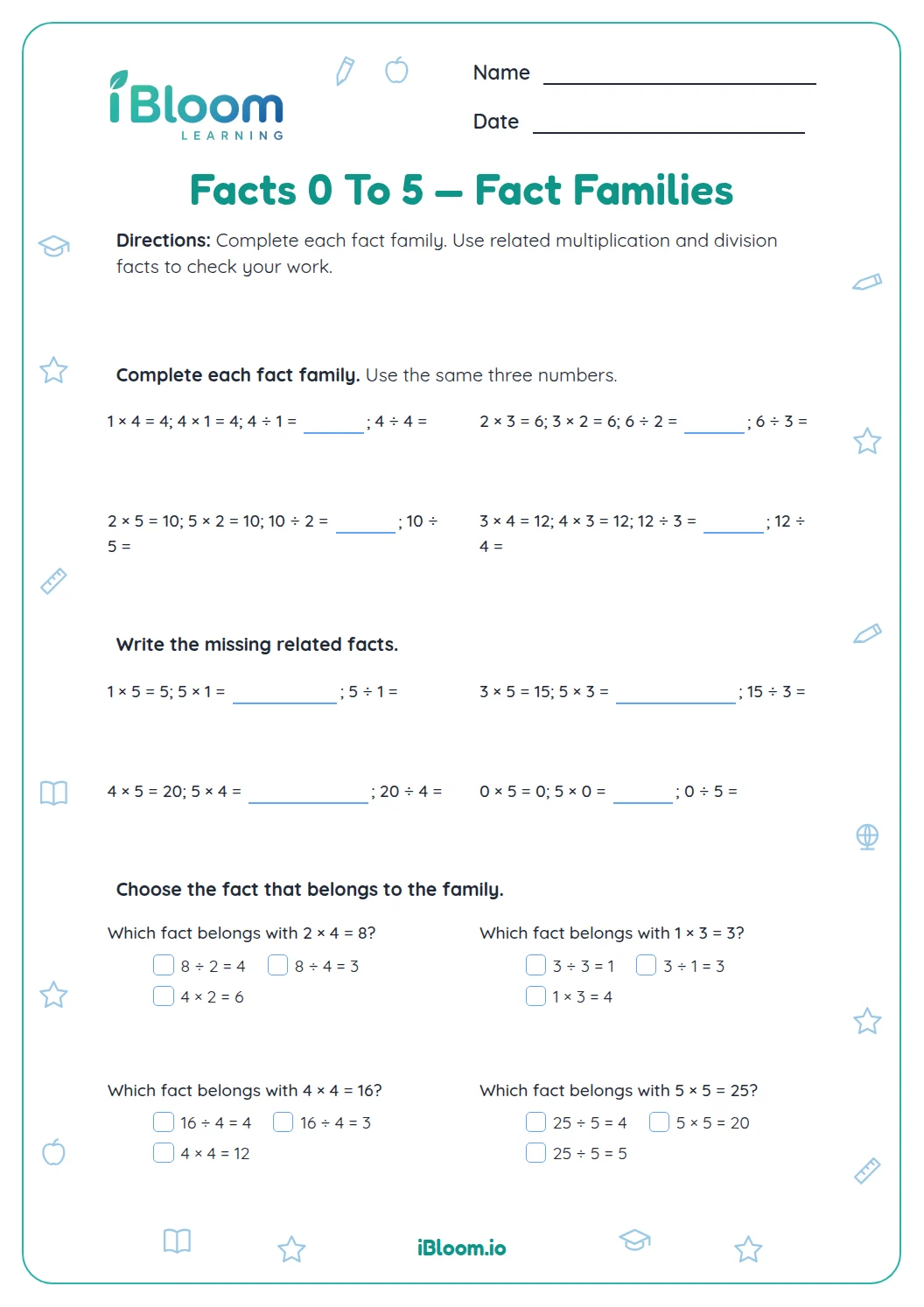
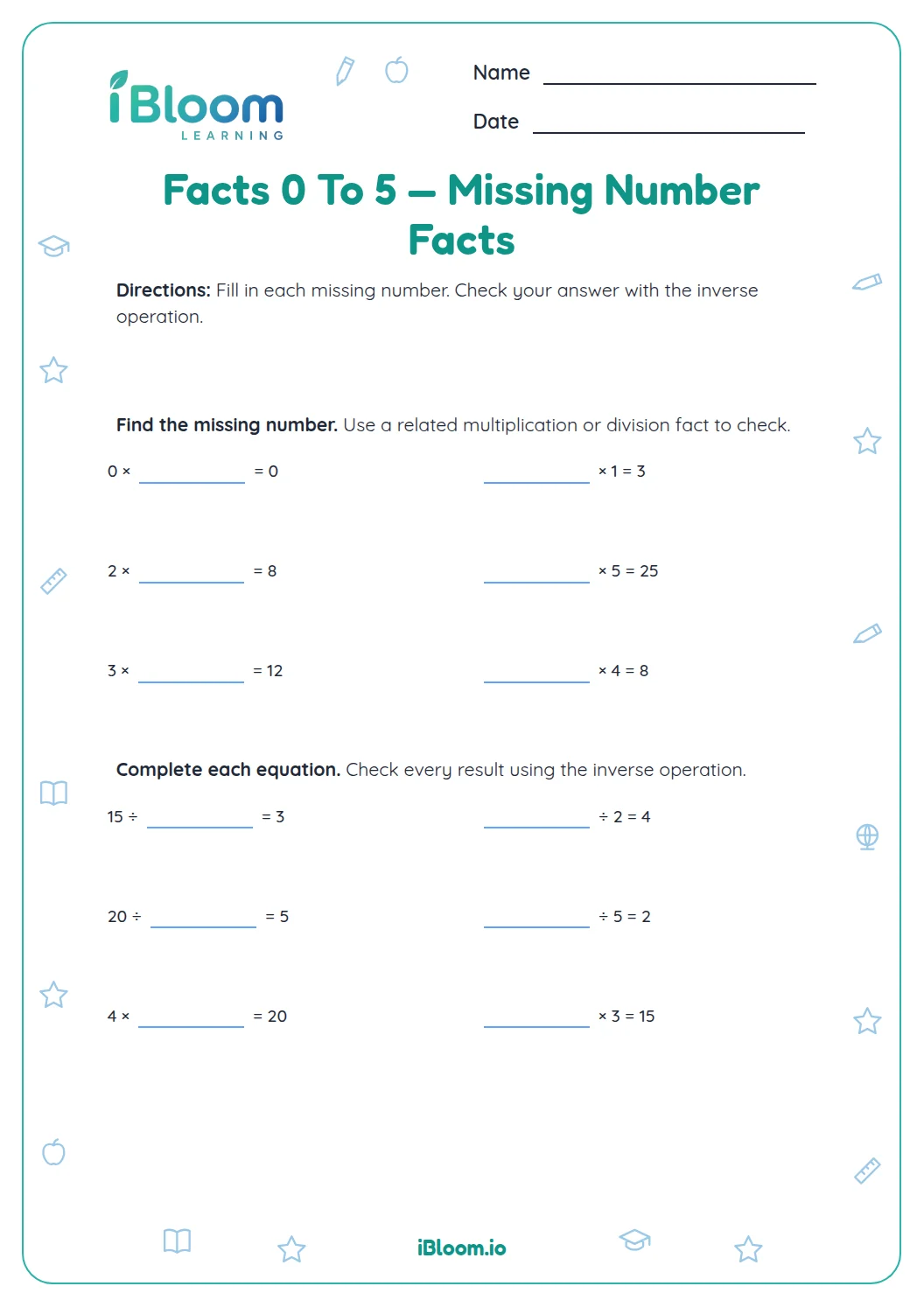
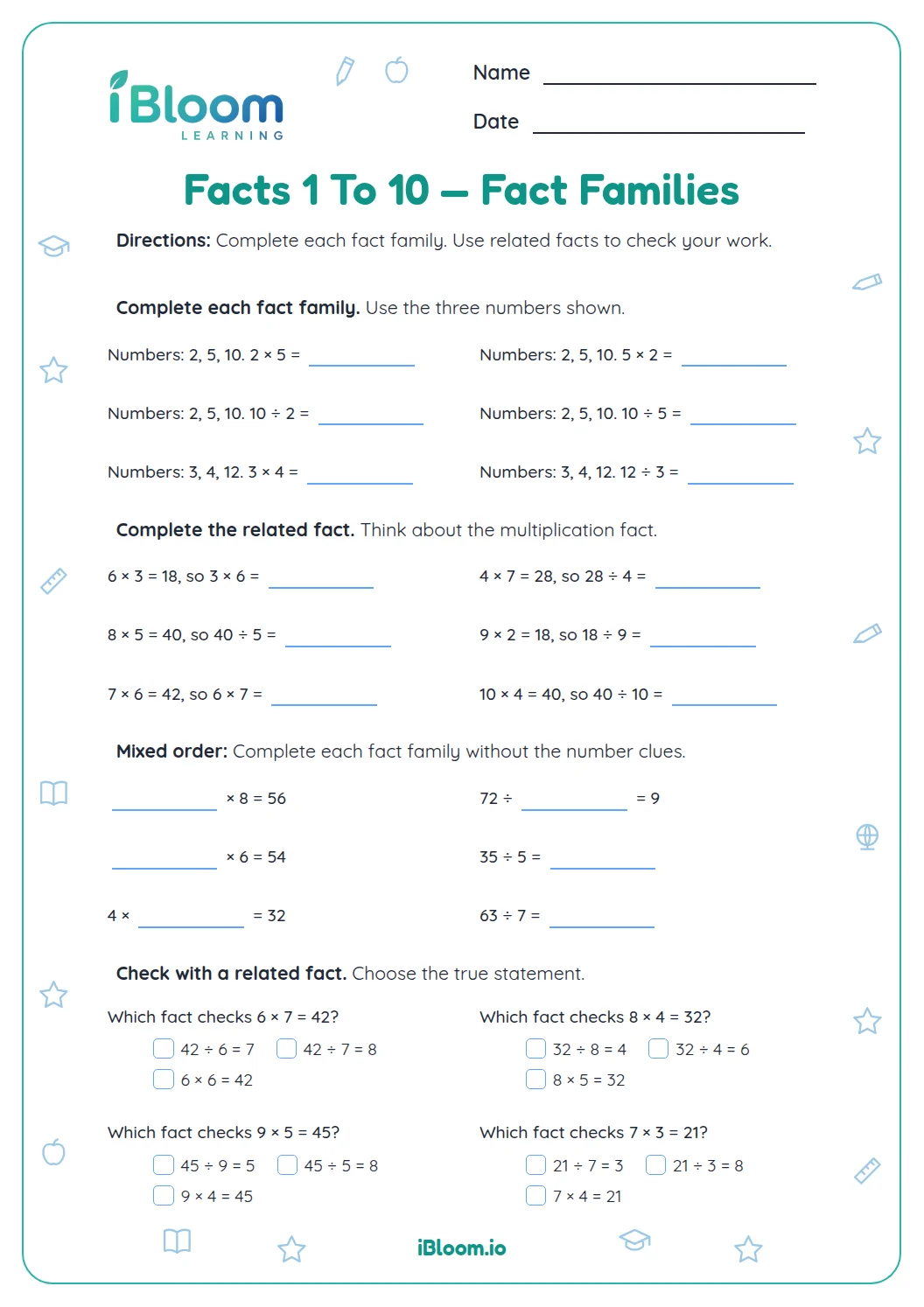
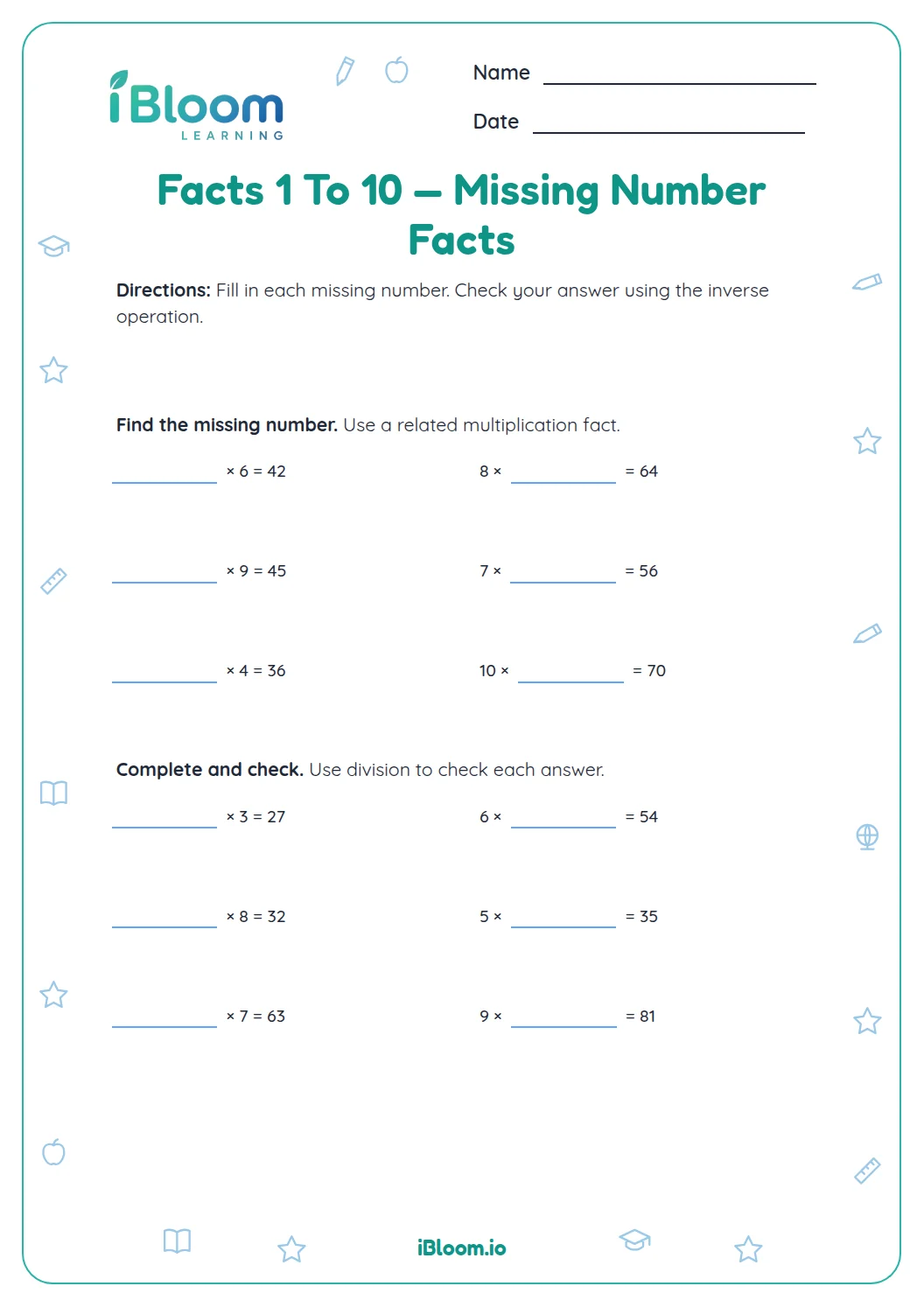
This free Grade 3 worksheet gives students 29 problems on the 2 and 3 times tables. Students solve direct products, find missing factors, choose products, check mixed facts, and explain one fact in a sentence. Every problem shows its numbers on the student page. The separate answer key supports checking after the work is complete.
How can a student solve a 2 or 3 times-table fact?
Read the two factors and multiply. For question 1, 2 × 4 means two groups of four, so the product is 8. A student can also skip-count by fours: 4, 8.
- 12 × 4 = 8
- 2Two groups of four make 8.
What kinds of practice are included?
The page moves from direct products to missing factors and product choices, then finishes with mixed facts. Every item prints the numbers students need.
- Products and missing factors
- Multiple-choice product checks
- Mixed facts through the 2 and 3 tables
How should the answer key be used?
Complete the problems first, then compare each answer with the matching question number. For the explanation, look for a sentence showing the groups or a related fact.
How to use this worksheet
- 1Read both factors and the multiplication sign.
- 2Use equal groups, skip-counting or a fact you know.
- 3For a missing factor, ask how many groups make the product.
- 4Choose the product that matches the factors.
- 5Check each response against the matching key entry.
Common multiplication slips
The mistake
Adding the factors instead of multiplying.
The fix
Think of the first factor as the number of equal groups.
The mistake
Writing a known factor in the missing-factor blank.
The fix
Check that the known factor times your answer equals the product.
The mistake
Choosing a nearby product without checking.
The fix
Recompute the fact or skip-count to confirm the product.
What to practice next
Make more practice
Further reading
Questions parents and teachers ask
What is on the worksheet?
The two-page worksheet has 29 printed problems: direct products, missing factors, product choices, mixed facts and one written explanation. Every equation includes its factors on the student page. The separate answer key lists the numeric results and a sample idea for the explanation.
How can a student find a missing factor?
Use the product and known factor to determine how many equal groups are needed. In 3 × ___ = 21, count by threes until reaching 21; seven groups are needed. Check by multiplying 3 by 7 to confirm that the product is 21.
Is this practice timed?
No timing is needed to complete these problems. A student can focus on reading the factors, choosing a strategy and checking each product. If an adult tracks time during repeated practice, accuracy should remain the main goal for this worksheet.
What should the written explanation say?
The final response asks the student to explain a multiplication fact using groups, skip-counting or a related fact. A complete response names the fact and shows why its product is correct. The key gives a sample; other clear explanations can also work.
When should we check the key?
Try a part before looking at its answers. Then match each response to its question number and redo any fact that does not agree. For the written explanation, compare the reasoning rather than expecting every student to use the exact sample wording.