




About this worksheet
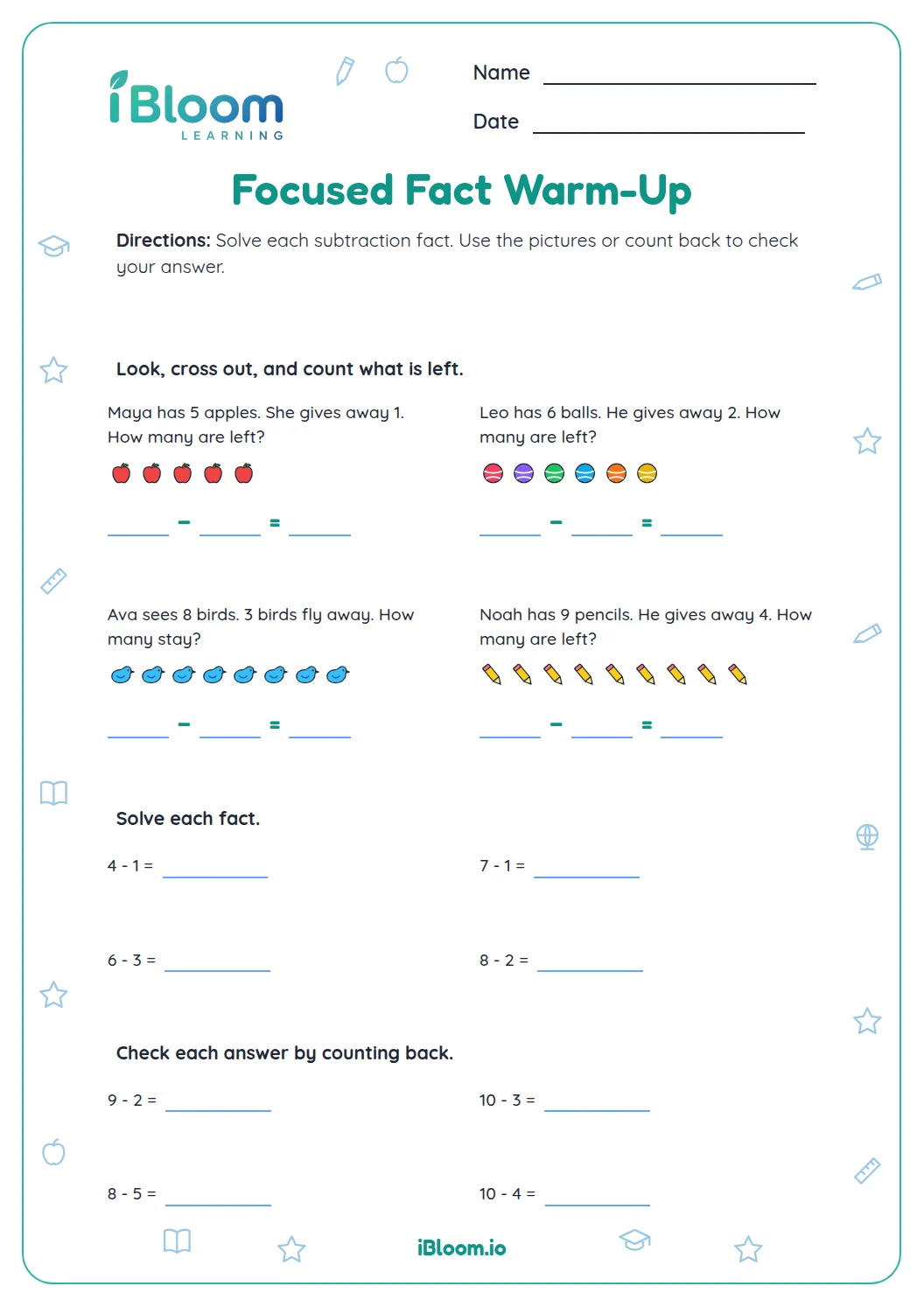
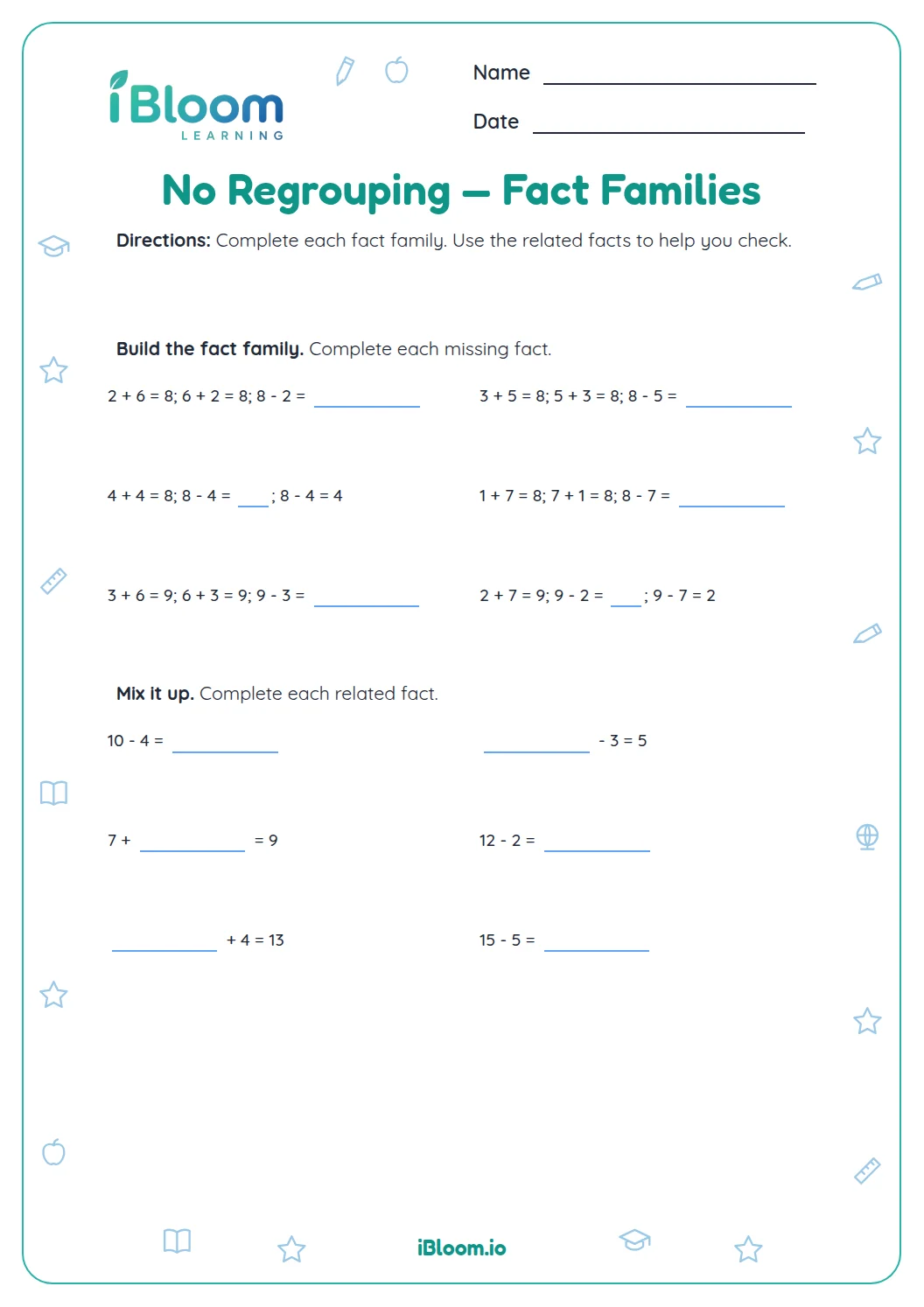
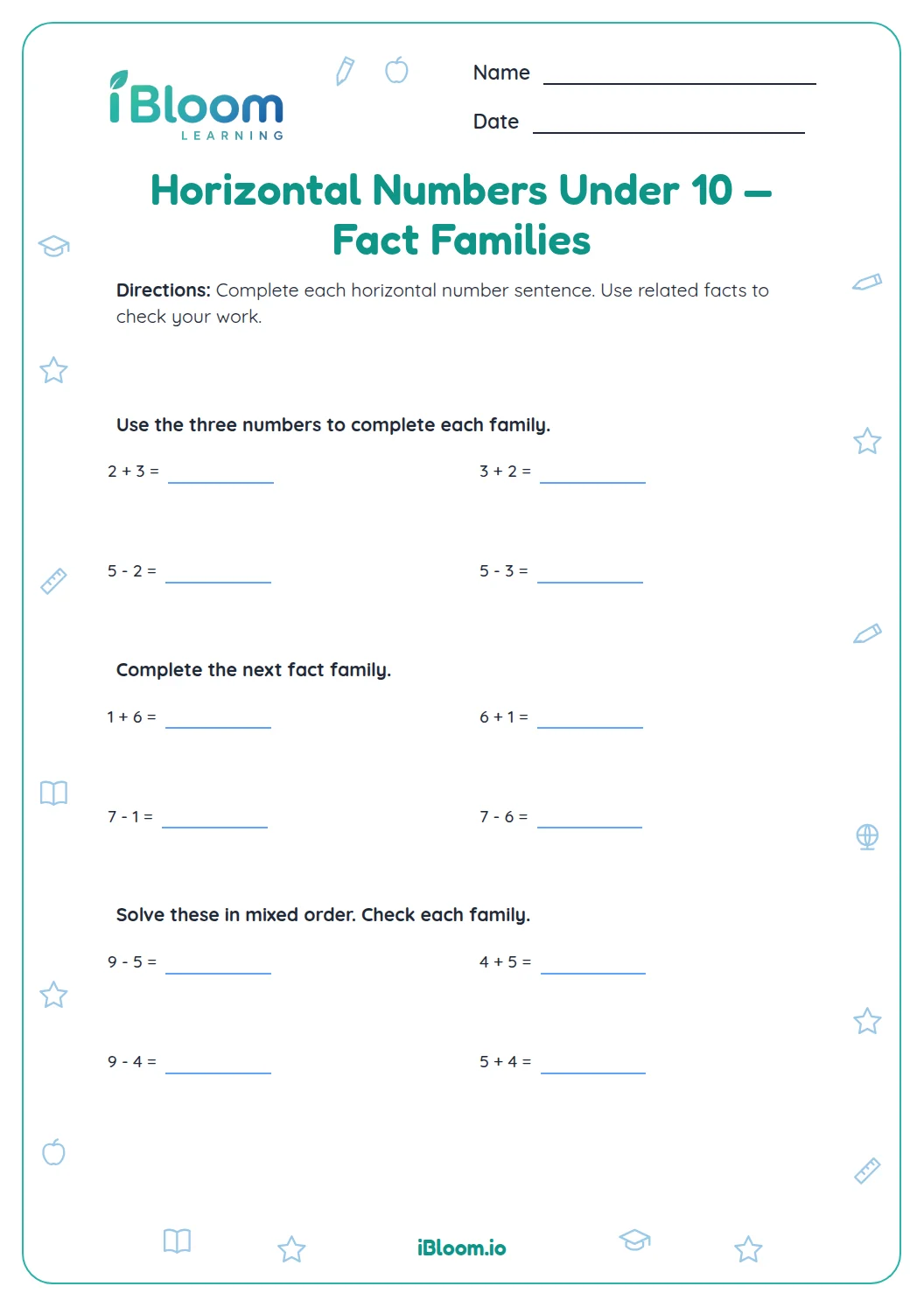
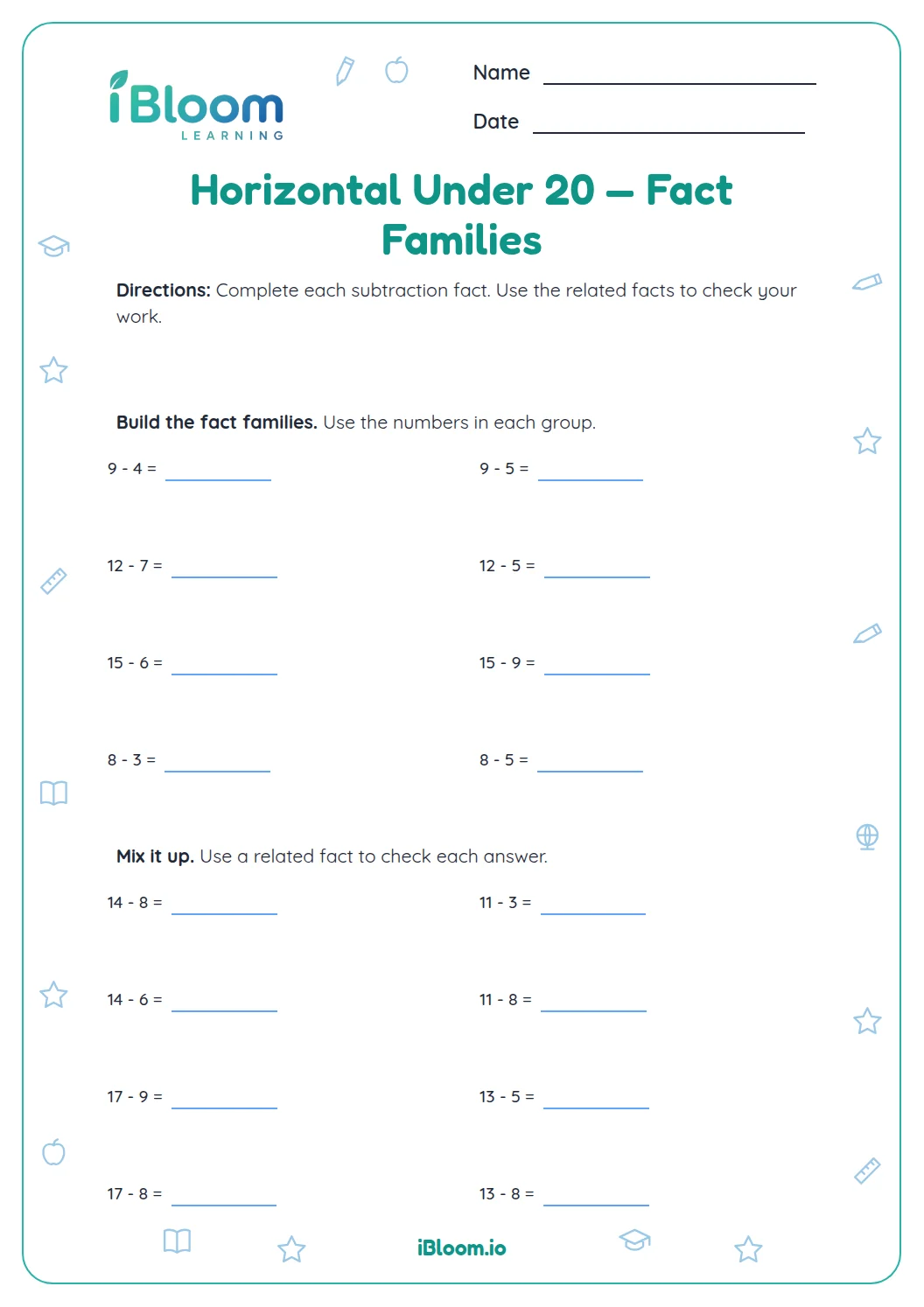
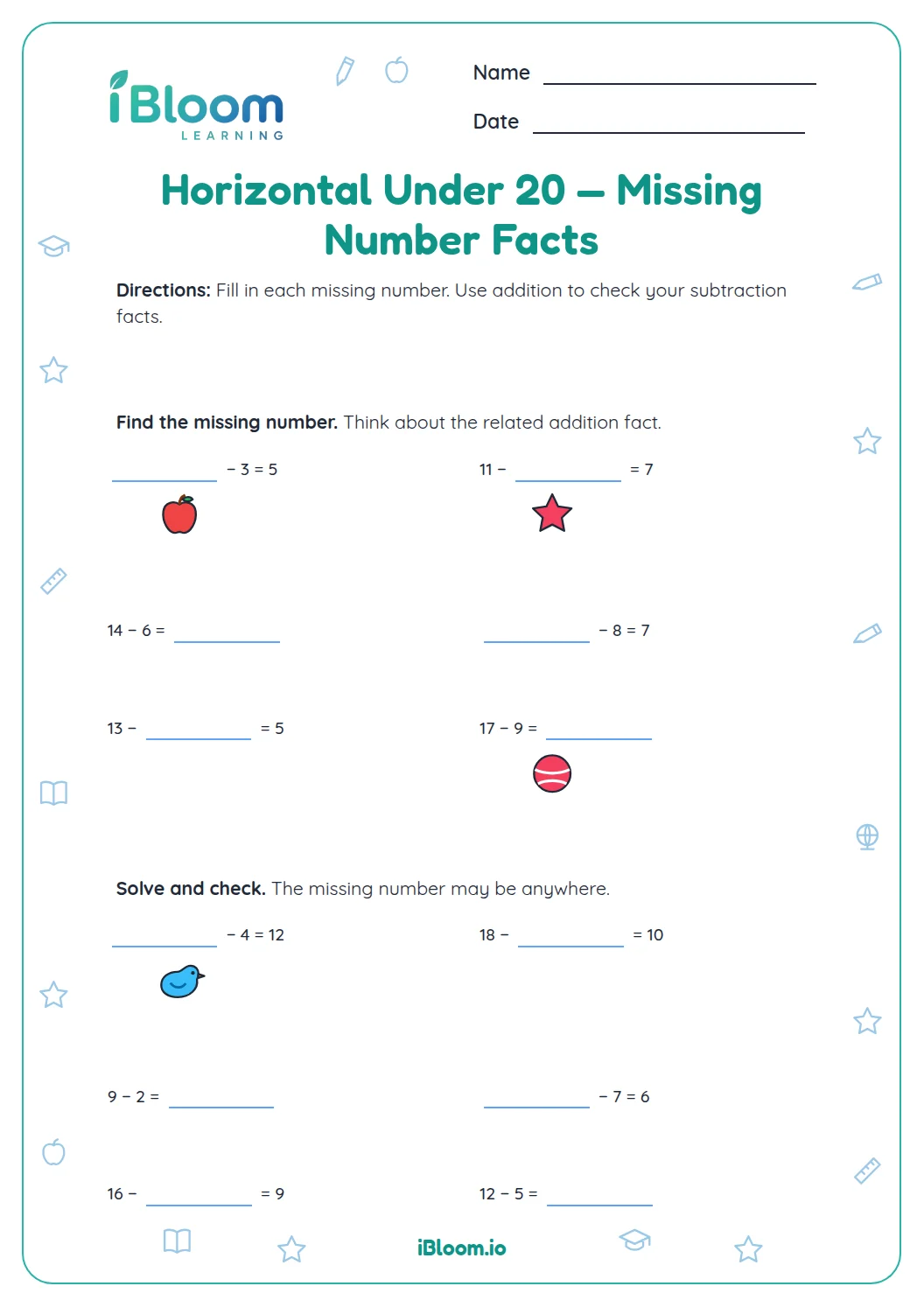
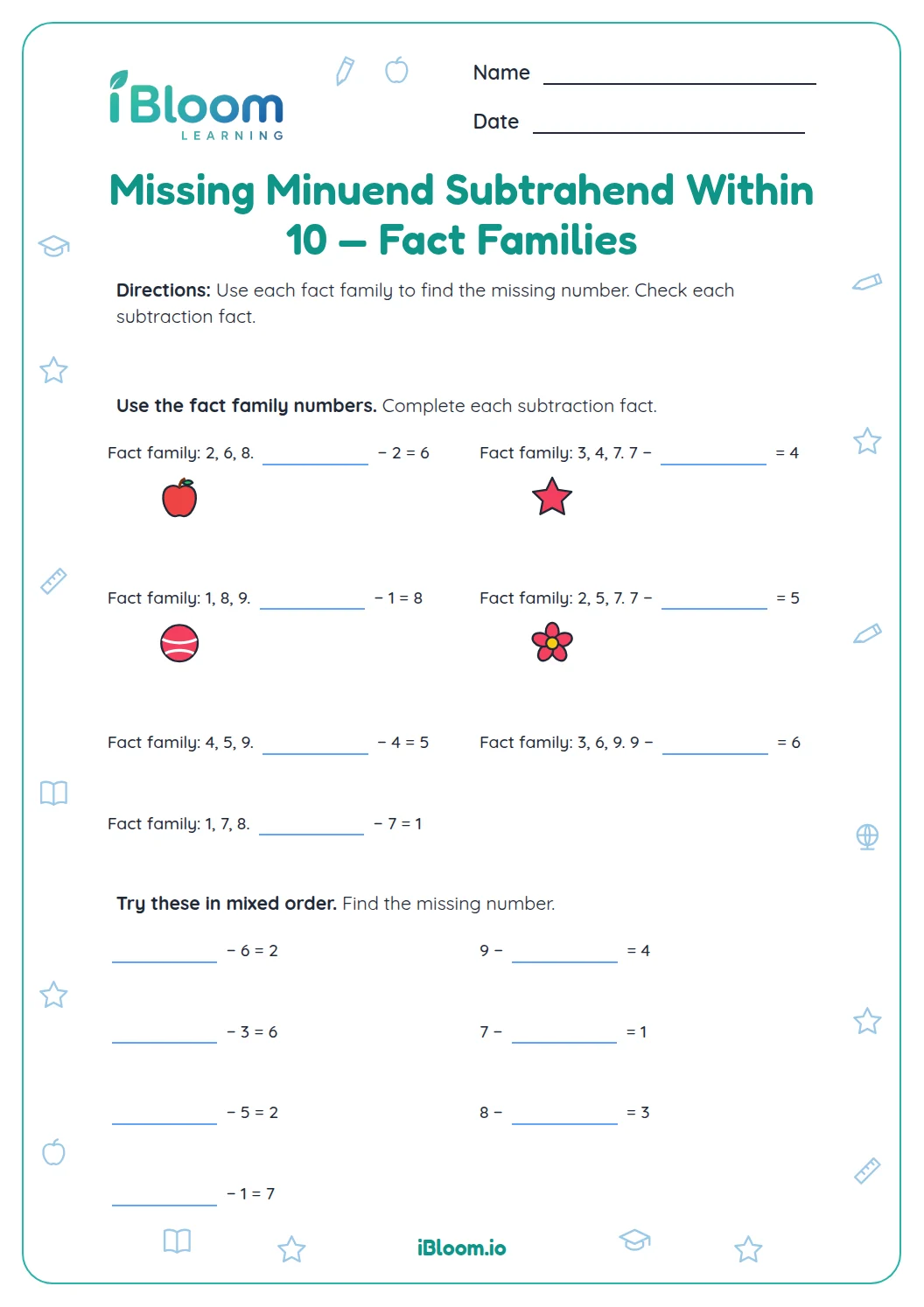
This free printable worksheet gives Grade 1 students practice with subtract without regrouping. Each equation is printed on the student page for students to solve, and the answer key is on its own page. The 16 questions are arranged in two parts.
Aligned to 1.OA.C.6
How can a child start each fact?
Read the numbers and minus sign in order. In question 1, 14 − 2 asks how many remain after taking 2 away; 12 is the difference.
- 114 − 2 = ___
- 214 − 2 = 12
- 3Check by adding the difference and the number subtracted to get the starting number.
What is in the two practice parts?
Part A has the first eight subtract without regrouping facts. Part B has eight more facts for continued practice. All 16 equations appear on the student sheet, with answers on the separate key page.
How should families use the answer key?
Have the student solve each equation before checking. If an answer differs, reread the equation and use addition to check: the difference plus the number subtracted should equal the starting number.
How to use this worksheet
- 1Read the complete equation before writing.
- 2Name the starting number and the number being taken away.
- 3Solve Part A without rushing.
- 4Pause and check a few answers with addition.
- 5Finish Part B, then compare with the key.
Common mistakes and quick fixes
The mistake
Reading the minus sign as a plus sign.
The fix
Say “take away” when you see −, then reread the equation.
The mistake
Subtracting the larger number from the smaller one.
The fix
Start with the first number and take away the second.
The mistake
Writing the starting number as the difference.
The fix
Check by adding the difference to the number taken away.
This sheet practices subtraction fluency within 20.
Build fluency with subtraction facts within 20, including facts within 10.
On this sheet:
Show the official wordingHide the official wording
Add and subtract within 20, demonstrating fluency for addition and subtraction within 10. Use strategies such as counting on; making ten (e.g., 8 + 6 = 8 + 2 + 4 = 10 + 4 = 14); decomposing a number leading to a ten (e.g., 13 − 4 = 13 − 3 − 1 = 10 − 1 = 9); using the relationship between addition and subtraction (e.g., knowing that 8 + 4 = 12, one knows 12 − 8 = 4); and creating equivalent but easier or known sums (e.g., adding 6 + 7 by creating the known equivalent 6 + 6 + 1 = 12 + 1 = 13).
What to practice next
Make more practice
Further reading
Questions parents and teachers ask
Are the problems printed on the student pages?
Yes. Each equation is printed on the worksheet page beside its answer blank. Students solve the shown numbers directly, and the answer key repeats those same items with their answers for checking. This makes the page ready to print and complete.
How many questions are on this worksheet?
There are 16 subtraction questions arranged in two parts. The first eight build accuracy with subtract without regrouping, and the second eight continue the practice with a mixed sequence. One key page provides the matching answers for students or adults to check after the work is complete.
Is the timed drill required?
No. The optional timed drill can be completed without a timer. A student may focus on accurate answers first, then use a timer later if that suits the family or classroom routine. Careful work is useful at either pace.
What does no regrouping mean?
No regrouping means the ones in the starting number are large enough to subtract the ones in the second number without trading a ten. For example, 18 − 6 can be solved directly because 8 ones is enough to take away 6 ones. The subtraction stays in the ones place.
How can a student check a subtraction answer?
Add the difference to the number that was taken away. The result should match the starting number. For example, if 16 − 3 = 13, then 13 + 3 returns to 16. This check works for each direct subtraction equation on the page.
Which skill does this worksheet practice?
The equations practice subtract without regrouping within 20, with familiar facts that support subtraction fluency. The page lists Common Core 1.OA.C.6 and includes an answer key for quick checking. Students see the complete equations before they begin and can work through them in either sitting or small-group practice.