





About this worksheet
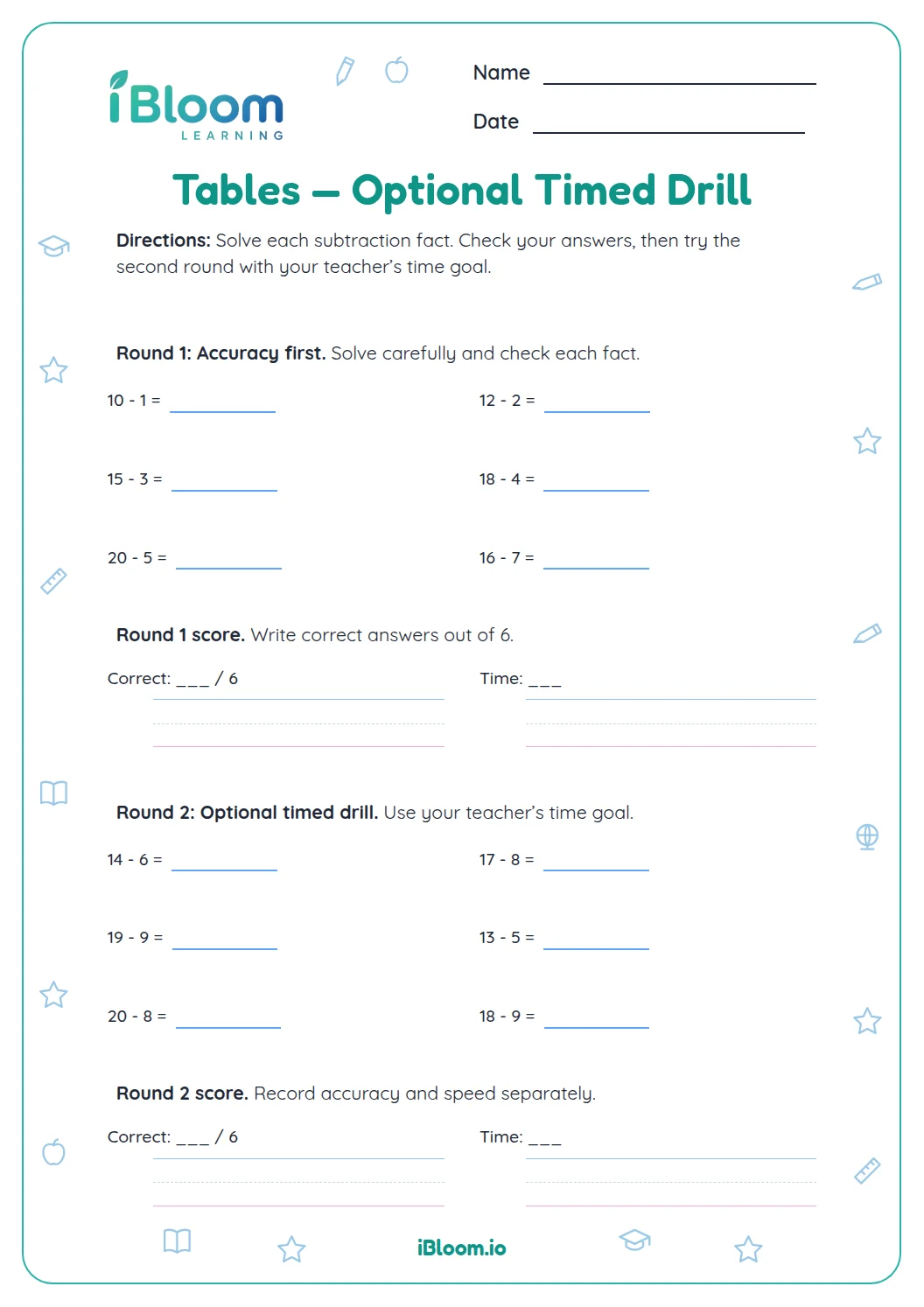
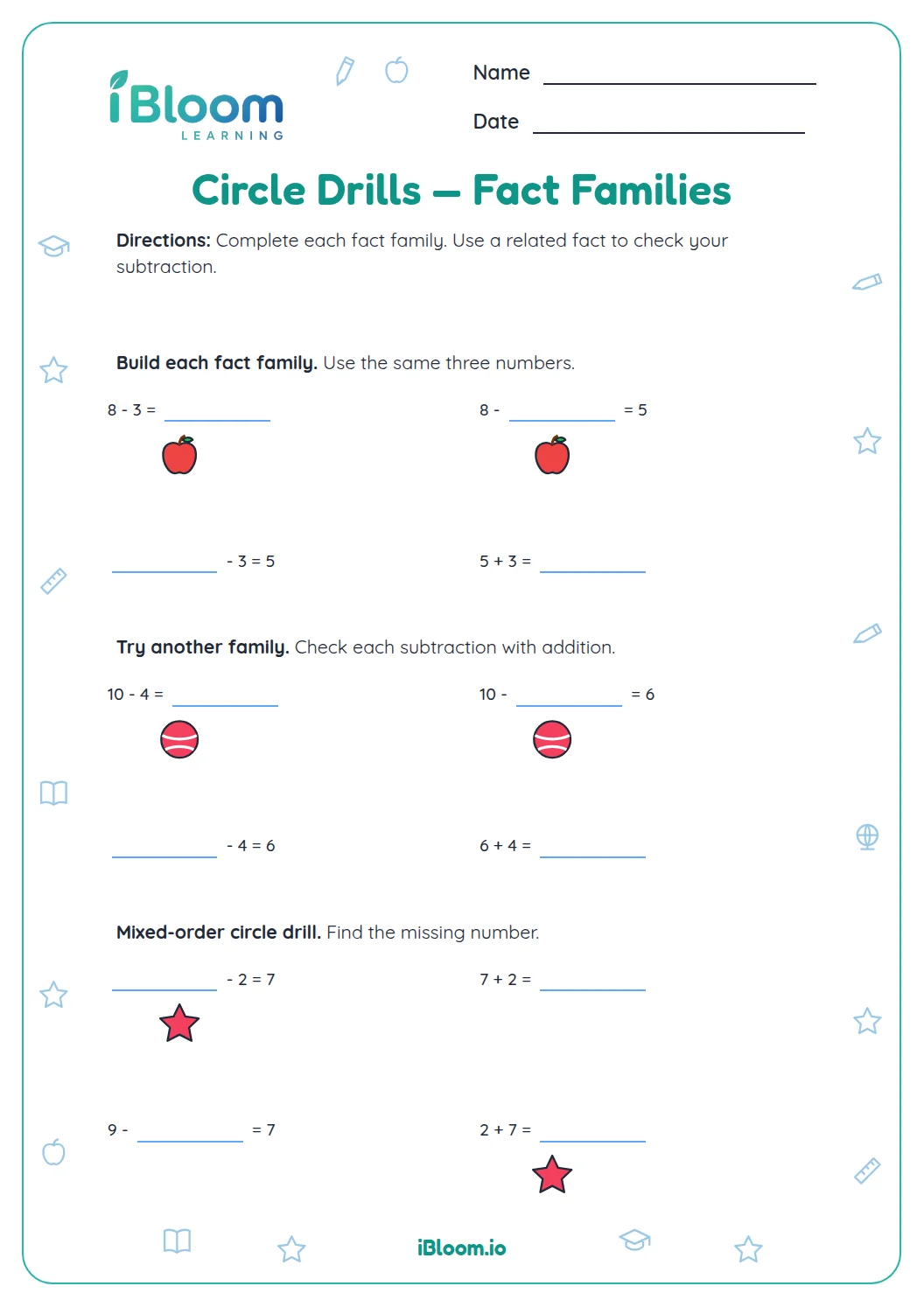
This free printable worksheet gives students 21 fully printed subtraction questions to solve. It practices subtraction facts within 20, including missing minuends and subtrahends; every starting number and number being subtracted appears on the student sheet, with one answer space per equation. Students can work through 5 labeled parts and check their completed work with the separate answer key.
Aligned to 1.OA.C.6 and 2.OA.B.2
How should students use the worksheet?
Read each printed equation and write its missing difference or number. For a missing starting number or subtrahend, use the relationship between subtraction and addition to find the value that makes the equation true.
How can students check their answers?
Use the answer key after finishing. For a subtraction equation, add the difference to the number subtracted; the sum should equal the starting number. On the ordered facts page, compare neighboring results to notice how subtracting one changes the difference.
Common Core alignment
These subtraction questions give practice with the place value and fluency expectations named below.
Add and subtract within 20, demonstrating fluency for addition and subtraction within 10.
On this sheet: The zero and one facts reinforce subtraction fluency within 10 and extend selected facts within 20.
Show the official wordingHide the official wording
Add and subtract within 20, demonstrating fluency for addition and subtraction within 10.
Fluently add and subtract within 20 using mental strategies.
On this sheet: The page practices this standard through the printed subtraction equations in its 18 questions.
Show the official wordingHide the official wording
Fluently add and subtract within 20 using mental strategies.
What to practice next
Make more practice
Further reading
Questions parents and teachers ask
What does this worksheet practice?
It practices subtraction facts within 20, including missing minuends and subtrahends. The worksheet has 21 questions in 5 parts, with the numbers printed in each equation so students can focus on solving and checking each difference. The sections build from a first set of examples to a final practice group, giving learners a clear path through the skill.
How should students use the answer key?
Have students complete the worksheet before checking the key. They can mark any missed item, solve it again, and use addition to check: the difference plus the number subtracted should equal the starting number. For a missing minuend, combine the answer and subtrahend to find the starting value, then confirm the equation.
Are the operands printed on the student page?
Yes. Each equation shows its known numbers and operation sign on the student sheet. A single blank marks the value students need to find; the answer key is separate and is intended for checking completed work. Students should read each equation as printed and write only the missing number in its answer space.
Is a timer required?
No. Students can work carefully at their own pace and use the page as an accuracy check. If they already understand the facts, they may time a later attempt and compare it with their own earlier time; speed is optional. Encourage correct answers and careful reading before considering a faster time.
How can a student check a subtraction result?
Add the difference to the number subtracted. The total should match the starting number in the fact. This inverse operation provides a quick check without needing another worksheet or a calculator. For example, if 12 − 5 = 7, then 7 + 5 should equal 12.